
2027 Online Healthcare Administration Doctorate Accreditation Guide: Institutional, Programmatic, and Licensure Considerations

Co-Founder and Chief Data Scientist
Choosing an online healthcare administration doctorate is not just an academic decision; it can affect financial aid, employer recognition, transfer options, and licensure eligibility. The stakes are real: the U. S. Bureau of Labor Statistics reported a May 2024 median pay of $117,960 for medical and health services managers, but many senior roles still scrutinize accreditation.
This guide is for prospective doctoral students comparing online programs, especially those considering licensure-linked careers. You will learn how institutional accreditation, programmatic accreditation, state authorization, and professional licensure rules work together before you enroll.
Key Things You Should Know
- Institutional accreditation is the baseline: for federal financial aid and broad academic recognition, the school should be accredited by an agency recognized by the U.S. Department of Education, and students should verify this directly in official databases.
- Programmatic accreditation is not always required for healthcare administration doctorates, but it can matter for specific employers, academic pathways, and fields connected to licensure, such as nursing home administration or health information management.
- State authorization is not the same as licensure approval; federal professional licensure disclosure rules that took effect for institutions in 2024 make it especially important to confirm whether an online program meets requirements in your state before enrolling.
Is an Online Healthcare Administration Doctorate Accredited Differently From an On-Campus Program?
Online healthcare administration doctorates are not supposed to be accredited under a weaker or separate standard simply because the coursework is delivered online. A legitimate online Doctor of Healthcare Administration, DBA in healthcare management, PhD in healthcare administration, or related doctorate should be reviewed as part of the institution's approved academic offerings, with distance education included in the accreditor's scope when applicable.
The practical difference is not the value of the accreditation label; it is what you must verify. Online students need to confirm that the institution is accredited, the accreditor recognizes distance education activity if relevant, the program is authorized for students in their state, and any in-person requirements can be completed where they live.
Students comparing flexible or accelerated healthcare programs should be especially careful, because shorter timelines do not remove accreditation, residency, practicum, or licensure obligations.
The table below shows how accreditation concerns are similar for online and campus formats, while state authorization and field-placement logistics create extra steps for online students.
| Issue | Online healthcare administration doctorate | On-campus healthcare administration doctorate | Why it matters |
| Institutional accreditation | Should come from a U.S. Department of Education-recognized accreditor for federal aid eligibility and broad recognition | Same expectation | Protects access to federal aid, transfer review, and employer acceptance |
| Programmatic accreditation | May apply depending on the program type and career goal | Same expectation | Can affect licensure-linked pathways, employer preferences, or further study |
| State authorization | Must be checked based on the student's location | Usually less complex unless the student relocates or completes placements elsewhere | A school may be accredited but not authorized to enroll students in every state |
| Practicum or residency | May require local site approval, travel, or employer-based projects | Often arranged through campus networks | Site availability can affect graduation and licensure eligibility |
A common mistake is assuming that "online" means "nationally available." In reality, an accredited university can still restrict enrollment in certain states, and a program that meets one state's professional requirements may not meet another state's rules.
What Is the Difference Between Institutional and Programmatic Accreditation for an Online Healthcare Administration Doctorate?
Institutional accreditation evaluates the college or university as a whole. Programmatic accreditation evaluates a specific school, department, or program against standards for a profession or academic field. For online healthcare administration doctoral students, the distinction matters because one type can support federal aid and general legitimacy, while the other may influence professional recognition or licensure-related expectations.
Healthcare administration is broader than clinical practice. Many doctorate holders work in executive leadership, operations, policy, quality improvement, consulting, teaching, or research rather than in a separately licensed occupation. That is why programmatic accreditation is often helpful but not always mandatory.
However, if your goal connects to a licensed role, a regulated facility administrator position, or a credential with specific education rules, you need to look beyond institutional accreditation.
The table below summarizes the main types of accreditation and recognition you may encounter when evaluating online healthcare administration doctorates.
| Category | What it reviews | Common example in healthcare administration | Best question to ask |
| Institutional accreditation | The entire college or university, including governance, student services, finances, academic quality, and degree integrity | Accreditation by an agency recognized by the U.S. Department of Education | Is the institution currently accredited and Title IV eligible? |
| Programmatic accreditation | A specific program or academic unit | CAHME accreditation is most commonly associated with graduate healthcare management programs, especially master's-level programs | Does my specific doctorate have, need, or benefit from specialized accreditation? |
| Professional approval | Education required for a regulated occupation | State nursing home administrator or long-term care administrator board approval | Will this program satisfy my state board's education requirements? |
| State authorization | Whether an institution may enroll distance education students in a state | Authorization through state approval processes or participation in reciprocity agreements | Is the school allowed to enroll me where I live? |
Students sometimes enter a doctorate after completing a master's in healthcare administration, and that earlier degree may be more directly tied to CAHME or employer expectations than the doctorate itself. If you already hold a graduate healthcare management degree, ask whether the doctorate adds the accreditation or licensure value you actually need.
How Can You Verify That an Online Healthcare Administration Doctorate and Its Accreditor Are Legitimate?
The safest way to evaluate an online healthcare administration doctorate is to verify accreditation from independent sources rather than relying only on marketing language. Terms such as "approved," "recognized," "licensed," "candidate," and "member" can mean very different things, so your goal is to confirm the exact institution, program, accreditor, location, and status.
Use this sequence before you apply or pay an enrollment deposit. Each step helps you separate a legitimate accredited program from one that may be unrecognized, misrepresented, or unsuitable for your state.
- Search the U.S. Department of Education's Database of Accredited Postsecondary Institutions and Programs for the institution's exact legal name, campus, accreditor, and current status.
- Confirm that the accreditor is recognized by the U.S. Department of Education for the type of institution and degree level you are considering.
- Check the institution's accreditation page and compare the dates, accreditor name, and status against the federal database.
- If the school claims programmatic accreditation, verify the specific program directly with the specialized accreditor rather than assuming all healthcare programs are covered.
- Ask whether the online doctorate is included in the institution's accredited degree inventory and whether distance education is within the accreditor-approved scope.
- Request written professional licensure disclosures for your state if the program is designed or marketed as leading to a licensed occupation.
- Contact the relevant state licensing board yourself if you plan to pursue nursing home administrator, long-term care administrator, assisted living administrator, or another regulated credential.
Watch for red flags such as an accreditor that sounds official but is not recognized, a school that refuses to name its accreditor, a program that says accreditation is "pending" without explaining student risk, or admissions staff who promise licensure in every state. Legitimate schools should be able to provide clear, written accreditation and authorization information.
An online healthcare administration doctorate does not automatically need programmatic accreditation in the way that nursing, medicine, physical therapy, or social work programs often do. For many executive, academic, research, quality improvement, and policy roles, institutional accreditation is the most important baseline. Still, programmatic accreditation can be valuable when it aligns with your career target.
The key question is not "Is programmatic accreditation good?" but "Does this specific accreditor matter for my intended outcome?"
In healthcare administration, CAHME is widely known for accrediting graduate healthcare management education, but doctoral-level healthcare administration programs are not always structured around CAHME accreditation in the same way many master's programs are. Some doctoral programs may be housed in business, public health, health sciences, nursing, or policy units, which can change the accreditation landscape.
The table below helps clarify when programmatic accreditation is likely to matter and when it may be secondary.
| Goal | How much programmatic accreditation may matter | What to verify |
| Healthcare executive leadership | Moderate; employers often focus on institutional accreditation, experience, and leadership record | Whether the degree is from an accredited institution and respected by your employer sector |
| Academic teaching or doctoral faculty roles | Moderate to high depending on institution type | Whether the doctorate is research-oriented, regionally accepted by universities, and appropriate for the discipline |
| Long-term care or nursing home administration licensure | Potentially high, but state board rules matter more than a generic accreditation label | Whether the curriculum and field experience satisfy your state board |
| Health information management leadership | May matter if the role requires a specific HIM credential | Whether prior degrees, certifications, or accredited HIM coursework are required |
| Consulting, policy, or healthcare operations | Usually secondary | Whether the institution is accredited and the curriculum matches your work goals |
If cost is a major concern, compare the doctoral program with lower-cost stepping-stone options, including a cheapest online healthcare administration degree pathway for earlier credentials. A less expensive accredited route can be better than a costly doctorate that does not improve your licensure, promotion, or teaching prospects.
Healthcare administration is not one single licensed profession across the United States. Many healthcare administration doctorate graduates work in unlicensed management roles, while others pursue credentials or licenses tied to specific settings. The accreditation that matters depends on whether your target role is regulated by a state board, governed by a professional certification body, or evaluated mainly by employers.
Use the table below to distinguish licensure from certification and employer recognition. This distinction prevents one of the most expensive mistakes applicants make: assuming a doctorate by itself qualifies them for every healthcare leadership credential.
| Career or credential target | Is state licensure usually involved? | Accreditation or education issue to verify | Why doctoral students should care |
| Hospital or health system executive | Usually no separate healthcare administration license | Institutional accreditation and employer-recognized graduate education | Experience, leadership record, and degree legitimacy usually carry more weight than a specific doctoral programmatic accreditor |
| Nursing home administrator | Yes, state licensure is typically required | State board-approved education, administrator-in-training or practicum hours, exams, and background requirements | A doctorate may help academically but may not replace state-specific licensure steps |
| Assisted living or long-term care administrator | Often state regulated, but rules vary | State-approved coursework, supervised experience, and examination requirements | Online coursework may be accepted only if it fits the state's rules |
| Health information management leader | Generally certification-driven rather than state licensed | Eligibility for RHIA, RHIT, or related credentials may depend on specific accredited education | A healthcare administration doctorate may not substitute for HIM-specific credential requirements |
| Public health administrator | Usually no broad administrator license | Employer or agency requirements; sometimes public health program accreditation may be preferred | Program fit may matter more than a healthcare administration label |
The most important rule is to start with the credentialing authority, not the university catalog. If a state board or certification body requires a certain type of accredited education, supervised experience, or exam eligibility, get that requirement in writing before assuming an online doctorate will satisfy it.
An online healthcare administration doctorate may meet licensure requirements in one state and fall short in another. This is especially true for roles involving nursing homes, long-term care facilities, assisted living facilities, or other regulated care settings. States can differ on required coursework, supervised administrator-in-training hours, residency rules, exam requirements, background checks, and whether online or out-of-state education is accepted.
Before enrolling, treat licensure eligibility as a state-specific due diligence process. The following steps are practical because they create a written record and reduce the risk of discovering a mismatch after you have already completed courses.
- Identify the exact license or credential you want, such as nursing home administrator, long-term care administrator, or assisted living administrator.
- Find the official state board or agency that regulates that credential in the state where you plan to work, not only where you currently live.
- Review the board's education, exam, supervised experience, residency, and application requirements.
- Ask the online doctorate program for its professional licensure disclosure for your state and whether the school has determined that the program meets, does not meet, or has not determined state requirements.
- Send the curriculum, practicum plan, and accreditation information to the state board if the requirements are unclear.
- Save emails, board responses, catalog pages, and disclosures in case requirements change or you later need documentation.
Do not rely on national averages or broad statements such as "graduates are eligible for licensure." A statement like that may be accurate only for the school's home state, only for certain concentrations, or only when students complete additional supervised hours outside the degree.
Practicum, internship, clinical, administrator-in-training, or residency requirements can determine whether an online healthcare administration doctorate is practical for you. Even when the coursework is fully online, some programs require in-person residencies, applied doctoral projects, supervised fieldwork, executive site visits, or approved preceptors. For licensure-linked roles, those experiences may need to satisfy state board rules, not just school graduation rules.
Students should evaluate field requirements before admission because these obligations can affect timeline, cost, travel, employer approval, and licensure eligibility. The following questions help uncover issues that may not be obvious in the program brochure.
- Does the doctorate require an in-person residency, campus visit, practicum, internship, clinical experience, or administrator-in-training placement?
- Who is responsible for finding the site: the school, the student, or both?
- Must the site be located in the school's state, the student's state, or a state with specific approval?
- Are preceptors required to hold a particular license, certification, or administrative title?
- Will supervised hours count toward state licensure, or are they only academic graduation requirements?
- What happens if no approved site is available near the student's home or workplace?
The common mistake is treating field experience as a scheduling detail. For regulated healthcare administration roles, fieldwork can be a legal eligibility requirement. If the program cannot document how its practicum or residency maps to your state's expectations, ask the state board before enrolling.
Accreditation can affect the financial and professional value of an online healthcare administration doctorate. Institutional accreditation by a recognized accreditor is often tied to federal student aid eligibility, employer tuition reimbursement, credit transfer review, military education benefits, and admission to further study. Programmatic accreditation may add value in certain fields, but institutional accreditation is usually the first checkpoint.
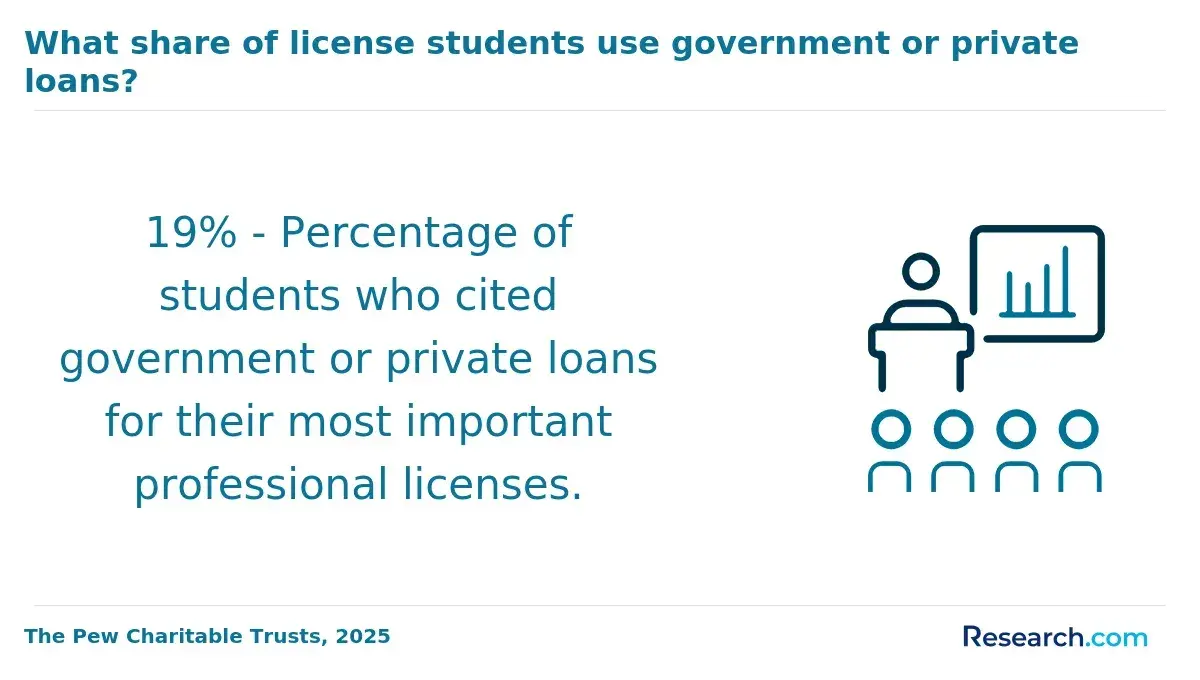
Cost should be evaluated alongside recognition. The National Center for Education Statistics reported in 2024 that graduate and professional students continue to rely heavily on loans, which means an unrecognized or poorly matched doctorate can create long-term financial risk.
If you are also comparing adjacent healthcare leadership paths, salary context can help; for example, students exploring data-oriented management roles may want to review health information management salary information before choosing a doctoral concentration.
The table below summarizes how accreditation status can influence common education and career decisions.
| Decision area | Why accreditation matters | What to confirm |
| Federal financial aid | Students generally need an eligible institution accredited by a recognized accreditor | Institutional accreditation and Title IV participation |
| Employer tuition reimbursement | Many employers reimburse only accredited institutions or approved programs | Employer policy before enrolling |
| Transfer credits | Receiving schools decide whether credits from another institution are acceptable | Transfer policies at likely future schools |
| Academic hiring | Universities may prefer or require doctorates from accredited institutions and appropriate disciplines | Faculty qualification standards in your target teaching area |
| Executive employment | Employers may screen for recognized universities and relevant leadership preparation | Whether the degree is understood and valued in your sector |
| Licensure-linked roles | State boards may require specific education, supervised experience, or program approval | Current rules from the licensing board |
The U.S. Bureau of Labor Statistics projected much faster-than-average growth for medical and health services managers in its 2023-2033 outlook, but that does not mean any doctorate will produce the same result. Use accreditation, cost, experience requirements, and state eligibility together when judging return on investment.
What Happens if an Online Healthcare Administration Doctorate Loses Accreditation or Is Only in Candidacy?
If an online healthcare administration doctorate loses accreditation, is placed on probation, or is only in candidacy, students should pause and gather facts before making a decision. Accreditation status can affect federal aid, transferability, employer recognition, and confidence in the degree. The level of risk depends on the exact status, timing, accreditor action, and whether the school has an approved teach-out plan.
The table below explains common accreditation statuses and what they generally mean for students. These are not guarantees; students should always read the official accreditor notice and ask the school for written guidance.
| Status | General meaning | Student implication |
| Fully accredited | The institution or program currently meets the accreditor's standards | Still verify renewal dates, program inclusion, and state eligibility |
| Candidacy or pre-accreditation | The institution or program is seeking accreditation but has not yet earned full status | May not provide the same benefits as full accreditation; ask whether credits, aid, or licensure eligibility are affected |
| Probation or warning | The accreditor has identified compliance concerns | Risk is elevated; review official findings and ask about corrective plans |
| Accreditation withdrawn or terminated | The accreditor no longer recognizes the institution or program after a stated point | Federal aid, transfer, employer recognition, and licensure pathways may be affected |
| Teach-out plan | A plan for students to complete or transfer after closure or loss of accreditation | Can reduce disruption but may not preserve every original benefit |
If your program's status changes, take action quickly and document everything. Ask whether your graduation date falls before or after the effective date of the accreditation action, whether federal aid will continue, whether partner schools will accept transfer credits, and whether your state licensing board will recognize the coursework.
A major mistake is assuming candidacy equals accreditation. Candidacy can signal progress, but it is not the same as full accreditation and may not satisfy employers, doctoral transfer policies, or licensure boards that require graduation from an accredited program.
Other Things You Should Know About Healthcare Administration
Yes. Many legitimate healthcare administration doctorates rely primarily on institutional accreditation, especially when they prepare students for leadership, research, consulting, or policy roles rather than a licensed occupation. The key is whether the degree fits your specific career or licensure goal.
The older regional-versus-national language is less precise than it used to be. The safer approach is to verify that the institution's accreditor is currently recognized by the U.S. Department of Education and that the school's status is active.
Usually not. Senior healthcare administration roles often weigh leadership experience, regulatory knowledge, financial management, quality improvement, and operational results heavily. A doctorate can strengthen a profile, but it does not automatically substitute for required experience or supervised practice.
Yes, if your goal involves a regulated role such as nursing home administrator or long-term care administrator. Ask the board whether the program's coursework, supervised experience, online format, and institution accreditation satisfy current requirements in the state where you plan to work.
- Health Administration Programs State Directory https://www.healthadministrationdegrees.com/programs-by-state/
- Who Accredits MHA Programs? https://www.mhaonline.com/faq/who-accredits-online-mha-programs
- Institutional vs. Programmatic Accreditation: Key Differences | Higher Ed Review https://higheredureview.com/institutional-vs-programmatic/
- Doctor of Health Administration (DHA) | Doctor of Healthcare | University of Phoenix https://www.phoenix.edu/online-healthcare-degrees/health-administration-doctoral-degree.html
- Best Online Doctor of Healthcare Administration Programs https://www.phds.me/online-programs/doctorate-healthcare-administration-dha/
- Understanding the Differences: Institutional Accreditation, Programmatic Accreditation, and ISO Certification https://www.qahe.org/article/understanding-the-differences-institutional-accreditation-programmatic-accreditation-and-iso-certification/
- DHA Online Programs 2020 | Healthcare-Administration-Degree.net https://www.healthcare-administration-degree.net/best/dha-online-programs-2/
- Healthcare Administration Certifications https://www.publichealthdegrees.org/careers/healthcare-administrator/certification/
- Best Online Doctorates in Healthcare Administration 2026 https://www.onlineu.com/degrees/doctoral-healthcare-administration
- CAHME-Accredited Healthcare Administration Programs by State https://www.healthcareadministrationedu.org/accredited-healthcare-administration-programs/


