2027 Online Healthcare Administration Doctorate vs Master's Degree: Cost, Salary, Career Outcomes, and ROI

Co-Founder and Chief Data Scientist
Choosing between an online healthcare administration doctorate and a master's degree is really a question of return: how much more time, tuition, and debt should you take on for the roles you want? The stakes are significant because the U. S. Bureau of Labor Statistics reported a May 2024 median wage of $117,960 for medical and health services managers. This guide is for working healthcare professionals, career changers, and graduate applicants comparing cost, salary potential, career mobility, and ROI so they can choose the credential that fits their goals.
Key Things You Should Know
- A master's degree is usually the faster and lower-cost path into healthcare administration leadership, while a doctorate typically makes the most sense for executive, consulting, policy, teaching, or research-focused goals.
- The BLS reported a May 2024 median salary of $117,960 for medical and health services managers, but that figure reflects occupation and experience, not a guaranteed master's-or-doctorate salary premium.
- Doctoral ROI depends heavily on funding, employer support, current salary, and whether the extra years of study lead to a role that a master's alone would not realistically unlock.
What Are the Key Differences Between an Online Healthcare Administration Doctorate and Master's Degree?
An online healthcare administration master's degree, such as an MHA, MBA in healthcare management, or MS in health administration, is designed to prepare students for management and leadership roles in hospitals, clinics, insurers, long-term care organizations, public health agencies, and healthcare technology companies. A doctorate, such as a DHA, DrPH, DBA in healthcare management, or PhD in health services or healthcare administration, goes deeper into systems leadership, applied research, policy, organizational strategy, population health, or academic research.
The central difference is not simply "higher degree equals better job." The practical distinction is whether the credential matches the level of responsibility, evidence use, research, teaching, or executive influence you are pursuing. If your target roles list a graduate degree as preferred or required, a masters in healthcare administration may already satisfy the credential requirement without the additional years of doctoral study.
The table below summarizes the core decision points. Use it as a first-pass filter before comparing individual programs.
| Comparison factor | Online master's in healthcare administration | Online healthcare administration doctorate |
| Primary purpose | Builds management, finance, operations, policy, and leadership skills for healthcare organizations | Develops advanced executive, research, consulting, policy, teaching, or systems-level leadership expertise |
| Typical credential types | MHA, MSHA, MBA with healthcare concentration, MPH with administration concentration | DHA, DrPH, DBA in healthcare management, PhD in health services or healthcare administration |
| Best fit | Early- to mid-career professionals seeking management advancement | Experienced professionals targeting senior executive, academic, research, or high-level consulting roles |
| Typical admissions profile | Bachelor's degree, transcripts, resume, recommendations, statement of purpose; some prefer healthcare experience | Master's degree often preferred or required, stronger professional background, writing sample or research interests, interview in some programs |
| Online format | Often asynchronous or hybrid with practical projects or capstone | Often online coursework plus dissertation, doctoral project, residencies, or applied research milestones |
| Main ROI question | Will the degree help you move into management quickly enough to justify tuition? | Will the doctorate unlock roles or income that a master's would not, after accounting for extra time and cost? |
Accreditation also matters. For healthcare administration, look for institutional accreditation first, then consider programmatic recognition such as CAHME for eligible graduate healthcare management programs. A doctorate may have less standardized programmatic accreditation than an MHA, so curriculum quality, faculty expertise, dissertation support, residency requirements, and employer recognition become especially important.
How Much Does an Online Healthcare Administration Doctorate Cost Compared With a Master's Degree?
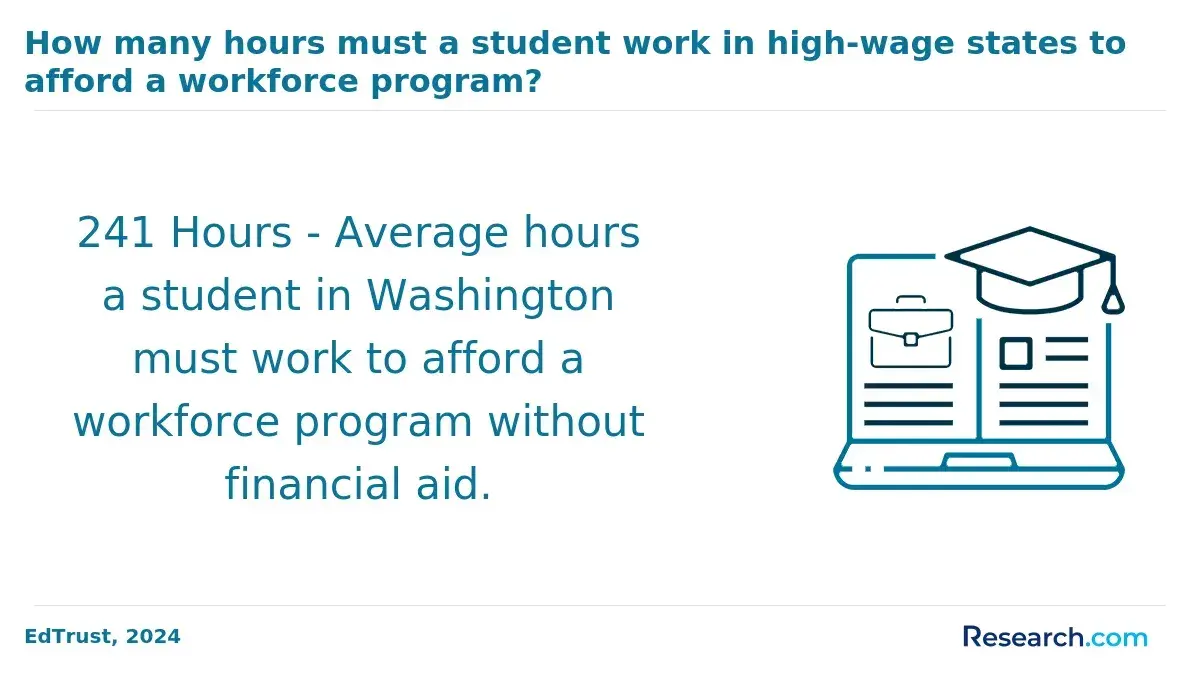
The cost comparison should start with total degree cost, not advertised tuition. Online programs may reduce relocation and commuting costs, but tuition, fees, books, technology charges, residency travel, dissertation continuation fees, and lost time can still create a large gap between a master's and doctorate.
Because school pricing varies widely, the most reliable way to compare programs is to multiply required credits by per-credit tuition, then add all mandatory fees and realistic indirect costs. If affordability is the main constraint, comparing a cheapest online healthcare administration degree list can help you identify lower-cost options before you calculate ROI.
The table below shows how the cost structure usually differs. It does not replace a school's official cost of attendance, but it shows what to verify before enrolling.
| Cost category | Master's degree impact | Doctorate impact | Why it matters for ROI |
| Required credits | Often fewer credits than a doctorate | Usually more credits plus dissertation or project enrollment | More credits usually increase tuition and extend the payback period |
| Mandatory fees | Technology, graduation, clinical or practicum, and student service fees may apply | May include doctoral residency, research, dissertation, or continuation fees | Fees can make a low tuition rate less competitive |
| Residency or campus visits | Less common, but possible in hybrid formats | More common in some professional and research doctorates | Travel and lodging can raise the real cost of an online program |
| Time to completion | Shorter timeline often means faster re-entry into higher-paying roles | Longer timeline may delay financial benefits | Extra years can increase opportunity cost even if direct tuition is manageable |
| Employer reimbursement | Often available when the degree aligns with current role | May be available but can be capped annually | Employer funding can change the ROI calculation substantially |
For a practical comparison, request an official written cost estimate from every school and ask whether tuition is locked for the cohort. Then compare the programs using the same assumptions.
- Calculate tuition as required credits multiplied by the current per-credit rate.
- Add mandatory fees, textbooks, software, residency travel, graduation fees, and dissertation or capstone fees.
- Subtract confirmed scholarships, tuition discounts, employer reimbursement, military benefits, or assistantship funding.
- Estimate interest if you expect to borrow, especially if you will use graduate or PLUS loans.
- Compare the resulting total against the salary increase or career access you realistically expect.
A common mistake is comparing only first-year tuition. Doctoral programs can become expensive late in the program if dissertation progress slows, because continuation enrollment may continue even after coursework is finished.
How Long Does a Healthcare Administration Doctorate Take Compared With a Master's Degree?
A master's degree usually has a shorter timeline than a doctorate, which is one reason it often produces faster financial returns. Many online healthcare administration master's programs are built for working adults and can be completed part time, full time, or in accelerated formats. Doctorates are more variable because the dissertation, doctoral project, applied research study, or capstone can extend the timeline beyond coursework.
If speed is a major factor, reviewing accelerated healthcare programs can help you see how compressed schedules differ from standard online formats. However, faster is not always better if the workload conflicts with a demanding healthcare role.
The table below compares typical time commitments and the decision implications of each path.
| Timeline factor | Master's degree | Doctorate | Decision impact |
| Coursework length | Generally shorter and more structured | Longer and more specialized | A shorter program can reduce opportunity cost and debt exposure |
| Final requirement | Capstone, internship, practicum, thesis, or applied project | Dissertation, doctoral project, applied research study, or major capstone | Doctoral completion depends heavily on research support and student persistence |
| Work compatibility | Often designed for working professionals | Can be compatible with work but may require intensive writing and research periods | Busy executives should verify weekly workload and residency requirements |
| Transfer or prior credit | Some programs accept graduate transfer credits | Some programs accept prior master's credits, but policies vary | Accepted credits can reduce both cost and time |
| Completion risk | Usually clearer path to graduation | Higher risk of delay if dissertation or project milestones are not well supported | Delays can reduce ROI even when tuition looks reasonable |
Before choosing a doctoral program, ask how long students typically take after finishing coursework, how often they meet with dissertation chairs, and whether the school publishes completion or persistence data. A doctorate with strong research mentoring may be a better value than a cheaper program with weak doctoral support.
Salary comparisons are tricky because employers rarely pay based on degree level alone. In healthcare administration, compensation is shaped by organization size, revenue responsibility, geography, years of experience, clinical background, management scope, and whether the role is executive, operational, technical, academic, or policy-focused.
The clearest national benchmark is occupational rather than degree-specific: the BLS reported a May 2024 median annual wage of $117,960 for medical and health services managers. That figure suggests strong earning potential in the field, but it should not be read as proof that a doctorate will automatically outperform a master's degree for every student.
The table below shows how salary potential typically differs by path and role type. Use it to identify whether the doctorate is likely to add value for your target career, not as a salary guarantee.
| Career direction | Master's degree salary logic | Doctorate salary logic | Key caution |
| Hospital or health system management | Often sufficient for department, service line, operations, or administrative leadership roles | May support movement toward senior strategy, system leadership, or executive roles when combined with experience | Experience and results often matter more than credential level alone |
| Long-term care or ambulatory operations | Can support advancement into administrator, director, or regional operations roles | May help with consulting, policy, or multi-site leadership, but is not always required | Some roles require state licensure or specific experience rather than a doctorate |
| Healthcare analytics or information leadership | Can pair well with data, quality, and informatics skills | May support research, informatics strategy, or executive analytics leadership | Technical skills may affect compensation as much as the degree |
| Consulting and policy | Can qualify professionals for analyst, project manager, or advisory roles | Can strengthen credibility for senior consulting, policy research, or thought leadership | Client portfolio and subject-matter expertise drive value |
| Teaching and academic research | May support adjunct teaching or training roles | Often expected for full-time faculty, research, or doctoral-level teaching roles | Research doctorates may be preferred for tenure-track positions |
Healthcare administration also overlaps with health data, compliance, finance, and information systems. Readers comparing leadership tracks with information-focused careers may find it useful to review the health information management salary outlook because some roles reward technical and regulatory expertise more directly than additional administration credentials.
A master's degree can open many healthcare administration roles, especially for professionals who already have healthcare, business, nursing, public health, finance, informatics, or operations experience. A doctorate can add value when the target role requires advanced evidence-based leadership, original research, doctoral-level teaching, executive credibility, or systems-level transformation.
The table below separates roles where a master's is commonly enough from roles where a doctorate may provide a stronger advantage.
| Career outcome | Master's degree fit | Doctorate fit | What employers often evaluate |
| Healthcare operations manager | Strong fit | Usually not necessary | Operational performance, staffing, budgeting, quality metrics |
| Department director | Strong fit with relevant experience | Helpful in complex or highly competitive systems | Leadership record, regulatory knowledge, service-line outcomes |
| Health system executive | Possible with substantial experience | May strengthen candidacy, especially for strategy or transformation roles | Executive track record, financial results, governance experience |
| Healthcare consultant | Good fit for operations, revenue cycle, quality, or strategy consulting | Helpful for senior advisory, policy, research, or niche expertise | Client results, specialization, communication, analytical depth |
| College faculty member | May support adjunct or practitioner teaching | Often preferred or required for full-time faculty roles | Doctoral credential, publications, teaching experience, research agenda |
| Policy or health services researcher | Can support analyst or program roles | Stronger fit, especially for research design and publication work | Research methods, grant experience, writing, data skills |
The BLS projects employment for medical and health services managers to grow 23% from 2024 to 2034, which is much faster than the average for all occupations. For readers, this means the broader leadership market is favorable, but it does not mean every advanced credential has equal payoff.
A doctorate may unlock opportunities when it helps you credibly answer higher-level questions such as how to redesign care delivery, evaluate population health interventions, lead enterprise strategy, publish research, or teach future healthcare leaders. If your desired jobs are primarily operational management roles, a master's plus targeted experience may be the more efficient route.
For many students, the master's degree has the clearer near-term ROI because it costs less, takes less time, and can qualify graduates for a broad set of management roles. The doctorate can have strong long-term ROI, but usually only when the student uses it for a specific career move that a master's degree would not support as well.
A practical ROI comparison should combine cost, time, salary change, probability of career advancement, and personal risk. The table below shows how each credential tends to perform on the most important ROI dimensions.
| ROI factor | Master's degree | Doctorate | Better fit when... |
| Direct education cost | Usually lower | Usually higher | The master's is better if both degrees lead to the same target role |
| Time to benefit | Usually faster | Usually slower | The master's is better when speed to promotion matters most |
| Career ceiling | Strong for many management and director roles | Potentially stronger for executive, academic, consulting, or research roles | The doctorate is better when the target role values doctoral training |
| Debt risk | Often lower because of shorter duration | Often higher if self-funded | The doctorate improves when funded or employer-supported |
| Nonfinancial return | Leadership mobility and practical skill development | Credibility, research expertise, teaching eligibility, intellectual specialization | The doctorate is better when these nonfinancial returns matter to your goal |
To calculate your own ROI, use a conservative method rather than assuming the highest possible salary outcome.
- Identify the exact roles you want and confirm whether job postings require, prefer, or rarely mention a doctorate.
- Estimate total program cost using official tuition, fees, travel, and borrowing assumptions.
- Estimate the realistic salary change based on your current role, experience, location, and target employer type.
- Calculate how many years of added earnings it would take to recover total cost and interest.
- Adjust the result for risk, including time to completion, likelihood of promotion, and whether you can keep working while enrolled.
If a doctorate costs substantially more but leads to the same job options as the master's, the master's likely has the stronger ROI. If the doctorate is funded, aligns with a clear executive or academic target, and builds expertise that directly increases your market value, the doctoral path can be worth the longer timeline.
Opportunity cost is the value of what you give up while completing a degree. For online students, the biggest opportunity cost is often not leaving the workforce entirely; it is the time, energy, and career flexibility spent on coursework, research, residencies, and writing instead of taking on promotions, consulting work, certifications, or leadership projects.
The table below shows common opportunity costs that affect the doctorate-versus-master's decision.
| Opportunity cost | How it affects a master's degree | How it affects a doctorate | How to reduce the risk |
| Delayed promotion | Shorter delay because the program is usually faster | Longer delay if research milestones extend completion | Choose flexible scheduling and align assignments with current work projects |
| Reduced work capacity | Moderate workload in many part-time formats | Heavier writing, research, and independent study demands | Ask for weekly workload expectations before enrolling |
| Lost networking time | Can still build a healthcare management network quickly | Network may be more specialized and academic or executive | Evaluate alumni access and cohort interaction |
| Delayed specialization | May allow faster entry into operations, finance, quality, or policy roles | May deepen specialization but delay immediate career moves | Pick a program that supports your exact niche |
| Family and personal strain | Usually shorter duration | Can be substantial during dissertation or project phases | Build a realistic completion calendar before committing |
Opportunity cost is especially important for mid-career healthcare professionals. If you are already close to a director or executive track, the best move may be a master's plus certifications, mentoring, and high-visibility projects. If you need doctoral-level credibility for teaching, research, or senior consulting, the longer path may be easier to justify.
Funding can completely change the ROI comparison. A self-funded doctorate with high borrowing can be financially risky, while a funded or employer-supported doctorate may be a reasonable investment for someone with a clear career plan. Likewise, a low-cost master's with employer reimbursement may have a very short payback period.
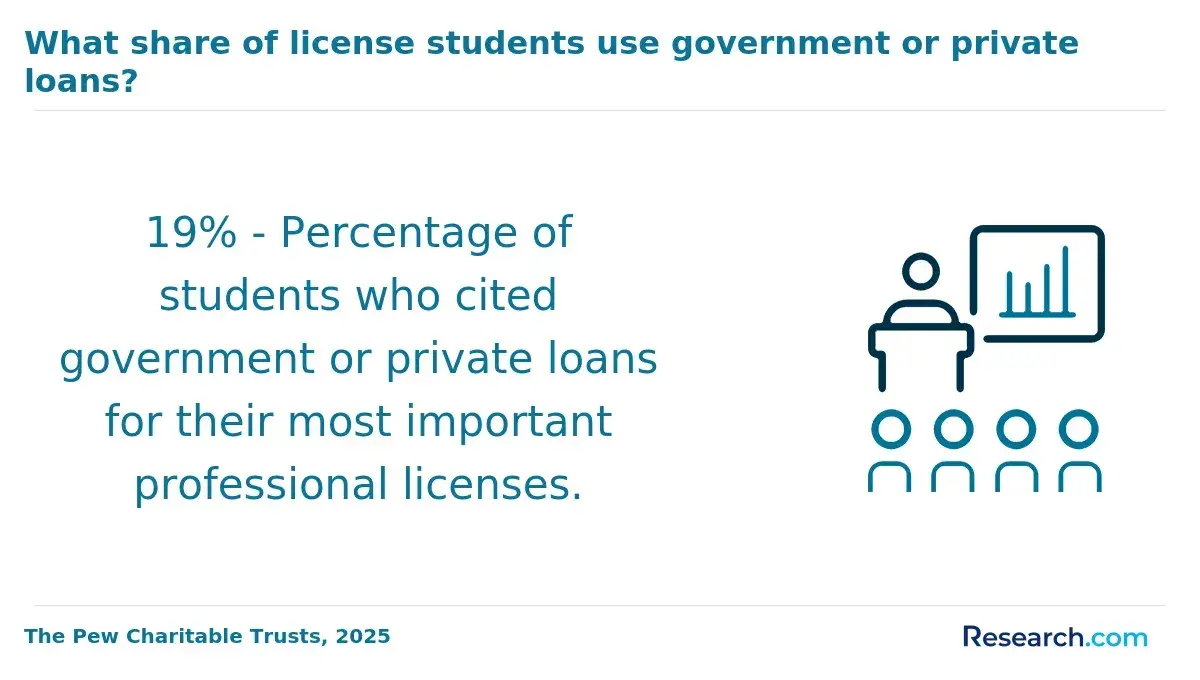
Federal Student Aid sets the annual Direct Unsubsidized Loan limit for many graduate and professional students at $20,500, with Graduate PLUS loans potentially available up to the school-certified cost of attendance for eligible borrowers. This matters because doctoral study can extend over more years, increasing the amount of debt and interest a student may carry.
Before enrolling, compare funding sources in writing and focus on guaranteed aid rather than optimistic assumptions.
- Ask whether scholarships are renewable and what GPA or enrollment status is required.
- Confirm whether employer tuition assistance applies to doctoral programs, not just master's programs.
- Check whether reimbursement is paid upfront or only after course completion.
- Ask whether the program offers assistantships, fellowships, research roles, or teaching opportunities for online students.
- Model repayment using the total amount you expect to borrow, not just first-year loans.
Debt should be evaluated against your expected role, not against the prestige of the credential. A doctorate funded by an employer because it supports succession planning can be very different from borrowing heavily for a doctorate without a defined career outcome.
Not all healthcare administration doctorates are designed for the same purpose. The difference between a professional doctorate and a research doctorate can be just as important as the difference between a doctorate and master's degree.
The table below compares the three major paths most readers are likely to evaluate.
| Degree path | Primary focus | Best for | Less ideal for |
| Master's in healthcare administration or related field | Practical management, finance, policy, operations, quality, leadership | Professionals seeking management, director, administrator, or operational leadership roles | Students whose goal requires doctoral teaching, research, or senior research credibility |
| Professional doctorate, such as DHA, DrPH, or DBA | Applied leadership, systems change, executive decision-making, practice-based research | Experienced professionals who want to lead complex organizations, consult, or apply evidence to practice | Students primarily seeking tenure-track research careers where a PhD is preferred |
| Research doctorate, such as PhD in health services or healthcare administration | Original research, theory, methods, publication, academic contribution | Future researchers, faculty members, policy scholars, and grant-funded research professionals | Students who want the fastest route into healthcare management practice |
The professional doctorate is usually the better doctoral fit for working healthcare leaders who want to solve applied organizational problems. The PhD is usually the better fit for people who want to produce original research, publish, teach in research-oriented settings, or compete for academic roles.
The master's remains the most efficient option when your goal is to manage teams, departments, budgets, compliance programs, quality initiatives, or healthcare operations. Adding a doctorate is most useful when your career direction clearly depends on advanced research, executive credibility, or doctoral-level teaching.
When Is a Healthcare Administration Doctorate Worth It Instead of a Master's Degree?
A healthcare administration doctorate is worth considering when the additional credential changes your realistic career path, not merely when it looks impressive. The best candidates usually already have meaningful healthcare experience, a defined leadership or research niche, and a plan for using doctoral work in their organization or profession.
Choose the doctorate over the master's when several of the following conditions are true.
- You already hold a relevant master's degree or have substantial leadership experience.
- Your target roles explicitly prefer or reward doctoral-level training.
- You want to teach full time, conduct research, publish, or lead evidence-based transformation projects.
- Your employer will fund part or all of the degree, or the program offers meaningful funding.
- You can complete the dissertation or doctoral project without derailing your career or finances.
- Your expected career gain is specific enough to justify the extra time and cost.
Stop at the master's degree, at least for now, if the following conditions describe your situation.
- Your main goal is entry into healthcare management, operations, or department leadership.
- Job postings for your target roles ask for a master's degree but rarely mention a doctorate.
- You would need to borrow heavily without a clear salary or role change.
- You are still exploring healthcare administration and have limited industry experience.
- You want the fastest path to promotion or career transition.
Several mistakes can make either path less valuable. Avoid these before you commit.
- Comparing degrees by tuition rate alone instead of total cost of attendance.
- Assuming a doctorate automatically creates a salary premium.
- Ignoring dissertation support, completion expectations, and residency requirements.
- Choosing a program without checking institutional accreditation and employer recognition.
- Borrowing based on best-case salary outcomes rather than conservative career scenarios.
- Overlooking lower-cost alternatives such as certifications, fellowships, internal leadership programs, or a targeted master's degree.
The strongest decision is the one that matches your next role. If a master's gets you there, it may offer the better financial return. If the doctorate opens a role, platform, or specialty that the master's cannot, the added investment may be justified.
Other Things You Should Know About Healthcare Administration
Some do, especially doctoral programs with residencies, dissertation seminars, or executive intensives. Fully online master's programs are more common, but students should still confirm whether orientation, capstone presentations, internships, or exams require travel.
CAHME accreditation is not a universal job requirement, but it can signal that a graduate healthcare management program meets recognized quality standards. Employers vary, so applicants should check the expectations of hospitals, health systems, and agencies in their target market.
Yes. Many healthcare administrators come from business, finance, public health, analytics, human resources, policy, or operations backgrounds. A clinical background can help in certain settings, but leadership, regulatory knowledge, budgeting, communication, and systems thinking are also highly valued.
Certifications can strengthen a degree when they match your role, such as quality, project management, health information, compliance, or long-term care administration. They are most useful when they fill a specific skill gap rather than simply adding more letters after your name.
- Best Online Doctorates in Healthcare Administration 2026 https://www.onlineu.com/degrees/doctoral-healthcare-administration
- Master vs. PhD: Salary, Jobs & Time, The Big Differences https://www.applykite.com/blog/phd-guide-master-vs-phd
- Healthcare Administrator ROI Guide https://www.healthadministrationdegrees.com/articles/healthcare-administrator-roi-guide/
- Salary for MHA Degree Graduates https://mhadegree.org/salary-outlook/
- Average Cost of a Master's Degree: 2025 Analysis https://educationdata.org/average-cost-of-a-masters-degree
- Is Grad School Worth It? A Comprehensive Return on Investment Analysis - FREOPP https://freopp.org/whitepapers/is-grad-school-worth-it-a-comprehensive-return-on-investment-analysis/
- Healthcare Management vs. Healthcare Administration | University of Phoenix https://www.phoenix.edu/articles/healthcare/healthcare-management-vs-healthcare-administration.html
- Is A Master’s Degree in Healthcare Management A Good Investment? - Healthcare Management Degree Guide https://www.healthcare-management-degree.net/faq/is-a-masters-degree-in-healthcare-management-a-good-investment/
- What’s the Average Grad School Cost — And How Will You Pay It? https://joinjuno.com/financial-literacy/student-loans/average-grad-school-cost
- How Much Does a PhD Cost https://aituedu.org/how-much-does-a-phd-cost/