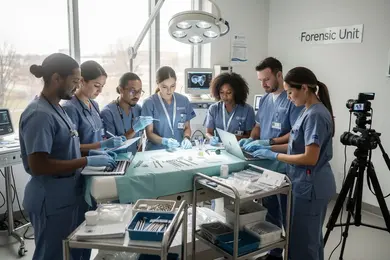
2026 Online Forensic Nursing Master's Programs at Accredited U.S. Universities

Co-Founder and Chief Data Scientist
Seeking an online forensic nursing master's program at an accredited U.S. university often involves navigating complex tradeoffs between admission criteria, program design, and cost transparency. With online graduate nursing enrollment rising by nearly 12% in 2024 according to the National Center for Education Statistics, flexibility in delivery format plays a critical role for working professionals and place-bound students.
Yet accreditation standards, licensing recognition, and hidden fees significantly influence long-term career mobility and financial outcomes. Understanding these intertwined factors helps potential candidates avoid costly missteps and select programs aligned with both immediate needs and evolving workforce demands.
Key Things to Know About Online Forensic Nursing Master's Programs at Accredited U.S. Universities
- Admission criteria often demand clinical experience plus RN licensure, reflecting employers' preference for candidates with practical skillsets; this gatekeeping limits access but enhances graduate employability in medicolegal environments.
- Most programs balance asynchronous coursework with mandatory clinical practicums, a tradeoff that complicates purely remote study but ensures alignment with forensic nursing competency standards sought by hiring agencies.
- Despite rising per-credit costs, flexible enrollment options respond to the 2024 National Center for Education Statistics data showing a 12% increase in adult online learners, signaling expanded access but requiring strategic financial planning.
What Is the Overall Structure and Purpose of Online Forensic Nursing Master's Programs at Accredited U.S. Universities?
Online forensic nursing master's programs at accredited U.S. universities exist to bridge the gap between clinical nursing expertise and the specialized investigative demands of legal and healthcare environments. Their structure aims to deliver rigorous professional preparation while accommodating the varied schedules of working adults, including those balancing current roles or geographic restrictions.
For many prospective students-such as a registered nurse transitioning into forensic nursing in a rural area-the decision to enroll in an accredited online program directly influences both licensure portability and employer credibility in a competitive field.
- Program Structure: These programs generally require 30 to 45 credit hours, integrating forensic nursing curriculum with advanced nursing practice. Core topics often include forensic pathology, evidence collection, trauma-informed care, and relevant legal principles, reflecting the multidisciplinary nature of the field.
- Delivery Methods: The fully online format typically combines asynchronous lectures, virtual simulations, and interactive case discussions, designed to foster clinical reasoning and investigative skills remotely. This flexible delivery benefits place-bound students but demands high self-discipline compared to traditional on-campus setups.
- Time to Degree: Completion timelines range from 18 to 36 months, contingent on enrollment status and prerequisites. Accelerated options exist but may require greater clinical experience and time investment, which can create tradeoffs between speed and comprehensive competency development.
- Accreditation Role: Accreditation by the Commission on Collegiate Nursing Education (CCNE) or the Accreditation Commission for Education in Nursing (ACEN) ensures that academic standards meet professional expectations, facilitating licensure transferability and enhancing graduate employability across healthcare and forensic sectors.
- Distinction From On-Campus Programs: Unlike on-campus alternatives, accredited online forensic nursing programs emphasize technology-enhanced learning and remote practicums. This approach accommodates diverse student circumstances but may require enhanced self-motivation and adaptability to achieve comparable clinical proficiency.
For those weighing admission offers or navigating financial constraints, understanding the nuances of online forensic nursing master's program curriculum structure and the program's overarching goals is essential. Students who are first-generation or transitioning careers should closely evaluate how these elements align with their professional aspirations and practical life circumstances.
Further clarity on selecting programs that balance quality with affordability can be found in listings of easy to get into nursing schools, which sometimes include options offering forensic nursing tracks with manageable admission criteria.
Which Accrediting Bodies Recognize Online Forensic Nursing Master's Programs, and Why Does Accreditation Status Matter?
Choosing an accredited online forensic nursing master's program directly impacts a graduate's professional mobility and job prospects. Enrollment in a program lacking the correct accreditation can result in credit transfer difficulties, loss of financial aid eligibility, and limited licensure or employment opportunities.
Regional accreditation, granted by one of the six U.S. Department of Education-recognized agencies, evaluates the overall institutional quality and integrity of universities. This type of accreditation facilitates credit transfers and access to federal aid but does not address discipline-specific standards.
Programmatic accreditation, on the other hand, targets nursing education quality and clinical competencies relevant to forensic nursing, often managed by entities such as the Commission on Collegiate Nursing Education (CCNE) or the Accreditation Commission for Education in Nursing (ACEN). Prospective students must recognize that both forms of accreditation serve distinct but complementary purposes.
Key considerations include:
- Transferability: Regional accreditation enhances acceptance of credits when moving between programs, reducing redundant coursework and saving both time and money.
- Financial Aid Eligibility: Students in regionally accredited programs typically qualify for federal financial assistance, which is crucial for managing the high costs associated with graduate-level nursing education.
- Licensing Board Recognition: Many state nursing boards require graduation from programs with specific programmatic accreditations to sit for forensic nursing certification exams or licensure, making these endorsements indispensable.
- Employer Acceptance: Credentials from appropriately accredited programs carry greater credibility and are preferred by employers who prioritize validated clinical expertise and up-to-date forensic nursing practices.
Due diligence demands verifying that a chosen program holds both the regional and programmatic accreditation mandated by relevant state licensing authorities and aligns with employer expectations before weighing other factors like cost or delivery format.

What Are the Admission Requirements for Online Forensic Nursing Master's Programs at Accredited U.S. Universities?
Admission to online forensic nursing master's programs at accredited U.S. universities rarely hinges on minimum thresholds alone; understanding the nuances behind these criteria is crucial. Public institutions typically offer broader access with less restrictive standards, which may appeal to place-bound or first-generation students seeking flexibility.
In contrast, private or highly selective programs often reflect rigorous academic environments and smaller cohorts, influencing long-term career networking and outcomes. Applicants should target programs based on median admitted profiles rather than stated minimums to realistically gauge competitiveness.
Standard requirements for enrollment in online forensic nursing master's degrees in the United States emphasize a balance of academic preparation and professional readiness:
- Undergraduate GPA: A baseline around 3.0 on a 4.0 scale is common, yet more competitive programs weigh course rigor and upward trends more than fixed numbers.
- Prerequisite Coursework: Foundational classes in nursing, anatomy, biology, and occasionally criminal justice underpin successful progression; some programs provide conditional entry with required prerequisite completion.
- Letters of Recommendation: Two to three endorsements from healthcare or academic professionals assess clinical skills and commitment beyond transcripts.
- Personal Statement: Articulating motivations, relevant experience, and future goals can tip admission decisions in crowded applicant pools.
- Standardized Tests: Many programs have removed or made GRE requirements optional to emphasize clinical experience and holistic review.
- Professional Experience: An active nursing license paired with one to two years of clinical work is often expected; some programs accommodate career changers through bridge options.
- Institutional Differences: Public versus private distinctions affect admission selectivity, cohort size, and academic rigor, shaping different educational tradeoffs.
- Competitive Versus Minimum: Meeting minimum criteria offers eligibility but not admission-examining the median admitted student profile informs application strategy.
- Non-Traditional Applicants: Pathways exist for those with lower GPAs, different undergraduate backgrounds, or career changers, often via flexible admissions or prerequisite fulfillment.
Balancing these elements against tuition investment and workforce demands requires careful research. For professionals evaluating options, program structure and delivery format also influence accessibility and relevance. Resources such as best online self paced colleges can further assist prospective students in aligning admission criteria with their personal and career circumstances.
What Is the Minimum GPA Requirement for Forensic Nursing Master's Program Admission, and How Does Selectivity Correlate With Program Reputation?
Admission GPA requirements for online forensic nursing master's programs vary notably, often reflecting institutional selectivity and downstream professional benefits. While a 3.0 undergraduate GPA forms a common baseline for eligibility, programs with stronger reputations and licensure exam outcomes frequently set expectations closer to 3.3 or 3.5.
However, prospective students should distinguish between minimum thresholds and the higher averages typical among strong applicants competing at selective schools.
- Baseline GPA Expectations: Most accredited programs require at least a 3.0, signaling foundational academic readiness but not guaranteeing admission, especially where applicant pools are competitive.
- Program Prestige and Performance: Elevated GPA cutoffs generally align with schools boasting rigorous curricula, extensive clinical partnerships, and superior forensic nursing licensure pass rates, impacting employability and professional standing.
- Flexible Admissions Options: Some programs with open enrollment may accept candidates below a 3.0 GPA, contingent on supplemental coursework, relevant clinical experience, or demonstrated competencies, often yielding graduates with comparable licensing success.
- Holistic Review Practices: Admissions committees typically integrate GPA with clinical experience, recommendation quality, personal statements, and certifications, balancing academic metrics against professional potential.
- Conditional Admission Pathways: Applicants near or under typical GPA cutoffs might improve prospects through bridge programs or conditional acceptance, emphasizing mastery via post-baccalaureate study before full matriculation.
One graduate recalls applying during a winter rolling admissions cycle, facing weeks of uncertainty due to delayed transcript processing from their undergraduate institution. This timing pressure prompted them to submit extra supporting materials and seek conditional admission to retain options while awaiting a final official GPA calculation.
The waiting period underscored how critical thorough application preparation and strategic communication can be when negotiating GPA expectations in forensic nursing programs with varying selectivity.
How Many Credit Hours Are Required to Complete an Online Forensic Nursing Master's Program, and How Does This Affect Total Cost and Time-to-Degree?
Online forensic nursing master's programs typically demand between 30 and over 60 credit hours, depending on accreditation criteria, the inclusion of practicum or thesis components, and curriculum depth. This credit range exceeds many other master's degrees because forensic nursing integrates advanced clinical skills with specialized legal and investigative training, necessitating additional coursework and field experience to meet professional standards.
The total number of credits substantially influences overall tuition costs, as most institutions calculate fees per credit hour. For instance, a program requiring 30 credits at $600 each totals $18,000, while a 45-credit option charging $400 per credit also aggregates to $18,000, demonstrating how lower per-credit rates don't always translate to cheaper degrees.
Evaluating cost solely on per-credit fees may obscure the actual financial commitment when higher credit demands are involved.
Extended credit requirements also affect time-to-degree, particularly for part-time students balancing employment or personal responsibilities. Additional credits often mean enrolling across more semesters, leading to higher living expenses, prolonged opportunity costs from delayed full-time forensic nursing roles, and potential exposure to tuition increases or added administrative fees over time.
- Credit Variation: Forensic nursing's practicum and thesis obligations typically push credit requirements beyond conventional master's programs.
- Cost Impact: Total tuition hinges on multiplying credit hours by per-credit cost, making programs with lower rates but more credits potentially pricier overall.
- Time-to-Degree: Increased credit loads can extend program length, influencing financial strain and delaying workforce entry.
- Strategic Comparison: Accurate cost assessment must consider both total credits required and per-credit pricing to avoid underestimating expenses.

What Specializations and Concentrations Are Available in Online Forensic Nursing Master's Programs at Accredited Universities?
Specializations within online forensic nursing master's programs at accredited U.S. universities significantly shape both educational investment and career trajectory. Choosing a concentration can accelerate entry into high-demand roles but may also introduce complexity in program length and cost.
For example, a working nurse pursuing a Sexual Assault Nurse Examiner (SANE) certification track may gain access to better-paying clinical positions, reflecting Bureau of Labor Statistics data that links specialized skills to salary premiums. Conversely, selecting a narrow concentration like Death Investigation could limit lateral job flexibility if one later chooses to shift focus within forensic nursing.
- Common Specializations: Programs frequently offer tracks such as SANE certification preparation, Death Investigation, Legal Nurse Consulting, and Victim Advocacy. These concentrations target workforce segments with proven demand across healthcare and legal systems, helping graduates align with employer expectations and certified practice standards.
- Program Structure: Concentrations may be embedded within the main curriculum as mandatory pathways, provided as elective clusters for customization, or offered as optional certificate add-ons with extra credits. Embedded tracks tend to ensure eligibility for certain certifications but can extend time-to-degree and increase tuition costs.
- Career Impact: Specializations tied to forensic examination and victim services correlate with higher placement rates and stronger salary prospects, as these areas receive more employer recognition. However, broad forensic nursing degrees without specialization might offer wider employment options but less immediate distinction in competitive job markets.
- Faculty Expertise and Recognition: Programs led by instructors with direct forensic nursing experience and endorsements from professional bodies such as the International Association of Forensic Nurses provide tangible advantages in hiring and licensure. Employer value often hinges more on these credentials than on generic master's degrees.
- Cost Considerations: Concentrations demanding additional coursework or certificate fees raise total tuition, necessitating careful assessment of return on investment, especially for working professionals balancing education and earnings. Financial aid eligibility and program duration shifts should be factored into enrollment decisions.
Prospective students looking for specializations in online forensic nursing master's programs in the U.S. should weigh these tradeoffs alongside delivery format and admission prerequisites. Those balancing geographic or career transition constraints might also compare forensic nursing options against related fields, including biology degree online programs, where foundational sciences and clinical skills intersect.
How Do Online Forensic Nursing Master's Programs at U.S. Universities Compare in Format-Synchronous, Asynchronous, and Hybrid Delivery?
Program format critically shapes how students engage with online forensic nursing master's degrees, influencing outcomes and practical feasibility. Choosing between asynchronous, synchronous, or hybrid delivery involves weighing real-time interaction against scheduling flexibility and financial impact.
Each format presents distinct tradeoffs that affect student responsibilities, cohort cohesion, and cost structures.
- Asynchronous: Entirely self-paced, this format suits students juggling work or family by offering unrestricted access to course materials and deadlines. However, it demands high self-motivation and limits instantaneous feedback or peer connection, which may challenge skill acquisition in interactive domains.
- Synchronous: Live classes at set times provide immediate communication with faculty and peers, enhancing collaborative learning vital for complex forensic scenarios. Still, fixed scheduling can disadvantage those with irregular shifts or residing in incompatible time zones, and the need for robust real-time systems often raises tuition and resource costs.
- Hybrid: Combining asynchronous content with mandatory live sessions or on-campus requirements, hybrid formats attempt balance but add complexity. Travel and lodging for residencies increase expenses and time commitments, while alternating between remote and in-person demands adaptability that may strain students managing multiple roles.
Prospective forensic nursing students should scrutinize specifics beyond the "online" label, clarifying expectations for synchronous attendance, residency frequency, and technological platforms. This due diligence ensures alignment with personal schedules, learning preferences, and financial constraints, avoiding unforeseen burdens that could jeopardize completion or professional preparedness.
An online forensic nursing graduate recalled grappling with admissions timelines while comparing programs. During rolling admissions, she hesitated to commit without clarity on live session schedules and campus visits, fearing conflicts with her caregiving duties.
The delay nearly caused her to miss a preferred program's start date, highlighting how incomplete format information can complicate crucial enrollment decisions and necessitate early, strategic inquiry into program requirements.
What Is the Average Cost per Credit Hour for Online Forensic Nursing Master's Programs, and How Does It Differ Across Institution Types?
Cost per credit hour often serves as the clearest financial metric for comparing online forensic nursing master's programs, yet it demands a nuanced reading to avoid misleading conclusions about affordability and value. For example, a working professional weighing an offer from a public university against a private nonprofit institution must consider that while the public option might list $300-$600 per credit for in-state students, residency restrictions and additional fees can significantly inflate total expenses.
This matters because many students pivot into Forensic Nursing later in their careers and rely on predictable, transparent pricing to balance income disruption and return on investment.
- Public Universities: Average per-credit costs range from about $300 to $600 for in-state students, with out-of-state tuition often 1.5 to 2 times higher. This variability means nonresidents frequently pay considerably more, which can diminish program accessibility despite overall lower sticker prices.
- Private Nonprofit Institutions: Fees generally fall between $700 and $1,200 per credit hour without residency differentiation. While costlier upfront, these schools often provide merit-based scholarships not usually available in the public sector, which can offset list prices and influence net cost.
- Private For-Profit Schools: Tuition per credit typically ranges from $500 to $1,000 but may include extra administrative or technology fees. Although competitively priced, prospective students should evaluate these programs carefully for alignment with accreditation standards and workforce recognition.
- Program-Level Fees and Residency: Beyond tuition, fees for course materials, technology, and clinical placements accumulate, sometimes adding hundreds to thousands of dollars. Residency mainly influences public school pricing, rarely affecting private institutions.
- Sticker Price vs. Actual Cost: Publicized per-credit rates represent base tuition before financial aid or scholarships, meaning the final amount can differ substantially for students. Early enrollment trends suggest that many applicants prioritize financial packages, with nearly 60% applying within six months of admission deadlines in recent cycles.
- Interpretation Guide: Cost per credit hour provides a foundational comparison metric but must be evaluated alongside credit requirements, fees, financial aid availability, and licensing recognition, all critical elements shaping the total investment and outcome of an online forensic nursing master's degree.
Choosing the right program also intersects with practical career planning. The demand for forensic nursing professionals influences hiring patterns and employer expectations, making it essential to assess how program quality and financial considerations integrate to support sustainable employment. Additionally, specific expertise areas, such as becoming a functional medicine nurse, may complement forensic nursing roles, expanding professional opportunities within healthcare systems.
Prospective students should address these multifaceted cost elements early in their search for accredited programs, especially those balancing geographic limitations or transitioning careers without sacrificing educational rigor or long-term workforce relevance.
How Do In-State and Out-of-State Tuition Policies Apply to Online Forensic Nursing Master's Programs, and Which Schools Offer Flat Residency-Neutral Rates?
Public universities have traditionally charged out-of-state students higher tuition rates for online forensic nursing master's programs, mirroring campus residency policies. This distinction historically impeded accessibility for working professionals relocating across state lines or those seeking to switch careers without bearing steep financial premiums.
However, growing demand for flexible education and a competitive national market have driven many programs to adopt flat, residency-neutral tuition rates, thus removing location-based cost disparities and offering clearer budget expectations for enrollees.
Key aspects to consider include:
- Residency-Neutral Tuition: Several regionally accredited public universities such as the University of Arizona, University of Central Florida, and Oregon Health & Science University have established uniform pricing regardless of students' residency. This change particularly benefits career-changers or place-bound students who require affordable options without relocation.
- Traditional Residency-Based Pricing: Despite this trend, some institutions maintain differential tuition for in-state versus out-of-state online forensic nursing students, which requires prospective enrollees to carefully assess the long-term financial implications in relation to program quality and potential career returns.
- Tuition Reciprocity and Regional Compacts: Agreements like the Western Interstate Commission for Higher Education (WICHE), Southern Regional Education Board (SREB), and Midwest Student Exchange Program may allow eligible out-of-state students to qualify for reduced tuition rates, although availability and eligibility requirements vary widely.
- Verification of Tuition Policies: Since pricing models and residency verification criteria can shift between academic cycles and may not be promptly updated on promotional websites, prospective students should contact bursar or financial aid offices directly for confirmed tuition charges before enrollment decisions.
Deciding between flat residency-neutral rates and traditional differential tuition involves weighing immediate affordability against program reputation, licensure recognition, and career trajectory within forensic nursing's specialized labor market. This is particularly vital for first-generation graduate students or career transitioners balancing educational investment with job market realities.
Additionally, evaluating comparable fields through accredited programs can be supported by consulting resources on accredited online environmental health and safety programs to understand cross-disciplinary tuition and workforce implications.
What Mandatory Fees and Hidden Costs Are Added to Tuition for Online Forensic Nursing Master's Programs?
For working professionals pursuing an online forensic nursing master's degree, published tuition rates rarely represent the full financial commitment. Programs vary significantly in mandatory fees and hidden costs, which can cumulatively exceed several thousand dollars, influencing the total cost-effectiveness of enrollment decisions. For example, a program boasting low per-credit tuition may impose substantial technology, practicum, or exam-related fees that overshadow its sticker price, especially in states with stringent clinical requirements.
Given that forensic nursing roles attract median salaries ranging broadly from $70,000 to over $90,000 depending on region and experience, understanding true educational costs is crucial to estimating return on investment and managing financial planning.
Key expenses beyond tuition typically include:
- Technology Fees: Per-semester or per-credit charges for access to online platforms and digital learning tools, often accumulating to several hundred dollars.
- Program or Course Fees: Additional costs for specialized forensic nursing software, lab simulations, or subscription databases essential for coursework.
- Student Services Fees: Mandatory fees covering library access, career counseling, tutoring, and administrative supports.
- Graduation Fees: One-time charges, frequently exceeding $100, required for diploma processing and commencement attendance.
- Liability Insurance: Practicum placements often necessitate insurance payments costing several hundred dollars per clinical term.
- Background Check and Drug Screening: Prerequisites for clinical sites, each costing between $50 and $100 or more, depending on provider and state standards.
- Proctoring Fees: Remote exam supervision fees that vary by institution and exam count.
- Required Textbooks and Software: Textbook expenses may total over $1,000, augmented by proprietary forensic or medical software.
- Licensing Exam Preparation: Costs for preparatory courses or materials for board certification exams relevant to forensic nursing practice.
Differences in program delivery and regional licensing requirements amplify this variability. As many institutions do not fully disclose these fees upfront, prospective students should consult current enrollees or recent graduates to clarify realistic out-of-pocket costs before committing. This pragmatic inquiry enables candidates to weigh tradeoffs effectively, balancing educational quality against total financial investment and workforce entry timelines.
What Graduates Say About Online Forensic Nursing Master's Programs at Accredited U.S. Universities
- Kian: "Balancing a full-time job and family commitments meant I had limited hours to dedicate to my forensic nursing master's program. I chose an online program for its flexibility and the opportunity to complete internships locally rather than relocating. While graduating opened doors to clinical roles, I found employers valued hands-on experience and certifications more than just the degree, so I focused on building a portfolio through volunteer work, which helped me secure a position in a sexual assault response unit."
- Leonard: "After considering the high cost and time commitment of traditional routes, I decided on an online forensic nursing master's that offered a faster path to entering the workforce. The decision came down to balancing debt avoidance with gaining relevant skills quickly. Post-graduation, I realized many forensic nursing employers highly prioritized internships and practical case experience, so completing an unpaid internship was essential, even though it delayed my salary growth; however, it was crucial for competing for specialized roles in forensic pediatrics."
- David: "Switching careers in my late 30s with a heavy workload meant I needed a program that matched my pace without compromising content quality. The online forensic nursing degree was appealing because it allowed me to study remotely and keep my day job. Despite earning the degree, I ran into challenges as many advanced positions required RN licensure, which I had to pursue separately, delaying my career progression but ultimately enriching my practical understanding and improving my chances for supervisory roles in forensic healthcare."
Other Things You Should Know About Forensic Nursing Degrees
Public universities typically offer more affordable tuition rates for in-state students, which can significantly lower overall costs compared to private nonprofit and for-profit institutions. However, the value of the degree also depends on the program's clinical partnerships and reputation within forensic healthcare circles. Private nonprofit programs often invest more in specialized faculty and internship placements, potentially enhancing job placement rates despite higher tuition. For-profit programs, while sometimes more flexible in scheduling, may carry a cost premium without consistently demonstrating stronger employment outcomes, so prospective students should prioritize programs with accredited clinical affiliations and transparent career support services over baseline tuition alone.
Accreditation from recognized bodies like CCNE or ACEN is essential but not solely sufficient for employer recognition in forensic nursing. Employers in forensic and clinical settings prioritize graduates who have completed programs combining both theoretical knowledge and supervised clinical practicums, often requiring local state boards' approval or specific forensic certifications. Graduates from fully accredited master's degrees with integrated forensic clinical experiences have higher employment success. Those from programs lacking state licensure alignment or inadequate clinical components risk diminished prospects, making careful verification of each program's alignment with employer standards critical.
Career outcomes vary widely based on program emphasis, geographic placement of internships, and sector focus-such as hospital forensic nursing versus law enforcement collaboration. Programs reporting licensure exam pass rates above 85% typically correspond with more rigorous clinical preparation and stronger employer networks, leading to faster job placement. Graduates from programs with lower pass rates often face longer job searches and may need additional certifications to compete. Prospective students should prioritize programs providing transparent, recent outcome data and those facilitating forensic-specific licensure preparation to optimize employment opportunities.
Students must weigh not only tuition and length but the extent of forensic clinical practice integrated within the curriculum and quality of internship placements. Programs tied closely to forensic hospitals, medical examiners' offices, or law enforcement agencies generally yield better employment outcomes. Evaluating alumni employment data, employer partnerships, and post-graduation support services will differentiate programs beyond surface-level features. For adult learners balancing work and study, prioritizing flexible scheduling and robust online learning infrastructure can sustain progress without sacrificing practical training, which remains the most influential factor in job readiness and placement.
References
- CCNE Accreditation https://www.aacnnursing.org/ccne-accreditation
- Master's Degrees in Forensic Nursing - Online & On-Campus Programs https://www.forensicscolleges.com/programs/forensic-nursing/masters
- Forensic Nursing https://www.duq.edu/academics/colleges-and-schools/nursing/graduate-programs/masters-of-science-in-nursing/msn-forensic-nursing.php
- Getting Through the Gate: MSN Admission Requirements and What You Need to Know https://yourhealthmagazine.net/article/healthcare-careers/msn-admission-requirements/
- Online Masters Degree in Nursing - Elevate Your Career https://nevadaonline.unr.edu/academics/graduate/msn
- Online RN to MSN - Forensic Nursing | Aspen University https://www.aspen.edu/nursing/rn-msn-forensic-nursing/
- Forensic Nursing Degree Programs https://www.criminaljusticedegreeschools.com/degrees/forensic-nursing-degree/
- What’s the Deal with Accreditation? https://nursingcas.org/resources-for-current-schools/whats-the-deal-with-accreditation
- Why Nursing School Accreditation Matters | All Nursing Schools https://www.allnursingschools.com/how-to-get-into-nursing-school/school-accreditation/
- Best Online Nursing School Master's Programs for 2025 https://www.princetonreview.com/nursing-school-rankings