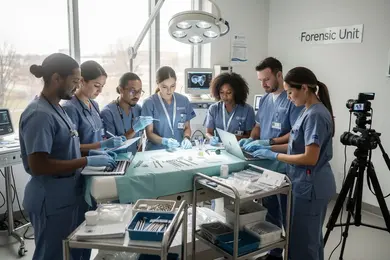
2026 Entry-Level Jobs With a Forensic Nursing Master's Degree

Co-Founder and Chief Data Scientist
Graduates with a forensic nursing master's degree often grapple with a fragmented labor market shaped by varying employer expectations and constrained entry points. Many healthcare and legal organizations prioritize candidates with direct clinical experience alongside specialized forensic training, creating a catch-22 for recent graduates. Additionally, agencies frequently require certification or field-specific competencies that influence role eligibility and hiring timelines. Diverse forensic nursing disciplines-from sexual assault examination to death investigation-demand different operational settings and skill applications, affecting job availability and mobility.
This article examines common entry-level positions, employer hiring structures, and sector-specific career entry dynamics relevant to forensic nursing master's graduates.
Key Benefits of Entry-Level Jobs With a Forensic Nursing Master's Degree
- Entry-level roles often require a balance of clinical and investigative skills, reflecting a tradeoff where technical proficiency must complement legal knowledge, impacting early-career competency development.
- Employers prioritize candidates with real-world forensic case experience, signalling workforce demand trends that favor practical exposure over purely theoretical training in job placements.
- Completion timelines and costs for forensic nursing master's degrees affect access, with longer programs reducing immediate workforce entry but offering broader advancement potential in specialized sectors.
What Entry-Level Jobs Can You Get With a Forensic Nursing Master's Degree?
Entry-level in graduate education often denotes roles that integrate advanced knowledge and meaningful responsibility rather than strictly beginner tasks. For many forensic nursing careers with a master's degree, initial positions require applying specialized clinical and investigative skills, often demanding analytical decision-making and collaboration across interdisciplinary teams.
These entry-level opportunities reflect diverse employer needs and prior experience, as well as the forensic nursing program's particular focus. Understanding how these roles function is essential to grasping how new graduates establish a foundation for deeper specialization or leadership within the field.
- Sexual Assault Nurse Examiner (SANE): SANEs conduct detailed medical forensic exams on sexual assault survivors, collecting evidence and documenting injuries that support criminal justice processes. This role requires combining clinical precision with trauma-informed care and begins many forensic nursing careers by offering direct application of graduate-level skills within healthcare and legal contexts, positioning nurses for later certification and leadership in victim advocacy.
- Forensic Nurse Consultant: Entry-level consultant roles engage graduates in interpreting medical findings for law enforcement or legal teams, aiding investigations and case management. Although some consultant positions require experience, many agencies hire master's graduates for junior support roles, allowing gradual mastery of forensic analysis and fostering pathways toward expert forensic case review or courtroom testimony responsibilities.
- Forensic Nurse Death Investigator: Working alongside coroners and medical examiners, early-career death investigators assess injuries and contribute to cause-of-death determinations. This role introduces forensic nursing graduates to multidisciplinary investigative environments, encouraging knowledge of pathology and legal frameworks that serve as a platform for advancement in medicolegal death investigation or forensic pathology collaboration.
Labor market data from the U.S. Bureau of Labor Statistics and Lightcast forecast continued growth in nursing specialties, including forensic nursing, at rates around 15-17%. This growth reflects expanding institutional demand for nurses who combine clinical and forensic expertise, strengthening long-term employment prospects for those entering these roles.
Salaries for entry-level forensic nursing jobs typically range between $60,000 and $80,000 annually, varying by geography and employer type, with advancement relying on both certification achievements and hands-on forensic case experience.
Graduates evaluating these career paths should note that early professional growth often hinges on gaining credentials such as SANE-A or SANE-P, and pursuing mentorship within interdisciplinary teams. Forensic nursing careers with a master's degree are not merely extensions of clinical nursing but require integrating forensic and legal knowledge to navigate the complex demands of evidence collection, documentation, and testimony.
For those contemplating educational investments, exploring details like how much is the RN program can provide broader context on training costs relative to career outcomes.
What Sectors Have the Strongest Demand for Graduate-Level Talent?
Demand for graduate-level forensic nursing expertise is driven less by degree popularity and more by structural workforce needs rooted in healthcare, law enforcement, and regulatory frameworks. Sectors exhibiting sustained hiring require professionals who combine clinical acumen with specialized forensic analysis, often under complex legal and policy constraints.
Such environments call for advanced problem-solving, leadership potential, and precise documentation skills-all hallmarks of graduate training-highlighting the value of a master's degree beyond basic credentialing.
- Healthcare Institutions: Hospitals and trauma centers increasingly integrate forensic nurses within emergency and specialized units to support medical-legal evidence collection and improve patient care documentation. This trend responds to health systems' rising focus on multidisciplinary approaches and quality assurance, where forensic nurses help bridge clinical treatment with legal standards, ensuring that injuries are properly documented for potential court proceedings.
- Criminal Justice Agencies: Law enforcement, coroners' offices, and related government bodies demand forensic nurses to interpret medical evidence and collaborate on investigations. The growing complexity of forensic evidence and legal scrutiny requires advanced knowledge of pathology, case reporting, and courtroom testimony preparation, making master's-level training essential for these analytical and procedural responsibilities.
- Victim Advocacy and Support Organizations: Nonprofits and public programs involving sexual assault response and victim services seek forensic nurses for their dual role in sensitive clinical examination and trauma-informed care. The sector's emphasis on cultural competence and emotional resilience aligns with a growing policy focus on holistic approaches to victim support, positioning forensic nurses as key contributors in care coordination and program leadership.
These sectors exhibit geographically uneven demand, typically concentrated in urban centers or regions with higher violence rates, reflecting broader demographic and crime patterns that influence job availability. Entry-level salaries tend to align with general nursing specialties, but advancing beyond initial roles often requires ongoing education and cross-disciplinary certifications, especially where criminal justice skills or forensic pathology knowledge supplement foundational expertise.
One forensic nursing graduate recalled navigating the admissions cycle with considerable uncertainty. Applying during a rolling admission phase, the candidate faced delays in notification that forced some tentative planning around job offers and relocation. "It felt like juggling timelines," they noted, balancing application requirements while awaiting a decision that would impact their ability to pursue specific sector roles.
The experience underscored how strategic timing and early preparation can be as crucial as academic qualifications when entering a competitive job market shaped by sector-specific demand fluctuations.

Which Entry-Level Forensic Nursing Careers Have the Highest Starting Salaries?
Starting salaries for graduates with a master's in forensic nursing reflect more than academic achievement alone. Compensation typically corresponds to the specialized skills required, the complexity of legal and clinical responsibilities, and market pressures such as demand scarcity or funding availability.
Positions commanding the highest entry-level pay usually involve greater liability, advanced clinical or investigative expertise, or roles critical to legal outcomes, all of which heighten employer valuation and influence career path trajectories.
- Emergency Department Forensic Nurse Practitioner ($80,000-$95,000): These practitioners earn top-tier starting wages due to their advanced scope, including prescriptive authority and management of acute cases in high-pressure clinical settings. The role demands proficiency in both immediate patient care and forensic evidence collection, translating to significant operational impact and justifying elevated entry-level pay. This position often serves as a springboard toward lead clinical, administrative, or policy roles.
- Sexual Assault Nurse Examiner (SANE) ($75,000-$90,000): SANEs receive strong starting salaries because their work directly influences legal proceedings through expert forensic examinations and evidence documentation. The role's technical complexity and emotional challenges, combined with a relatively limited supply of certified specialists qualified to perform these examinations, drive competitive compensation aligned with the position's critical legal and healthcare interface.
- Forensic Nurse Investigator ($70,000-$85,000): Investigators bridge clinical knowledge with law enforcement collaboration, requiring analytical skills to collect and interpret evidence within legal frameworks. The hybrid nature of these responsibilities, along with moderate market demand, places them in a mid-tier salary bracket reflecting both their investigative function and clinical foundation.
- Forensic Nurse Coordinator/Case Manager ($60,000-$75,000): Coordination and case management roles typically start with lower salaries as they focus on administrative oversight, patient advocacy, and interagency communication rather than direct forensic examinations. However, these positions offer pathways to leadership and policy development, with compensation growth often linked to increased managerial duties and institutional influence.
Which Industries Pay the Most for Entry-Level Forensic Nursing Master's Graduates?
Entry-level forensic nursing master's degree salaries by industry reflect broader structural and economic forces rather than individual credentials alone. Organizations that deliver critical services under high regulation, with complex risk management needs or rapid innovation, tend to assign greater value-and thus higher pay-to specialized forensic nursing skills.
Forensic nurses in these sectors enhance operational resilience, provide legally sensitive clinical expertise, and reduce liability exposure, which are indispensable in environments where workforce scarcity meets acute demand.
- Hospitals and Trauma Centers: These settings often top the list for highest entry-level forensic nursing salaries due to their substantial budgets and regulatory intensity. Forensic nurses here perform clinical assessments involving violence and abuse victims, supporting both medical treatment and legal documentation. The high operational stakes in trauma care combined with increasing demand across healthcare systems drive competitive pay structures.
- Law Enforcement Agencies and Medical Examiner Offices: The integration of forensic nursing into criminal investigations elevates compensation in this sector. Roles supporting evidence collection, forensic interviewing, and courtroom testimony require nurses who possess clinical precision and legal acumen, a scarce combination that justifies premium salaries. The specialized nature of this work within public safety institutions reflects labor market tightness and federal/state regulatory requirements.
- Government and Forensic Laboratories: Government-funded entities rely on forensic nursing experts to validate medical findings pertinent to criminal justice and public health. These organizations often operate under strict compliance regimes with stable funding, enabling competitive wages. The intersection of forensic nursing expertise with scientific analysis creates a high-value role focused on accuracy and legal defensibility.
- Specialized Legal Consulting Firms: While smaller in scale, these firms offer strong entry-level pay to forensic nursing graduates who deliver expert analysis and testimony in civil and criminal cases. The revenue model here hinges on expertise-driven consulting and risk mitigation for clients, pushing salaries upward despite fewer total job openings compared to healthcare or government.
Data from recent compensation surveys emphasize that forensic nursing salaries within these industries correlate with factors like revenue margins, regulatory oversight, and the criticality of forensic evidence in decision-making processes. Prospective students weighing education routes should consider not only pay but also the intensity and specialization each sector demands.
For guidance that aligns with financial and career goals, exploring colleges with free application fees may reduce upfront costs while preparing for this specialized labor market.
Which Skills Are Most Valuable in Entry-Level Positions?
Entry-level hiring in forensic nursing increasingly hinges on demonstrable skills rather than academic credentials alone. Employers prioritize candidates who can translate theoretical knowledge into practical problem-solving within clinical, legal, and investigative contexts from the outset.
Mastery of specific technical and interpersonal competencies directly impacts early-stage effectiveness, influencing both recruitment outcomes and initial salary positioning.
- Critical Thinking and Analytical Reasoning: These skills enable new forensic nurses to assess complex case details and make informed decisions that affect legal proceedings. Candidates who can scrutinize evidence meticulously and interpret subtle findings typically have a measurable edge in hiring, as employers link such rigor to fewer errors and stronger case support.
- Evidence Collection and Documentation: Precision in gathering and recording forensic evidence maintains legal admissibility and protects patient rights. Early-career success often depends on demonstrating reliability in chain-of-custody procedures, which employers closely monitor to minimize liability and enhance investigative credibility.
- Interpersonal Communication: Effectively engaging trauma victims and multidisciplinary teams is critical, given the emotionally charged environments forensic nurses operate within. Employers value professionals who reduce patient distress while facilitating clear, accurate information flow, directly affecting both case outcomes and workplace dynamics.
- Technological Proficiency: Familiarity with electronic health records (EHR) and forensic database systems streamlines reporting and case management. This capability is increasingly associated with higher employability and can open doors to specialized roles, reflecting labor market trends favoring digital fluency in healthcare and forensic sectors.
- Legal Acumen: Understanding relevant laws and regulations guides forensic nurses in navigating ethical dilemmas and collaborating effectively with law enforcement. Entry-level hires who demonstrate knowledge of legal frameworks enhance departmental integrity and are often viewed as low-risk hires who support smoother case resolutions.
One forensic nursing graduate recounted navigating program admissions amid a rolling cycle that required careful timing. Initially hesitant due to delays in receiving prerequisite verification, the candidate ultimately prioritized submitting evidence of prior clinical experience to strengthen their application. This strategic preparation, paired with understanding the admissions office's pacing, proved essential.
The experience highlighted how readiness and patience during uncertain periods can mirror professional demands in forensic nursing, where managing procedural timing and demonstrating relevant skills often determine early success.

Do Employers Hire Forensic Nursing Master's Graduates Without Professional Experience?
Many employers do hire forensic nursing master's graduates without prior professional experience, particularly when structured entry-level roles exist as part of early-career talent pipelines. Such positions often include supervised trainee or assistant roles designed to build competency through close mentorship and practical exposure.
Workforce data from 2024 highlights that these entry points are more common in institutions with forensic nursing units that can afford systematic onboarding processes, allowing new graduates to gain essential hands-on skills. However, these roles remain competitive, given the specialized nature of forensic nursing and the operational risks employers weigh when hiring candidates with limited field experience.
The ability to secure entry-level forensic nursing master's degree jobs with no experience hinges significantly on a candidate's demonstration of readiness beyond academic credentials alone. Strong performance in internships, capstone projects, and clinically supervised rotations can partially substitute for professional history, signaling practical aptitude.
Complementary certifications or volunteer work that emphasize evidence collection, victim advocacy, and legal procedure familiarity enhance employability by addressing specific employer risk concerns about unproven candidates. According to recent analyses, candidates who combine advanced degrees with demonstrable technical and analytical skills, akin to those developed through accelerated MSN psychiatric NP programs, may better navigate the entry bottleneck even without direct forensic nursing experience.
Industry variation in willingness to hire forensic nursing graduates without prior experience is notable; sectors with deeply regulated, client-facing, or investigative roles tend to require applicants who can present tangible practice-based competencies. This contrasts with fields such as technology, consulting, or data-driven healthcare functions, where skill verification and adaptability often overshadow traditional experience.
Due to these dynamics, employers in forensic nursing typically expect initial hires to supplement academic credentials with real-world exposure, reflecting persistent concerns about evidentiary accuracy and victim interaction delicacy. As a result, forensic nursing master's graduates must strategically leverage all available practical opportunities to meet entry-level job demands in this complex discipline.
Which Certifications Help Entry-Level Forensic Nursing Master's Graduates Get Hired?
Certifications serve as critical indicators for employers by validating practical skills that forensic nursing master's degrees alone may not fully demonstrate. While advanced academic training establishes essential knowledge, certifications bridge the gap to applied competencies and workplace readiness important in forensic healthcare settings.
In competitive entry-level hiring landscapes, these credentials distinguish candidates who can contribute effectively with reduced onboarding time.
- Sexual Assault Nurse Examiner (SANE): SANE certification holds significant weight in the forensic nursing labor market, with about 65% of entry-level roles citing it as preferred or required. This credential signals verified expertise in handling sexual assault cases, including evidence collection and victim support, which aligns closely with operational workflows central to many forensic nursing positions.
- Forensic Nurse Certification (FNC): More comprehensive than SANE, the FNC validates a broader forensic skill set, covering death investigations and cases of domestic violence. Although not universally mandated, possessing the FNC enhances a candidate's appeal by confirming capabilities across diverse forensic scenarios, fitting well with employer desires for versatile practitioners.
- Basic Life Support (BLS) and Advanced Cardiovascular Life Support (ACLS): These certifications function more as foundational clinical requirements than forensic-specific endorsements. Their importance remains high since healthcare employers expect current lifesaving skill qualifications as part of baseline hiring standards, ensuring all forensic nursing hires meet fundamental patient care competencies.
Data from recent 2024 workforce studies estimate that holding one or more of these certifications can boost entry-level job placement rates by 15-20%, reflecting the premium placed on credentials that minimize employer training burdens. Particularly in regions or facilities with higher forensic nursing demand, certifications factor heavily into initial hiring decisions and early role assignment.
The investment in certification can also affect long-term career trajectories, enabling expedited access to positions with supervisory or specialized forensic responsibilities. Graduates without certifications often encounter a narrower range of forensic-specific openings and may initially serve in more generalized nursing roles.
Geographic and institutional variables further influence which credentials yield the most value, making strategic certification choices essential for aligning early career opportunities with individual goals and labor market realities.
What Remote Jobs Can You Get With a Forensic Nursing Master's Degree?
Remote work opportunities for Forensic Nursing master's graduates have expanded with advances in digital platforms, cloud-based case management, and a growing acceptance of distributed talent in healthcare-related fields. However, suitability for remote roles hinges on the ability to deliver measurable, data-driven outputs that require minimal synchronous collaboration or hands-on intervention.
Jobs that translate forensic nursing expertise into report writing, analysis, or education tend to be more adaptable to virtual workflows.
- Forensic Nurse Consultant: These professionals analyze medical records and forensic data to support legal teams and insurance providers. Remote work in this role centers on producing detailed, timely reports and expert interpretations via secure digital communication, which aligns well with asynchronous review cycles and outcome-focused evaluations.
- Medical Coding and Billing Specialist (Forensic Focus): Remote coding roles require precise knowledge of forensic terminology integrated with healthcare reimbursement protocols. Cloud-based coding tools and electronic health records facilitate distributed workflows, and performance is measured by accuracy and timely claim submissions rather than traditional clinical inputs.
- Curriculum Developer or Online Instructor in Forensic Nursing: Creating and delivering educational content remotely demands strong instructional design skills alongside forensic nursing expertise. This role utilizes learning management systems and digital collaboration, with measurable outcomes such as course completion rates and learner assessments guiding performance.
- Case Review Analyst: In this role, specialists remotely evaluate forensic case files to identify inconsistencies or support prosecution/defense strategies. The position relies heavily on digital document review and report generation, making productivity highly traceable and conducive to remote team environments.
These remote roles generally replace hands-on clinical tasks with analytical, educational, or administrative functions, which limits direct patient interaction but offers flexibility. Employers increasingly expect strong digital literacy, disciplined self-management, and the ability to communicate complex forensic concepts clearly in writing within these distributed roles.
Early-career salaries in remote forensic nursing fields tend to be lower than traditional onsite positions, reflecting the narrower scope and differing operational demands. Graduates should weigh these tradeoffs carefully against career objectives and lifestyle preferences.
How Competitive Is the Entry-Level Job Market for Forensic Nursing Master's Graduates?
Entry-level competition for forensic nursing master's graduates differs widely based on geographic labor market conditions, healthcare demand, and the specific niche within forensic nursing. Regions with a higher concentration of forensic nursing programs and specialized healthcare providers often see a denser applicant pool, especially in urban centers where several candidates compete for limited roles.
Conversely, less saturated areas may offer a more accessible entry point, though opportunities can be fewer and more dispersed. This variation reflects broader industry demand cycles and workforce distribution, influencing how quickly graduates secure positions in this field, including remote forensic nursing job opportunities for new master's degree holders.
Employers prioritize candidates who demonstrate both clinical expertise and additional practical experience, such as internships, certifications, and applied projects that align with the forensic nursing specialty. Familiarity with legal protocols, victim advocacy, and trauma-informed care often serves as a threshold requirement, narrowing the eligible pool despite the advanced degree.
According to a 2024 American Nurses Association workforce survey, about 60% of these graduates achieve employment within one year, a metric that illustrates both opportunity and selection rigor. The signaling value of certifications like SANE and direct experience with multidisciplinary teams heightens competition even among entry-level applicants.
Strategic differentiation becomes essential in crowded markets, where technical skills and professional networks with law enforcement and healthcare providers can reveal hidden job opportunities. Certain subfields or settings, such as medical examiner offices or community health agencies, may experience talent shortages, reducing competition relative to hospital-based forensic programs.
Graduates who cultivate certifications and interdisciplinary competencies improve their positioning substantially. Understanding factors like regional labor demand and employer expectations is critical- prospective forensic nursing graduates should also consider how long is NP school is to better navigate their educational and career timelines.
The entry-level job market for forensic nursing master's graduates presents a nuanced landscape marked by moderate competition influenced by various factors including geographic location, healthcare demand, and employer awareness of the specialization. According to the U.S. Bureau of Labor Statistics (BLS) 2024 projections for nursing specialties, forensic nursing is categorized under advanced practice registered nurses (APRNs), with a job growth rate of approximately 15%, slightly above the national average for nursing roles. This growth suggests expanding opportunities but does not eliminate competition, especially in urban centers where multiple qualified candidates pursue limited openings.
Employers typically seek candidates with not only clinical expertise but also strong interdisciplinary skills, such as familiarity with legal protocols, victim advocacy, and trauma-informed care. These additional requirements can narrow the pool, providing an advantage to graduates who have practical experience or internships aligned with forensic investigations and multidisciplinary team collaboration. Entry-level roles often materialize in hospital-based forensic programs, sexual assault response teams, medical examiner offices, and community health agencies, but the availability of such positions varies widely.
Data from a 2024 American Nurses Association workforce survey indicates that roughly 60% of forensic nursing master's graduates secure employment within 12 months post-graduation, often starting in roles titled forensic nurse examiner, sexual assault nurse examiner (SANE), or legal nurse consultant. Initial salaries for these positions typically range between $65,000 and $85,000 annually, depending on region and employer, with growth potential linked closely to additional certifications and on-the-job experience.
Key considerations for new graduates include:
- Geographic flexibility can reduce time-to-job placement due to disparate concentration of forensic nursing programs across states.
- Building professional networks with law enforcement and healthcare providers increases access to hidden job markets.
- Certifications such as SANE or Advanced Forensic Nursing credentials substantively enhance employability.
Which Entry-Level Roles Have the Strongest Long-Term Growth Potential?
Long-term career growth in forensic nursing is influenced more by the depth of skills acquired, scope of responsibilities, and industry connections gained early on than by initial job titles alone. Entry-level roles that provide diverse clinical experience, foster multidisciplinary collaboration, and offer insight into case management and legal processes equip graduates with transferable skills.
These positions also open pathways for specialization and leadership development, which remain valuable as the forensic nursing field evolves and expands. Evaluating roles through the lens of skill accumulation and organizational value can better inform career strategy.
- Sexual Assault Nurse Examiner: This role exposes clinicians to sensitive forensic evidence collection and victim advocacy, enhancing expertise in trauma-informed care. It often serves as a gateway to specialized certifications and leadership in sexual assault response teams.
- Forensic Nurse Investigator: Combining clinical knowledge with investigative skills, this position offers broad exposure to legal processes and collaborations with law enforcement, paving the way for supervisory roles or consultancy in forensic health policy.
- Clinical Nurse Specialist in Forensics: This role focuses on advanced clinical interventions and interdisciplinary coordination, creating opportunities for program management and organizational leadership.
These entry-level forensic nursing careers with highest growth integrate practical forensic skills and strategic responsibilities, giving graduates a competitive edge in markets demonstrating sustained demand and opportunity for career progression.
Students and recent graduates should consult data from government labor analyses and education research-such as recent 2024 reports-to identify geographic areas where employer demand aligns with these career pathways. Conditional admission offers should be critically evaluated against how effectively a program supports entrance into these roles.
Forensic nursing master's graduates aiming to optimize their trajectory may also consider programs featured among accredited online colleges for drug and alcohol counseling, as interdisciplinary expertise increasingly enhances forensic nursing practice.
What Graduates Say About Entry-Level Jobs With a Forensic Nursing Master's Degree
- Kian: "Graduating with my master's in forensic nursing, I quickly realized that many employers prioritized hands-on experience over just having a license. I invested heavily in internships and assembling a detailed portfolio of case studies, which ultimately opened doors to entry-level roles in hospital settings. While the starting salary wasn't high, the opportunity to gain exposure to multidisciplinary teams and crime scene analysis was invaluable. It's clear that certifications and demonstrable skills have more weight than academic credentials alone in this field."
- Leonard: "After completing my degree, I approached the job market with a focus on flexibility, which for me meant exploring remote consultation roles and community outreach programs. Although these positions are less conventional, they allowed me to enter the workforce faster without waiting for specific hospital openings. The downside is that salary growth can be slow, and advancement often requires pursuing additional licensure. Still, the experience sharpened my forensic nursing skills and gave me practical insight into coordinating with law enforcement remotely."
- David: "I found the transition into a forensic nursing career to be more competitive than I anticipated, especially for traditional clinical spots. Many employers emphasized a history of direct forensic casework or specialized certifications rather than just my academic background. This prompted me to pivot towards health administration roles within forensic units to stay involved in the field while building practical leadership experience. It's a challenging balance-continuing to develop clinical skills while also navigating administrative responsibilities-but it offers a broader perspective on how forensic nursing functions within the justice system."
Other Things You Should Know About Forensic Nursing Degrees
Clinical experience embedded in a forensic nursing master's curriculum is a critical differentiator for immediate job readiness. Employers expect graduates to have hands-on exposure to forensics-focused patient care, evidence handling, and multidisciplinary collaboration prior to hire. Graduates from programs with robust practicum components tend to transition more smoothly into demanding entry-level positions because they require less intensive on-the-job training. Without meaningful clinical practice, new nurses often face steeper learning curves that may delay full professional competency and limit early advancement opportunities.
Choosing between roles emphasizes a tradeoff between depth and breadth of experience. Positions focused exclusively on forensic nursing sharpen specialized competencies but may offer fewer immediate leadership or supervisory growth paths. Conversely, roles encompassing general nursing duties alongside forensics can broaden clinical skills and increase adaptability, which employers value in fluid work environments. For entry-level graduates, prioritizing roles that balance specialization with broader nursing practice often provides a stronger foundation for varied career trajectories and resilience amid shifting organizational priorities.
Entry-level forensic nursing roles often demand managing high-stress cases involving trauma, legal processes, and emotional complexity, sometimes alongside standard nursing duties. Graduates may underestimate the intensity and volume of documentation, interagency coordination, and courtroom preparedness required. These factors contribute to significant cognitive load and time pressures that can impact job satisfaction and turnover. Early-career nurses should assess potential employers' support structures-such as mentorship and manageable caseloads-to sustain longer-term engagement and avoid burnout.
Smaller organizations might provide more diverse hands-on forensic nursing experiences and closer team interactions, which can accelerate skill acquisition. However, they may lack formalized training programs, career advancement ladders, or resources found in larger healthcare systems. Larger institutions often have specialized forensic units, established protocols, and clearer pathways for promotion but might assign narrower or more routine tasks initially. Graduates should weigh their current need for comprehensive exposure versus structured career development when selecting an employer, prioritizing settings aligned with their long-term professional goals and learning preferences.
References
- Forensic Nursing https://nursinglicensemap.com/advanced-practice-nursing/forensic-nursing/
- Forensic Nurse Salary, Career Outlook & Education Requirements https://www.forensicscolleges.com/careers/forensic-nurse
- Forensic Nurse Career Guide: How to Become a Forensic Nurse (2025 Guide) https://nurseslabs.com/forensic-nurse-career-guide/
- What Can You Do With MSN - Forensic Nursing? - Aspen University https://www.aspen.edu/altitude/what-you-can-do-with-forensic-nursing-msn/
- How Forensic Nursing Training Prepares You for Success https://aihcp.net/2024/08/22/how-forensic-nursing-training-prepares-you-for-success/
- Forensic Nurse Jobs (with Salaries) - SEEK https://au.seek.com/forensic-nurse-jobs
- How Much Do Forensic Nurses Make? – Nursing Education https://nursingeducation.org/careers/forensic-nurse/salary/
- Online Forensic Nursing Post-Master’s Certificate https://www.duq.edu/academics/colleges-and-schools/nursing/graduate-programs/post-masters-certificates/forensic-nursing-pmc.php
- What Is Forensic Nursing and How Can You Take up a Career in Forensic Nursing? https://mwtconsultancy.com/blog/what-is-forensic-nursing-and-how-can-you-take-up-a-career-in-forensic-nursing
- Forensic Nursing: A Comprehensive Guide - Madonna https://absn.madonna.edu/blog/forensic-nursing/