2027 Online Fire Science Doctorate Programs with Practicum, Internship, Clinical, or Fieldwork Requirements

Co-Founder and Chief Data Scientist
Choosing an online fire science doctorate is harder when "online" still includes supervised fieldwork, agency-based research, or short residencies. NFPA data published in 2024 estimated that U.S. fire departments responded to 1,389,000 fires in 2023, showing why advanced leadership, prevention, and emergency management training still matter.
This guide is for firefighters, fire officers, emergency managers, safety professionals, and public-safety educators comparing doctoral options. You'll learn which experiences programs may require, how placements work, what costs to expect, and how to decide whether the added hands-on commitment is worth it.
Key Things You Should Know
- Dedicated online fire science doctorates are uncommon. Most practice-based options appear under fire and emergency management, public safety leadership, disaster science, occupational safety, homeland security, or public administration doctoral titles.
- Hands-on requirements usually mean applied field research, agency projects, residencies, internships, or supervised professional practice rather than hospital-style clinical rotations; required hours and site rules vary by school.
- NCES data released in 2024 shows average published graduate tuition and required fees were $12,596 at public institutions and $29,931 at private nonprofit institutions in 2022-23, before travel, residency, placement, and unpaid fieldwork costs.
Which Online Fire Science Doctorate Programs Require Practicum, Internship, Clinical, or Fieldwork Experience?
At the doctoral level, "fire science" is often not the exact degree title. Prospective students usually find relevant programs in fire and emergency management administration, emergency services leadership, public safety, occupational safety and health, disaster science, homeland security, public administration, or education with a public-safety concentration. That matters because practicum and fieldwork expectations often depend more on the degree type than on the word "fire" in the title.
Students entering from public safety, law enforcement, or emergency management backgrounds may also compare doctoral options after completing an online criminal justice degree, especially if their career goal is fire investigation, emergency services leadership, homeland security, or public-sector administration.
The table below summarizes the types of online or mostly online doctoral programs most likely to include experiential requirements. It is meant to help you read program catalogs more accurately, not to replace school-specific verification.
| Doctoral program type | Common experiential requirement | How it usually appears in an online format | Best fit | Key caution |
| PhD in fire and emergency management administration | Applied dissertation research, agency-based data collection, possible short residency | Coursework may be online, while research may require access to fire departments, emergency management agencies, or public-safety datasets | Future faculty, researchers, policy analysts, senior emergency services leaders | May be research-heavy rather than practicum-heavy |
| Doctorate in public safety or emergency services leadership | Capstone, leadership practicum, organizational improvement project, or field-based inquiry | Students often complete projects in their own agency or an approved public-safety organization | Fire chiefs, battalion chiefs, training officers, emergency services administrators | Placement approval may depend on supervisor credentials and agency permissions |
| Doctor of Public Administration with emergency management focus | Applied policy project, internship-style administrative experience, or dissertation-in-practice | Experiential work may occur in local government, emergency management, nonprofit, or public safety settings | Students aiming for government, policy, budgeting, planning, or executive leadership roles | May not be fire-specific enough for technical fire science goals |
| Doctorate in occupational safety and health or environmental health and safety | Worksite assessment, applied safety project, field research, or professional practice component | Students may complete site-based assessments near home or through their employer | Fire prevention, code compliance, industrial safety, risk management, training leadership | Accreditation and certification relevance vary by safety profession |
| Doctorate in disaster science, homeland security, or emergency management | Field research, scenario evaluation, community risk assessment, or agency partnership project | Online coursework is paired with local field data, simulations, residencies, or approved projects | Emergency managers, resilience planners, disaster researchers, homeland security professionals | Some programs require travel for residencies or intensive sessions |
| EdD in organizational leadership or higher education with public-safety focus | Dissertation-in-practice, training evaluation, curriculum project, or workplace-based inquiry | Fieldwork often occurs in a fire academy, community college, training division, or workplace learning environment | Fire service educators, academy directors, training chiefs, public-safety instructors | May support education leadership more than operations or investigation careers |
The most important takeaway is that "requires fieldwork" rarely means the same thing across programs. One school may require a formal internship course, while another expects a dissertation project that depends on access to a fire department, emergency operations center, municipal agency, or safety worksite.
What Are the Practicum, Internship, Clinical, and Fieldwork Requirements for Online Fire Science Doctorates?
Practicum, internship, clinical, and fieldwork are sometimes used loosely in online program marketing, but they are not interchangeable. Before enrolling, ask the school to define the term in writing and show where it appears in the curriculum, handbook, or doctoral milestone checklist.
The comparison below clarifies what each requirement typically means in fire science-related doctoral study and how it may affect your schedule.
| Requirement | What it means | Typical fire science doctorate example | Level of supervision | Common scheduling issue |
| Practicum | A structured professional learning experience tied to course objectives | Evaluating a fire prevention program, training system, community risk reduction plan, or incident command process | Faculty oversight plus an approved site contact | May require scheduled hours during agency business operations |
| Internship | A more formal placement in an organization, often with defined duties and deliverables | Working with an emergency management office, fire marshal's office, training bureau, or municipal public safety department | Site supervisor and university coordinator | Can be difficult for full-time employees if unpaid or daytime-only |
| Clinical | Supervised practice in a regulated service environment; less common in fire science doctorates | Possible only in adjacent EMS, public health, behavioral health, or emergency medical services leadership tracks | Usually strict, credentialed supervision | May involve compliance checks, immunizations, background screening, or fixed shifts |
| Fieldwork | Hands-on data collection, observation, assessment, or applied research outside a virtual classroom | Conducting interviews, analyzing emergency response systems, observing training, or collecting safety data at approved sites | Varies from faculty-supervised research to site-supervised practice | Often depends on agency access, permissions, and research approval |
| Residency | A short in-person campus or professional intensive | Doctoral seminars, research defense preparation, simulation labs, leadership intensives, or cohort meetings | Faculty-led | Requires travel, lodging, and time away from work |
In fire science-related doctorates, the most common "hands-on" requirement is not a clinical rotation. It is usually an applied research or leadership project that uses real organizations, real incident data, real training systems, or real community risk problems.
Common mistakes happen when students rely on the word "online" instead of reading the field experience policy. Watch for these red flags before you apply:
- Assuming online coursework means the doctorate can be completed entirely from home.
- Confusing a dissertation data-collection requirement with a guaranteed school-arranged practicum site.
- Overlooking in-person residencies, weekend intensives, agency visits, or required presentations.
- Failing to confirm whether your current fire department, emergency management office, or safety employer can serve as an approved site.
- Assuming fieldwork hours automatically satisfy employer promotion, certification, or licensing requirements.
How Do Online Fire Science Doctorate Programs Arrange Practicum and Clinical Placements?
Online doctoral programs usually use one of three placement models: school-arranged, student-arranged with school approval, or employer-based. The model affects convenience, risk, and accountability, so it should be one of your first admissions questions.
The table below explains how each model works and what it means for a working fire or emergency services professional.
| Placement model | Who identifies the site? | What the school usually controls | Student advantage | Student risk |
| School-arranged placement | The university or program office | Site agreement, supervisor approval, documentation, learning outcomes | More structured support and fewer cold calls | May be limited to certain regions or partner agencies |
| Student-arranged, school-approved placement | The student proposes a site | Final approval, supervisor qualifications, legal agreements, academic requirements | Can be highly local and career-relevant | Placement may be denied if the site lacks qualified supervision or required agreements |
| Employer-based placement | The student uses a current workplace | Conflict-of-interest review, supervisor role, project scope, documentation | Often easiest for full-time fire service, EMS, safety, or emergency management employees | Work duties may not count unless they meet academic learning objectives |
| Research-based field site | The student secures data access or participants | Research ethics review, dissertation committee approval, data security, methodology | Useful for students pursuing scholarship, policy, or executive analysis | Agency permissions and institutional review can delay progress |
If a school expects you to arrange your own placement, that is not automatically a problem. It becomes a problem only when the program cannot clearly explain approval criteria, backup options, state restrictions, insurance requirements, or what happens if a site withdraws.
Before accepting an offer, follow a verification sequence that turns vague placement promises into concrete answers:
- Ask for the practicum, internship, clinical, fieldwork, residency, or dissertation-in-practice handbook before enrollment.
- Confirm the exact number of required hours, terms, milestones, and documentation requirements.
- Ask whether the school has approved sites in your state or whether you must locate your own site.
- Request the qualifications required for a site supervisor, such as rank, degree, certification, licensure, or years of experience.
- Ask whether current employment can count and whether your direct supervisor can sign evaluations.
- Confirm who is responsible for affiliation agreements, liability coverage, background checks, and agency approvals.
- Ask what happens if a placement is delayed, cancelled, or no longer meets program requirements.
Many students can complete doctoral fieldwork near home, especially if the program allows employer-based projects, local agency partnerships, or dissertation research in the student's region. However, local completion is not automatic. State authorization, site agreement rules, faculty availability, and supervisor qualifications can all limit where experiential work may occur.
The strongest candidates for local fieldwork are already connected to a fire department, emergency management agency, training academy, fire prevention office, municipal government, code enforcement division, safety department, or community risk reduction program. These settings can support applied projects if the work is clearly different from routine job duties and meets doctoral-level learning outcomes.
Local fieldwork is most realistic when the program permits one or more of the following arrangements:
- Using a current employer as the field site with documented academic objectives.
- Completing an applied leadership or safety project in a nearby public agency.
- Conducting dissertation research through interviews, surveys, policy analysis, incident data, training records, or community risk data.
- Partnering with a fire academy, emergency operations center, public health preparedness office, or occupational safety department.
- Completing limited campus residencies while keeping ongoing fieldwork in the student's home region.
The main red flag is a program that advertises national online access but cannot confirm whether students in your state can complete required placements. Ask admissions staff to connect you with the placement coordinator, not just a general enrollment counselor, because the coordinator is more likely to know which states and site types have actually worked for recent students.
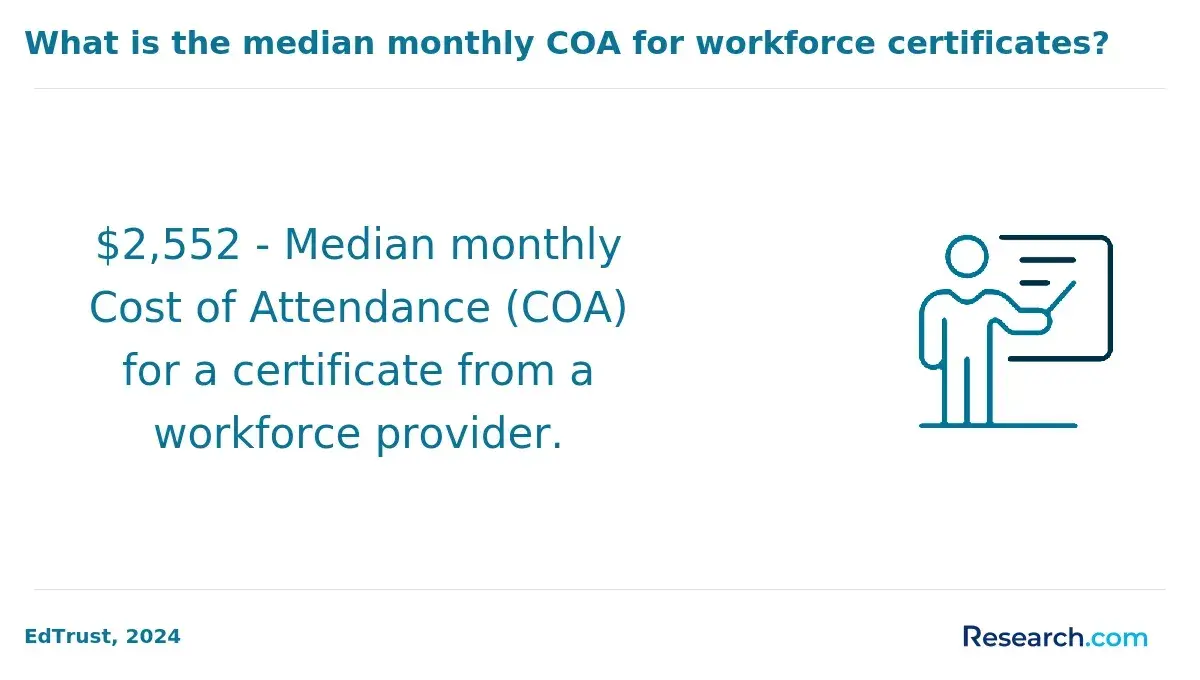
Experiential requirements can affect total cost even when they do not add many credits. The largest expenses often come from travel, lodging, unpaid work time, commuting, background checks, uniforms or professional gear, technology, research transcription, and delayed graduation if placement approval takes longer than expected.
NCES data released in 2024 reported average published graduate tuition and required fees of $12,596 at public institutions and $29,931 at private nonprofit institutions for 2022-23. For doctoral students, those figures are only a baseline because program length, dissertation continuation fees, residency travel, and fieldwork logistics can change the real cost of attendance.
Students comparing public-safety pathways can use a detailed breakdown of criminal justice degree price factors as a useful reference point for how online tuition, fees, and indirect expenses can differ from the advertised per-credit rate.
The table below shows where experiential requirements tend to add costs or time. Use it as a checklist when requesting a full cost estimate from each school.
| Cost or timeline factor | Why it matters | Questions to ask |
| Required credits | Some programs attach fieldwork to existing courses, while others require separate practicum or internship credits | Are field experience credits included in the published program total? |
| Residency travel | Even short intensives can require airfare, lodging, meals, and leave from work | How many in-person trips are required, and where are they held? |
| Placement schedule | Daytime agency hours may conflict with fire shifts, command schedules, family care, or overtime opportunities | Can hours be completed on shift, evenings, weekends, or in blocks? |
| Unpaid experience | Internship-style placements may reduce earning time for students who cannot use their job site | Can paid employment satisfy the requirement if objectives are approved? |
| Screening and compliance | Some sites require background checks, drug screening, immunizations, confidentiality training, or cybersecurity training | Which compliance costs are paid by the student? |
| Research approval delays | Dissertation field research may require institutional review, agency permission, data-use agreements, or legal review | What is the average review timeline for agency-based research? |
| Continuation fees | Delayed dissertations or unfinished fieldwork can extend enrollment | What fees apply after coursework is complete? |
A practice-based doctorate may still be worth the added cost if the experience directly supports your target role, such as fire chief, emergency management director, public-safety executive, fire service educator, safety director, risk manager, or policy leader. It is less attractive if the field requirement is expensive, hard to schedule, and only loosely connected to your career goal.
Flexibility varies widely. Some online fire science-related doctorates are designed for active-duty firefighters and public-safety professionals with rotating shifts, while others assume predictable weekday availability. The difference is rarely obvious from the homepage, so you need to evaluate the actual fieldwork design.
In practice, flexibility usually depends on four program features: whether the site can be local, whether the student can use current employment, whether hours can be completed in blocks, and whether faculty allow projects aligned with the student's professional role.
The following questions help separate genuine flexibility from marketing language:
- Can practicum or fieldwork hours be completed at my current workplace without duplicating normal job duties?
- Can I complete hours during 24/48, 48/96, Kelly, or other fire service shift patterns?
- Are evening, weekend, hybrid, or block-scheduled placements allowed?
- Does the program require synchronous online meetings during standard business hours?
- Are campus residencies optional, required, or replaceable with virtual intensives?
- Can dissertation field research focus on my department, region, training division, prevention program, or emergency management agency?
- Does the school allow temporary leave, pause terms, or adjusted sequencing if deployment, disaster response, wildland assignment, or emergency operations interfere with coursework?
Working professionals should be especially cautious about internship language. A required internship may sound manageable until you learn that the site requires weekday hours, a new agency supervisor, or activities outside your normal command structure.
If you already hold a senior fire service or emergency management role, a doctoral capstone or dissertation-in-practice may be more practical than an entry-style internship.
Experiential requirements can strengthen a doctoral program when they are tied to clear learning outcomes, qualified supervision, ethical research practices, and credible institutional accreditation. However, they do not automatically create licensure eligibility, certification credit, or promotion eligibility.
For fire science-related doctorates, the first accreditation checkpoint is institutional accreditation from an agency recognized by the U.S. Department of Education or the Council for Higher Education Accreditation. Programmatic accreditation is less uniform in fire science than in fields such as nursing, counseling, or education, so students should focus on whether the degree type, curriculum, faculty expertise, and fieldwork design match their profession.
Students interested in prevention, industrial safety, risk management, or compliance may also compare related safety-focused pathways, including the best online environmental health and safety programs, because those fields may have different accreditation, certification, and employer-recognition expectations than traditional fire service leadership programs.
Licensure is a separate issue. Most fire science doctorates do not license someone to become a firefighter, fire inspector, paramedic, engineer, code official, emergency manager, or safety professional.
Those credentials usually depend on state rules, local civil service requirements, fire academy completion, National Fire Protection Association-aligned training, EMS licensure, International Code Council credentials, Board of Certified Safety Professionals credentials, or employer-specific standards.
Use this verification list before assuming fieldwork has professional value beyond the degree:
- Ask whether the doctorate is institutionally accredited and confirm the accreditor independently.
- Ask whether any programmatic accreditation applies to your exact degree, concentration, or school.
- Confirm whether fieldwork hours count toward any certification, licensure, promotion, or continuing education requirement you care about.
- Contact the relevant state agency, certification board, civil service office, or employer rather than relying only on school marketing.
- Ask whether the field supervisor must hold specific credentials for hours to be accepted outside the university.
- Get written confirmation if the program claims alignment with a professional standard.
The safest approach is to treat doctoral experiential requirements as career-development and research preparation unless a licensing body or employer confirms otherwise in writing.
Support during practicum and fieldwork is one of the biggest quality differences among online doctoral programs. Strong support reduces the risk of placement delays, unclear expectations, rejected sites, and dissertation bottlenecks.
A well-run program should not simply tell online students to "find a site." It should provide policies, templates, deadlines, named contacts, supervisor criteria, and escalation paths if a placement problem occurs.
Look for these support features when comparing programs:
- A placement coordinator or faculty fieldwork lead who understands public safety, fire service, emergency management, or safety settings.
- Written site approval criteria, including supervisor qualifications and required agreements.
- Sample learning contracts, evaluation forms, project scopes, and hour logs.
- Clear guidance on using current employment as a practicum, internship, or field research site.
- Research ethics support for interviews, surveys, incident data, personnel data, or agency records.
- Dissertation committee members with expertise in fire service, emergency management, safety, public administration, or applied research methods.
- Backup procedures if a site supervisor leaves, an agency withdraws, or a project becomes unavailable.
- Student services that work for shift workers, including flexible advising, online library access, writing support, and technical help outside standard office hours.
Ask current students or recent graduates what support actually felt like after enrollment. A program may have excellent coursework but weak placement coordination, which can create avoidable stress for students balancing doctoral work with emergency response, command responsibilities, family obligations, and rotating schedules.
Practicum and fieldwork can improve career readiness when they produce evidence of advanced leadership, applied research, program evaluation, policy analysis, risk reduction, or organizational change. The value is strongest when the experience creates a portfolio-worthy outcome, such as a community risk assessment, training evaluation, strategic plan, prevention initiative, emergency operations improvement, or publishable applied study.
BLS May 2024 wage data reported a median annual wage of $86,130 for emergency management directors. That figure should not be treated as a guaranteed outcome from a doctorate, but it shows why experienced public-safety professionals often evaluate doctoral study through a leadership and advancement lens rather than an entry-level employment lens.
Career value depends on the target role. A research-focused PhD may be better for university teaching, policy research, or scholarly work. A practice-focused doctorate may be better for executive leadership, training administration, organizational consulting, safety management, or applied public-sector problem solving.
The table below connects common career goals with the type of experiential requirement that may be most useful.
| Career goal | Most useful experiential component | Why it helps | What to avoid |
| Fire chief or senior command leader | Leadership practicum, organizational change project, strategic planning capstone | Shows ability to diagnose agency problems and implement evidence-based improvements | Projects with little connection to budgeting, labor, operations, prevention, or governance |
| Emergency management director | Agency-based fieldwork, disaster planning evaluation, resilience project | Builds practical experience with interagency coordination, planning, mitigation, and public-sector decision-making | Programs with no access to real emergency management settings or data |
| Fire service educator or academy leader | Training evaluation, curriculum research, instructional leadership project | Creates evidence of adult-learning, assessment, and program improvement skills | Programs that lack education, assessment, or training leadership coursework |
| Fire prevention or code leadership | Community risk reduction project, inspection program analysis, prevention data project | Connects doctoral study to measurable prevention and compliance challenges | Clinical or internship requirements unrelated to prevention or risk analysis |
| Occupational safety or risk management executive | Worksite assessment, safety management system evaluation, applied safety research | Aligns doctoral work with hazard control, compliance, training, and organizational risk | Programs that do not match relevant safety certifications or employer expectations |
| Professor, researcher, or policy analyst | Dissertation field research, quantitative or qualitative methods, publication-oriented project | Supports scholarly credibility, research design, and evidence-based policy analysis | Programs with minimal research methodology or limited faculty expertise in fire-related topics |
The best experiential requirement is not always the longest one. A smaller, well-supervised project tied to your desired role can be more valuable than a larger hour requirement that is poorly aligned with your career path.
How Should Students Choose an Online Fire Science Doctorate With Experiential Requirements?
Choosing an online fire science doctorate with experiential requirements is a feasibility decision as much as an academic one. The right program should match your career goal, state, schedule, employer situation, budget, and tolerance for in-person commitments.
If you are still early in your public-safety education path, it may be more practical to build credentials gradually through options such as the best online associate degree programs in criminal justice before committing to a doctorate with fieldwork expectations.
Use the following decision process to compare programs before applying:
- Define the career outcome first: research, teaching, executive leadership, emergency management, safety, prevention, training, policy, or consulting.
- Match the degree type to that outcome, such as PhD for research, EdD for education leadership, DPA for public administration, or applied doctorate for professional practice.
- Request the exact experiential requirement in writing, including hours, credits, residencies, project expectations, and evaluation methods.
- Confirm whether the program has approved placements in your state or permits local, employer-based, or student-proposed sites.
- Ask whether your current role can support the requirement without creating conflicts of interest or simply counting normal job duties.
- Calculate total cost beyond tuition, including travel, lodging, commuting, unpaid time, background checks, dissertation fees, and possible delays.
- Check institutional accreditation and any profession-specific recognition relevant to your goal.
- Interview admissions staff, faculty, placement coordinators, and current students before making a deposit.
- Compare the fieldwork burden against the career value; choose fewer hours if the program is otherwise stronger and the extra hours do not improve your target outcome.
- Keep a backup plan for site changes, supervisor turnover, emergency deployments, family obligations, or scheduling conflicts.
Students who benefit most from practice-based doctoral training are usually experienced professionals who can turn their workplace, agency network, or community safety challenges into doctoral-level applied learning.
Students who should be cautious include those without access to relevant agencies, those unable to travel for residencies, those needing a strictly asynchronous program, and those expecting the school to guarantee a convenient local placement without verification.
The most practical rule is simple: do not enroll until you can describe exactly where, when, with whom, and at what cost you will complete every required in-person, supervised, or field-based component.
Other Things You Should Know About Fire Science Programs
Not always. Some programs admit students from emergency management, public administration, occupational safety, military, EMS, law enforcement, education, or policy backgrounds. However, applicants without fire service experience should confirm that the curriculum and dissertation options fit their career goals.
Most doctoral programs require a master's degree, although the required field may vary. Common admissions materials include transcripts, a resume, professional references, a statement of purpose, writing sample, and sometimes an interview or research proposal.
Many do, especially PhD programs. Applied doctorates may require a dissertation-in-practice, doctoral project, or capstone instead. The key difference is that a dissertation usually emphasizes original research, while an applied project focuses more on solving a professional problem.
Sometimes, but transfer credit policies are usually limited at the doctoral level. Even when coursework transfers, students often must complete doctoral milestones, research courses, residencies, qualifying exams, field projects, or dissertations through the awarding institution.
- Fire Service Training Bureau https://dps.iowa.gov/divisions-iowa-department-public-safety/iowa-state-fire-marshal-division/fstb
- Getting Your Fire Science Associate Degree Online | Become With Lantern https://www.learnhowtobecome.org/best-online-associates-in-fire-science-degree-programs/
- Best Online Fire Science Degrees https://www.onlineu.com/degrees/fire-science
- Fire Science https://catalog.cv.edu/fire-science
- How to Engage Community Risk Reduction Partnerships - VirtualCRR https://virtualcrr.com/how-to-engage-community-risk-reduction-partnerships-to-put-the-community-in-crr/
- Fire Science Degree | Fire Science Schools & Colleges https://www.firescience.org/fire-science-degrees-and-programs/
- FSRI Expands Pioneering Online Learning Platform https://fsri.org/news/fsri-expands-pioneering-online-learning-platform