2027 Online Criminal Justice Administration Doctorate Programs with One-on-One Faculty Mentorship

Co-Founder and Chief Data Scientist
Choosing an online criminal justice administration doctorate is really a decision about support, not just curriculum. Doctoral students often balance full-time public safety, corrections, court, military, or policy roles while completing advanced research. The stakes are practical: the U. S. Bureau of Labor Statistics reported a May 2024 median annual wage of $77,270 for police and detectives, while senior leadership and federal roles may require stronger research, policy, and management credentials.
This guide explains how one-on-one faculty mentorship works, what to verify before applying, and when the added support is worth the cost.
Key Things You Should Know
- One-on-one mentorship is most valuable when it is formal, scheduled, faculty-led, and connected to dissertation, capstone, publication, or agency leadership goals rather than limited to routine academic advising.
- Cost and value should be compared against total program length, dissertation support, employer tuition benefits, and federal graduate borrowing rules, including the $20,500 annual Direct Unsubsidized Loan limit for eligible graduate students.
- The strongest programs let students identify mentor expertise before enrollment, explain chair or committee assignment processes, publish faculty research areas, and allow students to confirm communication frequency with current students or alumni.
How Does One-on-One Faculty Mentorship Work in Online Criminal Justice Administration Doctorate Programs?
One-on-one faculty mentorship in an online criminal justice administration doctorate means a doctoral-level faculty member works directly with a student over time on academic planning, research development, professional growth, and the dissertation or applied doctoral project. It is different from general student services, automated progress alerts, or an academic advisor who mainly helps with registration.
In strong programs, mentorship begins early and becomes more specialized as the student moves from coursework to research. A student interested in police executive leadership, for example, should ideally work with faculty who understand organizational reform, use-of-force policy, community trust, public budgeting, analytics, or labor relations. A student focused on corrections administration may need a mentor with experience in prison management, rehabilitation programming, reentry, or institutional safety.
The mentoring structure usually includes several layers of support. The exact titles vary by school, but the functions are similar enough that applicants can compare them directly.
| Support role | What it usually does | Why it matters |
| Program advisor | Helps with course sequencing, registration, policy questions, and administrative deadlines. | Keeps the student moving through the degree requirements but may not provide research mentoring. |
| Faculty mentor | Discusses scholarly interests, professional goals, research fit, and early project ideas. | Helps the student connect coursework to a focused leadership or research agenda. |
| Dissertation or project chair | Guides proposal development, methodology, approvals, revisions, and final defense or presentation. | Often has the greatest effect on research quality, timeline, and student confidence. |
| Committee member or methodologist | Provides specialized feedback on theory, criminal justice practice, data analysis, or research design. | Strengthens the project when the chair does not cover every area of expertise. |
| Career or professional mentor | Connects doctoral work to executive leadership, policy roles, teaching, consulting, or agency advancement. | Improves the practical value of the doctorate beyond completing the credential. |
The most important distinction is whether mentorship is guaranteed as part of the program design or simply described as faculty accessibility. A meaningful mentoring model should specify who mentors students, when the relationship begins, how often students meet, whether meetings are synchronous, and how mentor changes are handled if research interests or faculty availability shift.
Students moving into doctoral study from an online criminal justice degree should also expect a major change in expectations. Undergraduate and master's programs often focus on mastering established concepts; doctoral programs require students to define a problem, justify a research approach, evaluate evidence, and contribute something useful to criminal justice administration practice.
Which Online Criminal Justice Administration Doctorate Programs Offer the Strongest Faculty Mentorship?
The strongest online criminal justice administration doctorate programs are not necessarily the ones that use the phrase "one-on-one mentorship" most often. They are the programs that make faculty access verifiable before enrollment and continue that access through the dissertation, capstone, or applied research phase.
Because faculty assignments, dissertation formats, tuition, and program policies change, students should treat the following examples as programs to investigate rather than a fixed ranking. The table focuses on mentoring signals that applicants can verify through catalog language, admissions conversations, faculty directories, and student or alumni feedback.
| Program type to compare | Mentorship signals to look for | Best fit | Questions to verify |
| Online Doctor of Criminal Justice or Doctor of Criminal Justice Administration | Applied doctoral project or dissertation chair, faculty with practitioner and research backgrounds, leadership-oriented curriculum. | Working professionals seeking executive, command, policy, or agency leadership roles. | When is the chair assigned, and can students request faculty based on research interests? |
| Online PhD in Criminal Justice | Dissertation committee, research methods sequence, faculty publications, potential teaching or scholarly pathways. | Students interested in research, higher education, policy analysis, or advanced consulting. | How many students does each chair advise, and what is the average response time during dissertation work? |
| Online Doctorate in Public Administration with criminal justice, public safety, or homeland security focus | Mentors with public management, budgeting, emergency management, or policy expertise. | Students whose goals cross criminal justice, government administration, and interagency leadership. | Can the dissertation or capstone focus specifically on criminal justice agencies? |
| Hybrid executive doctorate with residencies | Scheduled faculty intensives, dissertation workshops, cohort networking, and individual research consultation. | Students who want structured milestones and face-to-face faculty interaction without relocating. | Are residencies required, optional, or virtual, and are travel costs included in published estimates? |
Applicants should pay attention to the distinction between availability and capacity. A program may list impressive faculty credentials, but that does not tell you whether those faculty members are accepting new doctoral mentees, whether they chair dissertations in your topic area, or whether adjunct faculty handle most online sections.
Mentorship strength is usually highest when the program gives students a transparent path to faculty fit. Before applying, look for public faculty profiles, recent publications, practitioner experience, dissertation chair policies, virtual office hour expectations, and evidence that faculty are engaged in the online doctoral program rather than only the campus-based department.
How Does Faculty Mentorship Support Dissertation or Applied Research in an Online Criminal Justice Administration Doctorate?
Faculty mentorship matters most during the transition from coursework to independent research. Many doctoral students can complete seminars successfully but struggle when asked to turn broad interests such as "police reform," "recidivism," or "cybercrime" into a researchable, ethical, and feasible project.
A mentor helps narrow the project so it can be completed with available time, data, approvals, and access. This is especially important in criminal justice administration because many topics involve sensitive records, vulnerable populations, agency permissions, confidentiality concerns, or politically complex environments.
Strong dissertation or applied-project mentorship usually supports the student through a clear sequence. The steps below show where faculty guidance should be active rather than occasional.
- Clarifying the administrative problem, such as staffing shortages, reentry outcomes, emergency response coordination, officer wellness, court backlog, or jail population management.
- Connecting the problem to scholarly literature, public policy, leadership theory, organizational behavior, criminology, or evidence-based practice.
- Choosing a feasible research design, such as qualitative interviews, program evaluation, policy analysis, survey research, case study design, or secondary data analysis.
- Preparing institutional review board materials and agency permission documents when human subjects, internal records, or practitioner interviews are involved.
- Reviewing drafts for logic, methodology, professional tone, and alignment between the research question, data, findings, and recommendations.
- Helping the student translate findings into a dissertation defense, executive briefing, policy memo, journal article, conference proposal, or agency improvement plan.
The best mentors also help students avoid overbuilding the project. A doctoral study does not need to solve every problem in a justice system. It needs to answer a well-defined question using a defensible method and produce findings that are useful to administrators, policymakers, or scholars.
A common mistake is choosing a program because it offers a dissertation chair without asking how chair selection works. Students should ask whether they can request a chair, whether chairs must have subject-matter expertise, what happens if a chair leaves the university, and whether methodologists are available for quantitative, qualitative, or mixed-methods studies.
One-on-one mentorship can improve doctoral progress by reducing ambiguity. Online doctoral students are often experienced professionals, but they may be years removed from formal research writing or may never have completed an independent scholarly project. Regular faculty feedback can help them avoid stalled proposals, unfocused topics, and repeated revisions.
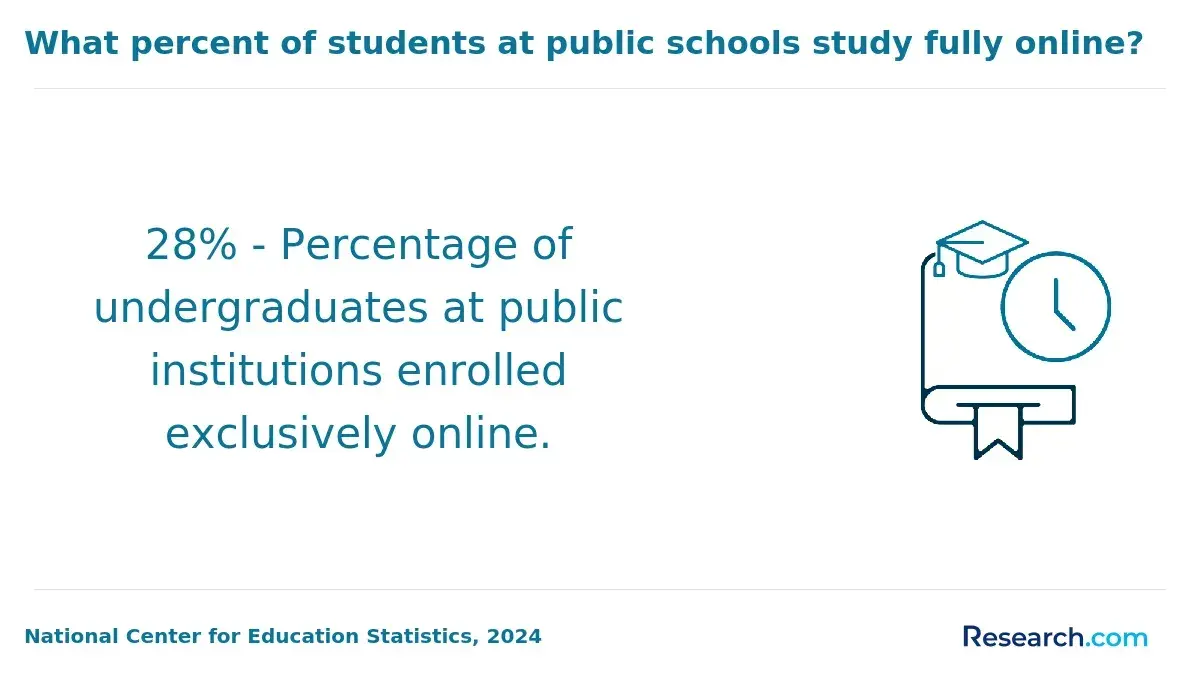
The National Center for Education Statistics reported in its 2024 Condition of Education that distance education remains a major part of U.S. higher education. For doctoral applicants, the takeaway is not simply that online learning is common; it is that online programs need intentional support systems because students are not relying on hallway conversations, campus offices, or informal face-to-face check-ins.
Mentorship affects progress most when it is tied to milestones. Students should ask whether the program has a dissertation timeline, required research checkpoints, proposal-development courses, writing support, and escalation processes if a mentor is unavailable.
| Progress factor | Weak mentorship model | Stronger mentorship model |
| Topic development | Student chooses a broad topic alone and receives feedback late. | Faculty discuss feasibility, data access, and research fit early in the program. |
| Communication | Meetings happen only when the student requests help or when a deadline is missed. | Program sets expected response times, office hours, and recurring check-ins. |
| Dissertation transition | Student finishes coursework and then searches for a chair with little guidance. | Chair or mentor assignment is explained before the research phase begins. |
| Revision management | Feedback is vague, delayed, or inconsistent across reviewers. | Faculty provide specific comments tied to rubrics, methodology, and approval standards. |
| Professional accountability | Student receives administrative reminders but little intellectual engagement. | Mentor helps the student connect research progress to leadership and career goals. |
Mentorship does not guarantee faster completion. Doctoral progress still depends on the student's writing time, work schedule, research access, family responsibilities, and responsiveness to feedback. However, a clear mentoring structure can reduce preventable delays, especially during proposal approval and dissertation revisions.
Red flags include programs that cannot explain average faculty response times, do not publish dissertation policies, assign chairs only after long delays, or describe "personalized support" without naming who provides it. Applicants should also be cautious if admissions staff cannot explain the difference between academic advising and faculty mentorship.
Online doctoral programs use several mentoring models. The best choice depends on how much structure the student wants, how independent the student already is, and whether the student values individualized research fit more than cohort networking or lower tuition.
The comparison below summarizes common models. It is useful because many schools use similar language but deliver faculty interaction in different ways.
| Mentorship model | How it works | Advantages | Trade-offs |
| Dedicated faculty mentor from enrollment | A faculty member is assigned early and stays involved throughout coursework and research planning. | Strong continuity and early topic development. | Quality depends heavily on mentor fit and availability. |
| Course faculty plus later dissertation chair | Students work with instructors during courses and receive a chair when entering the dissertation phase. | Common and efficient for structured online programs. | Students may not build a deep research relationship until later. |
| Cohort-based mentoring | Students move through milestones together with faculty-led seminars, group advising, and peer support. | Strong accountability and networking. | Less individualized if the student's research topic is highly specialized. |
| Committee-based research mentoring | A chair and committee provide specialized feedback on theory, methods, and practice. | Good for complex dissertations or interdisciplinary projects. | May involve more coordination and longer review cycles. |
| Executive residency or intensive model | Online coursework is paired with virtual or in-person research workshops and faculty meetings. | Helpful for working professionals who benefit from concentrated guidance. | May add travel, scheduling, or residency costs. |
Students who value independence may do well in programs where the dissertation chair becomes central later. Students who need sustained accountability should prioritize early mentor assignment, required check-ins, and structured research milestones. Students who want professional networking may prefer cohort models, even if they include less individualized attention.
The key is to choose the model that matches your risk points. If you are confident in research writing but need career connections, a cohort with executive faculty may be enough. If you have a complex agency-based study involving records, interviews, or policy implementation, individualized faculty mentorship is usually more important.
Faculty mentorship can make a doctorate more career-relevant by helping students turn academic work into professional evidence. For criminal justice administration students, that may mean a dissertation that informs agency policy, a capstone that evaluates a program, or a research agenda that supports promotion into command, executive, consulting, teaching, or policy roles.
The labor market for criminal justice leaders is changing. Agencies are placing more emphasis on data-informed decision-making, public accountability, interagency coordination, technology governance, and community trust. At the same time, AI tools, predictive analytics, digital evidence, body-worn camera data, cybersecurity issues, and privacy concerns are reshaping what senior administrators need to understand.
Mentors can help students connect doctoral work to practical opportunities in several ways. The most useful support is specific and tied to the student's career target.
- For agency leaders, faculty can help frame research as an executive briefing, policy proposal, training model, or operational improvement plan.
- For aspiring faculty, mentors can advise on conference proposals, teaching statements, publication strategy, and adjunct teaching experience.
- For consultants, mentors can help translate a dissertation into a service area, such as program evaluation, compliance review, leadership training, or risk assessment.
- For public policy professionals, mentors can help students connect research findings to legislative analysis, grant writing, performance metrics, or cross-agency collaboration.
Career value is strongest when the mentor understands both scholarship and practice. A faculty member with published research but no exposure to criminal justice organizations may be excellent for theory, while a practitioner-scholar may better understand implementation barriers in police, corrections, courts, emergency management, or homeland security settings.
Students interested in adjacent public safety and regulatory leadership can also compare related fields, such as the best online environmental health and safety programs, because compliance, risk management, emergency planning, and organizational safety increasingly overlap with criminal justice administration careers.
A strong doctoral mentor should have the academic credentials, research competence, and practical understanding needed to guide advanced work in criminal justice administration. At minimum, students should expect mentors to hold a terminal degree in criminal justice, criminology, public administration, public policy, sociology, law, homeland security, emergency management, or a closely related field.
Credentials alone are not enough. The best mentor for a doctoral student is someone whose expertise aligns with the student's topic, method, and career direction. For example, a student studying police legitimacy needs different guidance than a student evaluating reentry services, correctional staffing, cybercrime coordination, or public safety budgeting.
Applicants should review faculty profiles with a practical lens. The following qualifications are especially important when assessing mentor fit.
- Recent research, publications, presentations, or applied projects related to the student's intended topic area.
- Experience chairing dissertations, supervising doctoral projects, or serving on doctoral committees.
- Methodological expertise that fits the likely project, such as qualitative interviews, survey design, program evaluation, policy analysis, statistics, or mixed methods.
- Professional experience in criminal justice, courts, corrections, policing, public administration, federal agencies, military justice, homeland security, or public safety leadership.
- Evidence of online teaching effectiveness, including clear feedback practices, virtual office hours, and experience mentoring working adults remotely.
- Capacity to mentor, including a manageable advising load and availability to chair new dissertations or applied projects.
A common mistake is assuming that a well-known department automatically means strong individual mentorship. Students should look beyond institutional reputation and ask whether the specific faculty member they hope to work with is active in the online doctorate, accepting mentees, and qualified in the student's research area.
Students should also evaluate whether mentors understand ethical and administrative constraints. Criminal justice research may involve internal agency data, confidential personnel issues, incarcerated populations, victims, minors, or law enforcement operations. A mentor who understands institutional review board requirements and agency permissions can help the student avoid serious delays.
One-on-one mentorship can increase the value of an online criminal justice administration doctorate, but it does not automatically justify higher tuition. The right question is whether the mentoring structure reduces completion risk, improves research quality, and supports the career outcome the student is pursuing.
Students should compare total cost rather than per-credit tuition alone. Online doctoral costs may include tuition, technology fees, dissertation continuation fees, residency travel, books, research software, transcript fees, graduation fees, and lost personal time. Federal graduate students who qualify for Direct Unsubsidized Loans are subject to the $20,500 annual borrowing limit, with Grad PLUS Loans potentially available up to the school-certified cost of attendance for eligible borrowers.
The table below shows how mentorship can affect cost and value. It is not a price list; it is a decision framework for evaluating whether a higher-cost program provides enough support to reduce academic or career risk.
| Cost or value factor | Why mentorship matters | What to verify before enrolling |
| Time to dissertation approval | Responsive faculty feedback may reduce repeated revisions and stalled proposals. | Ask about review timelines, chair availability, and escalation procedures. |
| Research feasibility | A mentor can help prevent projects that are too broad, too expensive, or impossible to approve. | Ask how early students receive feedback on topic scope and data access. |
| Residency or intensive requirements | In-person mentoring can be valuable but may add travel and schedule costs. | Confirm whether residencies are required, optional, virtual, or separately billed. |
| Career translation | Faculty can help turn doctoral work into policy, teaching, consulting, or leadership materials. | Ask whether mentorship includes career-facing outputs or only dissertation completion. |
| Employer reimbursement | Structured milestones may help students stay eligible for employer tuition benefits. | Confirm grade, credit, accreditation, and reimbursement timing rules with the employer. |
Students comparing total investment should also review the broader criminal justice degree price landscape, especially if they are still deciding between a master's degree, doctoral degree, graduate certificate, or employer-sponsored leadership training.
A higher-tuition doctorate may be worth considering if it offers strong faculty fit, predictable dissertation support, relevant professional mentoring, and flexibility for working adults. A lower-cost program may be the better value if the student is highly independent, already has strong research skills, has employer support, or does not need intensive faculty contact.
One-on-one faculty mentorship is most valuable for students whose goals require individualized research guidance, professional positioning, or careful navigation of agency-based projects. It is especially useful for working professionals who have leadership experience but need help translating that experience into rigorous doctoral work.
The students below often gain the most from individualized mentoring because their risks are specific, not generic.
- Mid-career and senior criminal justice professionals who want to connect doctoral research to promotion, command leadership, policy reform, or agency performance improvement.
- Students returning to school after a long academic break who need support with scholarly writing, research methods, and dissertation planning.
- Practitioners with access to agency problems but limited experience designing ethical, feasible, and approvable research studies.
- Aspiring higher education instructors who need guidance on teaching, publishing, conference participation, and building an academic profile.
- Students studying specialized topics such as cybercrime, corrections management, police accountability, homeland security, emergency preparedness, or court administration.
- First-generation doctoral students who may benefit from direct explanation of doctoral norms, committee expectations, and milestone planning.
Some students may not need a program built primarily around one-on-one mentoring. A highly structured cohort model may be better for students who value peer accountability, fixed deadlines, and group learning. A lower-cost program with later dissertation chair assignment may also be enough for students who already have research experience, a clear topic, and strong independent writing habits.
Students who are still early in their education pathway may want to compare foundational options first, including the best online associate degree programs in criminal justice, before assuming a doctoral path is the immediate next step. Doctoral study is usually best for students who already have graduate-level preparation or substantial professional goals that justify the commitment.
How Should Students Evaluate Faculty Mentorship Before Choosing an Online Criminal Justice Administration Doctorate?
Students should evaluate faculty mentorship before applying, not after enrollment. The goal is to verify whether mentorship is a real academic structure or a marketing phrase. A program that cannot describe how mentoring works may still offer good courses, but it may not provide the individualized support doctoral students expect.
Use a structured process when comparing programs. The following steps help applicants move from general claims to evidence.
- Identify your likely research or professional focus, even if it is broad, such as corrections leadership, police administration, community supervision, public safety analytics, emergency management, court operations, or homeland security.
- Review faculty profiles and look for topic alignment, recent publications, practitioner experience, dissertation supervision, and online teaching involvement.
- Ask admissions staff when faculty mentoring begins, whether students can request mentors, and how dissertation chairs are assigned.
- Request specifics on communication, including expected response times, office hours, synchronous meeting options, and whether meetings are required or optional.
- Ask how many doctoral students each faculty member typically advises and whether key faculty are currently accepting new dissertation students.
- Confirm whether the program uses a dissertation, applied doctoral project, capstone, or professional portfolio, and ask how faculty support differs for each option.
- Speak with current students or alumni about the actual frequency, quality, and usefulness of faculty feedback.
- Compare mentorship with tuition, transfer policy, accreditation, residency requirements, employer reimbursement rules, and your available weekly study time.
Applicants should also prepare direct questions for each school. These questions make it easier to compare programs side by side and avoid vague answers.
- Who will mentor me during the first year, and will that person be a faculty member in criminal justice administration?
- Can I meet or correspond with potential mentors before enrollment?
- What happens if my mentor leaves, retires, changes roles, or is not available to chair my project?
- How often do students normally meet one-on-one with faculty during coursework and dissertation work?
- Are dissertation chairs compensated or assigned workload credit for mentoring doctoral students?
- Does faculty mentorship include career planning, publication guidance, teaching preparation, or agency networking?
- What percentage of dissertation feedback is provided by the chair, committee, writing center, or external reviewers?
- How does the program handle delayed faculty responses or mismatched mentor relationships?
The best decision balances mentorship, flexibility, cost, accreditation, and career fit. If you cannot maximize all five, prioritize the factor most likely to affect your success. For many online doctoral students, that factor is not the lowest tuition or the fastest advertised timeline; it is access to qualified faculty who can help them finish a defensible project that supports their professional goals.
Other Things You Should Know About Criminal Justice Administration
A doctorate is not usually required for most criminal justice leadership roles. Many police, corrections, court, and public safety executives advance through experience, certifications, civil service systems, graduate degrees, and demonstrated leadership. A doctorate may be useful for senior policy roles, teaching, consulting, research leadership, or highly competitive executive positions.
A PhD typically emphasizes original research, theory, and scholarly contribution. A professional doctorate, such as a Doctor of Criminal Justice, usually emphasizes applied research, leadership, and solving practice-based problems. Both can involve rigorous research, but the best fit depends on whether your goal is academic research, executive practice, policy work, or consulting.
Some are fully online, while others require residencies, intensives, dissertation workshops, or in-person defenses. Requirements vary by school, so students should confirm travel obligations, residency length, added fees, and whether virtual alternatives are available before applying.
Yes. Students should choose an institutionally accredited school recognized by the U.S. Department of Education or the Council for Higher Education Accreditation. Accreditation can affect credit transfer, employer reimbursement, federal financial aid eligibility, and how the credential is viewed by employers or academic institutions.
- Doctor of Criminal Justice | Online with Limited Residency | Tiffin University https://go.tiffin.edu/doctorate-programs/doctor-of-criminal-justice/
- Online Criminal Justice Degrees (Types, Benefits & FAQ) https://www.allcriminaljusticeschools.com/criminal-justice/criminal-justice-online-degree/
- Top Online Criminal Justice Degrees https://www.criminaljusticeprograms.com/online-criminal-justice-degrees/
- Faculty-Student Mentoring in Online Higher Education https://www.facultyfocus.com/articles/online-education/online-assessment-grading-and-feedback/faculty-student-mentoring-in-online-higher-education/
- Best Online Doctorate in Criminal Justice - Top Online Degree Programs https://www.collegeconsensus.com/rankings/best-criminal-justice-doctorate-programs-online/
- Research mentorship for criminology students https://riseglobaleducation.com/blogs/research-mentorship-for-criminology-students
- The Influence of Mentoring on Career Development of ... https://www.jurnaldidaktika.org/index.php/contents/article/download/545/339/