2027 Online Community Health Degree Programs With No Letters of Recommendation Required

Co-Founder and Chief Data Scientist
Applicants who lack recent professors or supervisors to recommend them can still find online community health degrees with streamlined admissions. "No letters required" means recommendation letters are not part of the standard application; it does not mean automatic admission. This option can suit working adults, transfer students, and career changers.
Demand also supports careful program selection: the U.S. Bureau of Labor Statistics projects 13% job growth for community health workers from 2023 to 2033. Use this guide to compare requirements, verify quality, estimate costs, and choose a program aligned with your goals.
Key Things You Should Know
- Online bachelor's programs in community health, public health, health education, and health studies are the most likely options to omit recommendation letters; many graduate MPH programs still request them.
- No-recommendation admissions usually rely on official transcripts, a minimum GPA, an application, and sometimes a personal statement, resume, prerequisite coursework, or proof of work experience instead.
- Verify institutional accreditation, total tuition, transfer-credit rules, fieldwork requirements, and career alignment before applying; the BLS projects 13% growth for community health workers from 2023 to 2033.
Which Online Community Health Degree Programs Require No Letters of Recommendation?
Programs rarely use identical titles. A school may offer a community health degree as a BS in Community Health, BS in Public Health, BS in Health Education, BS in Health Promotion, or BS in Health Studies. At the undergraduate level, institutions that use standard online admissions processes often do not list recommendation letters as required materials. Graduate programs, particularly MPH programs, are more likely to request professional or academic references.
Do not assume that a school's general undergraduate application policy automatically applies to a specific online major. Admissions rules can differ for first-year, transfer, degree-completion, and graduate applicants. The comparison below shows where no-letter options are most commonly found and what to confirm.
| Program type | Likelihood of no letters for standard admission | Common alternative evidence | Best fit |
| Online associate degree in health or public health | Often available | High school transcript or GED, placement requirements | Students starting college or exploring the field |
| Online bachelor's in community health or public health | Common at schools with streamlined undergraduate admission | Official transcripts, GPA review, essay or resume when requested | Entry-level community health and health-promotion preparation |
| Online degree-completion bachelor's | Often available for transfer applicants | College transcripts, completed prerequisites, transfer-credit evaluation | Adults with prior college credit or an associate degree |
| Online MPH or related master's degree | Less common | Resume, statement of purpose, GPA, relevant experience; some still require references | Applicants seeking advanced public health roles |
Start by searching a school's program-specific admissions page and application checklist, not only a marketing page. Look for wording such as "letters of recommendation are not required." "Optional" is different: optional letters may still strengthen an application, while a waiver may apply only to applicants meeting a stated GPA or work-experience threshold.
Students considering related clinical paths should keep the distinction clear. A community health degree is not a nursing credential, and advanced nursing routes have separate prerequisites; compare options such as the shortest DNP program online only if your long-term goal requires nursing licensure and graduate clinical preparation.
What Are the Admission Requirements for Online Community Health Degree Programs With No Recommendation Letters?
A no-recommendation policy removes one document from the application, not the school's academic review. Most online undergraduate programs still need enough information to confirm that an applicant can succeed in college-level work. Requirements vary by institution, enrollment status, and whether the applicant is entering as a first-year or transfer student.
These are the materials applicants should expect to prepare before starting an application.
- A completed online application and any required application fee or approved fee waiver.
- Official high school, GED, and/or college transcripts.
- A cumulative GPA that meets the school's stated admission standard, if one is published.
- Proof of completed prerequisites, especially for transfer or degree-completion pathways.
- A personal statement, short-answer response, or resume when the program requests additional context.
- Identity, residency, immunization, background-check, or technology documentation if required for field experiences.
Standardized tests are increasingly uncommon in online undergraduate admissions, but applicants should not presume they are universally waived. A school may also admit some students conditionally, requiring successful completion of initial courses. Conditional admission can be useful, but students should ask about academic support, progression rules, and whether financial aid eligibility changes.
For community health programs with practicum, internship, or service-learning components, admission is only the first checkpoint. The placement site may require vaccination records, a background check, drug screening, CPR training, or site-specific onboarding. Confirm those requirements and any travel expectations before enrolling.
Are Online Community Health Programs With No Letters of Recommendation Easier to Get Into?
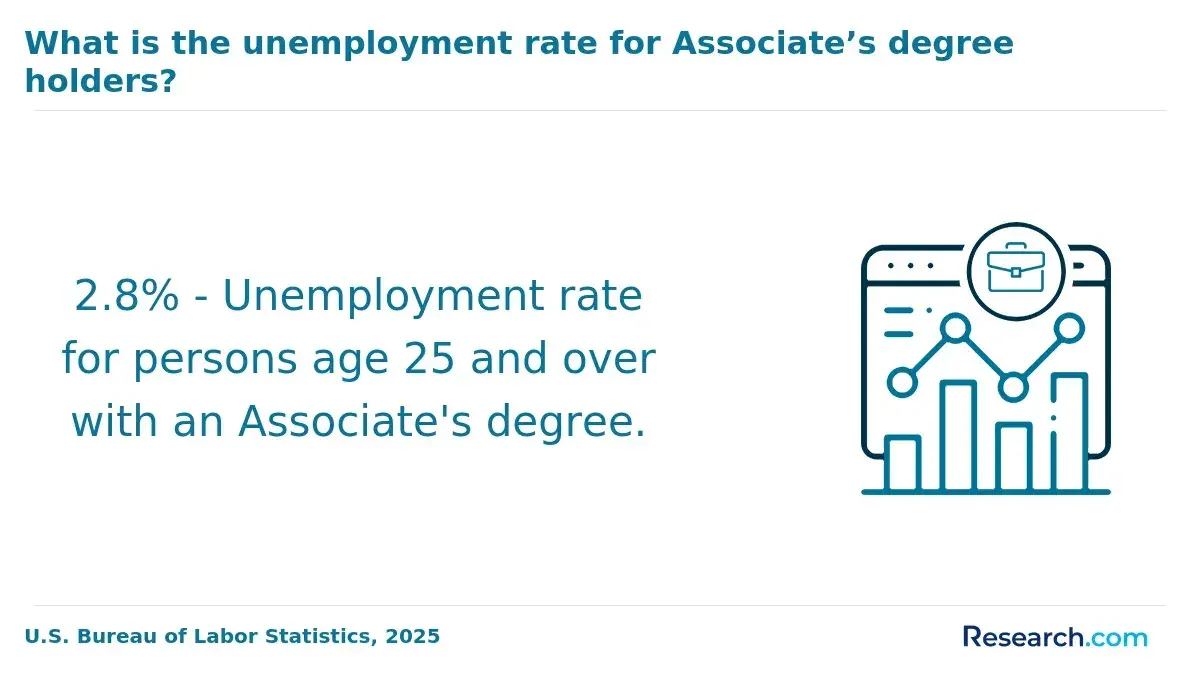
Not necessarily. Removing letters of recommendation makes the application less burdensome, particularly for applicants who have been out of school or work independently. It does not establish a program's selectivity, academic rigor, faculty quality, or likelihood of admission. Schools can assess readiness through transcripts, prior coursework, written responses, and transfer-credit records.
A simpler process may be a strong fit for applicants with a clear academic record and relevant experience but limited access to referees. It may be less suitable for someone who needs references to explain an uneven transcript, demonstrate recent leadership, or support an application to a selective graduate program.
Keep these common assumptions from driving the decision.
- Do not treat "no letters required" as "guaranteed admission"; GPA, prerequisite, and capacity requirements can still apply.
- Do not equate streamlined admissions with lower quality; assess accreditation, curriculum, faculty, practicum support, and student services separately.
- Do not choose solely for easy entry if the program lacks courses in epidemiology, health communication, health equity, program planning, or evaluation that support your goals.
- Do not overlook career differences between community health, nursing, health administration, and health information roles.
Community health graduates may work as community health workers, health educators, outreach coordinators, patient navigators, prevention-program assistants, or program coordinators, depending on employer requirements and experience. The BLS reported a 2024 median annual wage of $51,030 for community health workers. This is a national occupational median rather than a salary promise for degree holders; pay varies by location, employer, duties, education, and credentials.
If your goal is a faster transition into a different health-related occupation, compare the curriculum and credential requirements with fast track career programs before assuming an accelerated option serves the same purpose.
What Do Online Community Health Programs Evaluate Instead of Letters of Recommendation?
Without recommendation letters, admissions teams generally emphasize evidence the applicant can document directly. This approach can be particularly practical for adult learners, military-affiliated students, caregivers, and applicants whose prior instructors are difficult to contact. It also means applicants should make every submitted item accurate, complete, and consistent.
The table identifies common substitutes and what each one helps a school evaluate.
| Application material | What it may show | How to use it well |
| Official transcripts | Academic preparation, course completion, and GPA trend | Submit every required institution and review records for holds or missing terms. |
| Personal statement | Motivation, career direction, and ability to explain context | Connect your goals to community health work and address relevant academic circumstances briefly. |
| Resume | Employment, service, leadership, and transferable skills | Include outreach, client support, data entry, education, volunteer, and bilingual experience when applicable. |
| Prerequisite coursework | Readiness for health and science curriculum | Check whether anatomy, statistics, psychology, biology, or nutrition must be completed before enrollment. |
| Interview or writing sample | Communication skills and program fit | Use concrete examples of ethical communication, teamwork, and work with diverse communities. |
A strong application does not need to overstate experience. Describe what you did, who you served, what skills you used, and what you learned. Community health work commonly requires health literacy, cultural humility, communication, confidentiality awareness, program coordination, basic data interpretation, and relationship-building with local organizations.
Graduate applicants should be especially careful. A program may say the GRE is not required while still requiring letters, a resume, and a statement of purpose. Read the checklist for the exact degree and term rather than relying on a school-wide test-optional policy.
How Can You Tell if an Online Community Health Degree With No Recommendation Requirement Is Accredited and Legitimate?
Accreditation is more important than whether an application requires recommendations. For most students, the first check is institutional accreditation by an accreditor recognized by the U.S. Department of Education or the Council for Higher Education Accreditation. Institutional accreditation can affect federal aid eligibility, transfer-credit acceptance, employer confidence, and future graduate-school options.
Some public health programs also hold specialized accreditation, such as accreditation associated with public health education. Specialized accreditation can be valuable, but its availability depends on the degree type and school. It is not a substitute for institutional accreditation, and its absence does not automatically make an undergraduate community health degree illegitimate.
Use the following verification sequence before paying an enrollment deposit or sharing sensitive documents.
- Confirm the institution's accreditation status in a recognized accreditor or federal database and match the listing to the school's legal name.
- Read the specific program page for curriculum, faculty, required practicum or internship, and learning format.
- Ask whether the degree is fully online, whether any fieldwork is required, and whether placements are available in your state.
- Request the total estimated cost, including technology, course-material, practicum, graduation, and travel expenses.
- Review refund, withdrawal, transfer-credit, and complaint policies before accepting admission.
Red flags include pressure to enroll immediately, vague accreditation claims, a missing physical business address, unclear tuition disclosures, promises of guaranteed employment, and a curriculum that does not identify courses or faculty. Employers generally focus on the degree-granting institution, accreditation, skills, experience, and job fit rather than on whether letters of recommendation were part of admission.
How Much Do Online Community Health Degree Programs With No Letters of Recommendation Cost?
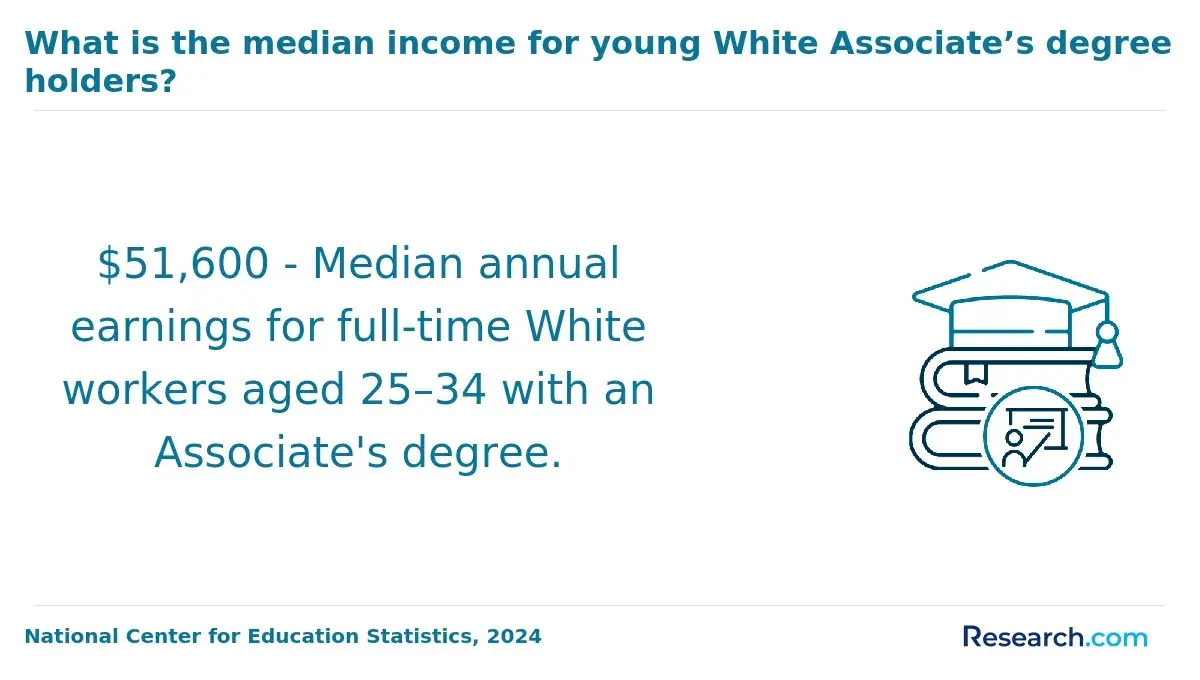
No-recommendation admissions do not determine tuition. Cost is driven by institution type, residency policies, transfer credits, course load, fees, and whether a required practicum creates travel or background-check expenses. Compare the total program price rather than a single per-credit rate, especially when a program has differential tuition for online students or charges fees each term.
As a broad U.S. benchmark, College Board reported average published tuition and fees of $11,610 for in-state students at public four-year institutions and $43,350 at private nonprofit four-year institutions for 2024-25. These are not online community health program prices and exclude living costs; use them only to understand why institutional type and residency can materially affect the comparison.
When requesting a financial estimate, ask the school to identify each cost category.
- Tuition per credit and the number of credits required after transfer evaluation.
- Mandatory university, distance-learning, technology, and graduation fees.
- Digital textbooks, lab supplies, professional memberships, and examination costs if applicable.
- Practicum expenses, including transportation, background checks, immunizations, and site-required training.
- Whether tuition is fixed for continuing students or may increase during enrollment.
Students interested in health-sector degrees should compare credentials by career destination, not tuition alone. For example, an HIM degree online may lead toward records, coding, privacy, or health-data work rather than community outreach and prevention programming.
Can You Get Financial Aid for an Online Community Health Degree With Streamlined Admissions?
Yes. A simplified admissions process does not by itself limit financial aid. Students enrolled in an eligible program at an institution that participates in federal student aid programs may be able to pursue grants, loans, work-study, state aid, employer tuition assistance, military education benefits, and institutional scholarships. Eligibility depends on the student, school, enrollment status, satisfactory academic progress, and other federal or state rules.
Complete the FAFSA as early as practical for the applicable award year, then compare each school's aid offer against the program's net cost. Grants and scholarships usually reduce out-of-pocket cost without repayment, while federal and private loans create repayment obligations. Do not accept the maximum loan amount automatically simply because it is offered.
Before committing, use these questions to make an aid package comparable across programs.
- What portion of the offer is grant or scholarship aid versus loans?
- Is institutional scholarship aid renewable, and what GPA or enrollment level is required to keep it?
- Does part-time online enrollment change eligibility for grants, loans, or employer reimbursement?
- Will transfer credits shorten the program enough to reduce borrowing?
- Are practicum, books, and technology costs included in the school's cost-of-attendance estimate?
If you are comparing community health with a clinical nursing route, review the full cost and licensing pathway. Lists of cheap nursing programs can help frame nursing costs, but nursing programs may have clinical, licensing, and prerequisite expenses that differ substantially from community health degrees.
How Long Does an Online Community Health Degree With No Letters of Recommendation Take to Complete?
Application requirements do not set the completion timeline. A typical bachelor's degree requires about 120 credits, and an associate degree commonly requires about 60 credits. The actual timeline depends on transferred coursework, the number of credits taken each term, course sequencing, availability of required classes, and completion of any internship or practicum.
Full-time students may complete a bachelor's program in about four years without transfer credit, while degree-completion students can finish sooner if a school accepts a substantial number of applicable credits. Part-time enrollment can make online study more manageable for working adults but usually extends the timeline. Accelerated terms may shorten calendar time, yet they require consistent weekly study and may not suit every learner.
Ask the admissions office for a written degree plan based on your evaluated transfer credits. It should show remaining credits, required sequencing, practicum timing, and the earliest realistic graduation term. This is more useful than a generic "finish faster" claim.
For students already holding an advanced nursing degree, a post masters FNP certification is a different post-graduate pathway with clinical and certification implications; it should not be treated as a substitute for an undergraduate community health degree.
Can You Transfer Credits Into an Online Community Health Degree Program With No Recommendation Letters?
In many cases, yes. Transfer admission often does not require letters of recommendation, but schools will still evaluate official college transcripts and decide which courses apply to general education, electives, prerequisites, and the community health major. A course can transfer to the institution without fulfilling a specific degree requirement, so students should request a program-level evaluation.
Transfer policies differ widely. Schools may set limits on the number of credits accepted, require a minimum grade for major courses, restrict the age of science courses, or require students to complete a set number of credits at the degree-granting institution. Credit from military training, professional certifications, prior learning assessments, or national examinations may be considered, but acceptance is never automatic.
Follow these steps to avoid losing time or paying for duplicate courses.
- Send official transcripts from every prior college as early as possible.
- Save course descriptions and syllabi for health, science, statistics, and social science courses that may need review.
- Request a written transfer evaluation showing accepted credits and remaining degree requirements.
- Compare the evaluation with the catalog curriculum and ask whether any accepted credits count only as electives.
- Confirm that transferred coursework supports your intended graduate school, certification, or employer pathway.
Students planning an MPH, clinical license, or specialized credential should check downstream prerequisites before selecting electives. A degree may satisfy bachelor's completion requirements while leaving gaps for a later application.
How Should You Compare Online Community Health Degree Programs That Do Not Require Letters of Recommendation?
Compare programs as educational and career investments, not merely as applications you can complete quickly. The best option is one with transparent admission rules, recognized accreditation, a curriculum that matches your target role, an affordable net cost, and practical support for online learners. A school's current catalog and program admissions checklist should be the final authority.
The following comparison framework helps separate genuinely suitable programs from options that are simply easy to apply to.
| Comparison factor | What to verify | Why it matters |
| Recommendation policy | Whether letters are required, optional, or waived only for certain applicants | Prevents a late application surprise |
| Accreditation | Institutional accreditation and any relevant specialized recognition | Supports aid, transfer, graduate study, and employer confidence |
| Curriculum | Courses in health promotion, epidemiology, health equity, communication, assessment, and evaluation | Shows whether the degree supports your intended work |
| Experiential learning | Practicum, internship, placement assistance, and state availability | Builds applied experience and may carry extra requirements |
| Total cost | Net price after aid, fees, books, and practicum expenses | Provides a realistic borrowing and affordability picture |
| Online support | Advising, tutoring, career services, accessibility, and course schedule | Influences persistence for working and remote students |
Before applying, contact admissions with a short, specific set of questions: "Are recommendation letters required for this exact online program and term?" "What materials replace them?" "Which credits will transfer?" "Can practicum requirements be completed in my area?" and "What is my estimated total cost after aid?" Keep written answers with your application records.
Community health is a strong fit for learners interested in prevention, outreach, education, navigation, and reducing barriers to care. It may not be the right choice for applicants whose goal requires professional nursing licensure, direct clinical diagnosis, or a specialized technical credential. Match the degree to the job descriptions you want to pursue, then compare program outcomes and costs before enrolling.
Other Things You Should Know About Community Health
Usually, yes. No-recommendation programs can be practical for adults without recent academic contacts. You may still need official transcripts, and some schools may request a resume or brief statement explaining your goals and recent experience.
No. Some schools do not accept extra materials, while others allow optional letters. Check the specific application instructions. Submit optional letters only if they add meaningful evidence that is not already clear from your transcripts, resume, or statement.
Contact the admissions office before submitting the application and ask for confirmation in writing. Requirements can change by term, applicant type, or program concentration, and the school's current official instructions control.
Usually not by itself. Community health degrees can prepare students for prevention, outreach, education, and program-support roles, but clinical licensure commonly requires a separate approved professional program, supervised training, examinations, and state-specific requirements.
References
- Accelerated Online MPH https://www.publichealthdegrees.org/online/accelerated-mph/
- Social Behavior and Community Health https://www.albany.edu/cihs/programs/mph-social-behavior-and-community-health
- MPH Programs With No GRE Requirement (2026) https://www.publichealthonline.org/mph-no-gre/
- Top 25 Online MPH Community Health Degree Programs - MPH Online https://www.mphonline.org/best-online-mph-community-health/
- Application Requirements https://publichealth.lsuhsc.edu/admissions/applying/application-requirements.aspx
- Is an MPH in Community Health Right for You? https://masterspublichealth.com/mph-in-community-health/
- Online Bachelor's Degree in Community Health and Wellness https://www.monroeu.edu/academics/undergraduate-programs/school-allied-health-professions/online-bachelors-degree-community
- Master of Public Health Online https://www.unthealth.edu/tcom/public-health/master-of-public-health-online.html
- Master of Public Health - UNE Online https://online.une.edu/program/master-of-public-health/
- Online MSW Programs No GRE Required - MasterofSocialWork.com https://www.masterofsocialwork.com/faqs/gre-requirements-online-msw-programs