2027 Online Clinical Nurse Specialist Doctorate Program Costs: Tuition, Fees, Financial Aid, and Employer Reimbursement

Co-Founder and Chief Data Scientist
An online Clinical Nurse Specialist doctorate is a major financial decision, especially when graduate borrowing is expensive: federal graduate Direct Unsubsidized Loans carry an 8.08% interest rate for 2024-25, while Grad PLUS Loans carry 9.08%. This guide is for RNs, CNS-certified nurses, MSN graduates, and nurse leaders comparing DNP or doctoral CNS pathways. You will learn how tuition is priced, which fees are easy to miss, how aid and employer reimbursement work, and how to judge whether the degree fits your career goals before taking on debt.
Key Things to Know About Online Clinical Nurse Specialist Doctorate Program Costs
- Most online Clinical Nurse Specialist doctorate programs are structured as DNP pathways; a practical tuition planning range is often about $21,000 to $63,000 for 30 to 45 post-master's credits before fees, although exact costs vary by school, residency status, and transfer credit.
- Federal graduate borrowing can cover large portions of the cost of attendance, but 2024-25 rates of 8.08% for Direct Unsubsidized Loans and 9.08% for Grad PLUS Loans make scholarships, employer support, and pay-as-you-go strategies especially valuable.
- Employer tuition benefits can reduce out-of-pocket cost, but many employers cap tax-free educational assistance at $5,250 per calendar year and may require service commitments, grade minimums, or repayment if you leave early.
What is the average tuition cost of an online Clinical Nurse Specialist doctorate program?
The most direct answer is that there is no single federal "average tuition" figure for online Clinical Nurse Specialist doctorate programs because schools usually report these programs under broader Doctor of Nursing Practice, graduate nursing, or doctoral nursing categories. For planning purposes, most students should estimate total tuition by multiplying the program's required credits by the per-credit graduate nursing rate, then adding mandatory fees.
A Clinical Nurse Specialist doctorate is usually a DNP with a CNS population focus or a post-master's doctoral completion route for advanced practice nurses. Applicants commonly need an active RN license, an MSN or BSN depending on entry point, graduate-level statistics, clinical experience, references, a statement of purpose, and sometimes existing APRN certification.
The table below shows common pricing patterns rather than guaranteed prices. Use it to understand how a similar credit load can create very different total tuition depending on the institution's rate structure.
| Pricing model | Typical cost logic | Best fit | Main risk |
| Public in-state graduate tuition | Lower per-credit rate for state residents | Residents who can access a CNS track at a state university | Out-of-state students may pay substantially more unless the school offers an online rate |
| Public out-of-state graduate tuition | Higher nonresident rate per credit | Students who need a specialized CNS focus not offered locally | Total tuition can exceed private online options |
| Flat-rate online tuition | Same online rate regardless of state residency | Working nurses comparing programs across states | Fees, practicum costs, and travel may still vary |
| Private nonprofit graduate tuition | Institution-set per-credit rate, often flat for online students | Students who value cohort structure, specialized faculty, or flexible pacing | Scholarship availability and total credit requirements matter more than sticker price alone |
A useful planning formula is: required credits × tuition per credit + mandatory university fees + required travel + books and software + clinical compliance costs. For a 36-credit post-master's DNP/CNS pathway, every $100 difference in the per-credit rate changes tuition by $3,600 before fees, so small pricing differences matter.
Be cautious with "average cost" claims that do not specify whether they include fees, practicum expenses, project continuation credits, or campus immersion travel. The more accurate comparison is total cost of attendance, not tuition alone.
Are online Clinical Nurse Specialist doctorate programs subject to distance learning or technology fees?
Yes. Many online doctoral nursing programs charge technology, online learning, distance education, clinical placement, library, graduation, or program fees in addition to tuition. These charges may appear small per term, but they can add meaningful cost in a part-time doctorate that lasts several years.
Distance learning fees usually support learning management systems, virtual simulation tools, proctoring, online student services, digital library access, and technology infrastructure. Some schools bundle these charges into a flat online tuition rate; others list them separately, which makes programs harder to compare at first glance.
Ask each school for a written cost sheet that separates tuition from mandatory fees. The most important fee categories to verify are listed below because they often determine whether the advertised tuition rate reflects the real bill.
- Online or distance education fee charged per credit, per course, or per semester.
- Graduate nursing program fee for simulation, assessment platforms, or clinical management systems.
- Clinical compliance fee for background checks, drug screening, immunization tracking, and document management.
- Residency, immersion, or intensive fee if the program requires short on-campus visits.
- DNP project, dissertation, or scholarly project continuation fee if you need extra terms after finishing coursework.
A common mistake is assuming that "online" means all services are included in tuition. Before enrolling, compare each program's full billing schedule and ask whether fees are fixed for your cohort or can increase annually.
What out-of-pocket expenses should online Clinical Nurse Specialist doctorate students anticipate?
Out-of-pocket costs are the expenses that may not be obvious in the tuition quote but still affect affordability. For Clinical Nurse Specialist doctorate students, these costs often come from clinical practice requirements, DNP project work, campus visits, and professional documentation.
The table below summarizes common non-tuition expenses. Exact amounts vary by school and location, so use this as a checklist when asking admissions and financial aid offices for a complete cost of attendance estimate.
| Expense category | Why it matters | Cost-control question to ask |
| Books and digital resources | Doctoral nursing courses often use specialized clinical, leadership, and evidence-based practice texts | Are e-books, library reserves, or open educational resources available? |
| Technology and software | Students may need a reliable computer, webcam, statistical software, teleconferencing tools, or proctoring services | Which platforms are required, and are licenses included in tuition? |
| Clinical compliance | Clinical sites may require background checks, immunization records, CPR certification, and drug screening | Are compliance vendors included in the program fee? |
| Travel for campus intensives | Some online DNP programs require short residencies, orientation, skills labs, or project presentations | How many visits are required, and can dates be planned around work schedules? |
| Practicum and project expenses | DNP projects can require data access, quality improvement tools, printing, professional memberships, or conference presentation costs | Does the school offer project grants or internal funding? |
Students should also plan for indirect costs. Reduced work hours, unpaid practicum time, childcare, parking at clinical sites, and professional conference travel can affect the real price of completing the doctorate even if they never appear on the tuition bill.
Before you commit, build a personal three-part budget: school-billed charges, required professional expenses, and life costs caused by study time. This approach prevents the common mistake of choosing the lowest tuition rate while underestimating the cost of completing clinical and scholarly work.
Does in-state versus out-of-state residency status impact online Clinical Nurse Specialist doctorate tuition?
Residency status can matter a lot, but its impact depends on the school's tuition model. Some public universities still charge different graduate rates for in-state and out-of-state students, while others offer a single online tuition rate for distance learners regardless of state residency.
Public in-state tuition can be attractive when your state university offers the CNS population focus you need. However, if the out-of-state rate is much higher, a private nonprofit program or public university with flat online tuition may be less expensive overall. The lowest advertised per-credit rate is not always the lowest total cost.
Use the following comparison process before assuming residency will save money. It helps you evaluate the full price rather than relying on a school's tuition label.
- Confirm whether the program charges in-state, out-of-state, or flat online graduate nursing tuition.
- Multiply the correct per-credit rate by the exact number of credits you must complete after transfer review.
- Add mandatory fees, residency travel, project continuation credits, and clinical compliance costs.
- Ask whether tuition is locked for the cohort or subject to annual increases.
- Compare the final total against programs that offer the same CNS focus, accreditation status, practicum support, and completion timeline.
Residency should be one factor, not the only factor. A slightly higher tuition rate may be reasonable if the program offers stronger practicum coordination, better fit with your specialty population, or a faster path to completion without extra continuation terms.
How do total costs for an online Clinical Nurse Specialist doctorate compare to traditional on-campus programs?
Online programs often reduce relocation, commuting, parking, and lost-work costs, but they are not automatically cheaper than campus programs. The real comparison depends on tuition structure, residency requirements, employer flexibility, and whether the online format lets you keep working full time.
The table below compares major cost categories for online and campus-based CNS doctorate routes. It is most useful for working nurses deciding whether format flexibility offsets any tuition difference.
| Cost factor | Online CNS doctorate | On-campus CNS doctorate |
| Tuition | May use flat online, in-state, or program-specific rates | Often tied to campus graduate tuition and residency status |
| Work flexibility | Often better for nurses maintaining employment | May require more daytime availability |
| Travel | Usually limited to campus intensives, if required | Recurring commute or relocation may be necessary |
| Technology fees | More likely to include online platform or distance learning fees | May have campus service, facility, or lab fees |
| Networking | Requires intentional virtual engagement and local clinical connections | More built-in face-to-face faculty and peer interaction |
Online study tends to make the most financial sense for experienced nurses who can keep earning while enrolled. Campus study may be more appealing if you live near a low-cost public university, want frequent in-person faculty access, or can secure an on-campus assistantship that online students cannot access.
Nurses comparing doctoral CNS programs with other advanced practice options may also want to review affordable online nurse practitioner programs, especially if their career goal is direct provider practice rather than CNS leadership, consultation, and systems-level improvement.
Can graduate assistantships and fellowships reduce online Clinical Nurse Specialist doctorate costs?
Yes, but availability is uneven for online doctoral nursing students. Graduate assistantships, teaching assistant roles, research assistant roles, traineeships, and fellowships can reduce tuition or provide stipends, but many are designed for students who can work on campus or support faculty projects during standard hours.
For online Clinical Nurse Specialist doctorate students, the best opportunities are often targeted nursing scholarships, DNP project grants, workforce development funding, school-based fellowships, and part-time teaching or simulation support roles. These may not cover the full program, but even partial awards reduce the amount borrowed at high graduate loan interest rates.
Use this approach when asking about assistantships and fellowships. It helps you uncover funding that may not be promoted on the program's main tuition page.
- Ask the graduate nursing office whether online DNP students are eligible for the same awards as campus students.
- Ask faculty in your CNS population area whether research, quality improvement, or teaching support roles are available remotely.
- Check whether the school has HRSA-funded nursing workforce grants, alumni scholarships, or hospital partnership awards.
- Ask whether awards require full-time enrollment, minimum GPA, service hours, or campus presence.
- Apply before admission deadlines when possible because some doctoral funding is awarded with admission rather than after enrollment.
The main red flag is assuming assistantships will be available after you enroll. Treat assistantship and fellowship funding as a bonus unless the school gives you a written award letter that clearly states the amount, duration, renewal rules, and work expectations.
What financial aid options are available for students enrolled in an online Clinical Nurse Specialist doctorate?
Online Clinical Nurse Specialist doctorate students at accredited, Title IV-eligible institutions may qualify for federal student aid, institutional scholarships, employer benefits, private scholarships, and in some cases public service loan forgiveness pathways. Eligibility depends on the school, enrollment status, citizenship or eligible noncitizen status, satisfactory academic progress, and program classification.
Federal borrowing can cover a large share of the cost of attendance, but it should not be the first and only strategy. For 2024-25, graduate students can borrow up to $20,500 per year through Direct Unsubsidized Loans before considering Grad PLUS Loans, which can cover remaining eligible costs but carry a higher interest rate.
The table below compares common funding options. Use it to prioritize lower-cost money before relying on high-interest borrowing.
| Funding option | What it can cover | Best use | Limitation |
| Institutional scholarships | Partial tuition or program fees | Reducing borrowing before the first term begins | May be competitive or limited to specific tracks |
| Federal Direct Unsubsidized Loans | Eligible cost of attendance up to annual graduate limits | Baseline federal borrowing with fixed rates | Interest accrues while enrolled |
| Federal Grad PLUS Loans | Remaining eligible cost of attendance after other aid | Gap funding when other aid is insufficient | Higher interest rate and credit check requirement |
| Private scholarships | Tuition, books, professional costs, or project expenses depending on sponsor rules | Reducing reliance on loans | Deadlines and eligibility vary widely |
| Employer tuition assistance | Usually tuition and sometimes fees or books | Working nurses whose degree supports organizational goals | Often capped and may require continued employment |
Students should complete the FAFSA, confirm the school's accreditation and Title IV eligibility, and request a net cost estimate after scholarships. If you are comparing the CNS doctorate with other advanced practice paths, reviewing how financial aid works across graduate nursing options can also help; for example, many how to become a nurse practitioner pathways use similar federal aid rules but may differ in credit load, clinical requirements, and timeline.
Does employer tuition reimbursement cover an online Clinical Nurse Specialist doctorate?
Employer tuition reimbursement may cover an online Clinical Nurse Specialist doctorate when the degree aligns with the organization's workforce needs, clinical ladder, Magnet or quality initiatives, advanced practice staffing strategy, or leadership development plan. Coverage is not automatic, and policies vary widely across hospitals, health systems, universities, government agencies, and insurers.
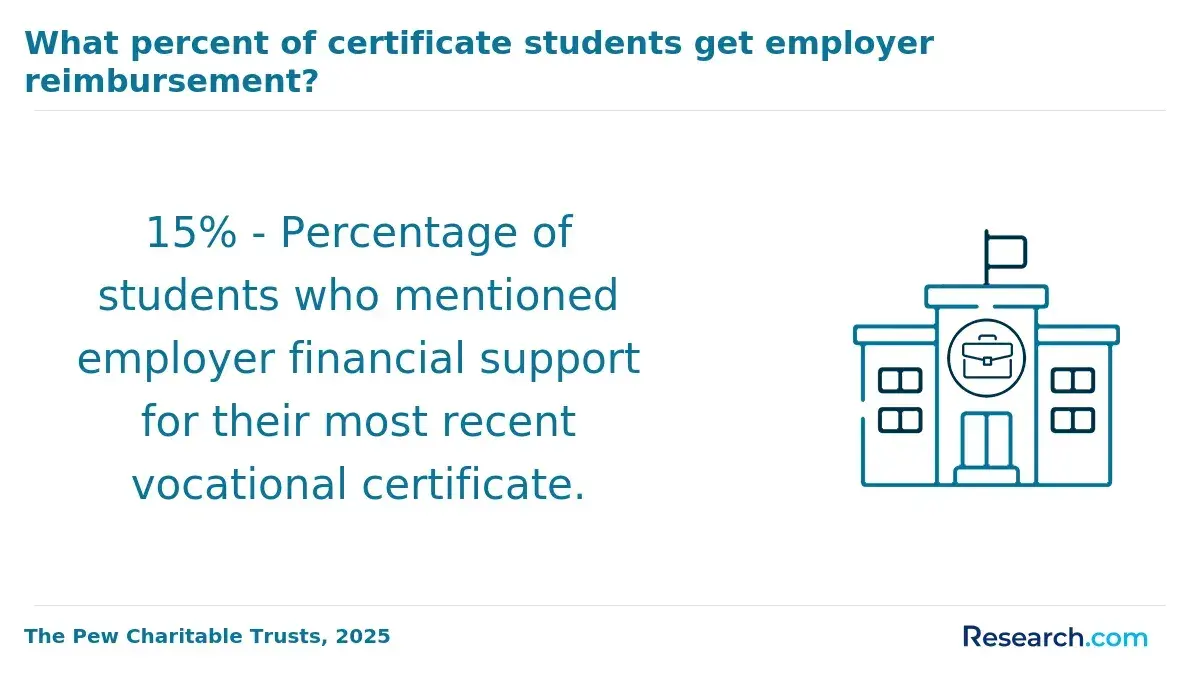
Many employers reimburse only after successful course completion, which means students may need to pay upfront and wait for repayment. Employers may also require grades of B or better, manager approval before the course begins, an accredited school, job relevance, and continued employment for a set period after reimbursement.
Review the policy carefully for these terms before enrolling. They determine whether the benefit reduces your real cost or simply delays it.
- Annual reimbursement cap and whether it resets by calendar year or academic year.
- Covered expenses, including tuition only or tuition plus fees, books, and certification costs.
- Preapproval deadlines and required documentation before each term.
- Service commitment after reimbursement and repayment rules if you resign.
- Whether the doctorate must relate directly to your current role or a documented internal career path.
Employer support is strongest when the program solves a clear organizational problem, such as improving specialty care outcomes, supporting evidence-based practice, leading staff education, or expanding advanced practice capacity. Nurses working in behavioral health settings who are comparing CNS leadership with psychiatric advanced practice roles may also evaluate best PMHNP programs online to see which pathway better matches employer priorities.
How can working professionals negotiate employer sponsorship for an online Clinical Nurse Specialist doctorate?
Negotiating employer sponsorship works best when you present the doctorate as a business case, not only as a personal education goal. Your employer needs to see how the program can improve patient outcomes, staff competency, quality metrics, retention, care coordination, or specialty service development.
Before speaking with your manager, prepare a concise proposal. The steps below help you connect program costs to measurable organizational value.
- Identify the employer's current priorities, such as reducing readmissions, strengthening evidence-based practice, improving specialty care protocols, or building internal nurse leadership.
- Map the CNS doctorate curriculum to those priorities, especially courses in systems leadership, quality improvement, population health, clinical consultation, and outcomes evaluation.
- Request a specific support package, such as annual reimbursement, paid practicum time, conference funding, flexible scheduling, or project data access.
- Offer a return-on-investment plan, such as leading a DNP project tied to a unit quality goal or developing staff education after each academic year.
- Clarify your commitment, including how long you intend to stay and how the role could expand after graduation.
Do not start the conversation by asking for the maximum benefit without showing the organizational payoff. A stronger approach is to bring the program's total cost, term-by-term schedule, accreditation status, and a proposed internal project that directly benefits your unit or service line.
If your employer is more familiar with nurse practitioner career ladders than CNS roles, it may help to explain how CNS practice differs from NP practice. A resource on how to become a nurse practitioner can help frame the comparison while you position the CNS doctorate around consultation, clinical expertise, quality improvement, and systems leadership.
What ROI can graduates expect from an online Clinical Nurse Specialist doctorate?
ROI for an online Clinical Nurse Specialist doctorate depends on your starting salary, tuition paid, debt level, employer support, completion time, and post-graduation role. The degree may be worth the investment for nurses aiming for advanced clinical leadership, CNS practice, quality improvement leadership, nursing education, program director roles, evidence-based practice leadership, or executive-track positions. It is less likely to make financial sense if you do not need a doctorate for your target role or if the program requires heavy borrowing without a realistic salary or promotion pathway.
National salary data has limitations because the U.S. Bureau of Labor Statistics does not publish a separate national wage series only for Clinical Nurse Specialists. For context, BLS 2024 data reported a median annual wage of $132,050 for nurse anesthetists, nurse midwives, and nurse practitioners as a broad APRN group, while medical and health services managers had a median annual wage of $117,960. These figures are not CNS-specific, but they show the salary environment for adjacent advanced clinical and healthcare leadership roles.
The table below gives a practical way to think about ROI by career outcome. It does not promise earnings; it shows which financial factors usually matter most for each path.
| Career direction | How the doctorate may create value | ROI factor to test before enrolling |
| Clinical Nurse Specialist practice | Supports advanced specialty expertise, consultation, staff development, and outcomes improvement | Whether employers in your state and specialty recognize and compensate CNS doctoral preparation |
| Quality or evidence-based practice leadership | Builds skills in systems change, data interpretation, and project implementation | Whether your organization has roles that reward doctoral-level quality leadership |
| Nursing education | May support faculty, clinical education, or academic-practice partnership roles | Whether the role requires a doctorate and whether salary offsets tuition cost |
| Healthcare administration | Can strengthen leadership credentials for service line, program, or clinical operations roles | Whether leadership experience matters more than the credential alone |
To estimate your personal payback period, subtract your current annual compensation from a realistic target role compensation, then compare the annual difference with your total net program cost after scholarships and employer reimbursement. Include loan interest if you borrow. A lower-cost program with strong employer support can have a very different ROI than a high-cost program financed mostly with Grad PLUS Loans.
Students considering alternative advanced practice roles should compare salary, scope, clinical placement requirements, and local demand. For example, nurses evaluating psychiatric advanced practice can review state-level psychiatric nurse practitioner salary data as one benchmark, while remembering that CNS, NP, leadership, and faculty roles follow different labor markets.
The strongest candidates for this investment usually have a clear role goal, a supportive employer, an accredited program, manageable debt, and a plan to use the DNP project as a career bridge. The riskiest path is enrolling mainly because the doctorate sounds prestigious without confirming licensure relevance, clinical placement support, total cost, and local employer demand.
Other Things You Should Know About Clinical Nurse Specialist
Yes. Accreditation can affect federal aid eligibility, employer reimbursement, transferability, and whether the degree is respected by healthcare employers. Look for institutional accreditation and appropriate nursing program accreditation, and confirm state requirements if the program affects APRN recognition.
Sometimes. Post-master's DNP students may receive credit for prior graduate coursework, but schools set their own limits. Ask for a transcript review before comparing costs because a lower per-credit rate may not be cheaper if the program accepts fewer transfer credits.
Part-time enrollment can make monthly or term-by-term payments easier, but it is not always cheaper overall. Extra semesters may add fees, and longer enrollment can increase the risk of tuition increases or project continuation charges.
Employer educational assistance is commonly tax-free up to $5,250 per year under federal rules, but amounts above that may be taxable unless another exclusion applies. Ask payroll or HR how your employer reports tuition benefits before relying on reimbursement.
References
- Doctor of Nursing Practice, Clinical Nurse Specialist https://www.pointloma.edu/graduate-studies/programs/doctor-nursing-practice-clinical-nurse-specialist
- Tuition Reimbursement for Nursing https://www.brighthorizons.com/employers/benefits/tuition-reimbursement-for-nursing
- Can You Get Financial Aid for Doctoral Programs? - Graduate Programs for Educators https://www.graduateprogram.org/blog/can-you-get-financial-aid-for-doctoral-programs/
- Clinical Nurse Specialist (CNS) Programs https://www.widener.edu/academics/graduate-studies/adult-gerontology-clinical-nurse-specialist-msn
- Your Guide to Online PhD Nursing Programs: What They Are, What to Expect, and How to Choose the Right One – FRESHRN https://www.freshrn.com/online-phd-nursing-programs/
- Tuition & Fees https://online.norwich.edu/online/paying/tuition-fees
- Top Online Clinical Nurse Specialist Programs (CNS Rankings) https://www.npschools.com/rankings/all-online-cns-programs
- Apply to the Nurse Corps Scholarship Program https://bhw.hrsa.gov/programs/nurse-corps/scholarship/apply
- Nursing Financial Aid https://nursinglicensemap.com/resources/nursing-financial-aid/
- Sign Up for the Journal of Nursing. https://www.asrn.org/journal-advanced-practice-nursing/3370-why-aren%E2%80%99t-nurses-using-employer-education-benefits-new-report-explains-why.html