2027 Online Christian Counseling Doctorate Programs with One-on-One Faculty Mentorship

Co-Founder and Chief Data Scientist
Choosing an online Christian counseling doctorate is difficult because "faculty mentorship" can mean anything from occasional advising to sustained dissertation guidance. The stakes are higher as demand for counseling-related roles continues to grow; the U. S. Bureau of Labor Statistics projects 17% growth for substance abuse, behavioral disorder, and mental health counselors from 2024 to 2034. This guide is for working counselors, ministry leaders, educators, and faith-integrated practitioners who want to compare programs, verify mentoring quality, and decide whether individualized doctoral support is worth the cost and commitment.
Key Things You Should Know
- Strong one-on-one mentorship is most valuable in doctoral programs with a dissertation, applied research project, supervision training, or faith-integrated clinical specialization; it is less critical if the program is mostly coursework-based.
- Mentorship quality depends on faculty availability, advising loads, research fit, communication frequency, and whether mentor assignment is formalized in the handbook rather than described only in marketing language.
- Cost should be judged against total credits, doctoral fees, residency travel, dissertation continuation costs, and financing rates; Federal Student Aid lists 7.94% for 2025-2026 Direct Unsubsidized Loans for graduate students.
How Does One-on-One Faculty Mentorship Work in Online Christian Counseling Doctorate Programs?
One-on-one faculty mentorship in an online Christian counseling doctorate usually means a doctoral student has direct access to a faculty member for academic planning, research development, professional formation, dissertation or capstone guidance, and sometimes career direction. It is different from routine academic advising, which often focuses on registration, policies, and degree progress.
In Christian counseling doctorates, mentorship also has a faith-integration dimension. A strong mentor helps students connect counseling theory, research ethics, clinical or pastoral practice, and theological commitments without treating faith as a superficial add-on. This is especially important for students preparing for counselor education, supervision, pastoral counseling leadership, marriage and family work, chaplaincy-adjacent roles, or ministry-based counseling programs.
The table below explains the main support roles students may encounter. This matters because schools often use similar words for very different levels of faculty access.
| Support role | What it usually covers | How personal it is | What to verify |
| Academic advisor | Course sequence, registration, policies, graduation requirements | Moderate | Whether the advisor is a faculty member or staff advisor |
| Faculty mentor | Research direction, professional goals, scholarly identity, faith integration | High when formalized | Meeting frequency, response time, and how mentors are assigned |
| Dissertation chair | Proposal development, methodology, committee coordination, final defense | High but research-focused | When students select a chair and whether faculty expertise fits the topic |
| Clinical or supervision mentor | Supervision practice, counselor educator identity, consultation skills | Varies | Whether the mentor is licensed and active in the relevant counseling field |
| Spiritual formation mentor | Vocational discernment, ministry identity, ethical faith integration | Varies | Whether this is part of the curriculum or an optional support service |
Students should expect a mix of synchronous and asynchronous interaction. A meaningful model often includes scheduled video meetings, detailed written feedback, dissertation milestone reviews, and access to faculty during research or practicum-related decision points.
Before treating mentorship as a program strength, ask schools to define it in operational terms. The most useful questions are specific and hard to answer with vague promotional language.
- Is every doctoral student assigned a faculty mentor, or must students request one?
- How often are one-on-one meetings expected during coursework, comprehensive exams, and dissertation work?
- Can students choose a mentor whose research, license, or ministry experience matches their goals?
- What is the typical faculty response-time expectation for doctoral students?
- Does mentorship continue through dissertation continuation terms if the student needs extra time?
Which Online Christian Counseling Doctorate Programs Offer the Strongest Faculty Mentorship?
The strongest programs are not simply the ones that advertise "personal attention." They are programs where mentorship is built into the doctoral structure through faculty advising, research supervision, dissertation committees, cohort seminars, residencies, and documented expectations for student-faculty interaction.
Because program details change, students should verify each school's current catalog, accreditation status, residency requirements, tuition, and faculty availability before applying. The table below highlights program types and examples that are commonly considered by students looking for online Christian counseling doctorates with substantial faculty involvement.
| Program or institution type to compare | Doctoral pathway | Mentorship signals to look for | Important caution | Best fit |
| Christian universities with CACREP-accredited counselor education doctorates, such as Liberty University or Regent University | PhD in Counselor Education and Supervision | Dissertation chair, doctoral faculty advising, supervision-focused coursework, residencies or intensives | CACREP accreditation supports counselor education alignment but does not automatically improve one-on-one availability | Licensed or license-track counselors pursuing teaching, supervision, leadership, or research roles |
| Christian institutions with clinical counseling or counseling supervision doctorates, such as Trevecca Nazarene University | PhD or similar doctorate in clinical counseling, teaching, or supervision | Faculty-led research development, supervision training, dissertation committee structure | Students should confirm whether the program is designed for licensure, post-licensure advancement, or academic leadership | Practitioners seeking doctoral-level teaching and supervision preparation |
| Faith-based universities with marriage and family therapy or professional counseling doctorates, such as Amridge University | PhD in MFT, professional counseling, or related field | Research chair, professional specialization advising, faculty with family systems or counseling credentials | Accreditation alignment may differ from CACREP counselor education pathways | Students focused on couples, family systems, family ministry, or therapy leadership |
| Theological schools and seminaries with pastoral counseling doctorates | DMin, PhD, or professional doctorate in pastoral counseling, care, or spiritual formation | Mentor teams, ministry project supervision, theological reflection, applied-practice faculty guidance | These programs may not prepare students for clinical counseling licensure | Pastors, chaplains, ministry counselors, and faith community leaders |
| Low-cost online counseling doctorates at religiously affiliated or broadly accessible institutions | PhD, EdD, or professional doctorate depending on school | Documented dissertation supervision, accessible faculty, clear online advising procedures | Lower tuition is valuable only if mentor access and completion support are adequate | Cost-sensitive doctoral students who can independently verify faculty fit |
A useful search strategy is to separate "Christian institution," "counseling doctorate," and "mentorship model" into three checks. A program can be Christian but not clinically oriented, clinically oriented but not faith-integrated, or inexpensive but thin on individualized faculty support.
Red flags include faculty pages with few full-time doctoral faculty, no clear dissertation chair process, no published handbook, and admissions advisors who cannot explain when mentor assignment occurs. A program with a small number of highly relevant faculty may still be excellent, but only if those faculty are actually available to doctoral students.
How Does Faculty Mentorship Support Dissertation or Applied Research in an Online Christian Counseling Doctorate?
Dissertation and applied-project support is where one-on-one mentorship often matters most. Doctoral students do not only need encouragement; they need a faculty guide who can help narrow a viable topic, select an appropriate method, address ethical issues, interpret literature, and keep the project aligned with degree expectations.
In Christian counseling, dissertation topics may involve clinical supervision, counselor education, pastoral care, trauma-informed ministry, marriage and family systems, addiction recovery, spiritual integration, or counseling ethics in faith-based settings. A mentor should help the student avoid two common problems: choosing a topic that is too broad and choosing a topic that is meaningful spiritually but weak methodologically.
The table below shows how mentorship should change as a student moves from early doctoral coursework to final defense or applied-project completion.
| Doctoral stage | What students need from a mentor | Strong mentorship looks like | Weak mentorship looks like |
| Early coursework | Topic exploration and professional identity development | Faculty help students connect assignments to a future research agenda | Students complete papers without building toward a coherent project |
| Research methods | Methodological fit and feasibility feedback | Mentor helps match question, population, data, and ethical review requirements | Student receives only generic comments such as "narrow the topic" |
| Proposal | Literature review, design, and committee preparation | Chair provides detailed written feedback and milestone expectations | Feedback is delayed or contradictory across faculty members |
| Data collection or applied implementation | Ethical oversight and problem-solving | Mentor helps manage recruitment, site access, permissions, and practical obstacles | Student must independently interpret all institutional requirements |
| Defense or final project | Synthesis, presentation, revision, and dissemination | Mentor prepares the student for critique and publication or professional use | Final feedback focuses only on formatting or compliance |
Students should ask whether dissertation chairs are assigned by topic, student preference, faculty availability, or program administration. Topic match is especially important if the student wants to study faith-integrated practice, because not every counseling faculty member is comfortable supervising theological analysis, biblical counseling perspectives, or ministry-based applications.
A practical safeguard is to identify at least two potential faculty mentors before applying. If only one professor fits the student's topic and that professor goes on leave, changes roles, or has a full advising load, the student may have limited alternatives.
One-on-one mentorship can improve doctoral progress when it creates clarity, accountability, and early intervention. It does not guarantee faster completion, but it can reduce avoidable delays caused by unclear research direction, weak topic fit, inconsistent feedback, or isolation in an online format.
Online doctoral students are often working adults with counseling caseloads, ministry responsibilities, family obligations, or teaching duties. For these students, mentor access matters because small delays can compound: a late proposal review can push back ethical approval, which can delay data collection, which can extend tuition-bearing continuation terms.
Mentorship is most likely to support completion when it is structured around milestones. Students should look for a program that explains the expected sequence rather than leaving progress to informal initiative.
- Coursework builds toward a research or applied-project agenda instead of treating each class as separate.
- The program identifies when students move from general advising to dissertation chair supervision.
- Students receive written expectations for comprehensive exams, proposal approval, research ethics review, and final defense.
- Faculty feedback is timely enough to support enrollment planning and financial planning.
- Students have a process for changing mentors if research fit, availability, or communication breaks down.
The main mistake is assuming "mentor assigned" means "mentor available." Students should ask how many doctoral advisees each faculty member typically supports, whether faculty teach heavy course loads, and whether dissertation chairs are compensated or given workload credit for doctoral supervision.
A highly structured cohort program may be better than a loosely defined one-on-one model for students who need fixed deadlines and peer accountability. Individual mentorship is most valuable when the student also has the discipline to prepare agendas, submit drafts, and act on feedback consistently.
Faculty mentorship models vary widely. Some online Christian counseling doctorates are mentor-centered from admission to graduation, while others rely on coursework faculty until the dissertation stage. Neither model is automatically better; the best choice depends on the student's experience level, research goals, schedule, and need for structure.
The table below compares common models so students can identify the trade-offs before enrolling.
| Mentorship model | How it works | Strengths | Limitations | Best for |
| Assigned faculty mentor from entry | Student is paired with a faculty member early in the program | Continuity, early research shaping, stronger professional formation | Match may be weak if assignment is based on availability rather than interest | Students with a clear doctoral direction who want sustained guidance |
| Dissertation-chair model | Students receive general advising until they select or are assigned a chair | Efficient for coursework-heavy programs and students still exploring topics | Limited individualized research support before the dissertation phase | Students who want flexibility before committing to a research area |
| Cohort plus faculty advisor | Students progress with peers and have faculty oversight | Peer accountability, predictable pacing, shared doctoral culture | Less individualized if cohort deadlines drive the experience | Working adults who benefit from structure and community |
| Mentor team or committee model | Multiple faculty or practitioner mentors support research, ministry, and professional goals | Broader expertise and less dependence on one professor | Feedback may be harder to coordinate | Interdisciplinary topics involving counseling, theology, leadership, or ministry |
| Low-residency intensive model | Online coursework is paired with campus or virtual intensives | Stronger relationship-building and face-to-face dissertation planning | Travel, scheduling, and added costs may be significant | Students who want online flexibility but value concentrated faculty access |
Students comparing doctoral and master's-level pathways should also be careful about degree purpose. If the real goal is initial counselor preparation rather than doctoral scholarship or leadership, online masters programs for counseling may be the more appropriate starting point because licensure preparation in counseling commonly begins at the master's level.
The best mentorship model is the one that solves the student's biggest risk. For a strong self-directed researcher, a dissertation-chair model may be enough. For a practitioner returning to school after many years, an assigned mentor or cohort model may provide better support. For a pastor or ministry leader studying counseling applications, a mentor team may offer better integration of theology and practice.
Faculty mentorship can support career growth by helping students translate doctoral work into teaching, supervision, consulting, ministry leadership, publishing, conference presentations, or advanced clinical specialization. The strongest mentors do more than approve assignments; they help students understand how doctoral training fits a professional identity.
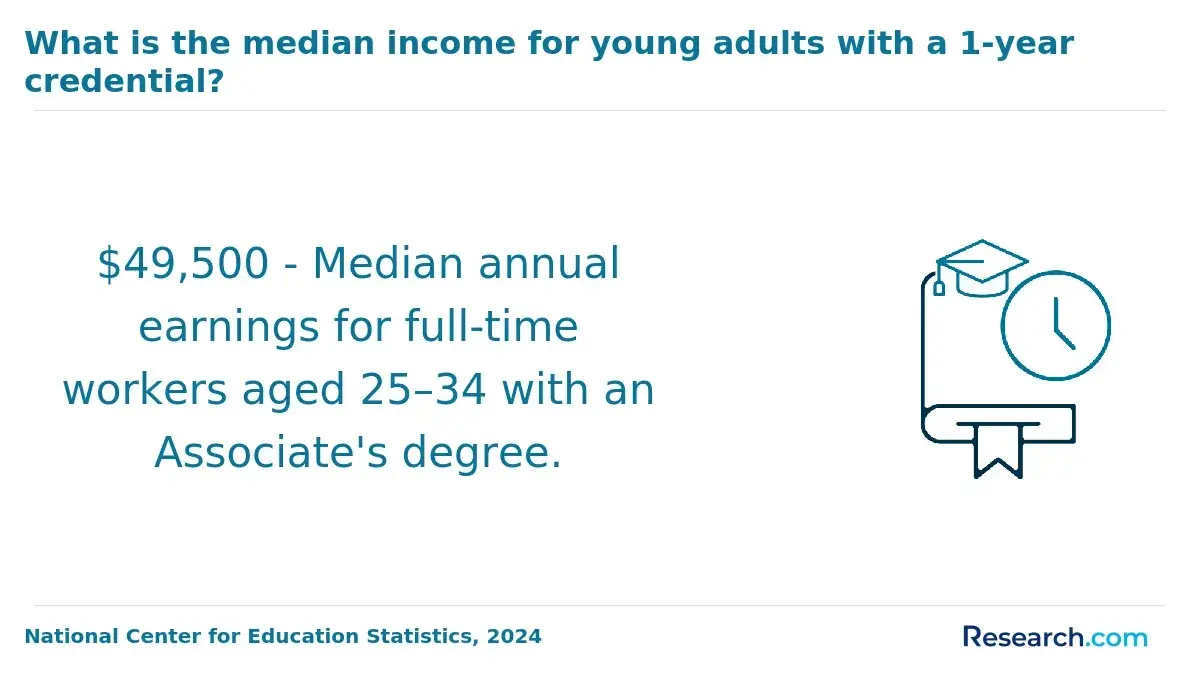
The counseling labor market is growing, but a doctorate is not required for every counseling role. The U.S. Bureau of Labor Statistics reported a May 2024 median annual wage of $59,190 for substance abuse, behavioral disorder, and mental health counselors. That figure is not a doctoral salary benchmark, but it helps students compare the opportunity cost of doctoral study with the earnings context of counseling-related work.
Faculty mentorship may be especially useful for students targeting roles where reputation, supervision experience, scholarship, or professional networks matter. These opportunities are often built through repeated faculty interaction, not just a credential line on a résumé.
- Teaching: mentors can help students develop syllabi, teaching philosophy statements, guest lectures, and evidence of instructional effectiveness.
- Supervision: licensed faculty can model ethical supervision, feedback practices, gatekeeping responsibilities, and counselor educator identity.
- Research and publishing: mentors can guide students toward conference proposals, journal submissions, and realistic publication timelines.
- Faith-based leadership: mentors can help students apply counseling research to churches, nonprofits, recovery ministries, schools, and community programs.
- Professional networking: faculty can introduce students to associations, alumni, research groups, and practitioner communities when appropriate.
Students interested in couples and family systems should also compare doctoral counseling options with master's-level preparation routes such as the best online MFT programs, especially if licensure as an LMFT is the immediate goal. A doctorate can deepen leadership or scholarship, but it usually should not replace the required master's foundation for regulated therapy roles.
A common misconception is that one-on-one mentorship automatically includes job placement. It usually does not. Students should ask whether faculty actively support conference participation, teaching assistantships, supervision experience, alumni connections, or publication opportunities.
A strong doctoral mentor should have the academic, professional, and faith-integration background to guide the student's actual goal. A respected theologian may not be the right mentor for a clinical supervision dissertation, and a licensed counselor may not be the best fit for a pastoral theology project unless the faculty member also understands ministry-based research.
Students should evaluate mentors in three areas: scholarly competence, professional relevance, and mentoring capacity. The table below summarizes what to look for when reviewing faculty profiles.
| Mentor qualification | Why it matters | What students should check |
| Earned doctorate in a relevant field | Supports advanced research supervision and doctoral-level scholarship | Degree field, dissertation area, institution, and fit with the program's focus |
| Clinical license or supervision credential when relevant | Important for students studying counselor education, supervision, or therapy practice | LPC, LMFT, psychologist, supervisor status, or other state-recognized credentials |
| Active research or publication record | Shows familiarity with current literature and scholarly expectations | Recent articles, books, conference presentations, or grants |
| Faith-integration experience | Helps students connect counseling ethics, theology, spiritual care, and professional standards | Courses taught, ministry experience, publications, or supervised projects in faith-integrated practice |
| Doctoral mentoring experience | Reduces risk during dissertation or applied-project stages | Number of dissertations chaired, completion history, and student testimonials where available |
Students should also look beyond titles. "Professor," "program director," or "department chair" does not automatically mean the faculty member has time for intensive mentoring. Senior faculty may have high expertise but limited availability, while newer faculty may be accessible but still developing a dissertation-chair record.
The best way to evaluate fit is to read faculty bios, review recent scholarship, and ask admissions whether prospective students may speak with faculty before applying. If the answer is no, ask for a program webinar, sample dissertation titles, or a list of faculty research interests.
One-on-one faculty mentorship can raise the value of an online Christian counseling doctorate, but it does not automatically justify a higher price. The value depends on whether mentorship helps the student complete a dissertation, build professional opportunities, avoid unnecessary extension terms, and pursue a goal that truly requires doctoral preparation.
Cost comparison should include more than tuition. Many doctoral students focus on per-credit price but overlook continuation fees, technology fees, residency travel, books, research costs, transcript fees, and the income trade-off of spending evenings or weekends in doctoral work.
Federal financing costs also matter. For 2025-2026, Federal Student Aid lists 7.94% as the fixed interest rate for Direct Unsubsidized Loans for graduate and professional students and 8.94% for Direct PLUS Loans. For students borrowing a large portion of doctoral costs, mentorship has financial value only if it helps reduce avoidable delays or supports a career path where the doctorate is meaningfully useful.
When comparing programs, organize costs into categories that affect both affordability and completion risk.
- Direct academic costs: per-credit tuition, required credits, dissertation continuation enrollment, university fees, and graduation fees.
- Online learning costs: technology fees, software, research tools, library access requirements, and proctoring costs.
- Residency costs: travel, lodging, meals, missed work, and childcare if the program requires intensives.
- Research costs: transcription, survey tools, participant recruitment, editing, statistical consultation, or ministry-site permissions.
- Financing costs: loan interest, origination fees, employer tuition benefits, scholarships, and repayment timeline.
A lower-cost program can offer excellent value if faculty are accessible and the dissertation process is clear. A higher-cost program may be worth it if it provides a strong mentor match, recognized accreditation for the student's goal, relevant faculty expertise, and structured completion support. Students who need a broad affordability benchmark can compare options through cheapest online PhD in counseling resources, then investigate whether low tuition comes with sufficient doctoral mentoring.
The wrong value calculation is "more mentorship equals better ROI." The better calculation is "does this specific mentoring model reduce my biggest academic, financial, or career risk?"
One-on-one mentorship is most valuable for students whose doctoral goals require individualized intellectual development, ethical judgment, and professional positioning. It is less important for students who only want a credential, are not ready for independent research, or would be better served by a master's-level licensure program.
The students who benefit most usually share one or more of the following characteristics.
- They have a specific research, supervision, teaching, or ministry-leadership question that needs expert guidance.
- They are working professionals who need help connecting doctoral assignments to real counseling, ministry, or organizational problems.
- They plan to write a dissertation or applied project involving faith integration, clinical ethics, trauma, addiction, family systems, or counselor education.
- They are first-generation doctoral students who need help understanding academic culture, scholarly writing, and faculty expectations.
- They want to move into teaching, supervision, consulting, or program leadership rather than only continuing the same clinical role.
Students may benefit less from a mentorship-centered doctorate if they need initial licensure preparation, want the fastest route into counseling practice, or are unsure whether they can commit to doctoral-level research. In that case, alternatives such as accelerated mental health counseling programs online may better match the immediate goal.
Students should also be honest about how they use support. Mentorship works best when students prepare meeting agendas, submit drafts on time, ask direct questions, and act on feedback. A passive student may not benefit from even a strong mentor, while a proactive student may thrive in a program with moderate but reliable faculty access.
How Should Students Evaluate Faculty Mentorship Before Choosing an Online Christian Counseling Doctorate?
Students should evaluate mentorship before applying, not after enrollment. The goal is to confirm whether faculty support is formal, accessible, relevant, and sustainable across the full doctoral timeline.
A practical evaluation process should combine website review, document review, direct questions, and conversations with people who have experienced the program. Use the steps below to test whether mentorship is real or mostly promotional.
- Read the doctoral handbook and catalog to find where mentor assignment, dissertation chair selection, communication expectations, and progress milestones are documented.
- Review full-time faculty profiles and identify at least two people whose expertise fits your intended research or professional goal.
- Ask admissions when students receive a mentor and whether the mentor is faculty, staff, dissertation chair, program director, or committee member.
- Ask how many doctoral students each faculty member typically advises or chairs and whether faculty availability changes by term.
- Request examples of recent dissertation or applied-project topics to see whether the program supports work similar to yours.
- Ask whether meetings are synchronous, asynchronous, or both, and whether students can schedule recurring one-on-one sessions.
- Speak with current students or alumni about response times, feedback quality, mentor access, and dissertation-stage support.
- Confirm accreditation, licensure alignment, residency requirements, transfer-credit policies, and whether the doctorate fits your state and career goal.
The most important red flag is vague certainty. If a school promises "individualized support" but cannot describe meeting frequency, mentor assignment, dissertation-chair availability, or escalation procedures when mentorship fails, treat the claim cautiously. A trustworthy program can explain not only what support exists but also what happens when a student needs more help than expected.
Other Things You Should Know About Christian Counseling
Not always. Christian counseling is a broad term that may include licensed clinical counseling with faith integration, pastoral counseling, spiritual care, or ministry-based support. Biblical counseling usually refers to an approach centered more explicitly on Scripture and church-based care, and it may not be designed for state clinical licensure.
Usually not by itself. State counselor licensure typically depends on a qualifying master's degree, supervised clinical hours, exams, and state board rules. A doctorate may support teaching, supervision, leadership, or specialization, but students should verify licensure requirements with their state board before enrolling.
Some programs require or strongly prefer applicants who already hold a counseling-related master's degree and clinical license, especially counselor education and supervision doctorates. Pastoral counseling or ministry-oriented doctorates may admit applicants with theological, ministry, or human services backgrounds instead.
They can be, especially when the institution is properly accredited, the program aligns with the role, and the student's research or practice experience is relevant. Employers may evaluate accreditation, faculty quality, dissertation topic, license status, teaching experience, and professional reputation rather than online format alone.
- Advance Your Ministry: Doctorate in Christian Counseling! https://andersonvilleseminary.com/gradulate/doctor-of-ministry-christian-counseling/
- Service Center https://cutsedu.org/doctor-of-philosophy-in-christian-counseling-ph-d-c-c/
- Best Online Master's in Christian Counseling in 2025 https://www.onlinemastersdegrees.org/best-programs/counseling/christian-counseling/
- Best Online Psychology Degrees: Differences Between Christian and Secular Schools - Grace Christian University https://gracechristian.edu/blog/best-online-psychology-degrees-differences-between-christian-and-secular-schools/
- COST/ FEES | United States | Restrorative Christian Counseling https://www.restorativechristian.org/cost-fess
- Undergraduate Programs https://christianbibleinstitute.net/doctorate-degree-programs/doctor-of-christian-counseling-and-psychology-cpsy-d/
- Doctor of Christian Psychology and Counseling Online https://cornerstonechristianuniversity.com/programs/christian-psychology-and-counseling/doctor-of-christian-psychology-and-counseling/
- Doctor of Christian Counseling - Logos University https://logos.edu/academics/graduate-programs/doctor-of-christian-counseling/
- Does the program you study at university actually affect your career outcomes in Sackville? https://bealuniversity.ca/paa/does-university-program-affect-career-outcomes/
- Mentorship in Teacher Education Programs: A Review of ... https://tecnoscientifica.com/journal/apga/article/download/679/354