2027 Online Chemistry Degree Programs With No Letters of Recommendation Required

Co-Founder and Chief Data Scientist
An online chemistry degree can be difficult to compare when schools use different admissions rules, lab formats, and tuition models. Programs with no required recommendation letters may suit working adults, transfer students, and applicants without recent faculty contacts. The National Center for Education Statistics reported that 54% of postsecondary students took at least one distance-education course in fall 2022, showing how common online study has become.
This guide explains what "no letters required" actually means, what schools review instead, and how to verify program quality before applying.
Key Things You Should Know
- "No letters of recommendation required" means an application can be submitted without references; it does not mean transcripts, prerequisite science courses, GPA standards, fees, essays, or placement requirements are waived.
- Legitimate online chemistry options are usually undergraduate completion or bachelor's programs with online coursework and in-person, hybrid, virtual, or intensive laboratory requirements; confirm the exact degree and lab model before applying.
- Use institution-wide accreditation, transparent tuition, transferable-credit policies, and career alignment - not streamlined admissions alone - to compare programs; published undergraduate tuition averages for 2024-25 were $11,610 at public four-year in-state institutions and $43,350 at private nonprofit four-year institutions.
Which Online Chemistry Degree Programs Require No Letters of Recommendation?
Fully online bachelor's degrees titled "chemistry" are less common than online biology, biochemistry, environmental science, or health-science programs because chemistry education requires substantial hands-on laboratory work. However, some universities use general undergraduate admissions processes that do not request recommendation letters for online applicants. A school may offer chemistry coursework online while requiring campus laboratory sessions, so applicants should distinguish between an online degree, an online completion pathway, and an online science-related degree.
The examples below identify program types and institutions that prospective students may investigate. Admissions policies, available concentrations, and lab-residency formats can change by term; verify the requirements shown for the exact online program and applicant category before paying an application fee.
| Option to investigate | Typical delivery pattern | Recommendation-letter approach to verify | Best fit |
| Arizona State University Online science pathways | Online lecture coursework with program-specific science requirements | General undergraduate admission commonly relies on academic records rather than recommendations | Students seeking a large online university and broad course availability |
| University of North Dakota online science coursework or degree pathways | Online courses may support degree completion; labs can have separate requirements | Check the current undergraduate or transfer application checklist | Transfer students needing upper-division science planning |
| Oregon State University Ecampus science-related pathways | Online coursework; availability varies by major and laboratory sequence | Confirm whether the specific major, not merely the university, has no-reference admission | Students open to related fields such as environmental or biological sciences |
| Online biology or biochemistry-adjacent programs | Primarily online, often with virtual or local lab options | Many undergraduate applications do not use recommendation letters, but requirements differ | Applicants whose career goal does not require a traditional chemistry major |
For students interested in molecular science, health professions preparation, or laboratory-adjacent work, a biology degree online may offer more fully online choices than a chemistry major. That alternative is not automatically interchangeable with chemistry: review prerequisite requirements for graduate school, clinical programs, and employer roles.
A program is truly "no letters required" only when its current application instructions state that recommendations are not requested. "Optional," "encouraged," "required for scholarship consideration," and "waived for applicants with a certain GPA" are different policies. Ask admissions whether letters are needed for admission, departmental review, honors consideration, research placements, or financial awards.
What Are the Admission Requirements for Online Chemistry Degree Programs With No Recommendation Letters?
Most no-recommendation undergraduate applications replace subjective references with documented academic evidence. Requirements vary between first-year, transfer, degree-completion, and postbaccalaureate applicants. Chemistry applicants should expect schools to review preparation in mathematics and laboratory science carefully because later courses build sequentially from general chemistry through organic, analytical, physical, or biochemistry.
The following comparison shows common requirements and why they matter when recommendation letters are absent.
| Application item | How it is commonly used | What applicants should check |
| Official transcripts | Documents GPA, completed credits, and academic trends | Whether all colleges attended must submit records |
| High school record or GED credential | Often required for first-year applicants | Required math and science units |
| College prerequisite courses | Determines readiness for upper-division chemistry | Minimum grades and whether labs transfer separately |
| Personal statement | May explain goals, career changes, or academic context | Whether it is required, optional, or limited to particular applicants |
| Resume or employment history | Can add context for adult and returning learners | Whether relevant technical or laboratory experience is requested |
| Placement or readiness assessment | May place students into mathematics or chemistry sequences | Whether prior coursework can satisfy the assessment |
Some institutions are test optional for SAT or ACT scores, while others do not use them for many adult or transfer applicants. Graduate chemistry programs are more likely to request a statement, résumé, prerequisite coursework, and sometimes references, even when an undergraduate online application does not. Do not assume a no-letter undergraduate policy applies to a master's program.
Before applying, use a short verification process:
- Open the admission page for the exact degree, concentration, term, and applicant type.
- Download or save the current checklist and note every required academic record, prerequisite, and deadline.
- Ask whether chemistry labs must be completed on campus, through an approved local provider, or during a residency.
- Confirm whether a recommendation is needed for scholarships, research, departmental admission, or later progression into the major.
Applicants exploring pharmacy-oriented careers should also compare prerequisite science sequences with the cheapest online pharmacy school pathway. A chemistry bachelor's degree can support pharmacy-school preparation, but it does not replace Pharm.D. admission requirements.
Are Online Chemistry Programs With No Letters of Recommendation Easier to Get Into?
Not necessarily. Removing recommendation letters makes the application less burdensome, particularly for applicants who have been out of school or lack recent academic contacts. It does not establish a lower academic standard. A program can have streamlined paperwork while still requiring a competitive GPA, completed calculus or chemistry prerequisites, satisfactory transfer grades, and successful progress through demanding laboratory courses.
Admissions difficulty has two separate parts: getting admitted to the institution and qualifying for the chemistry curriculum. Some schools admit students broadly to the university, then require a minimum grade in general chemistry, calculus, or introductory laboratory classes before students enter upper-division coursework. Others review direct admission to the major. Ask which model applies.
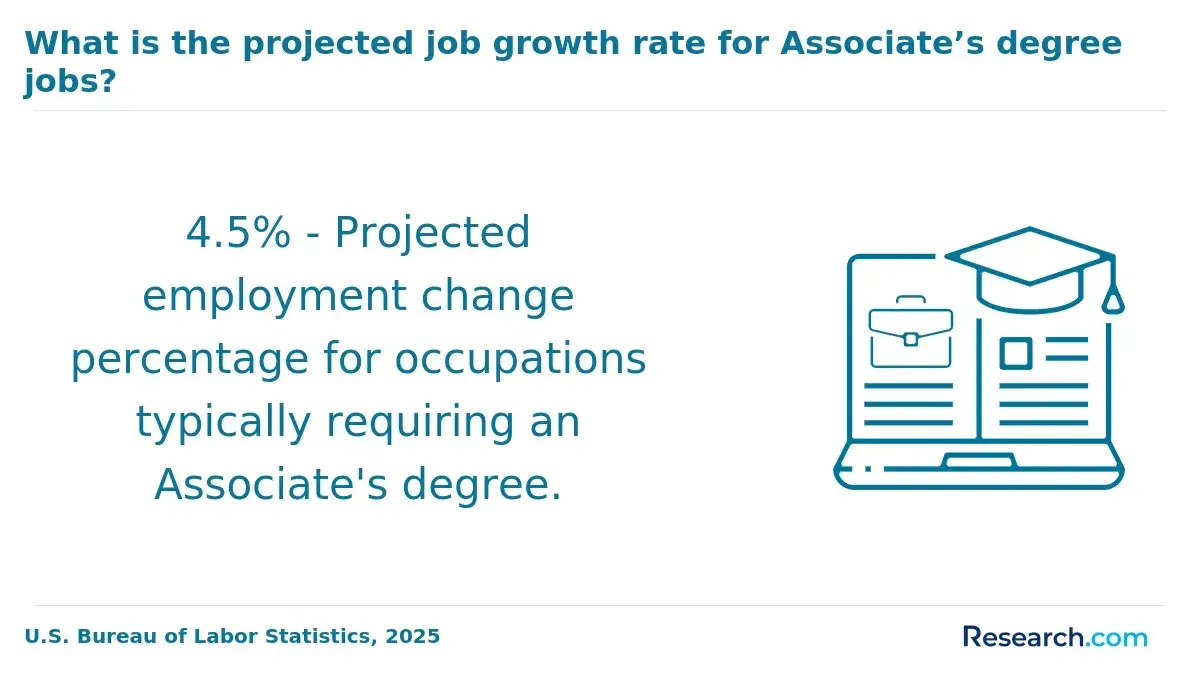
The Bureau of Labor Statistics projects employment of chemists and materials scientists to grow 8% from 2023 to 2033, faster than the average for all occupations. That outlook supports careful planning for science skills, but it does not mean every chemistry program or graduate will have identical job prospects. Geographic location, laboratory experience, degree level, and specialization remain important.
A no-letter program may be a good option for applicants with a solid transcript and clear academic record. It may be less suitable for applicants who need recommendations to explain exceptional research potential, strengthen a weak GPA, or compete for selective research opportunities. In those cases, an optional-reference program may provide more room to present strengths.
Without letters, admissions teams typically place more weight on evidence that can be consistently reviewed across applicants. The goal is not simply to identify who can complete an online course; it is to determine whether the student has the academic foundation and capacity to succeed in sequential quantitative science classes.
These materials can help an applicant present a complete record when references are not part of the file.
- Course performance: Grades in general chemistry, organic chemistry, algebra, calculus, physics, and laboratory courses can demonstrate readiness for advanced study.
- Academic trend: More recent strong grades may help contextualize older coursework, although each institution sets its own GPA rules.
- Personal statement: A concise statement can connect prior learning, career goals, and reasons for choosing an online or hybrid chemistry format.
- Relevant experience: Quality-control, manufacturing, environmental monitoring, pharmacy technician, laboratory support, or military technical experience may add context when a résumé is accepted.
- Prerequisite mapping: Transfer evaluations show whether completed courses match required lecture and lab components.
A strong application is specific rather than promotional. Explain how prior courses prepared you for the next chemistry sequence, identify any planned laboratory arrangements, and disclose only relevant context for gaps or unusual grades. Avoid submitting an essay written for another program without adapting it to the institution's curriculum and delivery format.
Chemistry can also lead toward health-system and operations careers, but the educational focus differs. Students who prefer organizational work over laboratory science may find an online masters healthcare management more aligned with their long-term goals after completing an appropriate undergraduate degree.
Accreditation and laboratory quality matter more than whether a program requests letters. In the United States, students should first verify that the institution holds recognized institutional accreditation. This affects federal financial-aid eligibility, credit transferability, employer confidence, and graduate-school review. Then examine whether the chemistry curriculum has appropriate faculty oversight, laboratory instruction, safety training, and transparent learning outcomes.
Chemistry bachelor's programs may seek American Chemical Society approval, but ACS approval is not the same as institutional accreditation and is not available for every degree format. It can be a useful indicator for students who want a traditional professional chemistry curriculum or plan to pursue doctoral study, but its absence does not automatically make a program illegitimate. Ask whether the degree meets ACS-certified or approved curriculum expectations, if that distinction matters for your goal.
Use these checks before enrolling:
- Search the institution in the U.S. Department of Education and Council for Higher Education Accreditation directories, and confirm that its accreditor is recognized.
- Review the catalog for degree title, required credits, course descriptions, faculty credentials, and the laboratory sequence.
- Get the online lab format in writing, including equipment, safety procedures, on-site requirements, and any travel costs.
- Confirm that the school is authorized to enroll students in your state and ask whether any professional outcome has state-specific restrictions.
- Request net-price information, transfer-credit evaluation procedures, withdrawal policies, and contact details for academic advising.
Red flags include vague claims that a degree is "accredited" without naming the accreditor, pressure to enroll before receiving a written cost estimate, no published faculty or catalog, and promises of guaranteed jobs or licensure. A legitimate school should clearly identify its degree-granting authority and explain how students complete laboratory learning safely.
Students considering a clinical transition should not confuse a chemistry degree with nursing preparation. A fasttrack medical option has separate clinical placement, state approval, and licensure considerations that must be reviewed independently.
No-recommendation admissions do not determine tuition. Total cost depends on residency, public or private status, transfer credits, course load, required laboratory sessions, technology fees, textbooks, proctoring, and travel for intensives. Published tuition is only one part of the decision; students should compare a written estimate for the entire degree path.
For context, College Board reported average published 2024-25 tuition and fees of $11,610 for in-state students at public four-year colleges and $43,350 at private nonprofit four-year colleges. These national figures are not online-chemistry price quotes, and they exclude room, board, books, transportation, and program-specific laboratory costs. They are useful as a broad benchmark when judging whether a school's annual tuition is unusually high or low.
Cost comparisons are most useful when the same assumptions are used for every school.
| Cost category | Why it varies | Question to ask |
| Per-credit tuition | Residency, program, and undergraduate status can affect the rate | Is the listed rate guaranteed for online students? |
| Mandatory fees | Technology, distance-learning, student-service, and graduation fees may apply | Which fees are charged each term? |
| Laboratory expenses | Home kits, local labs, residencies, supplies, and safety equipment create added costs | What is the expected cost for every required lab? |
| Transfer credit | Accepted credits can reduce the number of courses purchased from the institution | How many credits are likely to apply to the major? |
| Travel and lodging | Hybrid laboratories or residencies can require campus visits | How often must students travel, and is travel included in estimates? |
Compare cost alongside outcomes. A lower-priced program may be a better value if it has the needed laboratory access, transferable credits, and academic support. Conversely, a higher-priced option should offer a clear benefit, such as a required specialization, better scheduling, or a lab format that works for your location.
Yes, eligible students can generally receive federal financial aid for online study when they enroll in an eligible program at an institution recognized for federal student-aid purposes. The absence of recommendation letters does not affect FAFSA eligibility. Aid depends on factors such as enrollment status, financial circumstances, satisfactory academic progress, program eligibility, and remaining annual and lifetime aid limits.
Start with the FAFSA and the school's financial-aid office. Ask whether online students are charged the same fees as campus students, whether laboratory intensives alter enrollment status, and whether institutional scholarships require a separate application or references. Some merit scholarships may have requirements beyond basic admission.
Borrow cautiously, especially if the degree requires travel or unpaid laboratory time. Review grants, scholarships, employer tuition assistance, payment plans, and federal loans before considering private loans. Federal Student Aid reports that the FAFSA is used to determine eligibility for federal grants, work-study, and loans; the actual aid package still differs by school and individual circumstances.
If your interest is more directly tied to healthcare operations than laboratory chemistry, an affordable healthcare administration course pathway may be worth comparing for curriculum, cost, and career relevance.
A bachelor's degree usually requires about 120 semester credits, but completion time depends far more on transfer credit, prerequisite sequencing, and laboratory availability than on the recommendation-letter policy. A first-year student studying full time may follow a four-year plan. A transfer or degree-completion student with accepted general education and science credits may need less time, while part-time enrollment, repeated prerequisites, or limited lab scheduling can extend the timeline.
Chemistry is a sequence-heavy major. General chemistry commonly precedes organic chemistry, which may precede biochemistry or advanced laboratory courses. Mathematics and physics prerequisites can create additional dependencies. Online formats may improve scheduling flexibility for lectures but cannot eliminate course order or required lab competencies.
Before committing, request a term-by-term graduation plan that identifies remaining courses, lab dates, transfer-credit assumptions, and the latest possible completion term. Be cautious of "accelerated" marketing that does not explain how hands-on labs, safety training, and upper-division chemistry are completed. Fast pacing is only valuable if it preserves the preparation needed for your intended job or graduate program.
Many online programs accept transfer credits, but the number applied to the chemistry major can be more limited than the number accepted toward total graduation credits. General education courses often transfer more easily than laboratory science courses because schools must evaluate lecture hours, lab hours, content coverage, grades, recency, and safety standards.
Transfer applicants should submit official transcripts early and ask for a preliminary evaluation before making an enrollment decision. A course called "General Chemistry I" may not fulfill the same requirement at every institution if its laboratory component was separate, virtual, or missing from the transcript.
To reduce surprises, compare the following items in writing:
- The maximum number of transfer credits allowed toward the degree and toward the chemistry major.
- The minimum grade required for chemistry, mathematics, physics, and laboratory transfer courses.
- Whether old science credits have a recency limit for prerequisite or graduation use.
- How AP, CLEP, military training, community-college courses, and prior online labs are evaluated.
- The institution's residency requirement, meaning credits that must be completed through the degree-granting school.
Do not rely on an admissions representative's informal estimate alone. Obtain the official evaluation, identify any missing laboratory requirements, and calculate how those decisions affect tuition and completion time. Recommendation letters are generally unrelated to transfer-credit review.
How Should You Compare Online Chemistry Degree Programs That Do Not Require Letters of Recommendation?
Compare programs by their ability to support your intended outcome, not just by the convenience of the application. A no-letter policy is especially useful for returning students, career changers, military-connected learners, and transfer applicants who can document academic readiness but do not have suitable references. It is less important than curriculum quality if you plan to enter laboratory research, graduate school, teaching, health-professional school, or a regulated technical role.
This comparison framework separates admissions convenience from the factors most likely to affect your education and next steps.
| Comparison factor | What to look for | Why it matters |
| Exact degree title | BA, BS, chemistry, biochemistry, environmental chemistry, or related science | Graduate programs and employers may expect specific coursework |
| Laboratory model | In-person, local partner, residential intensive, virtual, or hybrid labs | Hands-on practice and travel requirements can affect readiness and cost |
| Accreditation and curriculum | Recognized institutional accreditation, published catalog, qualified faculty, and transparent outcomes | Supports transferability, aid eligibility, and program credibility |
| Admissions policy | Explicit statement that recommendations are not required for your applicant type | Prevents incomplete applications and deadline problems |
| Academic support | Tutoring, office hours, lab support, career services, and disability services | Online quantitative science courses require reliable support |
| Total net cost | Tuition, fees, labs, travel, books, and likely transfer credits | Shows the practical financial commitment |
| Career and graduate-school fit | Internships, research access, required prerequisites, and alumni outcomes | Helps determine whether the degree supports the next credential or role |
After narrowing your list, contact each program with the same questions: Are letters required for my exact application type? Where and when are laboratories completed? Which credits will transfer? What will I pay after all mandatory fees? Does the curriculum meet prerequisites for my target graduate or professional program? Save answers in writing so policies can be compared fairly.
The strongest choice is not always the school with the shortest application. Choose a program when its laboratory format, academic sequence, accreditation status, price, and career relevance all match your circumstances. If the school cannot clearly answer those questions, continue comparing options.
Other Things You Should Know About Chemistry
Many do. Chemistry degrees commonly require hands-on laboratory experiences that may occur through campus residencies, approved local facilities, intensive sessions, or hybrid formats. Review the lab schedule before enrolling because travel, safety training, and equipment costs can affect feasibility.
You may be able to apply, but no-letter admission does not remove GPA or prerequisite standards. Consider strengthening your record through transferable chemistry or math coursework, explaining relevant circumstances when an essay is available, and asking whether conditional admission or academic advising options exist.
They can be. A program may not require letters for general admission but may request them for scholarships, honors, research placements, internships, or graduate-school applications. Check each opportunity separately rather than relying on the main admissions checklist.
Verify them when you begin researching, again before submitting the application, and whenever you defer to a later term. Schools may change deadlines, prerequisites, test policies, lab arrangements, and document requirements between admission cycles.
- CEG's Ultimate Guide for Choosing Your High School Courses https://www.collegeessayguy.com/blog/how-to-choose-high-school-courses
- College Applications Without Essays: Do They Exist? https://collegewise.com/blog/college-application-without-essay
- Application Guidelines https://abclinchem.org/application-guidelines/
- Online Organic Chemistry Course: Complete Guide for Healthcare Students https://acceleratedsciences.scuhs.edu/online-organic-chemistry-course-complete-guide-for-healthcare-students/
- EdAssist | Understanding the college application process https://www.brighthorizons.com/resources/blog/edassist/understanding-the-college-application-process-your-ultimate-guide
- How to Make Your College App Stand Out | CollegeXpress https://www.collegexpress.com/articles-and-advice/admission/articles/improve-your-chances/how-to-make-your-college-applications-stand-out/