2027 Accredited Online Chemistry Degree Programs for Working Adults: Flexible, Part-Time, and Self-Paced Options

Co-Founder and Chief Data Scientist
Choosing an online chemistry degree while working full time is really a scheduling, cost, and accreditation decision. NCES reported in its 2024 distance education data that more than half of U. S. undergraduates took at least one online course, showing that flexible study is now mainstream rather than unusual. This guide is for adults comparing accredited online chemistry programs, including part-time and self-paced options. You will learn how formats differ, what labs require, how costs and transfer credits affect completion time, and how to choose a program that fits both your work schedule and career goals.
Key Things You Should Know
- Accreditation is nonnegotiable: choose an institution recognized by the U.S. Department of Education or CHEA, and check whether chemistry-specific recognition such as ACS approval matters for your graduate school, employer, or certification goals.
- Part-time online chemistry study can fit full-time work, but it is still demanding: a 6-credit load often represents about 18 hours of weekly academic work when class time, labs, homework, and exam preparation are included.
- A 120-credit bachelor's degree usually takes about 4 years full time, longer part time, but transfer-friendly programs may reduce the timeline significantly if they accept prior general education, math, and science credits.
What Is an Accredited Online Chemistry Degree Program and Why Does Accreditation Matter?
An accredited online chemistry degree program is a college program delivered fully or mostly online by a recognized institution. It may lead to an associate, bachelor's, post-baccalaureate certificate, or master's degree in chemistry or a closely related field such as chemical science, biochemistry, or applied chemistry. For working adults, the key distinction is that lecture content, assignments, discussion boards, tutoring, and advising may be online, while laboratory work may require home lab kits, virtual simulations, short campus intensives, or approved local lab placements.
Accreditation matters because it is the quality-control system that affects financial aid eligibility, transfer credit, graduate school admission, and employer recognition. In the U.S., the most important baseline is institutional accreditation from an agency recognized by the U.S. Department of Education or the Council for Higher Education Accreditation. Program-level recognition may also matter: the American Chemical Society approves some bachelor's chemistry programs, although not every reputable online chemistry degree has ACS approval.
The table below summarizes the main accreditation checks and why they matter for adults who may be using transfer credits, employer tuition benefits, or federal aid.
| Accreditation or recognition type | What it tells you | Why working adults should care |
| Institutional accreditation | The college or university meets recognized academic and operational standards. | It is commonly required for federal financial aid, credit transfer, and employer tuition reimbursement. |
| Programmatic chemistry recognition | A chemistry curriculum may meet discipline-specific expectations, such as ACS-related standards. | It can matter for graduate study, research-oriented roles, or employers that prefer a traditional lab-science curriculum. |
| State authorization | The school is allowed to offer online education to students in your state. | It protects you from enrolling in a program that cannot legally serve your location. |
| Professional or licensure alignment | The curriculum may or may not meet requirements for teaching, clinical laboratory, environmental, or regulated roles. | Requirements vary by state and job type, so you should verify alignment before enrolling. |
A common mistake is assuming "online" means "less rigorous." In chemistry, accredited online programs still need to teach quantitative reasoning, laboratory methods, safety, instrumentation, and scientific writing. The delivery format may be flexible, but the academic expectations should be comparable to campus-based science degrees.
Which Flexible Chemistry Degree Formats Are Best for Working Adults: Part-Time, Full-Time, or Self-Paced?
The best format depends on how predictable your work schedule is, how quickly you want to finish, and how much structure you need. Chemistry is less flexible than many online majors because laboratory courses, proctored exams, and sequential prerequisites can limit when courses are offered.
The table below compares common online chemistry formats so you can match the learning model to your work and family schedule.
| Format | Best fit | Main advantage | Main trade-off |
| Part-time asynchronous | Adults working full time or managing caregiving responsibilities | You can complete weekly work around shifts, commuting, or family obligations. | Progress is slower, and lab courses may still have fixed deadlines. |
| Full-time online | Students who can reduce work hours or study as their primary commitment | You may finish faster and maintain momentum through prerequisite sequences. | The workload can be difficult with full-time employment. |
| Self-paced or competency-based | Self-directed learners with prior college experience or strong science preparation | You may move faster through familiar material. | Not all chemistry courses work well in this model, especially lab-heavy or sequential courses. |
| Synchronous live online | Students who want instructor interaction and scheduled accountability | Live lectures and discussions can help with difficult concepts. | Fixed meeting times may conflict with evening shifts or rotating schedules. |
| Hybrid online with lab intensives | Students near campus or able to travel briefly | Hands-on lab experience may be stronger than simulation-only models. | Travel, lodging, and time off work can raise the real cost. |
As a rule of thumb, choose part-time study if your income depends on keeping full-time hours, if your work schedule changes, or if you are returning to science after a long break. Choose full-time study only if you can realistically protect weekday study blocks and handle multiple math and lab courses at once. Choose self-paced study if you are highly organized and the program clearly explains course access windows, lab requirements, grading timelines, and maximum completion limits.
Before choosing a format, ask each school practical scheduling questions rather than relying on marketing language. The phrase "flexible" can mean very different things from one program to another.
- Ask whether lectures are asynchronous, live, or a mix of both.
- Confirm whether exams require specific testing windows or live proctoring appointments.
- Find out how labs are completed and whether any campus visits are mandatory.
- Check whether chemistry courses are offered every term or only once per year.
- Ask whether part-time students have the same course access, advising, and financial aid options as full-time students.
The main red flag is a program that advertises "work at your own pace" but does not clearly explain lab logistics, course sequencing, or deadline policies. Chemistry degrees depend heavily on prerequisites, so one missed course can delay graduation by a term or more.
What Are the Admission Requirements for Accredited Online Chemistry Degree Programs?
Admission requirements vary by degree level, but accredited online chemistry programs usually review academic readiness more carefully than open-enrollment general studies programs. Chemistry requires algebra, quantitative reasoning, and lab science preparation, so admissions teams often look for evidence that you can handle college-level math and science.
Most undergraduate online chemistry programs ask for a high school diploma or equivalent, official transcripts, and placement information for math and writing. Transfer applicants may need college transcripts from every institution attended. If you are coming from another science pathway, such as a biology degree online, ask whether your general chemistry, organic chemistry, statistics, calculus, and lab credits will apply directly to the major.
The table below shows typical requirements by program level, along with what working adults should prepare before applying.
| Program level | Common admission requirements | Adult-learner planning note |
| Associate degree or lower-division transfer pathway | High school diploma or GED, placement testing, prior transcripts if applicable | Useful if you need prerequisites before entering a bachelor's program. |
| Bachelor's degree completion program | Prior college credits, minimum GPA, completed general education or science prerequisites | Best for adults who already have transferable credits and want to avoid starting over. |
| Full bachelor's program | High school or college transcripts, math placement, application form, possible prerequisite review | Works for students with few prior credits, but completion may take longer. |
| Master's degree in chemistry or chemical science | Bachelor's degree, prerequisite chemistry coursework, GPA minimum, recommendations, possible statement of purpose | Often intended for teachers, industry professionals, or applicants preparing for advanced technical roles. |
If you have been out of school for several years, do not assume that older credits are unusable. Many schools accept older general education credits, but may review older lab science and math credits more carefully because chemistry content and instrumentation expectations change over time.
Adults can reduce application delays by preparing documents before speaking with admissions. Focus on records that help the school evaluate both admission and transfer credit at the same time.
- Official transcripts from all colleges previously attended
- Course descriptions or syllabi for chemistry, math, biology, physics, and lab courses
- Military, workplace, or professional training records if the school reviews prior learning
- Documentation of employer tuition assistance rules, if you plan to use workplace benefits
- A realistic weekly schedule showing when you can study, attend labs, and take exams
A common mistake is applying before asking how prerequisites are sequenced. If general chemistry is offered only in the fall and organic chemistry only after that sequence, your start date can affect the entire graduation timeline.
The cost of an online chemistry degree depends on tuition, fees, transfer credits, lab supplies, proctoring, books, technology, and travel for any required in-person labs. College Board's 2024 pricing data reported average published tuition and fees for full-time undergraduates at public four-year in-state institutions of $11,610 for the academic year, which provides a useful benchmark when comparing online public university options. Private and out-of-state online programs may cost substantially more, so the listed per-credit tuition is only the starting point.
When comparing costs, separate tuition from the total cost of attendance. Chemistry students may face added expenses because lab kits, goggles, lab manuals, software, scientific calculators, webcam proctoring, or short campus residencies can increase the real price.
- Public in-state tuition benchmark: $11,610 for published tuition and fees at public four-year institutions in College Board's 2024 data
- Common online cost items: per-credit tuition, distance learning fees, technology fees, lab kits, textbooks, proctoring, and graduation fees
- Possible hidden expenses: travel for lab intensives, lost wages for required daytime labs, course repeat costs, and prerequisite courses that do not count toward the major
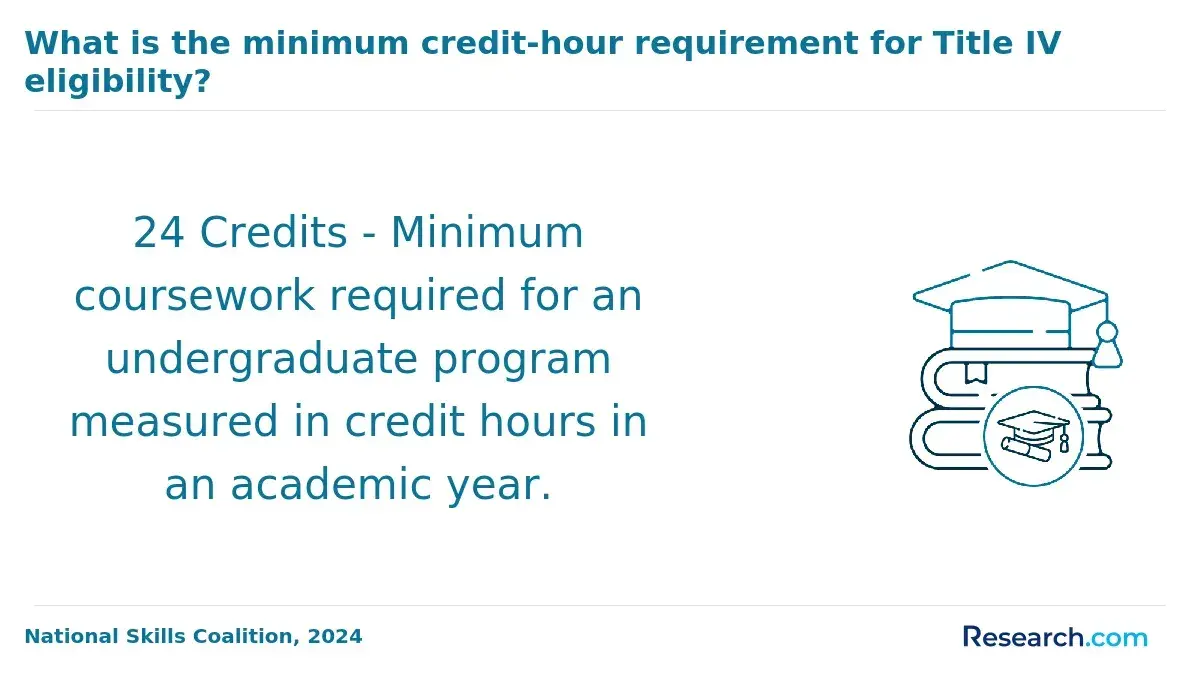
Financial aid may include federal grants, federal student loans, state grants, institutional scholarships, employer tuition assistance, military education benefits, and payment plans. To qualify for federal aid, the school generally must be properly accredited and eligible to participate in Title IV federal student aid programs.
Students comparing chemistry with other science-heavy or health-related degrees should look at total program cost, not just the advertised tuition. For example, someone comparing a chemistry pathway with the cheapest online pharmacy school options should remember that professional programs often add clinical, licensing, and residency-related expenses that are different from undergraduate chemistry costs.
Use a simple cost-control process before enrolling. These steps are especially important if you are working full time and cannot afford surprise costs after the refund deadline.
- Request a written estimate that includes tuition, mandatory fees, lab fees, books, technology, and travel requirements.
- Ask how your transfer credits affect both total cost and remaining time to graduation.
- Confirm whether part-time enrollment changes your financial aid eligibility or employer reimbursement schedule.
- Check whether lab courses cost more than lecture courses.
- Compare the net price after grants, scholarships, employer benefits, and transfer credits, not the sticker price alone.
The most common cost mistake is choosing the lowest per-credit price without checking how many credits you must actually complete at that school. A slightly higher tuition rate can be cheaper overall if the program accepts more transfer credits and avoids unnecessary prerequisite repeats.
A bachelor's degree in chemistry generally requires around 120 credits, including general education, math, physics, chemistry lecture courses, and chemistry labs. Full-time students often finish in about 4 years, while part-time working adults may need 5 to 7 years depending on course load, transfer credit, and lab scheduling.
The table below gives a practical comparison of completion timelines and workload patterns. These are planning ranges, not promises, because each school sets its own calendar, credit requirements, and transfer policy.
| Enrollment pattern | Typical credit load | Planning timeline | Workload consideration |
| Full-time | 12 to 15 credits per term | About 4 years for a full bachelor's degree | Difficult to combine with full-time employment, especially during lab terms. |
| Half-time | 6 to 8 credits per term | Often 5 to 7 years without major transfer credit | More realistic for full-time workers but requires long-term consistency. |
| Accelerated with transfer credit | Varies by remaining credits | Potentially 2 to 3 years if many credits apply | Depends heavily on whether prior science and math credits satisfy major requirements. |
| Self-paced | Variable | Can be faster or slower depending on progress limits | Requires strong self-management and clear lab access policies. |
Transfer credit can shorten both time and cost, but chemistry majors need to be careful. General education courses often transfer more easily than upper-division chemistry labs. Organic chemistry, physical chemistry, analytical chemistry, calculus, and physics may be reviewed for recency, lab equivalency, credit hours, and syllabus match.
To evaluate transfer-credit potential, do not rely on a verbal estimate alone. Ask for a formal or preliminary degree audit before you commit.
- Ask how many credits can transfer into the degree overall.
- Confirm how many credits must be completed at the enrolling institution.
- Ask whether online, community college, military, or prior learning credits are accepted.
- Check whether older chemistry and math courses expire or require department review.
- Request a term-by-term plan showing exactly when remaining chemistry courses are offered.
A major red flag is a school that gives only a rough credit estimate before enrollment but will not show how credits apply to the major. For working adults, the difference between elective credit and major credit can mean extra semesters, extra debt, and delayed career plans.
When comparing accredited online chemistry degree programs, look beyond the word "online." The best program for a working adult is one that combines recognized accreditation, realistic lab access, predictable scheduling, strong transfer policies, transparent cost, and career-relevant curriculum.
The table below highlights key comparison factors and why each one matters when your time, budget, and work schedule are limited.
| Comparison factor | What to review | Why it matters |
| Accreditation | Institutional accreditation and any chemistry-related recognition | Supports aid eligibility, transfer, employer recognition, and graduate school options. |
| Lab model | Home kits, simulations, campus intensives, or local lab partnerships | Determines travel needs, hands-on experience, and schedule flexibility. |
| Course delivery | Asynchronous, synchronous, self-paced, or cohort-based | Affects whether you can study around fixed or rotating work hours. |
| Course availability | How often core chemistry courses are offered | Sequential courses can delay graduation if offered only once per year. |
| Transfer policy | Maximum transfer credits, science-course review, residency requirements | Can significantly reduce time and total cost. |
| Career alignment | Research preparation, teaching prerequisites, industry skills, instrumentation | Helps match the degree to lab, education, environmental, quality control, or graduate school goals. |
It is also useful to identify red flags early. The following mistakes are common among adults who need flexibility but also need a degree that will hold up academically and professionally.
- Enrolling without verifying institutional accreditation in an official database
- Assuming "self-paced" means no deadlines, no exams, or no lab schedule
- Choosing a program before confirming whether labs require travel or weekday attendance
- Comparing only tuition rates while ignoring fees, lab supplies, and course repeat costs
- Failing to request a transfer-credit audit before paying a deposit
- Assuming every online chemistry degree meets teaching, clinical laboratory, or state licensing requirements
- Underestimating the workload of math-heavy courses while working full time
A strong program should be able to answer specific questions clearly. If admissions staff cannot explain lab requirements, course sequencing, transfer limits, or state authorization, keep comparing options before you enroll.
A chemistry degree can support careers in laboratory testing, quality control, environmental analysis, technical sales, education, manufacturing, regulatory work, and graduate or professional study. It is most valuable when paired with practical lab skills, data analysis, safety training, instrumentation experience, and clear career planning.
BLS wage data published in 2024 places chemist pay in roughly the mid-$80,000 range nationally, but salary varies by industry, location, education level, and experience. This number should be treated as labor-market context rather than a promise; entry-level roles, technician roles, and roles requiring graduate education can fall above or below that benchmark.
The table below shows common career directions connected to chemistry and the kind of preparation that may be expected.
| Career direction | Typical responsibilities | Education or preparation note |
| Chemist or research associate | Conduct experiments, analyze compounds, document results, maintain lab safety | A bachelor's degree may qualify for some roles; research-intensive positions may prefer graduate study. |
| Quality control analyst | Test raw materials or finished products, validate results, follow standard operating procedures | Strong lab technique, documentation, and instrumentation skills are important. |
| Environmental laboratory analyst | Analyze water, soil, air, or waste samples for regulatory or compliance purposes | May require knowledge of EPA methods, sample handling, and state-specific rules. |
| Chemistry teacher pathway | Teach chemistry concepts, manage classroom labs, prepare students for exams | Usually requires state teacher certification in addition to academic coursework. |
| Technical sales or scientific support | Explain scientific products, support customers, translate technical information | Communication skills and applied chemistry knowledge are valuable. |
| Healthcare or laboratory management pathway | Coordinate teams, oversee compliance, support operations, manage budgets | Additional business or healthcare administration training may be useful. |
Chemistry can also serve as a foundation for professional school or broader healthcare and operations roles. If you are interested in the management side of health organizations rather than laboratory science, an affordable healthcare administration course or degree pathway may align better with your long-term goals.
Current trends affecting chemistry careers include automation in labs, AI-assisted data analysis, tighter documentation expectations, and continued demand for workers who can combine scientific knowledge with regulatory, quality, and data skills. For adults choosing an online program, this means curriculum quality matters: look for courses that build analytical reasoning, lab documentation, software familiarity, and real-world problem-solving, not just textbook knowledge.
Balancing a chemistry degree with full-time work is possible, but it requires more structure than many online majors. Chemistry courses often combine reading, problem sets, lab reports, calculations, quizzes, and exams. A single 4-credit lab science course can feel heavier than a 4-credit lecture-only course because lab preparation and reports add time.
The most realistic plan is to protect study time before the term begins. Working adults should build a schedule around the hardest courses first, then add easier general education or elective courses only if there is enough capacity.
- Start with one science or math course in your first term if you have been out of school for a while.
- Place study blocks on your calendar before work shifts, childcare routines, and commute time consume the week.
- Avoid taking organic chemistry, calculus, and a lab-intensive course together while working full time unless you have unusually strong preparation.
- Use employer tuition benefits carefully by matching course loads to reimbursement rules and grade requirements.
- Tell family members or roommates which hours are reserved for labs, exams, and weekly deadlines.
- Build a backup plan for proctored exams, internet outages, unexpected overtime, and family emergencies.
Part-time enrollment is often the better choice for adults who need predictable income, but it can increase the risk of stopping out if the degree stretches too long. To reduce that risk, ask your advisor to create a term-by-term plan that keeps prerequisite sequences moving even when you take fewer credits.
The biggest mistake is treating asynchronous courses as optional until the end of the week. In a chemistry course, falling behind by even one module can affect labs, quizzes, and later calculations. A better approach is to set two or three shorter study sessions during the week and one longer weekend block for labs or problem sets.
Strong student support is especially important in online chemistry because students need help with both difficult concepts and practical logistics. A good program should not leave you to figure out lab kits, proctoring, transfer credits, tutoring, or software access on your own.
Look for support services that are available outside traditional weekday business hours. This matters for adults who work shifts, care for children, or study in the evenings.
- Online tutoring for general chemistry, organic chemistry, calculus, statistics, and physics
- Faculty office hours offered virtually and at varied times
- Academic advising that understands prerequisite sequencing for chemistry majors
- Library access to scientific journals, citation tools, and research databases
- Technical support for learning platforms, lab simulations, proctoring systems, and chemistry software
- Career services that can help with laboratory resumes, internships, graduate school planning, and employer outreach
- Disability accommodations and accessibility support for online labs, exams, and course materials
Adults comparing science and healthcare training options should pay attention to how quickly support teams respond. Programs serving learners in accelerated clinical pathways, such as fasttrack medical programs, often show why timely advising and clear schedules matter: delays in labs, clinicals, or prerequisites can affect the whole completion plan.
A useful test is to contact advising before applying and ask a detailed question about lab scheduling or transfer credit. The quality of the answer can reveal how well the program supports online science students after enrollment.
Do Online Chemistry Degree Programs Include Internships, Practicums, or Other Hands-On Learning Requirements?
Yes, many online chemistry degree programs include hands-on learning, but the format varies widely. Chemistry is an experimental science, so credible programs need a way to teach lab safety, measurement, observation, error analysis, lab reporting, and instrumentation concepts. The hands-on requirement may be built into individual lab courses rather than labeled as an internship or practicum.
The table below compares common hands-on formats. Use it to understand what each model means for time, travel, and learning experience.
| Hands-on format | How it works | Planning issue for working adults |
| Home lab kits | Students complete approved experiments at home using shipped materials and safety instructions. | Requires safe space, careful scheduling, and strict adherence to disposal rules. |
| Virtual labs and simulations | Students use software to model experiments, instruments, or chemical processes. | Flexible, but may not replace all hands-on experience needed for some goals. |
| Campus lab intensives | Students travel to campus for concentrated lab sessions over several days or weeks. | Requires time off work, travel budgeting, and family coverage. |
| Local lab arrangements | Students complete approved lab work at a partner or nearby institution. | Availability varies by location and may require advance approval. |
| Internship or research project | Students gain applied experience in an academic, industry, environmental, or quality-control setting. | May require daytime availability or employer coordination. |
Not every chemistry career requires an internship, but applied experience can strengthen your resume. If your goal is laboratory employment, ask whether the program includes instrumentation, chromatography, spectroscopy, wet chemistry techniques, safety documentation, and lab report writing. If your goal is management after technical experience, you may eventually compare science credentials with an online masters healthcare management program or similar leadership pathway.
Before enrolling, ask exactly how hands-on learning is assessed. A credible program should be able to explain safety rules, required materials, grading rubrics, lab-report expectations, and what happens if you cannot attend a scheduled lab intensive.
Other Things You Should Know About Chemistry
Yes, but you may need refresher coursework in algebra, general chemistry, or basic lab science. Starting with one demanding course can help you rebuild study habits before taking multiple STEM courses together.
It can be, because chemistry covers important prerequisites such as general chemistry and organic chemistry. However, professional schools set their own admission requirements, so you should compare the degree plan with each target school's prerequisite list.
Employers are more likely to focus on accreditation, skills, lab experience, and the reputation of the institution than on whether lectures were online. For lab roles, be prepared to explain how your program handled hands-on training.
Most chemistry programs require college algebra or precalculus at minimum, and many bachelor's programs require calculus, statistics, and physics. Physical chemistry and analytical chemistry can be especially math-intensive.
- Flexible Learning Options: Asynchronous, Online, Part-Time and more https://www.fanshawec.ca/blog/flexible-learning-asynchronous-online-part-time
- Quality Without Compromise: How to Maintain Standards & Elevate Learning in Online Lab Courses https://www.scienceinteractive.com/blog/2025/quality-without-compromise-how-to-maintain-standards-elevate-learning-in-online-lab-courses/
- Chemistry - Self-Paced - Excelsior Classes https://excelsiorclasses.com/product/self-paced-chemistry/
- Study Chemistry in Poland - - Bachelors & Masters Guide https://www.studyeurope.in/study-chemistry-in-poland/
- Online, Hybrid, and More: Flexible Learning Options in College - ReUp Education https://reupeducation.com/blog/online-hybrid-and-more-flexible-learning-options-in-college/
- Online Bachelor's Degree Completion Financial Aid https://www.hamline.edu/admission-aid/financial-aid/online-bachelors
- Admissions Criteria https://ed.wum.edu.pl/pl/admissions-criteria
- Chemistry Labs Online and Remote: Practical Solutions https://lms.ectnmoocs.eu/courses/course-v1:ECTN+DIST002+2025v1/about
- Free Tuition – TCSG | Technical College System of Georgia https://www.tcsg.edu/free-tuition/