2027 Best Accredited Online Chemistry Degree Programs: Compare Tuition, Admissions, and Career Outcomes

Co-Founder and Chief Data Scientist
Choosing an online chemistry degree is harder than comparing tuition because lab access, accreditation, transfer credit, and career fit can change the value of a program. The stakes are real: the Bureau of Labor Statistics reported a May 2024 median salary of $87,180 for chemists and materials scientists, but many roles require the right lab preparation. This guide is for working adults, transfer students, and first-time students comparing accredited options. You will learn how to evaluate cost, admissions, formats, support, and outcomes before applying.
Key Things You Should Know
- Best overall value usually comes from regionally accredited public universities or transfer-friendly online programs that combine reasonable per-credit tuition, supervised lab pathways, and clear chemistry or biochemistry degree requirements.
- College Board's 2024 pricing data shows average published tuition and fees of $11,610 for in-state public four-year colleges and $43,350 for private nonprofit four-year colleges, so residency, transfer credits, and fees can matter as much as the sticker price.
- A bachelor's degree can support technician, quality control, environmental testing, or entry-level research roles, while graduate study is often more useful for advancement, teaching, or specialized R&D work.
Which Accredited Online Chemistry Degree Programs Offer the Best Overall Value?
The best accredited online chemistry degree program is not automatically the cheapest one. Because chemistry is a laboratory science, value depends on whether the program offers credible lab training, transfer pathways, academic advising, and a degree title that matches your career goal.
Fully online bachelor's programs in chemistry are less common than online business or psychology degrees because general chemistry, organic chemistry, analytical chemistry, and physical chemistry often require hands-on lab work. Students who want maximum online flexibility may also compare chemistry with a biology degree online, especially if their long-term goal is healthcare, environmental science, or graduate study rather than chemical manufacturing or lab-based chemistry research.
The table below summarizes common accredited online or mostly online chemistry-related pathways. Use it as a value framework, then verify the current catalog, lab requirements, tuition, and state authorization directly with each school.
| Program pathway | Best fit | Value strengths | Important trade-off |
| Online B.S. or B.A. in Chemistry | Students seeking broad preparation for laboratory, technical, graduate, or pre-professional pathways | Most direct degree title for chemistry careers; may include advanced chemistry coursework | May require in-person, at-home, or locally proctored labs that reduce flexibility |
| Online B.S. in Biochemistry | Students interested in biotechnology, pre-health, pharmaceuticals, or molecular science | Strong fit for healthcare and life science pathways that blend chemistry and biology | May be less focused on industrial, analytical, or physical chemistry than a chemistry major |
| Online M.S. in Chemistry | Working professionals, teachers, or graduates seeking advanced subject knowledge | Can improve eligibility for senior technical, teaching, or specialized roles | May require a chemistry bachelor's degree and prior lab coursework |
| Online Chemistry Education or Science Education Degree | Current or aspiring teachers who need chemistry content plus pedagogy | Often designed for working educators and school schedules | Teacher licensure requirements vary by state and may require student teaching or exams |
| Online chemistry courses within a science degree | Transfer students completing prerequisites for health, engineering, or graduate programs | Useful for completing general, organic, or biochemistry prerequisites | Course credits may not equal a full chemistry major, and lab transfer rules can be strict |
For most undergraduates, the strongest value comes from a regionally accredited program that accepts prior credits, provides a realistic lab plan, and offers advising for graduate school or employment. For professionals who already hold a bachelor's degree, a targeted online master's may offer better return on investment than starting a second undergraduate degree.
A common mistake is treating "online" as a single format. In chemistry, a program with a few required campus lab intensives may be less convenient but academically stronger than a program that avoids advanced lab work entirely.
What Accreditation Should Students Look for in an Online Chemistry Degree Program?
Accreditation is the first quality filter for any online chemistry degree. At minimum, the college or university should hold institutional accreditation from an agency recognized by the U.S. Department of Education or the Council for Higher Education Accreditation.
Programmatic accreditation is more specialized. In chemistry, the American Chemical Society approves certain bachelor's chemistry programs, but not every legitimate chemistry degree is ACS-approved, and many online or hybrid programs may be regionally accredited without ACS approval. ACS approval can be valuable for students targeting graduate chemistry programs, research roles, or employers that prefer a traditional chemistry curriculum.
Use the following checklist before applying because accreditation affects credit transfer, graduate admissions, employer recognition, and eligibility for federal financial aid.
- Confirm institutional accreditation through the school's official accreditation page and the U.S. Department of Education database.
- Check whether the chemistry department states ACS approval, ACS-certified degree tracks, or no specialized chemistry approval.
- Ask whether online students earn the same diploma and transcript notation as campus students.
- Verify that required labs meet the expectations of graduate programs, medical schools, pharmacy schools, or employers you may target.
- Confirm state authorization if you live outside the school's home state, especially when labs, internships, or teacher licensure are involved.
The biggest red flag is a school that advertises accreditation vaguely without naming the accreditor. Another warning sign is a chemistry program that cannot clearly explain how students complete lab learning outcomes.
How Do Tuition Costs Compare Across Accredited Online Chemistry Degree Programs?
Tuition comparisons can be misleading because online chemistry students may pay per-credit tuition, technology fees, lab kit fees, proctoring costs, textbooks, software costs, travel for campus labs, or extra tuition for repeated lab courses. The most useful comparison is total estimated degree cost after transfer credits and aid, not tuition alone.
College Board's 2024 data shows a wide national gap in published tuition and fees: $11,610 for the average in-state public four-year institution compared with $43,350 for the average private nonprofit four-year institution. For chemistry students, that gap should be weighed against lab access, course availability, time to completion, and whether the program prevents delayed graduation.
The table below shows how major cost categories usually affect online chemistry students. It is not a substitute for a school-specific bill, but it helps identify where hidden costs often appear.
| Cost factor | Why it matters in chemistry | How to compare programs |
| Per-credit tuition | Chemistry degrees commonly require about 120 credits at the bachelor's level or about 30 credits at the master's level | Multiply tuition by remaining credits after transfer evaluation, not by the full degree if you have prior credits |
| Lab fees and materials | Online labs may use kits, simulations, shipped materials, or campus intensives | Ask for a course-by-course fee estimate for general, organic, analytical, and physical chemistry labs |
| Residency and online pricing | Some public universities charge different rates for in-state, out-of-state, and online students | Confirm whether online students pay a flat distance-learning rate or residency-based tuition |
| Transfer credit limits | Strong transfer policies can reduce total cost substantially | Request an unofficial transfer review before committing to enrollment |
| Time to graduation | Infrequent lab course offerings can add extra terms | Ask for a full degree map showing when required chemistry courses are offered |
Students choosing between a lower-cost public option and a higher-cost private option should look at completion risk. A cheaper program that delays required labs for a year may cost more in lost time than a program with a higher per-credit rate but a clearer sequence.
Admissions competitiveness varies widely by degree level. Many online bachelor's programs are transfer-friendly and focus on college readiness, while online master's programs typically expect prior coursework in general chemistry, organic chemistry, analytical chemistry, physical chemistry, calculus, and sometimes physics.
For undergraduate applicants, chemistry programs often evaluate whether the student is ready for math-intensive science coursework. A flexible admissions policy does not necessarily mean the program is academically easy; it may simply mean the school admits a broad group of students and then uses prerequisites to control progression into upper-division chemistry.
Before applying, compare admissions requirements in the areas that most directly affect your timeline and likelihood of success.
- Math placement: Ask whether you can begin chemistry immediately or must complete college algebra, precalculus, or calculus first.
- Science prerequisites: Confirm whether prior general chemistry or biology courses are required for transfer or upper-division admission.
- Minimum GPA: Check both general university admission standards and chemistry department progression standards.
- Lab credit acceptance: Ask whether online, community college, AP, CLEP, or prior military science credits meet lab requirements.
- Graduate prerequisites: For master's programs, confirm whether deficiencies can be completed after admission or must be finished before applying.
A common mistake is applying before getting a transfer evaluation. Chemistry sequences are cumulative, so one missing prerequisite can postpone organic chemistry, analytical chemistry, or physical chemistry and extend the degree by multiple terms.
The most flexible online chemistry programs are usually asynchronous for lectures but more structured for labs, exams, and upper-division science courses. Students should compare not only whether the program is "online," but also how often they must attend live sessions, travel, complete lab work, or take proctored exams.
The table below compares common formats and the type of student each one serves best. This distinction matters because the wrong format can increase withdrawal risk even when the curriculum is strong.
| Format | Flexibility level | Best for | Potential drawback |
| Fully asynchronous online courses | High | Working adults who need weekly flexibility | Requires strong self-discipline and may not fit complex lab courses |
| Synchronous online courses | Moderate | Students who want live instruction and instructor interaction | Class times may conflict with work or caregiving schedules |
| Hybrid lab intensives | Moderate | Students who can travel occasionally for hands-on laboratory work | Travel, lodging, and time off work can add cost |
| At-home lab kits | High for location, moderate for scheduling | Introductory science courses and students far from campus | May not satisfy every employer, graduate program, or professional school requirement |
| Local-site supervised labs | Variable | Students near an approved college, employer lab, or testing facility | Approval processes can take time and may not be available everywhere |
Students who need the greatest flexibility should ask for a sample weekly schedule, exam policy, and lab plan before enrolling. If the program cannot explain exactly how labs work, treat that as a red flag.
Student support matters more in chemistry than in many other online majors because the coursework is sequential, quantitative, and lab-based. Strong support can help students avoid retaking gateway courses such as general chemistry, organic chemistry, calculus, and physics.
Look for services that directly support science learning, not just general online student support. The most useful programs usually make academic help available before students fall behind.
- Dedicated science advising that maps chemistry, math, and lab prerequisites in the correct order.
- Online tutoring for general chemistry, organic chemistry, calculus, and statistics.
- Faculty office hours offered at times that work for adult and part-time students.
- Lab coordination support for kits, campus intensives, local-site approvals, or safety requirements.
- Career services with resume support for laboratory, quality control, environmental testing, biotechnology, or graduate school applications.
- Research or capstone options that help students show applied skills to employers or graduate programs.
One common mistake is choosing a program with strong general student services but weak science-specific advising. Chemistry students need help sequencing courses correctly because a missed prerequisite can delay graduation even when all general education requirements are complete.
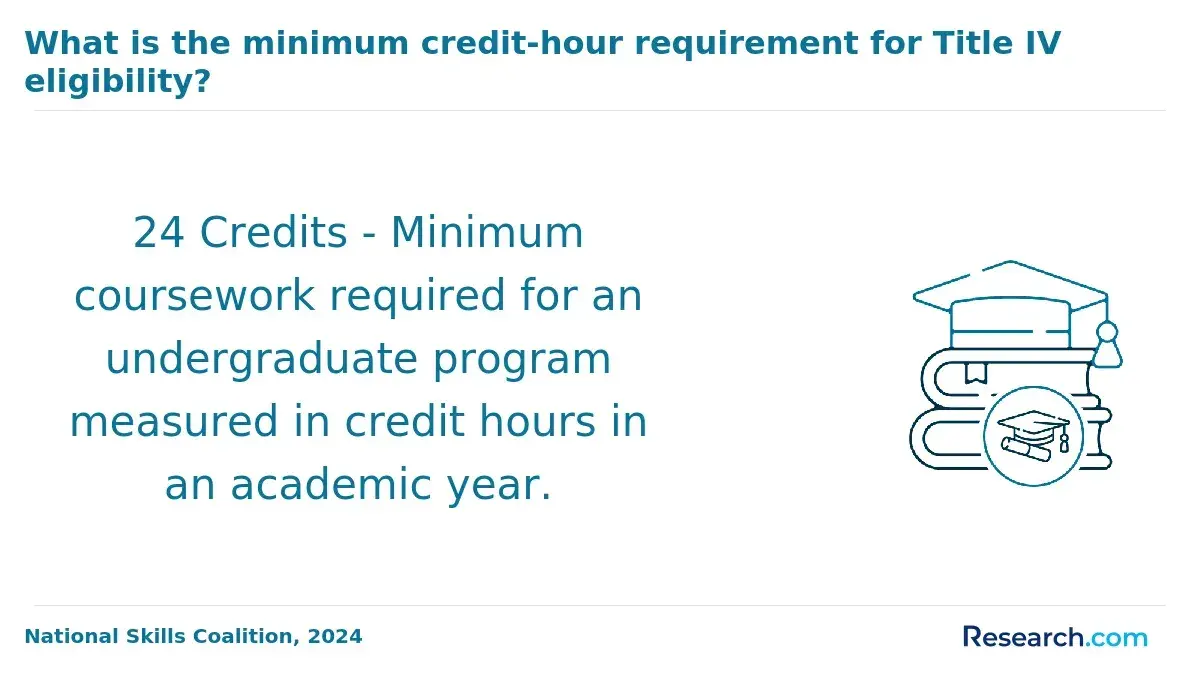
Students in accredited online chemistry degree programs may qualify for the same major federal aid categories as campus students if the institution participates in Title IV federal aid programs and the student meets eligibility rules. The maximum Federal Pell Grant for the 2024-25 award year was $7,395, which can meaningfully reduce out-of-pocket costs for eligible undergraduates.
Chemistry students should compare aid offers carefully because a lower tuition rate does not always produce the lowest net price. Lab fees, summer courses, and delayed prerequisites can change the final cost.
- Federal grants: Pell Grants and other need-based aid may help eligible undergraduate students reduce borrowing.
- Federal student loans: Direct Subsidized, Unsubsidized, and graduate loans may be available, but borrowing should be compared against realistic career goals.
- Institutional scholarships: Some schools offer merit, transfer, adult learner, STEM, or departmental scholarships.
- Employer tuition assistance: Working students in healthcare, manufacturing, pharmaceuticals, education, or environmental testing may receive partial reimbursement.
- Military and veteran benefits: Eligible students may use VA education benefits or military tuition assistance depending on program approval.
- State grants: Residency, enrollment intensity, and school participation can affect eligibility.
If your long-term plan is pharmacy, compare the undergraduate chemistry cost with the later professional degree cost. Students researching the cheapest online pharmacy school options should remember that pharmacy programs may have separate accreditation, experiential learning, and licensure requirements beyond a chemistry bachelor's degree.
Before accepting aid, ask each school for a net price estimate, a full lab fee estimate, and a term-by-term plan. Avoid borrowing based only on the first semester bill if upper-division labs or campus intensives will cost more later.
An accredited online chemistry degree can support several career directions, but the best outcome depends on the degree level, lab experience, internships, location, and whether the student pursues graduate or professional education. Employers generally care about the credibility of the institution, the relevance of coursework, and whether applicants can demonstrate safe and accurate laboratory skills.
The Bureau of Labor Statistics reported a May 2024 median annual wage of $87,180 for chemists and materials scientists. That figure is a useful benchmark, but it includes workers with different education levels, industries, and experience, so new graduates should treat it as labor-market context rather than a starting-salary promise.
The table below links common chemistry degree levels with career directions. Use it to decide whether an online chemistry program matches your intended outcome or whether another science or healthcare path would fit better.
| Education level | Common career directions | What improves outcomes |
| Associate coursework or chemistry prerequisites | Lab assistant, production support, health program prerequisites | Transferability, lab grades, and completion of general chemistry sequences |
| Bachelor's in Chemistry or Biochemistry | Quality control analyst, environmental testing technician, research assistant, chemical sales support, forensic lab support | Hands-on labs, internships, instrumentation experience, and data analysis skills |
| Master's in Chemistry | Senior analyst, laboratory supervisor, community college instructor, advanced technical specialist | Specialized coursework, research or capstone work, and professional experience |
| Chemistry plus professional school | Pharmacy, medicine, dentistry, physician assistant, patent law, or health science careers | Prerequisite planning, high science GPA, entrance exams, clinical or research experience |
| Chemistry plus management training | Lab operations, healthcare operations, regulatory affairs, or technical project management | Leadership experience, compliance knowledge, and business or healthcare management coursework |
Some chemistry graduates later move into health operations, compliance, or management rather than bench science. If that direction is more appealing than laboratory work, comparing an online masters healthcare management pathway may help clarify whether a science degree or management degree offers the better fit.
Students should be cautious about programs that advertise broad career possibilities without showing how students gain lab, research, instrumentation, or internship experience. A chemistry degree is strongest when it is paired with demonstrable technical skills.
Online and campus-based chemistry degrees can cover similar scientific concepts, but the student experience is different. The biggest difference is not the lecture content; it is access to laboratories, faculty research groups, peer study networks, and hands-on instrumentation.
Campus programs may be better for students who want traditional research experience, frequent faculty interaction, or preparation for competitive graduate chemistry programs. Online programs may be better for working adults, military students, caregivers, rural students, or transfer students who cannot relocate.
The table below compares the practical differences students should weigh before choosing a format. The best choice depends on schedule, lab access, career goals, and how much in-person science experience the student needs.
| Factor | Online chemistry degree | Campus-based chemistry degree |
| Schedule | Often better for working adults and part-time students | More fixed class and lab times |
| Lab access | May use kits, simulations, intensives, or local supervision | Usually provides regular access to teaching labs and instruments |
| Research opportunities | Available in some programs but may require extra planning | Often easier to join faculty research labs |
| Networking | Depends on virtual events, advising, and student engagement | More informal peer and faculty interaction |
| Cost structure | May reduce relocation and commuting costs | May offer campus facilities, assistantships, or local internships |
| Best fit | Self-directed students who need flexibility | Students who want immersive lab and research access |
Students choosing between online chemistry and other health-focused options should be clear about the end goal. For example, a student who wants direct patient care quickly may find a fasttrack medical pathway more aligned with that goal than a chemistry degree, while a student interested in pharmaceuticals, toxicology, or analytical testing may benefit more from chemistry.
How Should Students Choose the Best Accredited Online Chemistry Degree Program?
Students should choose an accredited online chemistry degree by matching the program to a specific goal: employment after graduation, graduate school, professional school, teaching, or advancement in a current technical role. The best program is the one that minimizes unnecessary cost while preserving the academic preparation needed for that goal.
Use this decision process before submitting applications. It will help you compare programs on fit, cost, quality, and risk rather than relying on rankings alone.
- Define the outcome first: Decide whether you need chemistry employment, graduate school preparation, pre-health prerequisites, teacher preparation, or career advancement.
- Verify accreditation: Confirm institutional accreditation and check whether ACS approval matters for your target employers or graduate programs.
- Map the labs: Ask exactly how each required lab is completed, including travel, kits, safety rules, local supervision, and additional fees.
- Request a transfer review: Do this before enrollment so you know which chemistry, math, and general education credits count.
- Calculate total cost: Include tuition, fees, lab materials, books, travel, repeated courses, and lost income if labs require time off work.
- Compare support: Prioritize programs with chemistry tutoring, science advising, career services, and clear access to faculty.
- Check course rotation: Make sure required upper-division chemistry courses are offered often enough to graduate on your planned timeline.
- Ask about outcomes: Request information on graduate school placement, internships, employer partnerships, licensure alignment, or alumni career paths when available.
Students should consider a different major if they dislike math-heavy science, cannot complete required labs, or mainly want administrative healthcare roles. In that case, a healthcare administration course or degree pathway may be more practical than a chemistry program.
The strongest overall choice is usually a regionally accredited program with transparent lab requirements, competitive net cost, strong transfer policies, and evidence that its graduates can move into the student's intended next step. Avoid programs that make the degree sound easy but cannot explain lab quality, credit transfer, or career preparation.
Other Things You Should Know About Chemistry
Yes, some schools offer online organic chemistry lectures and labs, but acceptance varies by institution, graduate program, and professional school. Before enrolling, confirm that the course includes the lab format and credit type required for your goal.
Most chemistry bachelor's programs require calculus, and some also require physics or statistics. Biochemistry and chemistry education programs may vary, so students should review the degree map before applying.
It can be part of a pre-med or pre-pharmacy plan if the courses meet prerequisite rules. Students should confirm lab requirements, GPA expectations, entrance exam preparation, and school-specific admissions policies early.
Some online lab courses use mailed lab kits, household-safe materials, simulations, or remote lab tools. Advanced labs may require campus visits or approved local facilities because not all chemistry experiments are suitable for home settings.
- Affordable Accredited Online Colleges https://www.onlineu.com/online-schools/low-tuition
- Study Chemistry in Poland - - Bachelors & Masters Guide https://www.studyeurope.in/study-chemistry-in-poland/
- What Can You Do With a Chemistry Degree? https://willamette.edu/academics/college/chemistry/career-options
- How does a college degree improve graduates’ employment and earnings potential? - APLU https://www.aplu.org/our-work/4-policy-and-advocacy/publicuvalues/employment-earnings/