2027 Online Art History Bachelor's Degree Completion Programs for Working Adults

Co-Founder and Chief Data Scientist
Balancing full-time employment with the desire to complete an online art history bachelor's degree often challenges working adults. Many face uncertainty about credit transfer policies and program flexibility, risking lost time and resources. According to the National Center for Education Statistics, nearly 60% of adult learners prioritize programs accommodating prior learning and professional experience. This article systematically reviews how top-ranked online art history bachelor's degree completion programs address these concerns. It provides critical insights into accreditation, transfer options, tuition models, and employer outcomes, guiding prospective students to select programs aligned with their career goals and busy schedules.
Key Benefits of Online Art History Bachelor's Degree Completion Programs for Working Adults
- Online art history bachelor's degree completion programs offer flexible scheduling designed to accommodate full-time work, allowing students to balance employment and study effectively.
- Fully asynchronous coursework enables professionals to engage with materials and assignments at convenient times, eliminating the need to sacrifice income or work hours.
- These programs often provide accelerated pathways, helping students graduate faster than restarting a traditional four-year degree, with transfer credits reducing overall time and cost.
What Are Online Art History Bachelor's Degree Completion Programs, and Who Are They Designed For?
Online art history bachelor's degree completion programs provide specialized pathways that enable adults with some prior college credits to finish their undergraduate degrees efficiently. Unlike traditional four-year bachelor's programs that commence from the beginning, completion programs concentrate on the final two years of study, maximizing previously earned college credits.
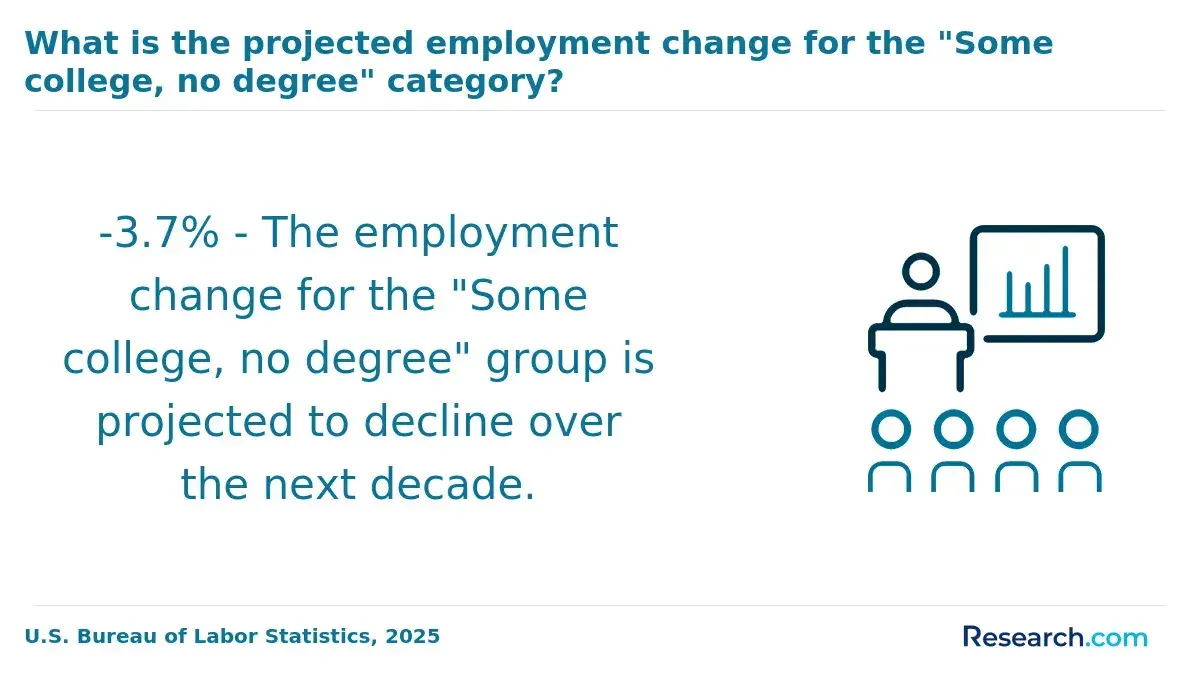
According to the National Center for Education Statistics (NCES), millions of Americans have some college experience but no degree, emphasizing the large demographic these programs cater to. These programs often appeal to working adults seeking accredited art history bachelor's programs with transfer credit options, allowing for a faster and more affordable route to degree completion.
Designed with busy professionals and caregivers in mind, these programs use accelerated course formats, accept a high volume of transfer credits, and are offered primarily online or in hybrid models to fit diverse schedules. They respond to the growing demand for bachelor's degrees in the job market, where many roles once requiring only an associate degree now expect a higher credential.
For those interested in related study areas, programs like BCBA certification online offer additional professional certification opportunities.
How Do Online Art History Degree Completion Programs Differ From Traditional Four-Year Art History Bachelor's Degrees?
Online art history degree completion programs offer distinct advantages compared to traditional four-year bachelor's degrees, especially for working adults transferring 60 or more credits. These programs are tailored to accommodate prior college credits and focus on students' major coursework, making them a practical choice for those balancing work and studies.
- Credit Requirements: Completion programs often require fewer total credits, concentrating on upper-division art history courses while minimizing general education credits already satisfied through previous coursework or life experience. This is a stark contrast to traditional degrees, which typically mandate a full slate of general education and major classes.
- Curriculum Sequencing: Unlike the structured pathway of traditional programs that start with foundational general education, completion degrees prioritize major-specific courses early. Many institutions apply competency-based credits or recognize portfolios reflecting professional experience, military service, or prior learning to waive general education requirements, aligning curriculum sequencing with adult learner needs.
- Time to Completion: According to IPEDS data, students entering with 60+ transfer credits generally complete online art history degree completion programs within 12 to 24 months, compared to 36 to 48 months in traditional programs. The accelerated pace suits working adults seeking to efficiently finalize their degrees.
- Cost per Credit Hour: While completion programs may have a higher cost per credit due to specialized delivery and support services, the overall tuition burden can be lower because of fewer required credits and condensed timelines. Many programs adopt flat-rate pricing or subscription tuition models designed for online cohorts.
Considering these factors helps students evaluate differences between online and traditional four-year art history degrees to choose the path best suited for their backgrounds and professional goals. For working adults looking for affordable options in related fields, exploring the cheapest online masters in mental health counseling may also offer valuable financial insights.
The structure of online art history degree completion programs fundamentally serves adult learners by leveraging transfer credits and alternative learning assessments to shorten completion times while maintaining academic rigor.
2026 Update: Remote Research and Museum Access for Art History Students
This 2026 update adds a practical check on how online art history completion programs support research, visual analysis, and museum-based learning for adults who may not live near campus.
- Access to digital image collections, art databases, journals, and exhibition archives through the university library.
- Clear options for completing museum, gallery, or archival assignments locally or virtually.
- Faculty guidance on using visual evidence, citations, and primary sources in upper-division papers.
- Remote-friendly capstone or senior seminar formats that do not require campus travel.
- Technology requirements for viewing high-resolution images, recorded lectures, and virtual exhibitions.
- Availability of librarian support for provenance, artist research, and art historical documentation.
Checking these academic support features helps working adults choose a program that is not only flexible, but also strong enough for serious art history study from a distance.
Programs with the lowest tuition generally feature flat online rates for all residents, high acceptance of transfer credits, and regional accreditation by established agencies such as the HLC. Mid-range tuition offerings compensate with richer resources, partnerships, and niche experiential learning opportunities, although programmatic art history accreditation is still absent across these options.
- Fort Hays State University: Offers one of the most economical online art history degree completion options at a uniform rate of $218.67 per credit hour for all online learners. Accredited regionally by the Higher Learning Commission (HLC), it allows up to 75% of credits to be transferred, accommodating students with prior coursework. While specific art history program accreditation is absent, the university maintains strong quality standards through its regional accreditation.
- Eastern New Mexico University: Charges $228.83 per credit for in-state and $436.79 for out-of-state students. It holds HLC accreditation and features accelerated term availability to support faster degree completion. The program welcomes transfer credits generously but does not hold specialized accreditation in art history, making it an affordable choice with flexible pacing.
- University of Massachusetts-Lowell: With tuition priced at $374 per credit hour for in-state and $618 for out-of-state online students, UMass Lowell is accredited by the New England Commission of Higher Education. Its program stands out for integration with museums and digital archives, enriching the learning experience despite higher tuition and somewhat stricter transfer policies.
- Columbia College (Missouri): This institution offers a flat tuition rate of $405 per credit for online art history courses, accredited by the HLC. It targets military veterans and adult learners with transferable credits and prior learning assessments but lacks program-specific art history accreditation. The college emphasizes broad liberal arts education and career preparation.
- University of North Dakota: Charges a consistent $398 per credit hour for all online students regardless of residency. The HLC accredits UND, which supports degree acceleration through prior learning assessments. Though not offering specialized accreditation in art history, the curriculum is interdisciplinary and supports transfer students extensively.
Reflecting on his experience, a professional who pursued an online art history bachelor's degree completion program shared that navigating transfer credits was initially daunting. He described feeling "overwhelmed by the paperwork and verification steps," but valued the flexibility to "balance coursework with a full-time job." He appreciated how prior learning assessments helped reduce his course load, commenting that this approach "made a real difference in finishing on time without excessive expenses." The combination of affordability and adaptable pacing was key in enabling him to achieve career goals while managing other responsibilities.
Transfer credit policies in online art history degree programs often limit the number of transferable credits to between 60 and 90 semester hours. These limits maintain academic integrity while enabling students to leverage previous college work, helping reduce overall time and expense.
Institutions review transcripts carefully to assess credit equivalency, matching prior coursework with the new program's curriculum. This evaluation ensures transferred credits uphold quality standards and fit degree requirements. According to the U.S. Department of Education's Transfer Summit, students typically lose about 40% of their credits during the transfer process due to mismatches or missing documentation. This highlights the importance of selecting programs with strong credit transfer policies.
Many schools enhance transfer success through articulation agreements with community colleges or four-year universities, guaranteeing credit acceptance and simplifying degree progression. Such agreements are especially helpful for those seeking maximum transferable credits for art history bachelor's completion.
Top transfer-friendly art history programs often accept ACE-recommended credits, including military training and professional certifications, benefiting veterans and adult learners with diverse experiences. Prospective students should request official transcript evaluations before enrollment to understand exactly which credits qualify and to avoid surprises.
For those curious about additional options, explore what's the easiest associate's degree to get to understand foundational pathways that can feed into bachelor's completion programs.
Applicants typically need between 24 and 60 semester hours of transferable college credit to qualify. This ensures students bring sufficient prior academic preparation before advancing towards degree completion. Other requirements also include:
- GPA Standards: A minimum cumulative GPA usually ranges from 2.5 to 3.0. Some programs impose stricter criteria, while others may permit conditional entry for candidates slightly below the threshold.
- Required Documentation: Official transcripts from all previous institutions are essential. Additional materials might include letters of recommendation or personal statements demonstrating a commitment to art history and academic goals.
- Prerequisite Coursework: Many programs expect foundational courses in art history or related humanities. Students lacking these credits can often enroll in prerequisite classes at community colleges before applying.
- Admission Selectivity: Open-admission tracks generally welcome most applicants meeting baseline standards, offering greater flexibility but fewer academic resources. Conversely, selective programs demand higher qualifications, often providing enhanced mentorship and more prestigious credentials.
- Conditional Admission: Some schools offer provisional acceptance for applicants who don't meet all criteria upfront. These opportunities usually require completion of remedial work or maintenance of minimum grades during an initial period.
- Application Enhancement: Strengthening your profile through extra college credits, higher GPA, and clearly articulated interest in art history can improve admission chances. Early engagement with faculty advisors also proves beneficial in tailoring a strong application.
A professional who completed an online art history bachelor's degree shared that navigating the requirements initially felt daunting, especially coordinating transcripts from multiple schools. She found that proactively completing a few extra humanities courses before applying helped ease her confidence. Her experience underscored the value of clear communication with admissions counselors who guided her through conditional acceptance options. Reflecting on the journey, she credits this structured approach with making completion manageable despite work and family commitments, emphasizing that persistence and preparation made all the difference.
Completion times for online art history bachelor's programs differ based on transfer credit amounts, enrollment status, and course structure. Students transferring with 30, 60, or 90 credits will see varying remaining requirements. For instance, those with 60 credits generally need about 60 more, while those with 90 often focus primarily on major courses after fulfilling general education.
Part-time students usually take around 6 credits per semester, balancing study with other responsibilities, which stretches degree completion to about five semesters for 30 credits. Full-time learners taking 12 or more credits per semester can finish in roughly half the time, especially when utilizing accelerated courses.
Many institutions offer accelerated eight-week terms, allowing students to complete courses more quickly than traditional 16-week semesters. Taking two accelerated classes per term can effectively double course completion rates annually, reducing overall time to graduate.
Competency-based progression lets learners demonstrate mastery to advance without spending unnecessary time on familiar material. Additionally, summer courses offer opportunities to earn extra credits, helping students move through programs faster.
For a working professional taking two courses per semester in eight-week terms and adding summer classes, completing a degree with 60 transfer credits typically takes 2 to 3 years. Those entering with 90 credits may finish within 1 to 1.5 years, depending on course availability and pacing.
Individual factors like family commitments, job flexibility, and employer tuition assistance significantly influence progress speed. Supportive employers who provide both financial aid and scheduling flexibility can help students graduate more quickly.
National data shows a 20% increase from 2018 to 2022 in working adults enrolling in online completion programs, highlighting rising demand for flexible learning in art and humanities fields.
Financial aid options for adults completing an online art history bachelor's degree span federal, state, institutional, and employer-supported programs designed for non-traditional learners. Eligible students can still receive federal Pell Grants and Direct Loans, which are widely accessible to working adults returning to school. Many states also provide grants specifically intended to ease the financial burden for adult returners completing their degrees later in life.
Colleges often offer institutional scholarships and fellowships aimed at adult learners resuming an art history degree. These awards typically consider prior academic performance, career experience, or financial need. Researching each institution's financial aid resources can reveal such specialized opportunities.
Employer tuition assistance can be a significant funding source. Under IRS Section 127, employers may provide up to $5,250 per year in tax-free undergraduate education benefits. This helps working adults pursue degrees without additional tax burdens, as many organizations support continuing education through formal reimbursement plans.
Before enrolling, prospective students should complete key financial aid steps to maximize support and manage costs responsibly:
Per-credit tuition rates for online art history degree completion programs vary widely among accredited institutions. National data from the National Center for Education Statistics (NCES) and IPEDS reveal a typical cost range from $300 to $600 per credit hour. Public universities often offer the more affordable rates near $320, while private or specialized institutions may charge $550 to $600.
For students transferring 60 credits, the remaining 30 credits might cost about $9,600 at lower rates, whereas those with 90 credits left could face nearly $19,200. However, these tuition figures do not always reflect the total program cost, especially when credit hour requirements exceed typical completion levels.
Ancillary fees further increase expenses. Technology fees charged for maintaining online platforms range from $50 to $150 per semester. Graduation application fees can add $100 to $200, while proctoring for remote exams typically costs $30 to $50 each. Textbooks and course materials, which are often mandatory, may amount to $500 or more annually. Understanding these additional costs is essential for accurate budgeting when evaluating accredited art history online completion programs.
Students should also consider credit transfer policies and program structures carefully. Some programs requiring more than the usual credits for graduation may result in higher overall expenses despite lower per-credit tuition.
Prior learning assessments and flexible transfer options can reduce both time and cost to degree completion. Whether a military veteran, community college transfer, or mid-career professional, evaluating these factors ensures the best fit for schedule and budget.
For those interested in related fields, examining clinical psychology masters programs online can provide helpful insights into cost, flexibility, and program delivery across online degree completion offerings.
Prior Learning Assessment (PLA) options provide a valuable pathway for working adults to leverage their existing knowledge and experiences toward earning an online art history bachelor's degree. These options include widely recognized credit-by-exam programs such as CLEP and DSST, portfolio assessments that document professional and academic achievements, and military training credits evaluated through the American Council on Education (ACE) system. Programs with expansive PLA policies often accept up to 30-45 credits, enabling substantial acceleration toward degree completion.
- CLEP and DSST Exams: Many online art history degree credit-by-exam options for working adults allow students to demonstrate proficiency in subject areas relevant to their degree, translating exam results into transferable college credit.
- Portfolio Assessment: Adult learners can submit a portfolio consisting of work samples, certifications, and reflective essays as evidence of learning, with some institutions offering multiple submission opportunities to maximize credit awards for prior experience.
- ACE Credit Recommendations: Military veterans and individuals with corporate training can benefit from ACE evaluations that translate military or professional training into academic credits accepted by many online art history bachelor's completion programs.
- Maximum Credit Acceptance: The most flexible programs allow up to 60 credits from combined PLA methods, reducing tuition costs and shortening time to graduation for transfer students and mid-career professionals.
- Documentation and Submission: Applicants should carefully document all relevant learning experiences, including official transcripts, certificates, and detailed narratives, to facilitate smooth institutional credit evaluation processes.
These PLA pathways are vital for those navigating prior learning assessment policies in online art history bachelor's completion programs, as they help maximize the value of prior education and work experience. Additionally, working adults contemplating the cost of these degrees can consult rankings of the cheapest data science degree programs, which often intersect with affordable online degree strategies applicable to art history students.
- Flexible Scheduling: Fully asynchronous programs enable students to complete assignments, participate in discussions, and take assessments at any time, making them ideal for those balancing irregular work hours or living in multiple time zones. This flexibility supports learners who cannot commit to fixed class times but may require strong self-motivation and time management skills.
- Varied Format Benefits: Unlike synchronous or hybrid formats, asynchronous-only courses remove live session constraints, offering greater freedom. Synchronous classes foster real-time interaction but can be challenging for shift workers or caregivers, while hybrids provide some flexibility but may still require scheduled attendance. Choosing depends on individual lifestyle and learning preferences.
- Shorter Course Terms: Institutions offering eight-week course cycles allow students to concentrate on fewer subjects at once. This condensed schedule helps adult learners maintain focus and balance coursework with jobs or family obligations, reducing long-term stress and enhancing retention.
- Time Management Tools: Successful online learners often rely on digital calendars, task management apps, and reminder systems to organize study sessions and deadlines. Establishing consistent daily routines and breaking tasks into manageable segments are key strategies to stay on track and avoid procrastination.
- Discussion Board Engagement: Asynchronous programs typically use forums for peer interaction. These boards allow thoughtful, flexible participation but require proactive involvement to foster community and enrich learning without real-time dynamics.
- Assessment Flexibility: Online Art history courses commonly use timed quizzes, essays, and portfolio submissions accessible anytime during a window. This approach accommodates diverse schedules while maintaining academic standards.
Many online art history bachelor's completion programs offer concentrations integrated within the 120-credit degree format, allowing students to graduate on time without extra coursework. However, some specialized tracks may require additional credits, so verifying specific program details is advisable before enrollment.
- Museum Studies: This specialization prepares students for careers in curation, preservation, and art exhibition. Graduates often work as museum curators or archivists, with related occupations like museum technicians earning median annual salaries of about $53,000, supported by steady demand in cultural and educational institutions.
- Art Education: Designed for those seeking teaching certification, this track includes courses that meet licensure requirements for secondary or community college art instructors. Median salaries vary by region, typically ranging from $47,000 to $60,000.
- Digital Art History: Emphasizing technological tools for art analysis and presentation, this emerging field suits careers in digital curation, heritage management, and art web design. Tech-focused art historians often command salaries exceeding $60,000.
- Cultural Heritage Management: Focused on protecting cultural sites and artifacts, graduates pursue roles in government or nonprofits, such as conservators or cultural resource managers, with median pay near $55,000 that increases with experience.
- Art Criticism and Writing: Ideal for those interested in publishing or journalism, this concentration prepares students to become art critics or content creators. Earnings vary widely but can range from $40,000 to $70,000, often boosted by freelance work.
Selecting a concentration should balance passion with labor market trends. Museum studies and cultural heritage management offer stable opportunities, while digital art history aligns with growing tech demands. Art education is essential for teaching careers, and art criticism provides flexible options for creative professionals.
What Graduates Say About Online Art History Bachelor's Degree Completion Programs for Working Adults
- Derrick: "The structured layout of the program really helped me stay on track, especially knowing it was fully accredited gave me peace of mind about the value of my degree. I appreciated how straightforward the transfer credit policies were-they recognized so many of my previous courses, which saved both time and money. This program's flexible tuition model allowed me to budget effectively while finishing my art history degree online."
- Arjun: "Completing my art history bachelor's degree online felt like a perfect fit for my busy schedule. Reflecting on the prior learning options available, I realized how much my previous work experience was valued and seamlessly integrated. It's rewarding to see that employers recognize the rigor of this accredited program, which has opened new doors in my career."
- Elias: "From a professional standpoint, the importance of high accreditation standards was a major factor in choosing this online art history program. The clear policies on recognizing transfer credits helped me leverage my earlier college achievements without redundancy. Additionally, the emphasis on real-world employer outcomes convinced me that this degree would enhance my career prospects significantly."
Other Things You Should Know About Art History Degrees
The affordability of 2027 online art history degree completion programs for working adults varies, with public institutions typically offering lower tuition rates than private schools. Many programs provide payment plans and financial aid options. Comparing costs and financial support options can help determine the most economical choice for completing a degree.
Most online art history completion programs offer tailored academic advising to help working adults manage their course load and transfer credits effectively. Career services often include resume workshops, interview preparation, and networking opportunities specific to arts and cultural sectors. Additionally, many programs provide access to online libraries, writing centers, and faculty office hours to assist students throughout their studies.
Many 2027 online art history degree completion programs ask for 60 transferable semester credits, a minimum 2.0 GPA, and a recent writing sample or portfolio review for upper-division entry. Some also require transcripts showing prerequisite art history or humanities coursework before admission.
- ART HISTORY B.A. ONLINE-Plus https://www.uvu.edu/online/programs/art-history/index.html
- 5 advantages of earning an online bachelor’s degree | Penn LPS Online https://lpsonline.sas.upenn.edu/features/5-advantages-earning-online-bachelors-degree-or-certificate-working-adult
- Asynchronous Art History: Teaching Online with Picasso https://www.facultyfocus.com/articles/online-education/asynchronous-art-history-teaching-online-with-picasso/
- Online Prior Learning Assessment (PLA) Programs | Colorado State University Global https://csuglobal.edu/admissions/transfer-students/alternative-credit-options/online-prior-learning-assessment-pla-programs
- Getting a degree in Art History: All you need to know https://www.study.eu/article/getting-a-degree-in-art-history-all-you-need-to-know
- Prior Learning Assessment Program (PLA) https://www.ramapo.edu/catalog-2024-2025/academic-policies/prior-learning-assessment-program-pla/
- Affordable Online Master's In Art & Art History | Grad School Hub https://www.gradschoolhub.com/affordable/online/masters/art-and-art-history/
- Cost of Online Education vs. Traditional Education [2025]: Comparison https://educationdata.org/cost-of-online-education-vs-traditional-education
- Asynchronous Education vs Fixed Schedule Online Classes: Which Works for Working Professionals https://puie.ac/asynchronous-education-vs-fixed-schedule-online-classes-which-works-for-working-professionals/
- Art History | (BFA) Fine Arts Degree Program | Undergraduate Admissions - Apply Here - Concordia University https://www.concordia.ca/academics/undergraduate/art-history.html