2027 Online Applied Behavior Analysis Doctorate Completion Guide: How to Finish Your Dissertation, Capstone, or Applied Project

Co-Founder and Chief Data Scientist
Finishing an online Applied Behavior Analysis doctorate often comes down to managing the final project, not just passing courses. The National Science Foundation's 2024-released Survey of Earned Doctorates reported a 7.7-year median elapsed time to a U. S. research doctorate, showing how easily completion can stretch. This guide is for ABA doctoral students, ABD learners, and professionals returning to finish. You will learn how dissertations, capstones, and applied projects differ; how approvals and defenses work; and how to build a realistic path to final submission.
Key Things You Should Know
- After coursework, most online ABA doctoral students still need proposal approval, chair or committee review, research ethics clearance when applicable, data collection or project implementation, final manuscript approval, defense, revisions, and institutional formatting or graduation clearance.
- Completion time varies by program and project design, but the NSF's 2024-released doctoral data showing a 7.7-year median elapsed time across U.S. research doctorates is a reminder to plan the final stage in months, milestones, and approval cycles rather than assuming it will be quick.
- A dissertation usually contributes original research, while a capstone or applied project more often solves a practice-based problem; your safest strategy is to align your topic, methodology, data access, IRB needs, and committee expectations before collecting any data.
What Is Required to Complete an Online Applied Behavior Analysis Doctorate: Dissertation, Capstone, or Applied Project?
Completing an online Applied Behavior Analysis doctorate usually means proving advanced competence through a final scholarly or practice-based product.
ABA is the science of applying learning and behavior principles to improve socially significant behavior, so the final project often focuses on intervention effectiveness, staff training, treatment integrity, supervision, organizational behavior management, assessment, ethics, or outcomes in clinical, school, community, or disability-service settings.
Not every ABA doctorate uses the same final requirement. A PhD program may emphasize original research and publication-quality inquiry, while an EdD or professional doctorate may emphasize applied change, leadership, program evaluation, or practice improvement.
If you are still comparing doctoral or certification-aligned pathways, reviewing best BCBA programs can help you understand how program structure, supervision expectations, and professional preparation differ before you reach the doctoral completion stage.
The table below summarizes the most common final-project models so you can identify which one your program requires and what kind of evidence you will need to produce.
| Final requirement | Typical purpose | Common evidence | Best fit for |
| Dissertation | Generate original scholarly research related to ABA theory, practice, assessment, intervention, or systems | Research questions, literature review, methodology, data analysis, findings, implications | Students pursuing research, university teaching, advanced clinical leadership, or policy work |
| Capstone | Demonstrate advanced professional competence by solving a defined practice problem | Needs assessment, implementation plan, outcome measures, reflection, recommendations | Students focused on practice leadership, program development, staff training, or service improvement |
| Applied project | Design, implement, and evaluate an ABA-informed intervention or organizational improvement | Project proposal, stakeholder approval, intervention data, evaluation results, sustainability plan | Students working in clinics, schools, agencies, autism services, or organizational behavior management |
Your first completion task is to confirm the exact rules in your handbook. Look for the required number of dissertation or project credits, continuous enrollment rules, committee membership, proposal defense expectations, IRB requirements, formatting standards, oral defense format, revision deadlines, publication embargo options, and graduation application dates.
Most programs move through a recognizable sequence. Use this as a checklist, but verify the names and order of steps with your school.
- Confirm whether your final requirement is a dissertation, capstone, or applied project.
- Select or confirm your chair, advisor, project mentor, or committee members.
- Develop a topic, problem statement, purpose statement, and research or project questions.
- Complete a proposal that explains the literature base, method, setting, participants or data source, instruments, analysis plan, and ethical safeguards.
- Receive proposal approval before collecting data or implementing the project.
- Obtain IRB, site, district, agency, clinic, or organizational approvals when required.
- Collect data, implement the project, or analyze approved existing data.
- Write the final chapters or project report and respond to chair and committee feedback.
- Complete the oral defense or final presentation if required.
- Submit revisions, complete formatting review, file final documents, and satisfy graduation clearance.
How Long Does It Take to Finish a Applied Behavior Analysis Doctorate After Completing Your Coursework?
After coursework, many ABA doctoral students need one to three years to finish, but the realistic timeline depends on topic readiness, data access, approval speed, employment load, and how much revision the committee requires.
Programs with structured dissertation courses and active advising can move faster than programs that leave students to self-manage the final stage.
The NSF's 2024-released doctoral data reported a 7.7-year median elapsed time for U.S. research doctorate recipients across fields. That figure includes the full doctoral journey, not just the dissertation stage, but it is useful because it shows why doctoral completion planning should account for delays, life events, employment demands, and approval bottlenecks.
The table below shows broad post-coursework timeline scenarios. These are planning ranges, not guarantees, because institutional calendars and committee review cycles vary.
| Completion scenario | Typical conditions | Likely pressure points |
| Faster completion | Topic approved early, data source secured, chair responsive, proposal mostly complete during coursework | Formatting, committee revisions, defense scheduling |
| Moderate completion | Topic needs narrowing, IRB is required, student works full time, data collection depends on a clinic or school site | Site approval, participant recruitment, data quality, revision cycles |
| Extended completion | Topic changes after coursework, committee changes, data access falls through, student stops continuous writing | Re-enrollment, new approvals, outdated literature review, time-limit policies |
If you are not yet at the doctoral stage and are trying to shorten the earlier certification or master's pathway, researching a fastest BCBA program may help you understand how prerequisite coursework and supervised-fieldwork planning can affect your longer academic timeline.
A practical timeline should be built backward from the graduation deadline, not forward from your ideal finish date. Most delays happen because students underestimate review time rather than because they cannot write.
- Find the final graduation application deadline and the final manuscript submission deadline.
- Ask your chair how long each review cycle usually takes and whether committee members review sequentially or simultaneously.
- Reserve time for IRB review, site approval, recruitment, data cleaning, analysis, defense scheduling, and post-defense revisions.
- Add a buffer for technology issues, participant attrition, school breaks, clinic closures, holidays, or committee travel.
- Convert the timeline into weekly deliverables, such as revised problem statement, completed literature matrix, draft methods section, or analyzed baseline data.
How Do You Choose and Narrow a Manageable Applied Behavior Analysis Dissertation or Applied Project Topic?
A manageable ABA dissertation or applied project topic is narrow, ethical, measurable, and feasible within your access to participants, settings, records, or secondary data. The best topic is not always the most interesting one; it is the one you can complete with defensible methods and available evidence.
Start with a practice problem rather than a broad population. "Improving behavior outcomes for children with autism" is too large, while "evaluating treatment-integrity feedback for registered behavior technicians implementing functional communication training in one clinic network" is closer to a researchable project.
Students interested in legal, correctional, or competency-related behavior issues may also draw ideas from adjacent fields such as forensic psychology master's programs, but the final doctoral topic still needs a clear ABA framework.
Use the following narrowing process before you commit to a proposal. It helps prevent one of the most common doctoral delays: choosing a topic that sounds impressive but cannot be approved, implemented, or analyzed.
- Define the setting you can actually access, such as a clinic, school, telehealth program, adult day program, residential service, or staff-training environment.
- Identify one behavior, outcome, process, or system variable that can be measured reliably.
- Confirm that the population is ethically appropriate and that gatekeepers can approve participation or record access.
- Choose a design that matches the question, such as single-case experimental design, program evaluation, survey research, qualitative interview study, archival analysis, or mixed methods.
- Check whether the project can be completed with the time, sample size, software, and analytic support available to you.
- Rewrite the topic as a problem statement, purpose statement, and two to four research or project questions.
Qualitative, quantitative, and mixed-methods approaches can all work in ABA doctoral projects, but each has trade-offs. Quantitative designs may fit intervention outcomes, treatment integrity, or performance data.
Qualitative designs may fit caregiver experiences, staff perceptions, supervision barriers, or implementation challenges. Mixed methods can be valuable but often take longer because you must justify and integrate both strands.
A red flag is a topic that depends on permissions you do not control. If your project requires district-level approval, protected health information, access to minors, or cooperation from multiple clinics, build a backup plan early. A slightly narrower study with reliable access is usually better than a sophisticated design that never reaches data collection.
Your chair is usually the person who guides day-to-day dissertation or project progress, while the committee provides methodological, content, and institutional review. In online programs, successful students treat this relationship as a project-management system, not just an academic formality.
ABA doctoral students should clarify expectations early because faculty differ in review style. Some chairs want polished chapter drafts; others prefer smaller sections. Some committees focus heavily on methodology and measurement validity; others scrutinize alignment among the problem, literature, research questions, and analysis plan.
Before you begin major writing or revisions, ask your chair these questions so you can reduce miscommunication and avoid preventable rewrites.
- What document or section should I complete first?
- How polished should drafts be before I send them?
- What is your typical turnaround time for feedback?
- Should I communicate with committee members directly or only through you?
- Which methodology or statistics resources does the program expect me to use?
- What issues most often delay proposal approval in this program?
- How should I document revisions after each round of feedback?
Responding well to feedback is a doctoral-completion skill. Keep a revision matrix with three columns: committee comment, your response, and page or section where the change was made. This shows professionalism, prevents missed edits, and makes it easier for faculty to approve the next version.
Common committee-related delays include submitting a full chapter when the chair asked for a focused section, revising only the wording without fixing the underlying alignment problem, and treating faculty comments as optional. If feedback conflicts, ask the chair to help prioritize rather than trying to satisfy every comment in isolation.
The proposal is the blueprint for the rest of the dissertation, capstone, or applied project. In ABA, a strong proposal usually explains the behavioral problem, why it matters, what the literature already shows, what gap or practice need remains, how data will be collected or evaluated, and how participants or records will be protected.
For projects involving children, schools, autism services, caregivers, or clinical records, research ethics planning is especially important.
Students who previously studied child development or clinical populations through programs such as child psychology master's programs may already recognize why consent, assent, confidentiality, mandated-reporting boundaries, and data security must be addressed before implementation.
Most proposals include predictable components, though the names may vary by institution. The list below shows what each component must accomplish for the project to move into approval.
- Problem statement: Identify the ABA-relevant practice, research, training, or service problem that justifies the study.
- Purpose statement: Describe exactly what the dissertation, capstone, or applied project will examine or improve.
- Research or project questions: Connect directly to the purpose, data source, and analysis plan.
- Literature review: Synthesize current ABA research rather than summarizing article after article.
- Methodology: Define the design, participants or records, setting, measures, procedures, reliability checks, and analysis approach.
- Ethical safeguards: Explain consent, confidentiality, risk minimization, data storage, conflicts of interest, and site permissions.
- Feasibility plan: Show that the project can be completed within program deadlines and with available access.
IRB approval is required when your work meets your institution's definition of human-subjects research, and many schools also review quality-improvement or program-evaluation projects. Do not assume a capstone is exempt. Even when full IRB review is not required, you may still need a determination letter, site approval, data-use agreement, or supervisor signoff.
Never collect data before approval. In doctoral programs, using unapproved data can force you to discard the data, restart the project, or face academic-integrity review. This matters even if the data came from your workplace, because employee access to records is not the same as research authorization.
Data collection and analysis are where feasibility becomes real. For ABA doctoral work, data may include direct behavioral observations, treatment-integrity scores, staff-performance measures, caregiver surveys, interview transcripts, archival service records, single-case graphs, or program outcomes.
In the U.S. labor market, the Bureau of Labor Statistics reported a May 2024 median annual wage of $94,310 for psychologists, though behavior analysts are not tracked as a separate BLS occupation.
For doctoral ABA students, this limitation matters: your project should be designed around the professional setting and decision problems you actually plan to influence, not around broad salary categories that may combine very different roles.
The table below compares common data-source options. It can help you think through feasibility before you commit to a design that depends on hard-to-obtain participants or records.
| Data source | Strength | Limitation | Common ABA use |
| Primary observation data | Closely aligned with behavior-change questions | Requires time, reliability planning, and setting access | Single-case intervention studies, treatment-integrity projects |
| Archival clinical or school records | May reduce recruitment burden | Requires permission, clean records, and privacy safeguards | Program evaluation, service outcome analysis |
| Surveys | Efficient for staff, caregiver, or practitioner perspectives | Response rates and instrument quality can be problems | Supervision, burnout, training needs, implementation barriers |
| Interviews or focus groups | Useful for understanding experiences and barriers | Requires careful coding and credibility procedures | Caregiver perspectives, staff adoption, ethical decision-making |
| Secondary public or de-identified datasets | May avoid direct recruitment | May not match the exact ABA question | Policy, service access, organizational trends |
Before data collection starts, create a written data-management plan. This keeps your project defensible and makes analysis easier later.
- Name every variable, measure, or qualitative data source you will use.
- Describe who will collect the data and how they will be trained.
- Define interobserver agreement, treatment integrity, audit trail, or credibility procedures when applicable.
- Identify where data will be stored, who can access it, and when it will be destroyed.
- Build a codebook or data dictionary before analysis begins.
- Schedule data checks so missing or inconsistent data are caught early.
Choose analysis methods you can explain clearly. A single-case design may require visual analysis and effect-size discussion; a quantitative survey may require descriptive or inferential statistics; qualitative interviews may require coding, theme development, and trustworthiness procedures. The goal is not to use the most complex method; it is to use the method that answers the approved question.
Writing the final dissertation, capstone, or applied-project report is less about inspiration and more about alignment. Every chapter or section should connect back to the approved problem, purpose, questions, method, findings, and implications for ABA practice.
Many online doctoral students lose time because they revise locally instead of structurally. Fixing grammar will not solve a mismatch between the research question and analysis plan. Before polishing sentences, confirm that the logic of the document works from beginning to end.
Use the following revision order to avoid spending weeks editing sections that may later be rewritten.
- Check alignment among title, problem statement, purpose, research questions, design, data source, and analysis.
- Update the literature review so it supports the exact project rather than the broad topic area.
- Revise the methodology in past tense after data collection, if your program requires that convention.
- Present findings without overstating causation or generalizability.
- Connect implications to ABA practice, supervision, service delivery, ethics, training, or future research.
- Complete tables, figures, appendices, consent documents, instruments, and permissions.
- Apply the required style guide and institutional formatting checklist before final review.
AI tools have become a current issue in doctoral writing. Many universities now require students to follow program-specific generative AI policies, disclose certain uses, and avoid submitting AI-generated text or fabricated citations.
Treat AI, if allowed, as a planning or editing aid rather than a substitute for analysis, authorship, or source verification.
Common writing delays include waiting to write until all data are collected, using outdated literature, ignoring required templates, and submitting drafts without checking APA or institutional formatting. A better approach is to maintain a living manuscript, update the literature review monthly, and run formatting checks before the chair sees the final defense draft.
Finishing an online ABA doctorate while working in clinics, schools, agencies, or supervisory roles requires a realistic productivity system. Motivation helps, but calendar-protected writing time and visible milestones matter more.
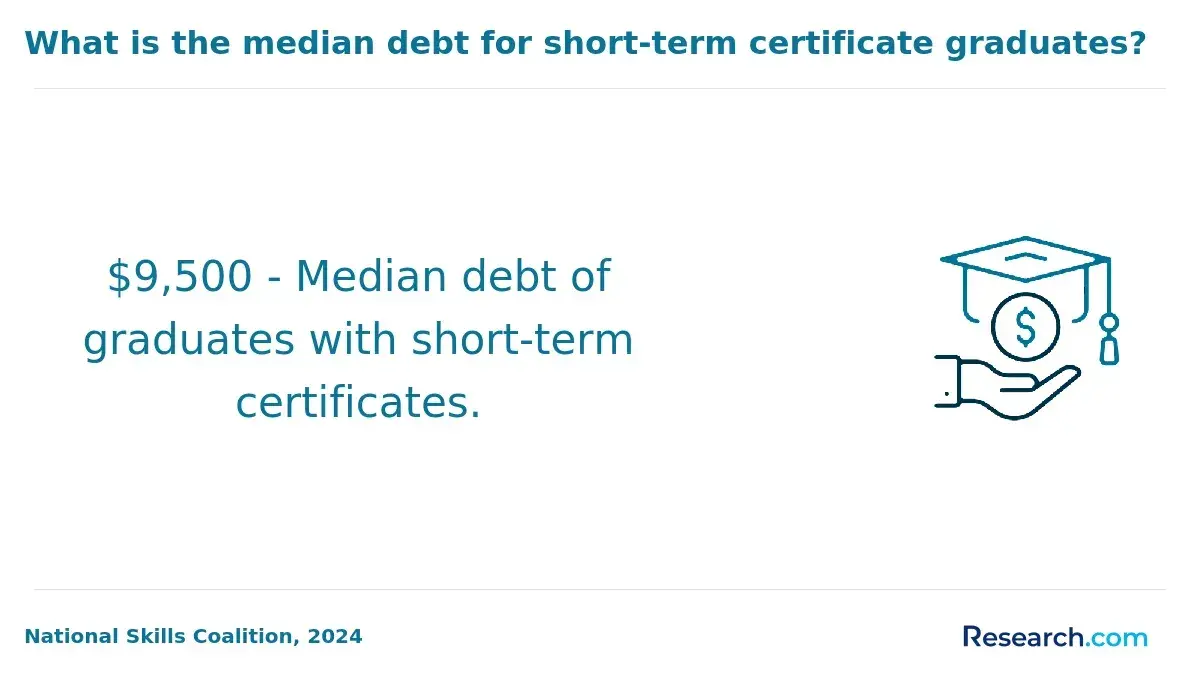
Graduate financing is another reason to avoid unnecessary delays. For the 2024-25 award year, federal Direct Unsubsidized Loans for graduate and professional students were capped at $20,500 per academic year, with Grad PLUS borrowing potentially covering remaining approved costs.
That does not mean every student should borrow more; it means extra semesters can have real financial consequences through tuition, fees, and continued enrollment charges.
A completion plan should convert a large doctoral project into weekly work blocks. The following structure works well for many online students because it separates thinking, writing, review, and administrative tasks.
- Set a nonnegotiable weekly writing minimum, such as three focused sessions rather than one long weekend attempt.
- Keep a milestone tracker for proposal approval, IRB, data collection, analysis, defense draft, defense, revisions, and final submission.
- Use short chair check-ins to confirm direction before writing large sections.
- Batch administrative tasks such as forms, permissions, transcripts, graduation applications, and formatting checks.
- Protect analysis time from routine email, work documentation, and clinical emergencies when possible.
- Review progress monthly and adjust scope early if the timeline is slipping.
Online students should also plan for technology-enabled research and defense requirements. Confirm whether your institution allows remote defenses, whether sessions can be recorded, which platform is required, and how signatures or approval forms are routed electronically.
If your schedule is already overloaded, the right question is not "Can I finish if I work harder?" It is "Which requirement, meeting, data source, or writing block must be simplified so the project remains feasible?" Scope control is often the difference between completion and another semester of enrollment.
The defense or final presentation is your opportunity to show that you understand the problem, the literature, the method, the findings, the limitations, and the implications for ABA practice. It is not usually a test of memorization; it is a structured professional conversation about the quality and meaning of your work.
Defense expectations vary. Some programs require both a proposal defense and final defense. Others require a capstone presentation, applied-project briefing, or committee conference. Online students may defend by video conference, but they still need to meet the same standards for preparation, professionalism, documentation, and revisions.
Prepare for the defense by building a concise presentation and practicing answers to predictable questions. The list below focuses on areas committee members often probe.
- Why was this ABA problem important enough to study or address?
- How did the literature justify the gap, need, or practice problem?
- Why was the selected design appropriate for the question?
- How were participants, records, sites, or stakeholders protected?
- What do the findings show, and what do they not show?
- How should practitioners, supervisors, agencies, or researchers use the results?
- What limitations affect interpretation or transferability?
- What would you do differently if you repeated the project?
Passing the defense does not always mean you are finished. Many students pass with required revisions, and the degree is not complete until the chair, committee, graduate school, and registrar or graduation office clear the final file.
After the defense, move quickly and systematically. Record every requested change, ask for clarification before making major edits, and submit a clean revision matrix with the updated document. Then complete formatting review, signature forms, repository upload, survey requirements, bound-copy rules if any, and graduation clearance.
How Can You Finish a Stalled or ABD Applied Behavior Analysis Doctorate and Meet Final Graduation Requirements?
ABD usually means "all but dissertation," but in practice it can also describe students who have completed coursework and stalled during a capstone or applied project. Stalling is common when a topic is too broad, a chair changes, data access disappears, work responsibilities increase, or the student loses contact with the program.
The first step is diagnostic, not motivational. You need to identify whether the barrier is academic, administrative, financial, personal, methodological, or relational. A student with no data access needs a different solution than a student who has completed analysis but fears the defense.
If your ABA doctorate has stalled, use this recovery sequence before deciding whether to continue, transfer, or stop.
- Request an official degree audit showing remaining credits, continuous enrollment status, time limit, GPA standing, and graduation requirements.
- Ask the program whether your prior proposal, IRB approval, committee, or completed chapters are still valid.
- Meet with your chair or program director to identify the smallest approvable path to completion.
- Decide whether to narrow the existing topic, change the data source, revise the method, or restart with a more feasible project.
- Calculate the cost of remaining enrollment, fees, software, editing, travel if any, and lost time.
- Set a 30-day reactivation plan with concrete deliverables, not just a general intention to resume writing.
- Confirm final deadlines for defense, revisions, formatting, repository submission, and graduation application.
Transferring ABD work to another institution can be difficult because dissertation credits, committee approvals, and doctoral residency requirements rarely move cleanly.
It may still be worth exploring if your original program has closed, lost accreditation, changed requirements dramatically, or cannot provide advising support. Ask any receiving school how many credits transfer, whether a new dissertation is required, and whether prior IRB-approved data can be used.
The final graduation stage can feel administrative, but it is part of completion. Do not assume the degree will post automatically after the defense. Check diploma name, transcript holds, library or repository upload, publication embargo, final formatting approval, financial balance, exit counseling if you used federal loans, and licensure or employer documentation needs.
Other Things You Should Know About Applied Behavior Analysis
Usually only if the program officially offers both options and approves the change. Many doctoral programs have fixed final-project requirements tied to the degree type, catalog year, and accreditation or institutional rules.
Continuous enrollment means you must stay registered for dissertation, capstone, project, or continuation credits until all final requirements are complete. Stopping enrollment without approval can affect advising access, time limits, financial aid, and graduation eligibility.
Many do. Time limits often count from first doctoral enrollment or admission to candidacy, and expired coursework or inactive status may require appeals, course updates, or reinstatement. Students should confirm the policy in the current graduate catalog.
Save the approved final manuscript, signed approval forms, IRB determination or approval letters, site permissions, revision matrix, defense confirmation, formatting approval, repository receipt, and graduation application confirmation.
- Academic research software: Essential tools for every researcher https://lumivero.com/resources/blog/best-software-for-academic-research/
- Top 15 PhD in Applied Behavior Analysis https://www.appliedbehavioranalysisprograms.com/phd-in-applied-behavior-analysis/
- Strategies for a Successful Capstone Project - Graduate Programs for Educators https://www.graduateprogram.org/blog/strategies-for-a-successful-capstone-project/
- Data Analysis Assistance for Dissertations - https://bogoni.co.za/data-analysis-assistance-for-dissertations/
- Help Making a Dissertation Data Collection Tool https://mydissertationwritingservices.com/dissertation-data-collection-tool-help/
- Data Collection Help for Dissertations & Research https://www.researchprospect.com/data-collection-help/
- Capstone vs Thesis: Key Differences and How to Choose Between Them https://www.homeworkhelpglobal.com/ca/blog/capstone-vs-thesis-key-differences/