2027 Best Online Applied Behavior Analysis Doctorate Programs for Career Advancement Beyond a Master's Degree

Co-Founder and Chief Data Scientist
After a master's degree, the key question is whether an online doctorate in applied behavior analysis can move you into roles that a BCBA or related master's credential cannot. The decision matters because the U.S. Bureau of Labor Statistics projects psychologist employment to grow 7% from 2024 to 2034, faster than the average for all occupations.
This guide is for behavior analysts, educators, clinicians, and consultants weighing doctoral study for leadership, research, teaching, specialization, or higher earnings. You'll learn when the degree pays off, when it may not, and how to compare programs wisely.
Key Things You Should Know
- An online ABA doctorate is most valuable when your target role requires advanced research, executive leadership, university teaching, policy design, or high-level clinical consultation rather than only BCBA practice.
- The doctorate does not automatically raise reimbursement or guarantee promotion; BLS May 2024 wage data shows stronger salary ceilings in adjacent leadership roles such as training and development manager and medical and health services manager than in many direct-service roles.
- Most working professionals should compare total cost, dissertation or capstone demands, accreditation, faculty expertise, transfer-credit policy, and whether the program supports BCBA-D eligibility before enrolling.
Which Online Applied Behavior Analysis Doctorate Programs Best Support Career Advancement Beyond a Master's Degree?
The strongest online applied behavior analysis doctorate programs are the ones that match a specific advancement goal, not simply the ones with the most recognizable school name.
For master's-prepared professionals, the best fit usually falls into one of three categories: a research-focused PhD, a practice-focused professional doctorate, or an education-focused doctorate with ABA, autism, special education, organizational behavior management, or behavioral systems coursework.
An ABA doctorate should deepen your ability to design interventions, evaluate evidence, supervise systems, publish or present research, and influence policy or organizational practice.
If you still need master's-level BCBA coursework or want the shortest route to certification before considering doctoral study, comparing a fastest BCBA program may be a better first step.
The table below compares the main online doctorate formats and the career advancement situations where each tends to make the most sense:
| Program type | Best fit after a master's degree | Typical doctoral requirement | Career advancement value |
| PhD in Applied Behavior Analysis or behavior analysis | Professionals targeting research, tenure-track teaching, grant-funded work, or advanced clinical science | Dissertation based on original research | Strongest fit for academic, research director, and evidence-development roles |
| EdD with ABA, autism, special education, or behavioral intervention focus | Educators, district leaders, clinical training directors, and behavior specialists in school systems | Applied dissertation, improvement study, or practice-based research project | Strong fit for education leadership, program evaluation, and systems-level intervention roles |
| Professional doctorate in behavior analysis or psychology-adjacent practice | Experienced practitioners seeking senior consultation, agency leadership, or advanced supervision roles | Capstone, applied project, clinical portfolio, or dissertation depending on the school | Useful for career mobility when employers value doctoral-level applied expertise |
| Online psychology doctorate with behavior analysis research opportunities | Professionals whose target roles overlap with psychology, assessment, behavioral health, or interdisciplinary teams | Dissertation and possible residency, internship, or practicum requirements | Can be valuable, but licensure rules and program accreditation must be checked carefully |
For career advancement, prioritize programs that show clear evidence of doctoral mentoring, faculty research in behavior analysis, applied research opportunities in your population or setting, and support for working professionals. A program that is convenient but not aligned with your target role can become an expensive credential with limited career leverage.
Which Career Paths Become More Accessible With an Online Applied Behavior Analysis Doctorate?
An online ABA doctorate can open doors beyond direct case management, especially when the role requires research literacy, program leadership, supervision of complex systems, or credibility with executives, school districts, hospitals, or universities.
However, many ABA jobs remain accessible with a master's degree and BCBA certification, so the doctorate is most useful when it changes the type of work you can pursue.
The table below separates career paths where a doctorate is often required, often preferred, or usually optional. Use it to avoid overinvesting in a degree for roles that do not reward it:
| Career path | Doctorate requirement level | Common responsibilities | Why the doctorate may help |
| University faculty member | Often required for tenure-track roles | Teaching, research, student advising, publication, curriculum development | Provides research training and academic credibility |
| Research scientist or principal investigator | Often required | Study design, grant writing, data analysis, dissemination of findings | Builds methodological depth and publication experience |
| Clinical director or executive director of ABA services | Often preferred, not always required | Program oversight, supervision systems, quality assurance, payer or stakeholder communication | Signals advanced expertise for complex programs and multi-site leadership |
| Behavioral health consultant | Optional but valuable in specialized markets | Consulting with agencies, schools, hospitals, or employers on behavior change systems | Strengthens credibility in high-stakes interdisciplinary settings |
| District-level behavior specialist or special education leader | Preferred for some senior roles | Staff training, intervention frameworks, compliance support, program evaluation | Supports leadership in large-scale school-based behavior systems |
| Master's-level BCBA practitioner | Usually not required | Assessment, treatment planning, caregiver training, supervision | May help with reputation, but advancement can often happen through experience and management training |
ABA-trained professionals also move into adjacent areas such as correctional behavior programs, threat assessment teams, school safety, and behavioral consultation in legal settings.
If your main goal is criminal behavior, court-related assessment, or justice-system work rather than behavior-analytic intervention, comparing forensic psychology master's programs may provide a more direct pathway than an ABA doctorate.
How Does an Online Applied Behavior Analysis Doctorate Increase Earning Potential After a Master's Degree?
An online ABA doctorate can increase earning potential when it moves you from direct service into higher-responsibility roles, such as director, consultant, researcher, professor, training leader, or systems administrator.
The degree itself is not the income driver; the income driver is the role, employer, region, funding model, and scope of responsibility you can access after the degree.
BLS May 2024 wage data is useful because it shows the salary context for doctorate-adjacent roles, even though ABA-specific doctoral salaries are not tracked as a separate national category. The figures below should be treated as labor-market benchmarks, not promises of individual earnings:
| Role category | Relevant BLS wage benchmark | How it relates to ABA doctorate ROI |
| Clinical and counseling psychologists | Median annual wage of $96,100 in May 2024 | Relevant for psychology-adjacent doctoral roles, but licensure requirements vary by state and program type |
| Training and development managers | Median annual wage of $127,090 in May 2024 | Relevant for ABA professionals who move into staff development, organizational behavior management, or enterprise training leadership |
| Medical and health services managers | Median annual wage of $117,960 in May 2024 | Relevant for clinical directors and behavioral health administrators managing programs, budgets, compliance, and staff |
| Postsecondary teachers | Median wages vary by discipline and institution | Relevant for professionals pursuing faculty work, where pay depends heavily on institution type, rank, contract length, and research expectations |
The biggest salary mistake is assuming the doctorate automatically changes compensation in a current master's-level BCBA role. In many agencies, pay bands are tied to billable service models, supervisory responsibility, caseload complexity, location, and payer contracts.
A doctorate is more likely to raise earnings when you can use it to negotiate broader authority, lead multiple teams, teach at the graduate level, publish, consult independently, or qualify for senior administrative roles.
Leadership in ABA is increasingly about more than excellent intervention planning. Senior professionals often need to manage staff performance, evaluate program outcomes, use data systems, supervise supervisors, interpret research, protect ethical standards, and communicate with executives or public agencies.
A strong doctorate can help you develop the competencies employers expect in high-responsibility roles. Before enrolling, look for evidence that the curriculum builds the following leadership capabilities rather than only repeating master's-level content:
- Advanced supervision skills, including supervisor training, performance feedback, treatment integrity monitoring, and ethical oversight.
- Program evaluation skills, including outcome measurement, data visualization, quality improvement, and interpretation of treatment effectiveness across teams.
- Research translation skills, including the ability to turn peer-reviewed findings into practical protocols, staff training, and policy recommendations.
- Systems leadership skills, including budgeting awareness, compliance, interdisciplinary communication, and change management.
- Technology fluency, including responsible use of electronic data collection platforms, telehealth tools, AI-assisted documentation review, and privacy-aware analytics.
The doctorate is most powerful when you pair it with leadership experience before and during the program. If you are still early in practice, you may get a better immediate return from supervisory roles, project leadership, specialized CEUs, and management training before committing to doctoral tuition and dissertation work.
The best specialization depends on the population, setting, and level of responsibility you want after graduation. A specialization should make your profile more distinct, not simply duplicate your master's concentration.
The table below compares common ABA doctorate specialization areas and the advancement paths they tend to support:
| Specialization | Best-fit professionals | Potential advancement paths | Decision note |
| Autism and developmental disabilities | BCBAs, clinical supervisors, school consultants, early intervention leaders | Clinical director, autism program developer, university instructor, research coordinator | Strong demand area, but competition is high; choose programs with advanced research and systems training |
| Organizational behavior management | Consultants, trainers, agency leaders, HR-adjacent professionals | Performance consultant, training leader, organizational change specialist, executive consultant | Good fit if you want to apply behavior science outside traditional autism services |
| Education and school-based behavior support | Teachers, school psychologists, behavior specialists, district staff | District behavior leader, special education administrator, MTSS or PBIS consultant | May require additional state education credentials for some administrative roles |
| Behavioral health and integrated care | Clinicians working with interdisciplinary teams, hospitals, community agencies, severe behavior programs | Clinical consultant, treatment program leader, quality improvement director | Check state licensure boundaries if the role overlaps with psychology or counseling |
| Research methodology and experimental analysis | Professionals targeting faculty, research lab, or publication-focused careers | Professor, research scientist, grant-funded project leader | Best fit for PhD-oriented students comfortable with statistics, publication, and long-term research agendas |
If your interests center on development, assessment, family systems, and non-ABA child mental health services, child psychology master's programs may be worth comparing before committing to an ABA-specific doctorate. The right specialization should point directly toward the work you want to do, the population you want to serve, and the employers you want to impress.
Employers generally value an online ABA doctorate when it is from an accredited institution, aligns with the organization's service model, and produces skills that solve real organizational problems.
The online format itself is usually less important than the school's credibility, faculty expertise, doctoral rigor, practicum or applied project relevance, and the graduate's professional track record.
In ABA, one important distinction is that BCBA-D is a doctoral designation, not a separate certification with a different independent scope of practice.
That means employers may value the designation as evidence of advanced education, but it does not replace state licensure, employer-specific requirements, payer rules, or BCBA certification standards.
Employer value tends to be highest when the doctorate helps answer one of these business or mission-critical needs:
- Can this person improve clinical quality across multiple teams, not just carry a caseload?
- Can this person design supervision systems that reduce risk, staff turnover, and treatment inconsistency?
- Can this person interpret research and defend intervention decisions to schools, payers, regulators, or interdisciplinary teams?
- Can this person lead data-informed decisions using outcome dashboards, telehealth records, and responsible AI-assisted administrative tools?
- Can this person teach, publish, train, or represent the organization with authority?
A common red flag is choosing a doctorate because the word "online" makes it convenient without confirming whether your target employers recognize the program. Before applying, search current job postings, talk to hiring managers, and ask alumni whether the degree helped them secure the type of advancement you want.
Most online ABA doctorate pathways are designed for working professionals and often take several years beyond the master's degree. The exact timeline depends on transferred credits, enrollment intensity, dissertation or capstone scope, research sequence, and whether the program requires synchronous classes, residencies, internships, or applied fieldwork.
The table below summarizes common timeline factors for master's-prepared applicants. Use it to estimate not only graduation time, but also the point at which the doctorate may begin producing career value:
| Timeline factor | Typical impact | What to ask before enrolling |
| Transfer credit from prior graduate study | May shorten coursework if the school accepts relevant master's credits | How many credits can transfer, and do transferred credits reduce tuition or only elective requirements? |
| Full-time versus part-time enrollment | Full-time study can shorten completion but may reduce work capacity | Can working professionals realistically take the recommended course load? |
| Dissertation, capstone, or applied project | Often determines the final completion timeline | What is the median time to finish the final project after coursework? |
| Residency or synchronous requirements | Can affect schedule flexibility and travel cost | Are any campus visits, live sessions, or internship experiences required? |
| Career advancement while enrolled | Some students move into leadership before graduation | Does the program support promotion-ready projects, publications, or employer-based research? |
For many professionals, the smartest path is sequential: first secure the master's-level credential needed for practice, then build supervisory experience, then pursue doctoral study once the advancement goal is clear.
If you are still deciding where to complete ABA preparation, reviewing best BCBA programs can help you understand how certification-oriented study differs from doctoral advancement.
The ROI of an online ABA doctorate depends on whether the degree creates access to higher-value work that would not be realistic with your current master's credential. A positive return is more likely when the program helps you move into leadership, university teaching, research, high-level consulting, or administrative roles with broader responsibility.
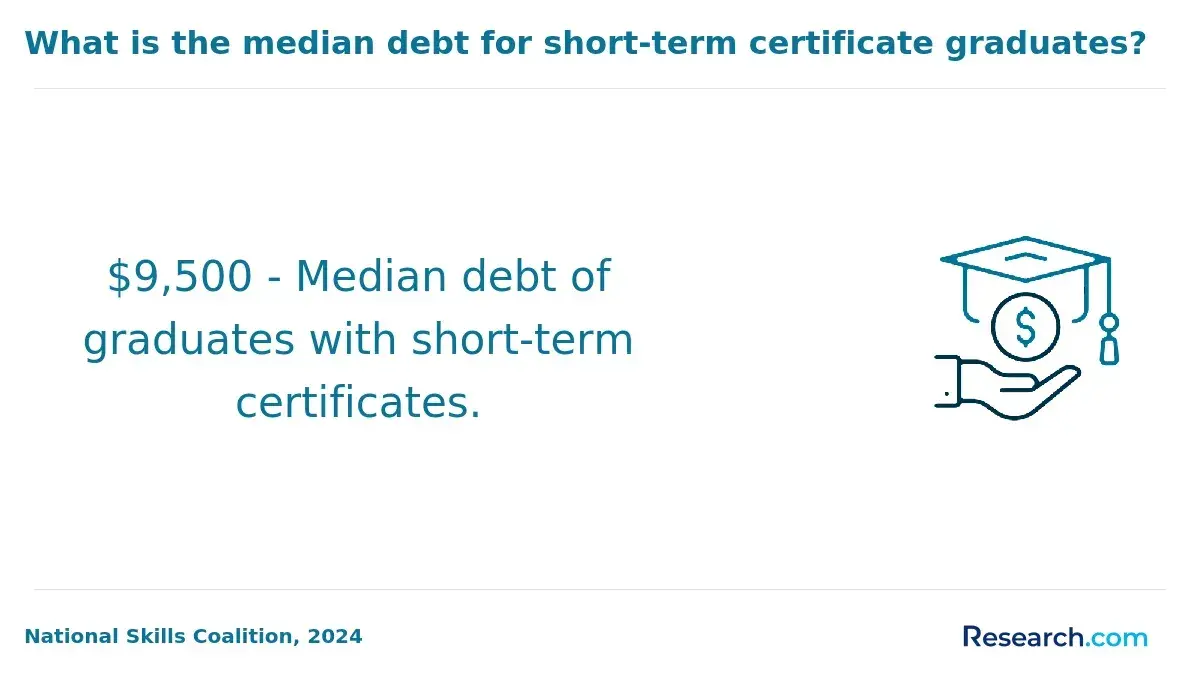
One important financial aid benchmark is the federal Direct Unsubsidized Loan annual limit for graduate and professional students, which is $20,500.
That limit matters because doctoral students who need more than that may rely on Grad PLUS loans, employer tuition assistance, scholarships, payment plans, or out-of-pocket funding, each with different risk levels.
Before enrolling, calculate ROI using a realistic framework rather than a best-case salary assumption:
- Estimate total program cost, including tuition, fees, books, software, travel for residencies, dissertation continuation fees, and interest if borrowing.
- Estimate opportunity cost, including reduced consulting hours, fewer billable cases, delayed promotion, or family and workload trade-offs.
- Identify the specific role or promotion the doctorate is supposed to support, then compare current job postings and salary bands for that role in your region.
- Ask whether a lower-cost alternative, such as supervision training, a certificate, management development, licensure preparation, or a second focused master's degree, could achieve the same career outcome.
- Evaluate the payback period only after subtracting taxes, loan payments, and any income you might lose while completing doctoral requirements.
The doctorate may not be worth it if your current employer does not reward doctoral education, your target role does not require it, you would need to borrow heavily without a clear advancement plan, or the program's final project does not strengthen your professional portfolio.
It may be worth it if it helps you credibly compete for roles with decision-making authority, research expectations, or multi-site responsibility.
The professionals who benefit most are those who already have a strong master's-level foundation and can connect doctoral study to a defined career move. The degree is usually less effective as a vague "next step" and more effective as a targeted investment in authority, specialization, research capacity, or leadership credibility.
An online ABA doctorate is often a strong fit for the following professionals when the program aligns with their next role:
- Experienced BCBAs who want to become clinical directors, regional directors, chief clinical officers, or advanced consultants.
- Master's-prepared educators who want to lead district-wide behavior systems, special education initiatives, or evidence-based intervention programs.
- Practitioners who want to teach graduate-level ABA courses, supervise future behavior analysts, or contribute to curriculum development.
- Professionals interested in publishing, presenting, conducting applied research, or building a research-informed consulting practice.
- Behavior analysts moving into organizational behavior management, staff performance systems, workforce training, or executive coaching.
The degree may be a weaker fit for professionals who are still unsure whether they want clinical practice, education leadership, psychology licensure, or business consulting.
It may also be premature for newer practitioners who have not yet managed cases, supervised staff, led projects, or tested whether they enjoy research. In those cases, professional experience and targeted credentials may clarify whether doctoral study is the right move.
How Should Professionals Choose an Online Applied Behavior Analysis Doctorate for Career Advancement?
Choosing an online ABA doctorate should start with your target job, not with a school search. The best program is the one that builds the skills, evidence, network, and credential recognition needed for the specific advancement you want.
Use the following steps to compare programs in a career-focused way:
- Define your target role in writing, including job title, setting, salary range, required credentials, preferred doctorate type, and whether BCBA-D recognition matters.
- Confirm institutional accreditation and, when relevant, whether the program supports behavior-analytic credentialing, psychology licensure, education leadership requirements, or state-specific employment rules.
- Compare faculty expertise with your intended specialization, especially if you need a dissertation chair or research mentor in ABA, autism, OBM, special education, or behavioral health.
- Ask for graduate outcome examples, including alumni job titles, faculty placements, consulting roles, leadership promotions, publications, and employer partnerships.
- Review the final project requirement and choose a dissertation, capstone, or applied project model that will produce a portfolio asset for your target career.
- Calculate full cost and time to completion using your likely course load, not the fastest advertised timeline.
- Evaluate support for online doctoral students, including advising, statistics help, research groups, library access, writing support, and networking opportunities.
Avoid choosing only by ranking, tuition, or convenience. Also avoid programs that do not clearly explain dissertation expectations, faculty availability, transfer-credit limits, or student support. The right online doctorate should make your next professional move more credible and more achievable, not simply add letters after your name.
Other Things You Should Know About Applied Behavior Analysis
No. ABA is widely associated with autism intervention, but behavior-analytic principles can also be applied in education, developmental disabilities, organizational performance, behavioral health, safety, sports, and caregiver training. The setting determines which credentials, supervision, and legal requirements apply.
Only in limited cases. Psychology licensure usually depends on state rules, program accreditation, supervised clinical hours, internships, exams, and whether the degree is designed for licensure. An ABA doctorate by itself should not be assumed to qualify someone for psychologist licensure.
Some do, but many graduate programs have reduced or eliminated GRE requirements. Applicants should check each school's policy and focus on the full admissions profile, including master's GPA, professional experience, writing samples, research fit, recommendations, and credential history.
ABA is a scientific and professional approach focused on understanding and changing behavior through assessment, measurement, reinforcement, environmental design, and data-based decision-making. Behavior therapy is a broader mental health term that may include techniques from psychology, counseling, cognitive behavioral therapy, and other clinical traditions.
- Association for Behavior Analysis International Accreditation Board https://accreditation.abainternational.org/accredited-programs.aspx
- How to Pay for a Ph.D in 2026 - ELFI https://www.elfi.com/how-to-pay-for-a-ph-d/
- DBH vs. PhD - Applied Behavior Analysis - Cummings Graduate Institute for Behavioral Health Studies https://cgi.edu/resources/dbh-comparisons/dbh-vs-phd-applied-behavior-analysis/
- Opportunities for ABA Career Advancement: ABA PhD https://www.baypath.edu/news/bay-path-university-blogs/post/opportunities-for-aba-career-advancement-aba-phd/
- How Much Does a PhD Cost https://aituedu.org/how-much-does-a-phd-cost/
- BCBA Career Path To Take https://www.allaboutaba.com/blog/bcba-career-path-to-take
- Applied Behavior Analysis Graduate Programs https://www.alumacare.com/blog/applied-behavior-analysis-graduate-programs
- Master’s in ABA - Is It Worth It? https://onlinecounselingprograms.com/online-counseling-degrees/online-masters-in-aba-programs/reasons-to-get-aba/
- The Growing Demand for ABA: Career Opportunities in a Rapidly Expanding Field https://www.abaresourcecenter.com/post/the-growing-demand-for-aba-career-opportunities
- How to Compare ABA Programs | What Actually Matters https://www.appliedbehavioranalysisedu.org/aba-program-comparison/