2027 Inpatient Rehabilitation Nurse Orientation: Training, Competency Reviews, and Support to Compare
Audited and Verified:
Our Editorial and Data Verification Process
Research.com uses government datasets, official education statistics and primary institutional information to support its career and degree guides. Our review process checks factual accuracy, occupational definitions, source dates and the requirements associated with the credentials discussed.
How This Article Was Fact-Checked
Our editorial team verifies salary estimates, employment projections, education requirements and program information against original data providers and official organizations. Salary figures are checked against the relevant occupational definitions and reporting periods. Information about licensure, accreditation and required in-person training is reviewed separately.
Fact-checked and verified on:

Co-Founder and Chief Data Scientist
An inpatient rehabilitation job offer tells you where you will work, but not necessarily how you will learn to manage the unit's patients safely. For a new graduate or an RN changing specialties, the quality of orientation can matter more than its advertised length. This guide explains what rehabilitation nurses learn, how employers verify competence, and which questions reveal whether support will continue after sign-off. Use it to compare offers and identify gaps to resolve before taking an independent assignment.
Key Things You Should Know
- Compare orientation by supervised patient assignments, observed competency checks, and access to help - not by its number of weeks alone.
- Expect training in mobility and fall prevention, skin and bowel or bladder care, medication safety, patient education, and coordination with rehabilitation therapists; the exact mix depends on the unit. An active RN license is essential for an RN role.
- A specialty credential such as the CRRN can support later development but does not replace employer orientation or authorize independent practice.
What Is Inpatient Rehabilitation Nurse Orientation and Why Does It Matter?
Inpatient rehabilitation nurse orientation is an employer's structured transition from general nursing preparation or prior practice to its rehabilitation setting. It usually combines required onboarding, unit-specific teaching, supervised shifts, feedback, and documented competency reviews. Orientation is not the same as nursing school clinical hours or a specialty certification course.
Patients may be recovering from stroke, brain or spinal cord injury, orthopedic conditions, or other illnesses that affect function. Nurses manage medical needs while helping patients practice safe daily routines and coordinating with therapists, physicians, case managers, and families. A patient who appears medically stable may still face substantial risks during transfers, medication self-management, or discharge preparation. That is why prior bedside experience should inform an orientation plan, not automatically shorten it.
Further academic study, including master's nursing study after an ADN, is a separate choice; it does not substitute for learning a rehabilitation unit's workflows and demonstrating safe practice there.
What Training Do Inpatient Rehabilitation Nurses Need Before Starting?
For an RN position, confirm that you hold an active license accepted for practice in the job's state and meet the employer's hiring and credentialing conditions. Employers may require current life-support training, health screening, or other onboarding items, but the exact requirements belong to the facility - not to a universal rehabilitation-nursing checklist. A newly licensed RN can apply where the employer offers an appropriate new-graduate transition; other vacancies may call for prior nursing experience.
Before accepting an offer, ask what must be completed before the first patient assignment and what will be taught during paid orientation. Request the unit's competency list and clarify which unfamiliar skills require direct supervision. An LPN/LVN considering an RN-designated role must first meet RN education and licensure requirements; fast-track RN education for licensed practical nurses is a different pathway from employee onboarding.
How Are Inpatient Rehabilitation Nursing Competencies Evaluated?
Competency evaluation should test what a nurse can do in the intended role, not merely whether the nurse attended class. Employers may combine knowledge checks, simulation, observed care, chart review, and preceptor feedback. The method should match the risk: a transfer-safety skill, for example, needs more than a completed reading assignment.
The table shows how to interpret common evaluation methods when comparing orientation plans. No single method proves competence across every patient condition.
| Evidence | What it can show | Important limitation |
| Knowledge check or case discussion | Understanding of policies and clinical reasoning | Does not establish performance with a patient |
| Simulation or skills lab | Practice and feedback in a controlled setting | May not reflect competing demands on a shift |
| Direct observation by a qualified evaluator | Performance of a defined skill in context | One observation may not cover varied patients |
| Supervised assignment and documentation review | Prioritization, follow-through, communication, and charting | Requires specific feedback rather than a generic sign-off |
Ask who signs off each competency, how concerns are recorded, and whether extra supervised practice is available. School-arranged clinical experiences have different approval and hour requirements; comparing FNP preceptor placement policies, for example, addresses graduate education rather than an employer's rehabilitation-unit sign-off.
A useful orientation progresses from watching and practicing with a preceptor to managing a suitable assignment with support. The sequence and pace should change with the nurse's experience, patient population, and demonstrated performance. Ask the hiring manager to describe the progression for the specific shift and unit you would join.
These components help distinguish a supported transition from a short checklist-based onboarding process:
- Unit foundations: Patient populations, emergency response, escalation routes, equipment, EHR documentation, and handoff expectations.
- Supervised rehabilitation care: Mobility and transfer precautions, falls prevention, skin protection, bowel and bladder routines, medication administration, and patient or caregiver teaching within RN scope and facility policy.
- Team coordination: Communication with physical, occupational, and speech-language therapists and participation in discharge planning.
- Progress reviews: Scheduled feedback, observed competency checks, a plan for remaining gaps, and a defined route to help after orientation.
Find out whether you will keep the same preceptor, work the shift you were hired for during training, and receive a reduced or staged assignment. A shorter post-master's FNP pathway serves a different educational goal and cannot replace these employer-specific orientation steps.
For an RN role, an approved prelicensure nursing pathway that leads to RN licensure eligibility provides the general nursing foundation. Depending on the state and employer, that may be an associate-degree, diploma, or BSN route. Graduation alone does not grant an RN license, and no degree by itself establishes rehabilitation-unit competence.
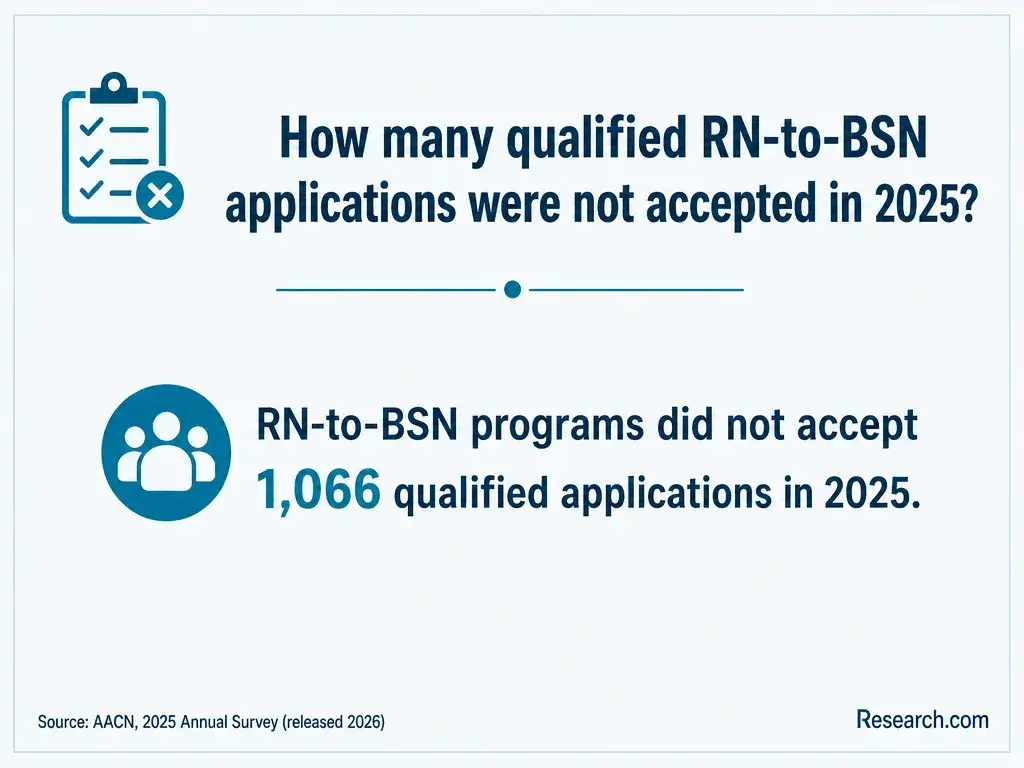
A BSN may be preferred for some jobs or advancement opportunities, but an already licensed ADN-prepared RN should check the actual job posting before enrolling in another degree. A postlicensure RN-to-BSN can support academic advancement; it is not a substitute for prelicensure education or specialty orientation. Graduate study - including affordable graduate pathways to NP preparation - is generally unnecessary to start bedside inpatient rehabilitation RN practice. It makes sense only if a distinct future role warrants it.
An RN must have appropriate, active authorization to practice in the facility's jurisdiction. Check license status and any applicable compact privilege with the relevant board of nursing and employer. License eligibility, a school credential, and an employer's permission to take an assignment are separate decisions.
The Certified Rehabilitation Registered Nurse (CRRN) is a specialty certification awarded by the Rehabilitation Nursing Certification Board. It is not a state license and is not a universal prerequisite for entry-level rehabilitation RN jobs. Eligibility, application fees, examination policies, and renewal rules can change; check the board's current candidate materials before planning to apply. Ask an employer whether certification is preferred, supported financially, or expected after hire.
Other advanced credentials have different purposes. Accelerated mental health NP certificate study, for instance, does not confer rehabilitation RN competency or replace the authorization required for an RN assignment.
There is no universal orientation length. A new graduate may need a more gradual progression than an RN with closely related experience, but neither should be cleared solely because a preset number of shifts has passed. Ask for the planned schedule, the conditions for extending orientation, and what support remains once you take a regular assignment.
For employer orientation, verify whether training shifts and required courses are paid, who covers mandatory credentials, and whether travel to another training site creates an expense. If you are not yet an RN, prelicensure education is a separate and much larger time and cost decision. Compare a school's full tuition and fees with supplies, clinical travel, testing, and potential lost earnings; do not treat an advertised program length as a guaranteed completion date.
Likewise, exploring affordable PMHNP education pathways addresses a separate advanced-practice goal, not a cost required to enter inpatient rehabilitation nursing.
For someone seeking initial RN licensure, the decisive issue is whether a particular program meets applicable state-board requirements and arranges required supervised clinical learning - not whether lectures are online or on campus. Online coursework does not make hands-on labs, simulation, clinical shifts, or scheduling obligations disappear. Check program approval, applicable accreditation, clinical-site arrangements, and eligibility in your state before enrolling.
Already licensed RNs considering an online RN-to-BSN can compare scheduling flexibility and employer tuition support without confusing degree completion with unit training. A nurse balancing work or caregiving should request the actual calendar for live sessions, campus visits, and clinical requirements. Shorter online mental health NP master's programs should be evaluated against their own clinical and licensure goals, not as preparation required for a rehabilitation RN job.
Rehabilitation nursing develops the ability to combine ongoing medical assessment with a patient's functional goals. Nurses practice identifying changes that need escalation, administering and teaching about medications, preventing complications, reinforcing safe techniques established with the care team, and preparing patients and caregivers for care after discharge. Patients' diagnoses and abilities differ, so these responsibilities require assessment, collaboration, and facility-specific protocols - not a single routine applied to everyone.
When comparing units, ask which diagnoses are common, how often nurses coordinate with therapists, what mobility equipment is used, and how patient and caregiver teaching is evaluated. Ask to discuss a typical assignment and the support available when patient needs change. Experience in one rehabilitation population is valuable but does not automatically validate competence in another.
Advanced study such as accelerated Doctor of Nursing Practice programs may fit a later professional objective; supervised bedside experience and feedback are more directly relevant to readiness for this role.
What Are the Salary and Career Outlook for Inpatient Rehabilitation Nurses?
The U.S. Bureau of Labor Statistics reports wages and employment projections for registered nurses as an occupation, not for inpatient rehabilitation nurses as a distinct national category. RN-wide figures can provide labor-market context, but they cannot predict a rehabilitation offer. Pay may differ by region, employer, experience, union agreement, shift, and weekend requirements.
Compare written offers on base pay, differentials, benefits, paid orientation, scheduling, and the assignment you will carry after sign-off. Also weigh preceptor availability, staffing support, and how the unit handles a nurse who needs more supervised practice. Those conditions can affect whether an offer is sustainable even when its hourly rate is higher.
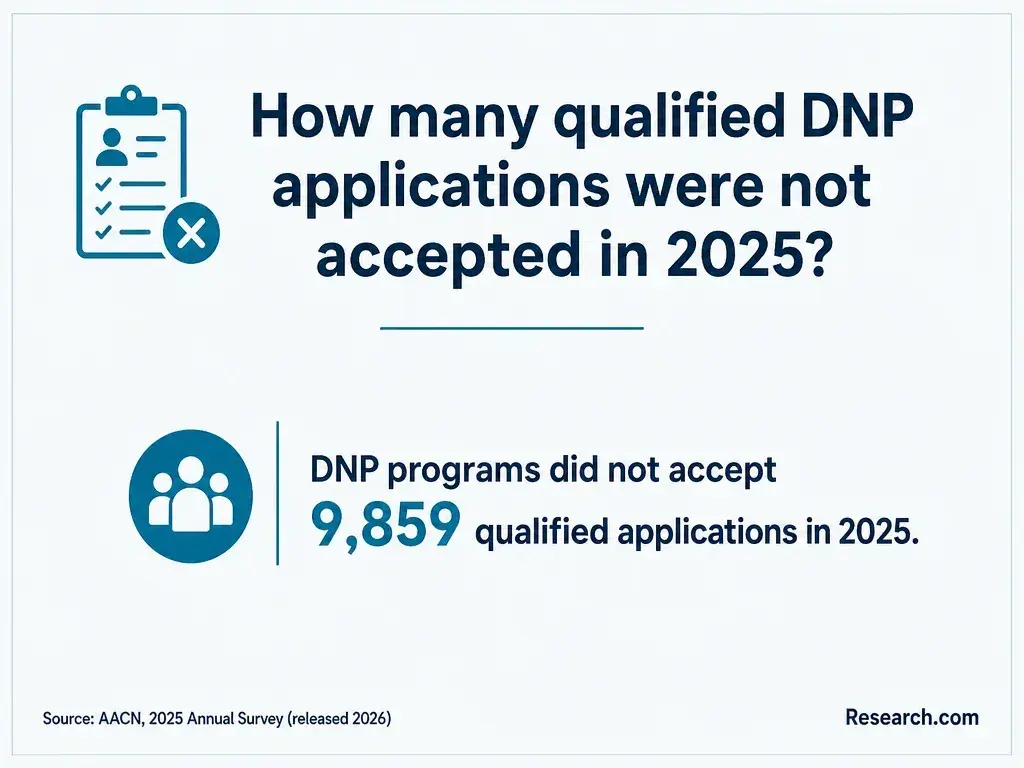
Further degrees are not a prerequisite for this first specialty move. If you later pursue a different graduate role, understanding barriers to DNP admission belongs to that separate decision, not to evaluating your rehabilitation orientation.
Other Things You Should Know About Nursing
Yes. You can ask for a conversation with a preceptor or a unit visit, subject to facility policy. Use it to learn how assignments progress and how feedback is given.
Ask for the specific performance gap, the reassessment method, and whether supervised practice is available. Do not perform an unvalidated task independently merely because orientation is nearing its scheduled end.
Policies vary. Ask when floating may begin, who will supervise you, and how the facility limits assignments to your demonstrated competencies.
No. When appropriate and consistent with patient preferences and facility policy, nurses can reinforce teaching throughout the stay and check what the patient or caregiver understands before discharge.
- Success factors in adaptation of newly graduated nurses - PMC https://pmc.ncbi.nlm.nih.gov/articles/PMC10111715/
- Rule 3701-83-29 - Ohio Administrative Code https://codes.ohio.gov/ohio-administrative-code/rule-3701-83-29
- Inpatient Rehabilitation Facilities | cms.gov https://www.cms.gov/medicare/health-safety-standards/certification-compliance/inpatient-rehabilitation-facilities
- 42 CFR Part 485 -- Conditions of Participation | ecfr.gov https://www.ecfr.gov/current/title-42/chapter-IV/subchapter-G/part-485
- Fall Prevention and Management | Texas Health and Human Services https://www.hhs.texas.gov/providers/long-term-care-providers/nursing-facilities-nf/quality-monitoring-program-qmp/evidence-based-best-practices/fall-prevention-management
- Competency Model | ARN https://rehabnurse.org/advance-your-practice/competency-model