2027 Nursing Professional Identity vs a Job Title: How Education and Experience Contribute
Audited and Verified:
Our Editorial and Data Verification Process
Research.com uses government datasets, official education statistics and primary institutional information to support its career and degree guides. Our review process checks factual accuracy, occupational definitions, source dates and the requirements associated with the credentials discussed.
How This Article Was Fact-Checked
Our editorial team verifies salary estimates, employment projections, education requirements and program information against original data providers and official organizations. Salary figures are checked against the relevant occupational definitions and reporting periods. Information about licensure, accreditation and required in-person training is reviewed separately.
Fact-checked and verified on:

Co-Founder and Chief Data Scientist
"Nursing student," "RN," and "nurse practitioner" describe different stages or roles, but none fully explains how a nurse thinks, acts, and takes responsibility for care. That broader professional identity develops through education, supervised practice, licensure, workplace experience, and reflection.
For prospective students, new graduates, and working nurses, the distinction matters when choosing a program or deciding whether another credential will actually help. This guide explains what education establishes, what experience adds, and how to evaluate a next step without mistaking a degree or job title for demonstrated competence.
Key Things You Should Know
- A job title identifies a role; professional identity includes clinical judgment, ethical accountability, communication, and commitment to practicing within one's scope.
- Prelicensure ADN and BSN programs prepare students to seek RN licensure, but graduation, NCLEX eligibility, a passing result, and an active state license are distinct steps.
- Education builds a foundation; supervised practice, orientation, feedback, and continuing learning turn that foundation into setting-specific competence. More school is not always the best next step.
What Is Nursing Professional Identity Beyond a Job Title?
Nursing professional identity is a nurse's understanding of their responsibilities, values, and place in patient care - and the consistent behavior that follows. A title tells others what position someone holds. A license defines legal authority within a jurisdiction. Neither alone shows how that person recognizes risk, communicates uncertainty, respects patients, or responds to feedback.
For example, two RNs may share a title while working in very different settings. Their specialty skills differ, but both remain accountable for safe practice within their scope, honest documentation, and appropriate escalation. Professional identity is therefore not a claim to know everything; knowing when to seek help is part of it.
Identity also changes as responsibilities change. An ADN-prepared RN considering leadership or graduate study can explore MSN bridge options for ADN-prepared RNs, but the useful question is which new responsibilities the education prepares them to assume - not whether a higher degree makes them "more of a nurse."
How Does Nursing Education Shape Professional Identity and Clinical Competence?
Nursing education introduces a shared way of assessing needs, using evidence, protecting safety, and explaining decisions to patients and colleagues. Faculty feedback and supervised clinical evaluations help students connect those obligations to their own actions. Coursework can establish knowledge; it cannot, by itself, prove dependable performance in every workplace.
The difference becomes clearer at specialty transitions. An experienced RN may bring strong communication and assessment habits to a new population, yet still need formal population-focused preparation and supervised experience. Graduate nurses considering short-format online PMHNP study should check the certificate's entry requirements, required clinical experiences, certification eligibility, and state rules rather than treating previous RN experience as an automatic substitute.
A useful test of an educational option is whether it addresses a specific knowledge or practice gap. If the gap is a unit-specific device or workflow, employer training may fit better than another degree. If the goal is a newly regulated advanced practice role, employer training alone will not replace required education and authorization.
What Nursing Degree Pathways Lead to Registered Nurse Licensure?
For someone who is not already an RN, the central choice is a prelicensure program that meets the requirements of the state where they intend to seek a license. The routes below differ in academic award and entry requirements, but none awards an RN license automatically.
| Pathway | Who it generally fits | Key distinction |
| ADN or ASN | Students seeking an associate-degree route to initial RN preparation | Often completed at a community college; prerequisites and clinical sequencing can extend the total timeline. |
| Traditional BSN | Students seeking initial RN preparation alongside a bachelor's degree | Includes general education and nursing study; employer preferences vary. |
| Accelerated BSN | Applicants with a prior bachelor's degree who meet program prerequisites | Condenses the nursing sequence but can demand intensive, in-person clinical time. |
| Approved nursing diploma | Students where this prelicensure route remains available | Availability and the academic award vary by program. |
After completing a qualifying program, graduates must meet the state board's examination and other licensure requirements. By contrast, an RN-to-BSN program assumes an existing RN license; it is not an initial licensure route. LPNs and LVNs should assess approved bridge programs individually. Claims of unusually rapid completion deserve particular scrutiny, as the guide to six-month LPN-to-RN claims and alternatives illustrates.
Before enrolling, distinguish three checks. Institutional accreditation concerns the school; nursing program accreditation, where applicable, concerns a defined nursing program; and state board approval or recognition affects whether a prelicensure program meets that jurisdiction's requirements. These are not interchangeable endorsements, and approval in one state does not establish eligibility everywhere.
Confirm the exact degree, track, campus or online format, and location with the institution, relevant accreditor, and intended state board. Ask for outcomes for the specific program and reporting period, including completion and NCLEX results where applicable; a school-wide claim may not describe the cohort you would join. Also ask who secures clinical placements and whether enrollment is authorized where you live.
The same diligence matters for graduate study, even when cost is the first concern. Someone comparing lower-cost online BSN-to-MSN degree routes should verify the exact track and its intended outcome: an MSN in education or leadership does not, merely by virtue of its degree title, prepare a graduate for NP licensure.
Prelicensure study commonly connects anatomy, physiology, pharmacology, health assessment, and nursing care with patient safety, documentation, and clinical judgment. In labs and simulation, students can rehearse decisions and receive feedback. During approved clinical experiences, they apply learning to patient care under the required supervision and are evaluated against program objectives.
That progression helps explain why an excellent exam score is not the same as observed clinical competence. A student may be able to describe a change in condition yet still need practice recognizing it promptly, communicating it clearly, and following the site's escalation process. Likewise, simulation and employment hours should not be assumed to replace clinical hours a program or credentialing body requires.
Advanced specialty programs build on a nurse's existing preparation but have their own clinical expectations. In comparing short-format FNP program comparisons, examine the required population-focused experiences and placement arrangements, not just the advertised calendar length. A compressed schedule does not eliminate required preparation or demonstrate independent readiness.
Requirements depend on the route and school. Prelicensure applicants may need specified sciences with labs, minimum grades, an entrance assessment, and clearance for clinical placement. A previous bachelor's degree can make someone eligible to apply to an accelerated route, but it does not necessarily satisfy anatomy, microbiology, or other prerequisites. Admission to a university may also be separate from selection into its nursing major.
For working nurses, postlicensure and graduate programs generally assess the required RN license and prior academic preparation; specialty tracks may add experience or other criteria. Before applying, compare your transcript with each program's written rules for course equivalency, science-course age, lab format, and prerequisite deadlines. Clinical-site checks can impose requirements beyond academic admission.
If an accelerated route appeals because you already hold a degree, use accelerated nursing programs with broader entry criteria as a starting point for comparison - not as a prediction of acceptance. Ask whether you meet the nursing program's requirements for your intended entry term and whether its pace is workable alongside employment or caregiving.
Online delivery can reduce commuting for lectures, but nursing programs may still require scheduled live classes, skills labs, simulation, campus visits, and supervised clinical placements. Campus programs may make face-to-face practice and local support easier to access, while offering less flexibility for some schedules. Neither format is inherently stronger; the decisive issue is how it provides and assesses the experiences your goal requires.
Ask for a term-by-term schedule showing on-site obligations, clinical days and locations, placement responsibility, and any state-based enrollment restrictions. An RN working shifts should also ask whether classes are asynchronous and what happens if a clinical assignment conflicts with work. These details matter more than an "online" label.
For instance, an online psychiatric nursing MSN pathway guide can help identify programs to investigate, but prospective students still need to verify supervised psychiatric clinical access, population-focus preparation, and eligibility with the program and applicable regulators.
A traditional BSN is often planned as a four-year degree, while an ADN nursing sequence is commonly described as about two years; prerequisites, admission waits, part-time enrollment, and clinical scheduling can change either total. Accelerated BSN study is shorter than a traditional bachelor's sequence for eligible applicants, but its intensity may limit paid work. Postlicensure timelines depend on transfer credit and pacing, not just a program's advertised minimum.
No single tuition figure describes these routes across US schools. For a meaningful comparison, request a total-program estimate rather than relying on a per-credit price. Include the following costs when they apply:
- Tuition and mandatory school, lab, and technology fees.
- Books, equipment, uniforms, screening requirements, and travel to clinical sites or campus.
- Examination and licensing expenses, plus income lost if the schedule reduces work hours.
For an already licensed nurse considering an advanced role, compare the incremental cost against the qualification actually needed. Lower-cost options for future nurse practitioners are worth examining only after confirming that the track fits the intended population focus, clinical needs, and licensing jurisdiction. Employer education assistance may help, but reimbursement terms and continued-employment obligations matter.
Initial RN graduates may seek roles in hospitals, ambulatory care, long-term care, or community settings, subject to licensure and hiring requirements. A first job's orientation, patient population, staffing support, and access to experienced colleagues can shape professional growth more directly than the job title alone. Specialty and advanced practice roles may require additional experience, graduate preparation, certification, and state authorization.
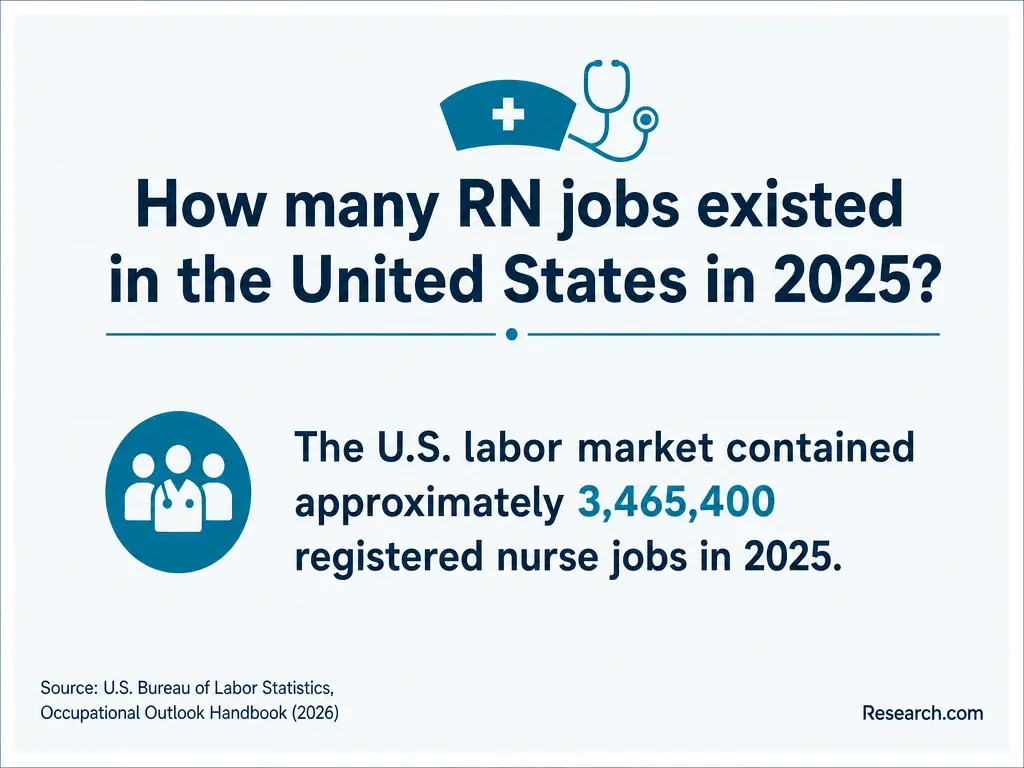
US Bureau of Labor Statistics RN wage and employment projections describe an occupation, not the expected salary or hiring prospects of a particular graduate. Pay also varies by region, employer, shift, and experience. Compare local job postings and actual offers for the role you can qualify for; do not use a nurse practitioner wage figure to estimate the return on a prelicensure degree.
Certification has a similarly specific purpose. A specialty credential can recognize qualifications under its awarding body's rules, but it does not replace an RN license, employer orientation, or an APRN authorization. A nurse considering psychiatric advanced practice might compare cost-focused online psychiatric NP options, then check the program's certification and state-licensure alignment before projecting a career change.
How Can Nurses Build Professional Identity Through Experience and Continuing Education?
Professional identity grows when nurses examine what happened in practice, seek feedback, and change their approach within their scope. For a new RN, that may mean using orientation to identify gaps in prioritization or communication and documenting progress against the employer's competencies. For an experienced RN, it may mean precepting with support, contributing to quality improvement, or learning a new specialty through a structured transition.
Choose development that matches the gap. Continuing education or employer training may be enough to update a skill; a specialty certification may be worthwhile when its eligibility rules and a desired role make it relevant. A new APRN population focus requires a different check. Graduate nurses looking at short-format family NP certificates for graduate nurses should verify prior preparation, required clinical work, certification eligibility, and state recognition rather than assuming that a short certificate or years of nursing practice confer a new scope.
A practical next step is to write down the role you want, the responsibilities you cannot yet perform, and the evidence an employer, program, or regulator requires. Then choose the least duplicative route that closes the actual gap. That approach treats professional identity as accountable practice, not a collection of titles.
Other Things You Should Know About Nursing
Yes. Nurses in education, informatics, administration, and other roles can apply nursing judgment and ethical responsibilities. Their current duties and legal scope still determine what they may do.
Check current policy and applicable standards, discuss the concern with an appropriate supervisor or educator, and use established safety-reporting channels when needed. Do not assume either classroom teaching or a local habit is sufficient without examining the situation.
No, but returning to practice may require license renewal or reinstatement, updated knowledge, and employer onboarding. Check the state board's requirements and be candid about skills that need refreshing.
Use de-identified reflections about the skill, feedback, or process you worked on. Follow employer and school privacy rules, and never include identifiable patient details or confidential records in a personal portfolio.
- Lifelong learning and nurses' continuing professional... - PMC https://pmc.ncbi.nlm.nih.gov/articles/PMC8045269/
- Education - Continuing Competency Requirements https://www.bon.texas.gov/education_continuing_education.asp.html
- Moments That Shape Professional Identity in Prelicensure Nursing Students - Penn State https://pure.psu.edu/en/publications/moments-that-shape-professional-identity-in-prelicensure-nursing-/
- Professional Identity in Nursing: The Path to Meaningful Change | The University of Iowa https://nursing.uiowa.edu/ionrp/blog/professional-identity-nursing
- Professional identity measures for student health professionals | griffith.edu.au https://research-repository.griffith.edu.au/bitstreams/dd8dface-567e-43f7-bc94-f8d1cd330609/download
- Professionalism and professional identity | American Nurse https://www.myamericannurse.com/professionalism-and-professional-identity/