2027 Nursing Professional Development Programs: Orientation, Competency, and Continuing Education
Audited and Verified:
Our Editorial and Data Verification Process
Research.com uses government datasets, official education statistics and primary institutional information to support its career and degree guides. Our review process checks factual accuracy, occupational definitions, source dates and the requirements associated with the credentials discussed.
How This Article Was Fact-Checked
Our editorial team verifies salary estimates, employment projections, education requirements and program information against original data providers and official organizations. Salary figures are checked against the relevant occupational definitions and reporting periods. Information about licensure, accreditation and required in-person training is reviewed separately.
Fact-checked and verified on:

Co-Founder and Chief Data Scientist
A nursing professional development program should do more than deliver classes: it should help nurses enter a role safely, demonstrate the skills that role requires, and keep learning as practice changes. For experienced RNs considering an educator position - and leaders evaluating staff-development training - the challenge is choosing preparation that matches those responsibilities without paying for an unnecessary degree.
This guide separates orientation, competency management, and continuing education, then explains the credentials, program features, costs, and career evidence worth checking before you enroll.
Key Things You Should Know
- Nursing professional development has three distinct functions: orientation prepares a nurse for a new role, competency management evaluates role-specific performance, and continuing education supports learning after onboarding.
- An active RN license and relevant practice experience are common expectations for nursing professional development specialist roles; a course certificate, graduate degree, or specialty certification does not replace licensure or employer competency checks.
- Compare programs against the work you need to perform: designing instruction, assessing competence, and evaluating results. A targeted employer course or certificate may be more useful than a full degree.
What are nursing professional development programs?
Nursing professional development (NPD) programs prepare nurses to support other nurses' learning and practice across an organization. The term can describe employer training, continuing education courses, academic certificates, or graduate nursing education focused on staff development. Their shared purpose is to connect education with safe, effective performance - not merely to record attendance.
An NPD specialist might design new-hire orientation, coach preceptors, assess learning needs, coordinate competency validation, and evaluate whether an educational change improved practice. A nurse residency or specialty onboarding program is usually delivered through an NPD department; it is not necessarily a qualification for becoming an NPD specialist.
These offerings generally assume an existing nursing role. Someone seeking initial RN preparation instead needs a prelicensure pathway, such as those discussed in comparing online prelicensure nursing pathways. Completing NPD education alone does not make a non-nurse eligible for RN licensure.
What training and education pathways lead to nursing professional development careers?
For a licensed RN, the most direct route is often to build expertise in a clinical setting, take on precepting or unit education responsibilities, and seek mentorship from an NPD specialist. Formal education becomes more valuable when the target job calls for program design, system-wide evaluation, or graduate preparation.
The pathways below serve different goals; compare them with the qualifications in actual job postings rather than assuming the longest program is best.
| Pathway | Best fit | Important limitation |
| Employer training and NPD continuing education | Experienced RN expanding preceptor, orientation, or competency responsibilities | May not satisfy an employer's degree preference |
| Academic nursing education or NPD certificate | RN seeking structured preparation in teaching and evaluation | Credit, practicum, and admission requirements vary |
| MSN or DNP with relevant education or organizational coursework | RN pursuing broader educator, leadership, or program-design responsibilities | Substantially greater commitment; a degree does not establish clinical competence |
An RN-to-BSN pathway may help a nurse meet a particular employer's degree requirement, but its coursework is not automatically NPD specialist preparation. For someone who is not yet a nurse, ABSN application planning by selectivity addresses a different, earlier decision: how to enter prelicensure nursing education. Clinical experience and an active license would still be needed before pursuing most RN staff-development roles.
What credentials and licenses are required for nursing professional development?
Requirements depend on the position and employer. Roles responsible for evaluating RN practice generally call for an active RN license, relevant clinical experience, and knowledge of the setting being taught. Employers may prefer a BSN or graduate degree for specialist or leadership positions, but those preferences are not universal licensing rules.
The American Nurses Credentialing Center offers Nursing Professional Development-Board Certified (NPD-BC) specialty certification. It is distinct from an academic certificate, an RN license, and an employer's validation of job-specific skills. Before making certification your goal, check the current ANCC eligibility guide for its license, education, practice, and continuing-education requirements; also check whether the jobs you want require or prefer it.
Likewise, an online FNP certificate program length guide concerns preparation for a different, advanced practice role. An NPD credential does not authorize nurse practitioner practice, and an NP credential does not replace the preparation needed to design or evaluate staff development.
These functions overlap in daily work, but they answer different questions. Separating them helps an NPD team choose an appropriate teaching method and collect evidence that actually supports its decision.
| Function | Primary question | Typical evidence |
| Orientation | What does this nurse need to learn to enter this role and setting? | Role-specific learning plan, supervised progression, preceptor feedback |
| Competency management | Can this nurse perform an identified responsibility to the required standard? | Assessment matched to the skill, such as direct observation when appropriate |
| Continuing education | What new or updated knowledge does the nurse need? | Learning participation and evaluation; further performance assessment if needed |
A nurse can attend a course without demonstrating a hands-on skill. Conversely, a satisfactory skills check does not mean the nurse has completed every required learning activity. Orientation completion should reflect the employer's defined criteria and supervised assessment, not a fixed calendar date alone.
This distinction matters even when nurses pursue flexible degree study. Information about exploring RN-to-BSN nontraditional clinical formats may help an RN compare academic requirements, but a format without traditional student clinical placements does not waive employer orientation or competency validation.
Strong programs teach nurses how to identify a practice gap, design a suitable learning experience, support its use at work, and evaluate what changed. Content may include adult learning, instructional design, preceptor development, simulation facilitation, feedback, competency assessment, evidence appraisal, and educational program evaluation.
The crucial skill is matching the assessment to the objective. A knowledge quiz can test understanding of a revised policy; it cannot, by itself, validate performance of a clinical procedure. For a role-specific skill, an NPD specialist must work within employer policy to define the expected standard, select an appropriate observation or other assessment, document the result, and arrange support when performance falls short.
Some graduate pathways emphasize organization-wide change rather than staff education alone. Nurses considering online DNP programs emphasizing organizational practice should examine their actual curricula and practice requirements: organizational improvement coursework can complement NPD work, but it may not teach preceptor coaching or clinical competency evaluation in sufficient depth.
There is no single NPD admission standard. An employer workshop may be open to staff in designated roles; an academic certificate may require an RN license and prior nursing education; a graduate program may also require transcripts, a specified degree, recommendations, or professional experience. A practicum, if offered, can have separate site and supervision conditions.
Before applying, ask whether the offering admits nurses with your exact degree and license status, whether experience is required, and whether its courses or practicum address your intended NPD duties. If your goal is an internal promotion, obtain the employer's written job qualifications before choosing a program.
Advice about understanding accessible nursing admissions chiefly concerns entry into nursing school. It should not be treated as an admissions shortcut for a postlicensure NPD certificate or graduate track, which may evaluate different credentials.
The answer depends on the credential and what the nurse has already completed. A focused course can fit around employment, while a credit-bearing certificate or degree involves a longer sequence of courses and possibly a practicum or project. Published completion times may assume a particular course load; part-time study, course availability, and employer scheduling can change the actual timeline.
Compare total required cost, not tuition alone: include fees, books or technology, travel for in-person activities, certification expenses if relevant, and any reduction in paid work. Ask whether your employer funds the course, requires a service commitment, or reimburses only after successful completion. Prices vary by provider and enrollment status, so request a written estimate for your intended schedule rather than relying on an unsourced average.
Lists of shortest online nursing practice doctorates can help a nurse investigate a degree option, but speed is a poor reason to choose a doctorate if a focused NPD course meets the job requirement. Compare the added responsibilities you want with the full time and cost commitment.
Neither format is inherently better. Online study can make reading, discussion, and education-design work easier to schedule around shifts. Campus or employer-based sessions may provide more immediate feedback for simulation facilitation, coaching, and observed assessment. A hybrid option can combine the two, but "online" does not necessarily mean asynchronous or free of on-site obligations.
Ask for a sample weekly schedule and identify live meetings, group work, required visits, and who arranges any workplace learning. Then inspect how the program assesses teaching and feedback - not just how it delivers lectures. If you are balancing shifts or caregiving, check missed-session and leave policies before enrolling.
Clinical-site logistics differ by pathway. Resources on exploring FNP programs with preceptor coordination address supervised advanced practice education, not an NPD program's teaching practicum. Confirm the placement and supervisor requirements of the specific program you choose.
Relevant roles include unit-based nurse educator, NPD specialist, nurse residency coordinator, simulation educator, and NPD department leader. Duties differ: one position may focus on new-hire orientation, another on organization-wide competency systems or continuing education. Experienced clinical RNs with preceptor and teaching experience may be well positioned for a unit-based transition, while broader program leadership may call for additional education and documented results.
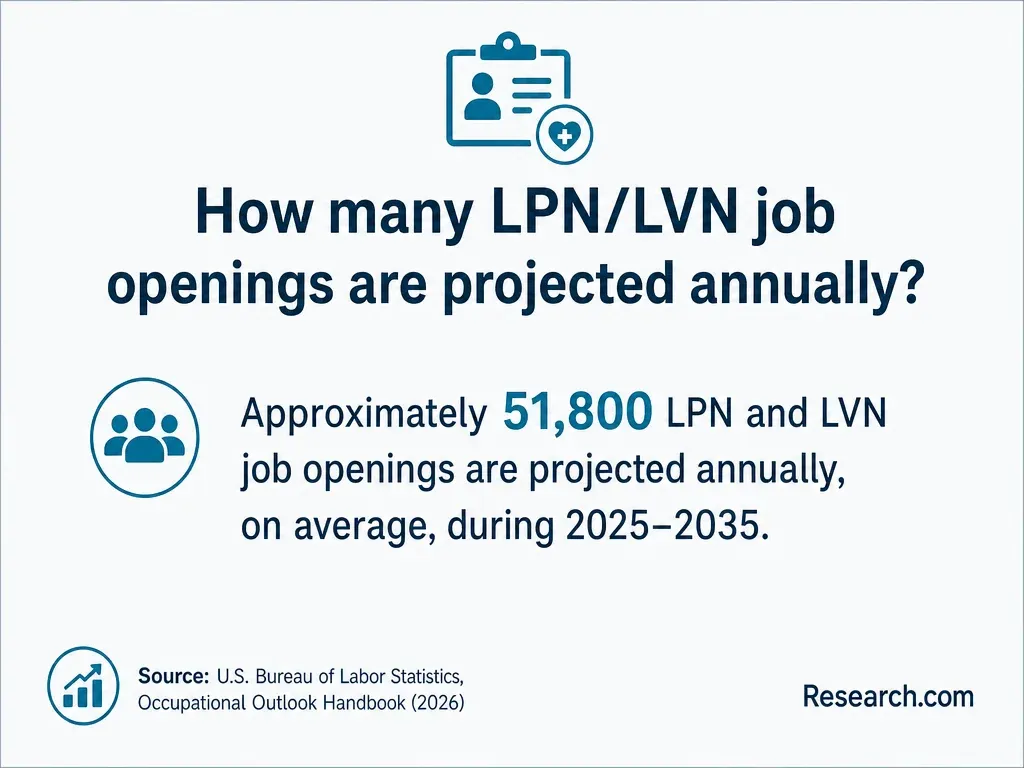
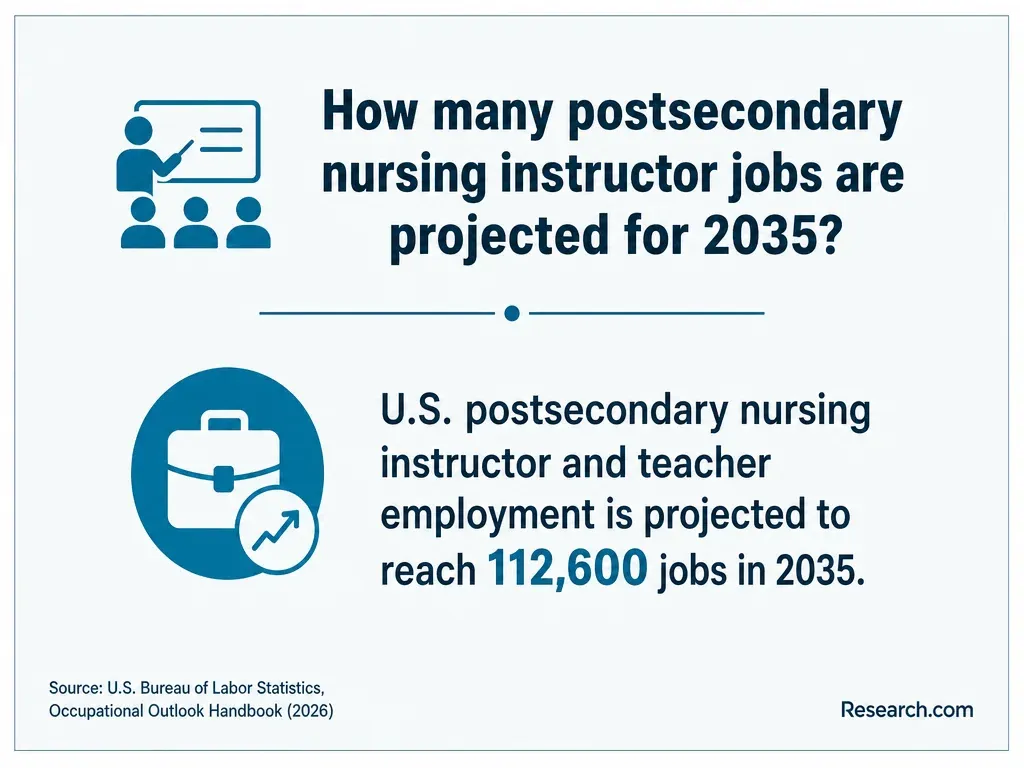
There is no single reliable national salary figure for "NPD specialist." The U.S. Bureau of Labor Statistics reports wages for defined occupations, including registered nurses and postsecondary nursing instructors, but neither category precisely captures every hospital staff-development job. Use those figures only as broad context; compare local postings by license, degree, responsibilities, location, and pay structure. A faculty wage is not a hospital educator offer, and an RN-wide median is not a guaranteed NPD salary.
A move into advanced practice is also a different career decision. Online MSN-PMHNP completion timelines concern a population-focused NP pathway with separate education, certification, and state authorization requirements. Choose it for the intended clinical role, not as a presumed route to better-paid staff development.
How can you choose an accredited nursing professional development program?
First identify what is being accredited. An academic certificate or degree is offered by an institution whose accreditation should be verified; nursing program accreditation, where applicable, has a separate scope. Continuing nursing professional development may instead be offered through an accredited provider or an approved provider system. None of these designations alone establishes that a particular course meets your employer's promotion criteria or qualifies you for NPD-BC certification.
Use the following checks to make a final comparison and resolve gaps before paying a deposit or registering.
- Match the curriculum and assessed work to the duties in your target NPD job description.
- Verify the institution's accreditation and any claimed nursing-program or continuing-education accreditation with the relevant accrediting organization, including its scope and status.
- Ask who supervises any practicum, what activities you will actually perform, and whether your employer will support them.
- Request the complete schedule and cost estimate, then confirm whether the employer recognizes the credential or reimburses the expense.
Keep unlike programs in separate comparisons. For example, comparing budget-friendly psychiatric NP programs may be useful to a nurse considering advanced clinical practice, but their price or accreditation cannot establish the value of an NPD program. The better NPD choice is the one whose verified preparation fits the education work you intend to do.
Other Things You Should Know About Nursing
Yes. Precepting provides relevant examples of coaching and feedback. Document what you did and what you learned, but do not present precepting alone as proof that you can design and evaluate an organization-wide education program.
The employer applies its policies and role-specific assessment process, subject to applicable scope-of-practice rules. An education provider's attendance record does not make that decision.
Only with appropriate employer permission and privacy safeguards. Proposed measures and data access should be reviewed through the organization's applicable quality, privacy, and research-oversight processes before information is collected or shared.
Keep de-identified examples of lesson plans, teaching materials, evaluation methods, and preceptor-development work that you have permission to share. Describe your own contribution accurately without disclosing patient information or confidential employer results.
- Influence of Technology in Supporting Quality and Safety in Nursing Education | nih.gov https://pmc.ncbi.nlm.nih.gov/articles/PMC9514973/
- Education - Continuing Competency Requirements https://www.bon.texas.gov/education_continuing_education.asp.html
- Mandatory Continuing Education for nurses | mass.gov https://www.mass.gov/info-details/mandatory-continuing-education-for-nurses
- Nursing Professional Development Standards - NCBI - NIH https://www.ncbi.nlm.nih.gov/books/NBK534784/
- Frequently Asked Questions - Continuing Education (CE) https://www.njconsumeraffairs.gov/nur/pages/continuing-education-faq.aspx
- ASBN - FAQs - Arkansas Department of Health https://healthy.arkansas.gov/boards-commissions/boards/nursing-arkansas-state-board/education/continuing-education/faqs/
- An integrative review of the continuing professional development needs for nurse educators - ScienceDirect https://www.sciencedirect.com/science/article/pii/S0260691722004324
- Full article: Learning needs assessments in continuing professional development: A scoping review | tandfonline.com https://www.tandfonline.com/doi/full/10.1080/0142159X.2022.2126756
- Accredited Nursing Continuing Professional Development | Association of Nurses in AIDS Care https://www.nursesinaidscare.org/NCPD/
- 5 Essentials of Nursing Orientation | HealthStream, Inc. https://www.healthstream.com/blog/five-essentials-of-nursing-orientation