2027 Nursing Job Descriptions: Required Qualifications vs Preferred Experience
Audited and Verified:
Our Editorial and Data Verification Process
Research.com uses government datasets, official education statistics and primary institutional information to support its career and degree guides. Our review process checks factual accuracy, occupational definitions, source dates and the requirements associated with the credentials discussed.
How This Article Was Fact-Checked
Our editorial team verifies salary estimates, employment projections, education requirements and program information against original data providers and official organizations. Salary figures are checked against the relevant occupational definitions and reporting periods. Information about licensure, accreditation and required in-person training is reviewed separately.
Fact-checked and verified on:

Co-Founder and Chief Data Scientist
A nursing job description can make an entry-level position look out of reach—or make a specialty role look easier to enter than it is. For students, new graduates, and nurses considering a move, the distinction between required qualifications and preferred experience determines which jobs are realistic and which preparation is worth pursuing.
This guide shows you how to read those terms, match them to education and licensure requirements, and evaluate the training an employer will provide. The goal is to help you apply strategically without buying a degree or credential you do not need.
Key Things You Should Know
- An ADN or BSN may prepare a graduate for RN licensure, but neither degree alone is a license; initial applicants generally pursue the NCLEX-RN, while practical nurse applicants pursue the NCLEX-PN.
- Read a posting in three layers: legal and employer-required qualifications, preferences that may be negotiable, and skills the employer will teach during orientation.
- Before enrolling to meet a job requirement, verify three separate conditions: the program's state approval, its applicable accreditation, and whether its graduates qualify for the license or credential the job specifies.
What qualifications do nursing job descriptions require versus prefer?
"Required" means an applicant must meet a condition to be considered or to begin work. "Preferred" means the employer would value it but may consider candidates without it. A posting can also distinguish requirements due at application from those due by the start date. Neither label changes a legal scope-of-practice or licensing rule.
This comparison helps identify what to verify before ruling yourself out. Employers vary, so read the exact wording rather than assuming every RN opening has the same threshold.
| Posting language | How to interpret it | What to check |
| "Active RN license required" | A condition of practicing as an RN, not a preference. | Whether the license must be active when you apply or when employment begins. |
| "BSN preferred; ADN accepted" | An ADN-prepared RN may qualify, subject to other requirements. | Whether the employer expects later BSN completion and offers tuition assistance. |
| "Two years of ICU experience preferred" | Relevant experience strengthens an application but is not stated as mandatory. | Whether structured specialty orientation is available to less-experienced hires. |
| "Current BLS certification required" | The employer expects a specified resuscitation credential. | The accepted provider and deadline for obtaining or renewing it. |
| "NP certification and state APRN authorization required" | Independent specialty experience cannot replace the applicable credentials. | The named role, population focus, and state requirements. |
A qualification can be negotiable in one posting and essential in another. For example, a short FNP program is relevant only to an appropriately qualified applicant; one-year FNP admission requirements are a separate question from whether an employer prefers prior primary care experience.
If the wording is ambiguous, ask the recruiter which qualifications are mandatory at application, which are needed before the first shift, and what the organization teaches during onboarding. That answer is more useful than assuming every line is a screening cutoff.
What education is required for registered nurse and practical nurse roles?
RN postings generally require graduation from an eligible prelicensure nursing program and an RN license. Approved associate degree in nursing (ADN or ASN), diploma, and bachelor of science in nursing (BSN) pathways can lead toward initial RN licensure, subject to state rules. A practical nurse position instead calls for an eligible practical nursing program and an LPN or LVN license. Nursing assistant training is not a substitute for either license.
A BSN may be an employer requirement for a particular RN position, especially one with defined leadership or advancement expectations, even where an ADN is sufficient to pursue RN licensure. Conversely, an RN-to-BSN program is designed for someone who already holds an RN license; it is not an initial licensing route for a newcomer.
For someone entering healthcare, nursing degrees for students new to healthcare are worth comparing by the credential awarded and initial-licensure eligibility—not by the word "online." Prelicensure students still need supervised clinical preparation and may need in-person labs or campus visits.
How do nursing graduates become licensed to practice in the United States?
Graduation, exam eligibility, exam passage, and an active license are separate milestones. An initial RN or LPN/LVN applicant applies through the relevant state board of nursing, meets that board's education and other eligibility requirements, and takes the applicable NCLEX examination after receiving authorization to test. The board—not the school or an employer—makes the licensing decision. Check its instructions for the state where you intend to practice.
Once licensed, a nurse must still meet an employer's onboarding and competency requirements. Moving into advanced practice adds distinct graduate preparation, applicable national certification, and state APRN authorization or recognition. An RN license or a graduate degree in a non-APRN subject does not authorize NP practice.
An experienced APRN changing population focus should examine educational gaps before applying for a different role. FNP certificate routes for changing advanced practice focus may be relevant, but the receiving program, certifying body, and state regulator determine what preparation is needed; prior specialty work alone does not settle eligibility.
Check state board approval or recognition for a prelicensure program first: it is central to determining whether that program can prepare graduates to seek licensure in the intended jurisdiction. Separately, check the institution's accreditation and the nursing program's applicable accreditation, such as ACEN or CCNE where relevant. These are different reviews, and accreditation at the university level does not establish that a particular nursing track meets every licensing requirement.
Confirm the exact campus, degree, track, and enrollment location rather than relying on a school-wide claim. Ask the program and state board whether graduates from your planned entry term and location can pursue the intended license. If you are comparing schools through guides to understanding accessible nursing admissions, keep admission selectivity separate from program approval, clinical access, and graduate outcomes.
Choose a pathway by the job you want to qualify for, not by the highest degree title available. The comparison below separates initial RN preparation from later academic advancement—a distinction that matters when interpreting "BSN preferred" or "MSN required."
| Pathway | Usual entrant and purpose | Job-description relevance |
| Prelicensure ADN or ASN | Student preparing to seek an initial RN license. | May satisfy RN postings that accept associate-prepared nurses. |
| Prelicensure BSN | Student preparing to seek an initial RN license and earn a bachelor's degree. | Fits postings that require a BSN, subject to licensure and other conditions. |
| RN-to-BSN | Already-licensed RN completing a bachelor's degree. | Can address a BSN requirement without repeating initial RN preparation. |
| MSN, DNP, or graduate certificate | Applicant pursuing a defined advanced practice or non-APRN goal. | Relevant only when the specific track matches the role's credential and duties. |
An ADN-prepared RN need not assume that every advancement opportunity requires starting over with a traditional BSN. MSN bridge options for ADN-prepared RNs can be compared with RN-to-BSN study, but applicants should verify the intermediate awards, admissions rules, clinical requirements, and whether the final track actually qualifies them for their target role.
Prelicensure programs commonly combine anatomy and physiology, pharmacology, assessment, nursing care, clinical judgment, communication, and patient safety with labs, simulation, and supervised patient care. These experiences help students develop and demonstrate foundational skills; they do not establish independent readiness for every unit. Employers therefore assess competence and provide setting-specific orientation even when a graduate meets every educational requirement in a posting.
Graduate coursework depends heavily on the track. An APRN program must be evaluated for its specific role and population focus, while leadership, education, and informatics programs prepare students for different work. Similarly, accelerated DNP program comparisons should examine the actual curriculum, practice or project expectations, and required attendance. A short completion schedule does not turn a non-APRN DNP into advanced practice preparation.
Admissions requirements depend on whether a program prepares beginners for initial licensure or advances nurses who already hold a license. Prelicensure applicants may need specified science courses and labs, minimum grades, an entrance assessment, and eligibility for clinical placement. Postlicensure programs commonly require an active RN license; graduate specialties may add a particular degree, practice background, or prerequisite coursework. Admission to a university does not necessarily mean admission to its nursing major.
Compare the school's published rules with your transcript before paying application fees. Check the science course age and lab format, prerequisite completion deadlines, entrance exam policy, and any separate clinical-site conditions. If testing is a barrier, alternatives to HESI-based nursing admission are a starting point for identifying schools to investigate—not evidence that their other admissions or licensure requirements are easier.
Time to completion depends on prerequisites, transfer-credit decisions, course sequencing, clinical availability, and enrollment pace. An ADN is generally a shorter academic route than a traditional BSN, but prerequisites can extend either timeline. An RN-to-BSN route builds on an existing license; graduate program length varies by track and required clinical or project work. Ask for a term-by-term plan based on your record rather than relying on an advertised minimum.
For a useful cost comparison, request an estimate that includes tuition and required fees alongside books, equipment, health and background requirements, travel to clinical sites or campus, exam and licensing fees, and income you may forgo. For an RN considering graduate study, BSN-to-MSN tuition and fee considerations should be weighed against employer assistance, required attendance, and the exact credential the position calls for. Paying for a degree to satisfy a preference may have less immediate value than gaining relevant experience.
Match professional development to the postings you intend to pursue. An employer may require a role-specific resuscitation credential, prefer specialty certification, and value experience with the unit's patient population. Those are not interchangeable: professional certification has its own eligibility rules, while an employer may still require orientation and observed competency before assigning specialty responsibilities.
For new graduates, a structured transition-to-practice program, supported specialty orientation, and evidence of safe communication and clinical judgment may be more attainable than a specialty certification requiring practice experience. For experienced nurses, compare credential eligibility with the jobs available locally before committing to further study. For example, planning an accelerated PMHNP certificate makes sense only if the applicant's existing graduate preparation, the program's requirements, and the intended certification and state authorization align.
What nursing jobs, salaries, and growth opportunities can graduates expect?
Licensed practical nurses, RNs, and nurse practitioners are distinct occupations with different scopes and preparations. Within RN work, bedside, ambulatory, community, and specialty positions also differ in schedule, patient needs, staffing, and orientation. A new graduate's first offer should be judged on those conditions as well as pay; a higher hourly rate may not compensate for inadequate training or an unsuitable schedule.
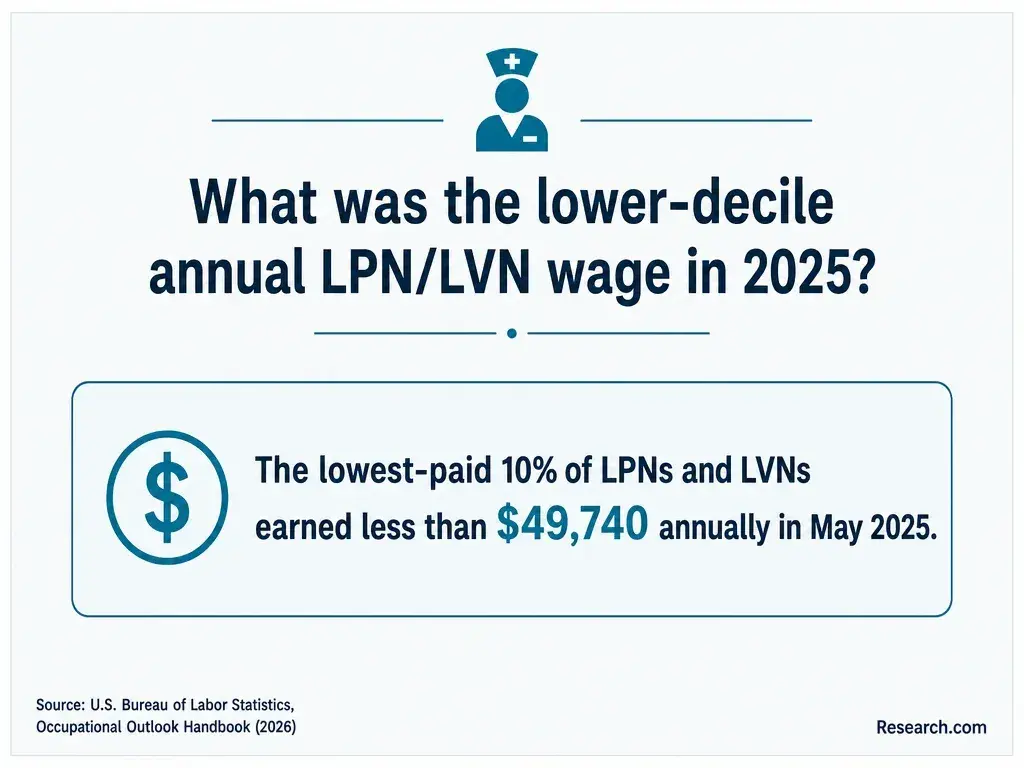
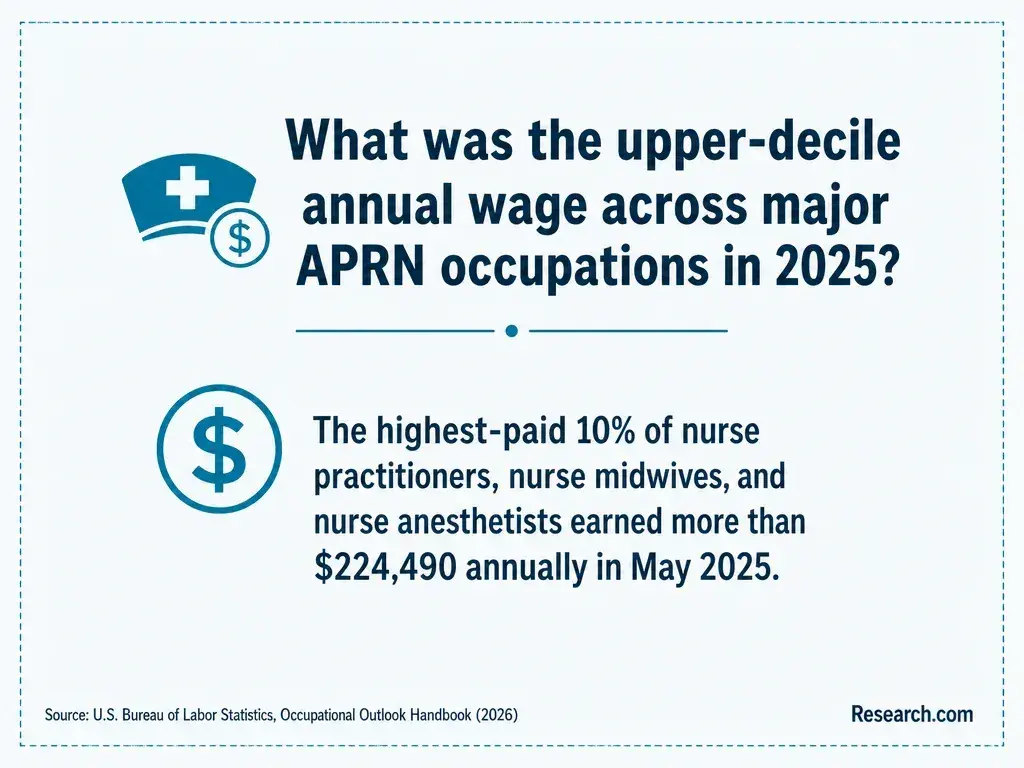
For a salary comparison, use the U.S. Bureau of Labor Statistics Occupational Outlook Handbook entry for the specific occupation, and check its wage reference year and projection period. Its national median describes workers across experience levels, locations, and employers—not the starting salary for an ADN or BSN graduate or a guaranteed offer. Ask employers for the position's pay range, shift differentials, benefits, and progression rules. Nurses considering advanced psychiatric practice can compare those offers with the education expense represented by cost-focused online psychiatric NP options while verifying each program's clinical arrangements and credential eligibility.
Before applying, sort your target postings into requirements you already meet, preferences you can demonstrate through relevant work, and gaps that genuinely require education or licensure. That exercise often identifies a better next step—an application, a supported entry-level role, or focused training—before another degree.
Other Things You Should Know About Nursing
State that your license is pending and give your expected exam or licensing milestone if known. Do not list yourself as an actively licensed RN until the state board has issued the license.
Not automatically. Describe the setting, dates, and duties accurately, but do not label volunteer service as paid RN experience or imply that it included care outside your authorized role.
Yes. A school's clinical-placement screening and an employer's hiring process serve different purposes. Ask what screening is required and when it occurs.
Read the written terms for payment timing, required service period, repayment triggers, and what happens if you change units or schedules. Compare the full offer, including orientation and staffing support, not just the bonus.
- Nursing Licensure Guide | Department of State https://www.pa.gov/agencies/dos/resources/professional-licensing-resources/licensure-processing-guides-and-timelines/nursing-guide
- SCOPE OF PRACTICE - Nursing Fundamentals - NCBI - NIH https://www.ncbi.nlm.nih.gov/books/NBK610819/
- APRN Practice FAQ - Texas Board of Nursing https://www.bon.texas.gov/faq_practice_aprn.asp.html
- Competency in nursing practice: a concept analysis - PMC - NIH https://pmc.ncbi.nlm.nih.gov/articles/PMC10255110/
- Applying Performance and Conduct Standards to Employees with Disabilities | U.S. Equal Employment Opportunity Commission https://www.eeoc.gov/laws/guidance/applying-performance-and-conduct-standards-employees-disabilities
- Avoiding Discrimination in Job Postings | umich.edu https://hr.umich.edu/avoiding-discrimination-job-postings
- Professional Licensure - State Authorization Network https://wcetsan.wiche.edu/resources/professional-licensure
- The Levels of Nursing Practice in the Nursing Profession | ANA https://www.nursingworld.org/content-hub/resources/becoming-a-nurse/levels-of-nursing/
- How it Works | NURSECOMPACT https://www.nursecompact.com/how-it-works.page
- Position Statement on Credentialing and Practice of Advanced Practice Registered Nurses https://www.nysna.org/position-statement-credentialing-and-practice-advanced-practice-registered-nurses