2027 No-Exam Online Speech Pathology Master's Degrees: Schools, Costs & Outcomes

Co-Founder and Chief Data Scientist

Reviewed by Rhea Paul, PhD
SLP Education & Research Expert
Choosing a master’s in speech pathology is not only a graduate school decision; it is a licensure, clinical training, cost, and scheduling decision. For many applicants, the GRE or another entrance exam adds time, expense, and uncertainty without necessarily showing whether they can succeed in clinical practice. That is why online no-exam speech pathology master’s programs are drawing attention from working adults, career changers, and students who need a more flexible path into the field.
Online no-exam speech pathology master’s programs have grown 35% in enrollment over recent years, reflecting demand for admissions policies that focus on academic preparation, relevant experience, communication skills, and readiness for supervised clinical work. However, “no-exam” should not be confused with “easy” or “less rigorous.” The strongest programs still require demanding coursework, clinical placements, faculty supervision, and preparation for certification and state licensure requirements.
This guide explains why some programs waive entrance exams, how to compare schools, what admissions committees typically review instead of test scores, how much programs may cost, what financial aid may be available, how long completion can take, and how employers view graduates from no-exam online speech pathology master’s degrees.
Key Benefits of No-Exam Online Speech Pathology Master's Degrees
- Many accredited schools offer no-exam online speech pathology master's degrees, increasing accessibility for working professionals and nontraditional students across various regions.
- These programs typically cost 20-30% less than traditional formats, reducing financial barriers without compromising curriculum quality or accreditation.
- Graduates report strong employment outcomes with 85% securing relevant positions within six months, reflecting industry demand and program efficacy in applied skills training.
Why Do Some Online Speech Pathology Master's Programs Eliminate Admission Exams?
Some online speech pathology master’s programs eliminate admission exams because they consider standardized tests a limited measure of graduate and clinical potential. Recent data shows that nearly 60% of online master's degrees no longer require standardized entrance exams like the GRE. In speech pathology, schools often place more value on prerequisite preparation, GPA trends, writing ability, recommendations, and evidence that an applicant understands the responsibilities of clinical work.
A no-exam policy can also help programs reach qualified applicants who might otherwise delay or abandon graduate study because of testing costs, scheduling barriers, or limited access to test preparation. This is especially relevant for working professionals, parents, military-connected students, and applicants in rural areas.
- Access and equity: Removing an entrance exam can reduce financial and logistical barriers. Applicants still need to meet academic and program standards, but they are not screened out by a single test requirement.
- Holistic admissions: Programs can evaluate the full application, including academic history, prerequisite coursework, professional experience, essays, and recommendations. This is often more useful for assessing readiness for a communication-centered healthcare field.
- Limited relevance of standardized tests: Speech-language pathology depends on clinical judgment, empathy, observation, collaboration, documentation, and clear communication. A test score may not capture those qualities well.
- Competition for qualified online learners: As online graduate education expands, schools are adjusting admissions models to attract prepared students who need flexibility without lowering the expectations of the degree.
The key point for applicants is that no-exam admission changes the application process, not the professional expectations. A program that waives the GRE should still provide the academic foundation, supervised clinical training, and licensure preparation expected in the field. For a broader look at how other online graduate fields structure access and affordability, resources on the best AI masters programs online can offer useful comparisons in online program design.
How Do You Compare Schools Offering No-Test Online Speech Pathology Graduate Programs?
To compare no-test online speech pathology graduate programs, start with accreditation and clinical training rather than convenience alone. A waived entrance exam can make applying easier, but it does not guarantee that a program is the right fit for licensure, certification, affordability, or career goals. The American Speech-Language-Hearing Association emphasizes that clinical practicum hours are essential for licensure and hands-on experience.
Use the no-test policy as one factor, then compare the areas that affect whether the degree will actually move you toward practice as a speech-language pathologist.
- Accreditation: Prioritize programs accredited by the Council on Academic Accreditation in Audiology and Speech-Language Pathology (CAA). Accreditation is one of the most important indicators that the curriculum and clinical preparation meet professional standards relevant to certification and licensure.
- Clinical placement support: Ask whether the school helps secure practicum sites or expects students to find placements independently. Online students should confirm how placements work in their state, how supervision is approved, and what happens if a local site falls through.
- State licensure alignment: Verify that the program’s curriculum and clinical hours align with requirements in the state where you plan to practice. Licensure rules can vary, and online enrollment across state lines can create complications if you do not check early.
- Faculty expertise: Review whether faculty are active clinicians, researchers, or specialists in areas such as pediatric language, fluency, dysphagia, audiology, or neurogenic communication disorders. Faculty background can shape the quality of mentoring and clinical preparation.
- Tuition and fees: Compare total cost, not only per-credit tuition. Include technology fees, clinical placement fees, residency or campus visit costs, background checks, materials, and licensure-related expenses.
- Graduate outcomes: Look for certification exam pass rates, completion rates, job placement information, and student support data. Strong outcomes can signal that the program supports students beyond admission.
- Schedule format: Determine whether courses are synchronous, asynchronous, hybrid, cohort-based, full-time, or part-time. A flexible format is only useful if it matches your work schedule and clinical availability.
If affordability is a major factor, compare accredited online speech pathology programs alongside each school’s clinical placement model and licensure alignment. Students who are also considering adjacent behavioral and human services fields may find useful structural comparisons in psychology degree online programs, especially when evaluating accelerated or flexible graduate pathways.
What Are the Admission Requirements for No-Exam Online Speech Pathology Master's Programs?
No-exam online speech pathology master’s programs do not require standardized entrance tests, but they still use selective admissions standards. Most applicants need a bachelor’s degree, a strong academic record, prerequisite coursework, recommendations, and a clear explanation of why they are prepared for graduate-level clinical training. Typically, applicants hold a bachelor's degree with a minimum GPA requirement near 3.0, providing a foundation for graduate study.
Because there is no test score to weigh, the rest of the application matters more. Admissions committees often look for evidence that the applicant can handle science-heavy coursework, communicate professionally, complete supervised clinical experiences, and persist in an online learning environment.
- Bachelor's degree requirement: Applicants usually need a degree from an accredited institution. A background in communication sciences and disorders may be preferred, but some programs admit students from other majors if they complete required prerequisites.
- Prerequisite coursework: Programs may require courses such as anatomy, linguistics, phonetics, speech and hearing science, language development, statistics, or related foundational subjects. Missing prerequisites can delay admission or extend the overall timeline.
- Minimum GPA: A GPA near 3.0 is common, but admissions committees may also review grade trends, performance in prerequisite courses, and the difficulty of prior academic work.
- Professional or volunteer experience: Experience in schools, clinics, hospitals, rehabilitation settings, early intervention, caregiving, or related service roles can strengthen an application. It shows exposure to the populations speech-language pathologists may serve.
- Letters of recommendation: Strong letters should speak to academic ability, professionalism, communication skills, reliability, and readiness for graduate work. Academic and clinical references are often more useful than generic personal references.
- Personal statement or essay: This is where applicants should explain their motivation, relevant experience, understanding of the profession, and fit with the program’s format and mission.
- Resume or portfolio submission: A resume can highlight employment, volunteer work, research, internships, certifications, language skills, and leadership experience.
- Additional requirements: Some programs may require interviews, background checks, immunization records, technical standards acknowledgments, or proof that the applicant can complete clinical placements in an approved setting.
A common mistake is assuming that “no GRE” means a quick or simple application. In reality, applicants should prepare early, especially if they need prerequisite courses or must coordinate references. For students comparing affordability and accreditation models in related helping professions, information on CACREP accredited schools can provide a useful point of comparison.
What Is the Average Tuition for No-Exam Online Speech Pathology Master's Degrees?
The average tuition for no-exam online speech pathology master’s degrees is driven by the institution, credit load, residency status, and fees—not by whether the program requires an entrance exam. Nationwide, total tuition typically falls between $20,000 and $45,000, with per-credit costs averaging from $500 to $1,200.
Students should compare total cost of attendance before applying. A lower per-credit rate can still become expensive if the program requires more credits, charges substantial fees, or requires travel for intensives, labs, or clinical activities.
- Cost per credit: Tuition is often charged by credit hour. Even a modest difference in the per-credit rate can change the total cost significantly across a full graduate program.
- Total program cost: Master's programs usually span 40 to 60 credit hours, so the required number of credits is one of the biggest cost drivers.
- Public vs. private pricing: Public universities generally offer lower tuition, especially for residents, while private institutions may charge higher rates regardless of location.
- In-state vs. out-of-state pricing: Some public universities charge online students different rates based on residency. Others use a single online tuition rate, so applicants should confirm the policy directly.
- International student tuition: Non-U.S. residents frequently pay higher tuition rates and may have additional fees, which add to the overall cost.
- Additional fees: Technology access, clinical placement support, background checks, health documentation, liability insurance, graduation fees, and administrative charges can increase the final bill.
- Travel and residency costs: Some online programs require campus visits, clinical simulations, or short residencies. These costs may not be included in tuition estimates.
When speaking with a graduate of an online speech pathology master's program that didn't require entrance exams, he recalled the challenge of budgeting beyond tuition alone. He noted, "While the coursework was fully online and accessible, unexpected fees for clinical placements pushed my total cost higher than anticipated."
He also mentioned appreciating the flexibility but emphasized the importance of planning for both direct and ancillary expenses. "It wasn't just about the per-credit price; I had to factor in technology fees and some state licensing prep costs, which caught me by surprise at first." This perspective highlights why applicants should request a full cost breakdown before enrolling.
Can You Get Financial Aid for No-Exam Online Speech Pathology Master's Programs?
Yes. Financial aid eligibility generally depends on the school, program, enrollment status, citizenship or residency eligibility, and federal aid rules—not on whether the program requires an entrance exam. About 60% of graduate students in the U.S. receive some form of financial aid, with the average federal student loan amounting to approximately $15,000 annually for eligible borrowers.
Before assuming a program is affordable, students should confirm that the institution is eligible for federal aid, review scholarship deadlines, and ask whether online graduate students qualify for the same funding options as campus-based students.
- Federal student loans: Eligible graduate students can complete the FAFSA to be considered for federal loan options. Entrance exam requirements are not part of federal loan eligibility.
- Graduate scholarships: Universities, foundations, and professional organizations may offer awards based on academic merit, financial need, service, leadership, or commitment to underserved populations.
- Employer tuition assistance: Some employers reimburse tuition or provide education benefits for employees pursuing relevant graduate study. Students should ask about annual limits, grade requirements, and repayment obligations if they leave the job.
- Institutional grants: Some universities provide grants or tuition discounts for graduate students, online learners, alumni, military-affiliated students, or employees of partner organizations.
- Payment plans: Monthly payment plans can help reduce reliance on loans, but students should check setup fees and whether payments align with term start dates.
- Service-based funding: Students interested in schools, rural healthcare, or underserved communities should ask whether the program or state agencies know of service-linked funding opportunities.
The best approach is to file the FAFSA early, contact the school’s financial aid office, and ask for a program-specific estimate that includes tuition, fees, books, clinical requirements, and any required travel. No-exam admission can reduce application barriers, but students still need a careful borrowing and repayment plan.
How Long Does It Take to Complete a No-Exam Online Speech Pathology Master's Degree?
A no-exam admissions policy usually does not shorten the degree itself. Program length depends on credit requirements, prerequisite completion, clinical placement timing, full-time or part-time enrollment, and whether the curriculum includes a thesis, capstone, or intensive clinical components. Typically, these programs require between 50 and 60 credit hours, translating to approximately two to three years for most full-time students.
- Full-time vs. part-time enrollment: Full-time students may finish faster, often within two years, while part-time students may need three years or longer because they take fewer courses each term.
- Prerequisite status: Students without a communication sciences background may need additional leveling or bridge coursework before beginning the full graduate sequence.
- Accelerated course options: Some universities offer condensed classes, summer terms, or year-round enrollment that can help students move through requirements more quickly.
- Transfer credit opportunities: Students with prior graduate coursework may be able to transfer credits, depending on school policy, course age, grade earned, and content match.
- Clinical placement availability: Even online students must complete supervised clinical experiences. Delays in securing placements can affect the graduation timeline.
- Capstone or thesis requirements: A thesis or applied project can add time if it requires research approvals, data collection, revisions, or additional faculty review.
When I spoke with a professional who completed a no-exam online speech pathology master's degree, she recalled that balancing coursework with work and family commitments was initially daunting. "The flexibility of the online format really helped me manage my schedule, but the thesis project required a lot of extra time and focus," she shared.
She found that pacing herself and taking advantage of available accelerated courses allowed her to finish sooner than expected. "It wasn't just about skipping exams; it was about committing to consistent effort across a rigorous curriculum," she reflected. Her experience shows that removing an admissions test may simplify entry, but progress through the degree still depends on planning, workload, and clinical readiness.
What Courses Are Included in a No-Exam Speech Pathology Master's Curriculum?
No-exam speech pathology master’s programs generally include the same core academic and clinical content as programs that require entrance exams. Waiving a test does not reduce the need for rigorous preparation in communication disorders, assessment, intervention, ethics, research, and supervised practice. These programs typically require completion of about 30 to 40 credit hours, including 10 to 15 core and elective courses combined.
Course titles vary by institution, but students can expect a curriculum built around the knowledge and clinical competencies needed for professional practice.
- Speech and hearing anatomy and physiology: Students study the biological systems involved in speech, voice, swallowing, hearing, and communication.
- Language development and disorders: Coursework typically covers typical and atypical development, language assessment, intervention planning, and child language disorders.
- Phonetics and speech sound disorders: Students learn how sounds are produced, transcribed, analyzed, and treated in children and adults.
- Audiology and hearing science: These courses introduce hearing assessment, hearing loss, amplification, and the relationship between hearing and communication.
- Adult neurogenic communication disorders: Students may study aphasia, dysarthria, apraxia, cognitive-communication disorders, and communication changes related to neurological conditions.
- Dysphagia and swallowing disorders: Many programs include coursework on swallowing assessment, safety, treatment planning, and interdisciplinary care.
- Clinical methods and practicum: Students learn documentation, assessment procedures, treatment planning, evidence-based practice, and professional communication under supervision.
- Research and evidence-based practice: Graduate students learn how to evaluate research, apply evidence to clinical decisions, and measure treatment outcomes.
- Elective options: Electives may address bilingualism, autism spectrum disorder, fluency, voice disorders, augmentative and alternative communication, or medical speech-language pathology.
- Capstone or applied project: Some programs require a culminating project that integrates research, case analysis, or applied clinical problem-solving.
Students comparing curricula should look beyond course names and ask how online labs, simulations, clinical competencies, and faculty feedback are handled. Those interested in long-term leadership, administration, or academic roles may later consider related graduate pathways such as an online PhD leadership degree, but the master’s curriculum should first prepare them for the clinical expectations of speech-language pathology.
Do Employers Care If Your Speech Pathology Master's Degree Has No Entrance Exam?
Employers generally do not focus on whether a speech pathology master’s program required an entrance exam. They are more likely to care about accreditation, licensure eligibility, clinical competence, communication skills, references, and whether the graduate can perform effectively in the setting being hired for. Over 70% of healthcare employers prioritize graduate program accreditation and overall quality rather than standardized test requirements when making hiring decisions.
In most hiring situations, a “no-exam” admissions policy is not listed on a diploma and is unlikely to be a central issue. What matters is whether the degree prepared the graduate for professional responsibilities and required credentials.
- Accreditation: Employers favor graduates from programs accredited by recognized bodies like the Council on Academic Accreditation in Audiology and Speech-Language Pathology (CAA). Accreditation signals that the program follows established professional standards.
- Licensure and certification readiness: Hiring managers want to know whether applicants meet state requirements and can pursue or hold appropriate professional credentials.
- Clinical experience: Practicum quality, population diversity, supervision, and documentation experience often matter more than admissions testing history.
- Program reputation: A school’s alumni network, clinical partnerships, faculty reputation, and graduate outcomes can influence employer confidence.
- Demonstrated skills: Interview performance, case discussion, treatment planning, professionalism, and communication style can strongly affect hiring decisions.
- Fit with work setting: Schools, hospitals, private practices, rehabilitation centers, and early intervention programs may value different types of clinical preparation.
Applicants should focus on choosing a credible program that supports their intended work environment. Some students comparing long-term career options also review unrelated online professional fields, such as a master's degree in cybersecurity online, but speech pathology hiring remains centered on clinical preparation, credentials, and fit for the role.
The impact of no entrance exam on speech pathology job prospects is minimal when the degree comes from a reputable, accredited program and the graduate can demonstrate strong clinical skills.
What Jobs Can You Get With a No-Exam Online Speech Pathology Master's Degree?
A no-exam online speech pathology master’s degree can lead to the same types of roles as a traditional program, provided the graduate meets applicable certification and state licensure requirements. According to the U.S. Bureau of Labor Statistics, the median annual wage for speech-language pathologists was approximately $97,870, with job growth projected at 21% over the coming decade.
Career options depend on licensure status, clinical experience, state rules, and the populations a graduate is trained to serve. Common paths include the following.
- Clinical speech-language pathologist: In hospitals, outpatient clinics, rehabilitation centers, or long-term care settings, speech-language pathologists assess and treat speech, language, cognitive-communication, voice, fluency, and swallowing disorders.
- School-based speech therapist: In educational settings, professionals work with children and adolescents who need support with articulation, language, fluency, social communication, or related communication needs. Collaboration with teachers, families, and special education teams is central to the role.
- Private practice clinician: Some graduates eventually work in or open private practices, offering evaluations, therapy, consultation, or telehealth services. This path may require business, billing, compliance, and referral-building knowledge in addition to clinical skill.
- Research assistant or specialist: Graduates interested in evidence-based practice may support studies on communication disorders, intervention outcomes, assessment methods, or clinical populations. Some research roles may require additional training or doctoral study.
- Healthcare consultant: Consultants may advise healthcare organizations, schools, agencies, or community programs on speech, language, swallowing, accessibility, or service delivery needs.
- Early intervention provider: Some speech-language pathologists work with infants, toddlers, and families, often in home-based or community settings, supporting early communication and feeding needs.
- Telepractice speech-language pathologist: With appropriate licensure and employer approval, some clinicians deliver services remotely. Telepractice requires strong documentation, technology, privacy, and engagement skills.
Before enrolling, students should identify the setting they want to work in and confirm that the program’s coursework and clinical placements support that path.
What Is the Average Salary After Earning a No-Exam Online Speech Pathology Master's Degree?
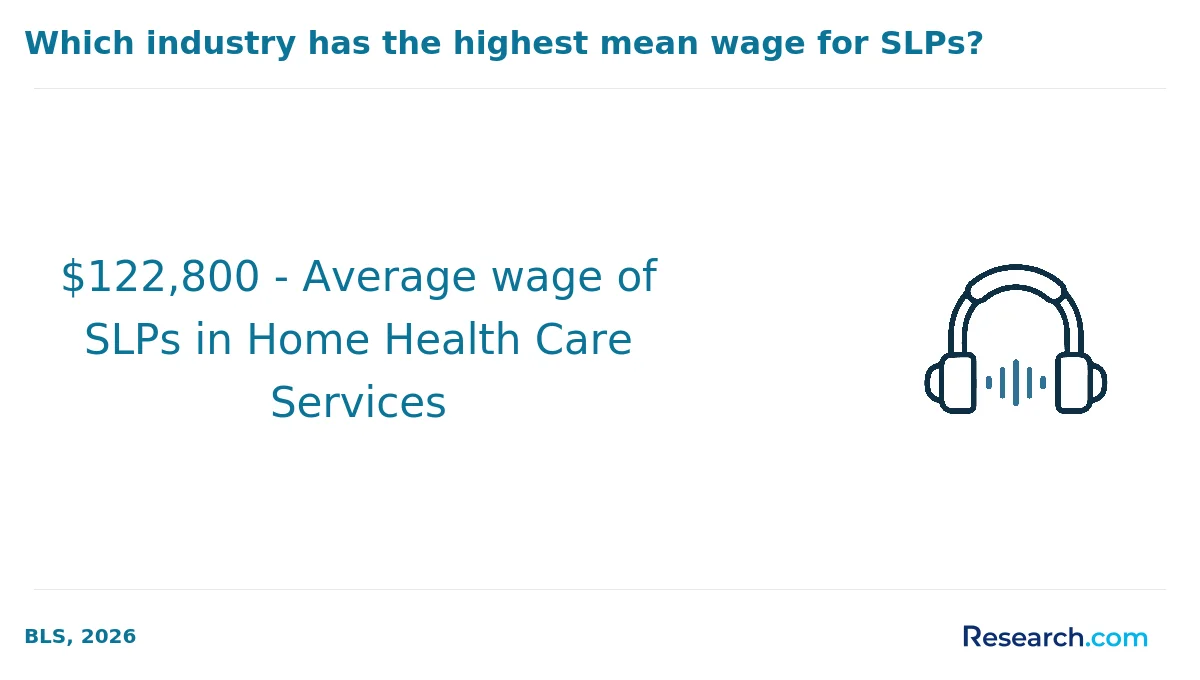
Graduates of no-exam online speech pathology master’s programs generally have salary prospects comparable to graduates of programs that required entrance exams, assuming similar accreditation, licensure, experience, and job setting. The U.S. Bureau of Labor Statistics reported a median annual wage of about $97,870 for speech-language pathologists as of May 2022.
Salary varies widely by role, location, employer, experience, and specialization. The admissions policy of the program is usually not a salary factor; professional qualifications and job responsibilities matter more.
- Geographic location: Salaries can differ by state, region, and local demand for speech-language pathology services. Cost of living may also affect how far a salary goes.
- Work setting: Medical environments like hospitals or private clinics may pay differently than schools, community rehabilitation facilities, early intervention agencies, or long-term care settings.
- Experience level: Entry-level clinicians typically earn less than experienced practitioners, supervisors, specialists, or private practice owners.
- Certifications and credentials: Additional licenses, specialty training, and advanced clinical competencies can affect opportunities and earning potential.
- Population served: Clinicians with experience in high-need areas such as swallowing disorders, neurogenic communication disorders, bilingual services, or medically complex cases may have access to different roles.
- Employment structure: Full-time, part-time, contract, school-year, telepractice, and private practice work can produce different compensation patterns and benefits.
Students should compare tuition against realistic earning expectations in their intended location and setting. A lower-cost program with strong clinical placement support and licensure alignment may offer a better return than a more expensive program with limited support, even if both waive entrance exams.
What Graduates Say About Their No-Exam Online Speech Pathology Master's Degrees
- Scott: "Choosing the right no-exam online speech pathology master's program was overwhelming at first, but focusing on schools with solid reputations really helped narrow my options. The cost was surprisingly reasonable compared to traditional programs, which made financing my education much less stressful. Since graduating, I've noticed a significant boost in my career opportunities, thanks to the practical skills and flexible learning environment the program offered."
- Lina: "Reflecting on my experience with a no-exam online speech pathology degree, I appreciate the balance between affordability and quality education. The lower cost allowed me to pursue my passion without accumulating heavy debt. Professionally, the program's curriculum has been instrumental in advancing my clinical skills and confidence in real-world settings."
- Kristen: "I approached my no-exam online speech pathology master's degree with a professional mindset, prioritizing outcomes above all else. I carefully evaluated programs to ensure they aligned with my career goals and offered credible certifications. The investment was reasonable, and now I'm thriving in a competitive job market, attributing much of my success to the accessible and focused nature of my education."
Other Things You Should Know About Speech Pathology Degrees
Yes, reputable no-exam online Speech Pathology master's programs maintain accreditation from recognized accrediting bodies such as the Council on Academic Accreditation in Audiology and Speech-Language Pathology (CAA). Accreditation ensures the program meets rigorous educational standards required for certification and licensure. Prospective students should verify accreditation status before enrolling to ensure their degree is respected by employers and licensing boards.
Graduates of a no-exam online Speech Pathology master's degree can advance their careers in various settings, such as schools, hospitals, and private practice. They can pursue roles like speech-language pathologists, educators, or clinical supervisors, with opportunities for specialization or leadership positions as they gain experience.
Yes. Programs usually require in-person clinical practica and a final externship or internship, even when coursework is online. For ASHA certification, students typically complete at least 400 supervised clinical hours, including 25 hours of observation, under approved placement sites and supervisors.
References
- U.S. Bureau of Labor Statistics - Speech-Language Pathologists https://www.bls.gov/ooh/healthcare/speech-language-pathologists.htm
- ASHA EdFind - Accredited Speech-Language Pathology Programs https://find.asha.org/ed/
- O*NET OnLine - Speech-Language Pathologists https://www.onetonline.org/link/summary/29-1127.00
- California State University-San Marcos - Online MS in Speech-Language Pathology https://www.csusm.edu/slp/programs/mastersonline/index.html
- California State University-Northridge - Master of Science in Communicative Disorders (Online) https://tsengcollege.csun.edu/programs/CDS
- Idaho State University - Master of Science in Speech-Language Pathology (Online/Distance Education) https://www.isu.edu/slp/programs-offered/slp-graduate-program/
- New England Institute of Technology - Master of Science in Speech Language Pathology https://www.neit.edu/academics/graduate-degrees/speech-language-pathology-ms
- Baylor University - Master of Science in Speech-Language Pathology (Online) https://csd.robbins.baylor.edu/graduate/online-csd-graduate-program