
2027 State-Approved Online Speech Pathology Degree Master's Programs

Co-Founder and Chief Data Scientist

Reviewed by Rhea Paul, PhD
SLP Education & Research Expert
An online master's in speech pathology can remove the need to relocate, but format should not be the first thing you judge. The more important question is whether the program can actually lead to clinical training, licensure eligibility, certification pathways, and employment in the state where you plan to work.
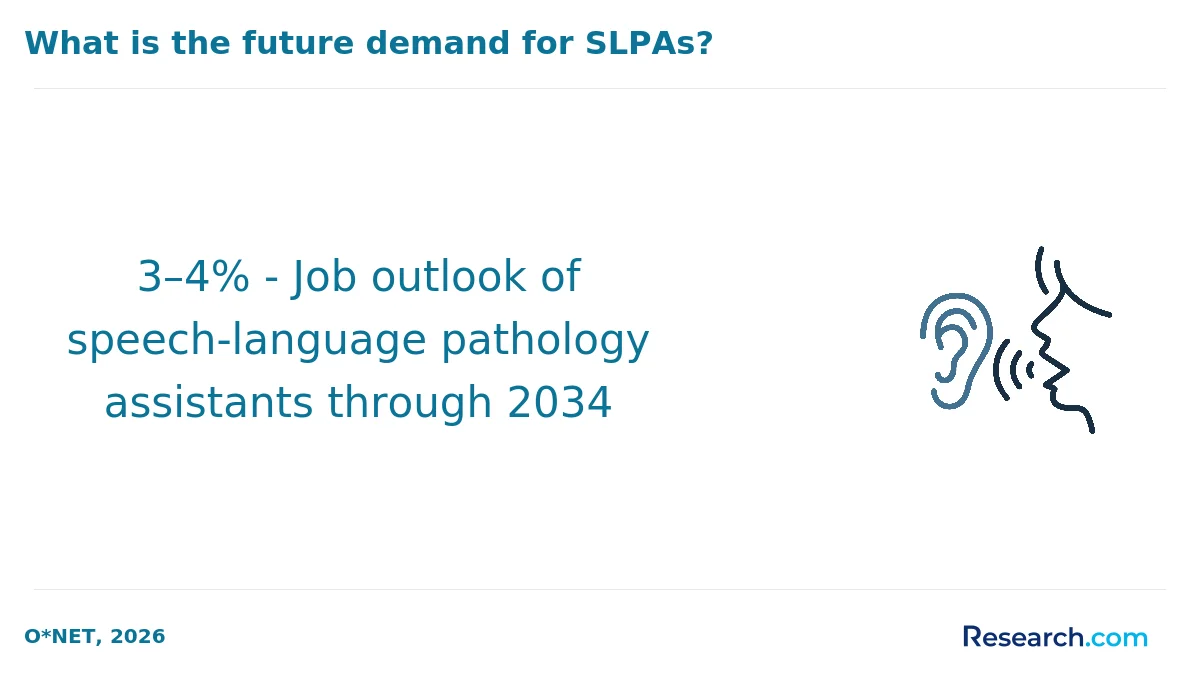
Speech-language pathology is a regulated clinical profession. Online students must meet the same academic and supervised practice expectations as students in campus-based programs. Before applying, confirm state authorization, program approval, accreditation, clinical placement policies, and licensing-board requirements. This due diligence matters because the field is growing: according to recent data, the employment of speech pathologists is projected to grow 17% through 2035, faster than the average for all occupations.
This guide explains what “state-approved” means for an online speech pathology master's program, how to verify a program's status, how approval differs from accreditation, what coursework and clinical training usually include, and how cost, admissions rules, employer expectations, and salary outcomes should influence your decision.
Key Benefits of State-Approved Online Speech Pathology Degree Master's Programs
- State-approved online speech pathology master's programs ensure adherence to rigorous academic standards and regulatory requirements essential for professional practice.
- Graduates have improved eligibility for state licensure and certification, which are often mandatory for clinical roles and career advancement.
- These programs enhance credibility with employers and industry organizations, increasing graduates' competitiveness in a growing job market projected to grow 17% through 2035.
What Does "State-Approved" Mean for an Online Speech Pathology Master's Degree Program?
A state-approved online speech pathology master's program has permission from a state education agency, higher education board, licensing authority, or similar regulator to offer the degree under that state's rules. In practical terms, the school has been authorized to operate, award the credential, and, in some cases, prepare students for professional practice requirements.
For speech-language pathology students, state approval is important because licensure usually depends on completing a qualifying graduate program with the right coursework and supervised clinical experience. About 85% of states require such approval for speech pathology graduate degrees, which creates a basic layer of oversight for programs preparing future clinicians.
State approval is not the same as a full professional green light. It does not automatically prove that the program is accredited, accepted by every licensing board, or authorized to enroll students in every state. An online program may be approved in its home state but still face limitations when enrolling out-of-state students or arranging clinical placements elsewhere.
| Requirement | What it means | What students should verify |
| State approval | The institution or program has legal permission to offer the degree under state rules. | Whether the school may enroll you in your state and support clinical placements where you live. |
| Accreditation | An external accreditor has evaluated academic quality, professional standards, and institutional or program performance. | Whether both the university and the speech pathology program hold the accreditation expected by boards and employers. |
| Licensure eligibility | The degree, coursework, supervised hours, and records align with a licensing board's requirements. | Whether graduates can apply for licensure in the state where they plan to practice. |
Students comparing speech pathology online programs should treat state approval, accreditation, and licensure alignment as three separate checkpoints. A program may satisfy one requirement but still fall short on another, and that difference can affect whether the degree leads to the career outcome you expect.
How Can I Check If an Online Speech Pathology Master's Program Is State-Approved?
Confirm state approval through official sources before you apply or pay a deposit. Marketing phrases such as “online,” “flexible,” “licensure-track,” or “designed for working professionals” do not prove that a program is authorized in your state or accepted by your licensing board. With over 6 million students enrolled in at least one online course as of 2023, applicants need to verify legitimacy and professional fit carefully.
Use this checklist before committing to a program:
- Search the state education agency's database: Look for the institution name, program title, degree level, delivery format, and current authorization status.
- Review the school's state authorization disclosures: Legitimate online programs typically publish state-by-state information explaining where they can enroll students and whether the program meets, does not meet, or has not determined licensure requirements.
- Contact the licensing board where you plan to practice: Ask whether graduates from the specific online master's program can meet that state's educational requirements for speech-language pathology licensure.
- Ask about interstate authorization arrangements: Some schools use reciprocity or authorization agreements to serve students across state lines. These arrangements may support enrollment, but they do not automatically guarantee licensure eligibility.
- Request written documentation from the program: Ask admissions, compliance staff, or program leadership for proof of authorization, accreditation status, clinical placement policies, and licensure disclosures for your state.
- Confirm clinical placement rules: Online SLP students often complete practicum experiences near home. Make sure the program can place students in your state and that local supervisors meet applicable requirements.
A useful question is: “If I live in this state and complete this online program, will I meet the educational requirements to apply for licensure here?” If the school cannot answer clearly, contact the state licensing board before enrolling.
Students who want to see how online programs in other fields present authorization details can review examples such as a 2-year psychology degree online. For speech pathology, however, SLP-specific licensing rules should carry more weight than general online-program language.
Do Online Speech Pathology Master's Programs Meet State Licensing Board Standards?
Some online speech pathology master's programs are designed to meet state licensing board standards, but applicants should never assume this. Licensing boards usually focus less on whether classes are online and more on whether the program includes the required graduate curriculum, supervised clinical training, faculty oversight, documentation, and recognized accreditation or approval. Surveys show that more than 80% of U.S. states insist on a master's degree accredited by recognized agencies for speech-language pathology licensure.
When evaluating licensing fit, look closely at these areas:
- Curriculum alignment: Coursework should cover speech and hearing science, anatomy and physiology, language development, communication disorders, assessment, diagnosis, intervention, and treatment planning.
- Qualified faculty and clinical educators: Instructors and supervisors should have appropriate academic credentials, clinical experience, and, where required, licensure or certification in speech-language pathology.
- Supervised clinical training: The program should provide structured practicum or internship experiences under qualified clinicians. Ask how clinical hours are approved, tracked, verified, and reported.
- Institutional authorization: The college or university must be legally authorized to award the degree and enroll online students in the states it serves.
- Ongoing program review: Review by organizations such as the Council on Academic Accreditation (CAA) or state boards can help show that academic and clinical standards remain current.
Before enrolling, request the program's licensing disclosure for the state where you expect to practice. Also ask whether recent graduates have successfully obtained licensure there. A school may say its curriculum is designed to meet requirements, but the final licensing decision typically belongs to the state board.
One graduate of a state-approved online master's in speech pathology described the verification process as detailed but worthwhile. He reviewed transcripts, clinical hour records, and supervisor qualifications before submitting materials to the state agency. His advice was to confirm documentation requirements before the first semester because missing clinical records or unmet requirements can delay licensure after graduation.
Yes. Some speech pathology master's programs are widely recognized because they follow national accreditation expectations and professional standards used by many state boards. However, “accepted by most states” does not mean “automatically accepted in every state.” Licensing boards may still require state-specific coursework, clinical documentation, exams, background checks, jurisprudence requirements, or additional forms.
Over the past five years, interstate exchange of educational credentials has grown by more than 30%, reflecting the growth of flexible and nationally recognized online programs. A speech pathology master's program is generally more portable when it has these characteristics:
- National accreditation: Programs accredited by bodies like the Council on Academic Accreditation in Audiology and Speech-Language Pathology (CAA) are reviewed against recognized professional education standards.
- Alignment with ASHA competencies: Programs that follow American Speech-Language-Hearing Association (ASHA) expectations are more likely to prepare students for common certification and practice requirements.
- Transparent state authorization: Strong programs publish state-by-state disclosures showing where students can enroll and whether licensure requirements are met, unmet, or undetermined.
- Reliable clinical placement systems: Programs with clear procedures for arranging, approving, supervising, and documenting clinical training are easier for licensing boards to evaluate.
- Comparable academic standards: Online and campus-based students should be held to similar expectations for coursework, practicum performance, faculty review, and professional competency.
Students who may move after graduation should verify more than one state when possible. A program that supports licensure in your current state may not satisfy every requirement in a future state of practice.
Students researching flexible degree structures in other fields, including accelerated programs online, should remember that speech-language pathology carries stricter licensing consequences than many general academic programs because it is a regulated clinical profession.
Accreditation is often essential for speech pathology students, even though it is not the same as state approval. State approval confirms that a program or institution has permission to operate under state rules. Accreditation evaluates academic quality, professional preparation, faculty qualifications, student outcomes, and continuous improvement. Nearly 70% of U.S. postsecondary institutions hold accreditation, emphasizing its importance.
For speech-language pathology, accreditation can affect licensure eligibility, certification pathways, employer confidence, and access to federal student aid. Applicants should review both institutional accreditation and programmatic accreditation before enrolling.
- State authorization is legal permission: It indicates that the institution may offer the program to students in a state, but it may not prove that the degree satisfies SLP licensing requirements.
- Institutional accreditation reviews the school: It evaluates the college or university as a whole and can influence federal student aid eligibility, transfer acceptance, and employer recognition.
- Programmatic accreditation reviews the SLP program: Licensing boards and employers often look closely at whether the speech pathology program itself is recognized by the appropriate professional accreditor.
- Federal financial aid may depend on accreditation: Students generally need to attend an eligible accredited institution to access federal student aid.
- Accreditation can improve portability: Recognized accreditation can make it easier for boards and employers to evaluate the degree, although state-specific requirements still apply.
A common mistake is assuming that state approval automatically means accreditation, or that an accredited university means every professional program at that university has the accreditation needed for licensure. Ask for both types of information in writing. If a program is new, in candidacy, or not currently accredited, ask how that status may affect licensure, certification, financial aid, and employment.
One online speech pathology graduate said that learning the difference between approval and accreditation earlier would have saved time. Her program was state-approved, but she still had to confirm whether licensing boards and employers would accept the degree. Her experience shows why applicants should review state approval, accreditation, and licensure alignment as separate issues.
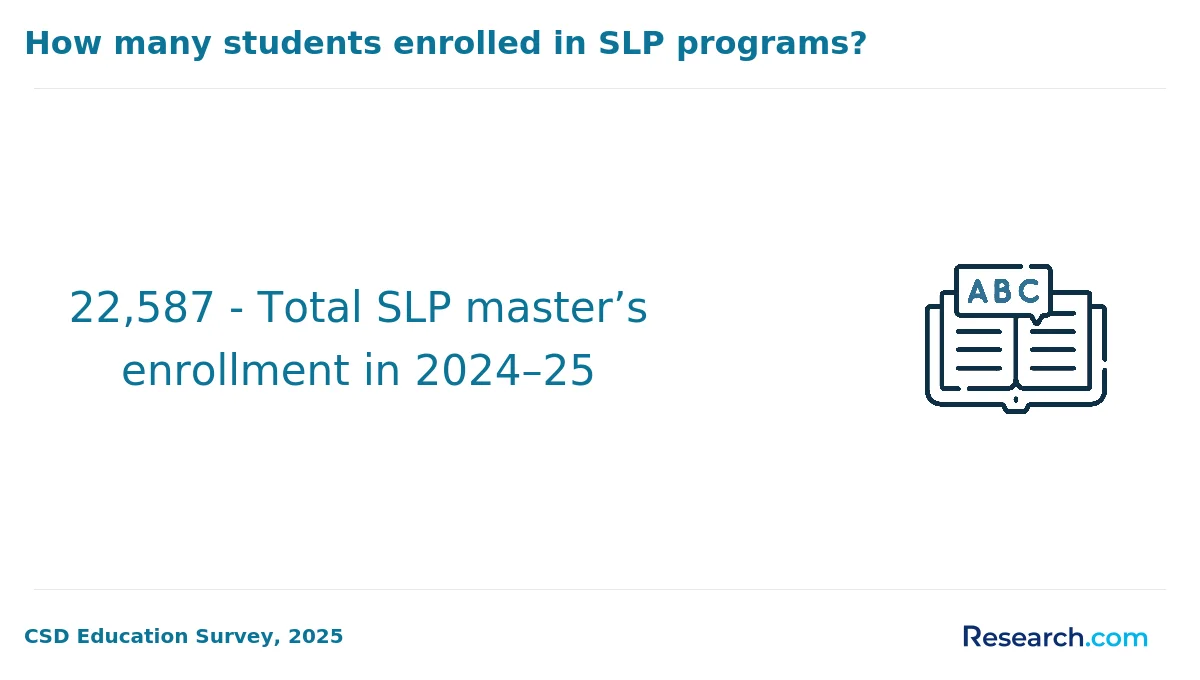
State-approved online speech pathology master's programs typically combine advanced coursework, supervised clinical practice, research training, and a culminating assessment or project. Typically, these programs require completion of approximately 60 to 75 graduate credits, aligning with common graduate health sciences education in the U.S.
Course titles vary by university, but most programs cover these areas:
| Course area | What students study | Why it matters |
| Speech and hearing foundations | Anatomy and physiology, speech science, hearing science, language acquisition, and communication development. | Builds the scientific foundation for understanding communication and swallowing disorders. |
| Communication disorders | Language disorders, speech sound disorders, fluency, voice, swallowing, neurological disorders, and related conditions. | Prepares students to work with clients across ages, diagnoses, and care settings. |
| Assessment and diagnosis | Screening tools, standardized and informal assessments, case histories, documentation, and interpretation of results. | Supports accurate clinical decision-making and treatment planning. |
| Intervention and treatment | Evidence-based therapy approaches, goal writing, treatment design, family counseling, and progress monitoring. | Connects graduate study to direct clinical care. |
| Research methods and statistics | Research design, data interpretation, evidence-based practice, and critical review of scientific literature. | Helps clinicians evaluate evidence and apply it responsibly in practice. |
| Clinical practicum or internship | Supervised client-facing experience in approved settings. | Provides required hands-on preparation for licensure and certification pathways. |
| Capstone, thesis, or comprehensive exam | A final project, examination, or evidence-based study demonstrating graduate-level competency. | Shows that students can integrate academic knowledge, clinical reasoning, and professional judgment. |
Applicants should ask whether prerequisite courses are required before admission or during the early part of the program. Career changers who did not major in communication sciences and disorders may need leveling or bridge coursework before beginning the full graduate sequence.
The strongest online programs explain clinical requirements early. Ask where placements may occur, who approves supervisors, how hours are documented, what technology is used for tracking, and what happens if a local placement is delayed. These details can affect graduation timing, licensure readiness, and total cost.
The cost of a state-approved online speech pathology master's degree depends on tuition, credit requirements, required fees, clinical placement expenses, and residency rules. On average, tuition rates for online master's degrees in the United States range from $500 to $1,500 per credit.
To estimate the full price, multiply the per-credit tuition rate by the number of required credits, then add required fees and out-of-pocket expenses. Pay close attention to these cost drivers:
- Per-credit tuition: Public and private institutions may charge different rates. Some public universities also price online programs differently for in-state and out-of-state students.
- Total credits required: Programs may require between 40 to 60 credits, with longer programs increasing total tuition. Students who need prerequisite or leveling coursework may pay more.
- Online learning fees: Technology fees, distance learning fees, digital platform fees, and proctoring fees can raise the total cost.
- Clinical placement expenses: Students may need to pay for background checks, immunizations, liability insurance, transportation, clinical tracking systems, or site-specific requirements.
- Books and materials: Textbooks, assessment manuals, software, and professional resources can add meaningful costs over the length of the program.
- Licensure and exam preparation: After graduation, students should budget for exam preparation materials, application fees, transcript fees, and state licensing costs.
Affordability should be evaluated alongside licensure fit. A lower-cost program can become more expensive if it cannot support clinical placements in your state or if a licensing board later requires additional coursework. Before enrolling, ask for a complete cost breakdown and confirm whether tuition is locked, cohort-based, or subject to annual increases.
Some state-approved speech pathology master's programs require the GRE, some are test-optional, and others offer waivers under specific conditions. The GMAT is less common for speech pathology admissions, but applicants should still check each school's current requirements. Recent data shows that about 60% of graduate programs across disciplines have adopted test-optional policies or waivers for exams like the GRE or GMAT.
Admissions policies usually fall into one of these categories:
- GRE required: Applicants must submit scores as part of the admissions file, and programs may review them alongside GPA, prerequisites, recommendations, and experience.
- Test optional: Applicants may choose whether to submit scores. If scores are omitted, the rest of the application becomes more important.
- GPA-based waiver: Applicants with a qualifying undergraduate GPA may be exempt from standardized testing.
- Experience-based waiver: Relevant healthcare, education, research, or clinical experience may support a waiver, depending on the program.
- Holistic review: Programs may emphasize academic history, prerequisite performance, personal statements, letters of recommendation, interviews, and professional experience instead of relying heavily on test scores.
Test-optional does not mean easy admission. Speech pathology programs often limit enrollment because they must maintain clinical placement capacity and adequate faculty supervision. Strong prerequisite grades, relevant experience, clear career goals, and polished application materials can matter as much as, or more than, test scores.
Students comparing admissions flexibility across other low-cost online degrees can find broader examples in cheap online psychology degree resources, but speech pathology applicants should rely on each SLP program's current admissions page and licensure disclosures.
Many employers strongly prefer, and in regulated clinical roles may effectively require, graduates from state-approved or appropriately accredited speech pathology programs. A recent survey found that nearly 78% of healthcare employers prioritize candidates from state-approved or nationally accredited speech pathology programs, reflecting strong employer requirements for speech pathology graduates.
Employer expectations vary by setting, but these factors usually matter most:
- Licensure eligibility: Employers hiring speech-language pathologists typically need candidates who can obtain or already hold the required state license.
- Recognized program status: A degree from a state-approved and nationally recognized program helps employers verify that the candidate's education meets professional standards.
- Clinical preparation: Employers value supervised experience in relevant settings, such as schools, hospitals, rehabilitation centers, private practices, or early intervention programs.
- Certification pathway: Programs that support eligibility for respected professional credentials can strengthen a candidate's employment profile.
- Documented competencies: Employers look for evidence of assessment, treatment planning, documentation, collaboration, and client management skills.
In school districts, healthcare systems, and clinical practices, the main concern is usually not whether coursework was delivered online. Employers are more likely to ask whether the graduate is license-eligible, clinically prepared, and trained through a recognized program. A well-designed online program can meet these expectations when it includes rigorous coursework and properly supervised clinical training.
Students comparing credential expectations across industries may notice that accreditation also affects unrelated fields, including a game design online degree, but speech-language pathology has higher licensing stakes because it involves regulated clinical practice.
A state-approved speech pathology master's degree can improve earning potential because it is commonly connected to licensure eligibility, clinical practice authority, certification pathways, and access to professional roles. Graduates with a master's degree typically earn between $65,000 and $90,000 annually.
No program can guarantee a specific salary. Earnings depend on location, setting, experience, caseload, employer type, specialty area, and local labor-market conditions. Still, a qualifying master's degree may support higher earnings in several ways:
- Access to licensed roles: Many speech-language pathology positions require a qualifying master's degree and state licensure, so the credential can open opportunities not available with a bachelor's degree alone.
- Specialized clinical skills: Training in pediatric therapy, neurological rehabilitation, swallowing disorders, fluency, or augmentative and alternative communication can strengthen marketability.
- Professional certification eligibility: State-approved programs are often part of the pathway toward credentials such as the Certificate of Clinical Competence (CCC), which can improve professional credibility.
- Leadership opportunities: Experienced master's-prepared clinicians may pursue supervisory, administrative, program development, or clinical leadership roles.
- Employer confidence: A recognized program can make it easier for employers to verify that a candidate's education meets professional and regulatory standards.
Students should compare salary expectations in their intended state and practice setting before taking on graduate debt. A sound financial decision weighs likely earnings against tuition, fees, living expenses, time away from work, and licensure costs.
What Graduates Say About State-Approved Online Speech Pathology Degree Master's Programs
- : "Choosing a state-approved online speech pathology master's program was a pivotal decision for me. I needed flexibility, but I also needed confidence that the degree would be taken seriously by licensing boards and employers. The coursework was demanding, and balancing study with work required discipline, but faculty support and clear clinical expectations helped me stay on track. — Abigail"
- : "Completing a state-approved speech pathology master's degree online taught me how to manage time, communicate clearly, and stay organized during clinical training. The program's accreditation gave me peace of mind because I knew my qualifications would be reviewed against recognized standards. As a practicing clinician, I can see how that preparation affects the quality of care I provide. — Jack"
- : "Professional credibility was the deciding factor for me. I wanted an online format, but I did not want to risk graduating from a program that would create problems with licensure or employment. The combination of online coursework and supervised practical experience was challenging, but it strengthened both my clinical judgment and my career options. — Elisha"
Other Things You Should Know About Speech Pathology Degrees
Most programs require a criminal background check, drug screening, and proof of immunizations before clinical placement. Common records include MMR, varicella, hepatitis B, Tdap, influenza, and TB testing. Health sciences partners and school clinics often use these documents to clear students for practicums.
A state-approved online speech pathology master's program in 2027 offers flexibility for working professionals, allowing them to balance studies with other commitments. These programs provide access to diverse clinical experiences and are designed to prepare students for licensure exams, ensuring they meet the necessary state requirements.
Students must have reliable internet access, a computer with audio and video capabilities, and possibly specialized software for virtual simulations and telepractice training. Programs may require specific platforms for coursework and communication, so it's important to confirm technical requirements before enrollment.
Many programs provide resources such as exam preparation workshops, study guides, and advising to help students successfully pass the Praxis Speech-Language Pathology exam. This support is crucial, as passing the licensure exam is a key step after completing a state-approved master's degree.
- U.S. Bureau of Labor Statistics - Speech-Language Pathologists https://www.bls.gov/ooh/healthcare/speech-language-pathologists.htm
- ASHA EdFind - Accredited Speech-Language Pathology Programs https://find.asha.org/ed/
- ETS Praxis - Speech-Language Pathology (5331) https://praxis.ets.org/test/speech-language-pathology-5331.html
- New England Institute of Technology - Master of Science in Speech Language Pathology https://www.neit.edu/academics/graduate-degrees/speech-language-pathology-ms
- California State University-Northridge - Master of Science in Communicative Disorders (Online) https://tsengcollege.csun.edu/programs/CDS
- University of Nebraska at Kearney - Speech-Language Pathology, Master of Science in Education (Online Track) https://www.unk.edu/online/degrees-programs/speech-language-pathology-online.php
- Pepperdine University - Master of Science in Speech-Language Pathology https://healthscience.pepperdine.edu/online-masters-in-speech-language-pathology/
- Ithaca College - Online Master of Science in Speech-Language Pathology https://slponline.ithaca.edu/programs/masters-speech-language-pathology-online


