
2027 Best Online Speech Pathology Degree Master's Programs for Career Changers

Co-Founder and Chief Data Scientist

Reviewed by Rhea Paul, PhD
SLP Education & Research Expert
Switching into speech-language pathology is a serious graduate school decision: you need a program that can close prerequisite gaps, meet accreditation expectations, support clinical placement requirements, and still fit around work or family responsibilities. For career changers, the challenge is not only getting admitted; it is choosing an online master’s pathway that prepares you for supervised clinical practice without forcing you into a full-time campus schedule.
Demand for flexible routes has grown. According to the American Speech-Language-Hearing Association, online speech pathology master's programs have grown enrollment by 35% in the past five years, reflecting rising interest from students who need alternatives to traditional on-campus study.
This guide explains what career changers should look for in online speech pathology master’s programs, including admissions expectations for non-majors, curriculum structure, timelines, costs, clinical training, career outcomes, and how to judge whether a program is respected enough to support licensure and employment goals.
Key Benefits of Online Speech Pathology Degree Master's Programs for Career Changers
- Online speech pathology master's programs offer flexible scheduling, enabling working professionals to balance coursework with job and family responsibilities effectively.
- Accelerated curricula help career changers develop essential clinical skills and knowledge rapidly, often completing degrees faster than traditional programs.
- These programs provide access to diverse, global networks of peers and faculty, fostering valuable connections for career transitions and professional growth.
What Are the Best Online Speech Pathology Master's Programs for Career Changers?
The best online speech pathology master’s programs for career changers are not simply the most convenient programs. They are accredited, clinically rigorous, transparent about prerequisites, and designed to help students from other academic or professional backgrounds build the science and practice foundation needed for speech-language pathology.
For non-majors, a strong program usually includes bridge coursework or clearly stated prerequisite options before graduate-level clinical training begins. It should also explain how online students complete supervised clinical hours, whether placements can be arranged near the student’s location, and what support the school provides if a placement becomes difficult to secure.
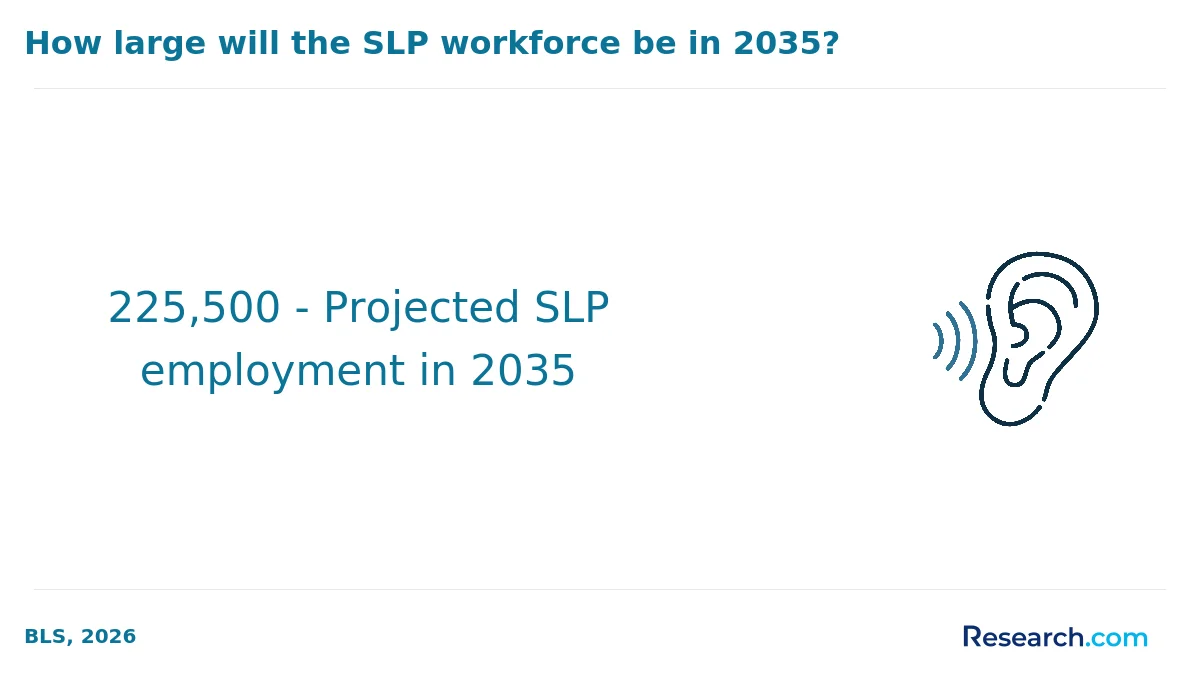
Specialization can also matter. Employment in speech-language pathology is projected to grow by 17% from 2025 to 2035, and focused preparation may help career changers connect prior experience with a specific client population or practice setting.
- Pediatric Speech-Language Pathology: A practical fit for career changers with experience in education, childcare, special education support, or child development. Coursework and clinical work typically emphasize language development, articulation, school-based services, and family collaboration.
- Adult Neurogenic Disorders: Often relevant for students coming from healthcare, rehabilitation, nursing support, psychology, or social services. This area focuses on communication and swallowing challenges associated with stroke, traumatic brain injury, and neurological conditions.
- Augmentative and Alternative Communication (AAC): A strong option for students with technology, assistive technology, disability services, or instructional design backgrounds. AAC training centers on tools and strategies that help clients communicate when speech is limited or unavailable.
- Fluency Disorders: Useful for students interested in stuttering, voice, counseling-informed practice, or confidence-building communication support. Prior experience in psychology, coaching, or human services may translate well here.
When comparing programs, do not choose a specialization before confirming the fundamentals: accreditation, clinical placement support, faculty access, licensure alignment, and total cost. If you are still comparing academic fields before committing to speech-language pathology, Research.com’s guide to the top degrees for the future can help place this career path in a broader education planning context.
What Are the Admission Requirements for Online Speech Pathology Master's Programs for Non-Majors?
Online speech pathology master’s programs often admit students who did not major in communication sciences and disorders, but non-majors should expect additional preparation. A 2023 survey found that over 40% of accredited programs accept candidates from diverse academic backgrounds, usually with required prerequisite or bridge coursework.
Admissions committees generally want evidence that you understand the profession, can handle graduate-level science and clinical coursework, and are prepared for the time demands of online study plus supervised clinical training.
- Bachelor's Degree Requirement: Applicants need a completed bachelor's degree from an accredited institution. For non-majors, the degree may be in another field, but the program may still require specific prerequisite subjects before full graduate progression.
- Bridge Coursework: Non-majors are commonly asked to complete foundational classes in areas such as anatomy, linguistics, or psychology. Some schools build these into a leveling sequence; others expect students to complete them before admission or before starting clinical courses.
- Professional Resume: A resume should show transferable strengths, not just job titles. Relevant experience may include teaching, tutoring, healthcare support, case management, counseling-adjacent work, customer communication, disability services, or language-related roles.
- Personal Statement: Career changers should clearly explain why speech-language pathology is the right next step, what they have done to understand the field, and how their prior background will support ethical, client-centered practice.
- Letters of Recommendation: Strong letters typically come from supervisors, professors, or professionals who can speak to communication skills, academic readiness, reliability, empathy, and ability to work with diverse clients.
A common mistake is applying before understanding each school’s prerequisite policy. Before submitting applications, make a checklist of missing courses, deadlines, minimum grade expectations, clinical observation requirements if applicable, and whether prerequisites affect the total program timeline. Students who want to build related skills while preparing for graduate admission may also review Research.com’s list of online certification courses, but certificates should be viewed as supplemental preparation rather than substitutes for an accredited speech pathology master’s degree.
How Is the Curriculum Structured for Career Changers in Online Speech Pathology Master's Programs?
For career changers, the curriculum usually works in layers: first closing foundational gaps, then building clinical knowledge, and finally applying that knowledge in supervised practice. This structure matters because students from unrelated fields may be strong communicators or experienced professionals, but they still need formal preparation in speech, language, hearing, swallowing, assessment, intervention, documentation, ethics, and evidence-based care.
Modern online speech pathology master's programs are carefully designed to equip individuals from unrelated fields with essential foundational knowledge and advanced professional skills. This approach has shown positive outcomes, with around 67% of such students completing certification within two years.
- Foundational Bridge Modules: These courses introduce core concepts such as anatomy, linguistics, speech and language development, and communication disorders. They help non-majors develop the vocabulary and scientific base needed before advanced clinical work.
- Core Industry Competencies: Graduate courses typically cover assessment, diagnosis, treatment planning, therapeutic techniques, research literacy, ethics, and evidence-based practice. Career changers should look for courses that connect theory to real client cases rather than relying only on lectures and exams.
- Applied Capstone Projects: Capstones, simulations, practicums, or supervised clinical experiences help students move from academic understanding to professional judgment. These experiences are especially important for students reshaping their identity from a prior field into a clinical role.
One career changer described the transition as demanding but clarifying: “Initially, the shift felt overwhelming-I wasn't sure if my previous career skills would translate at all.” The step-by-step curriculum helped him build confidence, while practicum experiences made daily clinical work feel real rather than abstract. He added that balancing coursework with family responsibilities tested his discipline, but the process was “not just about learning content; it was about reshaping my professional identity.”
Is an Online Speech Pathology Master's as Respected as an On-Campus Degree?
An online speech pathology master’s degree can be respected by employers when it comes from an accredited institution and includes the clinical training required for professional practice. The delivery format is less important than the program’s accreditation status, academic rigor, clinical supervision, faculty quality, and alignment with licensure or certification requirements.
Employer attitudes toward online education have also changed. According to a 2023 National Association of Colleges and Employers (NACE) survey, 78% now consider online degrees equal in value to traditional diplomas. For career changers, this is important because online study may be the only realistic way to enter the field while keeping a job or managing family obligations.
That said, students should not assume all online programs carry the same value. Before enrolling, confirm whether the diploma is issued by the same institution that offers the program, whether the transcript distinguishes the delivery format, whether the program is accredited, and how clinical placements are supervised. Many universities grant diplomas identical to those given to on-campus graduates, which means the online format may not appear on the credential.
Completing an online speech pathology master’s degree can also signal persistence, time management, and digital communication skills. Those qualities matter in a field where documentation, telepractice, interdisciplinary collaboration, and client communication are central to effective care. For readers comparing the financial value of different degrees more broadly, Research.com’s overview of the most profitable majors may provide useful context.
How Long Does It Take to Complete an Online Speech Pathology Master's Degree for Career Changers?
Career changers should plan for the degree timeline to depend on three factors: prerequisite coursework, enrollment intensity, and clinical placement scheduling. Online delivery can make lectures and assignments more flexible, but it does not remove the need for supervised clinical training.
Online speech pathology master's programs offer several scheduling formats, and recent data show that over 70% of allied health graduate students experience better outcomes through structured online formats.
- Accelerated Full-Time: These tracks typically take between 18 and 24 months to complete. They may be best for students who can reduce work hours, manage a heavy course load, and handle clinical placement demands without major schedule conflicts.
- Part-Time Flexibility: Part-time options often extend over two to three years. This pace can be more realistic for working adults, parents, and students who need time to complete prerequisites before advancing into clinical coursework.
- Hybrid Models: Hybrid programs combine online coursework with in-person clinical practicums or campus intensives. They can offer useful hands-on training while preserving some remote flexibility, but students should review travel requirements and placement expectations carefully.
A career changer who completed an online speech pathology master’s program described the schedule as manageable but not easy. She valued the ability to continue working and handle family responsibilities, but said “the hardest part was juggling deadlines and clinical placements.” Her experience highlights a key point: online does not mean low commitment. It means the program may offer more control over when and where academic learning happens, while clinical requirements still demand reliable availability.
How Much Does an Online Speech Pathology Master's Degree Cost for Career Changers?
The overall expense for an online speech pathology master’s degree typically falls between $30,000 and $80,000. The final cost depends on tuition, prerequisite requirements, program length, fees, clinical expenses, technology needs, and how much financial aid a student receives.
Online programs may reduce costs tied to relocation, commuting, parking, and campus housing. They may also allow students to keep working while enrolled. However, students should avoid judging affordability by tuition alone; the lower-priced program is not always the best value if it offers weak clinical placement support or delays graduation.
- Tuition Rates: Public universities often charge lower tuition than private institutions, particularly for in-state students. Some online programs charge the same rate regardless of residency, while others do not.
- Program Duration: Programs generally last two to three years. Longer timelines may increase total tuition and living costs, especially if prerequisite courses add additional terms before graduate coursework begins.
- Accreditation Status: Accreditation is essential for quality assurance and may affect licensure eligibility. Do not choose an unaccredited program simply because it appears cheaper upfront.
- Additional Expenses: Students should budget for textbooks, software, clinical practicum fees, background checks, immunization documentation, travel to clinical sites, and required technology.
- Financial Aid Availability: Grants, scholarships, assistantships, employer tuition support, and loans can change the net price substantially. Ask each school for a full cost estimate, not just the per-credit tuition.
Cost-conscious applicants should compare total program price, prerequisite costs, clinical placement support, and completion timeline side by side. Research.com’s guide to the cheapest slp master's programs can be a useful starting point for identifying lower-cost options, but affordability should always be weighed against accreditation and career readiness.
What Skills Do Career Changers Gain in an Online Speech Pathology Master's Program?
Career changers enter online speech pathology master’s programs with different strengths, but the degree is designed to turn those strengths into clinical competence. A former teacher may already understand child learning. A healthcare worker may understand patient care environments. A technology professional may be comfortable with digital tools. The master’s program adds the discipline-specific knowledge required to assess, treat, document, and collaborate as a speech-language pathology professional.
Employment of speech-language pathologists is projected to grow 17% from 2025 to 2035, according to the U.S. Bureau of Labor Statistics, making practical skill development especially important for students entering the field from another career.
- Clinical Assessment: Students learn to evaluate speech, language, communication, and swallowing concerns using structured tools, observation, case history, and professional judgment.
- Therapeutic Techniques: Programs teach evidence-based intervention methods and how to adapt treatment plans to client age, diagnosis, goals, setting, and progress.
- Cultural Competence: Students practice working with clients from different linguistic, cultural, developmental, and socioeconomic backgrounds, including families and caregivers.
- Research Literacy: Graduates learn to read clinical research critically, judge the strength of evidence, and apply findings responsibly rather than relying on habit or unsupported techniques.
- Ethical Practice: Training emphasizes confidentiality, scope of practice, professional boundaries, documentation standards, informed decision-making, and responsible referral.
For career changers, the most valuable skill may be integration: learning how to combine prior professional experience with new clinical responsibilities without overestimating what transfers. Strong programs make that transition explicit through case discussions, supervised practice, faculty feedback, and reflection.
What Industries Hire Speech Pathology Master's Graduates with No Prior Experience?
Speech pathology master’s graduates without prior field experience can be competitive for entry-level roles when they complete the academic and clinical preparation required by employers. The degree gives career changers a recognized professional pathway, while supervised clinical experiences help demonstrate readiness for client-facing work.
According to the Bureau of Labor Statistics, employment of speech-language pathologists is projected to grow 17% from 2025 to 2035. Demand spans healthcare, education, early intervention, long-term care, and technology-related settings.
- Healthcare: Hospitals and rehabilitation centers hire graduates to support patients with communication or swallowing disorders related to stroke, traumatic brain injury, illness, surgery, or neurological conditions. These settings may require comfort with fast-paced teams and medical documentation.
- Educational Institutions: Public and private schools employ speech pathologists to work with children who have speech, language, fluency, and communication needs. Schools can be a common entry point because they offer structured caseloads, collaboration with educators, and defined service plans.
- Early Intervention Programs: Government and private agencies provide services for infants and toddlers. These roles require family-centered communication, developmental knowledge, and the ability to coach caregivers as part of treatment.
- Skilled Nursing Facilities: These facilities serve older adults with communication and swallowing needs, including residents affected by dementia or other age-related conditions. Work may involve close collaboration with nurses, physicians, dietitians, and occupational or physical therapists.
- Research and Technology Firms: Some graduates apply speech-language pathology expertise to speech-recognition tools, accessibility products, augmentative communication devices, or clinical research support.
Career changers who eventually want administrative or organizational leadership roles may also explore broader graduate pathways, such as a doctorate in organizational leadership online, after establishing their clinical direction.
Can a Speech Pathology Master's Increase Earning Potential After a Career Switch?
A speech pathology master’s degree can increase earning potential for career changers because it qualifies graduates for specialized roles that are generally not available without graduate-level preparation. Recent projections estimate that holders of a master's degree in speech pathology earn between $62,900 and $134,160 annually.
The financial return depends on prior salary, geographic location, work setting, licensure status, experience, schedule, and whether the graduate enters schools, healthcare, private practice, telepractice, or another setting. Career changers should compare expected earnings against total program cost and the income they may forgo while studying.
- Immediate Post-Graduation Salary Bump: Moving from another field into a specialized speech pathology role may result in a 20% to 35% salary increase, especially when the student’s prior career paid less than clinical SLP roles in the target region.
- Long-Term Career Trajectory: Over time, the credential can support advancement into supervisory, specialist, clinical leadership, or program coordination roles. These positions often offer salaries that are 30% to 50% higher than entry-level earnings.
- Regional and Remote Premiums: Online graduates may be able to train without relocating and later pursue roles in higher-demand markets, including telepractice where permitted. Pay still varies by employer, location, caseload, and credential requirements.
The degree can be financially worthwhile, but it should not be evaluated only by headline salary. Applicants should calculate tuition, fees, prerequisite costs, loan interest, clinical placement travel, and likely starting pay in their intended location. Readers comparing flexible degree routes across industries may also find Research.com’s guide to a construction management bachelor degree useful as a point of comparison for career-switch planning.
What Should Career Changers Look for in a Speech Pathology Master's Program?
Career changers should look for an online speech pathology master’s program that is built for licensure readiness, not just convenient course delivery. About 60% of graduate speech pathology students come from unrelated academic backgrounds, so the strongest programs are clear about how they support students who need foundational preparation.
- Accreditation: Confirm that the program holds accreditation from the Council on Academic Accreditation (CAA). Accreditation is one of the most important checks for academic quality, clinical standards, and future licensure or certification planning.
- Flexible Delivery: Look for online coursework that fits your schedule, but also ask how synchronous classes, exams, group projects, labs, and clinical requirements are scheduled. Flexibility should be real, not just advertised.
- Foundational Support: Non-majors should prioritize programs with clear prerequisite pathways, bridge courses, advising, tutoring, and early academic support in core speech-language pathology concepts.
- Hands-On Experience: Supervised clinical training is essential. Ask who finds placements, what happens if a placement falls through, whether local sites are possible, and how supervision is documented.
- Career Resources: Career changers benefit from mentoring, resume support, interview preparation, alumni networks, licensure guidance, and introductions to school, healthcare, or clinical employers.
Before enrolling, ask direct questions: What percentage of students complete the program on time? Are prerequisites included in the advertised timeline? Does the school help secure clinical placements? How does the program prepare students for state licensure requirements? What support exists for students who have never worked in healthcare or education? A reputable program should answer these questions clearly.
What Graduates Say About Online Speech Pathology Degree Master's Programs for Career Changers
- : "Choosing an online speech pathology master's degree was a game-changer for me because it allowed me to balance work and study without relocating. The program was surprisingly affordable compared to traditional routes, which eased my financial worries. Ultimately, this degree has opened doors to meaningful jobs where I can truly help others communicate better. — Denise"
- : "Reflecting on my decision to switch careers, the flexibility of pursuing speech pathology online was crucial-it gave me the freedom to learn at my own pace. Although the cost was higher than I initially expected, the investment paid off by giving me the credentials I needed to enter a fulfilling new field. Now, I feel more confident professionally and equipped to make a difference in the lives of clients. — Alexis"
- : "I needed a practical way to change careers without sacrificing my current income, so the online speech pathology master's program was perfect. The program's reasonable cost and quality instruction impressed me from the start. Since graduating, I've experienced significant professional growth, with new opportunities that align with my passion for helping others communicate effectively. — Nigel"
Other Things You Should Know About Speech Pathology Degrees
Yes, career changers enrolled in online speech pathology master's programs complete required clinical practicum hours at approved local facilities. These programs typically coordinate with employers, healthcare centers, or schools near the student's location to ensure clinical training meets accreditation standards. This hands-on experience is essential for state licensure and certification.
Career changers should consider program accreditation, flexibility in scheduling, clinical practicum opportunities, faculty expertise in varied settings, and available career support services. Additionally, evaluating the strength of the alumni network can provide insights into the program’s effectiveness in facilitating career transitions.
Most programs require 3 to 5 prerequisite courses, often including anatomy and physiology of speech and hearing, phonetics, language development, audiology, and speech science. Some also require 25–40 observation hours, and missing prerequisites must usually be completed before clinical training begins.
References
- U.S. Bureau of Labor Statistics - Speech-Language Pathologists https://www.bls.gov/ooh/healthcare/speech-language-pathologists.htm
- ASHA EdFind - Accredited Speech-Language Pathology Programs https://find.asha.org/ed/
- O*NET OnLine - Speech-Language Pathologists https://www.onetonline.org/link/summary/29-1127.00
- University of Wisconsin-Eau Claire - Master of Science in Speech-Language Pathology (Online) https://www.uwec.edu/speech-language-and-hearing-sciences-department/graduate-program/speech-language-pathology-online
- University of Scranton - Master of Science (M.S.) in Speech-Language Pathology https://www.scranton.edu/academics/pcps/health-and-human-performance/programs/speech-language-pathology/index.shtml
- California State University-Northridge - Master of Science in Communicative Disorders (Online) https://tsengcollege.csun.edu/programs/CDS
- New York University - Online MS, Communicative Sciences and Disorders (Speech@NYU) https://steinhardt.nyu.edu/degree/online-ms-communicative-sciences-and-disorders
- West Virginia University - Speech-Language Pathology, M.S. - Online https://medicine.hsc.wvu.edu/communications-sciences-and-disorders/speech-language-pathology-ms/future-students/curriculum/online-slp-program/


