2027 Moving into Staff Nursing from a Permanent Unit: Experience and Financial Planning
Audited and Verified:
Our Editorial and Data Verification Process
Research.com uses government datasets, official education statistics and primary institutional information to support its career and degree guides. Our review process checks factual accuracy, occupational definitions, source dates and the requirements associated with the credentials discussed.
How This Article Was Fact-Checked
Our editorial team verifies salary estimates, employment projections, education requirements and program information against original data providers and official organizations. Salary figures are checked against the relevant occupational definitions and reporting periods. Information about licensure, accreditation and required in-person training is reviewed separately.
Fact-checked and verified on:

Co-Founder and Chief Data Scientist
Leaving a permanent unit can bring more variety or scheduling control, but it can also change your orientation, benefits, and income stability. For an RN considering a float pool, per-diem staff position, or staffing agency, the key decision is not simply which job advertises the highest hourly rate. This guide explains how the roles differ, when additional education is useful, and how to compare offers after benefits, unpaid time, and transition costs. Use it to decide whether a move fits your clinical experience and household budget.
Key Things You Should Know
- A permanent-unit RN is already a staff nurse; the meaningful move is usually to a float pool, per-diem position, or staffing agency, each with different scheduling and support.
- An RN generally does not need another degree to change staff assignments, but must hold the required license and meet the receiving employer's competency and orientation standards.
- At 36 paid hours a week for 52 weeks, a $5 hourly increase equals $9,360 in gross annual pay before accounting for canceled shifts, benefits, taxes, or other costs.
What is staff nursing, and how does it differ from permanent unit nursing?
Staff nurse usually describes an RN providing direct patient care as an employee, rather than naming a particular scheduling arrangement. A nurse assigned permanently to one hospital unit is typically a staff nurse, too. In this article, moving into staff nursing means leaving a fixed unit assignment for a float-pool, per-diem, or agency-based direct-care role. Confirm what an employer means by "staff," "resource," or "flex" before comparing jobs.
The distinction matters because variety and flexibility may come with less predictability. This comparison identifies the workplace terms most likely to change.
| Arrangement | Typical assignment | What to verify |
| Permanent unit | One primary team and patient population | Schedule commitments, staffing, and advancement options |
| Internal float pool | Multiple approved units within an employer | Float boundaries, unit-specific orientation, differential, and guaranteed hours |
| Per-diem staff | Shifts accepted under an employer's availability rules | Minimum shift requirements, cancellation priority, and benefit eligibility |
| Staffing agency | Assignments arranged through an agency, sometimes across facilities | Employer of record, contract terms, travel expectations, and site orientation |
A direct-care move also differs from a move into management. Online DNP leadership pathways for graduate nurses address a different goal; they are not a prerequisite for joining a float pool or agency.
What education and licensure requirements apply to staff nursing roles?
For an RN staff position, employers generally require an active RN license authorizing practice where the patient is located, plus any role-specific credentials and demonstrated competencies. An ADN, nursing diploma, or BSN may meet a posting's educational requirement; some employers prefer or require a BSN. A degree does not replace licensure, and prior employment on one unit does not establish readiness for every unit in a float rotation.
Check the posting and the state board of nursing for the applicable requirements. Ask the hiring team which units are included, which credentials must be held before the first shift, and how competency is assessed. An LPN/LVN considering an RN-only staff opening needs an initial RN-licensure pathway, not merely a new job title; comparing LPN-to-RN entry requirements can help frame that separate education decision.
Which nursing degree pathway best supports a transition into staff nursing?
For an already-licensed RN, the best first pathway is often no new degree. If the target employer accepts your education, targeted orientation, supervised specialty training, and recent relevant experience may close the actual gap faster and at lower cost. If a BSN is required for the position or a longer-term promotion goal, compare RN-to-BSN programs against the employer's tuition assistance and scheduling rules.
An ADN-prepared RN pursuing broader graduate-level career goals might explore MSN pathways that accept ADN-prepared nurses. That is a separate investment: an MSN is not generally needed for a direct-care float or agency RN role, and a non-APRN MSN does not confer advanced practice authority. Choose a degree only after identifying a specific job requirement or longer-term objective it serves.
If further education is necessary, online coursework may reduce commuting and make it easier to retain a fixed-unit job during study. It does not necessarily make exams, group work, clinical experiences, or campus visits self-paced. Campus-based study may offer a more predictable in-person routine, but travel and class times can be harder to reconcile with rotating shifts.
Before enrolling, request the actual term schedule, attendance policy, clinical-placement responsibilities, and rules for a temporary reduction in course load. A prelicensure program also has different in-person requirements from a postlicensure RN-to-BSN program. Online coursework options for aspiring nurses concern initial nursing preparation and should not be mistaken for a quicker format of an RN's postlicensure study.
Preparation should match the assignments you will actually accept. A float RN may need refreshed assessment, medication-safety, escalation, documentation, and handoff skills across several units; an agency nurse also needs to learn each facility's equipment, electronic records, and escalation procedures. Relevant continuing education can help, but employer-observed practice and unit-specific orientation are more useful evidence of readiness than a course certificate alone.
If pursuing a BSN, coursework in evidence-based practice, population health, or care coordination may support broader professional goals. RN-to-BSN pathways using applied projects may suit nurses seeking academic advancement, but an applied project is not a substitute for supervised orientation to an unfamiliar clinical assignment. Ask how the employer handles assignments outside your documented competencies and whom you can contact for immediate support.
An RN-to-BSN program commonly asks for prior nursing education, transcripts, and an RN license or a program-defined route to obtaining one. Requirements for GPA, prerequisite courses, license status, and transfer credit vary. A prelicensure program instead evaluates eligibility for initial nursing study and clinical placement; acceptance to a college alone may not mean acceptance to its nursing major.
Request a written review showing which credits apply to the degree and when required courses are offered. If your real aim is a direct-care RN staff job, confirm that an additional degree is required before applying. Admission to an advanced practice program, including accelerated mental health NP certificate study, serves a different licensed-role goal and should not be treated as ordinary staff-RN preparation.
There is no useful single price or timeline for "staff nursing education." An RN changing employers may need no degree program at all, although orientation and required credentials take time. An RN-to-BSN timeline depends on accepted credits, course availability, and enrollment pace; tuition and fees depend on the school and the number of credits still required.
Compare a written total-cost estimate - not just advertised tuition - with the shifts you may lose while studying. Include books, technology, any required visits, credential fees, and transportation. A fast program is not necessarily the least expensive if it requires reducing paid hours. Time-efficient online DNP pathways address doctoral study, which is generally unnecessary for this transition.
Compare offers on expected annual net compensation and risk, not the posted hourly rate. A $5 hourly premium produces $9,360 in additional gross pay only if you actually work 36 paid hours every week for 52 weeks. Unpaid gaps, canceled shifts, higher insurance premiums, and lost retirement contributions can erase some or all of that difference.
Use a conservative estimate before resigning. These steps expose costs that are easy to miss:
- Obtain written terms for base pay, differentials, guaranteed hours, cancellations, overtime, and any assignment-related expenses.
- Estimate paid hours using a cautious schedule, then subtract expected benefit costs, unpaid time, commuting, and required credentials.
- Check when current coverage ends and new coverage begins; budget for any gap and keep a reserve for irregular shifts.
- Confirm whether tuition reimbursement or a sign-on payment has service, repayment, or tax conditions before counting it as available cash.
Education spending belongs in this calculation only when it advances a defined goal. For example, an online mental health NP affordability guide addresses a substantially different education and practice decision, not a necessary expense of becoming a float RN.
With the appropriate RN license, experience, and employer onboarding, direct-care options can include permanent-unit RN, internal float-pool RN, per-diem RN, and agency RN positions. Completing another degree does not automatically qualify a nurse for every specialty assignment. Hiring teams may look for recent experience with the patient population, required credentials, and evidence that the nurse can practice safely with the support available.
For an experienced permanent-unit RN, an internal float pool can be a measured first move: it may offer exposure to several units while retaining one employer's policies and systems. Per-diem and agency roles may offer more choice over assignments but warrant closer review of hours, cancellations, and orientation. Advanced practice positions reached through routes such as shorter family NP certificate pathways are different jobs with separate education, certification, and state authorization requirements.
What salary and job outlook can staff nurses expect in the United States?
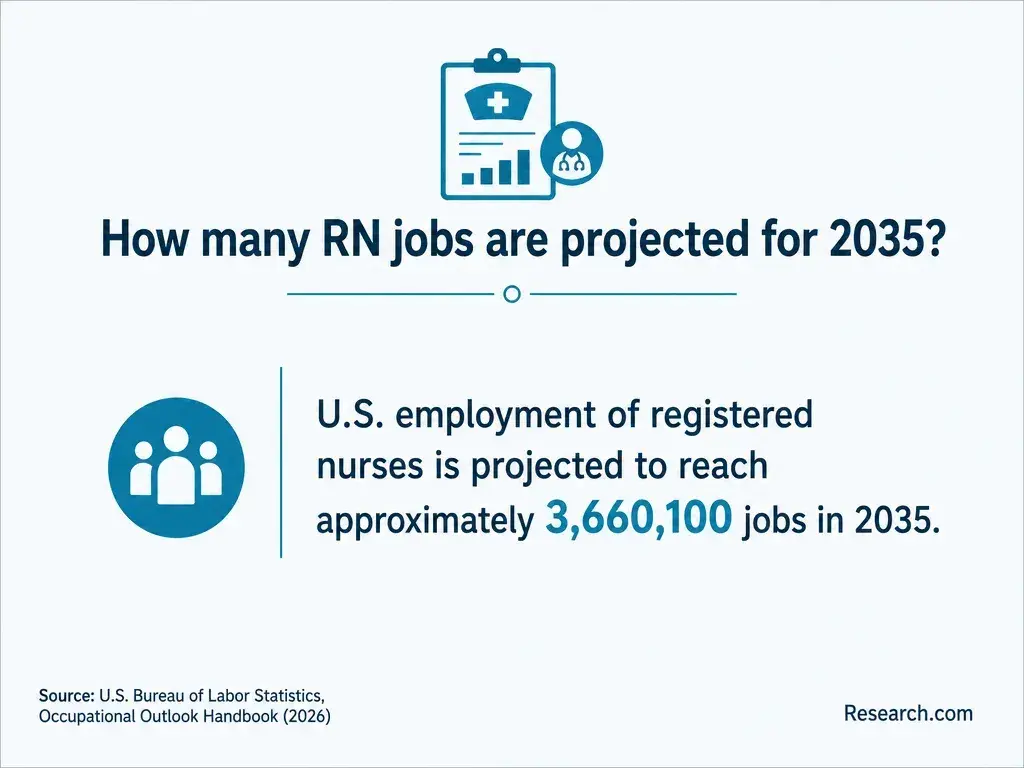
The U.S. Bureau of Labor Statistics reported a $93,600 median annual wage for registered nurses in May 2024 and projected 5% employment growth from 2024 to 2034. These occupation-wide figures describe RNs across settings and experience levels. They are not a forecast of a particular float-pool offer, agency assignment, degree premium, or local job market.
Compare local written offers using paid hours, differentials, benefits, and cancellation terms. BLS RN figures also should not be used to estimate returns from a different occupation: FNP programs with shorter completion timelines prepare eligible nurses for a separate advanced practice pathway, not a higher-paying version of the same staff-RN job.
Other Things You Should Know About Nursing
Possibly. Ask your employer whether it permits cross-training, occasional approved float shifts, or an internal trial assignment, and whether you would retain a right to return to your unit. Get any arrangement in writing.
No. An agency assignment may be structured as employee work or otherwise, depending on the actual relationship. Confirm your classification and payroll arrangements before accepting a contract; do not infer them from the job title.
State your relevant competencies and concerns promptly to the appropriate supervisor, and follow employer policy and applicable nursing standards. Ask what orientation, resources, and alternative assignments are available rather than assuming that being a licensed RN establishes competence for every unit.
That is financially risky. First confirm the offer's start date, required checks and credentials, expected hours, and benefits effective date. Consider how long your household could manage if onboarding or shifts are delayed.
- Fact Sheet #53 - The Health Care Industry and Hours Worked | U.S. Department of Labor https://www.dol.gov/agencies/whd/fact-sheets/53-healthcare-hours-worked
- Using action research to evaluate a nursing orientation... - PMC https://pmc.ncbi.nlm.nih.gov/articles/PMC8105551/
- Understanding Benefits | UConn Center for Career Readiness and Life Skills https://career.uconn.edu/resources/understanding-benefits/
- Employer-Sponsored Health Insurance 101 | KFF https://www.kff.org/health-costs/health-policy-101-employer-sponsored-health-insurance/
- 50 Nursing Certifications to Increase Your Salary | nurse.com https://www.nurse.com/blog/24-nursing-certifications-to-boost-your-career/
- Components of an Effective Nurse Orientation Pathway | American Association of Critical-Care Nurses https://solutions.aacn.org/blog/components-of-an-effective-nurse-orientation-pathway