2027 Most Affordable Online Associate Degree Completion Programs

Co-Founder and Chief Data Scientist
Already have college credits but no degree? The cheapest online associate degree is not necessarily the cheapest one for you: a school that accepts fewer of your credits could leave you paying for more courses. The College Board reported average published tuition and fees of $4,050 for public two-year, in-district students in 2024-25, but that benchmark excludes many expenses and does not reflect every online student's rate. This guide helps returning students compare completion paths across six fields, calculate the cost of finishing, and identify what to verify before enrolling.
Key Things You Should Know
- Start with an individual transfer evaluation: accepted credits must apply to degree requirements to reduce the number of courses you pay for.
- The College Board's 2024-25 public two-year, in-district tuition-and-fees average was $4,050; online fees and nonresident rates can change your actual price.
- Compare accredited programs by total remaining tuition and mandatory fees, required in-person work, and fit with your transfer or career goal - not by per-credit price alone.
Top 10 Most Affordable Online Associate Degree Completion Programs
Business Programs
An online business AA or AS may suit students planning to transfer into a bachelor's program; a business AAS may emphasize immediate workplace skills. Accounting, management, and office-technology concentrations can have different course requirements even when they share a name.
For the lowest completion cost, ask whether previous general education and business courses satisfy the specific degree plan. A cheap AAS is a poor bargain if your intended bachelor's program will not apply its courses toward the major.
Healthcare Programs
Online healthcare administration or health information programs may accommodate returning students without clinical training, but required internships, software, and certification preparation can add costs. Check whether older science or technology credits still count.
An administrative degree does not qualify you for a clinical license, and eligibility for a particular health information credential has separate requirements. Compare the remaining major courses and any supervised experience, not just the school's advertised tuition.
Information Technology Programs
IT completion options may focus on networking, cybersecurity, programming, or general computer systems. An AAS can be workforce-oriented, while an AS may better support transfer; confirm the actual curriculum. Online lab platforms, equipment, and certification exams may cost extra.
Ask whether previously earned technical courses still meet current requirements and whether the program accepts relevant exam, military, or professional training for credit. Prior experience reduces cost only if the college formally awards applicable credit.
Nursing / Pre-Nursing Programs
A pre-nursing AS generally prepares students to apply to a nursing program; it does not make them eligible for registered nurse licensure. An associate degree in nursing may include online coursework, but clinical placements and skills assessments require in-person participation.
Admission can be selective, and older science courses may not satisfy prerequisites. Before counting on a low online price, verify admission to the nursing track, clinical placement rules, nursing-program approval, and eligibility to seek licensure in your state.
Criminal Justice Programs
Criminal justice AA and AS pathways may support transfer, while an AAS may target entry-level public-safety or administrative work. Compare how many prior courses satisfy the degree, then check the hiring requirements of your intended agency.
Police and corrections roles may require academy training, background checks, physical qualifications, or other conditions beyond a degree. Paying less for an online program is useful only if its curriculum and delivery fit your intended next step.
Psychology / Counseling Programs
An online psychology AA or AS is usually a transfer foundation, not a qualification to practice as a licensed counselor or psychologist. Students with prior general education credits may find it economical if their intended bachelor's institution accepts the remaining courses.
Check transfer agreements before enrolling; a low-cost associate program can become expensive if credits do not apply later. Compare the full educational path, since professional counseling typically requires graduate education and state licensure.
What Are Online Associate Degree Completion Programs?
Online associate degree completion programs let students apply previous college credit toward the requirements of an associate degree while taking remaining coursework online. "Completion" describes the student's starting point, not a uniform program length: one person may need a few major courses, while another still needs general education, prerequisites, and electives.
Most associate degrees require around 60 semester credits, although requirements vary. An AA or AS often supports transfer; an AAS often emphasizes workforce preparation. Neither label guarantees how credits will be used by another school.
The affordable choice is the program that applies the most eligible prior credit to requirements you still need, at a manageable total price, while supporting your goal.
How Much Do Affordable Online Associate Degree Completion Programs Cost?
Calculate the cost to finish, not just the published tuition rate. The College Board's $4,050 public two-year, in-district average for 2024-25 is a useful benchmark, not a quote for an online completion student. Residency rules, online-course charges, and the number of credits left can make a seemingly inexpensive school cost more.
The comparison below separates price items that students commonly mistake for the same thing.
| Cost measure | What it tells you | What it can miss |
| Published tuition | The school's stated charge for instruction | Fees and the credits you must still take |
| Tuition and mandatory fees | A closer estimate of billed academic charges | Books, equipment, travel, and living expenses |
| Net price | Cost after applicable grant or scholarship aid | Differences between your aid offer and a published average |
| Total completion cost | Your estimated cost for all remaining requirements | Unexpected changes in course availability or aid eligibility |
Request a written degree audit and an estimate covering all remaining terms. Include residency-based tuition, mandatory technology fees, books, proctoring, and any lab or clinical travel. Then compare financial aid offers: eligible students may receive federal or state aid, scholarships, or employer tuition assistance, but prior enrollment and program eligibility can affect what remains available.
Which Accreditation Should Online Associate Degree Completion Programs Have?
Choose a college with institutional accreditation recognized by the U.S. Department of Education or the Council for Higher Education Accreditation. Accreditation matters for federal aid eligibility and can affect transfer, although it never guarantees another college will accept a particular course.
Verify the institution's current status directly with the accreditor rather than relying on an advertising claim or a list of top 10 online colleges.
For regulated healthcare pathways, institutional accreditation is only the first check. Ask whether the specific program has required approvals or relevant programmatic accreditation and whether it meets the education requirements for your state and intended credential.
What Admission Requirements Apply to Online Associate Degree Completion Programs?
Admission generally involves an application and transcripts from every previously attended college. Some schools admit students to the institution first and evaluate transfer work afterward; others can provide a preliminary review earlier. Ask when you will receive an official, course-by-course evaluation before committing to enrollment.
Policies vary on minimum grades, the age of science or technical courses, credit from other accredited institutions, and how many credits must be earned at the awarding school.
Prior learning, military training, examinations, and industry credentials may be evaluated for credit, but experience alone does not automatically count. Nursing and other selective majors can impose separate prerequisites or admission standards even when the college itself has broad-access admission.
How Long Does an Online Associate Degree Completion Program Take?
Completion time depends on credits that apply to the degree, the college's residency requirement, your course load, and when required courses are offered. An advertised short timeline may assume that a student enters with substantial transferable credit and can take every remaining course on schedule. Part-time study, prerequisite sequences, and clinical availability can extend it.
When comparing accelerated options, distinguish the duration of a course from the time needed to earn the degree. Guides to 1 year associate degree programs can help frame questions, but a timeline is meaningful only alongside its starting-credit assumption and a personalized degree audit.
What Courses Are Included in Online Associate Degree Completion Programs?
Remaining coursework commonly combines general education, major requirements, and electives. A student with previous college credit might have finished most general education courses but still need a sequence of business, IT, or psychology courses. Conversely, technical credits may transfer as electives without replacing required classes.
Ask for a degree plan showing where each accepted course applies. Check whether a capstone, lab, internship, clinical placement, or supervised practice is required and whether any part must be completed at a site. That plan reveals both the academic work and the expenses still ahead.
Are Online Associate Degree Completion Programs Better Than Campus Programs?
Online study can reduce commuting and make it easier to keep working, but it is not inherently cheaper or more flexible than campus study. Online courses may have fixed meeting times, weekly deadlines, proctored assessments, or fees.
A nearby campus may offer a lower district rate and a better schedule; a remote school may offer needed courses more consistently.
If scheduling is your main barrier, compare asynchronous classes with the options described in self paced online universities, then confirm how the actual associate program works. Choose the format you can complete reliably, not simply the one labeled "online."
What Careers and Salaries Do Associate Degree Completion Graduates Have?
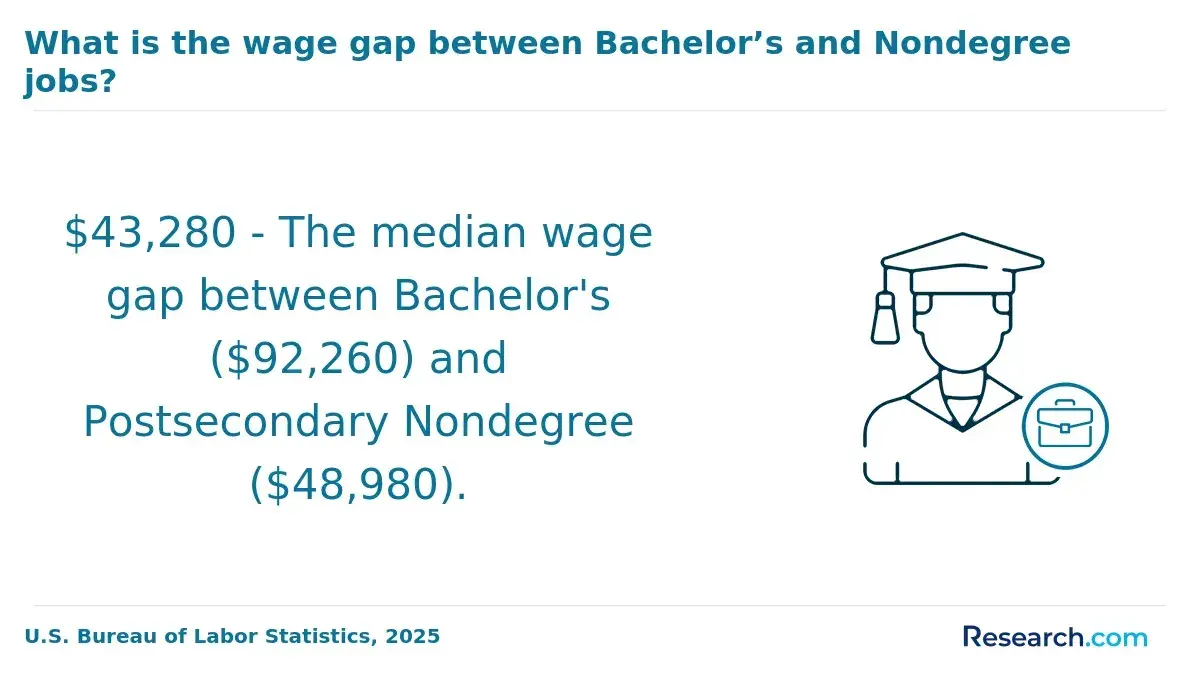
An associate completion degree can support different next steps: an entry-level administrative or technical role, eligibility to apply for further professional training, or transfer toward a bachelor's degree. Outcomes depend on the occupation, local employers, experience, and any required credential. The degree alone does not guarantee a job or wage.
For context, the U.S. Bureau of Labor Statistics reported a 2024 median annual wage of $93,600 for registered nurses. That is an occupation-wide figure, not the expected pay of associate degree graduates; registered nurses must meet state licensure requirements, and a pre-nursing degree does not qualify someone for the role.
Psychology and counseling students should likewise plan beyond the associate level if they seek professional licensure. Researching what is the easiest masters degree is less useful than checking the specific graduate and licensing requirements for the counseling role you want.
How Can You Choose a Reputable Online Associate Degree Completion Program?
The best-value program is the accredited, realistically completable option with the lowest cost for your remaining requirements. Start by identifying whether your goal is employment, transfer, or entry into a selective professional program. Then ask each college for an individual evaluation before comparing prices.
Use the same sequence with every school so that a low advertised rate does not hide a costly completion plan:
- Submit prior transcripts and request a written audit showing accepted credits, credits applied to each requirement, and credits still needed.
- Confirm transfer limits, minimum credits to be earned at the school, course-age rules, and whether prior learning can be evaluated.
- Request an estimate of remaining tuition, mandatory fees, materials, and any travel, alongside a realistic course schedule.
- Verify accreditation, online and in-person requirements, and - if relevant - transfer agreements or state licensure eligibility.
Be wary of a school that advertises a fast finish without stating its transfer-credit assumptions, will not clarify required fees, or calls a program fully online while leaving required site work unexplained. If a college cannot show how your existing credits reduce the work left to do, keep comparing.
Other Things You Should Know About
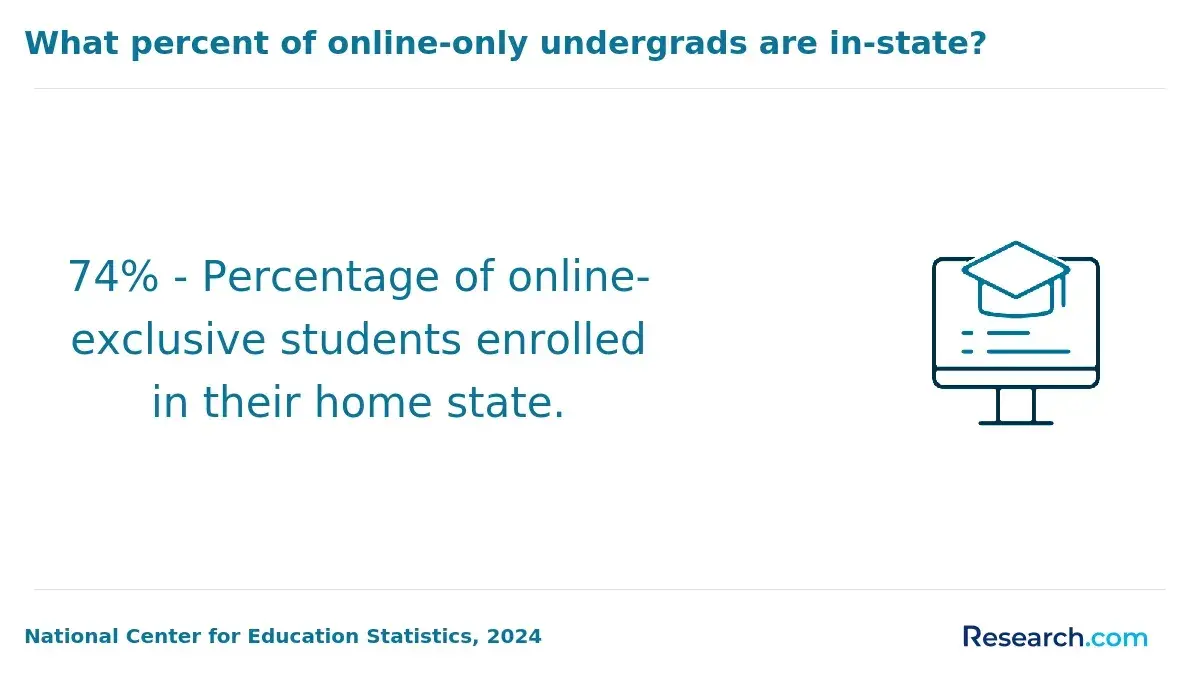
Some programs allow all coursework online. Others require labs, clinical placements, internships, or scheduled assessments. Confirm the requirements for your specific major.
There is no universal number. The college decides which credits it accepts and which satisfy degree requirements, subject to its transfer, course-age, grade, and residency policies.
A local district rate can be competitive, but fees, aid, course availability, and the number of remaining credits determine your actual completion cost. Compare personalized estimates.
It may, but acceptance and application toward a bachelor's major are separate decisions. Ask the intended four-year school to review the planned courses before enrolling.
References
- Recognition of Accrediting Agencies | Texas Higher Education Coordinating Board https://www.highered.texas.gov/recognition-of-accrediting-agencies/
- Fast Facts: Undergraduate graduation rates (40) | ed.gov https://nces.ed.gov/fastfacts/display.asp
- Net Price Calculator Center - Department of Education https://collegecost.ed.gov/net-price
- DAPIP | Homepage - Office of Postsecondary Education (OPE) https://ope.ed.gov/dapip/
- Tuition and fees - UW-Madison Online https://online.wisc.edu/tuition-fees/
- Mode of Instruction - Queens College - CUNY https://www.qc.cuny.edu/cetll/mode-of-instruction/
- Online Associate Degrees - Santa Monica College https://www.smc.edu/academics/online/online-associate-degrees.php
- Transfer Credit Guidelines | Undergraduate Admissions https://admissions.uconn.edu/apply/transfer/transfer-credit-guidelines/
- Frequently Asked Questions for New Online Students | South Central College https://www.southcentral.edu/south-central-online/frequently-asked-questions-for-new-online-students.html
- Transfer Credit Policy - SUNY Empire https://sunyempire.edu/policies/transfer-credit-policy.html