2027 Is an Online BS in Business Administration the Right Next Step for Distribution Center Supervisors?
Audited and Verified:
Our Editorial and Data Verification Process
Research.com uses government datasets, official education statistics and primary institutional information to support its career and degree guides. Our review process checks factual accuracy, occupational definitions, source dates and the requirements associated with the credentials discussed.
How This Article Was Fact-Checked
Our editorial team verifies salary estimates, employment projections, education requirements and program information against original data providers and official organizations. Salary figures are checked against the relevant occupational definitions and reporting periods. Information about licensure, accreditation and required in-person training is reviewed separately.
Fact-checked and verified on:

Co-Founder and Chief Data Scientist
You already know how staffing gaps, inventory errors, and late shipments affect a distribution center. The decision is whether an online BS in Business Administration will help you take responsibility for larger budgets, multiple teams, or broader operations - without disrupting the shifts you manage now.
This guide compares the degree with more specialized and shorter pathways, then examines scheduling, coursework, cost, and career evidence. Use it to identify the qualification your target role calls for and the program conditions you need to verify before enrolling.
Key Things You Should Know
- An online BS in Business Administration is most useful when your next role requires broader financial, analytical, and organizational responsibility - not simply more warehouse experience.
- Online does not necessarily mean self-paced. Check live sessions, group work, exams, and course availability against rotating shifts before committing.
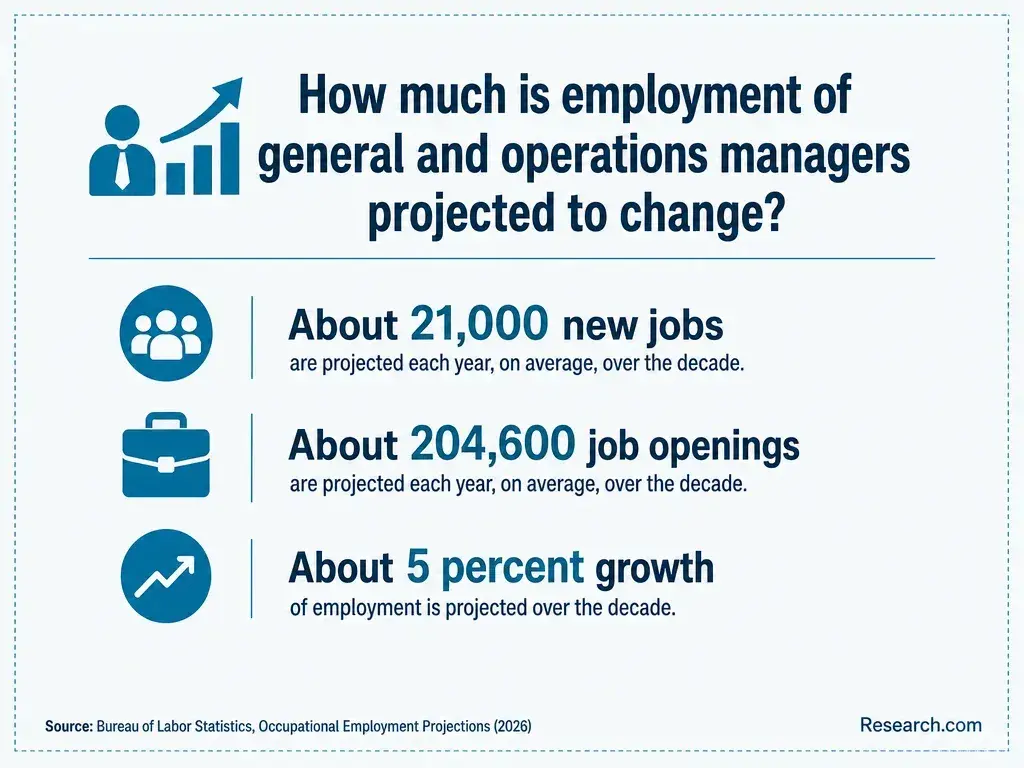
- The U.S. Bureau of Labor Statistics reports a $105,770 median annual wage for general and operations managers in May 2025, but that occupation-wide figure is not a predicted salary for a distribution center supervisor who earns a degree.
Is an online bachelor's in business administration right for distribution center supervisors?
Often, yes - if a bachelor's degree is required or preferred for the operations role you want and you need business skills beyond day-to-day floor supervision. A BS in Business Administration provides a general business foundation; it does not replace experience running shifts, improving throughput, handling safety issues, or leading employees.
Start with the job you want, not the degree title. A supervisor aiming to manage several departments may benefit from finance, staffing, and strategy courses. Someone seeking a narrowly technical inventory-planning role may get more direct preparation from a supply chain degree or targeted analytics training. If your employer promotes supervisors without a bachelor's degree, a stretch assignment and documented results may be a faster next step.
Compare the requirements in your employer's actual manager postings with the curriculum and your current responsibilities. When reviewing business administration colleges for working professionals, ask whether you could complete assessed projects using approved, nonconfidential workplace problems.
What careers can a business administration degree unlock in distribution and logistics?
The degree can strengthen a supervisor's candidacy, but the next role depends on demonstrated responsibility as well as education. A move to distribution center manager typically means owning broader staffing, service, cost, and safety outcomes. Regional operations roles add responsibility across sites. Logistics or supply chain specialist positions may instead emphasize inventory analysis, transportation, forecasting, or supplier coordination.
The distinctions below help you match a possible next role to evidence you can build while studying. Titles and hiring requirements vary by employer.
| Possible direction | Responsibilities to prepare for | Evidence beyond a degree |
| Distribution center management | Cross-shift performance, labor planning, budgets, and service levels | Results from leading teams and improving operations |
| Supply chain or logistics specialist | Inventory, transportation, supplier, or demand analysis | Data analysis and relevant systems experience |
| Operations project coordination | Schedules, stakeholders, risks, and implementation tracking | Completed projects with clearly documented responsibilities |
For context, the U.S. Bureau of Labor Statistics reports a May 2025 median annual wage of $82,320 for logisticians. That is an occupation-wide benchmark, not an entry salary or a promise that supervisory experience transfers directly into a specialist position. If project coordination is your goal, compare the business degree with transfer-friendly project management bachelor's degrees before choosing a major.
What accreditation should an online business administration program have?
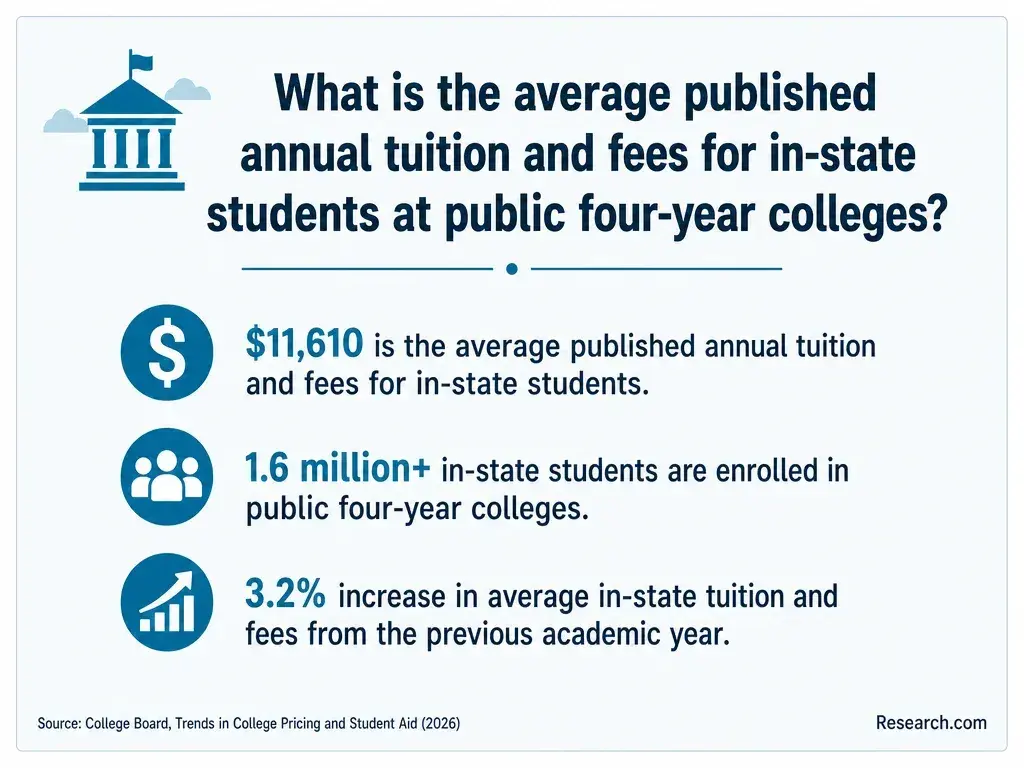
Verify that the institution holds accreditation from an accreditor recognized by the U.S. Department of Education. That is distinct from optional business-school or programmatic accreditation. A school may also cite AACSB, ACBSP, or IACBE; check the accreditor's own directory for the institution, the accreditation scope, and whether it covers the business program you would enter.
Accreditation is a baseline check, not proof that courses fit shift work or lead to promotion. Request the current catalog and confirm the exact degree name, online availability of required courses, transfer policies, and student support. Apply the same checks to lower-priced college options for business majors; a low advertised rate does not establish program fit or final completion cost.
Online study can remove a commute, but its flexibility depends on the course rules. For a supervisor whose hours change during peak periods, fixed live meetings, group presentations, proctored exams, and weekly deadlines may matter more than where lectures are delivered.
This comparison focuses on the commitments most likely to affect a working supervisor. Confirm the details for required courses, not just the program's general description.
| Format | Potential advantage | Constraint to verify |
| Online | Study away from campus, potentially around work | Live attendance, deadline flexibility, group scheduling, and exam rules |
| On campus | Scheduled in-person access to faculty and classmates | Commute, class times, and availability during assigned shifts |
Before enrolling, compare a sample course calendar with your busiest work period and ask what happens if your shift changes. Check part-time enrollment, leave policies, accessibility support, required software, and any campus visits. Accelerated study schedules for business majors may shorten elapsed time, but compressed deadlines can be harder to manage alongside overtime.
Look for coursework that connects floor-level decisions to organization-wide consequences. Managerial accounting and finance can help you interpret labor and equipment costs; operations and supply chain courses address process flow and capacity; statistics and analytics support performance measurement. Management, human resources, and business communication can help with coaching, change, and cross-department decisions.
Read course descriptions rather than assuming every BS in Business Administration has the same depth. An operations elective is not necessarily a formal concentration. Ask whether required courses include relevant assignments, such as evaluating a staffing proposal or explaining a service-level trade-off. Using workplace records for a class project requires employer permission and appropriate handling of employee and company data.
If you want substantial logistics specialization, compare the business core with a dedicated supply chain curriculum, including supply chain bachelor's programs with compressed schedules. Check whether specialization adds courses or changes which of your previous credits meet requirements.
Requirements vary by institution and by whether you apply as a first-time or transfer student. Schools commonly request prior academic transcripts; a business major may have additional entry or progression requirements. Ask admissions which mathematics, accounting, or other courses must be completed before entering the major, and ask the transfer office how prior coursework would apply.
If you have an associate degree or unfinished college study, request a written degree audit. Accepted credits do not necessarily satisfy the business core, concentration, or graduation residency requirement. Your supervisory experience may support an application, but it does not automatically earn academic credit.
Check application charges alongside transcript and evaluation requirements. Schools listed among options to reduce upfront college application expenses still need to be evaluated for admission rules and degree fit.
There is no reliable completion-time or total-price estimate without your school's degree audit. Remaining general education and business courses, accepted transfer credit, course sequencing, and whether you study part time all affect the calendar. An accelerated term changes the pace; it does not necessarily reduce the coursework required.
For a meaningful comparison, ask each school for a plan showing courses remaining and when they are offered. Add tuition and mandatory fees to books, software, exam costs, and any travel. Then account for overtime you may forgo and whether employer tuition assistance pays upfront or reimburses you after grades are posted. Compare fast-track undergraduate study options only after checking their full course load and total charges against a sustainable part-time plan.
A degree is easier to justify financially when it closes a documented hiring requirement or fills skills you will use. Do not calculate a return on investment using an assumed promotion or salary increase.
There is no single national salary figure for everyone called a "distribution center supervisor." Job titles, scope, employer, location, shifts, and incentives differ. For a broader management benchmark, the U.S. Bureau of Labor Statistics reports a May 2025 median annual wage of $105,770 for general and operations managers. The figure covers workers across industries and experience levels; it is not a starting salary for distribution center managers or a degree-specific outcome.
Use posted pay ranges for the role and location you want, then compare those with your current compensation and education costs. If your intended move is into project work rather than operations management, evaluate both role requirements and training costs; online project management degrees with lower tuition may be worth comparing, but a cheaper degree is not automatically the better qualification.
Employers can assess leadership more readily when you can show what you owned: staffing plans, inventory accuracy, safety processes, service measures, or a cross-functional change. Develop spreadsheet and warehouse-system fluency, cost awareness, clear reporting, and the ability to explain trade-offs to finance, transportation, and senior operations leaders.
A certification may help with a specific skill gap, but its value depends on the target job. Supply chain, process-improvement, safety, and project-management credentials have different eligibility rules and purposes; none is interchangeable with a bachelor's degree. Check current requirements with the credentialing organization and look for evidence that your target employer values the credential.
If your goal is primarily people leadership rather than broader business analysis, compare the BS with employer development programs or shorter online bachelor's pathways in organizational leadership. Compare actual remaining courses and costs, not advertised completion times alone.
How strong is the job outlook for distribution and operations managers?
The U.S. Bureau of Labor Statistics projects 5% employment growth for general and operations managers from 2025 to 2035. That national occupation-wide projection indicates potential opportunities, but it does not forecast openings at a particular distribution center or guarantee promotion. Automation, network changes, local employers, and the number of qualified internal candidates can affect your prospects.
Test the outlook against your goal: review manager postings in your region, identify recurring degree and experience requirements, and ask what responsibilities distinguish successful internal candidates. If openings instead emphasize project delivery, compare that route with operations management and consider transfer-friendly project management bachelor's degrees only if that curriculum better matches the work you want to do.
Other Things You Should Know About Business Administration
Possibly. Some schools offer prior-learning assessment, but they set the evidence, fees, credit limits, and requirements it can satisfy. Ask for a written evaluation before counting on the credit.
Only with appropriate employer permission. Remove proprietary information and employee or customer data; if permission is unavailable, describe your responsibilities without disclosing restricted records or claiming unverified results.
Ask which roles require a bachelor's degree, what results promotion candidates must demonstrate, whether a stretch assignment is available, and how tuition assistance and schedule changes are handled.
Your employer's written policy controls. Check reimbursement timing, grade rules, repayment obligations, and what happens if employment ends before or after payment. Plan for costs you may need to cover yourself.
- Military Training Evaluation Program (MTEP) | dantes.mil https://www.dantes.mil/credit4training/
- Employer-offered educational assistance programs can help pay for college | Internal Revenue Service https://www.irs.gov/newsroom/employer-offered-educational-assistance-programs-can-help-pay-for-college
- Cost of Attendance (Budget) | 2025-2026 Federal Student Aid Handbook https://fsapartners.ed.gov/knowledge-center/fsa-handbook/2025-2026/vol3/ch2-cost-attendance-budget
- Types of Financial Aid: Grants, Work-Study, and Loans | studentaid.gov https://studentaid.gov/understand-aid/types
- Accreditation in the U.S. | ed.gov http://www.ed.gov/laws-and-policy/higher-education-laws-and-policy/college-accreditation/accreditation-in-the-us
- What Degree Do You Need to Be a Logistics Manager? | American Military University https://www.amu.apus.edu/area-of-study/business-administration-and-management/resources/what-degree-do-you-need-to-be-a-logistics-manager/
- Credit for Prior Learning | maricopa.edu https://www.maricopa.edu/students/transfer-credit-credit-prior-learning/credit-prior-learning
- What Is Operations Management? A Complete Guide | Western Governors University https://www.wgu.edu/blog/what-is-operations-management2304.html
- Undergraduate and Graduate Tuition and Fees | Purdue Global https://www.purdueglobal.edu/tuition-financial-aid/undergraduate-graduate-tuition-and-fees/
- UNC Charlotte to Offer New Online Business Administration Degree - Digital and Professional Learning https://dpl.charlotte.edu/unc-charlotte-to-offer-new-online-business-administration-degree/