2027 Can A Retail Management Certificate Strengthen a BS in Business Administration Plan? Credit and Career Questions
Audited and Verified:
Our Editorial and Data Verification Process
Research.com uses government datasets, official education statistics and primary institutional information to support its career and degree guides. Our review process checks factual accuracy, occupational definitions, source dates and the requirements associated with the credentials discussed.
How This Article Was Fact-Checked
Our editorial team verifies salary estimates, employment projections, education requirements and program information against original data providers and official organizations. Salary figures are checked against the relevant occupational definitions and reporting periods. Information about licensure, accreditation and required in-person training is reviewed separately.
Fact-checked and verified on:

Co-Founder and Chief Data Scientist
A retail management certificate can add practical store-operations skills to a BS in Business Administration plan, but it's crucial to ensure that the certificate's courses move you closer to graduation. This is particularly important for those already working in retail or transferring college credits.
This guide helps you test a certificate's degree applicability, compare its career value with workplace experience, and check its time and cost before enrolling. The goal is a plan that strengthens your retail skills without paying for avoidable coursework.
Key Things You Should Know
- A retail management certificate is most useful when its courses fill verified BS requirements or a specific skill gap - not simply because the college accepts the credits.
- Ask the receiving university for a course-by-course degree audit before enrolling; credits applied only as unused electives may not shorten your path to graduation.
- Retail employers generally value demonstrated responsibility alongside education. A certificate can support advancement, but it does not replace supervisory experience or guarantee a management job.
What Is a Retail Management Certificate, and How Does It Support a BS in Business Administration?
A retail management certificate is a separately awarded, typically undergraduate credential focused on running retail operations. Its courses may address merchandising, customer experience, inventory, sales, staffing, and basic business decisions. It is not a bachelor's degree or automatically a formal concentration within one.
A BS in Business Administration usually provides a broader foundation in accounting, finance, marketing, operations, and management. The certificate can add retail-specific examples and assignments to that foundation. For an employee already handling inventory or training new staff, the combination may make classroom concepts easier to apply and document. It is less compelling if the BS already offers equivalent retail coursework or if the certificate would delay required degree courses.
If remaining employed is essential, compare the certificate's schedule with degree options for working business administration students. The stronger plan is the one you can complete while meeting both your academic requirements and work obligations.
Can Retail Management Certificate Credits Transfer to a Business Administration Degree?
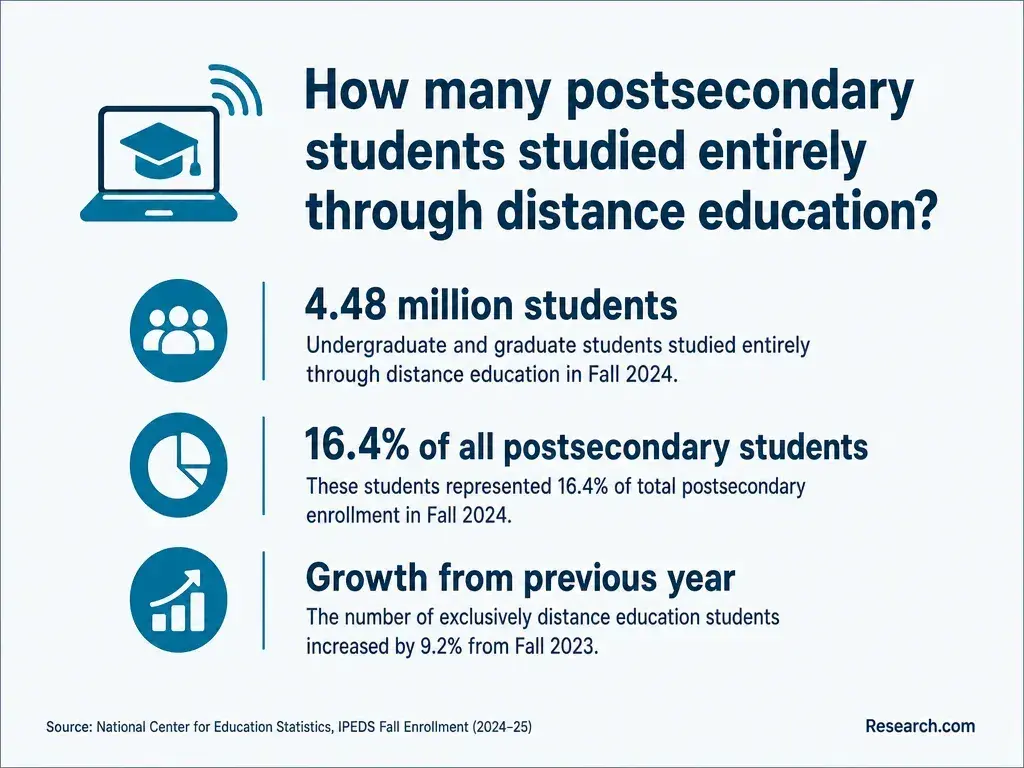
They can, but transfer acceptance and degree applicability are different decisions. The receiving university determines whether each course is accepted, what requirement it satisfies, and whether limits on transfer, upper-division, or in-residence credits leave it useful. A course accepted as a general elective may add to your transcript without replacing a required business course.
The distinctions below show why a certificate's total credits are not a reliable estimate of time saved toward the BS.
| Degree-audit result | What it means for your plan |
| Business core or prerequisite | May replace a required course if the receiving school approves the equivalency. |
| Approved concentration or major elective | May advance the degree if the program has an open requirement in that category. |
| General elective | Helps only if you still need applicable elective credits. |
| Not accepted or beyond a credit limit | Does not reduce remaining degree requirements. |
Before enrolling, send the BS program's transfer office or registrar the certificate catalog, course descriptions, credit hours, and, if requested, syllabi. Ask an academic adviser to show each proposed course in an official degree audit, including any unmet accounting, statistics, upper-division, and residency requirements.
Get written clarification about substitutions; do not rely on a preliminary credit total. The same accepted-versus-applied distinction matters when evaluating prior college coursework toward an HR bachelor's if HR, rather than retail, is your intended direction.
Does a Retail Management Certificate Improve Retail Career Opportunities?
It may improve your preparation for roles involving store operations, merchandising support, inventory coordination, or team supervision. Its value is strongest when you can pair coursework with evidence of work: resolving customer issues, improving a documented process, interpreting sales reports, or coaching colleagues within your assigned responsibilities. A newly earned certificate does not itself establish readiness to hire, schedule, and evaluate staff or manage a store budget.
Use job postings for your target role to separate required experience from preferred education. For perspective, the U.S. Bureau of Labor Statistics projects 5% employment growth for sales managers from 2025 to 2035. That occupation-wide projection is not a forecast of openings for certificate holders or entry-level retail workers; sales management typically requires substantial relevant experience.
If your goal is employee relations or recruiting rather than store operations, retail coursework may be less targeted than the subjects described in a human resources degree subject guide. Choose by the responsibilities you want, not by the word "management" in a credential's name.
Curricula vary, but common subjects include retail operations, merchandising, customer service, marketing or sales, inventory control, supervision, and introductory accounting or business communication. Compare course descriptions and assignments, not just titles: an inventory course that uses replenishment data may serve a different goal from one centered on general terminology.
For a BS student, the best course mix fills gaps in both the degree audit and workplace skills. If you want distribution or procurement work rather than store-level inventory responsibilities, compare the certificate with supply chain program length and value comparisons. A retail inventory elective is not necessarily a substitute for deeper supply chain study.
Completion time depends on the program's required courses, term schedule, prerequisites, and your enrollment pace. A working student may need to take fewer courses at once, particularly when classes include group assignments or fixed meeting times. Ask when every required course will next be offered; a short list of courses does not guarantee a short calendar timeline.
Consider the certificate and BS as one combined schedule. A certificate course that postpones a prerequisite for the business major could extend graduation even if its credits transfer. If finishing the bachelor's sooner is the priority, compare your audited plan with fastest online business bachelor's programs in the US, then verify each program's actual course sequence and transfer evaluation.
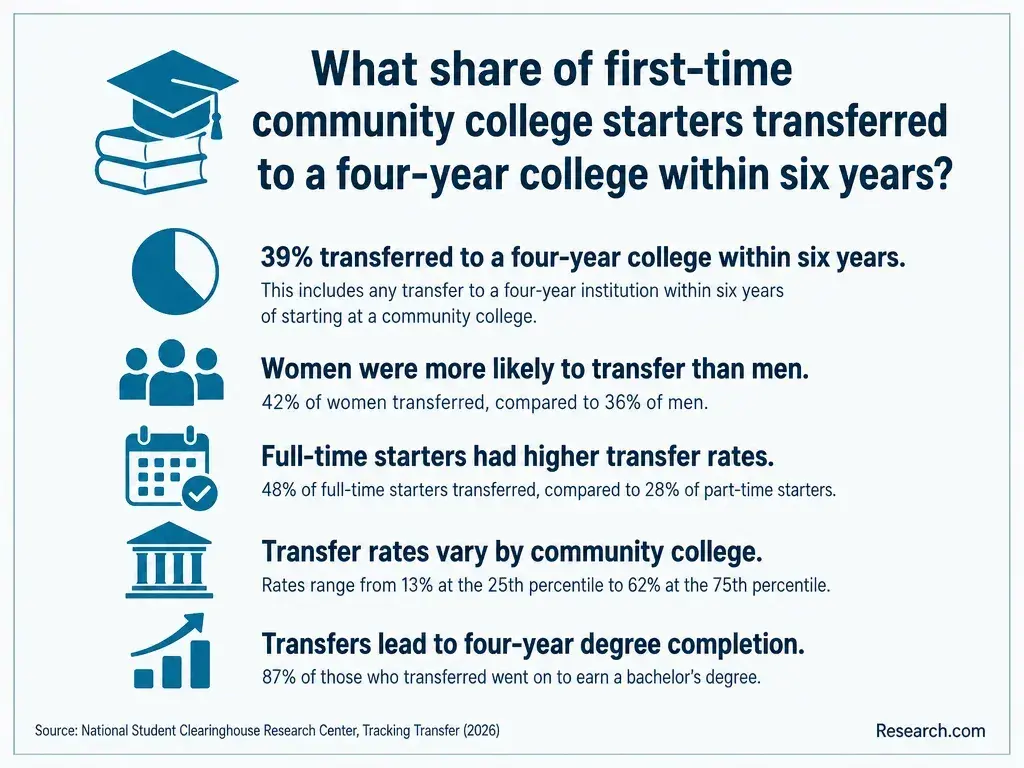
Neither format is automatically better for a retail employee. Compare attendance rules against your shift pattern and the kinds of practice each course provides. The following differences are worth checking with the program before you commit.
| Format | Potential advantage | Constraint to verify |
| Online | May reduce commuting and allow access around work shifts. | Live sessions, group meetings, exam windows, and weekly deadlines may still be fixed. |
| Campus-based | May offer scheduled discussion and local networking. | Travel and class times may conflict with rotating or evening shifts. |
Ask for a sample syllabus and assessment schedule, especially if you work weekends or have caregiving duties. Online business study with accelerated terms is another scheduling option to investigate, but shorter terms can concentrate the same work into fewer weeks.
Requirements depend on whether the certificate is offered through a community college, a university's undergraduate division, or noncredit continuing education. Ask whether you must first gain admission to the institution, submit prior transcripts, meet course prerequisites, or enroll in the BS separately. Admission to a certificate does not establish admission to a business major or guarantee that its courses will count toward that major.
If your primary goal is project coordination rather than retail operations, check whether the certificate's admission effort and coursework are well targeted before applying. Comparing affordable pathways to study project management may help you identify a more direct route, though degree admission and job requirements must be checked separately.
There is no reliable single price for retail management certificates. Schools may charge by credit, course, or term, with additional fees for technology, materials, or campus services. Request the current charge for every required course and ask whether the certificate qualifies for financial aid or employer education assistance; eligibility and reimbursement rules vary.
For a BS-bound student, the more useful calculation is additional cost to graduation. Compare the certificate's tuition and fees with the BS courses it would actually replace, then account for any extra term of enrollment or reduced work hours. If none of the certificate courses fills an outstanding requirement, compare its standalone learning value with lower-tuition online business administration programs before paying for both pathways.
General retail store operations and management do not have a universal professional license. Employers set their own education, experience, and training expectations. Particular duties or products may be subject to separate state or industry rules, so check the requirements for the job and location rather than assuming the retail certificate provides authorization.
A college certificate is also different from a voluntary professional certification issued by an industry organization. If your work is moving toward formal project responsibilities, review the credential requirements separately from accredited project management programs with low tuition. Completing a course or degree does not automatically award a professional designation.
How Can You Choose an Accredited Retail Management Certificate Program?
First, verify the institution's current accreditation status with the accreditor or the U.S. Department of Education's accreditation records. Then confirm whether the certificate is credit-bearing, which school awards it, and how its courses appear on a transcript. Institutional accreditation does not mean a receiving university must apply the courses to its BS; business-school accreditation, where present, has its own defined scope and is not a transfer guarantee.
Make your final choice using the written degree audit, complete price, course schedule, and evidence that assignments match your retail goal. Ask the BS adviser whether a built-in concentration or selected electives would accomplish the same purpose without an additional credential.
When comparing broader degree alternatives, online business degrees with lower tuition can provide candidates to investigate - but confirm the current catalog and your individual transfer results before changing plans.
Other Things You Should Know About Business Administration
If the institution awards it as a separate credential, you can list it separately after completion. Describe it accurately; a collection of retail electives is not an awarded certificate.
Some colleges assess prior learning, but employment alone does not award credit. Ask whether your BS program offers an approved assessment process and what documentation it requires.
Choose the option whose approved courses best fit your remaining BS requirements and career goal. A concentration is part of the degree; a certificate is separately awarded, and either may involve extra coursework.
Often, if the issuing school permits post-degree enrollment. Check whether you would gain skills not already covered by your BS and whether targeted employer training would be more useful.
- Rule 3335-9-32.1 | Requirements for certificate of study. https://codes.ohio.gov/ohio-administrative-code/rule-3335-9-32.1
- Chapter 3 - Courses and Enrollment, Full Course of Study, and Reduced Course Load | USCIS https://www.uscis.gov/policy-manual/volume-2-part-f-chapter-3
- Cost of Attendance (Budget) | 2025-2026 Federal Student Aid Handbook https://fsapartners.ed.gov/knowledge-center/fsa-handbook/2025-2026/vol3/ch2-cost-attendance-budget
- Industry-Recognized Credentials Guide | Ohio Department of Education and Workforce https://education.ohio.gov/Topics/Ohio-s-Graduation-Requirements/Contacts-and-Resources/Industry-Recognized-Credentials/Industry-Recognized-Credentials-Guide
- TEN_25-19_Attachment_1.pdf | dol.gov https://www.dol.gov/node/161266
- Bachelor of Science in Business Administration | Georgia Tech Catalog https://catalog.gatech.edu/programs/business-administration-bs/
- College of Business Administration - Academic Catalog https://catalog.uic.edu/ucat/colleges-depts/business-administration/
- Retail Management Certificate of Achievement | College of the Desert Catalog https://catalog.collegeofthedesert.edu/programs/business/retail-management-certificate-of-achievement/
- Explanation of Fees | University of Maryland Catalog https://academiccatalog.umd.edu/undergraduate/fees-expenses-financial-aid/explanation-fees/
- Business, BSB | Johnson County Community College Catalog https://catalog.jccc.edu/transfer-guides/ku/bachelor-science-business/