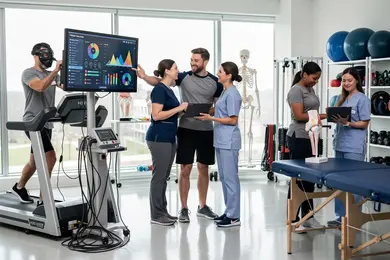
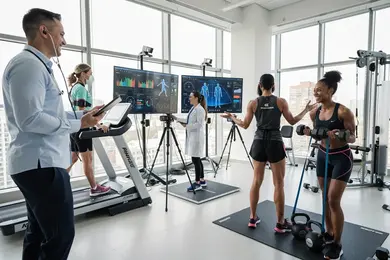
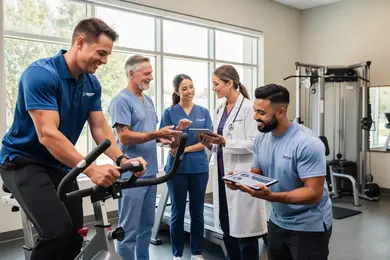
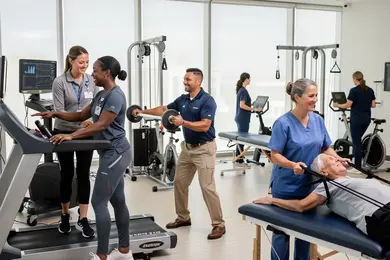
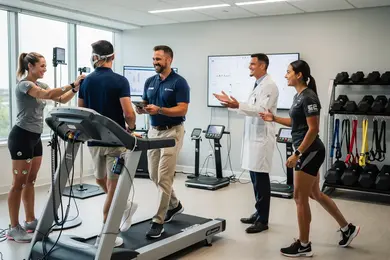
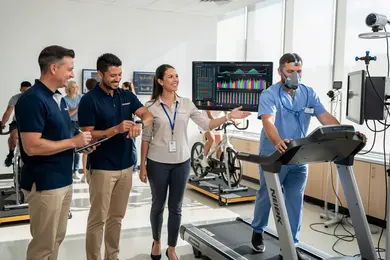
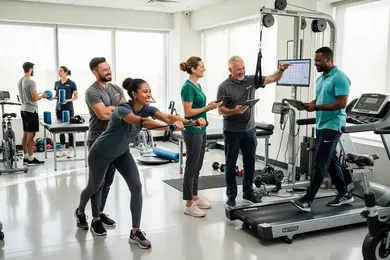
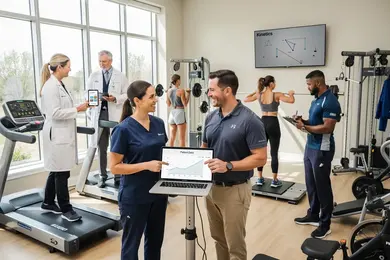
2027 Internship, Practicum or Clinical Requirements for Exercise Science Master's Programs

Co-Founder and Chief Data Scientist
For many exercise science master’s students, the hardest part of the degree is not only the coursework. It is completing the required internship, practicum, or clinical hours on a schedule that fits work, family, commuting limits, and career goals. These field experiences can determine when you graduate, whether you qualify for certain credentials, and how competitive you look to employers after graduation.
In 2024, a study by the National Consortium for Physical Therapy Education found that over 62% of master's students report delays or added financial strain due to inflexible practicum placements. That makes clinical planning a practical admissions issue, not something to postpone until the final semester.
This guide explains how internships, practicums, and clinical placements work in exercise science master’s programs; how many hours students may need; how placements are assigned and evaluated; and what working adults should ask before enrolling. The goal is to help you choose a program whose fieldwork requirements match your timeline, budget, licensure plans, and preferred career setting.
Key Things to Know About Internship, Practicum or Clinical Requirements for Exercise Science Master's
- Programs requiring extensive clinical hours often extend graduation timelines, imposing opportunity costs that particularly affect working professionals balancing jobs and education, thus shaping enrollment decisions.
- Employers increasingly prioritize candidates with diverse practicum settings, reflecting a 2024 study showing 62% higher hireability for students with multi-site internship experiences, impacting program selection.
- Limited availability of local practicum placements creates access barriers, disproportionately affecting non-urban students and potentially necessitating relocation or additional expenses, influencing practical feasibility of program completion.
What Is the Difference Between an Internship, Practicum, and Clinical Placement?
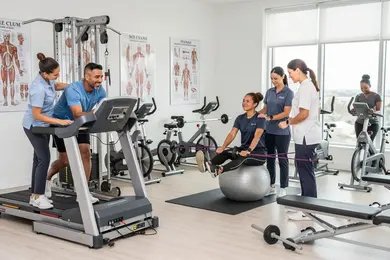
Internships, practicums, and clinical placements all provide supervised experience, but they are not interchangeable. The main differences are the level of responsibility, the setting, the intensity of supervision, and whether the experience is designed for broad career preparation or a specific clinical pathway.
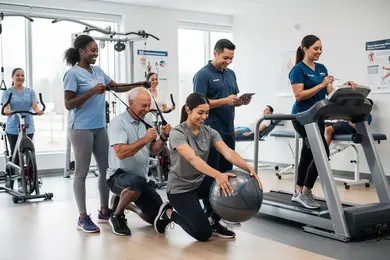
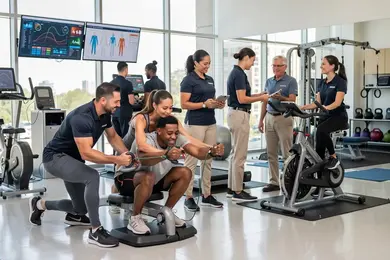
- Internship: An internship is usually the most job-like field experience. Students may assess clients, design exercise programs, monitor performance, assist with rehabilitation plans, and document outcomes under supervision. Internships often take place in fitness centers, performance facilities, corporate wellness programs, sports organizations, research environments, or rehabilitation-related settings. They are especially useful for students who need evidence of applied skill before entering the workforce.
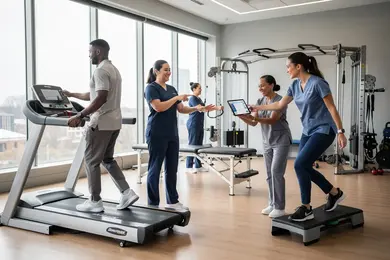
- Practicum: A practicum is typically shorter, more structured, and more closely tied to a course. Students may observe professionals, practice assessment techniques, assist with exercise testing, or complete limited client-facing tasks under direct faculty or site supervision. Practicums are valuable for skill development, but they may not provide the same independence or workplace exposure as an internship.
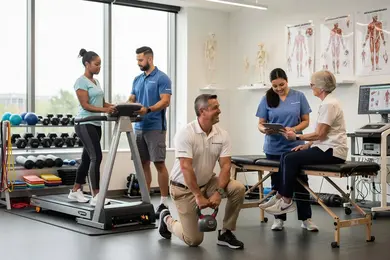
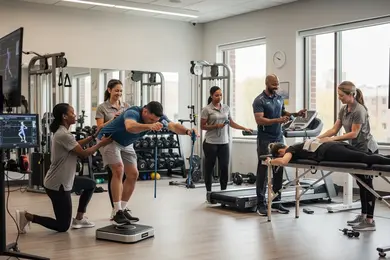
- Clinical Placement: A clinical placement is usually connected to medically oriented tracks, such as rehabilitation, cardiac wellness, clinical exercise physiology, or allied health preparation. These placements may occur in hospitals, outpatient clinics, rehabilitation centers, or healthcare-affiliated wellness programs. They often involve stricter documentation, patient privacy rules, safety protocols, and supervision requirements.
The right format depends on your goal. A student aiming for strength and conditioning, performance coaching, or wellness programming may benefit most from an internship with substantial client interaction. A student preparing for a healthcare-oriented role may need clinical placement hours that meet specific credentialing or licensure expectations.
Data from a 2024 report by the National Consortium for Exercise Science Education show why this distinction matters: 78% of employers regard internship experience as a strong predictor of job readiness, while only 52% consider practicum and clinical placements sufficient as standalone qualifications. That does not mean practicums or clinicals are less important; it means students should evaluate whether the experience provides the kind of responsibility employers or licensing bodies expect.
Students comparing clinical training across healthcare fields may also review how accelerated pathways, such as a 1 year MSN to DNP program online, structure supervised practice and advanced professional preparation.
What Internship or Practicum Requirements Do Exercise Science Master's Programs Have?
Exercise science master’s programs usually require some form of supervised applied experience, but the design varies by institution, concentration, accreditation status, and career track. Before enrolling, students should confirm not only whether a program requires fieldwork, but also when it occurs, how sites are approved, who finds the placement, and whether hours can be completed part-time.
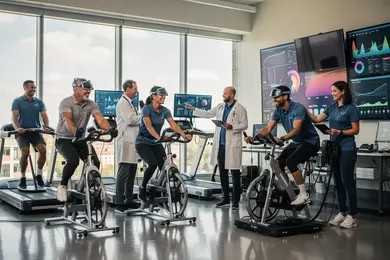
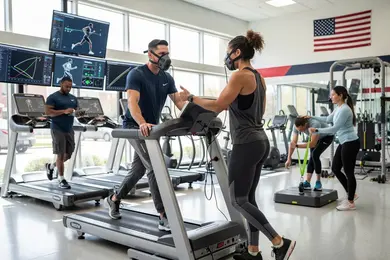
- Internship Requirement Structure: Most exercise science master's programs mandate a supervised internship lasting roughly 120 to 300 hours. Placements are commonly connected to fitness centers, sports teams, wellness organizations, research institutions, rehabilitation settings, or community health programs. Students may need to complete background checks, liability forms, site agreements, health documentation, or prerequisite coursework before beginning. For working adults, the key issue is whether the internship can be completed in blocks, evenings, weekends, or through an employer-approved site. According to 2024 data from the National Society of Exercise Physiology, digital health tools are now integrated into over 65% of programs, which means some internships may also involve remote coaching platforms, wearable data, telehealth-related workflows, or performance analytics.
- Practicum Requirement Structure: Practicums usually involve fewer total hours than internships and often occur in university laboratories, campus wellness centers, exercise testing facilities, or closely supervised partner sites. They may focus on assessment skills, exercise prescription, client communication, data collection, or program implementation. Because practicums are often scheduled around academic courses, they can be more predictable than internships. The trade-off is that they may provide less exposure to workplace pace, staffing constraints, client retention, insurance documentation, or interdisciplinary collaboration.
Students should ask programs to provide a fieldwork handbook before enrolling. That document can clarify minimum hours, grading standards, required competencies, approved site types, liability rules, and consequences if a placement falls through. A program with strong coursework but unclear internship policies can create avoidable delays near the end of the degree.

How Many Clinical Hours Are Required for Exercise Science Master's Programs?
Clinical hour requirements vary widely in exercise science master’s programs because programs prepare students for different outcomes. Some emphasize research, wellness leadership, or performance coaching, while others focus on clinical exercise physiology, rehabilitation support, or healthcare-adjacent practice.
Accredited programs, like those following 2024 Commission on Accreditation of Allied Health Education Programs (CAAHEP) guidelines, typically mandate between 300 to 600 practicum hours. Programs tied to licensure pathways or specialized clinical preparation may require more structured documentation and closer supervision than programs focused on general fitness, coaching, or research.
Students targeting licensure or regulated practice should not assume that a program’s graduation requirement automatically satisfies external requirements. Some state or professional board mandates may push clinical hours beyond 500, and hour definitions can differ. For example, one board may count only direct supervised patient contact, while an academic program may count orientation, observation, documentation, or simulation as part of its fieldwork requirement.
The practical effect is significant. Higher hour requirements can improve clinical readiness, but they may also affect work schedules, transportation costs, semester planning, and graduation timing. A 2024 national survey underscores that this wide variability complicates program selection, as students must weigh the benefit of intensive experiential learning against the possibility of extended time to degree completion if placements are limited.
One student recalled grappling with clinical hour timing during a rolling admissions process. They were hesitant to accept an early offer because practicum site availability was unclear, yet waiting risked losing access to programs with more flexible timelines. The pressure to secure a placement that met the higher end of clinical hour demands, while also managing work obligations and preparatory coursework, ultimately influenced the student’s decision to delay enrollment by a semester.
How Are Internship Placements Assigned in Exercise Science Master's Programs?
Internship placements are usually assigned in one of three ways: the program matches students with approved sites, students find their own sites for faculty approval, or the program uses a hybrid process. Each model has advantages and risks.
- Program-assigned placements: These are often easier administratively because the school already has agreements with healthcare providers, fitness facilities, sports organizations, wellness centers, or research sites. The drawback is that students may have less control over location, schedule, specialty area, or supervisor fit.
- Student-arranged placements: These can work well for students who need a local site, want to use an existing employer connection, or are pursuing a niche area such as biomechanics, tactical strength and conditioning, or cardiac wellness. The risk is that approval can take time, and the site must meet the program’s supervision, liability, and competency requirements.
- Hybrid matching: Some programs maintain approved site lists but allow students to propose alternatives. This approach can offer both structure and flexibility, especially for working adults or online students.
According to a 2024 national survey, over 70% of programs rely on formal agreements that streamline access to approved sites. These agreements help protect students and institutions, but they can also limit options if sites reach capacity or require daytime availability.
Students should ask who is responsible for securing the placement, how early the process begins, what happens if a site cancels, and whether placements are guaranteed. It is also important to ask whether GPA, prerequisite coursework, certifications, background checks, or prior experience influence placement priority.
These logistical details can affect graduation timing as much as the curriculum itself. Students comparing degree pathways may also consider how placement rules interact with transfer policies and related fields such as a health information management degree online, where experiential requirements may follow different structures.
Can Working Adults Complete Internships Part-Time?
Yes, some working adults can complete exercise science internships part-time, but flexibility depends on the program, site, accreditation expectations, and type of placement. Students should verify this before enrolling because “flexible” can mean different things. A program may offer online coursework but still require daytime, in-person clinical hours at an approved site.
Programs with cohort-based clinical rotations may require full-time attendance to maintain continuity, supervision, and compliance with site rules. Other programs allow individualized internships, employer-sponsored placements, evening hours, weekend blocks, or segmented schedules. According to the National Association of Colleges and Employers in 2024, nearly 38% of health-related graduate students, such as those in exercise science, take internships on schedules that deviate from traditional full-time formats.
Part-time internships can make graduate study more realistic for working adults, but they often extend the calendar time needed to finish required hours. A student completing a high-hour placement only a few hours per week may delay graduation, exam eligibility, or job applications. Some sites also prefer full-time interns because it is easier to supervise, train, and integrate them into daily operations.
Working students should ask programs these questions before committing:
- Can internship hours be completed during evenings or weekends?
- Can a current workplace serve as an approved site?
- Are there minimum weekly hour requirements?
- Can hours be completed across more than one semester?
- Are remote, hybrid, or telehealth-related activities permitted?
- What happens if work responsibilities change during the placement?
One student pursuing an exercise science master’s while working full time found that rolling admissions added pressure to finalize internship arrangements. A potential clinical site offered part-time hours, but the program’s admission decision was delayed. The student had to renegotiate with the site and risked losing the placement. For working professionals, alignment between admissions timing, site availability, and fieldwork approval can be just as important as tuition or curriculum.
Do Internship Hours Count Toward Professional Licensure Requirements?
Internship hours may count toward professional licensure requirements, but only when they meet the rules of the relevant jurisdiction, credentialing board, or professional organization. Students should never assume that all graduate fieldwork hours are automatically accepted.
Licensure authorities generally expect internship or clinical practicum hours to be supervised by qualified or licensed professionals, documented carefully, and aligned with an approved scope of practice. Accreditation can help because programs accredited by recognized bodies like CAAHEP often design clinical experiences around defined competency standards. However, the final decision usually rests with the licensing or credentialing authority, not the university alone.
For example, a 2024 analysis by the National Commission on Certification of Athletic Trainers found that close to 68% of licensure boards endorse internships completed through accredited graduate programs, provided that supervision and content meet regulatory mandates. This is why students seeking clinical practicum hours for licensure eligibility in exercise science graduate programs should request written details about supervision, competencies, site qualifications, and documentation procedures.
Internship hours may fail to count, or may count only partially, if the site does not meet supervision standards, if the work is too administrative, if the population served does not match licensure expectations, or if documentation is incomplete. This can affect graduation planning, exam eligibility, and employment timelines. Some licensing bodies may also require additional hours beyond what the degree itself requires.
A 2024 Bureau of Labor Statistics report underscores the career impact of clinical alignment: graduate-level internships conforming to licensure criteria raise licensure attainment rates by 25% within two years. Students evaluating clinical pathways should also review how specialized accreditation works in adjacent healthcare administration fields, such as cahme accredited MHA programs, where external quality standards can influence professional recognition.
How Are Internship or Practicum Experiences Evaluated?
Exercise science internships and practicums are typically evaluated through a combination of site supervisor ratings, faculty review, competency rubrics, reflective assignments, case reports, attendance records, and final performance documentation. The goal is to determine whether students can apply academic knowledge safely, ethically, and effectively in a real or simulated professional setting.
Most evaluations look beyond technical skill. Students may be assessed on communication, professionalism, punctuality, documentation, client rapport, ethical judgment, safety awareness, exercise testing technique, program design, and responsiveness to feedback. In clinical environments, evaluation may also include confidentiality, patient interaction, interdisciplinary communication, and adherence to site protocols.
Recent findings from a 2024 national survey reveal that 87% of programs use combined evaluations from both site supervisors and faculty. This dual-assessment model can reduce the risk that a single supervisor’s style or a single site’s limitations determine the student’s outcome. It also helps connect workplace performance with academic standards.
Evaluation quality still depends heavily on the placement. A strong site provides clear expectations, regular feedback, progressive responsibility, and documented competency checks. A weak site may assign repetitive tasks, provide little coaching, or leave students uncertain about performance until the end of the term. Students should ask how often evaluations occur, whether mid-placement feedback is required, and what remediation options exist if concerns arise.
For part-time students and career changers, evaluation standards are especially important. Limited hours at a site can make it harder to demonstrate growth unless the placement is well organized and the supervisor understands the program’s competencies.
What Challenges Do Students Face During Graduate Internships or Clinicals?
Graduate internships and clinical placements can be the most valuable part of an exercise science master’s program, but they often create the greatest strain. Students should plan for the hidden costs and scheduling pressures before they reach the fieldwork stage.
- Time Management Strain: Over 60% of exercise science graduate students identify juggling clinical hours alongside jobs or family duties as a critical obstacle. Fieldwork may require daytime availability, consistent weekly hours, commuting time, and preparation outside the placement itself.
- Limited Placement Availability: Some programs have a small network of approved sites, especially for specialized clinical or performance settings. Limited availability can force students into placements that do not match their preferred population, specialty, or location.
- Variable Quality of Supervision: A strong supervisor can turn a placement into a career-building experience. A weak or overextended supervisor may provide little feedback, unclear expectations, or limited skill development. Students should ask how sites are vetted and how concerns are addressed.
- High Cognitive and Emotional Demands: Students may need to apply assessment techniques, interpret client responses, communicate under pressure, and adjust exercise plans in real time. Those without prior clinical or coaching experience may need extra preparation before entering a fast-paced site.
- Geographic and Transportation Barriers: Clinical and internship sites may be far from campus or home. Commuting can add fuel, parking, transit, childcare, and time costs that are not always visible in tuition estimates.
- Performance Evaluation Pressure: Students are often evaluated on both technical competence and professional behavior. Anxiety can increase when a placement also influences references, job leads, certification readiness, or licensure documentation.
The best way to reduce these risks is to ask detailed fieldwork questions before enrolling, not after coursework is underway. Students should request examples of recent placement sites, typical weekly schedules, supervision expectations, and policies for site changes.
Do Internships Improve Job Placement After Graduation?
Internships can improve job placement after graduation because they give employers evidence that a candidate can work with real clients, follow professional protocols, and apply exercise science knowledge outside the classroom. They also help students build references, clarify career goals, and access informal hiring networks.
Data from the National Association of Colleges and Employers (NACE) indicates graduates with internships experience a 20% higher job placement rate within six months compared to those without field experience. In exercise science, that advantage can be especially meaningful because many employers value demonstrated skill, certifications, and supervised applied experience alongside the degree itself.
Internships are most valuable when they include meaningful responsibility, consistent mentorship, documentation of competencies, and exposure to the type of setting where the student wants to work. A placement in sports performance may help a student pursuing strength and conditioning roles, while a rehabilitation-focused clinical experience may better support healthcare-adjacent goals.
Not all internships lead directly to jobs. A placement may be unpaid, geographically inconvenient, poorly supervised, or disconnected from the student’s target career. In saturated markets or roles that require licensure, an internship alone may not be enough. Students should evaluate whether the opportunity provides professional contacts, strong supervision, client-facing experience, or skills that can be discussed clearly in interviews.
Cost and time also matter. Students should consider how transfer credits impact exercise science degree cost and duration because reducing repeated coursework may create more room for a high-quality internship. Those comparing financial trade-offs across healthcare graduate pathways may also examine options such as cheap psych NP programs, where clinical requirements, licensure outcomes, and opportunity costs differ substantially.
How Can Students Choose a Program That Matches Their Career Goals and Schedule?
To choose the right exercise science master’s program, students should evaluate fieldwork requirements as carefully as curriculum, tuition, and admission standards. A program that looks affordable or convenient on paper may become difficult if its internship sites are limited, its clinical hours are rigid, or its placements do not support the student’s intended career path.
Key decision factors include:
- Career Alignment of Clinical Placements: Ask whether recent students have completed placements in settings that match your goals, such as sports performance, cardiac wellness, rehabilitation, corporate wellness, research, biomechanics, community health, or coaching. A relevant placement can strengthen both skills and employer credibility.
- Scheduling Flexibility: Confirm whether part-time, evening, weekend, hybrid, or employer-based placements are allowed. Programs with fixed full-time rotations may be a poor fit for students who cannot leave current employment.
- Format and Pacing Options: Online or hybrid coursework can help, but fieldwork may still require in-person attendance. Students comparing exercise science online options should ask exactly how local placements are approved and whether the school helps identify sites near the student.
- Credit Transfer and Prior Learning: Review whether prior graduate credits, relevant certifications, or professional experience can reduce redundant coursework. However, be cautious: programs may not waive clinical competencies even when they accept transfer credits.
- Geographic Placement Constraints: Ask where approved sites are located and whether relocation or long commuting is common. For online students, confirm whether out-of-state placements require additional approval or agreements.
- Employer Networks and Reputation: Programs with established relationships in healthcare, fitness, rehabilitation, athletics, and research settings may offer stronger placement access and better professional references.
- Licensure and Certification Fit: If your goal depends on licensure or a specific credential, ask the program to explain how its hours, supervision, and competencies align with external requirements. Verify those claims with the relevant board or credentialing organization.
According to a 2024 report by the National Center for Education Statistics, 68% of graduate students prioritize programs offering practicum experiences directly matched to their job goals. That priority is sensible: fieldwork affects not only graduation logistics but also the quality of a student’s first professional opportunities.
Students evaluating broader graduate pathways may also compare how practical training is structured in other fields, such as online DSW programs, where scheduling models and field expectations may differ from exercise science.
What Graduates Say About Internship, Practicum or Clinical Requirements for Exercise Science Master's
- Stephen: "Balancing my master's in exercise science with a part-time internship was tough, especially since many employers now favor candidates with hands-on clinical experience over just academic credentials. I decided to extend my practicum to a full year, which delayed my job search but allowed me to build a strong portfolio that ultimately helped me secure a role in a sports rehab clinic. Although the salary growth was slower initially, the practical knowledge gained made me confident in progressing within the field."
- Pierre: "I faced a critical choice after graduation: pursue licensure, which would limit my ability to work immediately, or accept an internship position that didn't require certification but offered remote work flexibility. Opting for the internship, I gained experience in telehealth and fitness programming, which is increasingly in demand. While I had to be cautious about missing out on some clinical roles, this path allowed me to enter the workforce faster and pivot toward wellness coaching with steady client growth."
- Sebastian: "After completing my exercise science master's and clinical placement, I found that many employers prioritized certifications like CSCS over academic degrees alone, which meant I had to invest additional time and money in credentials. Given the competitive job market, I chose to focus on developing a specialized internship in biomechanics analysis to distinguish myself. This decision paid off by opening doors to research assistant positions, although I had to accept a lower starting salary compared to licensed practitioners."
Other Things You Should Know About Exercise Science Degrees
Unpaid internships are common in Exercise Science graduate training, which can pose financial barriers especially for students without external support. While unpaid placements may offer valuable hands-on experience, they can also limit your ability to focus fully on learning if financial stress necessitates part-time work elsewhere. Programs or placements offering paid or stipended internships reduce this tension but may be more competitive or limited in number. Prioritizing programs that integrate funding into clinical requirements can influence your financial stability and capacity to engage deeply with your clinical experiences.
The congruence between your clinical or practicum placement focus and your career objectives substantially affects the relevance of your training. For example, students aiming for rehabilitation roles benefit most from experiences in clinical or hospital settings, while those targeting athletic performance may need exposure to sports teams or fitness centers. Choosing a program or securing placements without consideration of specialization risks accumulating hours that are less applicable to your résumé and future employers, potentially slowing your transition to professional practice. Proactively seeking programs with diverse site options allows tailoring practical learning toward your specific discipline within exercise science.
Programs with rigorous internship or practicum demands generally provide more extensive exposure to real-world scenarios, which can improve readiness for licensure or certification exams that test applied competencies. However, excessive workload combined with academic coursework may reduce study time, adversely affecting exam performance. Students should assess whether a program offers structured guidance that balances clinical experience with exam preparation support. Selecting a program that balances sufficient practical training without overwhelming demands often optimizes both hands-on learning and successful certification outcomes.
References
- Master of Clinical Exercise Science and Rehabilitation https://www.vu.edu.au/courses/master-of-clinical-exercise-science-and-rehabilitation-amep
- Definition of TIP https://www.merriam-webster.com/dictionary/tip
- Practicum vs. Internship in Counseling Programs: What’s the Difference? https://www.nec.edu/news/practicum-vs-internship-counseling-programs
- Alcohol Training & Certifications https://www.gettips.com/
- Practicum in Exercise Science or Health Science | Rockhurst University https://www.rockhurst.edu/career-services/co-ops-internships/EHS-practicum-internship-guide
- TIPS Training: What Is TIPS Certification? | 360training https://www.360training.com/blog/tips-certification
- 2025-2026 Academic Catalogs https://catalog.aurora.edu/graduate/programs/master-science-exercise-science-mses/
- Maklumat Kata https://prpm.dbp.gov.my/Cari1
- TIPS Certification Online https://www.tipsalcohol.com/
- Registered Mental Health Counselor Intern - Florida Board of Clinical Social Work, Marriage & Family Therapy and Mental Health Counseling https://floridasmentalhealthprofessions.gov/registered-mental-health-counselor-intern/