2027 How Many Credits Can You Transfer Into a Geographic Information Systems Degree Program?

Co-Founder and Chief Data Scientist
Transfer credit policies in Geographic information systems degree programs vary widely, affecting students' paths to completion. In 2024, the National Student Clearinghouse Research Center reported that nearly 38% of bachelor's degree earners in STEM-related fields had transferred credits at some point, highlighting a growing reliance on credit mobility amid evolving workforce demands.
This trend underscores the complexities transfer students face when aligning prior coursework with specialized GIS curricula. Understanding how many credits can be applied-and the nature of acceptable coursework-is crucial for making informed decisions about program selection and timely degree attainment. The following discussion explores these key transfer credit considerations.
Key Things to Know About How Many Credits Can You Transfer Into a Geographic Information Systems Degree Program
- Transfer caps often exclude specialized GIS courses, forcing retakes that delay graduation and increase costs, a critical tradeoff for career changers balancing time and financial constraints.
- Employers favor candidates with hands-on GIS tech skills; limited credit transfer for practical labs necessitates focused in-program training to meet evolving workforce expectations.
- Flexible credit policies align with a 17% growth in online GIS program enrollment, improving access but requiring students to strategically plan around asynchronous prerequisites.
How Many Credits Can You Transfer Into a Geographic Information Systems Degree Program?
Transfer credit policies for geographic information systems degrees commonly impose limits that reflect the critical technical depth required by these programs. Typically, institutions accept between 50% and 75% of total credits from prior coursework, but this threshold often excludes upper-division or specialized GIS classes taken elsewhere. For example, a student transferring from a community college may find most general education credits accepted, yet still need to complete advanced spatial analysis or geospatial technology courses on-site due to course equivalency and accreditation standards.
Many programs require a robust portion of credits earned directly through their curriculum to ensure workforce-readiness, meaning those relying heavily on transferred credits might extend their time to degree completion. Understanding these transfer credit policies is essential for students evaluating how many credits can transfer into a geographic information systems degree program and weighing the tradeoffs between transfer efficiency and meeting employer expectations for advanced GIS skills.
Transfer credit limits profoundly shape degree planning and course sequencing strategies. Exceeding allowed credits often forces additional academic terms, which can increase financial burden and delay entry into GIS-related roles in the workforce. A practical approach involves prioritizing prerequisite and specialization courses after transferring core credits to streamline progress toward graduation.
This sequencing is especially important for career changers or adult learners balancing part-time study with employment. Students considering transfer pathways should also examine PhD online programs in related fields for long-term credential planning. Clarity on transfer credit constraints enables more strategic decisions, avoids costly enrollment in non-transferable courses, and aligns educational pathways with evolving industry demands in the geospatial sector.
What Types of College Credits Can Transfer Into a Geographic Information Systems Degree Program?
Transfer credits entering a geographic information systems degree often come from diverse academic backgrounds and non-traditional learning experiences, each weighed carefully against program-specific standards and course relevance. For example, a community college graduate with an environmental science associate degree may find only a portion of their credits accelerate GIS coursework, potentially prolonging time to degree completion and delaying workforce entry. This reality underscores the tradeoff between accepting broad transfer credits and ensuring alignment with employer-valued GIS competencies.
- General Education Credits: These typically cover writing, mathematics, and foundational sciences; while widely transferable, they often do not reduce the time needed to master GIS-specific skills, necessitating careful planning to avoid stalled progress in specialized courses.
- Technical and STEM Credits: Courses in computer science, statistics, or environmental science are scrutinized for equivalency to GIS core requirements, frequently requiring detailed syllabi evaluations to confirm coverage of spatial analysis and quantitative reasoning crucial to GIS roles.
- Specialized GIS or Mapping Credits: Direct GIS coursework from accredited programs or recognized continuing education has the highest potential to accelerate degree completion but faces rigorous proof-of-content standards reflecting the discipline's variability and evolving technology.
- Military and Professional Training Credits: Awards for geospatial technology experience depend heavily on documented competencies; their acceptance varies widely and often hinges on evidence-linked alignment to GIS curricular frameworks.
- Non-Traditional and Experiential Learning Credits: Some institutions accept portfolios or competency-based assessments documenting real-world GIS projects, a pathway increasingly relevant for adult learners balancing workforce demands and academic progress but requiring flexible accreditation policies.
Recognizing how each category fits into degree progression and employer expectations helps students minimize redundant coursework and better position themselves for a rapidly evolving GIS workforce where technical depth and applied skills are paramount.
Does Accreditation Affect How Many Credits Transfer Into a Geographic Information Systems Degree?
Accreditation status significantly shapes how many credits transfer into a geographic information systems degree, with regional accreditation generally enabling smoother credit recognition due to alignment with rigorous academic standards at receiving institutions. Nationally accredited schools, often focused on vocational or technical training, tend to face more restrictive credit acceptance, leading to partial or full rejections, especially in specialized fields like geographic information systems.
Programmatic accreditation tied directly to GIS or related technology disciplines can add credibility, ensuring that coursework meets field-specific rigor and relevance, which improves transfer evaluators' willingness to accept credits. Ultimately, institutions and transfer advisors weigh accreditation as a fundamental filter, with courses from unaccredited or poorly accredited sources frequently excluded or needing additional validation.
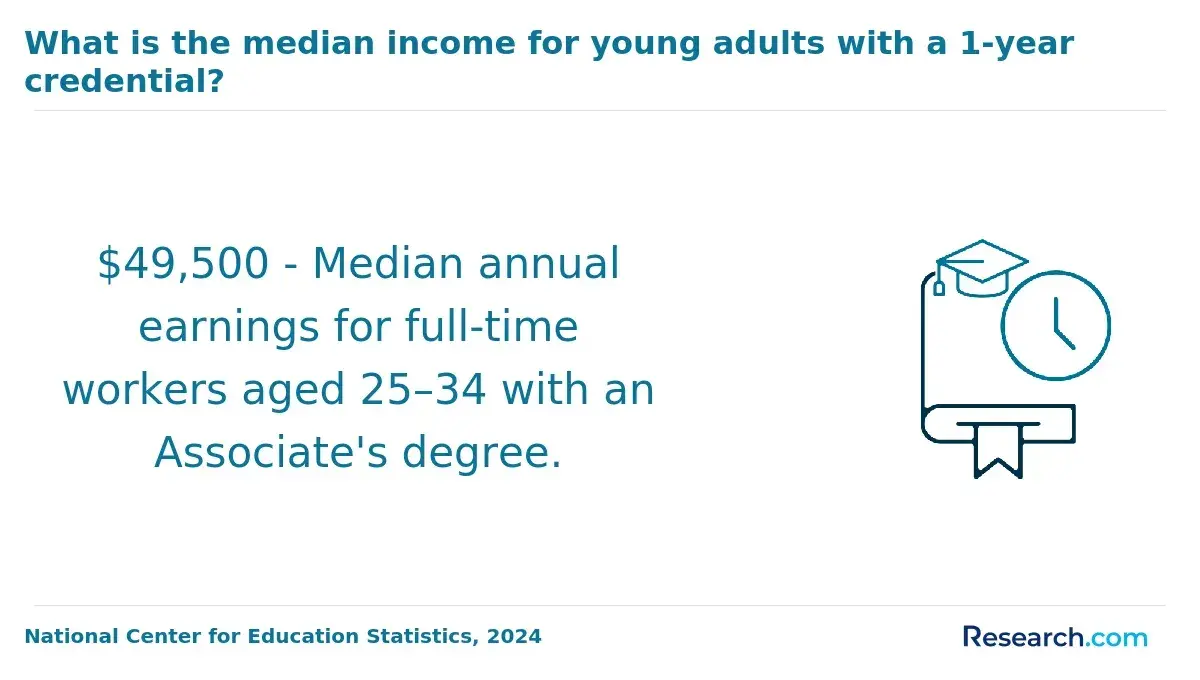
These accreditation differences translate to tangible impacts on student progress in geographic information systems programs. Data from the National Center for Education Statistics in 2024 highlights that students transferring from nationally accredited or unaccredited schools lose roughly 30-40% of their credits on average, compared with less than 15% loss for those from regionally accredited institutions. This credit loss often means retaking foundational GIS classes like spatial analysis or database management, delaying graduation timelines and increasing educational costs.
Beyond financial strain, extended degree completion can affect workforce entry, slowing skill application and diminishing motivation, especially for adult learners balancing work and study. Such tradeoffs make careful accreditation review critical when planning transfers to optimize time-to-degree and maintain alignment with employer expectations in geospatial fields.
One GIS applicant recalled submitting transcripts early in a rolling admissions cycle only to face uncertainty about how many credits would transfer. Hesitant to finalize course selections without clarity, they delayed enrollment decisions until the transfer evaluation process caught up, causing a semester's start to slip by. This wait created pressure to redesign their academic plan and balance financial aid deadlines, underscoring how accreditation-related credit evaluation timing can add unseen complexity. Ultimately, understanding accreditation nuances shaped their approach to applying strategically rather than rushing into immediate enrollment with unclear credit outcomes.
How Do Universities Evaluate Transfer Credits for Geographic Information Systems Programs?
Universities apply a rigorous transfer credit evaluation process for geographic information systems degrees that centers on detailed comparisons between prior coursework and program standards. Evaluators begin with a comprehensive syllabus review, assessing course content and learning outcomes for alignment with core GIS topics such as spatial analysis, GIS software proficiency, and cartographic principles. This ensures credits reflect the discipline's essential competencies rather than general or unrelated subjects.
Credit hours are scrutinized to confirm they meet program thresholds, with preference given to courses from regionally accredited institutions that demonstrate sufficient instructional rigor. This accreditation factor plays a key role in ensuring transfer credits maintain academic rigor expected in GIS programs. Faculty committees or GIS program directors oversee departmental approval, determining if courses substitute for core requirements or electives. Core GIS classes face stricter equivalency checks, whereas electives allow more flexibility but often contribute less to critical degree milestones.
Evaluation also differentiates lower-division from upper-division credits, with advanced GIS courses requiring more stringent review due to their importance in developing technical proficiency valued by employers. Institutional policies affect transfer outcomes, including caps on transferable credits and prioritization of directly relevant GIS coursework over unrelated general education classes.
According to recent data from the National Center for Education Statistics (2024), nearly 68% of transfer students experience partial credit denial because of course misalignment with degree requirements. Students should strategically select courses, keeping these criteria in mind to enhance transfer success and timely degree completion. Adult learners might also explore flexible pathways like an online eMBA if integrating GIS knowledge with broader business skills.
Can Work Experience Count as College Credits in a Geographic Information Systems Degree Program?
Work experience can occasionally be translated into college credits within a geographic information systems degree program, but this largely hinges on an institution's prior learning assessment (PLA) policies and the depth of evaluation used. Programs typically require comprehensive documentation, such as portfolios showcasing relevant projects, competency assessments, and employer verifications, to substantiate alignment with course learning outcomes. Academic departments then conduct detailed reviews to ensure the experience matches the rigor and content of formal coursework. Acceptance is selective, as institutions must maintain curriculum standards while balancing the practical knowledge applicants bring.
From a practical standpoint, leveraging work experience through PLA can reduce required coursework and hasten degree completion, potentially lowering overall tuition. However, many institutions, as noted in recent National Center for Education Statistics research, cap credit recognition from prior learning at around 30% of degree requirements for STEM fields, including geographic information systems. Furthermore, experiential credits rarely substitute for advanced theoretical classes critical for employer-recognized expertise. In some cases, lacking a clear connection between experience and course objectives or restrictive accreditation standards means students cannot earn credit, necessitating strategic evaluation of when and how to pursue PLA to ensure both efficiency and marketable skills development.
A geographic information systems graduate once shared how their attempt to gain credit through work experience was slowed by the program's rolling admissions and the extensive portfolio review process. Despite having five years managing spatial data systems, it took several months before they learned which courses would be waived, causing uncertainty in planning their schedules. This delay highlighted the importance of early preparation and realistic expectations about the timeline for credit evaluation, influencing their choice to enroll in some foundational courses while awaiting official PLA decisions to avoid setbacks in degree progression.
Why Do Colleges Reject Transfer Credits for Geographic Information Systems Programs?
Transfer credit rejection in geographic information systems programs often stems from complex academic and institutional factors. One predominant issue is disparities in accreditation status. Credits earned at nationally accredited or technical schools may not meet the standards set by regionally accredited universities, which prioritize academic rigor and current industry relevance. This becomes a notable barrier for students transferring from certain community colleges or specialized technical programs. The challenges reflect common policies affecting transfer credit acceptance in geographic information systems degrees, where institutional expectations differ significantly.
Additionally, outdated coursework contributes to credit denial. Given the fast-paced evolution of geographic information systems technologies and methods, courses completed several years ago may fail to capture the skills and software tools essential in today's workforce. Universities emphasize alignment with recent knowledge to ensure graduates possess applicable competencies. Minimum grade thresholds also play a critical role; many programs mandate at least a C grade for transferable credits, with some requiring higher marks in prerequisite subjects, reflecting employer demand for candidates with strong foundational expertise in this technical field.
Course equivalency mismatches further restrict credit acceptance. Geographic information systems curricula vary widely, emphasizing spatial analysis theory, fieldwork, or specific software proficiency. When prior coursework lacks direct correlation to the receiving institution's core or upper-division requirements, credits often transfer only as electives or are outright rejected. Laboratory or applied fieldwork standards impose additional hurdles, as hands-on experience is vital for professional readiness but may not be documented equivalently across programs.
These rejections impose tangible consequences: students face extended timelines to degree completion, increased tuition costs from repeating courses, and disruption of carefully sequenced learning pathways. Studies indicate that about 40% of attempted transfers in STEM disciplines, including geographic information systems, are rejected, underscoring the importance for prospective transfer students and adult learners to critically assess how their credits align with target program demands. Evaluating how existing coursework meets institutional equivalency criteria can mitigate these setbacks. For those evaluating alternative educational routes, resources like the best online cyber security degrees offer insight into comparable fields where credit transfer may pose different challenges.
Which Geographic Information Systems Degree Programs Accept the Most Transfer Credits?
Public universities typically limit the acceptance of upper-division transfer credits despite having firm articulation agreements with community colleges, capping lower-division credit transfers around 60 credits. This structure preserves academic rigor but can slow progress for students with substantial prior learning. In contrast, online and competency-based GIS degree programs often provide greater flexibility by evaluating prior learning through assessments or portfolios, allowing adult learners to convert work experience and skills into credits. However, these flexible approaches may narrow academic breadth and affect employer perceptions, as heavily transferred or competency-based transcripts sometimes raise questions about the consistency of educational preparation in technically demanding GIS roles.
Degree-completion pathways designed specifically for transfer students maximize credit applicability-often accepting over 75% of the required credits from previous institutions-but counterbalance this with strict residency requirements, mandating that 30-40% of credits be earned directly within the program to maintain accreditation standards. According to a 2024 report from the National Center for Education Statistics, 62% of institutions now use standardized frameworks like the Interstate Passport to facilitate smoother transfers, yet limitations on upper-division GIS coursework persist, potentially delaying acquisition of specialized skills critical to workforce demands.
Transfer students evaluating GIS programs must weigh time and cost savings against potential restrictions on course selection and employer acceptance when deciding which institution's policies align best with their career goals.
How Do Transfer Credits Affect the Time Needed to Complete a Geographic Information Systems Degree?
Transfer credits can reshape the trajectory for completing a Geographic Information Systems degree, but their impact is often constrained by program-specific rules such as upper-division residency requirements and prerequisite sequencing. Many institutions require that 30-40% of credits are earned directly through their GIS program, limiting how much transferred coursework reduces the overall time to degree. For example, a student transferring from a community college with an associate degree in geography might carry over general education credits but still face multiple semesters of core GIS technical classes, especially if required prerequisites were not completed or do not transfer equivalently.
Data from the National Student Clearinghouse Research Center (2024) highlights that about 65% of transfer students in applied STEM fields experience delays averaging an extra semester due to course misalignment and unfulfilled prerequisite sequences, showing that transfer credits can sometimes complicate rather than expedite graduation.
Beyond reducing total credits, transfer courses may disrupt academic planning by fragmenting prerequisite chains necessary for advanced GIS topics, which can delay readiness for internships or professional certifications integral to workforce entry. Transferred credits not directly matching GIS core or elective requirements typically apply only as general electives, so students may still need to complete specific GIS courses to meet degree milestones.
Additionally, some programs impose time limits on the validity of technical courses, potentially requiring students to retake outdated credits to maintain current skills. Strategic advising is essential for students weighing credit transfer options, emphasizing the need to balance shorter time-to-degree aspirations against ensuring smooth progression through technical prerequisites and timely acquisition of pivotal career qualifications in Geographic Information Systems fields.
Do Transfer Credits Reduce the Cost of a Geographic Information Systems Degree?
Transfer credits can influence the total tuition cost of a geographic information systems degree, but this impact depends heavily on how those credits are accepted and applied by the institution. Tuition is usually calculated on a per-credit-hour basis, so only transferred credits that count directly toward core or elective requirements typically reduce expenses. When transfer credits replace required courses, they shorten the time needed to graduate, thereby limiting the number of credits students must pay for. This dynamic is central to strategies aiming to reduce geographic information systems degree expenses with transfer credits.
Despite this, practical outcomes often reveal tradeoffs. Many programs have residency rules that require students to complete a minimum number of credits on-site, meaning transferred credits may not reduce tuition for those required residency credits. Excess transfer credits that do not fulfill degree requirements might count as electives, but often do not reduce the overall tuition burden. Data from the National Center for Education Statistics show that roughly 55% of transfer students nationwide see some tuition reduction from transfer credits, but these savings are uneven and context-dependent. Prospective students, including adult learners or community college graduates, should carefully review program policies to understand how transfer credits affect cost and degree completion timelines.
Those comparing options might also explore related fields and pathways such as an established social media marketing major, especially when considering credit applicability and institutional policies.
What Is the Best Strategy to Maximize Transferable Credits?
Maximizing transferable credits in a geographic information systems degree involves navigating institutional policies that often limit accepted coursework to regionally accredited programs and lower-division classes. A practical tradeoff emerges: students who invest early in completing prerequisite and technical courses at accredited schools reduce later redundancies and time-to-degree. According to a 2024 National Student Clearinghouse study, transfer success rates improve by 15% when prior credits are earned from regionally accredited colleges, underlining the critical role of accreditation in real-world credit evaluation.
Effective strategies to increase transferable credits include:
- Choose regionally accredited institutions for coursework to meet most programs' baseline requirements and avoid credit rejection.
- Review articulation agreements between current and target geographic information systems programs to identify explicitly accepted courses and reduce uncertainty.
- If articulation agreements are unavailable, request detailed syllabus evaluations from the receiving institution's admissions or registrar office to clarify course equivalencies and applicability.
- Prioritize completing prerequisite-aligned technical courses-such as spatial data handling and map analysis-before transferring to secure foundational credit acceptance.
- Utilize prior learning assessments where available, including portfolios or competency exams, to convert relevant experience or certifications into academic credit efficiently.
- Maintain thorough documentation of all coursework and experience to support evaluation, a step often overlooked but essential for substantiating transfer requests.
Informed by these strategies, students can better align their prior learning with degree requirements and employer expectations, improving both timeliness and cost-effectiveness in geographic information systems studies. For those exploring related career pathways, understanding the pros of being a forensic psychologist offers insight into specialized applied domains increasingly integrated with GIS technologies.
What Graduates Say About How Many Credits Can You Transfer Into a Geographic Information Systems Degree Program
- Otis: "When I was deciding how many credits to transfer into my geographic information systems degree, I realized that only about half my previous coursework qualified due to strict core requirements. It was frustrating at first because it lengthened my time in school, but ultimately it pushed me to gain hands-on project experience that employers valued more than transferred credits. Now, my portfolio and internship experiences have gotten me further than simply having a shorter degree path."
- Ronan: "I took a cautious approach and limited my credit transfer to essentials, aiming to maintain a thorough understanding of geographic information systems fundamentals. This meant more classes for me but fewer gaps in knowledge. In hindsight, this approach made the transition into complex roles smoother, although it delayed my full-time entry into the workforce by a semester. Employers here definitely prioritize demonstrated skills and certifications over the number of credits transferred, so I focus heavily on continuing education alongside work."
- Brooks: "The biggest constraint I faced was that the program capped transferable credits at 30, which forced me to complete more GIS-specific courses than I planned. I debated transferring more but decided to follow the program's structure to maximize internship opportunities and networking. As a result, I was able to pivot into a specialized remote role quickly, though I noticed salary growth was slower initially without additional certifications. Still, the structured coursework gave me confidence in handling advanced datasets and workflows on the job."
Other Things You Should Know About Geographic Information Systems Degrees
In 2027, most Geographic Information Systems degree programs allow students to transfer up to 60 credits from prior college coursework, though this can vary by institution. It is essential to consult with academic advisors to ensure that transferred credits align with program requirements for the GIS degree.
Yes, prioritizing depth and mastery in GIS-specific coursework is generally more beneficial than simply maximizing transferred credits. Transferring too many generic or unrelated credits can reduce exposure to critical GIS software, spatial analysis techniques, and data management practices essential to the field. Concentrating on program components that build specialized skills improves employability and real-world problem-solving ability.
Transferring credits may limit opportunities to participate in capstone projects or practicum experiences embedded in the receiving program, which are often crucial for applied learning and networking. While transferring credits can shorten time to degree completion, it may reduce direct engagement with institutional resources, faculty mentorship, and portfolio-building activities valued by GIS employers. Students should weigh the benefit of faster graduation against potentially missing these experiential learning milestones.
The wide differences in curriculum focus, technology platforms, and research orientation across GIS programs mean that transfer credit acceptance can vary significantly. Career changers should scrutinize how well their existing credits map onto the specific technical and analytical competencies demanded by their target program to avoid redundant coursework or skill gaps. It is often worth investing additional coursework in up-to-date GIS tools and methodologies rather than maximizing transfers that may not translate into practical career benefits.
References
- Bachelor of Applied Technology Geographic Information Systems https://www.sait.ca/programs-and-courses/degrees/bachelor-of-applied-technology-geographic-information-systems
- Geographic Information Systems (GIS) Certificate https://mcckc.edu/programs/geographic-information-systems/index.aspx
- Geographic Information Systems Certificate | San Juan Colleg https://www.sanjuancollege.edu/education-training/programs/geo-info-systems-cert/
- Geographic Information Systems : Training Recommendations https://nepis.epa.gov/Exe/ZyPURL.cgi
- Find GIS Bachelor's Degree Programs - GISDegree.org https://www.gisdegree.org/programs/bachelors/
- What is a GISP®? https://www.gisci.org/Want-to-be-a-GISP/What-is-a-GISP
- GEOGRAPHIC INFORMATION SYSTEMS A.S. https://www.cayuga-cc.edu/academics/schools/stem/geographic-information-systems/
- Geospatial Science (GIS) https://www.frontrange.edu/programs-courses/program-list/geospatial-science-bachelor-degree.html
- Can You Transfer Credits From a Completed Degree? https://www.edvisorly.com/student-guides/can-you-transfer-credits-from-a-completed-degree
- Skills to Learn in a GIS Certificate Program https://bootcampgis.com/skills-you-need-to-learn-in-your-gis-certificate/