2027 Healthcare Business Development Director: Beyond Sales Experience

Co-Founder and Chief Data Scientist
Sales experience can open the door to healthcare business development, but director-level work calls for decisions about partnerships, service lines, budgets, and patient access - not just revenue targets. This guide is for professionals considering that next step, including those deciding whether an MHA, healthcare-focused MBA, certification, or more experience would help most. It explains the work, the qualifications employers may seek, and how to compare education costs with realistic career opportunities.
Key Things You Should Know
- A healthcare business development director needs to evaluate growth opportunities against clinical capacity, financial performance, compliance, and patient needs; a strong sales record alone may not demonstrate those abilities.
- An MHA offers deeper healthcare-system preparation, while an MBA emphasizes broader business management. Neither degree replaces relevant healthcare experience or automatically qualifies someone for a director role.
- The U.S. Bureau of Labor Statistics reports a $126,520 median annual wage for management occupations in May 2025, but that broad figure is not a salary estimate for healthcare business development directors.
What does a healthcare business development director do beyond sales experience?
A healthcare business development director identifies and develops opportunities that advance an organization's strategy. Depending on the employer, the work may involve evaluating a new service line, building referral relationships, negotiating partnerships, or assessing whether a proposed expansion can serve patients sustainably.
The distinction from sales is decision-making scope. A director may need to test projected demand against staffing, clinical quality, reimbursement, operating costs, and the organization's mission. Increasing referrals is not a success if patients cannot obtain timely care or the service cannot operate responsibly.
Healthcare leadership education also differs from training for technical health-records roles; a comparison of healthcare leadership education compared with health information management can help clarify that boundary.
Job titles vary. A hospital may emphasize physician relationships and service-line planning, while a health technology company may emphasize provider partnerships and market entry. Read the position description for budget authority, contract responsibility, and collaboration with clinical leaders rather than assuming every "business development" role has the same scope.
What education and experience are required for healthcare business development directors?
There is no single degree or license that qualifies someone for every healthcare business development director position. Employers may seek a bachelor's degree and substantial experience in healthcare operations, partnerships, strategy, or sales; some prefer a relevant graduate degree. Requirements depend on the organization and the authority attached to the role.
For an experienced healthcare salesperson, the main gap may be evidence of financial analysis and cross-functional leadership. For someone changing industries, it may be knowledge of care delivery, reimbursement, and how decisions move through a health system.
A nonhealthcare background does not necessarily rule out graduate study: guidance on choosing an MHA when your background is outside healthcare can help applicants assess their preparation. Admission to a program, however, should not be confused with eligibility for a director job.
Before enrolling, compare several target job postings. Note which qualifications recur, then seek an assignment that addresses the most important gap - such as helping develop a partnership proposal, building a service-line business case, or managing a project with clinical and finance stakeholders.
Which healthcare administration degrees prepare you for business development leadership?
The best degree depends on what you already know and what your target role requires. The comparison below distinguishes broad business training from healthcare-specific preparation; individual curricula and admissions rules still need to be checked.
| Education path | Potential fit | Key limitation to consider |
| Bachelor's in healthcare administration | Building a foundation in healthcare organizations and management | Coursework alone may not provide the experience expected of a director |
| Master of Health Administration (MHA) | Developing healthcare-specific knowledge of operations, policy, finance, and leadership | May offer less general business breadth than an MBA |
| MBA, with relevant healthcare coursework if available | Strengthening strategy, finance, and organizational management skills | Healthcare depth varies; a healthcare elective is not necessarily a formal concentration |
| Focused graduate course or certificate | Addressing a defined knowledge gap while continuing to work | Usually provides less breadth than a full degree |
Professionals pursuing health-system leadership may want to examine online MHA programs and degree requirements. An MBA may be more useful when the goal spans healthcare and other industries. Neither option substitutes for experience working across clinical, operational, and commercial teams.
Advancement depends on turning a promising opportunity into a defensible organizational decision. Directors need to analyze demand and competition, understand budgets and reimbursement assumptions, negotiate with partners, and communicate trade-offs to executives and clinical stakeholders. They also need to know when a proposed growth strategy creates access, quality, privacy, or compliance concerns that require specialist review.
A useful test of readiness is whether you can present a business case that states its assumptions, identifies operational constraints, and defines how success will be measured. Leading that work with others is stronger evidence than reporting a sales result alone.
A doctorate is generally not the next credential to pursue simply because you want a director title. If your longer-term goal involves research, teaching, or a different form of senior leadership, comparing PhD and professional doctorate completion routes can clarify their different purposes. For a business development promotion, applied strategy and operating experience may be more directly relevant.
Healthcare administration programs may address business development through courses in healthcare finance, strategy, operations, policy, and organizational leadership rather than through a course with "business development" in its title. Relevant assignments could involve assessing a market, proposing a service improvement, or evaluating a partnership. Students should check whether the actual curriculum includes such applied work.
An MHA generally approaches these decisions through the structure and constraints of healthcare organizations. An MBA's management core typically provides broader finance, marketing, and strategy tools; healthcare-focused courses can add industry context if the program offers them. Neither degree should be mistaken for clinical training or for specialist legal or compliance advice.
If time to completion matters, an accelerated graduate healthcare management program comparison can help identify options to investigate. Speed is useful only if the course sequence and applied learning cover the skills you need.
Online study can make continued employment more feasible, while campus study may offer more scheduled face-to-face interaction. Neither format is automatically more flexible or better connected to healthcare employers. Program design - including live classes, group projects, fieldwork, and required visits - matters more than the delivery label.
For someone already employed in healthcare, an online program may allow immediate application of coursework to a real business problem. Someone seeking to enter the industry may place greater weight on internships, local employer relationships, and career services. Compare the support available to students in the specific format you would attend, not just the institution's overall reputation.
Ask for a sample course schedule, the timing of required live sessions, any campus attendance rules, and the policy for changing pace if work demands rise. A review of healthcare-focused MBA scheduling and completion options may help frame those questions, but confirm current requirements directly with each school.
Start by confirming that the institution holds recognized institutional accreditation. Then check whether a program has specialized accreditation relevant to the degree - for example, CAHME for certain healthcare management graduate programs or AACSB, ACBSP, or IACBE accreditation relevant to business education.
Institutional and specialized accreditation answer different questions; the absence of one particular specialized designation does not, by itself, establish that a program is unsuitable.
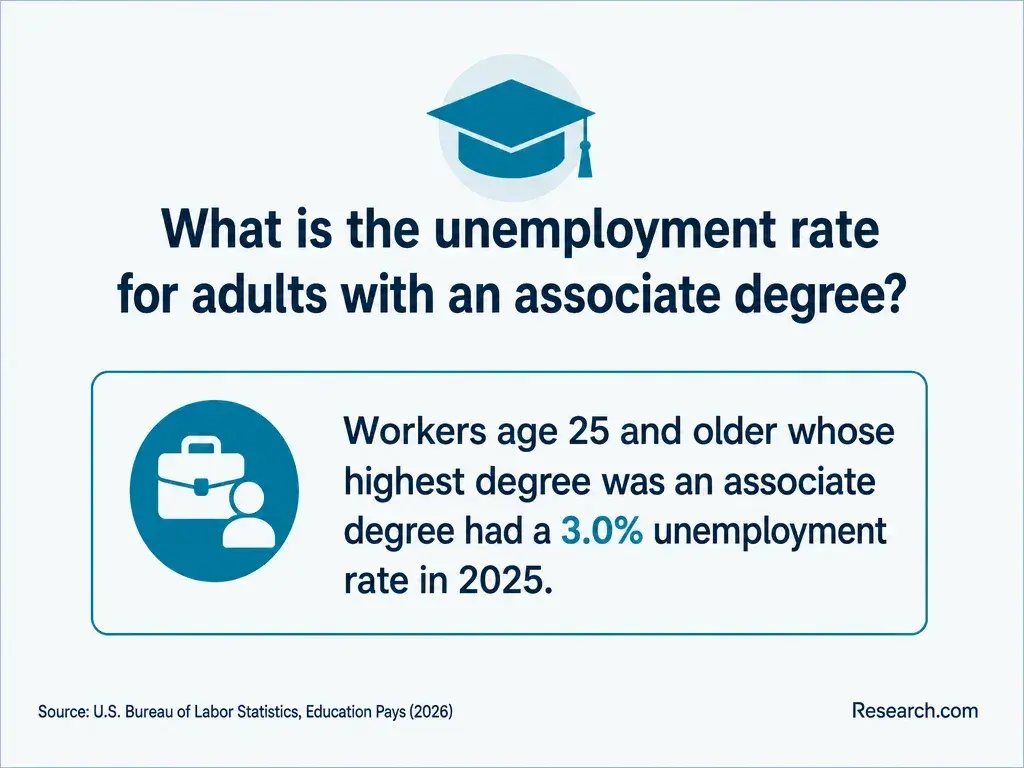
Accreditation also matters when planning a longer education route. Students beginning with an associate degree should confirm how prior coursework will apply to a prospective bachelor's program rather than assume every credit transfers. Guidance on associate degree transfer into healthcare management study can help with that conversation.
After checking accreditation, assess curriculum fit, faculty experience, applied projects, and career support. Ask the school which accreditor covers the institution and which, if any, covers the specific program you plan to attend.
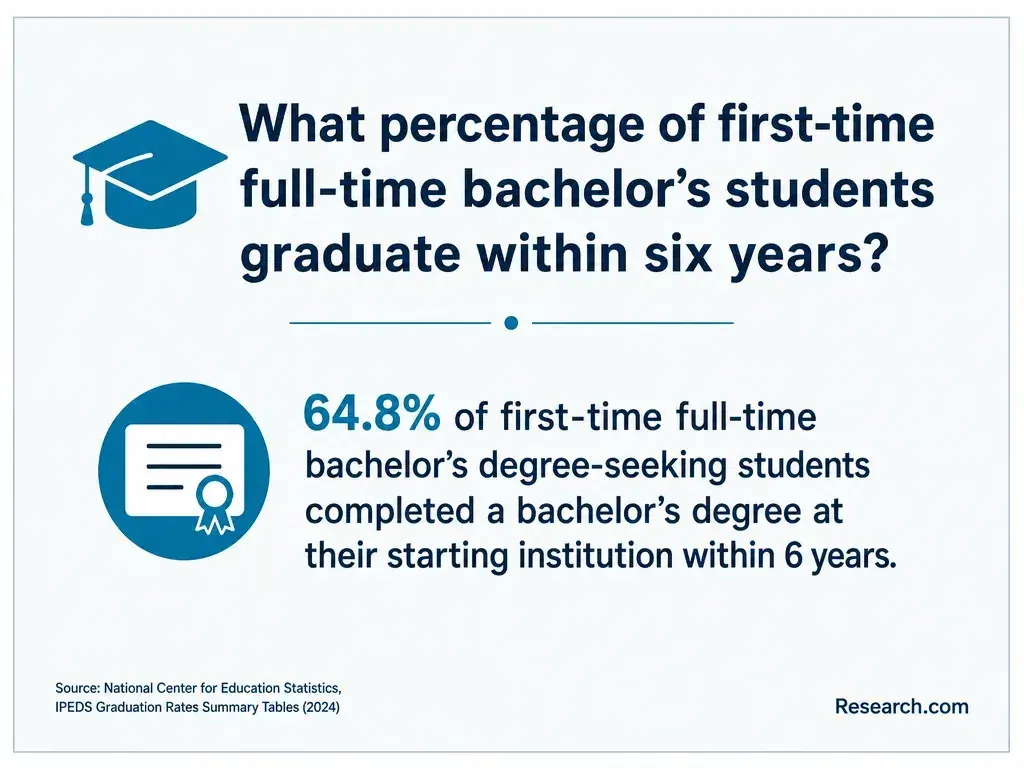
Completion time depends on the credential, required coursework, transfer credit, enrollment pace, and any practicum or project. An accelerated calendar may shorten elapsed time without reducing the work required. Schools' published prices may describe tuition per credit, per term, or for an entire program, so figures are not comparable until they are put on the same basis.
Request a written estimate covering required credits, tuition, mandatory fees, materials, and any travel or fieldwork expense. Then consider how part-time study, employer education assistance, and borrowing would affect your household budget. You can review costs of online healthcare administration degrees to begin a comparison, but verify current charges and your own eligibility for aid with each school.
The worthwhile option is not necessarily the shortest or least expensive one. If a targeted course addresses your only skill gap, a full graduate degree may have a weak return; if you need sustained healthcare leadership preparation, the broader curriculum may justify a greater commitment.
No single certification is universally required for healthcare business development directors. A credential in project management, healthcare management, or a relevant analytic discipline may support a specific skill gap, but its value depends on the employer and the work you intend to do.
Verify eligibility rules, renewal obligations, and whether target job postings actually mention the credential. Choose a certification for a defined purpose - for example, strengthening how you lead complex projects - rather than treating it as a substitute for healthcare experience.
If the alternative is a graduate business degree, compare tuition for online healthcare management MBAs alongside the skills and career access each option may provide. A shorter credential can be the better choice when you already have the management foundation a degree would teach.
What salary and job outlook can healthcare business development directors expect?
There is no single reliable national wage figure that captures every healthcare business development director role. Pay can vary with employer type, location, organizational size, responsibilities, and incentive structure.
For context only, the U.S. Bureau of Labor Statistics reports that management occupations had a median annual wage of $126,520 in May 2025. That is a broad occupational-group figure, not the median for this job title and not an expected return from earning an MBA or MHA.
BLS projects management occupations to grow faster than the average for all occupations from 2025 to 2035, with about 1.1 million openings annually on average across the group from growth and replacement needs.
This indicates a broad market for managers, not a forecast of healthcare business development director vacancies. For a personal decision, compare local postings, their stated qualifications, and compensation for roles within reach of your experience.
Be equally cautious about funding a more advanced degree on the assumption that senior titles will repay its cost. Reviewing doctoral healthcare administration costs and career context can help distinguish that longer route from preparation for a business development role. The most credible career plan connects an education expense to a specific skill gap and a realistic next position.
Other Things You Should Know About Healthcare Administration
Organizations may analyze appropriately governed data for planning, but access and use must follow applicable privacy rules and internal policies. Involve privacy and compliance specialists before using patient-level information for a new purpose.
Leaders may need to consider community needs and access alongside financial sustainability. A proposal that projects revenue but does not explain its effect on the population served may be incomplete.
Ask who approves partnerships and service-line investments, how clinical leaders participate, which outcomes define success, and what authority the director has over budgets and staff.
Describe the problem, your specific contribution, the stakeholders involved, and the results the organization can substantiate. Distinguish your work from changes in patient volume or revenue that may have had several causes.
- Fraud & Abuse Laws | Office of Inspector General - HHS.gov https://oig.hhs.gov/compliance/physician-education/fraud-abuse-laws/
- Interoperability Framework | cms.gov https://www.cms.gov/initiatives/health-technology-ecosystem/overview/interoperability-framework
- Business Development vs. Sales: Comparing the Career Options | MACU https://www.macu.edu/blog/business-development-vs-sales/
- Training for Health Care Jobs in California | ppic.org https://www.ppic.org/publication/training-for-health-care-jobs-in-california-opportunities-for-workers-without-a-four-year-degree/
- Health Information 101 | AHIMA https://www.ahima.org/certification-careers/certifications-overview/career-tools/career-pages/health-information-101/