2027 Fastest Accredited Online Educational Administration Degree Programs That Accept Transfer Credits

Co-Founder and Chief Data Scientist
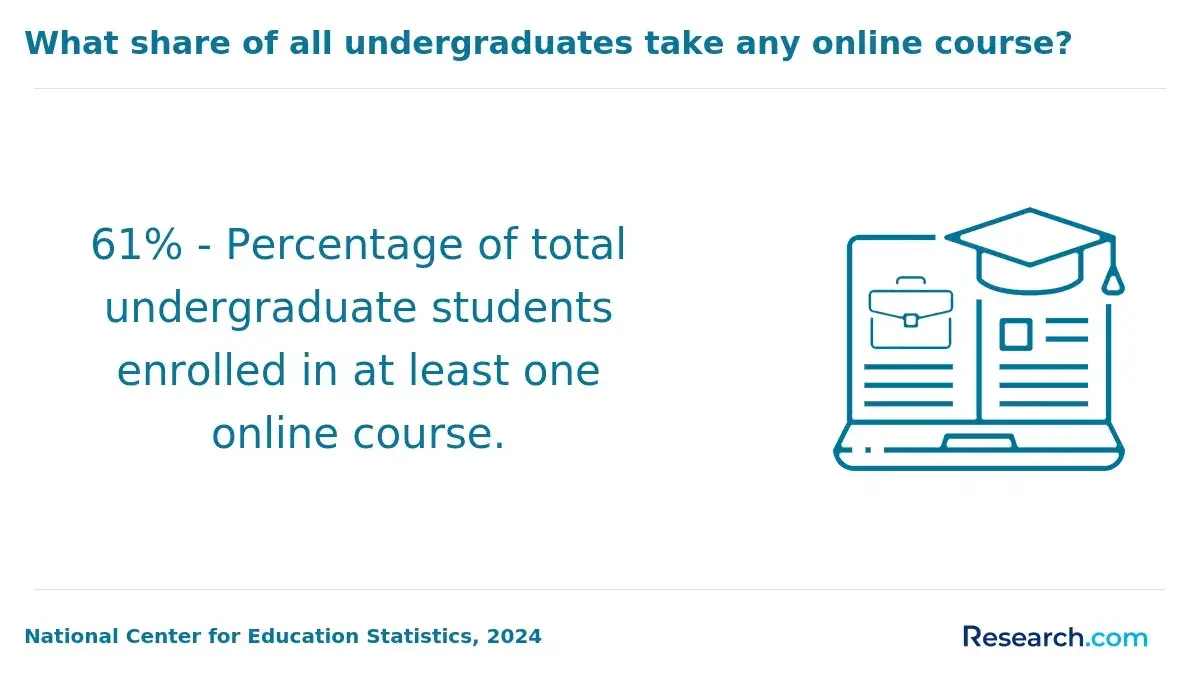
Finishing an accredited online educational administration degree faster usually depends less on the school's advertised timeline and more on how many of your previous credits actually apply. NCES reported in its Condition of Education update that more than half of U. S. postsecondary students took at least one distance education course in fall 2022, showing how normal online pathways have become.
This guide is for transfer students, teachers, military learners, and degree completers who want the quickest legitimate route to graduation while protecting accreditation, licensure value, cost, and future career options.
Key Things You Should Know
- The fastest realistic paths are usually 12 to 18 months for a 30- to 36-credit online master's in educational leadership when 6 to 12 graduate transfer credits apply, or 12 to 24 months for a bachelor's-completion pathway when up to 90 undergraduate credits transfer into the degree plan.
- The most transfer-friendly accredited options are not always the shortest advertised programs; look for schools that publish a high transfer-credit ceiling, a low residency requirement, frequent start dates, asynchronous or accelerated courses, and a written evaluation showing which credits satisfy educational administration requirements.
- For graduate educational administration degrees, transfer limits commonly fall below undergraduate caps because licensure, internship, capstone, and leadership-core courses often must be completed at the degree-granting institution.
What Are the Fastest Accredited Online Educational Administration Degree Programs That Accept Transfer Credits?
Fast accredited online educational administration degree programs are typically built for working educators, school staff, military-affiliated students, and adult learners who already have college credit. In this field, "fastest" usually means the program combines recognized accreditation, generous but realistic transfer policies, short course terms, multiple start dates, and a curriculum that does not delay graduation with unnecessary prerequisites.
Educational administration programs can lead to different outcomes. A bachelor's-completion program may prepare students for administrative support, training coordination, or entry-level education leadership roles, while a master's in educational leadership is often the route for aspiring principals or administrators. Doctoral programs, including EdD pathways, are usually for senior leadership, district-level administration, policy, higher education, or organizational leadership.
The table below compares the main online degree routes by speed, transfer-credit usefulness, and career fit. It is more useful than a simple "fastest schools" list because the quickest option depends on your starting credits, licensure goals, and whether you already hold a teaching credential.
| Program route | Who it fits best | Typical online length with useful transfer credits | Transfer-credit advantage | Main limitation |
| Bachelor's-completion degree with education administration, education studies, or organizational leadership focus | Students with substantial lower-division credits who need a completed bachelor's before graduate study | About 12 to 24 months if most general education and electives are complete | Often the largest transfer-credit potential at the undergraduate level | May not qualify someone for principal licensure by itself |
| Online M.Ed. or M.S. in Educational Leadership or Educational Administration | Licensed or experienced educators seeking school leadership preparation | About 12 to 18 months in accelerated formats | Some programs accept a limited number of graduate credits from prior education coursework | Internship, practicum, and state approval rules can limit transfer flexibility |
| Online Education Specialist degree | Master's-prepared educators seeking advanced leadership credentials without a doctorate | About 12 to 24 months | Prior graduate coursework may reduce the remaining plan if it matches advanced leadership outcomes | Not all employers treat it the same as an EdD or PhD |
| Online EdD in Educational Leadership or Administration | Educators aiming for district, higher education, policy, or executive leadership roles | About 2 to 4 years, depending on dissertation or capstone pace | Some programs apply post-master's or doctoral transfer credits | Research sequence, dissertation, residency, or capstone requirements may control the actual finish date |
The fastest legitimate choice is usually the one that gives you a completed, course-by-course degree audit before enrollment. If you are comparing adjacent helping-profession pathways, a transfer-friendly human services online program can also show how adult-degree-completion models use prior credits, accelerated terms, and applied coursework to shorten time to graduation.
A strong shortlist should include regionally accredited or institutionally accredited schools recognized by the U.S. Department of Education, clear transfer-credit policies, state-specific licensure disclosures, and evidence that online students can access advising, field placement support, and faculty supervision. Avoid choosing a program only because it uses phrases such as "finish fast" or "accelerated"; the real test is how many credits remain after the official evaluation.
How Fast Can You Complete an Online Educational Administration Degree With Transfer Credits?
With transfer credits, the fastest completion time depends on the number of remaining credits, course availability, term length, fieldwork, and whether the program allows overlapping or back-to-back courses. A student who transfers many credits but must wait for a once-a-year internship or capstone may graduate later than a student who transfers fewer credits into a more flexible calendar.
The table below shows realistic timeline ranges rather than guaranteed outcomes. Use it to estimate what may be possible after a school confirms which credits apply to your specific educational administration degree plan.
| Starting point | Credits that may still be needed | Fast online pace | Realistic completion estimate | What can slow the timeline |
| Associate degree or about 60 undergraduate credits | About 60 upper-division or major credits | Full-time accelerated terms | 18 to 30 months | Upper-division major sequencing and general education gaps |
| About 90 transferable undergraduate credits | About 30 credits | Year-round full-time enrollment | 9 to 15 months | Residency minimums and capstone timing |
| Licensed teacher entering a 30- to 36-credit master's | About 24 to 36 graduate credits after transfer review | One or two courses per short term | 12 to 18 months | Internship, principal exam preparation, or state approval rules |
| Master's-prepared educator entering an EdD | About 45 to 60 doctoral credits after transfer review | Continuous enrollment | 2 to 4 years | Dissertation, applied project, or research milestones |
For a faster finish, ask schools to calculate time from your remaining degree requirements, not from the catalog's standard plan. The most useful conversations with admissions and advising teams should cover several specific points.
- Request an unofficial pre-evaluation before applying and an official degree audit after admission.
- Ask which transferred credits meet general education, education-core, leadership-core, internship, elective, and capstone requirements.
- Confirm whether courses are offered every term or only once per academic cycle.
- Ask whether fieldwork can be completed at your current school or district if the program leads to licensure.
- Calculate your timeline using the number of credits you can realistically take while working, not only the maximum course load allowed.
A common mistake is assuming that "accelerated" means easier. Fast programs often compress the same academic outcomes into shorter terms, so they may require stronger time management, quicker writing turnarounds, and reliable access to school-based field experiences.
How Many Transfer Credits Can You Apply Toward an Online Educational Administration Degree?
Transfer-credit limits vary by level. Undergraduate completion programs usually allow the largest number of transfer credits, while graduate educational administration programs are more restrictive because leadership standards, licensure alignment, and advanced academic integrity matter. The key distinction is that a school may "accept" credits into your record without applying all of them toward the degree requirements you still need.
The table below summarizes common transfer-credit patterns in U.S. online educational administration pathways. These are planning ranges, so always verify the exact institutional policy and the program-level rule.
| Degree level | Common maximum transfer-credit pattern | Credits most likely to transfer well | Credits often restricted | Best-fit student |
| Bachelor's degree completion | Up to about three-fourths of the degree at many transfer-friendly schools | General education, electives, lower-division education courses, community college credits | Upper-division major courses, capstone, residency courses | Adult learners with associate degrees or prior college credit |
| Master's in educational administration | Usually a small portion of the total degree | Recent graduate education courses with matching content and grades | Internship, practicum, state licensure coursework, final portfolio | Teachers who started a related graduate program but did not finish |
| Education specialist degree | Often limited to closely related post-master's credits | Advanced leadership, supervision, curriculum, assessment, or policy coursework | Applied leadership project and residency requirements | Master's-prepared educators seeking additional credentials |
| Doctoral degree | Varies widely by school and doctoral structure | Post-master's leadership or research credits from accredited institutions | Dissertation sequence, doctoral seminar, research milestones | Experienced educators with prior graduate work |
To avoid losing time, evaluate credits by usefulness, not volume. A student with 90 credits that mostly satisfy open electives may still need many major courses, while a student with fewer but better-aligned credits may finish sooner.
Before enrolling, compare transfer policies in this order because each layer can reduce the number of credits that actually count toward graduation.
- Institutional transfer maximum: the highest number of credits the school may bring in overall.
- Program transfer maximum: the limit set by the school of education or leadership department.
- Residency requirement: the minimum number of credits you must complete at the new school.
- Major requirement: the courses that must be completed specifically in educational administration or leadership.
- Recency requirement: rules that reject older coursework in areas such as law, assessment, technology, or policy.
The best transfer-friendly program is the one that documents all five layers clearly. If a school gives only a verbal estimate, treat it as a starting point rather than a commitment.
Accreditation is the safeguard that helps protect your degree's legitimacy, transferability, financial aid eligibility, and recognition by employers or licensing boards. For educational administration, you should check both institution-level accreditation and any program-level approval tied to educator preparation or principal licensure.
Use a step-by-step verification process instead of relying on marketing language. The right checks can prevent the costly mistake of completing a fast online degree that does not qualify you for your intended role.
- Search the school in the U.S. Department of Education's recognized accreditation database or the Council for Higher Education Accreditation database.
- Confirm that the accreditor is recognized and that the institution's status is current, not probationary or expired.
- For licensure-focused programs, verify state educator-preparation approval with the state where you plan to work.
- Ask whether the program is designed for principal, superintendent, higher education, curriculum leadership, or nonlicensure administration roles.
- Request written disclosure explaining whether the online program meets licensure requirements in your state.
- Check whether internship or practicum placements must occur in a specific type of school, district, or supervised setting.
Programmatic accreditation can also matter. CAEP accreditation or state approval may be important for educator-preparation programs, but not every educational administration degree has the same purpose. A nonlicensure higher education administration degree may not need the same approval as a principal-preparation program.
Red flags include vague claims such as "nationally recognized" without naming an accreditor, refusal to provide state licensure disclosures, pressure to enroll before a transfer evaluation, or promises that credits will transfer anywhere. Accreditation supports recognition, but it does not force another school, state agency, or employer to accept every credit or credential automatically.
Transfer credits can come from several sources, but they are not interchangeable. Traditional college coursework is usually the easiest to evaluate, while prior learning, military training, exams, and certifications require additional review and may count only as electives unless they match degree outcomes.
The table below explains how different credit sources may apply to an online educational administration degree. This distinction matters because elective credit can help total-credit progress, but it may not replace leadership, law, finance, supervision, or internship requirements.
| Credit source | How it may help | Where it usually applies best | What to verify |
| Regionally or institutionally accredited college coursework | May satisfy general education, electives, education foundations, or graduate leadership courses | Bachelor's completion and some graduate transfer | Minimum grade, course equivalency, recency, and level |
| Community college credits | Can reduce lower-division undergraduate requirements | Bachelor's-completion route | Upper-division credit limits and articulation agreements |
| Graduate credits from another education program | May reduce a master's, specialist, or doctoral plan | Closely matched educational leadership programs | Whether the course covers comparable outcomes and was not used for a completed credential if restricted |
| Military training evaluated for credit | May add elective, leadership, management, or training-related credit | Undergraduate degree completion | ACE recommendations, school policy, and whether credit applies to the major |
| Credit-by-exam | May satisfy undergraduate general education or electives | Lower-division bachelor's requirements | Exam score minimums and maximum exam-credit limits |
| Professional certifications or portfolios | May document learning from work experience | Prior-learning-friendly adult degree programs | Faculty assessment rules and fees |
Students sometimes assume that experience in schools automatically converts into graduate educational administration credit. In reality, graduate leadership programs usually require evidence of academic equivalency, not just years worked. That is especially true for courses connected to ethics, school law, finance, personnel supervision, equity, assessment, and licensure standards.
If you are comparing education administration with other online degree-completion options, an online social media marketing degree can illustrate how some nonlicensure fields allow broader elective transfer, while administrator-preparation programs may be more constrained by state and professional expectations.
Residency requirements determine how many credits you must complete at the school awarding the degree. Major requirements determine which credits must come from educational administration, leadership, or closely related coursework. These two rules often matter more than the advertised maximum transfer limit.
For example, a bachelor's-completion school may allow many transfer credits overall, but still require a set number of upper-division credits in residence. A master's program may accept a few graduate credits, but still require its own internship, leadership portfolio, or capstone to ensure the student meets program outcomes.
The table below shows how residency and major rules can change the fastest possible timeline even when a school is transfer-friendly.
| Policy factor | Why it affects speed | Fastest-student advantage | Common risk |
| Minimum institutional residency | Sets the floor for credits taken at the new school | Helps students plan the true remaining workload | High residency can erase the value of extra transfer credits |
| Upper-division requirement | Requires advanced undergraduate coursework at the junior or senior level | Students with completed lower-division credits can focus on the major | Community college credits may not satisfy upper-level needs |
| Leadership-core requirement | Ensures coverage of administration topics such as law, finance, supervision, and school improvement | Prior graduate coursework may help if content matches closely | Similar course titles may not be equivalent |
| Internship or practicum | May be required for principal or administrator preparation | Students working in schools may arrange placements more efficiently | State rules or supervisor availability can delay completion |
| Capstone, portfolio, or dissertation | Measures final program outcomes | Organized students can finish faster with continuous advising | These requirements are rarely waived through transfer credit |
Ask for the school's residency policy in writing. Then compare it against your remaining major requirements, not just the total credits needed for the degree. This is where many transfer students discover the difference between "you can transfer 90 credits" and "you can graduate after 30 more credits."
A practical rule is to prioritize programs that show your remaining courses in a term-by-term plan. If the school cannot explain when each required course is offered, the program may not be as fast as it appears.
Prior learning can help some students finish faster, especially at the undergraduate level. However, it is usually less powerful in graduate educational administration programs because those programs must document advanced, discipline-specific learning and may be tied to licensure standards.
These options are worth exploring if you have military experience, school leadership experience, workplace training, professional certifications, or standardized exam scores. The value depends on whether the school awards credit and whether that credit applies to remaining requirements.
- Prior learning assessment: best for documented college-level learning from work, training, leadership, or professional development; often requires a portfolio, faculty review, and assessment fee.
- CLEP or similar exams: most useful for undergraduate general education or elective requirements; rarely replaces graduate educational administration coursework.
- Military training: may be evaluated through ACE credit recommendations and can support undergraduate elective, leadership, management, or training requirements.
- Professional certifications: may count in some adult-completion programs if the school has an approved crosswalk, but graduate leadership credit usually requires close academic equivalency.
- District or state leadership training: may help demonstrate readiness, but credit depends on whether the university has reviewed the training for academic credit.
Prior-learning credit is not always free. Some schools charge portfolio assessment fees, transcript evaluation fees, or per-credit posting fees. Even when the fee is modest compared with tuition, it is only worth paying if the credit reduces required coursework rather than adding unused elective credit.
For the fastest path, send all transcripts and documentation at once. Missing military records, exam scores, or professional training documents can delay the official audit and make it harder to register for the right first-term courses.
The cost of a fast online educational administration degree depends on remaining credits, per-credit tuition, fees, books, technology costs, internship expenses, and financial aid eligibility. Transfer credits can lower cost significantly, but only when they replace required credits you would otherwise pay to complete.
College Board's 2024 pricing data placed average published tuition and fees for in-state public four-year colleges at $11,610 for the 2024-25 academic year, while private nonprofit four-year colleges averaged $43,350. Online educational administration programs may use different pricing, but the comparison shows why calculating remaining credits matters more than looking only at annual sticker price.
The table below shows how cost can change when transfer credits reduce the number of remaining credits. Use the structure to compare schools using their actual tuition and required fees.
| Cost factor | Why it matters for fast transfer students | What to ask before enrolling |
| Per-credit tuition | Determines the base price of every remaining course | Is the online rate different for in-state, out-of-state, military, or cohort students? |
| Remaining credits after audit | Shows the real tuition exposure after transfer credit applies | Which accepted credits reduce required courses? |
| Mandatory fees | Can raise the total cost even when tuition looks low | Are there technology, graduation, internship, portfolio, or course fees? |
| Financial aid eligibility | May make an accredited program more affordable over time | Is the program Title IV eligible, and what enrollment level is required? |
| Employer or district tuition assistance | Can reduce out-of-pocket cost for working educators | Does the school defer billing until employer reimbursement arrives? |
| Licensure exam and background costs | May be required outside tuition for administrator-preparation students | Which state exams, fingerprinting, or application fees should be budgeted? |
Graduate students should also understand federal borrowing limits. The annual federal Direct Unsubsidized Loan limit for many graduate and professional students is $20,500, so students in faster programs should still borrow carefully and compare repayment obligations against realistic career goals.
If your long-term path may include a doctorate, comparing the cheapest EdD programs online can help you understand how transfer credits, dissertation structure, and tuition models affect total cost at the advanced-leadership level.
Do not assume the cheapest program is the best value. A slightly higher tuition rate may cost less overall if the school accepts more applicable credits, offers every required course year-round, and helps you finish a term or two earlier.
Accelerated, competency-based, and self-paced formats can all shorten an online educational administration degree, but they do so in different ways. The best choice depends on your work schedule, writing speed, prior knowledge, field placement access, and comfort with independent learning.
The table below compares the three formats from a transfer-student perspective. It focuses on how each model affects actual time to graduation rather than marketing claims.
| Format | How it works | Why it can be fast | Best for | Potential drawback |
| Accelerated term-based | Courses run in shorter sessions, often 5 to 8 weeks | Students can complete more courses per year | Working educators who want structure and deadlines | Heavy weekly workload and limited recovery time |
| Competency-based | Students progress by demonstrating mastery | Prior knowledge may help students move quickly through familiar material | Self-directed learners with strong professional experience | Not ideal for students who need frequent live instruction |
| Self-paced within deadlines | Students move through course modules flexibly during a term | Fast learners can finish assignments early | Students with variable work schedules | Procrastination can delay completion |
| Cohort-based accelerated | Students move through a prescribed sequence together | Clear schedule and predictable graduation date | Students who value peer support and advising structure | Less flexibility if transfer credits disrupt the sequence |
Competency-based formats can be especially appealing to experienced educators, but they are not automatically faster. If the program includes required fieldwork, administrator licensure standards, or a fixed assessment sequence, your pace may still depend on external approvals and faculty evaluation timelines.
Students comparing accelerated professional degrees can learn from other fields as well. For example, an MSW online pathway often shows how field placements can shape completion speed even when the academic courses are offered online and in accelerated terms.
Choose a faster format only if your weekly schedule can support it. A student taking one course per term consistently may finish sooner than a student who overloads, withdraws, and has to repeat a course.
Are Fast Accredited Online Educational Administration Degrees Respected by Employers and Graduate Schools?
Fast accredited online educational administration degrees can be respected when they come from properly accredited institutions, align with state or employer requirements, and document the same academic outcomes expected from comparable campus programs. Employers generally care more about accreditation, licensure eligibility, leadership experience, and demonstrated skills than whether courses were completed online.
The career value also depends on the role. The U.S. Bureau of Labor Statistics reported in its 2024 Occupational Outlook Handbook that the median annual wage for elementary, middle, and high school principals was $103,460 in May 2023. That figure should not be read as a promise, but it shows why many educators evaluate administrator-preparation programs as a career-investment decision rather than only an academic credential.
Graduate schools may accept an online degree if it is accredited and academically rigorous, but they will still review GPA, prerequisite coursework, recommendations, writing ability, and program fit. A fast bachelor's-completion degree can support admission to a master's program, while a fast master's can support EdD or specialist study if it includes sufficient graduate-level rigor.
Educational administration is also connected to other graduate professional pathways where online study is widely used. For example, a SLP online masters program may have different clinical requirements, but it similarly demonstrates why accreditation, supervised practice, and state eligibility matter more than online delivery alone.
Before choosing a fast program, ask employers or licensing offices what they require. This is especially important if you plan to move states, work in public schools, pursue principal certification, or compete for district-level leadership roles.
- Choose a licensure-aligned program if your goal is principal, assistant principal, or school administrator certification.
- Choose a nonlicensure educational leadership or higher education administration program if your goal is policy, training, student affairs, nonprofit education, or organizational leadership.
- Choose a slower but more structured program if you need extensive mentoring, placement support, live instruction, or a cohort network.
- Avoid programs that will not provide written accreditation, transfer-credit, and state-eligibility documentation before you commit.
Other Things You Should Know About Educational Administration
Possibly. General education and elective credits are often more flexible, while graduate education courses in law, technology, assessment, or policy may face recency limits. Ask for a course-by-course evaluation before assuming older credits will apply.
It depends on the program. Principal-preparation and school administrator licensure programs often require a current teaching license and classroom experience. Nonlicensure programs in higher education administration, training, or organizational leadership may not.
Transfer credits can reduce the number of courses you need, which may lower total borrowing. However, financial aid also depends on enrollment status, satisfactory academic progress, program eligibility, and remaining aid limits. Ask the financial aid office to model your cost after the official transfer audit.
Yes. Many accredited online educational administration programs require a supervised internship or practicum, often 150 to 300 hours, before graduation. If the program leads to licensure, the placement must usually meet state education department rules and be approved by a licensed school administrator.
- How Long Does It Take To Earn a Master’s Degree? | ACE Blog https://ace.edu/blog/how-long-does-it-take-to-earn-a-masters-degree/
- How long does it take to complete an IT program? | WCC - Western Community College https://wcc.ca/blog/how-long-does-it-take-to-complete-an-it-program/
- Online EdD Programs in Educational Leadership & Administration https://www.onlineeddprograms.com/specializations/education-administration-leadership
- Master's Degree: How Long Does It Take? | Teacher's Guide https://creditsforteachers.com/masters-degree-how-long-does-it-take-a-complete-guide-for-teachers/
- Editor’s Picks: The 11 Best 1-Year Online Masters in Education Programs https://www.educationdegree.com/articles/top-1-year-online-masters-in-education-programs/
- What Type of Online MEd Degree Should You Pursue? https://www.onlinemastersdegrees.org/student-resources/education/types-of-degrees/
- 50 Most Affordable Online Master’s in Education Administration (Educational Leadership) - Best Colleges Online https://www.bestcollegesonline.org/most-affordable/online-masters-education-administration/
- Educational Leadership Degree | Education Administration Degree https://www.educationalleadershipdegree.com/degrees/
- Masters Degree in School Administration | University of Phoenix https://www.phoenix.edu/online-education-degrees/education-administration-supervision-masters-degree.html