2027 Evaluating an Academic Nursing Faculty Member Job: Workload, Performance Measures, Schedule, and Support
Audited and Verified:
Our Editorial and Data Verification Process
Research.com uses government datasets, official education statistics and primary institutional information to support its career and degree guides. Our review process checks factual accuracy, occupational definitions, source dates and the requirements associated with the credentials discussed.
How This Article Was Fact-Checked
Our editorial team verifies salary estimates, employment projections, education requirements and program information against original data providers and official organizations. Salary figures are checked against the relevant occupational definitions and reporting periods. Information about licensure, accreditation and required in-person training is reviewed separately.
Fact-checked and verified on:

Co-Founder and Chief Data Scientist
A nursing faculty offer can look attractive until you learn what its teaching load includes - or does not include. Clinical supervision, grading, student advising, accreditation work, and scholarship may sit alongside scheduled classes, while a nine-month contract can still require substantial work between terms.
For experienced nurses and educators considering an academic position, this guide explains how faculty roles differ, what employers measure, and which documents and questions reveal whether the workload, schedule, compensation, and support make the job sustainable.
Key Things You Should Know
- Compare a nine-month and a 12-month offer by total duties and paid months, not annual salary alone; ask whether clinical supervision, course development, and summer work are included.
- Faculty reviews commonly consider three areas - teaching, scholarship, and service - but the weight of each depends on the institution, appointment, and promotion rules.
- Request the workload policy, appointment letter, evaluation rubric, and a sample semester schedule before accepting; a course count alone does not show the hours or support required.
What does an academic nursing faculty member do?
Academic nursing faculty teach and assess students, help maintain curriculum quality, and contribute to their institution. The work varies by appointment. A classroom instructor may design lectures and exams; a clinical faculty member may observe students at an approved site and evaluate their performance; a simulation educator may run scenarios and debriefings. Full-time faculty may also advise students, serve on committees, and contribute scholarship.
Ask which learners you would teach: prelicensure students, practicing RNs, or graduate students preparing for a defined role. Their supervision and assessment needs differ. For example, teaching students exploring accessible accelerated BSN pathways may involve a compressed prelicensure course sequence, not simply a faster version of postlicensure teaching. Faculty assess learning and clinical readiness within program and site rules; they do not grant licenses or independently approve students for nursing practice.
What education and credentials are required for nursing faculty jobs?
Requirements depend on the degree taught, the appointment, institutional policy, clinical-site expectations, and applicable state rules. Many full-time teaching positions seek a graduate nursing degree; research-intensive, doctoral teaching, and tenure-track positions may require or strongly prefer a doctorate. Some clinical instructor or adjunct openings accept a different combination of nursing education and substantial practice experience. Read the actual posting rather than treating any degree as a universal minimum.
For clinical teaching, employers may require an active, appropriate nursing license and recent experience in the specialty. Graduate preparation in nursing education can strengthen a candidate's teaching skills; a nurse considering master's nursing education on a BSN graduate's budget should first confirm that a target employer accepts the specific degree and track. An MSN or DNP does not, by itself, confer APRN authority or qualify someone to supervise every specialty.
Before pursuing another credential, compare the posting with your documented qualifications. A teaching portfolio, supervised teaching experience, simulation training, or targeted professional development may address the gap more directly than another degree.
How much do nursing faculty members earn, and what is the job outlook?
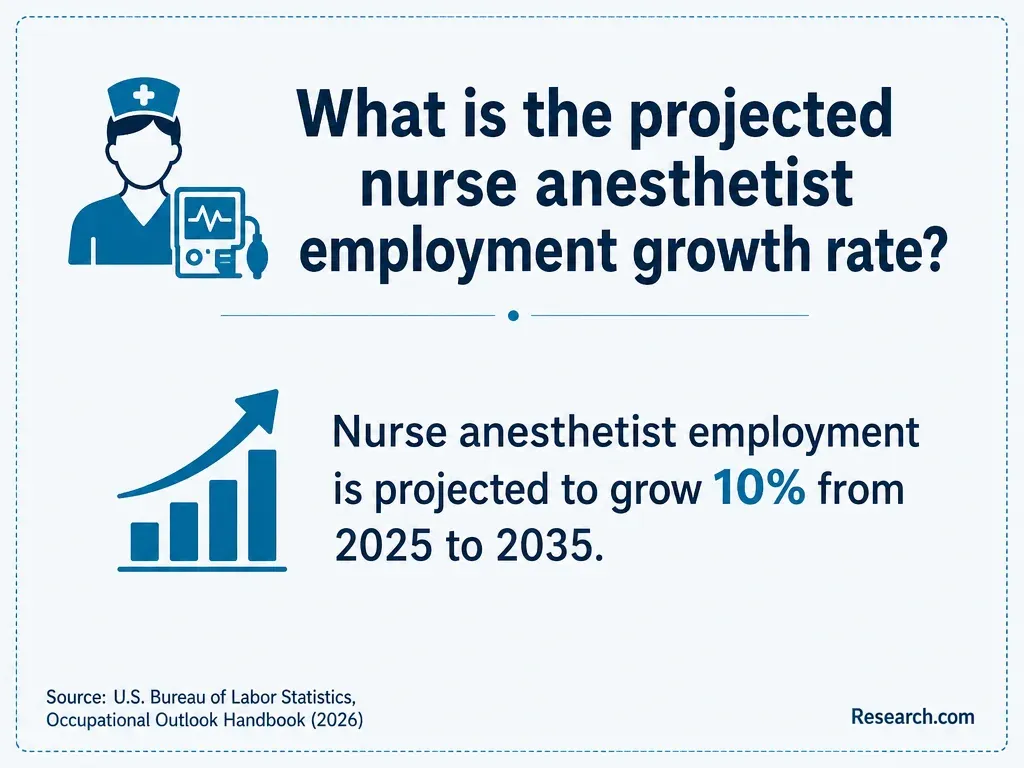
Pay depends heavily on rank, institution type, location, contract length, clinical specialty, and whether the position is full-time or paid per course or clinical day. For national context, the U.S. Bureau of Labor Statistics reports wages for nursing instructors and teachers, postsecondary. That occupation-wide figure is a benchmark, not a prediction for an individual offer; its wage data does not capture every contract term or an applicant's alternative clinical earnings. Use the latest published BLS wage year and projection period when comparing market figures, then compare actual offers locally.
Convert each offer to a comparable basis: paid months, expected workdays, benefits, retirement contributions, clinical-practice allowances, and any additional summer or overload pay. If your alternative is advanced practice, compare the actual credential and role rather than assuming faculty pay matches NP pay. Even one-year family nurse practitioner pathways involve a separate education and licensure decision, with costs and eligibility requirements of their own.
Demand for nursing education does not guarantee an opening in your specialty or preferred location. Review recent postings, salary ranges where disclosed, and the institution's enrollment and staffing plans before relying on a broad job-growth projection.
A teaching load is often expressed as courses, credits, contact hours, or workload units. Those measures can hide substantial differences: a new clinical course may require site coordination, travel, student observation, documentation, and remediation, while an established online course may require frequent feedback and accessibility updates.
Graduate specialty teaching brings its own assessment and placement demands; a faculty member assigned to students in accelerated psychiatric nursing master's programs should clarify who arranges and oversees approved clinical experiences. The table separates visible assignments from work that may not appear on a course schedule. Use it to ask how each duty is credited in the employer's workload policy.
| Work area | What the assignment may include | What to clarify |
| Teaching | Preparation, instruction, grading, office hours, accessibility, and course revision | Enrollment, teaching assistance, and credit for a new course |
| Clinical or simulation | Site visits, observation, debriefing, competency assessment, and documentation | Student group size, travel, site coverage, and workload credit |
| Advising and service | Student support, committees, admissions, and accreditation evidence | Expected hours and whether duties rotate |
| Scholarship and practice | Research, educational scholarship, continuing practice, or professional engagement | Required outputs, protected time, and available funding |
A manageable offer accounts for these tasks explicitly. "Other duties as assigned" should not be the only explanation for a large clinical or administrative commitment.
Faculty evaluations usually examine teaching effectiveness and may also assess scholarship, service, and professional practice. The weighting matters: an adjunct instructor, teaching-track professor, and tenure-track researcher should not be judged against identical expectations. Request the written annual-review and promotion criteria, including what counts as evidence and who evaluates it.
Teaching evidence may include peer observation, course materials, student feedback, timely grading, and documented improvements. Student evaluations offer useful feedback but should not be treated as the sole measure of instructional quality. Clinical faculty may also be evaluated on supervision, accurate competency documentation, and response to safety concerns - not simply on student pass rates.
For scholarship, clarify whether the institution recognizes peer-reviewed publications, funded research, simulation development, curriculum evaluation, or practice-improvement work, and what oversight each activity requires. A candidate teaching an APRN specialty should also distinguish educational preparation from certification: PMHNP certificate completion timelines do not establish that graduates - or faculty - meet every certification, licensure, or employer requirement. Ask how your own specialty competence and practice currency will be reviewed.
There is no single faculty schedule. Classroom teaching may cluster on certain days, but preparation, grading, meetings, and student support fill time outside class. Clinical teaching can start early, run into evenings or weekends, and require travel. Online instruction may be location-flexible while still imposing fixed meetings, clinical visits, and short grading deadlines.
A nine-month appointment describes the paid contract period, not necessarily nine months of low-intensity work. Verify orientation dates, required work between terms, summer teaching options, and whether summer obligations are separately compensated. If a program offers accelerated LPN-to-RN bridge programs, do not infer that "online" or "accelerated" makes the faculty assignment asynchronous; ask when labs, clinical oversight, and student assessments occur.
Request a sample weekly calendar for the courses you would actually inherit, including clinical days and recurring meetings. That is more informative for family commitments or continued clinical employment than an advertised course count.
Balance starts with the appointment's stated priorities. A teaching-focused job may leave little protected research time; a tenure-track job may require publications even during a heavy first-year teaching assignment. Clinical practice can maintain specialty currency and support teaching, but it consumes time and may not count toward the employer's workload unless the policy says so.
Discuss the expected output in each area and the time reserved to produce it. A faculty member pursuing a practice-focused doctorate may find DNP pathways that do not add a new clinical specialty relevant to their academic development, but degree study is not a substitute for a realistic faculty workload or protected scholarly time. Research-focused roles may instead prioritize PhD-level preparation and a sustainable research agenda.
Watch for competing deadlines: clinical evaluations, final grading, committee reports, and conference submissions can converge at term end. A workable plan specifies which duties can be reduced, reassigned, or deferred when priorities conflict.
Useful support is operational, not just a promise of mentoring. Ask about a teaching orientation, an assigned mentor, instructional-design help, simulation staff, clinical-site coordinators, library access, statistical consultation, and administrative assistance. Find out who handles a placement cancellation or a student performance concern when you are off campus.
Support also varies by course. Programs advertising online FNP programs with preceptor support still need clear faculty oversight and site-approval processes; ask which placement tasks belong to coordinators, students, and faculty. A mentor cannot compensate for an undefined responsibility to find every student's placement.
Confirm the funding and time available for educator training, conferences, continuing education, licensure or certification maintenance, and scholarship. If funds are discretionary, ask what new faculty have actually been able to use - not merely what the handbook permits.
The Commission on Collegiate Nursing Education (CCNE) and the Accreditation Commission for Education in Nursing (ACEN) accredit nursing programs within their respective scopes. Accreditation expectations can shape faculty qualifications, curriculum oversight, assessment, and evidence of program effectiveness. They do not prescribe one universal course load or automatically make an individual faculty assignment reasonable.
Ask which specific programs are accredited by which organization, when reviews or reports are due, and how faculty contribute to collecting and interpreting evidence. State board approval or recognition and institutional accreditation are separate from nursing program accreditation; none should be used interchangeably in a job description. If you are considering doctoral nursing application requirements compared to meet a posting's qualification threshold, verify the employer's actual degree requirement rather than assuming an accreditor requires that particular doctorate.
Accreditation work should appear in workload planning. A major self-study or curriculum revision can be valuable professional experience, but it needs deadlines, leadership, data access, and time.
How can you evaluate an academic nursing faculty position?
Start with your current license, teaching experience, specialty practice, and career goal. An experienced RN seeking a teaching-focused transition should evaluate a role differently from a researcher seeking tenure or an APRN hoping to preserve clinical practice. Use the same documents and questions for each offer so that appealing job titles do not obscure different obligations.
Before accepting, work through these checks and request answers in writing where possible:
- Obtain the appointment letter, contract length, workload policy, benefits summary, and annual-review and promotion criteria.
- Map assigned courses and clinical groups to preparation, grading, supervision, travel, advising, committee work, and expected scholarship.
- Ask who arranges clinical sites, handles student remediation, provides course-design help, and covers absences or cancelled placements.
- Compare compensation per paid period and the cost of required practice, travel, and professional development against your realistic alternatives.
- Speak with a prospective colleague about a recent term, then confirm any material discrepancy with the hiring manager.
If the role requires preparation you do not yet have, compare the cost and time of that gap with the job's actual benefits. For example, budget-conscious PMHNP study options concern a distinct advanced-practice pathway, not a general prerequisite for teaching nursing. A targeted educator course, supported teaching experience, or a different appointment may fit better. Accept when the institution's expectations, resources, and compensation align - not simply because the title says "faculty."
Other Things You Should Know About Nursing
Often, but confirm clinical-day assignments, required meetings, grading deadlines, and any employer conflict-of-interest rules before committing to both schedules.
It can build teaching experience, but conversion is not guaranteed. Ask whether full-time openings are anticipated and what qualifications those positions require.
Responsibilities depend on the setting, supervision arrangement, school policy, and applicable law. Before teaching, learn the escalation process, your authority, and the site's patient-safety procedures.
Yes, where the institution permits it. Discuss not only salary but also rank, workload credit, start-up support, mentoring, professional-development funds, and time for required scholarship.
- Rule 3358:17-20-03 | Faculty workload policy. https://codes.ohio.gov/ohio-administrative-code/rule-3358:17-20-03
- The evaluation of scholarship in academic promotion... - PMC https://pmc.ncbi.nlm.nih.gov/articles/PMC6325612/
- Evaluation of a New Faculty Teaching Workload Model | PubMed https://pubmed.ncbi.nlm.nih.gov/37229700/
- School of Nursing: Policy on Faculty Workload | University of North Carolina at Chapel Hill https://policies.unc.edu/TDClient/2833/Portal/KB/Article/151981/School-of-Nursing-Policy-on-Faculty-Workload
- 3.2 Criteria for Appointment to Faculty Rank | utk.edu https://facultyhandbook.utk.edu/appointment-evaluation-promotion-tenure-and-review/criteria-for-appointment-to-faculty-rank/
- 3.3.7 Promotion and Tenure Evaluation - Policy Library https://policylibrary.gatech.edu/faculty-handbook/3.3.7-promotion-and-tenure-evaluation
- Careers and Promotions | - Research Portal https://labs.icahn.mssm.edu/earlyinvestigators/career-pathways/
- A model for graduate nursing faculty teaching workload | sciencedirect.com https://www.sciencedirect.com/science/article/abs/pii/S8755722320302453