2027 Entry-Level Jobs With a Nursing Education Master's Degree

Co-Founder and Chief Data Scientist
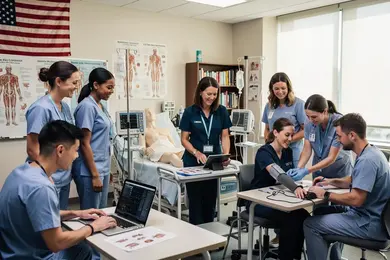
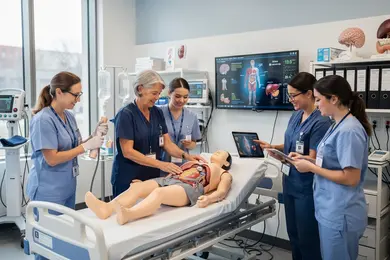
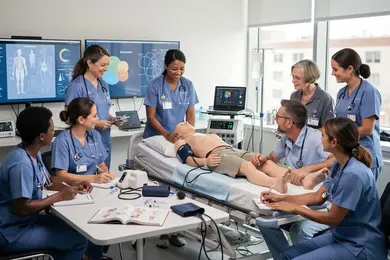
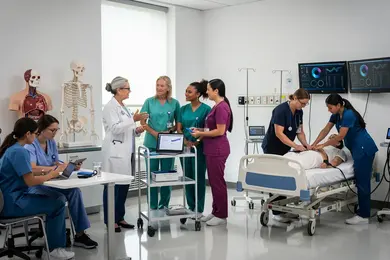
The transition from a master's degree in nursing education into the workforce occurs amid shifting employer priorities emphasizing clinical teaching competence alongside educational innovation. Entry-level roles often require balancing direct instructional duties with curriculum development, reflecting the profession's dual demand for pedagogical skill and practical nursing expertise. Workforce data from the Bureau of Labor Statistics in 2024 highlights increased hiring in community health education settings and simulation-based instruction, signaling a broader scope beyond traditional academic environments. Understanding these hiring structures and sector expectations informs realistic job targeting and clarifies how various early-career roles align with ongoing professional standards and systemic workforce transformations.
This article explores common entry-level positions for nursing education master's graduates and the workplace factors that influence their availability and function.
Key Benefits of Entry-Level Jobs With a Nursing Education Master's Degree
- Entry-level roles often demand simultaneous clinical expertise and educational skills, making a nursing education master's degree highly specialized but sometimes limiting early-career flexibility in non-educational nursing paths.
- Employers increasingly expect graduates to contribute not only as instructors but also as curriculum developers, reflecting a shift toward integrated teaching roles that merge practical and academic competencies.
- The average program length and associated costs can delay workforce re-entry, impacting those balancing financial pressures or career breaks, so timing and resource planning are crucial for prospective students.
What Entry-Level Jobs Can You Get With a Nursing Education Master's Degree?
Entry-level roles for graduates with a master's degree in nursing education often involve significant responsibility and specialized knowledge, despite the "entry-level" label. These positions require applying advanced educational theory alongside clinical insights, demanding both analytical acuity and practical instructional skills.
The range of opportunities varies with factors like prior clinical experience, program specialization, and employer needs, making early career paths both challenging and strategically important for future development.
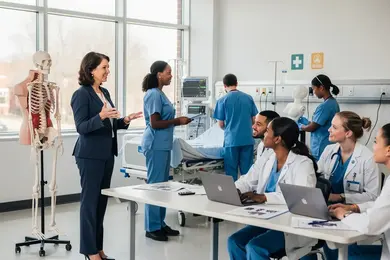
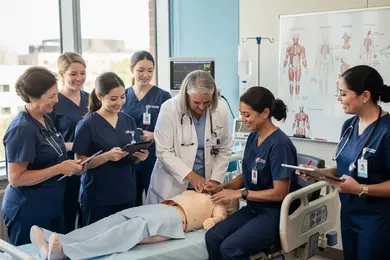
- Clinical Nurse Educator: This role centers on training nursing staff within healthcare settings, ensuring that clinical competencies meet evolving standards. It often serves as a bridge between direct patient care and academic instruction, requiring graduates to translate complex educational frameworks into actionable hands-on training. As an entry point, it builds foundational leadership and curriculum development skills critical for advancement into senior educator or management roles.
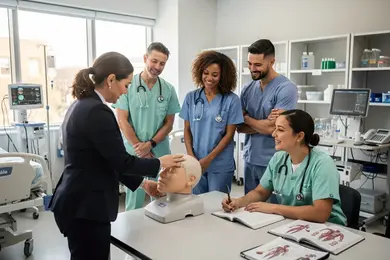
- Nursing Instructor: Typically found in community colleges or vocational schools, nursing instructors deliver core nursing concepts and assess student progress. While sometimes considered entry-level, these positions demand curriculum design and pedagogical expertise that extend beyond basic teaching. The structured academic environment offers a stable platform for honing teaching skills and exploring specialty certifications with an eye toward long-term academic careers.
- Instructional Coordinator: This role involves evaluating and improving nursing educational programs by integrating updated healthcare guidelines and teaching methodologies. Graduates stepping into instructional coordination often need some practical teaching or clinical education experience, positioning this role as a transitional step toward more strategic education leadership. Labor market data projects steady growth here, highlighting sustained demand for expertise in curriculum oversight and instructional effectiveness.
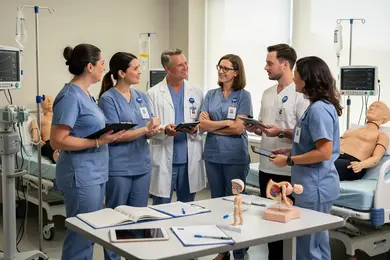
- Healthcare Training Specialist: Employed largely in hospitals or health systems, these specialists focus on in-service education, competency evaluations, and interdisciplinary staff development. This role leverages a master's graduate's ability to combine education theory with quality improvement initiatives and practical training delivery. It is often a starting point for those aiming to influence workforce competence and safety from within clinical institutions.
Salary expectations for entry-level nursing education careers with master's degree holders typically range from $60,000 to $85,000, influenced by geographic and institutional factors. Progression often requires additional certifications, such as Certified Nurse Educator (CNE), which complement demonstrated instructional and leadership capabilities in healthcare education contexts.
For graduates weighing the financial aspects of certification, understanding medical coding certification cost may provide useful context for managing professional development expenses alongside broader credentials.
What Sectors Have the Strongest Demand for Graduate-Level Talent?
Demand for graduate-level talent with a nursing education master's degree is influenced by larger workforce dynamics rather than popularity of the degree alone. Sectors that consistently seek these graduates typically require advanced clinical knowledge, educational leadership, and expertise in regulatory compliance.
Understanding how economic pressures, technology adoption, and demographic shifts shape hiring can help graduates target roles aligned with both current openings and future workforce needs.
- Higher Education: Universities and community colleges maintain strong demand due to persistent nursing faculty shortages and enrollment growth. Institutions prioritize hiring instructors with master's credentials to meet accreditation standards and incorporate evidence-based teaching. While entry salaries may be lower compared to clinical roles, these positions often serve as gateways to tenure-track faculty and offer long-term job stability amid structural shifts in academia.
- Healthcare Delivery Organizations: Hospitals, outpatient clinics, and specialty centers increasingly employ nurse educators to lead clinical training, staff development, and quality improvement. Emphasis on patient safety, regulatory compliance, and technology integration drives demand here, making these roles attractive for those seeking higher salary potential than academic posts. However, career progression may hinge on additional certifications or hands-on clinical experience.
- Public Health and Non-Profit Agencies: These sectors recruit nursing education graduates for community health initiatives, workforce training, and program development focused on diverse populations. Demand fluctuates with funding cycles and public health priorities, offering impactful but less predictable career options. Candidates should prepare for variable contract lengths and scope depending on governmental or grant-based financing.
One nursing education master's graduate recalled applying during a period of rolling admissions that felt uncertain for timing and outcome. They hesitated initially, debating whether to delay applying to gain more clinical hours versus securing a spot early in a program known for selective entry. Ultimately, the pressure to lock in a place amidst increasing applicant competition compelled swift action.
This experience underscored how timing and strategic application choices can influence access to programs feeding into high-demand sectors.

Which Entry-Level Nursing Education Careers Have the Highest Starting Salaries?
Starting salaries for graduates with a master's degree in nursing education are shaped by more than academic credentials alone. Compensation often reflects the specialized skills required, demand intensity, regulatory challenges, and the business impact of the role. Entry-level positions with higher pay typically involve greater responsibility, advanced clinical or pedagogical expertise, or focus on high-value niches within healthcare education.
- Clinical Nurse Educator ($70,000-$90,000): This role commands top starting salaries due to its hybrid requirement of clinical acumen and instructional skill. Employers prioritize candidates who can navigate complex patient care environments while effectively training staff on evolving healthcare protocols. The need for compliance with regulatory standards and quality assurance elevates the position's value. Strong clinical nurse educators can leverage this role as a springboard to leadership or advanced practice positions.
- Academic Nurse Educator ($65,000-$85,000): Positions within community colleges or smaller universities offer competitive pay tied to curriculum development and academic research contributions. Although initial salary growth may be slower, these roles benefit from relative job stability and the long-term potential of tenure or grant-funded projects. Compensation reflects a premium on scholarly credentials and the ability to design educational programs that meet state and national nursing standards.
- Nurse Training and Development Specialist ($60,000-$80,000): Found primarily in corporate healthcare or public health settings, these specialists focus on continuing education and compliance training, addressing organizational priorities around workforce readiness and patient safety. Predictable schedules and an emphasis on professional development align with employer goals to reduce turnover and improve care outcomes, justifying moderate but steady starting salaries.
Which Industries Pay the Most for Entry-Level Nursing Education Master's Graduates?
Entry-level salaries for nursing education master's graduates are shaped largely by sector-specific economic and regulatory forces rather than individual credentials in isolation. Industries with high profit margins, stringent regulatory demands, or rapid innovation tend to offer higher starting pay because nursing education expertise directly supports operational quality, compliance, and workforce development.
This dynamic reflects how nursing educators serve as key drivers in bolstering institutional performance, mitigating risk, and responding to persistent skill shortages in targeted environments.
- Hospital-Based Education Departments: Hospitals frequently top the list for highest paying industries for entry-level nursing education graduates due to the critical role nurse educators play in maintaining clinical competency among nursing staff. These roles align with revenue-driven patient care models where regulatory compliance and quality metrics impact reimbursements, incentivizing hefty investment in ongoing training. Hospitals' willingness to supplement salaries with overtime and benefits further elevates compensation for entry-level educators.
- Academic Institutions with Nursing Programs: Large universities that run nursing programs offer competitive salaries, particularly when tenure-track opportunities and research participation are factored in. While salaries initially may be lower than hospitals, the combination of stable funding, academic prestige, and scope for advancement sustains demand. Nursing education skills in this sector advance curriculum development and student clinical preparation, fulfilling growing calls for evidence-based instruction.
- Government Public Health Agencies: Agencies dedicated to nursing workforce development and public health offer robust pay reflecting the increasing emphasis on preventative care and population health management. Regulatory and policy frameworks here create structured career paths where nurse educators influence health standards at a systemic level, driving demand for expertise in program design and evaluation.
- Private Healthcare Organizations: Clinics and healthcare groups investing in staff education to enhance patient outcomes represent a lucrative sector. These employers often operate under market pressures to boost efficiency and quality, recognizing the value of nursing education to reduce turnover and improve clinical skills, thereby justifying higher entry salaries.
- Medical Research Institutions: Clinical research centers rely on nurse educators to support trial protocols and participant safety, creating niche roles with specialized skill requirements and relatively high pay. The intensity of regulatory oversight and innovation velocity in these settings necessitate educators versed in both clinical practice and research compliance.
According to recent data from the U.S. Bureau of Labor Statistics and industry compensation surveys in 2024, entry-level salaries across these sectors generally range from $60,000 to $85,000 annually but can shift significantly based on geography and employer scale. Prospective students considering a masters degree in nutrition alongside nursing education might find overlapping opportunities, reinforcing the value of interdisciplinary credentials in competitive labor markets.
Understanding these highest paying industries for entry-level nursing education graduates supports informed decisions about where to apply skills for maximum long-term impact within top sectors hiring nursing education master's degree holders.
Which Skills Are Most Valuable in Entry-Level Positions?
Entry-level hiring in nursing education increasingly hinges on demonstrable skills rather than solely on credentials. Employers seek graduates who can translate theoretical knowledge into practical solutions that address real operational challenges in healthcare training environments.
This shift reflects a broader labor market emphasis on adaptability, data fluency, and interpersonal effectiveness, especially in roles supporting clinical education and student outcomes.
- Critical Thinking and Clinical Judgment: These foundational skills enable new educators to assess complex clinical scenarios and adjust teaching strategies accordingly. Employers value candidates who apply evidence-based practices with precision, ensuring curriculum relevance and contributing to safer patient care during training.
- Effective Communication: Clear, empathetic communication is vital as nursing educators act as intermediaries between students and clinical staff. Mastery in conveying nuanced medical concepts shapes collaborative learning environments and often influences hiring, given its direct impact on instruction quality and stakeholder coordination.
- Technological Proficiency: With digital learning platforms becoming standard, fluency in simulation software, virtual classrooms, and student data management streamlines curriculum delivery. Candidates who quickly integrate these tools tend to boost operational efficiency, a trait increasingly prioritized in recruitment decisions.
- Leadership and Mentorship: Demonstrated organizational and mentoring abilities differentiate candidates by signaling readiness for expanded responsibilities. According to 2024 workforce analytics, over 65% of entry-level nursing education roles expect leadership potential, linking these qualities to faster promotions and higher early-career salaries.
- Adaptability to Evolving Clinical Practices: Employers prefer educators who readily incorporate changing healthcare protocols into training, ensuring that student knowledge remains current. This skill is critical in dynamic environments where outdated practices can undermine both teaching effectiveness and institutional reputation.
One graduate shared how navigating the rolling admissions process shaped their early career trajectory. Initially uncertain due to delayed responses, they strategically enhanced their portfolio by gaining additional practicum hours and refining technology skills while waiting. This proactive approach not only strengthened their application but aligned perfectly with employers' skill demands, ultimately easing entry into a competitive role.
Their experience underscores how timing and preparation around admissions can critically influence access to opportunities and highlight relevant competencies from the outset.
Do Employers Hire Nursing Education Master's Graduates Without Professional Experience?
Many employers do hire nursing education master's graduates without prior professional experience, particularly for entry-level roles structured as part of early-career talent pipelines within academic institutions or large healthcare organizations. These positions, such as educational coordinators or junior instructors under supervision, enable employers to mitigate hiring risks while investing in candidates' development.
Labor market realities show that while such openings exist, they typically require graduates to compensate for experience gaps through other demonstrated competencies. According to 2024 reports from government agencies, approximately 30 percent of entry-level nursing education roles are filled by candidates lacking direct clinical or teaching backgrounds, emphasizing the cautious yet present demand for inexperienced hires.
The conditions enabling employers to consider applicants without professional experience often include strong academic performance, completion of internships or capstone projects, and relevant certifications that signal practical skills and commitment. Candidates frequently offset the lack of on-the-job experience by showcasing technical proficiencies, analytical abilities, and pedagogical understanding gained during their master's studies.
These factors serve as substitutes for direct experience, providing tangible evidence of capability and reducing employers' uncertainty. Industry hiring trends for nursing education master's graduates indicate that those who actively pursue experiential learning or aligned skill validation tend to secure better opportunities despite the absence of traditional work histories.
Industry variation plays a significant role in hiring openness. Sectors like healthcare technology and education consulting demonstrate greater flexibility toward graduates without experience, valuing data-driven, methodological, and instructional skills above client-facing exposure. In contrast, roles demanding extensive regulatory knowledge or direct clinical practice remain less accessible without prior professional background.
This divergence mirrors broader workforce dynamics where labor market signaling and competency-based hiring increasingly influence employer decisions within nursing education and allied fields. For those exploring related healthcare career pathways, programs such as ultrasound tech programs also emphasize practical readiness alongside academic credentials.
Which Certifications Help Entry-Level Nursing Education Master's Graduates Get Hired?
Employers increasingly rely on certifications to confirm specialized, practical competencies that a nursing education master's degree alone may not fully establish. These credentials serve as tangible evidence of current expertise and readiness to handle specific instructional or clinical responsibilities in real-world settings.
By validating job-aligned skills, certifications help graduates distinguish themselves in entry-level hiring pools where academic degrees are common but differentiated skill sets are not.
- Certified Nurse Educator (CNE) - This credential is widely recognized among academic employers as a benchmark for standardized teaching proficiency and commitment to ongoing professional growth. Approximately 65% of nursing education employers prefer candidates holding the CNE, reflecting its role as a direct signal of pedagogical competence required in nursing schools and clinical training programs.
- Advanced Cardiac Life Support (ACLS) - Frequently expected in hospital-based education or simulation roles, ACLS certification demonstrates that graduates maintain critical clinical skills alongside teaching expertise. This dual credibility expands employability beyond lecture-focused positions by aligning with hands-on care protocols common in healthcare training environments.
- Pediatric Advanced Life Support (PALS) - Similar to ACLS, PALS confirms practical readiness in pediatric emergency care, an important complement for educators working with specialized populations or simulation-based curricula. Employers see this as enhancing clinical authority and versatility, which are valued in roles blending education with patient care scenarios.
Data from workforce analyses indicates that nursing education graduates who combine their master's qualifications with these certifications secure employment up to 20% faster and generally receive starting salaries 5-10% higher than counterparts without them. These advantages arise because certifications function as skill verification tools, assuring employers of candidate readiness beyond theoretical knowledge.
However, the initial effort to obtain certifications-often requiring clinical or teaching experience-should be strategically planned within the first years post-graduation to avoid early entry barriers while maximizing long-term career mobility.
What Remote Jobs Can You Get With a Nursing Education Master's Degree?
Remote job opportunities for graduates with a master's degree in nursing education have expanded notably due to the integration of digital platforms, cloud-based systems, and a growing trend toward distributed workforce models. The suitability of remote roles depends not only on the nature of the job but also on whether the work output can be clearly measured, is digitally deliverable, and supports asynchronous or light collaboration workflows.
These factors shape which nursing education roles translate effectively into remote environments and how employers assess performance and productivity.
- Online Nursing Instructor or Adjunct Faculty: These roles center on delivering lectures, mentoring remotely, and assessing coursework through learning management systems. The asynchronous nature of many courses paired with digital communication tools allows for flexible engagement, but requires mastery of virtual pedagogy and student support strategies that nursing education master's programs develop. Employers emphasize clear outcome evaluation and digital fluency, which directly influences advancement potential.
- Remote Clinical Education Coordinator: Coordinators manage virtual clinical placements and maintain partnerships with healthcare sites using cloud-based scheduling and communication platforms. This role demands the ability to facilitate practical clinical experiences while overcoming challenges inherent in remote oversight. Nursing education skills in curriculum alignment and learner assessment are critical but must be adapted to digital monitoring metrics and remote stakeholder collaboration.
- Instructional Designer for Nursing and Healthcare: Instructional designers develop and refine e-learning content that meets accreditation criteria, often working asynchronously with subject matter experts. Their work is inherently digital, suited for remote production using authoring software and collaboration tools. Master's level nursing education expertise ensures content relevance and quality, and performance is typically gauged by learner outcomes and platform engagement analytics.
- Staff Development Specialist or Continuing Education Coordinator: These professionals organize and deliver professional development via webinars and online modules, requiring strong digital communication and project management skills. The role is enabled by remote technologies that facilitate synchronous and asynchronous education delivery, with success measured through participant compliance and knowledge retention-areas where nursing education training informs curriculum design and evaluation.
Such positions reflect ongoing labor market shifts reported by sources like the U.S. Bureau of Labor Statistics and industry analyses, indicating increasing employer preference for remote work where digital task visibility and outcome measurability reduce supervisory complexity. Nursing education master's graduates equipped with technological adeptness and remote collaboration skills can adapt their clinical and pedagogical expertise effectively within these evolving frameworks, though career progression often depends on continual skill refinement in digital pedagogy and network expansion within virtual professional communities.
How Competitive Is the Entry-Level Job Market for Nursing Education Master's Graduates?
Entry-level job market competitiveness for nursing education master's graduates varies widely based on factors such as industry demand, geographic location, and the specialization within nursing education disciplines. Some regions and sectors face stronger growth due to acute nursing faculty shortages and healthcare system expansions, while others experience saturation with numerous qualified applicants.
According to the U.S. Bureau of Labor Statistics, employment opportunities for nurse educators are projected to grow 14% over the next decade, indicating robust demand across many contexts. This dynamic means that graduates entering large academic centers or urban markets often encounter more intense competition compared to those targeting smaller or less saturated institutions.
Employer expectations intensify competition even at the entry level, as hiring managers increasingly seek candidates with a blend of technical proficiency, clinical experience, and educational skills. Internships, relevant certifications, and tangible applied project experience serve as key differentiators in candidate pools that include many with master's degrees.
A growing share of employers expect familiarity with curriculum development or educational technology, which raises the bar beyond clinical expertise. These criteria reflect a labor market that values multidimensional skill sets, reinforcing the importance of practical readiness for nursing education master's jobs in the US.
Strategic candidate positioning becomes crucial in crowded markets, where differentiators such as specialized clinical backgrounds or demonstrated success in educational innovation can improve hireability. Conversely, less competitive subfields or sectors-such as hospital-based clinical education departments or vocational nursing programs-may offer better initial opportunities due to ongoing faculty shortages.
Prospective graduates can also consider complementing their credentials with focused pathways like a 12 month FNP program online to enhance their practical scope and market viability across healthcare and education settings.
Which Entry-Level Roles Have the Strongest Long-Term Growth Potential?
Long-term growth in nursing education careers depends less on initial job titles and more on roles that cultivate transferable skills, strategic insight, and domain expertise. Entry-level positions with strong advancement potential enable mastery of curriculum design, clinical partnerships, and leadership practices that remain relevant as healthcare delivery and education models evolve.
These roles also tend to offer higher visibility in organizational decision-making and access to professional networks that accelerate career progression.
- Clinical Nurse Educator: This role involves direct teaching and mentoring in patient care settings, providing foundational clinical expertise integrated with educational skills. Its hands-on nature facilitates progression into advanced simulation training or informatics-focused positions, which are in rising demand across large health systems.
- Curriculum Specialist: Specialists who develop, evaluate, and refine nursing curricula gain insight into accreditation standards and pedagogical innovation, positioning them for leadership in academic program development or policy advisory capacities.
- Entry-Level Nurse Education Administrator: Roles overseeing program coordination or faculty support offer early exposure to administration and resource management. Such positions often serve as stepping stones to departmental leadership or program director roles, especially within university-affiliated settings.
- Clinical Teaching Coordinator: Coordinators managing clinical placements bridge academic theory and practice, cultivating partnerships critical for experiential learning. Mastery here enhances prospects for advancing into strategic roles focused on educational quality and interprofessional collaboration.
Additionally, prospective students should compare conditions against alternative programs offering direct admission to avoid prolonged uncertainty. Exploring roles similar in strategic leadership to athletic director education requirements may provide transferable insights into career pathways emphasizing administrative authority and program oversight.
What Graduates Say About Entry-Level Jobs With a Nursing Education Master's Degree
- Lawrence: "After completing my master's in nursing education, I quickly realized that many employers were less focused on licensure and more interested in practical experience and a well-documented portfolio of teaching methods. I found that internships during the program were invaluable in securing my first entry-level role as a clinical instructor. The hiring process was competitive, but demonstrating real-world classroom management and curriculum design skills made a significant difference. This experience made me appreciate the importance of flexibility and proactive networking within academic healthcare settings."
- Yitzchok: "Graduating with a master's in nursing education opened doors to remote teaching opportunities that I hadn't initially considered. While some positions still require RN licensure for advancement, I accepted an entry-level role focusing on remote coursework development, which suited my personal circumstances well. It was clear that employers valued adaptability and technical skills alongside traditional certifications. Although the salary starts modestly without clinical licensure, the chance to build experience in curriculum design early on gave me a stable footing to pivot within the field."
- Cameron: "The transition from my nursing education master's program to the workforce was more challenging than anticipated, mainly due to the saturation of candidates with similar credentials. I noticed employers placing significant weight on certifications beyond the degree, like simulation training or adult learning credentials. I had to strategically pursue additional credentials and highlight practical teaching experience gained during the program's practicum to differentiate myself. This careful positioning proved essential in landing an entry-level educator role, underscoring that licensure alone rarely guarantees career progression in this field."
Other Things You Should Know About Nursing Education Degrees
Clinical teaching experience often weighs heavily when employers assess entry-level candidates with a nursing education master's degree. Programs that integrate hands-on clinical instruction components tend to better prepare graduates for the practical demands of these roles. Without this direct teaching exposure, graduates may find it challenging to translate theoretical knowledge into effective educational practice, which can limit initial job opportunities or require additional on-the-job training. Prioritizing programs with embedded clinical teaching practicums can significantly improve early career readiness.
Choosing between academic institutions and healthcare settings depends on your long-term career goals and the kind of educational environment you prefer. Academic roles often focus on curriculum development and student assessment, requiring strong pedagogical skills, whereas healthcare facility roles may emphasize staff training and patient education, demanding practical clinical coordination. Entry-level positions in academic settings typically offer clearer career pathways but might have slower salary growth, while healthcare-focused education roles can provide more varied hands-on experiences but also greater workload unpredictability. Assess your preferences for stability versus diversity of practice when deciding.
In 2027, workload demands in entry-level nursing education roles can vary widely, impacting job satisfaction. Balancing responsibilities such as curriculum development and student engagement often requires strong time management skills. Those prepared to manage these challenges typically report higher career satisfaction and professional growth opportunities.
The specific focus of your nursing education master's program-whether it leans more toward leadership, curriculum design, or clinical education-affects both employability and the range of entry-level roles accessible upon graduation. Employers tend to prefer candidates whose training aligns closely with their immediate needs, so a specialized program may limit options but increase competitiveness in niche areas. Conversely, a broader curriculum can open more generalist educational roles but may lower your appeal for targeted positions. Graduates should evaluate which specialization aligns best with their target employers and geographic job markets to optimize early career outcomes.
References
- Free Remote Nursing Job Board | Remote Nurse Connection https://remotenurseconnection.com/remote-nursing-job-board/
- Entry-Level Nursing Jobs For RNs: What Do You Need to Know | LearnTastic https://learntastic.com/blog/entry-level-nursing-jobs-what-you-need-when-you-start-as-an-rn
- Master's Education https://www.aacnnursing.org/students/nursing-education-pathways/masters-education
- Top 8 Remote Nursing Jobs https://onlineprograms.sacredheart.edu/resources/how-to-work-remotely-as-a-nurse/
- Nursing Education (MS) https://www.iona.edu/academics/explore-majors-programs/nursing-education-ms
- Career Paths in MSN https://www.allnursingschools.com/msn/career-paths/
- Best Post-School Nursing Certifications for New Graduates https://www.scrubsandbeyond.com/blog-articles/best-post-school-nursing-certifications-for-new-graduates.html
- 8 Highest Paying MSN Jobs | Eagle Gate College https://www.eaglegatecollege.edu/blog/highest-paying-msn-jobs/
- Remote Nursing Education Jobs https://www.virtualvocations.com/q-remote-nursing-education-jobs.html
- 10 Great Master's Degrees for Nurses in 2026 https://credenzahealth.com/career-advice/10-great-masters-degrees-for-nurses