2027 DNP Psychiatric-Mental Health NP Programs for Nurses in Pennsylvania: BSN and MSN Entry Routes and Clinical Training
Audited and Verified:
Our Editorial and Data Verification Process
Research.com uses government datasets, official education statistics and primary institutional information to support its career and degree guides. Our review process checks factual accuracy, occupational definitions, source dates and the requirements associated with the credentials discussed.
How This Article Was Fact-Checked
Our editorial team verifies salary estimates, employment projections, education requirements and program information against original data providers and official organizations. Salary figures are checked against the relevant occupational definitions and reporting periods. Information about licensure, accreditation and required in-person training is reviewed separately.
Fact-checked and verified on:

Co-Founder and Chief Data Scientist
A Pennsylvania nurse considering a psychiatric-mental health nurse practitioner (PMHNP) doctorate needs to know more than whether a school offers a DNP. The entry route must fit the nurse's existing degree, and the PMHNP track must provide the supervised preparation needed for certification and Pennsylvania practice.
This guide compares BSN and MSN entry, online and campus requirements, clinical placements, costs, and credentials so you can identify a workable program - or decide whether a shorter PMHNP pathway better serves your goal.
Key Things You Should Know
- BSN-to-DNP PMHNP study prepares an RN for a new advanced practice role; an MSN-to-DNP route may instead assume the nurse is already a certified PMHNP. Check the track's actual certification outcome.
- Online coursework does not remove supervised psychiatric clinical care. Confirm who secures sites, where placements are permitted, and which patient populations and hours count.
- Compare total credits and charges - not tuition per credit alone - and verify nursing accreditation, PMHNP exam eligibility, and Pennsylvania certification requirements before enrolling.
What are DNP psychiatric-mental health nurse practitioner programs in Pennsylvania?
A Doctor of Nursing Practice (DNP) PMHNP program combines graduate preparation for psychiatric advanced practice with doctoral-level work in evidence-based practice, systems improvement, and leadership. PMHNP is a nurse practitioner population focus, not a general mental health nursing credential. A qualifying track prepares students to assess and manage mental health conditions across the lifespan within applicable law and professional standards.
For a Pennsylvania RN, the decisive distinction is between a DNP that includes initial PMHNP preparation and a DNP for someone who already holds an advanced practice credential. A general or leadership DNP does not, by itself, make its graduate eligible for PMHNP certification. Similarly, online direct-entry MSN program comparisons concern routes into nursing for people without an RN license; they are not substitutes for verifying a postlicensure PMHNP track.
Schools may offer different entry points, and a school's DNP offering does not establish that it currently admits students to a PMHNP track. Request the degree plan and certification-eligibility statement for the specific entry term you are considering.
What are the BSN and MSN entry routes for Pennsylvania PMHNP DNP programs?
Start with your current RN license, graduate degree, and population focus. The same "MSN-to-DNP" label can describe very different curricula, so compare the credential awarded with the advanced practice preparation actually included.
The routes below show the principal differences to confirm with each school.
| Entry route | Typical starting point | Essential question |
| BSN-to-DNP PMHNP | RN with a BSN | Does the full curriculum lead to initial PMHNP certification eligibility? |
| MSN-to-DNP with PMHNP preparation | MSN-prepared RN without PMHNP preparation | Which prior courses and supervised hours will the school accept after a formal review? |
| Post-master's DNP for an existing PMHNP | Already-certified PMHNP | Is this primarily doctoral practice study rather than repeat NP training? |
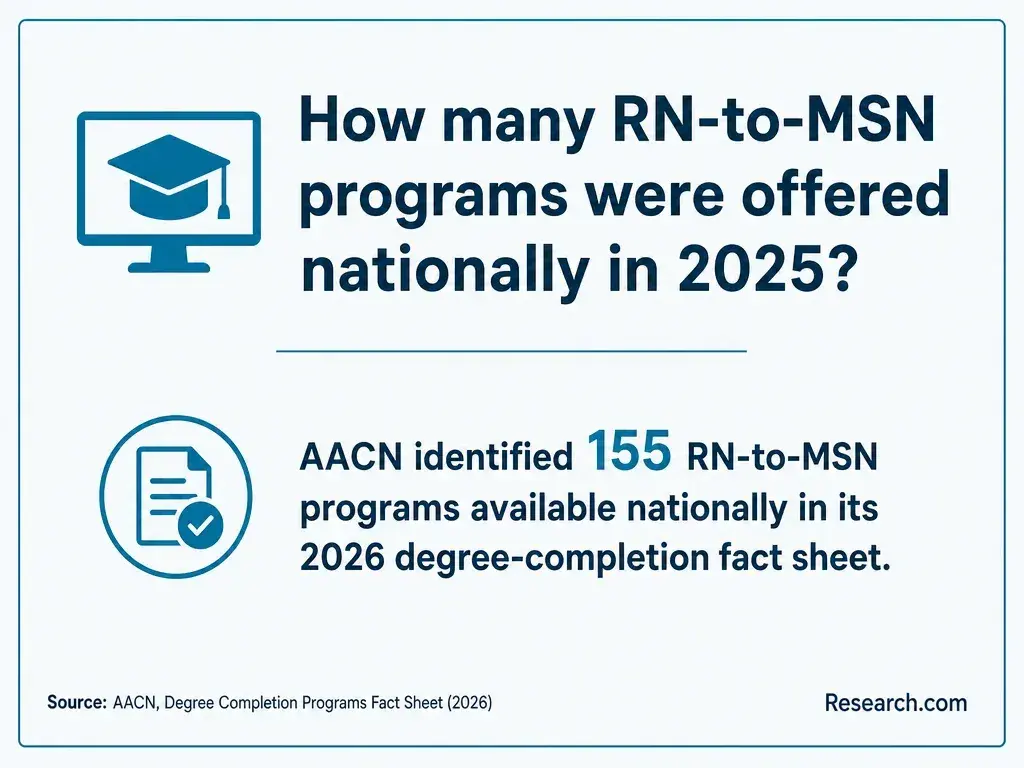
An MSN in education, leadership, or another NP population focus does not automatically satisfy PMHNP specialty requirements. Likewise, prior RN or APRN work may inform a school's gap analysis without replacing required psychiatric coursework and supervised patient care. An ADN-prepared RN exploring ADN-to-MSN education pathways should first confirm how and when a prospective DNP program would accept the resulting degree.
What are the admission requirements for Pennsylvania DNP PMHNP programs?
Programs commonly review an active RN license, transcripts showing the required entry degree, academic performance, references, a statement of goals, and relevant clinical experience. An MSN applicant may also need documentation of graduate assessment, pharmacology, and pathophysiology courses and any supervised NP hours. GPA thresholds, interviews, experience preferences, and course-age rules belong to the individual school - not to every Pennsylvania program.
Before applying, ask admissions to evaluate your specific entry route and PMHNP track. Send degree transcripts, course descriptions for potentially applicable graduate work, and verified clinical-hour records if you seek credit or a shortened plan. Separately ask about background checks, immunizations, site requirements, and any conditions that could prevent clinical placement even after academic admission.
These DNP routes assume nursing preparation and RN licensure. Someone who has a bachelor's degree in another field but is not an RN needs an initial nursing pathway first; admission-focused accelerated nursing comparisons can help frame that earlier decision, but admission to an accelerated BSN does not guarantee later DNP admission.
"Online" usually describes where much of the academic coursework happens, not where students gain PMHNP clinical experience. Hybrid programs may require scheduled video classes, simulation, intensives, or campus visits. Campus-based programs can provide more in-person contact but may require a longer commute throughout the term.
For a working RN, the most useful format comparison is a weekly schedule: required live sessions, daytime clinical shifts, travel, and periods when coursework and clinical hours overlap. Ask whether the school can approve placements near your home, whether it enrolls students in your state of residence, and how it handles an unavailable preceptor. Do not infer that an online track permits entirely asynchronous study or evening-only clinical work.
Earlier nursing degrees may have different experiential rules. For example, comparing no-traditional-clinical RN-to-BSN options does not tell an applicant whether a PMHNP DNP can be completed without supervised psychiatric patient care; it cannot.
PMHNP preparation typically builds on advanced health assessment, pathophysiology, and pharmacology with psychiatric assessment, diagnosis, psychopharmacology, psychotherapy approaches, and care across the lifespan. Supervised encounters help students apply clinical judgment, document care, coordinate services, and address safety and ethical issues in settings such as outpatient clinics, hospitals, and community services.
DNP coursework adds evidence appraisal, population health, quality improvement, leadership, and a practice-focused project. That project is not the same as a PhD dissertation, and a quality-improvement proposal is not evidence that patient outcomes improved. Schools determine project scope and oversight, while clinical sites control access to their patients and data.
Population focus matters when reviewing any prior NP education. Family NP certificate options for MSN-prepared nurses address a different focus; FNP coursework or experience should not be assumed to meet PMHNP competencies.
There is no dependable statewide DNP PMHNP price or completion time. BSN entrants generally have more specialty and doctoral coursework to complete than already-certified PMHNPs entering a post-master's DNP. An MSN-prepared nurse changing population focus may still need substantial new coursework and clinical training. Part-time enrollment, course sequencing, placement delays, and project completion can extend any published timeline.
Compare written, entry-route-specific cost estimates rather than a single advertised tuition rate. The calculation should include required credits multiplied by the applicable tuition rate, mandatory fees, books and technology, clinical compliance expenses, travel or lodging for campus visits, certification and licensing expenses, and potential lost earnings during clinical days. Ask whether tuition changes with residency status and whether additional terms or project credits carry charges.
If the DNP itself is not essential to your immediate goal, compare its full cost and time with an accredited MSN or post-master's PMHNP route. Researching lower-cost mental health advanced practice study is a starting point, but the least expensive advertised tuition may not produce the lowest total cost for your location and placement needs.
PMHNP students need program-approved, supervised experiences with appropriate psychiatric patients and qualified preceptors. The school sets its curriculum and evaluates competencies; clinical sites and preceptors must agree to accept and supervise students. Certification eligibility and program requirements govern which experiences and hours count. Existing RN employment, observation, and simulation should not be assumed to replace required supervised NP care.
Placement responsibility deserves a direct answer before you pay a deposit. Ask whether the school finds sites, supplies leads, or expects you to identify a willing preceptor; when affiliation agreements must be complete; whether placements must include particular age groups or settings; and what happens if a site cancels. A nearby facility is useful only if the program approves both the site and preceptor.
Already-graduate nurses considering PMHNP certificate admissions and timelines should apply the same placement questions. A shorter academic route does not mean its required psychiatric clinical experience can be skipped.
Check three separate matters: the institution's recognized accreditation, the nursing program's accreditation and its scope, and whether the specific PMHNP curriculum meets applicable certification and Pennsylvania practice-eligibility requirements.
Nursing program accreditors include the Commission on Collegiate Nursing Education (CCNE) and the Accreditation Commission for Education in Nursing (ACEN). Institutional accreditation alone does not establish that a particular NP track qualifies graduates for a specialty exam.
Verify status through the accreditor and obtain the school's written statement for your degree, PMHNP track, entry point, and anticipated graduation term. If you will complete clinicals outside Pennsylvania or may practice elsewhere, ask about that jurisdiction separately. Lists of accessible nursing practice doctorate pathways can help generate candidates, but ease of admission is not evidence of appropriate PMHNP preparation or eligibility.
Completing a qualifying PMHNP program is an educational milestone, not permission to practice as an NP. Graduates generally must meet the American Nurses Credentialing Center's eligibility rules and pass its psychiatric-mental health nurse practitioner certification examination to earn the PMHNP-BC credential.
They must also meet the Pennsylvania State Board of Nursing's requirements for certified registered nurse practitioner practice. The certifier evaluates certification; the state board determines state practice authorization.
Before enrolling, ask the school to identify the exam its track prepares students for and confirm the board's applicable educational and application requirements. After graduation, follow the certifier's and board's current instructions for documentation, certification, and state authorization; verify any additional prescribing requirements before assuming you may prescribe. An RN license - even a multistate one - does not itself grant PMHNP authority.
Nurses primarily seeking initial PMHNP qualification can compare psychiatric MSN study with condensed timelines against a DNP. The appropriate choice depends on verified certification eligibility, clinical access, cost, and whether doctoral preparation supports the nurse's intended work.
What careers, salaries, and job outlook can Pennsylvania PMHNP graduates expect?
Qualified PMHNPs may work in outpatient psychiatry, integrated primary care, hospitals, community mental health, or other approved settings. Duties and independence depend on Pennsylvania law, employer arrangements, credentialing, and demonstrated competence. New graduates should evaluate orientation, consultation access, patient complexity, and available behavioral health resources - not just an advertised caseload or schedule.
The U.S. Bureau of Labor Statistics reports wages and employment projections for the broader nurse practitioner occupation, not a separate Pennsylvania DNP-PMHNP graduate category. National NP figures can indicate the occupation's general market direction, but they cannot predict a PMHNP offer or a doctoral pay premium.
For a useful local comparison, review current Pennsylvania postings for the intended setting and compare compensation, benefits, call duties, and supervision or collaboration arrangements.
An already-certified PMHNP considering doctoral study should weigh a potential leadership, teaching, or practice-improvement goal against tuition and time away from work. Shortest online nursing practice doctorates may be worth comparing, provided they fit that goal; a faster general DNP does not add PMHNP certification to an unrelated credential.
Other Things You Should Know About Nursing
Do not assume Pennsylvania authorization is enough. Practice requirements can depend on where the patient is located, and the destination state may require its own NP authorization. Confirm both jurisdictions' rules before providing care.
No. National certification and state practice authorization are distinct. Check Pennsylvania's current prescribing requirements and complete any applicable steps before prescribing.
Only with the required school and workplace permissions and appropriate privacy and oversight review. Employment does not independently authorize access to patient information for a student project.
Some employers offer tuition assistance, but eligibility, annual limits, covered programs, and repayment obligations vary. Obtain the policy in writing before including reimbursement in your budget.
- Chapter 3 - Courses and Enrollment, Full Course of Study, and Reduced Course Load | USCIS https://www.uscis.gov/policy-manual/volume-2-part-f-chapter-3
- Cost of Attendance (Budget) | 2025-2026 Federal Student Aid Handbook https://fsapartners.ed.gov/knowledge-center/fsa-handbook/2025-2026/vol3/ch2-cost-attendance-budget
- Full-time Study | HESC - NY. Gov https://hesc.ny.gov/dictionary/tap-coach/term/full-time-study
- Guidance on Clinical Practice and Supervision | ca.gov https://docs.ctc.ca.gov/Document/Download/30526
- Online MSN-PMHNP | Psychiatric Nurse Practitioner Program | Wilkes University Online https://onlinenursingdegrees.wilkes.edu/programs/online-psychiatric-np-program
- Master of Science in Nursing - Psychiatric Mental Health Nurse Practitioner | Samuel Merritt University https://www.samuelmerritt.edu/college-nursing/master-science-nursing-psychiatric-mental-health-nurse-practitioner
- Psychiatric Mental Health Nurse Practitioner | UW School of Nursing https://nursing.uw.edu/academics/dnp/pmhnp/
- PMHNP Program (MSN) | Psychiatric Mental Health Nurse Practitioner | Westfield State University https://www.westfield.ma.edu/academics/degrees/master-science-nursing-pmhnp
- DNP in Psychiatric & Mental Health Nursing | PMHNP Track | The University of Scranton https://gradadmissions.scranton.edu/programs/doctorate-psychiatric-mental-health-nursing/index.shtml
- DNP in Psychiatric Mental Health Nurse Practitioner at Mizzou Online | missouri.edu https://online.missouri.edu/degrees-programs/mu/nursing/psychiatric-mental-health-nurse-practitioner-across-lifespan/dnp