2027 DNP Pediatric Primary Care NP Programs for Nurses in Pennsylvania: BSN and MSN Entry Routes and Clinical Training
Audited and Verified:
Our Editorial and Data Verification Process
Research.com uses government datasets, official education statistics and primary institutional information to support its career and degree guides. Our review process checks factual accuracy, occupational definitions, source dates and the requirements associated with the credentials discussed.
How This Article Was Fact-Checked
Our editorial team verifies salary estimates, employment projections, education requirements and program information against original data providers and official organizations. Salary figures are checked against the relevant occupational definitions and reporting periods. Information about licensure, accreditation and required in-person training is reviewed separately.
Fact-checked and verified on:

Co-Founder and Chief Data Scientist
A Pennsylvania nurse seeking to become a pediatric primary care nurse practitioner needs more than a DNP program with a pediatric-sounding course. The program must provide the right population-focused preparation, supervised clinical experience, and a route toward certification and state authorization. For BSN-prepared RNs and nurses who already hold an MSN, those requirements can lead to very different study plans. This guide explains how to identify a qualifying pathway, compare clinical and scheduling demands, and avoid paying for doctoral coursework that does not advance the intended NP role.
Key Things You Should Know
- A BSN-to-DNP pediatric primary care track prepares an RN for a new NP role; a general post-master's DNP does not necessarily provide pediatric NP preparation.
- Compare each school's pediatric primary care clinical placements separately from its doctoral practice hours: neither prior employment nor an advertised online format establishes that the required experiences are covered.
- Pediatric NP earnings are not reported separately in national nurse practitioner wage data; use local job offers and the complete program cost, rather than a DNP salary claim, to assess return on investment.
What are DNP pediatric primary care NP programs in Pennsylvania?
A Doctor of Nursing Practice (DNP) pediatric primary care nurse practitioner program combines doctoral-level practice preparation with education for the pediatric primary care NP population focus. Its clinical emphasis is ongoing care of infants, children, and adolescents: preventive visits, development, common conditions, family education, and coordination with other clinicians. Pediatric acute care NP preparation is a different track, and a family NP track is not interchangeable with pediatric primary care certification.
The decisive question is whether the specific entry route includes pediatric primary care NP courses and supervised experiences. Some schools offer an NP specialty at the master's or post-graduate certificate level and a separate DNP completion program. Taking both may be possible, but the DNP alone should not be described as an NP-qualifying track. Nurses still working toward their first RN license need a prelicensure pathway first; understanding ABSN admission barriers is relevant to that earlier decision, not a substitute for NP admission.
What are the BSN-to-DNP and MSN-to-DNP entry routes?
The routes differ most in what the applicant has already completed. An MSN transcript alone does not establish pediatric NP preparation, so schools must review the applicant's prior population focus and documented clinical hours.
| Applicant's starting point | Route to examine | Critical qualification check |
| BSN-prepared, licensed RN without NP preparation | Integrated BSN-to-DNP pediatric primary care NP track | Does this exact track include the specialty coursework and supervised care needed to seek pediatric primary care NP certification? |
| MSN-prepared RN without pediatric primary care NP preparation | Eligible MSN-to-DNP NP track, or pediatric NP post-graduate certificate plus a DNP | Which prior courses and hours does the school accept, and what new pediatric clinical work remains? |
| Already-certified pediatric primary care NP | Post-master's DNP completion pathway | Is additional NP preparation needed for the nurse's goal, or only doctoral practice coursework? |
An NP changing from another population focus needs a school-approved assessment of educational and clinical gaps; years of practice do not automatically replace pediatric primary care clinical training. An RN whose first nursing credential was an associate degree may instead need to evaluate ADN-to-MSN program planning before applying to a doctoral route. The most efficient sequence is the one the receiving school and eventual certifying body will recognize - not necessarily the one with the shortest advertised duration.
Which Pennsylvania schools offer accredited pediatric primary care DNP programs?
The University of Pittsburgh School of Nursing is a Pennsylvania option to investigate for a pediatric primary care NP DNP pathway. The University of Pennsylvania also offers pediatric primary care NP education, but applicants should establish whether their intended entry term has an integrated DNP track or would require separate NP and DNP programs. A school's pediatric NP offering and its DNP offering must not be assumed to form one admission route.
Before treating either school - or another Pennsylvania institution - as a match, obtain the current specialty-track plan of study and check the nursing degree's accreditation status with the named accreditor, such as CCNE or ACEN. Confirm institutional accreditation separately. Ask the school whether its particular route meets the educational requirements for the intended certification examination and Pennsylvania practice authorization. Accreditation of a university or a different nursing degree does not answer those track-specific questions.
Request the same information from every contender: award and entry route, pediatric primary care coursework, accepted prior hours, clinical placement responsibilities, campus visits, and an itemized cost estimate for your start term. General advice on comparing DNP admission criteria can help organize applications, but eligibility for this specialty is more important than a broad measure of admissions ease.
BSN-to-DNP applicants should expect a school to review their nursing degree, RN license, academic record, recommendations, professional goals, and readiness for graduate study. Schools may also ask for a résumé, interview, or evidence of nursing experience. An MSN applicant should additionally be prepared to provide graduate transcripts, course descriptions, and records of supervised clinical hours so the school can evaluate what remains to be completed.
Admission to the university is not the same as acceptance into a pediatric NP track. A program may also impose requirements for clinical-site access, background screening, immunizations, or practice authorization before placement. Ask whether an RN license must be held in Pennsylvania, in the clinical site's state, or both, and whether any experience requirement applies to your route.
Prelicensure testing advice can be misleading here: resources on nursing schools with alternative admission assessments address a different admissions stage. For this application, obtain the pediatric track's own written requirements and have the program evaluate any prior graduate work before assuming a course or clinical-hour waiver.
A BSN-to-DNP route generally takes longer than DNP completion for an already-prepared pediatric NP because it must include both advanced practice education and doctoral work. MSN-to-DNP timing varies substantially: an already-certified pediatric primary care NP may need mainly doctoral coursework, while an MSN-prepared nurse entering the specialty for the first time may need additional clinical courses and placements. Published timelines are examples of a particular course sequence, not promises for every applicant.
Ask for a term-by-term plan showing when pediatric clinical courses, site approvals, campus sessions, and the DNP project occur. Part-time enrollment can reduce weekly coursework but extend fees and the time needed to maintain placements. A lower-cost master's route may be worth comparing if the immediate goal is NP preparation rather than a doctorate; affordable nursing master's study for BSN graduates offers a starting point, provided the selected program actually includes pediatric primary care NP preparation.
Qualifying NP preparation ordinarily develops advanced assessment, pathophysiology, and pharmacology alongside pediatric growth and development, health promotion, diagnosis, and management of common conditions. Supervised pediatric primary care experiences are where students apply those concepts with patients and families under approved oversight. DNP work adds practice inquiry, evidence appraisal, systems leadership, and an applied project; a project is not a substitute for direct patient care.
Clinical fit is more informative than a single advertised total-hours figure. Ask how many hours involve direct pediatric primary care, what ages and settings students must encounter, who approves preceptors, and how faculty evaluate competency. Also ask how previously completed graduate practice hours are documented and counted. Simulation, RN employment, and hours from another NP population focus should not be assumed to satisfy a new specialty's requirements.
Specialty choice matters even when a shorter credential appears attractive. Short-format family NP certificates for graduate nurses prepare for a different population focus; they should not be selected as a shortcut to pediatric primary care NP certification. For a DNP project, verify site permission, patient-data safeguards, and the school's review process before proposing an improvement measure.
Some doctoral nursing coursework may be online or hybrid, but a pediatric primary care NP route cannot be evaluated by its lecture format alone. Supervised patient-care experiences take place at approved clinical sites, and a program may require campus visits, simulation, scheduled live classes, or an in-person project presentation. Availability of an online course also does not establish that the school can enroll or place a student in every state.
Working nurses should ask for the expected clinical days per week during each specialty term, whether placements can occur near home, and who secures the site and preceptor. Check whether required class meetings conflict with employment; "online" does not mean asynchronous. By contrast, RN-to-BSN education for working registered nurses addresses a different qualification and may have very different clinical demands.
There is no responsible single price for a Pennsylvania pediatric primary care DNP. Tuition may be charged per credit or term, and the bill depends on entry route, accepted prior coursework, enrollment pace, and the school's published rates for the applicant's term. A separate NP certificate followed by a DNP can produce a different total from an integrated BSN-to-DNP track.
Request a written estimate that covers the full expected sequence, not just the first semester. The costs most likely to change a comparison are these:
- Tuition and mandatory program, university, technology, and continuing-enrollment fees.
- Clinical compliance, travel, possible lodging for campus visits, and any lost paid work during placements.
- Books and equipment, certification examination and license applications, and any additional terms needed to finish a project.
Compare net cost only after checking aid eligibility and any employer reimbursement conditions. A lower-priced unrelated specialty is not a saving if it misses the desired role; budget-conscious PMHNP study options, for example, lead toward psychiatric rather than pediatric primary care preparation.
Graduation, national certification, and permission to practice are separate steps. A nurse must maintain the appropriate RN license, meet the current eligibility rules for the Certified Pediatric Nurse Practitioner-Primary Care (CPNP-PC) examination administered by the Pediatric Nursing Certification Board, and obtain the applicable Pennsylvania state authorization before practicing in the NP role. The Pennsylvania State Board of Nursing makes the state authorization decision; a DNP award does not make it automatic.
Before enrolling, compare the school's specialty coursework and documented direct-care experiences with the certifying body's current eligibility instructions. Before accepting a job, check Pennsylvania requirements for the intended practice arrangement and any other state where patients will be located, including telehealth. A certificate in another population focus is not equivalent: an online PMHNP certificate program guide concerns psychiatric NP preparation, not pediatric primary care eligibility.
What jobs, salaries, and outlook do pediatric primary care nurse practitioners have?
Pediatric primary care NPs may work in pediatric practices, health systems, community clinics, and other ambulatory settings serving children and families. Employers may look beyond certification for relevant pediatric experience, the ability to manage an outpatient caseload safely, and a supported transition into the specific role. A newly certified NP should ask about orientation, consultation access, scheduling, and patient complexity before comparing offers.
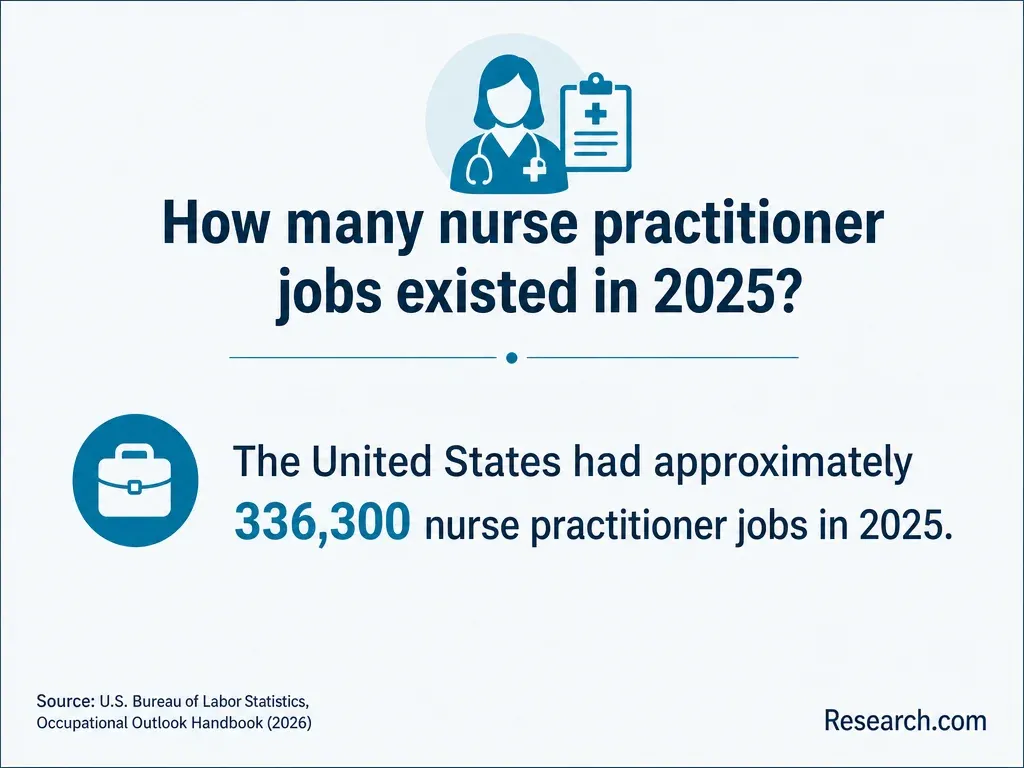
The U.S. Bureau of Labor Statistics reports wages and employment projections for nurse practitioners, not a separate pediatric primary care NP category. Its occupation-wide figures can indicate broad demand, but they cannot predict a Pennsylvania pediatric NP's pay or the return on a particular DNP. Compare actual local postings and offers by setting, schedule, benefits, and experience requirements; do not assume the doctorate itself commands a salary premium.
For someone who is not yet an RN, this job is a longer-term goal rather than a direct result of doctoral admission. Career-change nursing routes at the master's level address an earlier step; the graduate would still need the appropriate RN license and pediatric primary care NP preparation.
Other Things You Should Know About Nursing
No. It can strengthen an application and inform learning, but the receiving program determines required graduate courses and supervised NP clinical experiences.
Do not assume so. The tracks have different preparation and certification purposes; check the intended job duties against your education, certification, and state authorization.
Yes. Ask who identifies sites, approves preceptors, handles placement agreements, and helps if an approved site becomes unavailable.
Not necessarily. An eligible master's or post-graduate certificate pathway may meet the educational requirements for certification. Choose a DNP when its additional practice-focused education serves your goals.
- Recommended Clinical Preventive Services for Adolescents | HHS Office of Population Affairs https://opa.hhs.gov/adolescent-health/physical-health-developing-adolescents/clinical-preventive-services/recommended
- Cost of Attendance (Budget) | 2025-2026 Federal Student Aid Handbook https://fsapartners.ed.gov/knowledge-center/fsa-handbook/2025-2026/vol3/ch2-cost-attendance-budget
- Health Care for Children and Youth - NCBI - NIH https://www.ncbi.nlm.nih.gov/books/NBK610729/
- Online Nursing Clinical Placement FAQs | Simmons University https://online.simmons.edu/nursing-faq/clinical-placement-faq/
- Clinical Rotations FAQ - Online Nursing Programs https://online.nursing.georgetown.edu/academics/family-nurse-practitioner-fnp/admitted/clinical-placement-faq/
- Doctor of Nursing Practice - Nurse Practitioner https://www.nursing.psu.edu/dnp-np/
- Clinical Placement Services for FNP Programs | Texas Woman's University https://onlinenursing.twu.edu/clinical-placement-services
- Dual Pediatric Primary/Acute Care Nurse Practitioner (DNP) | Rutgers Nursing https://nursing.rutgers.edu/pediatric/dual-pediatric-acute-primary-care-nurse-practitioner/
- Clinical Collaborations | Nell Hodgson Woodruff School of Nursing https://www.nursing.emory.edu/degrees-programs/simulation-and-clinical-experience/clinical-collaborations
- Master of Professional Nursing | upenn.edu https://www.nursing.upenn.edu/master-of-professional-nursing/