2027 DNP Executive Leadership Programs for Nurses in Tennessee: Entry Routes, Project, and Practice Hours
Audited and Verified:
Our Editorial and Data Verification Process
Research.com uses government datasets, official education statistics and primary institutional information to support its career and degree guides. Our review process checks factual accuracy, occupational definitions, source dates and the requirements associated with the credentials discussed.
How This Article Was Fact-Checked
Our editorial team verifies salary estimates, employment projections, education requirements and program information against original data providers and official organizations. Salary figures are checked against the relevant occupational definitions and reporting periods. Information about licensure, accreditation and required in-person training is reviewed separately.
Fact-checked and verified on:

Co-Founder and Chief Data Scientist
An executive leadership DNP can help an experienced nurse lead organization-wide improvements, but the degree is a substantial commitment - and the practice-hour and project requirements can be harder to plan than the coursework. For nurses considering Tennessee programs, the key is to compare the route that fits their prior degree, the hours a school will recognize, and whether they can secure an approved project setting.
This guide explains those decisions, identifies universities to investigate, and shows what to confirm before spending money or committing employer resources.
Key Things You Should Know
- Executive leadership DNPs are postlicensure, practice-focused doctorates, not nurse practitioner programs; an RN license and substantial prior nursing preparation are generally expected.
- Many DNP programs use 1,000 post-baccalaureate practice hours as a planning benchmark, but each school determines its accepted prior hours, remaining hours, and project-hour rules.
- Compare the approved project site and required attendance before comparing tuition: an online course schedule does not eliminate supervised practice, employer permissions, or possible campus visits.
What are executive leadership DNP programs for nurses in Tennessee?
An executive leadership Doctor of Nursing Practice is a practice-focused nursing doctorate for experienced nurses who want to improve care through organizational leadership. Work may center on quality and safety, staffing systems, population health, finance, policy, or implementation across departments. The culminating DNP project applies evidence to a defined practice problem; it is not ordinarily a PhD-style dissertation designed primarily to produce original research.
These programs do not provide initial RN education or, by themselves, nurse practitioner preparation. A nurse whose goal is a new advanced-practice patient-care role should compare a population-specific APRN program instead. Someone who is not yet a nurse must first establish an RN pathway; direct-entry MSN prerequisite comparisons address a different admissions decision.
What are the entry routes and admission requirements for Tennessee executive leadership DNP programs?
The two routes to investigate are post-BSN entry, for an RN whose qualifying nursing degree is a bachelor's, and post-master's entry, for an RN with graduate nursing preparation. Availability varies by university and track. A post-master's applicant may have fewer hours left to complete, but a transcript alone does not establish how many prior supervised hours the DNP will accept.
Programs commonly request an active RN license, transcripts, a résumé documenting leadership experience, recommendations, and a statement of goals. They may also assess graduate GPA, interview performance, and access to an appropriate practice setting. Ask admissions whether the executive leadership track admits your exact degree background, whether a non-nursing master's counts toward post-master's entry, and what documentation is needed for previously completed practice hours.
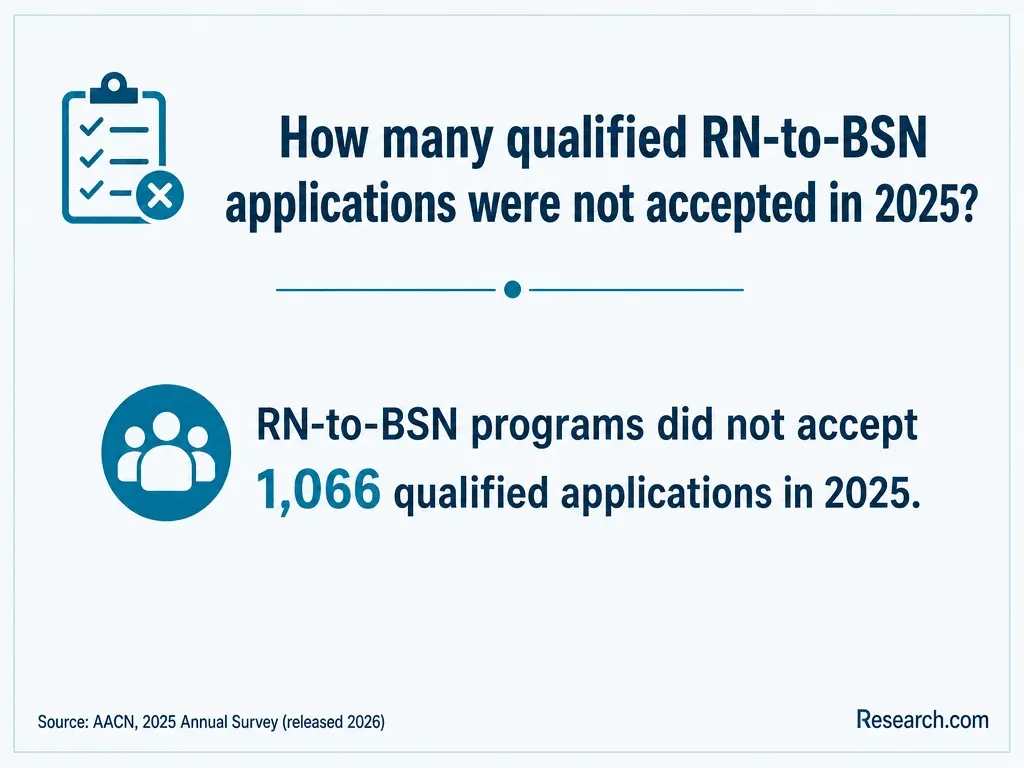
For an RN who still needs a bachelor's degree, RN-to-BSN pathways without standard hospital rotations are a separate step, not a substitute for DNP practice requirements.
How many practice hours and project hours do Tennessee executive leadership DNP programs require?
Practice hours and project hours are related but not interchangeable. Many DNP programs plan around at least 1,000 post-baccalaureate practice hours across qualifying graduate preparation and the doctorate. That is a useful comparison point, not a promise that every Tennessee student must complete 1,000 new hours. The receiving university decides which documented prior hours count and how many hours its own curriculum requires.
A school may permit approved project activities - such as stakeholder assessment, implementation, and evaluation - to count toward DNP practice hours. It may also require separate project courses, milestones, or a minimum number of project-specific hours. Regular paid employment, meetings attended, and historical clinical experience should not be counted without program approval. Obtain a written hour audit and ask how activities are logged and verified by faculty or an approved practice mentor.
This distinction matters when comparing a leadership doctorate with an APRN route. FNP completion timelines and entry requirements cannot be used to estimate leadership DNP hours: FNP programs prepare students for a specific advanced-practice population focus and have different supervised-care expectations.
Start with universities that publish a leadership-focused DNP option, then confirm that the specific track and entry route will enroll your cohort. Vanderbilt University and East Tennessee State University are two Tennessee institutions to investigate for executive leadership DNP study. Program names and admission cycles can change, so a historical listing is not confirmation that a track is open for a particular term.
The comparison below identifies the decision to take to each university, rather than treating an institution's general DNP description as a guarantee about the leadership track.
| University to investigate | Leadership-focused option | Confirm before applying |
| Vanderbilt University | Executive leadership DNP study | Current entry routes, required visits, practice-hour audit, project-site expectations, and tuition for the intended cohort |
| East Tennessee State University | Executive leadership DNP study | Current track availability, eligible prior degrees, delivery schedule, accepted hours, and project requirements |
Check the nursing accreditor's directory for the DNP program's current accreditation status and scope, and check the university's accreditation separately. Institutional accreditation, nursing program accreditation, and permission to enroll a student in a particular location answer different questions. If your goal is initial nursing admission rather than doctoral leadership, no-HESI nursing school application pathways address that earlier stage; they do not establish DNP admission eligibility.
Leadership DNP coursework typically combines evidence appraisal and improvement methods with organizational subjects: healthcare finance, policy, informatics, population health, systems leadership, and evaluation of change. The practical test is whether students learn to define a problem, select defensible measures, work with stakeholders, and determine whether an intervention was implemented safely - not merely present a proposal.
Review course descriptions for the methods your intended role requires. A nurse executive overseeing staffing, for example, needs to interpret workforce and safety measures, assess operational constraints, and communicate results without mistaking an association for proof of causation. This curriculum differs from preparation for direct psychiatric advanced practice; psychiatric NP certificate length options concern a population-specific clinical qualification, not a leadership DNP concentration.
Online or hybrid coursework may let an employed nurse remain in Tennessee while studying, but "online" describes course delivery - not every obligation. Live sessions, group work, intensives, project meetings, and supervised activities can impose fixed times or travel. A student's own workplace may be a convenient project site only if the program approves the setting, oversight, and work to be completed.
Request a term-by-term calendar showing synchronous sessions, campus visits, practice-hour deadlines, and project milestones. Compare that calendar with work and caregiving commitments before relying on an advertised completion estimate. Short online Doctor of Nursing Practice degrees can provide a timeline comparison, but a short advertised format does not waive a leadership track's project or hour requirements.
Completion time depends chiefly on entry route, enrollment pace, accepted prior hours, and how quickly a project can obtain site permission and usable data. Post-BSN students generally have more doctoral coursework and practice work to complete than otherwise comparable post-master's students. Neither route guarantees a fast finish: delayed approvals, intervention rollouts, or evaluation periods may extend enrollment.
For a meaningful cost comparison, request each school's required credits for your entry route, tuition per credit, mandatory fees, and charges for any additional project term. Add travel for required visits, technology, and reduced work hours if applicable. Ask an employer whether reimbursement covers doctoral coursework, whether approval must come before enrollment, and whether continued employment is required after payment.
NP programs organized by tuition may be useful if clinical advanced practice is your alternative goal, but their credit totals and placement costs should not be treated as leadership DNP prices.
A strong executive leadership project addresses a problem the student can influence and measure within the program's timeline. Potential topics include improving nurse-manager onboarding, evaluating an evidence-based retention intervention, reducing delays in escalation of safety concerns, or improving the reliability of care-transition documentation. Each needs a defined setting, stakeholder support, baseline measure, feasible intervention, and evaluation plan.
Before choosing a topic, establish who owns the data, whether it can be accessed in an approved form, and which organization must authorize the work. Faculty and the site - not the student alone - determine required quality-improvement, ethics, or institutional review. Report limitations honestly; a project proposal is not evidence that outcomes improved.
A nurse considering a different investment, such as direct psychiatric practice, can compare the cost of PMHNP education, but its clinical preparation serves a different objective than an executive improvement project.
Graduates may pursue or strengthen roles such as director of nursing, chief nursing officer, quality or patient-safety leader, service-line administrator, or health-system improvement leader. Employers also weigh management results, budget responsibility, organizational experience, and the complexity of the role. The DNP does not itself confer a promotion.
For salary research, compare the duties of the actual job posting with the closest Bureau of Labor Statistics occupation and local employer ranges. The BLS medical and health services managers category can offer context for some administrative positions, but it covers many non-nursing managers; its occupation-wide median is not a salary forecast for executive leadership DNP graduates.
If the desired job is instead family nurse practitioner, a shorter post-master's FNP pathway may be more directly relevant than a non-APRN leadership doctorate, subject to the program's gap review and certification requirements.
Do executive leadership DNP graduates need nursing licenses or certifications?
An executive leadership DNP does not issue or replace a nursing license. Students should confirm the RN license status required for admission and for any practice activities in their location. Graduates who hold an APRN license retain responsibilities associated with that separate authorization; completing a leadership track does not add a new APRN population focus or expand clinical scope.
Nurse executive or other professional certifications may be valuable for a particular employer or career stage, but they are distinct from the doctorate and have their own eligibility and renewal rules. Check the awarding organization's current criteria before assuming a degree satisfies them. Nurses who instead need to enter the profession should explore nursing schools with attainable requirements and verify initial RN eligibility first; an executive DNP is not an entry-to-practice route.
Other Things You Should Know About Nursing
Potentially. The university must approve the site, mentor or supervisor, activities, and any required agreements before you rely on it for hours or project work.
Possibly, but notify faculty before changing sites or data access. A move may require a revised proposal, new permissions, and an updated hour plan.
Follow the university's and practice site's review procedures. Do not make your own determination based solely on calling the work "quality improvement."
Often, if the program and site permit it. Confirm data-use, confidentiality, authorship, and dissemination requirements before sharing employer or patient information.
- Executive Development Programs | U.S. Office of Personnel Management https://www.opm.gov/agency-services/training-and-development/for-individuals/executive-development-programs/
- Cost of Attendance (Budget) | 2025-2026 Federal Student Aid Handbook https://fsapartners.ed.gov/knowledge-center/fsa-handbook/2025-2026/vol3/ch2-cost-attendance-budget
- .04-2 Supervised Professional Experience - Practice-Oriented Programs. | Library of Maryland Regulations https://regs.maryland.gov/us/md/exec/comar/10.36.01.04-2
- Doctor of Nursing Practice (DNP) Degree | Vanderbilt University School of Nursing https://nursing.vanderbilt.edu/programs/dnp/
- Direct Entry Master's in Nursing (MSN) for Non-Nurses Program | RUSH University https://www.rushu.rush.edu/college-nursing/programs-admissions/masters-entry-nursing-msn-non-nurses
- Doctor of Nursing Practice in Executive Leadership (DNP) | National University https://www.nu.edu/degrees/nursing/programs/doctor-of-nursing-practice-in-executive-leadership/
- Doctor of Nursing Practice (DNP) Project Expectations | pba.edu https://my.pba.edu/ICS/Portlets/ICS/Portlet.Resources/ViewHandler.ashx
- Online DNP in Executive Leadership | OHSU Admission Requirements and Application Process https://www.ohsu.edu/school-of-nursing/dnp-executive-leadership
- Master of Science in Nursing for Non-RNs | University of Illinois Chicago https://nursing.uic.edu/programs/master-science-for-non-rns/
- Direct Entry MSN Programs Explained | La Roche University https://msn.laroche.edu/articles/direct-entry-msn-programs