
2027 Different Types of Family Nurse Practitioner Doctorate Degrees: PhD, DBA, EdD, DNP, PsyD, and Professional Doctorate Paths

Co-Founder and Chief Data Scientist
Choosing a doctorate as a Family Nurse Practitioner is not one decision; it is several career decisions wrapped into one degree choice. The U. S. Bureau of Labor Statistics projects employment for nurse anesthetists, nurse midwives, and nurse practitioners to grow 40% from 2023 to 2033, making advanced preparation increasingly important. This guide is for FNPs and future FNPs comparing PhD, DBA, EdD, DNP, PsyD, and other professional doctorate paths so they can match research, academic, clinical, leadership, and applied-practice goals with the right credential.
Key Things You Should Know
- A PhD is usually the strongest fit for FNPs who want nursing research, tenure-track teaching, grant-funded scholarship, or health-science theory development; a DNP is usually the clearest clinical doctorate for advanced nursing practice and systems improvement.
- DBA, EdD, PsyD, DrPH, DHA, and DHSc degrees can support specialized FNP-adjacent goals, but they do not automatically replace nursing licensure, APRN certification, or DNP-level clinical preparation.
- According to the BLS, nurse practitioners had a May 2024 median annual wage of $129,210, but doctorate ROI depends heavily on role type: academic, executive, clinical, policy, behavioral health, and consulting tracks use different credentials in different ways.
What Are the Different Types of Family Nurse Practitioner Doctorate Degrees?
Family Nurse Practitioner doctorate options fall into two broad categories: research doctorates and professional or practice-focused doctorates. The best degree depends less on the title itself and more on whether you want to produce new knowledge, lead clinical practice change, run healthcare organizations, teach, shape policy, or move into an adjacent field.
The table below summarizes the most common doctoral paths an FNP may consider. Use it as a first filter before comparing admissions requirements, accreditation, clinical expectations, and career outcomes.
| Doctorate type | Primary purpose | Best fit for FNPs who want to | Typical final project | Important limitation |
| PhD | Original research and theory-building | Become nurse scientists, faculty researchers, policy researchers, or principal investigators | Dissertation based on original research | Usually not designed as a clinical practice doctorate |
| DNP | Advanced nursing practice, quality improvement, and clinical leadership | Lead evidence-based practice, improve patient outcomes, manage systems, or teach clinically | DNP scholarly project or applied clinical project | Usually not as research-intensive as a PhD |
| DBA | Applied business leadership and organizational strategy | Move into healthcare administration, entrepreneurship, consulting, operations, or executive leadership | Applied dissertation or business research project | Does not prepare someone for APRN licensure |
| EdD | Educational leadership, curriculum, and learning systems | Lead nursing education programs, simulation labs, faculty development, or academic administration | Dissertation in practice or applied education project | May not meet expectations for research-intensive faculty jobs |
| PsyD | Clinical psychology practice | Work in behavioral health leadership, integrated care, or mental health-adjacent roles | Clinical dissertation or applied doctoral project | Psychology licensure requirements are separate from nursing licensure |
| Other professional doctorates | Public health, health administration, health science, social work, or policy practice | Specialize in population health, systems leadership, interprofessional care, or health policy | Applied project, dissertation, or practice portfolio | Outcomes vary widely by field and accreditation |
A key point for FNPs is that "doctorate" does not mean "interchangeable." A DNP, PhD, DBA, EdD, and PsyD may all be terminal degrees, but they answer different professional questions: how to practice better, how to generate evidence, how to lead organizations, how to educate clinicians, or how to deliver psychological services.
What Is the Difference Between a PhD and a Professional Doctorate in Family Nurse Practitioner?
The central difference is purpose. A PhD is designed to create new knowledge through original research, while a professional doctorate is designed to apply advanced knowledge to complex professional problems. For an FNP, that distinction affects coursework, mentoring, funding, final project expectations, and the types of jobs the degree supports.
The comparison below explains how the two categories usually differ. These distinctions matter because choosing the wrong category can leave you overprepared for one goal and underprepared for another.
| Comparison point | PhD path | Professional doctorate path |
| Main question | What new knowledge can be generated? | How can evidence be applied to improve practice, systems, education, or leadership? |
| Common FNP-related examples | PhD in Nursing, PhD in Health Services Research, PhD in Public Health | DNP, DBA, EdD, PsyD, DrPH, DHA, DHSc |
| Research depth | High; often includes advanced statistics, theory, methods, and independent research | Varies; usually applied, practice-based, or organizational rather than theory-generating |
| Career alignment | Research faculty, nurse scientist, health policy researcher, grant-funded investigator | Clinical leader, executive, educator, consultant, advanced practitioner, program director |
| Final requirement | Original dissertation | Applied dissertation, capstone, DNP project, clinical project, or professional portfolio |
| Funding pattern | More likely to offer assistantships or research funding, especially in full-time campus programs | More often self-funded or employer-supported, especially online and part-time programs |
Neither category is automatically better. A PhD can be the wrong choice for an FNP who wants to remain mainly in advanced clinical practice, while a professional doctorate can be the wrong choice for someone whose long-term goal is federally funded nursing research or a tenure-track research appointment.
What Is a PhD in Family Nurse Practitioner and Who Should Pursue One?
A PhD for a Family Nurse Practitioner is usually not titled "PhD in Family Nurse Practitioner." More commonly, FNPs pursue a PhD in Nursing, Nursing Science, Health Services Research, Public Health, or a related field. The purpose is to train scholars who can design studies, test interventions, analyze data, publish research, and contribute to the scientific base of nursing and healthcare.
This path makes the most sense when your goal is scholarship rather than primarily clinical advancement. A PhD may be the right doctorate if you want your work to influence how primary care, chronic disease management, health equity, rural access, or family-centered care is studied and improved.
FNPs should seriously consider a PhD when they are aiming for the following outcomes:
- Tenure-track or research-intensive faculty roles in schools of nursing or health sciences
- Grant-funded research on primary care, population health, family practice, informatics, or care delivery models
- Policy research, outcomes research, or health services research roles
- Leadership in academic research centers, think tanks, government agencies, or nonprofit research organizations
The trade-off is that a PhD is demanding in ways that may not match every FNP's goals. Students usually need a strong interest in research methods, theory, statistics, academic writing, publication, and long-term scholarly productivity. If you want to lead clinical practice change without becoming a full-time researcher, a DNP may be a better fit.
Common red flags include choosing a PhD only because it sounds more prestigious, assuming it will automatically increase clinical compensation, or enrolling without confirming faculty research alignment. For a PhD, advisor fit is not a minor detail; it can shape your dissertation topic, funding options, publication opportunities, and academic network.
How Does a DBA Compare With a PhD for Family Nurse Practitioner Professionals?
A DBA, or Doctor of Business Administration, is an applied business doctorate. For Family Nurse Practitioners, it is usually relevant when the desired career shift is toward healthcare operations, executive leadership, private practice ownership, consulting, value-based care strategy, or healthcare entrepreneurship rather than nursing research or direct clinical advancement.
The DBA and PhD can both involve research, but they use research differently. The table below shows how the decision usually plays out for FNP professionals considering leadership beyond the exam room.
| Decision factor | DBA | PhD |
| Primary lens | Business problem-solving in real organizations | Original scholarly contribution to a discipline |
| FNP career use | Clinic ownership, operations leadership, healthcare consulting, executive roles | Nursing science, health services research, faculty scholarship |
| Research style | Applied research tied to organizational performance or strategy | Theoretical, empirical, or methodological research for academic contribution |
| Best student profile | Experienced clinicians moving into management or enterprise-level decisions | Clinicians who want to become researchers or academic scholars |
| Potential mismatch | Not ideal for someone seeking APRN clinical preparation | Not ideal for someone mainly seeking business leadership skills |
A DBA can be valuable if you want to analyze payer contracts, redesign clinic workflows, lead multisite practices, build a telehealth company, or manage population health programs. It may also pair well with existing FNP experience because clinicians who understand care delivery can bring practical insight to business strategy.
However, FNPs should avoid assuming a DBA is a substitute for nursing doctoral preparation. It generally will not meet DNP expectations, will not make someone an APRN, and may not satisfy nursing faculty hiring preferences when schools specifically want a doctorate in nursing or a related health discipline.
When Is an EdD the Right Doctorate Path for Family Nurse Practitioner Professionals?
An EdD, or Doctor of Education, is often the right doctorate for FNP professionals who want to lead learning systems. This can include nursing education, curriculum design, simulation-based instruction, clinical preceptor development, academic program assessment, faculty leadership, and continuing professional education.
The EdD is most useful when your main problem is educational rather than clinical or scientific. For example, an FNP who wants to improve how nurse practitioner students learn diagnostic reasoning may find an EdD more aligned than a DBA or PsyD.
An EdD may be the better path when your work centers on these responsibilities:
- Designing or evaluating nursing curricula, clinical competency frameworks, or simulation programs
- Leading faculty development, academic assessment, accreditation preparation, or student success initiatives
- Directing NP programs, clinical education offices, interprofessional training, or continuing education programs
- Studying how adult learners, online students, or practicing clinicians acquire complex clinical skills
The main trade-off is that an EdD may not carry the same research expectations as a PhD in Nursing for research-intensive academic jobs. It can be excellent for educational leadership, but if your goal is to run a funded research lab, publish in nursing science journals, or compete for research faculty roles, compare EdD and PhD expectations carefully.
A practical red flag is enrolling in an EdD program without checking whether the curriculum includes healthcare education, nursing education, higher education leadership, or adult learning options. A general education leadership program can still be useful, but it may require more effort to connect assignments and projects to FNP practice.
When Does a DNP Make Sense for a Family Nurse Practitioner Doctorate Path?
A DNP, or Doctor of Nursing Practice, is the most directly aligned doctorate for many Family Nurse Practitioners who want to deepen clinical leadership without becoming full-time researchers. It focuses on evidence-based practice, quality improvement, patient safety, healthcare systems, informatics, population health, and translating research into care delivery.
The DNP makes particular sense for FNPs who want to remain close to patients while influencing systems of care. If you are still comparing entry routes into advanced practice, reviewing online nurse practitioner programs can help you understand how clinical education formats differ before you commit to a doctoral route.
A DNP is often the strongest fit when the career goal involves these outcomes:
- Advanced clinical leadership in primary care, family practice, community health, rural health, or chronic disease management
- Quality improvement, evidence implementation, patient safety, and clinical workflow redesign
- Leadership roles such as clinical director, APRN leader, practice owner, chief nursing officer track, or population health manager
- Teaching in practice-focused nursing programs, especially when paired with clinical expertise and teaching experience
The salary context is favorable but should be interpreted carefully. The BLS reported a May 2024 median annual wage of $129,210 for nurse practitioners, but that figure reflects the occupation, not a guaranteed return for earning a DNP. Location, specialty, employer type, experience, scope-of-practice rules, and leadership responsibilities can all affect compensation.
Accreditation matters strongly for DNP programs. FNP students should look for nursing programs accredited by recognized nursing accreditors such as CCNE or ACEN and should confirm that the program's clinical hours, population focus, and state authorization align with APRN certification and licensure plans. Online and hybrid formats can be convenient, but clinical placement rules and state approvals must be verified before enrollment.
How Does a PsyD Compare With a PhD for Family Nurse Practitioner Students?
A PsyD, or Doctor of Psychology, is a professional doctorate focused on clinical psychology practice. It is not a Family Nurse Practitioner doctorate, but it may interest FNP students or practicing FNPs who are drawn to behavioral health, integrated primary care, trauma-informed care, health psychology, or mental health systems leadership.
The key distinction is licensure pathway. A PsyD is typically designed for psychology licensure preparation, while an FNP pathway prepares students for advanced nursing practice. These are separate professions with different boards, supervised practice expectations, exams, and scopes of practice.
The table below compares PsyD and PhD considerations for FNP students who are weighing psychology-related doctoral options.
| Factor | PsyD | PhD in Nursing or related health field |
| Primary purpose | Clinical psychology practice and psychological assessment | Research, scholarship, and knowledge generation |
| Best fit | Students who want a psychology licensure pathway | FNPs who want to study nursing, primary care, population health, or healthcare systems |
| Clinical focus | Psychotherapy, psychological testing, diagnosis, supervised psychology practice | Depends on field; usually research rather than psychology licensure |
| FNP relevance | Useful for behavioral health integration but not a nursing doctorate | Useful for nursing science, policy, education, or health systems research |
| Potential mismatch | Not a shortcut to psychiatric NP practice | Not a psychology licensure pathway unless structured for that profession |
A PsyD can make sense if your true goal has shifted from nursing practice to psychology practice. It may also support interdisciplinary leadership in behavioral health, but it is usually a much larger career pivot than choosing between a DNP and PhD in nursing.
A common mistake is confusing a PsyD with a psychiatric-mental health nurse practitioner pathway. FNPs interested in prescribing psychiatric medications, managing psychiatric conditions as APRNs, or changing nurse practitioner population focus should evaluate post-graduate nursing certificates and state board requirements rather than assuming a PsyD will serve that function.
What Other Professional Doctorate Degrees Are Available for Family Nurse Practitioner Students?
Several other professional doctorates may fit FNP professionals who want to move into public health, administration, health science, policy, or interprofessional systems leadership. These degrees can be valuable, but they should be chosen for a specific career reason rather than as a general upgrade.
If you are earlier in the process and still mapping the basic NP pathway, a guide on how to become a nurse practitioner can help separate APRN preparation from later doctoral specialization.
The following options are worth comparing when your goals extend beyond traditional FNP clinical practice:
- DrPH: Best for public health leadership, population health, prevention programs, health equity, epidemiology-informed practice, or community health systems.
- DHA: Best for healthcare administration, executive management, operations, compliance, and health system strategy.
- DHSc: Best for applied health science, interprofessional leadership, clinical education, and evidence-based health systems work.
- PhD in Health Services Research: Best for studying cost, quality, access, utilization, outcomes, and policy questions affecting primary care.
- JD or health law doctorate pathway: Best for professionals moving toward health law, compliance, regulation, advocacy, or policy work, though it is not a nursing practice doctorate.
These degrees can be useful for FNPs who want to lead beyond the clinic, but the fit depends on the setting. A DrPH may be more relevant for a county health leader, a DHA for a hospital executive, a DHSc for interprofessional academic leadership, and a health services PhD for someone studying care delivery outcomes.
The biggest red flag is choosing an "other" doctorate without checking whether employers in your target role recognize it. Before enrolling, review job postings, talk with leaders in your intended field, and ask programs where recent graduates work. Degree title matters less than whether the curriculum, project, network, and accreditation align with your intended role.
How Long Do Family Nurse Practitioner Doctorate Degrees Take, and What Are the Admissions and Cost Requirements?
Doctoral timelines vary because students enter with different backgrounds. A post-MSN FNP pursuing a DNP may need far less time than a BSN-prepared nurse entering a BSN-to-DNP pathway, while a PhD student may spend more time on independent research, dissertation design, data collection, and publication preparation.
The table below gives practical planning ranges. These are not universal requirements, so readers should verify each program's catalog, transfer-credit policy, clinical-hour expectations, residency requirements, and dissertation or project milestones.
| Doctorate path | Common entry background | Typical time commitment | Admissions emphasis | Cost drivers |
| Post-MSN DNP | MSN-prepared APRN or nurse leader | Often about 1 to 3 years, depending on enrollment pace and required hours | RN license, graduate nursing degree, APRN certification if applicable, professional goals | Credit load, clinical project fees, residencies, technology fees, travel |
| BSN-to-DNP FNP | BSN-prepared RN | Often about 3 to 5 years | RN license, BSN GPA, clinical experience, recommendations, statement of purpose | More credits, clinical placement support, certification preparation, longer enrollment |
| PhD in Nursing or health field | BSN, MSN, or related graduate degree, depending on program | Often about 4 to 6 years, longer if part-time | Research interests, faculty fit, writing ability, academic preparation | Tuition, research residency, statistics coursework, dissertation expenses, opportunity cost |
| DBA | Usually master's degree and professional experience | Often about 3 to 5 years | Leadership experience, management goals, applied research interest | Executive-format tuition, residencies, project costs, limited assistantship funding |
| EdD | Usually master's degree and education or leadership experience | Often about 3 to 5 years | Education leadership goals, writing sample, professional experience | Online fees, dissertation-in-practice support, residencies, research courses |
| PsyD | Bachelor's or master's degree, depending on program | Often about 4 to 7 years including clinical training expectations | Psychology prerequisites, clinical fit, supervised practice readiness | Clinical training, internship costs, practicum travel, licensing preparation |
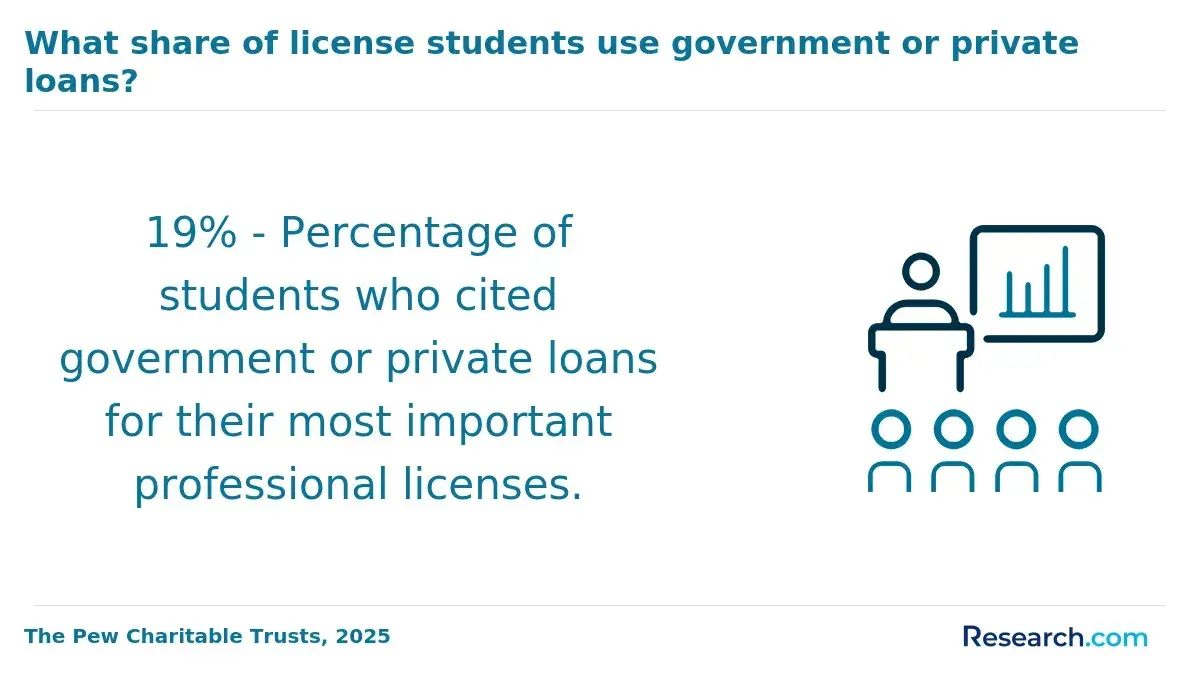
Cost should be evaluated as total cost, not just tuition. For graduate and professional students, the federal Direct Unsubsidized Loan annual limit is $20,500, which means many doctoral students who borrow may need Grad PLUS loans, employer tuition assistance, scholarships, assistantships, or payment plans to cover the full cost of attendance.
Admissions requirements also depend on whether you are entering an FNP track for the first time or adding a doctorate after becoming certified. Students comparing faster routes may also want to review accelerated nurse practitioner programs, but speed should never override accreditation, clinical placement quality, certification eligibility, or state authorization.
Before applying, take these practical steps to reduce risk:
- Confirm whether the program is designed for APRN preparation, post-licensure advancement, research training, business leadership, education leadership, psychology practice, or public health leadership.
- Ask whether the final requirement is a dissertation, DNP project, applied dissertation, capstone, practicum, internship, or portfolio.
- Verify accreditation, state authorization, clinical placement responsibilities, certification exam alignment, and any campus residency requirements.
- Compare total cost of attendance, not only per-credit tuition, including travel, fees, books, technology, background checks, malpractice coverage, and lost work time.
- Ask for recent student outcomes, completion support, faculty mentoring structure, and examples of doctoral projects or dissertations.
Which Family Nurse Practitioner Doctorate Is Best for Your Career Goals: PhD, DBA, EdD, DNP, PsyD, or Another Professional Doctorate?
The best Family Nurse Practitioner doctorate is the one that matches the work you actually want to do. The decision should start with your target role, not with the degree title. A DNP, PhD, DBA, EdD, PsyD, DrPH, DHA, or DHSc can all be credible choices when used for the right purpose.
Use the following decision guide to narrow your options. The goal is not to rank degrees, but to match each doctorate to the professional problem you want to solve.
| Your primary career goal | Best-aligned doctorate to consider first | Why it fits | Degree to compare carefully |
| Remain an FNP while leading clinical improvement | DNP | Focuses on evidence-based practice, systems change, and clinical leadership | PhD, if you want research more than practice leadership |
| Become a nurse scientist or research professor | PhD | Builds advanced research, theory, methods, and dissertation expertise | DNP, if your work will remain practice-focused |
| Lead a clinic, healthcare business, or consulting practice | DBA | Applies research to strategy, operations, finance, and management problems | DHA, if the role is more healthcare administration than business research |
| Lead nursing education or academic programs | EdD or PhD | EdD fits applied education leadership; PhD fits research-intensive academic work | DNP, if the teaching role is practice-focused |
| Move into behavioral health as a psychology professional | PsyD | Supports clinical psychology preparation when licensure requirements are met | Psychiatric NP certificate, if the goal is APRN psychiatric practice |
| Lead population health or public health programs | DrPH | Focuses on public health leadership, community outcomes, and policy implementation | PhD in Public Health, if research is the main goal |
| Move into health system executive leadership | DHA, DHSc, DBA, or DNP | Fit depends on whether the role emphasizes administration, health science, business, or nursing leadership | Compare curricula and employer expectations before choosing |
For many readers, the hardest part is deciding whether to pursue the quickest available path or the most strategically aligned path. If you are still comparing accessibility and admissions fit, resources on the easiest NP program options can be useful, but "easiest" should never mean unaccredited, poorly supported, or misaligned with licensure goals.
Common mistakes can be avoided by asking sharper questions before enrollment. Do not choose a doctorate only because of prestige, title, speed, or online convenience. Instead, compare the credential against your intended job postings, licensing board expectations, certification requirements, faculty expertise, project format, and long-term professional identity.
A simple decision rule works well: choose a PhD if you want to create research, a DNP if you want to lead nursing practice, a DBA if you want to solve business problems, an EdD if you want to lead education, a PsyD if you want psychology practice, and another professional doctorate only when its field directly matches your next role.
Other Things You Should Know About Family Nurse Practitioner
In academic and many professional settings, doctorate holders may use the title "doctor." In clinical settings, state laws, employer policies, and professional ethics may require clear identification of your role, such as "Doctor of Nursing Practice" or "nurse practitioner," to avoid confusion with physicians.
Not always. Many FNPs enter practice with an accredited MSN or DNP pathway, depending on the program and state requirements. Certification eligibility, APRN licensure, population focus, and clinical hours are more important than assuming one degree level applies everywhere.
Online and hybrid programs can be respected when they are properly accredited, authorized in your state, transparent about clinical placement, and aligned with certification or career goals. The delivery format matters less than accreditation, outcomes, faculty support, and clinical quality.
Yes, especially for clinical teaching, simulation, precepting, or practice-focused faculty roles. However, research-intensive universities may prefer or require a PhD for tenure-track research positions, while DNP, EdD, or other doctorates may fit teaching and leadership roles better.
References
- Top Roles for Graduates of an EdD in Healthcare Education & Leadership https://blog.methodistcollege.edu/top-roles-for-graduates-of-an-edd-in-healthcare-education-leadership
- Advancing Your Nursing Career With a DNP https://www.saintmarys.edu/graduate-studies/nursing/nursing-practice/dnp-article
- DNP vs. NP: What's the Difference? | Bradley University Online https://onlinedegrees.bradley.edu/blog/dnp-vs-np
- AACN Fact Sheet - DNP https://www.aacnnursing.org/news-data/fact-sheets/dnp-fact-sheet
- DNP Degree: What It Is & Why Demand Is Growing https://www.baypath.edu/news/bay-path-university-blogs/post/dnp-degree-what-it-is-why-demand-is-growing/
- What Is a Doctor of Nursing Practice? | All Nursing Schools https://www.allnursingschools.com/dnp/
- Professional Doctorate SOP: How to Write for EdD, DBA, DNP, and PsyD Programs https://gradpilot.com/news/professional-doctorate-sop-edd-dba-dnp-psyd-guide
- Best Ed.D. Nursing Education Programs (2026 Rankings) https://www.nurseeducator.com/degrees/edd/
- Doctor of Nursing Practice (DNP) vs. Nurse Practitioner (NP) https://www.chamberlain.edu/blog/dnp-vs-np-whats-the-difference
- 10 different career options for NPs https://comphealth.com/resources/career-options-nps


