2027 Compliance Auditor Careers: Skills, Education, Salary & Job Outlook

Co-Founder and Chief Data Scientist
Becoming a compliance auditor is a good fit if you want a career that combines investigation, business judgment, ethics, and regulatory knowledge. The path is not always obvious at first: employers often expect a foundation in accounting, finance, business, law, information technology, or a regulated industry, plus the ability to interpret rules and explain risks clearly.
The role matters because organizations face increasing pressure to prove they follow laws, internal policies, data standards, financial controls, and industry-specific regulations. A compliance auditor helps find gaps before they become fines, lawsuits, operational failures, or reputational damage. For detail-oriented professionals who like structured problem-solving and independent analysis, this can be a stable and meaningful career direction.
This guide explains what compliance auditors do, the skills and credentials employers value, how to get started, what you can earn, where the field is headed, and how to decide whether this career matches your strengths. Salary potential is around $73,700 annually, with higher earnings possible as auditors gain experience, specialize, or move into leadership roles.
Key Things You Should Know About Compliance Auditor Career
- The typical earning potential for a compliance auditor ranges from about $65,000 to $95,000 annually, depending on experience, industry, and location.
- This field is stable and growing, with increasing regulatory requirements driving demand for skilled auditors across finance, healthcare, and corporate sectors.
- A bachelor's degree in accounting, finance, business administration, or a related field is usually required, with professional certifications like CIA, CISA, or CPA often preferred.
- Success depends on skills in regulatory compliance, risk assessment, internal auditing, report writing, analytical thinking, attention to detail, and effective communication.
- Career advancement can lead to positions such as senior compliance auditor, compliance manager, director of compliance, or specialized roles in internal controls, risk management, or regulatory consulting.
What do Compliance Auditors do?
Compliance auditors examine whether an organization is following required laws, regulations, industry standards, contracts, and internal policies. Their work helps leaders understand where the organization is exposed to legal, financial, operational, or reputational risk.
In practice, compliance auditors review records, test controls, interview employees, inspect workflows, and compare actual practices against documented requirements. They do not simply look for mistakes. A strong auditor explains why an issue matters, how serious it is, and what the organization can do to correct it.
A day in the life of Compliance Auditors
A typical day may include reviewing policies, sampling transactions, checking documentation, analyzing reports, meeting with department leaders, and writing audit findings. Some days are highly independent and focused on evidence review. Others require interviews, presentations, or follow-up conversations with teams responsible for fixing identified issues.
The job requires a balance of skepticism and professionalism. Compliance auditors must ask direct questions, verify claims, and document conclusions without creating unnecessary conflict. Their value comes from helping organizations improve controls, reduce exposure, and maintain trust with regulators, customers, employees, and stakeholders.
What are the key responsibilities of Compliance Auditors?
Compliance auditors are responsible for testing whether business activities meet required standards and for reporting gaps in a way that leaders can act on. The work is evidence-based, highly documented, and often tied to risk management.
- Plan audits by defining the scope, objectives, criteria, timelines, and records that need to be reviewed.
- Review processes, policies, procedures, contracts, system records, and other documentation to verify compliance.
- Interview employees and managers to understand how controls work in day-to-day operations.
- Identify non-compliance, control weaknesses, documentation gaps, and inconsistent practices.
- Assess the severity of findings based on risk, regulatory exposure, financial impact, and likelihood of recurrence.
- Recommend corrective actions that are realistic, measurable, and aligned with business operations.
- Prepare audit reports that clearly explain findings, evidence, root causes, risks, and recommended next steps.
- Track remediation efforts and conduct follow-up reviews to confirm that corrective actions were completed.
- Work with legal, risk, compliance, finance, IT, or operations teams to update policies when rules or business processes change.
The most challenging vs. the most rewarding tasks
The hardest part of compliance auditing is often not the technical review; it is managing sensitive conversations. Auditors may uncover problems that departments did not expect or do not want documented. To be effective, they need the confidence to stay objective and the communication skills to avoid turning an audit into an adversarial process.
The most rewarding part is seeing recommendations lead to stronger controls, clearer processes, fewer errors, and better decision-making. A well-executed audit can prevent future violations, protect the organization, and make employees’ responsibilities easier to understand.
If you are entering the field while working full time, flexible education pathways can help you build the required foundation. Reviewing fast degree college options for working adults may be useful if you need a structured route into accounting, business, finance, or a related area.
What are the key skills for Compliance Auditors?
Compliance auditors need both technical competence and professional judgment. Employers look for candidates who can interpret requirements, test evidence, explain risk, and communicate findings without exaggeration or ambiguity.
Core technical skills
- Audit methodologies: Understanding risk-based auditing, sampling, control testing, documentation standards, and audit trails is essential.
- Regulatory knowledge: Familiarity with laws and frameworks such as SOX, HIPAA, and GDPR helps auditors assess whether requirements are being met.
- Internal controls: Auditors must know how policies, approvals, segregation of duties, monitoring procedures, and reporting mechanisms reduce risk.
- Data analysis tools: Excel, SQL, and Tableau can help auditors identify exceptions, unusual patterns, missing records, and potential control failures.
- Governance, risk, and compliance software: GRC platforms are commonly used to document audit steps, track findings, assign remediation tasks, and maintain evidence.
- Report writing: Strong reports distinguish between facts, conclusions, risk level, and recommendations.
Soft skills
- Analytical thinking: Compliance auditors must connect evidence, policies, and business processes to reach defensible conclusions.
- Attention to detail: Small inconsistencies in records, approvals, or procedures can reveal larger compliance problems.
- Integrity and objectivity: Auditors must be willing to report findings accurately, even when the results are uncomfortable.
- Communication: The ability to explain complex issues to non-specialists is critical, especially when findings require operational change.
- Professional skepticism: Good auditors verify claims without assuming bad intent.
- Diplomacy: The role often requires cooperation from teams that may feel scrutinized or defensive.
The one overlooked skill that separates the good from the great
Business acumen is often what separates a checklist-driven auditor from a high-impact compliance professional. Auditors with strong business judgment understand how a finding affects operations, customers, costs, timelines, and leadership priorities.
For example, identifying a missing approval step is useful. Explaining how that missing approval could create fraud exposure, delay regulatory reporting, or weaken customer trust is more valuable. The best auditors connect compliance requirements to business consequences and recommend improvements that are practical, not just technically correct.
Specialized skills can also influence opportunity. The Securities, Commodity Contracts, and Other Financial Investments sectors are associated with the highest salaries. If you are still building an educational foundation, resources such as what is the easiest degree to get in 2 years? can help you compare shorter academic options before committing to a longer path.
Compliance Auditor Careers: A Step-by-Step Guide to Getting Started
The path to becoming a compliance auditor is usually gradual. Most professionals build a base in business, finance, accounting, law, technology, healthcare, or another regulated field, then gain audit or risk experience before moving into more specialized compliance roles.
- Build the academic foundation. Start with coursework or a degree in a relevant field such as accounting, finance, business administration, law, information technology, management, or healthcare administration.
- Learn how organizations control risk. Study internal controls, documentation practices, regulatory requirements, ethics, reporting, and audit procedures.
- Get entry-level experience. Look for internships or jobs in audit support, accounting, operations, risk management, quality assurance, regulatory affairs, or compliance analysis.
- Develop evidence-review skills. Practice reviewing policies, testing transactions, documenting findings, and writing concise summaries.
- Pursue a relevant certification. Once you meet eligibility requirements, credentials can help demonstrate competence and commitment to the field.
- Choose a specialization. Common areas include financial compliance, healthcare compliance, data privacy, anti-money laundering, cybersecurity, environmental compliance, and internal audit.
- Move into senior or leadership roles. With experience, auditors can lead engagements, manage teams, design compliance programs, and advise executives.
A strong early strategy is to target roles that expose you to documentation, controls, regulations, and cross-functional communication. Even if your first job title is not “compliance auditor,” experience in risk, internal audit, quality, finance, or regulated operations can help you move toward the role.
What education, training, or certifications are required?
Most compliance auditor roles require at least a bachelor’s degree. Common fields include Accounting, Finance, Business Administration, Law, and Information Technology. Related degrees such as Management or Healthcare Administration can also be useful, especially for auditors who plan to work in a specific regulated industry.
Training usually continues on the job. New auditors learn how to review evidence, conduct interviews, apply audit criteria, use compliance software, and write defensible findings. Internships and entry-level roles in auditing, risk management, compliance, accounting, operations, or quality assurance can provide the practical experience employers value.
Common certifications
- Certified Internal Auditor (CIA): Issued by The Institute of Internal Auditors (IIA), this credential is relevant for professionals focused on internal auditing, controls, and risk-based assurance.
- Certified Compliance & Ethics Professional (CCEP): Offered by the Society of Corporate Compliance and Ethics, this credential supports professionals working in compliance programs and ethics oversight.
- Certified Public Accountant (CPA): Useful for auditors working in accounting, financial reporting, or controls-heavy environments.
- Certified Forensic Examiner (CFE): Valuable for professionals interested in fraud risk, investigations, and forensic review.
Are advanced degrees or niche certifications worth the investment?
Advanced degrees can be worthwhile when they align with a clear career goal. A master’s degree in Accounting, Finance, or Business Administration with a focus on compliance, audit, or risk may help professionals compete for senior, specialized, or management roles. However, the return depends on your industry, employer expectations, current experience, and whether the credential fills a real gap.
The cost and time commitment can be significant, ranging from $40,000 to $100,000+ and often requiring two years of study. Before enrolling, compare the credential’s cost with the jobs you are targeting, the certifications employers request, and whether your employer offers tuition assistance. If speed and flexibility matter, researching the quickest way to get a master's degree can help you evaluate more efficient options.
For many compliance auditors, the best sequence is degree, relevant work experience, targeted certification, then graduate education only if it supports advancement into a defined specialty or leadership track.
What is the earning potential for Compliance Auditors?
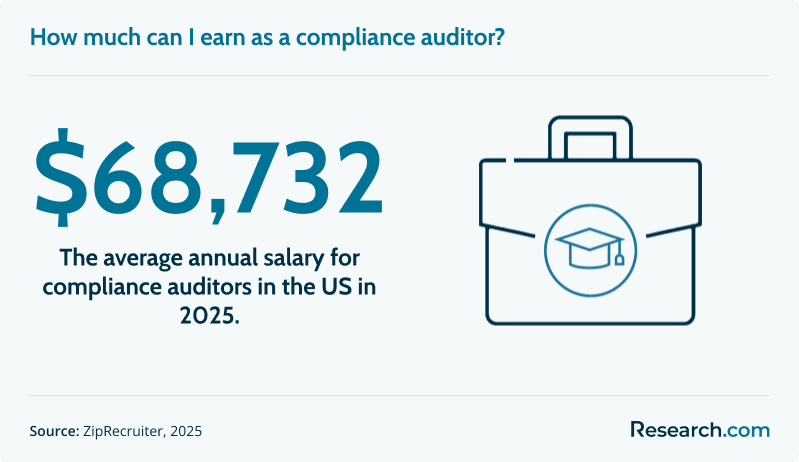
The median annual salary for a Compliance Auditor is $73,711. Entry-level positions start around $44,745, while senior-level roles can reach up to $121,427 per year. This range shows that earnings can grow meaningfully as auditors gain experience, specialize, and take on higher-risk or higher-responsibility assignments.
Pay is shaped by several factors, including industry, location, credentials, technical skills, and seniority. Large metro areas such as Dallas, TX, New York, NY, and Austin, TX offer higher pay compared to the national average. Industries such as healthcare, financial services, and technology also tend to pay more for compliance expertise because the regulatory and operational risks are significant.
| Career stage | Typical salary information | What usually drives pay at this level |
| Entry level | Around $44,745 | Foundational education, internships, audit support experience, and basic knowledge of controls and documentation |
| Median | $73,711 | Independent audit work, stronger regulatory knowledge, clear reporting skills, and experience with common compliance processes |
| Senior level | Up to $121,427 per year | Advanced expertise, specialization, leadership responsibilities, complex audits, and higher-value industry experience |
To improve earning potential, focus on high-demand specialties, build data analysis skills, document measurable results from audits, and pursue credentials that match your target industry. A certification is most valuable when employers in your field recognize it and when it supports the type of work you want to do.
What is the job outlook for Compliance Auditors?
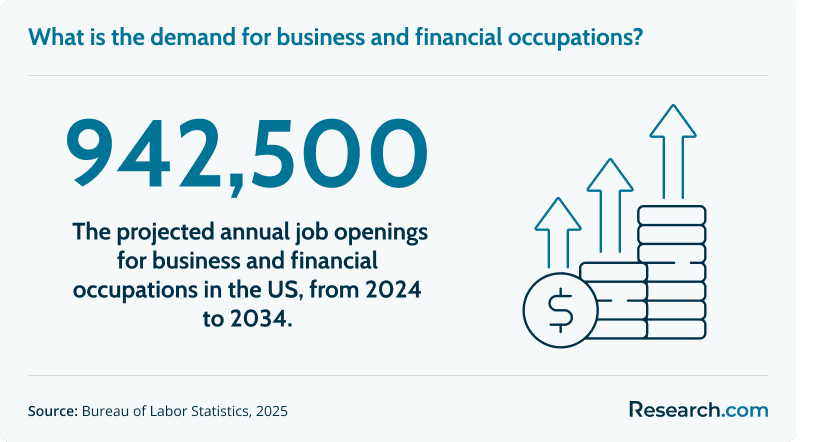
Employment of compliance officers, the category closest to compliance auditors, is projected to grow 3% from 2024 to 2034, which is about as fast as the average for all occupations. That points to a stable but not explosive job market. Demand is supported by ongoing regulation, organizational risk management, and the need to replace workers who retire or move into other roles.
The key factors shaping the future outlook
Technology is changing the work. Automation and AI can reduce some routine testing and monitoring tasks, but they also increase the need for auditors who can evaluate exceptions, interpret risk, and assess whether automated processes are working properly. Compliance auditors who can use data tools and understand technology-driven controls will be better positioned.
Regulatory complexity is another driver. Finance, healthcare, technology, data privacy, cybersecurity, environmental compliance, and ESG compliance all require professionals who can translate rules into operational controls. The more complex the regulation, the more valuable auditors become when they can provide clear, practical guidance.
For career planning, the outlook favors professionals who keep learning. Building a degree foundation through top accredited non profit online colleges may help prospective auditors prepare for roles that require both business knowledge and specialized compliance expertise.
What is the typical work environment for Compliance Auditors?
Compliance auditors usually work in office-based professional environments, including company headquarters, branch offices, government agencies, healthcare organizations, financial institutions, consulting firms, and internal audit departments. Some roles involve travel to client sites, subsidiaries, facilities, or business units when audits require onsite evidence review or employee interviews.
Top employing industries include finance and insurance (22%), government (17%), and healthcare and social assistance (14%). These settings often have structured policies, formal reporting requirements, and recurring audit cycles, making compliance work a regular part of operations.
The typical schedule is Monday through Friday during standard business hours. Overtime may occur near reporting deadlines, regulatory reviews, annual audit cycles, or major remediation projects, but routine weekend or evening work is not usually central to the role.
Remote and hybrid work are increasingly feasible for tasks such as document review, data analysis, report writing, and virtual interviews. However, some audits still require onsite observation, physical records review, facility walkthroughs, or in-person meetings. If flexibility is important to you, ask employers how often travel, onsite audits, or deadline-driven overtime are expected.
What are the pros and cons of Compliance Auditor careers?
A compliance auditor career can be rewarding for people who like structure, evidence, ethics, and problem-solving. It can also be demanding because the work involves detailed documentation, changing rules, and conversations about problems that others may not want to address.
Pros
- Meaningful impact: Auditors help organizations operate ethically, reduce risk, and maintain public trust.
- Transferable skills: Knowledge of controls, risk, documentation, and regulation applies across many industries.
- Clear advancement paths: Experienced auditors can move into senior audit, compliance management, risk leadership, consulting, or executive compliance roles.
- Intellectual variety: Each audit may involve different departments, systems, regulations, and business processes.
- Professional credibility: Certifications and specialized experience can strengthen long-term career mobility.
Cons
- Constant learning curve: Regulations, industry standards, and internal policies can change frequently.
- Potential resistance: Employees and managers may be defensive when audits identify problems.
- Heavy documentation: Audit work requires careful evidence tracking, report writing, and follow-up records.
- Deadline pressure: Auditors must be thorough while meeting reporting timelines and management expectations.
- Repetition in some roles: Certain audit cycles may involve recurring checklists, control tests, or compliance reviews.
This career is a strong fit if you are detail-oriented, objective, comfortable asking questions, and willing to explain risk clearly. It may be less appealing if you dislike documentation, prefer highly creative work, or find it difficult to challenge established practices.
If you want a lower-risk way to explore the field before committing to a full degree or advanced credential, reviewing certifications online that pay well can help you identify practical skill-building options.
What are the opportunities for advancement for Compliance Auditors?
Compliance auditors can advance by moving into higher-responsibility audit roles, managing compliance programs, specializing in a regulated area, or shifting into broader risk and governance leadership. Advancement usually depends on experience, judgment, communication skills, credentials, and the ability to influence change across departments.
Professional advancement opportunities
- Junior Compliance Auditor: Entry-level role focused on basic audit procedures, evidence collection, documentation, and learning regulatory requirements for 0-2 years of experience.
- Compliance Auditor: Mid-level role that conducts audits more independently, prepares findings, communicates with business units, and supports corrective action tracking.
- Senior Compliance Auditor: A role responsible for complex audits, higher-risk findings, team guidance, and interpretation of regulations, often suited for professionals with 4-7 years' experience.
- Compliance Manager: Oversees compliance programs and audit teams, requiring 10-15 years of experience and stronger strategic oversight abilities.
- Director or Chief Compliance Officer: Leads enterprise-level compliance strategy, board or executive reporting, program design, regulatory response, and organization-wide risk priorities.
Specialization areas to expand expertise
- Anti-Money Laundering (AML): Focuses on controls that help detect and prevent financial crime.
- Data Privacy: Involves compliance with data protection laws, privacy practices, consent requirements, and information handling standards.
- Environmental Compliance: Audits processes related to environmental standards, reporting, permits, and regulatory obligations.
- AI Governance & Ethics: Evaluates AI systems for ethical, transparent, and compliant operation.
- Healthcare Compliance: Reviews policies and practices tied to patient data, billing rules, quality requirements, and healthcare regulations.
- Cybersecurity Compliance: Assesses whether security controls, access practices, incident response, and documentation meet applicable standards.
The best advancement strategy is to combine technical depth with leadership ability. Senior roles require more than finding issues; they require prioritizing risk, advising stakeholders, managing remediation, and helping the organization build sustainable compliance systems.
What other careers should you consider?
If compliance auditing interests you, several adjacent careers use similar skills but differ in focus, authority, and day-to-day work. Comparing these options can help you choose the best fit.
- Compliance Analyst: Monitors regulations, reviews policies, tracks compliance activities, and supports reporting. This role may be a good entry point before becoming an auditor.
- Risk Analyst: Identifies, measures, and reports business risks, including operational, financial, regulatory, and strategic risks.
- Account Auditor: Focuses more directly on financial records, accounting controls, and accuracy in financial reporting.
- Chief Compliance Officer: Leads the organization’s compliance program, sets strategy, reports to executives or boards, and oversees compliance risk at a senior level.
- Compliance Consultant: Advises organizations on regulatory requirements, program design, audit readiness, remediation, and best practices.
Choose compliance auditing if you like testing evidence, documenting findings, and evaluating whether controls actually work. Consider compliance analysis if you prefer monitoring and policy support. Consider risk analysis if you want a broader view of organizational threats. Consider consulting if you enjoy variety, client-facing work, and project-based assignments.
Here's What Professionals Say About Their Compliance Auditor Careers
- : "“When I started as a compliance auditor, I did not realize how central the role would be to the integrity of financial reporting. It is not just checking boxes. It is helping ensure that statements, processes, and decisions meet required standards. Knowing that my attention to detail can help prevent fraud and support transparency gives the work real purpose.” — Luis"
- : "“I was unsure at first because the pace and complexity of audits felt intimidating, especially since I was not confident about my math skills. Over time, I learned that the role is also about curiosity, communication, and steady problem-solving. Experienced colleagues helped me build confidence, and now I value the variety and continuous learning.” — Sandra"
- : "“One memorable assignment involved auditing a winery. I was onsite reviewing quality controls, observing operations, and working closely with a small team. The learning curve was steep, but completing the audit and earning the client’s trust was deeply rewarding. It showed me that compliance auditing is ultimately about building confidence in how an organization operates.” — Noah"
Key Findings
- Compliance auditors evaluate whether organizations follow laws, regulations, internal policies, and industry standards.
- The role typically requires a bachelor’s degree in a relevant field such as accounting, finance, business administration, law, information technology, management, or healthcare administration.
- Important credentials include the Certified Internal Auditor (CIA) and Certified Compliance & Ethics Professional (CCEP), with CPA and Certified Forensic Examiner (CFE) useful for some career paths.
- The median annual salary for a Compliance Auditor is $73,711, with entry-level roles around $44,745 and senior-level roles up to $121,427 per year.
- Employment of compliance officers is projected to grow 3% from 2024 to 2034, about as fast as the average for all occupations.
- Top employing industries include finance and insurance (22%), government (17%), and healthcare and social assistance (14%).
- The strongest candidates combine regulatory knowledge, audit methods, data skills, business acumen, objectivity, and clear communication.
- Advancement options include senior compliance auditor, compliance manager, director-level roles, chief compliance officer, and specialized areas such as AML, data privacy, environmental compliance, AI governance, healthcare compliance, and cybersecurity compliance.
Other Things You Should Know About Compliance Auditor
The Certified Internal Auditor (CIA), Certified Compliance & Ethics Professional (CCEP), and Certified Information Systems Auditor (CISA) are the most recognized credentials. Employers often prefer auditors with 2–5 years of audit, risk, or regulatory experience, and many roles require a bachelor’s degree in accounting, finance, or business.
In 2027, AI streamlines the compliance auditing process by automating repetitive tasks, analyzing vast amounts of data, and identifying discrepancies with higher accuracy. Auditors leverage AI for risk assessment and reporting, allowing them to focus on complex problem-solving and strategic decision-making.
References
- Why Choose a Career in Audit, Risk and Compliance? - KPP Search https://kppsearch.com/why-choose-a-career-in-audit-risk-and-compliance/
- Security Compliance Auditor Role: Skills and Responsibilities | Splunk https://www.splunk.com/en_us/blog/learn/security-compliance-auditor-role.html
- Compliance Auditor for Sunclass Airlines - Sunclass Airlines https://career.sunclassairlines.dk/jobs/6531760-compliance-auditor-for-sunclass-airlines
- How to Find Work in Compliance: A Practical Guide to Starting a Career in Compliance https://amlincubator.com/blog/how-to-find-work-in-compliance-a-practical-guide-to-starting-a-career-in-compliance
- What are the highest paying compliance jobs? - compleye.io https://compleye.io/what-are-the-highest-paying-compliance-jobs-3/
- Compliance Analyst - Alternative Careers and Similar Jobs (Updated for 2025) https://resumeworded.com/career-profiles/compliance-analyst-career-profile
- Compliance Auditor Interview Questions https://www.betterteam.com/compliance-auditor-interview-questions
- Accountants and Auditors : Occupational Outlook Handbook: : U.S. Bureau of Labor Statistics https://www.bls.gov/ooh/business-and-financial/accountants-and-auditors.htm