2027 Choosing a BS in Business Administration for Business Roles in Community Association Management
Audited and Verified:
Our Editorial and Data Verification Process
Research.com uses government datasets, official education statistics and primary institutional information to support its career and degree guides. Our review process checks factual accuracy, occupational definitions, source dates and the requirements associated with the credentials discussed.
How This Article Was Fact-Checked
Our editorial team verifies salary estimates, employment projections, education requirements and program information against original data providers and official organizations. Salary figures are checked against the relevant occupational definitions and reporting periods. Information about licensure, accreditation and required in-person training is reviewed separately.
Fact-checked and verified on:

Co-Founder and Chief Data Scientist
Community association managers handle budgets, vendors, resident concerns, and decisions made by homeowner or condominium boards. A BS in Business Administration can build useful skills for that work, but it does not replace knowledge of association rules, relevant experience, or any state-required license.
This guide is for prospective students, career changers, and association employees weighing a degree against more targeted training. It explains what to look for in a program, where the degree fits in a career path, and which requirements to verify before enrolling.
Key Things You Should Know
- A BS in Business Administration can prepare you for association budgeting, operations, and board communication; it does not itself qualify you for a state-required community association manager license.
- Choose electives and practical work around financial reporting, contracts, vendor oversight, and conflict resolution, not a concentration name alone.
- A bachelor's degree commonly takes four years of full-time study, but your remaining time and cost depend on an official evaluation of applicable transfer credits and program requirements.
What Is a Business Administration Degree for Community Association Management?
A BS in Business Administration is an undergraduate degree covering how organizations manage money, people, operations, and decisions. For community association management, its value is applying those subjects to homeowner associations, condominium associations, and other communities governed by a board. It is not generally a degree specifically in community association management.
Managers may help prepare budgets, collect and explain financial information, coordinate maintenance, obtain vendor bids, administer contracts, and communicate with residents.
The board retains its own governing responsibilities; a manager's authority depends on the association's documents, employment or management agreement, and applicable law.
Business administration is a strong broad option when you want flexibility beyond associations. If your main interest is scheduling repairs and coordinating contractors, compare the curriculum with affordable online study routes in project management. Neither degree substitutes for learning association governance or meeting licensing requirements.
What Education and Licensing Does a Community Association Manager Need?
There is no single nationwide degree or license requirement for community association managers. Employers may accept relevant property-management or association experience instead of a bachelor's degree, while others prefer a degree for positions involving substantial budgets, staff, or multiple properties.
States set their own licensing rules; some regulate community association management specifically. Check the regulator in the state where you intend to work for the activities covered, education or examination requirements, exemptions, and renewal rules.
Voluntary industry designations and employer training are separate from state licenses. A business degree also does not authorize legal advice, an independent audit, or another regulated service.
Coursework in staffing can help with workplace responsibilities, but human resources education and career options address a different specialization, not association-manager licensure.
Before choosing a program, review local job postings alongside the state regulator's rules. That comparison will show whether your immediate gap is a degree, a license, association-specific training, or supervised experience.
Is a Business Administration Degree Good for Community Association Management Careers?
Yes, particularly if you want a foundation for managing association finances and operations or want career options outside property management.
Its return is less certain if you already meet employers' education expectations and chiefly need local legal knowledge or experience working with boards. Compare the degree with the qualification your next role actually requires.
The options below serve different gaps. They are complements in some careers, not interchangeable credentials:
| Path | Best fit | Important limitation |
| BS in Business Administration | Broad preparation in accounting, management, and operations; useful when a bachelor's is preferred | Does not confer a license or prove association-management experience |
| Association-specific training and supervised work | Learning board procedures, governing documents, resident communication, and local practice | May not meet an employer's bachelor's-degree requirement |
| Project-management study | Building depth in schedules, contractors, and multi-step improvement projects | May cover less accounting and association governance |
If you are considering the project-management route instead, compare its full cost and aid eligibility as well as its coursework; guidance on funding an online project management bachelor's degree can help frame that separate decision. For either path, relevant work with budgets, vendors, or residents is stronger evidence of readiness than the degree title alone.
The most useful courses connect general business methods to recurring association decisions. Accounting helps you read financial statements and explain budget variances; finance supports planning for major expenses.
Operations and project management help with maintenance schedules and vendor coordination, while business law and organizational behavior provide context for contracts, board relationships, and difficult conversations. These courses do not teach the governing law of every state.
Look past a concentration's label and inspect required courses, prerequisites, and applied assignments. A proposed capstone might compare vendor bids using stated criteria or build an illustrative operating budget. Work using a real association's records requires permission and appropriate protection of resident and financial information.
Ask an adviser whether your preferred electives are offered when you need them and whether they add credits beyond the degree minimum. Accelerated study schedules for business majors may shorten the calendar, but only if prerequisite sequencing and course availability support your plan.
Choose the format that lets you complete the required work while gaining relevant experience. Online study can suit an association employee who must remain near their properties; campus study may make it easier to use local employer connections and scheduled faculty support. Neither format guarantees an internship or a job.
Check whether online courses require live meetings, proctored exams, group presentations, or fixed deadlines. Those obligations matter if your work includes evening board meetings or urgent property issues.
Ask both online and campus programs how students arrange internships and whether an existing job can support an approved project; employment alone does not award academic credit.
Use online business degree rankings for US college applicants as a starting list, then verify each program's current curriculum, schedule, accreditation, and total cost directly with the institution.

Requirements vary by institution and by whether you apply as a first-year, transfer, or returning student. Schools commonly request prior academic transcripts and may have separate standards for entering the business major.
Mathematics, accounting, or other introductory courses may be admission requirements at one school and courses taken after admission at another.
If you have prior college work, request an official evaluation showing where credits apply, not just how many are accepted. Credits classified as general electives may leave accounting, business-core, or residency requirements unfinished. Ask admissions and a business adviser about any missing prerequisites before committing to a start date.
An application charge is a smaller cost consideration, but online universities with no application charge may be worth considering when comparing eligible programs. Confirm the policy for your application term rather than assuming a listed waiver applies to everyone.
A bachelor's degree commonly takes four years of full-time study from the start. Transfer students may finish sooner, but only if accepted credits satisfy specific degree requirements and the remaining courses are available in a workable sequence. Part-time enrollment can make study feasible alongside association work while extending the calendar.
Do not compare programs by advertised tuition alone. Request an estimate based on your official degree audit that includes remaining credits, mandatory fees, books and software, any travel or proctoring expenses, and the likely number of terms.
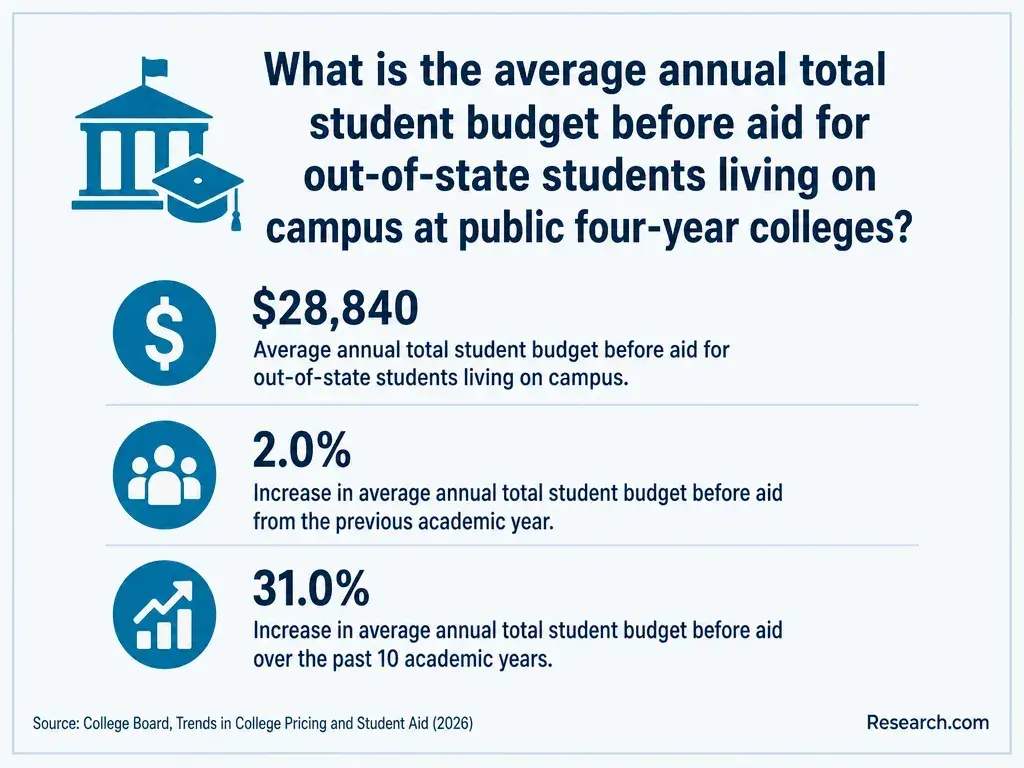
Ask the financial-aid office how enrollment intensity affects your eligibility and cash flow. FAFSA-eligible online business administration colleges can provide a comparison starting point, but eligibility for federal aid and any award depends on the institution and your circumstances.
A graduate without association experience may start as an assistant community manager, association coordinator, resident-services coordinator, or property-management assistant.
Such roles can involve responding to owners, preparing meeting materials, tracking work orders, and helping reconcile records under supervision. Responsibilities and job titles differ by employer and state.
With relevant experience and any required license, a professional may take responsibility for an association portfolio or a larger community. Senior roles can add staff oversight, complex budgets, and closer work with boards.
Show employers evidence that matches the job: a permitted, anonymized budget analysis, documented vendor coordination, or a supervisor-verified example of resolving a service issue. Do not share confidential association records in a portfolio.
If contractor schedules and improvement projects interest you more than ongoing association operations, online project management bachelor's programs accepting transfer credits offer another degree path to evaluate. Confirm how your own credits would apply before treating it as a faster route.
There is no reliable salary figure for every community association manager or every new business graduate. Pay depends on location, portfolio size, responsibilities, experience, and whether the position includes staff supervision.
The U.S. Bureau of Labor Statistics groups community association managers with property and real estate managers; its occupation-wide wage data is not an entry-level salary quote for someone completing a BS in Business Administration.
For a useful local comparison, look at current postings for assistant and manager roles that match your experience, note any license requirement, and compare compensation with the degree's remaining net cost and the income you might give up while studying.
If cost is decisive, explore lower-priced accredited business administration study options, then check whether each option offers the courses and support needed for your target role.
How Do You Choose an Accredited Business Administration Program?
First verify the institution's accreditation through its recognized accreditor and confirm that the school offers the exact BS in Business Administration you intend to earn.
Business-school or programmatic accreditation, such as AACSB, ACBSP, or IACBE, is a separate consideration: check the accreditor's stated scope rather than assuming every degree at an institution is covered.
Then request the current catalog and compare required accounting and operations courses, relevant electives, applied-learning rules, course schedules, transfer-credit application, and the cost of completing your remaining requirements.
Ask career services whether it has connections to property or community association employers, but do not treat a claimed partnership as a placement guarantee.
Online business degrees with lower tuition deserve consideration when their verified curriculum and scheduling fit. The best choice is the program that closes your actual qualification gaps at a cost and pace you can sustain, not simply the one with the lowest advertised price.
Other Things You Should Know About Business Administration
No. A manager may advise, coordinate, and carry out authorized work, but the board's responsibilities and the manager's authority depend on governing documents, agreements, and applicable law.
It can demonstrate relevant exposure, especially to budgets and governance, but employers decide how they value it. Describe your actual responsibilities rather than presenting volunteer board service as paid management experience.
Only with appropriate authorization and safeguards. Ask the association and instructor about confidentiality, data use, and what may appear in a submitted assignment or public portfolio.
No. Business coursework may help you recognize issues that require attention, but legal interpretation and advice should go to an appropriately qualified professional.
- BA vs. BS in Business Administration | New England College https://www.nec.edu/news/ba-vs-bs-business-administration
- What Internships Should Business Students Look For? | Lasell University https://www.lasell.edu/academics/lasell-insights/what-internships-should-business-students-get.html
- What Can I Do with a Business Administration Degree? | CTU https://www.coloradotech.edu/degrees/studies/business-and-management/articles/what-can-i-do-with-a-business-administration-degree
- What Jobs Can You Get With a Business Degree? | snhu.edu https://www.snhu.edu/about-us/newsroom/business/what-jobs-can-you-get-with-a-business-degree
- Starting and Maintaining a Quality Internship Program | Engineering Career Center https://ecc.ku.edu/starting-and-maintaining-quality-internship-program
- 5 Conflict Management Strategies Every Leader Should Know | Syracuse University https://ischool.syracuse.edu/conflict-management-strategies/
- Licences - Home | cmrao.ca https://www.cmrao.ca/condo-managers/licences
- Do You Need a Degree or Specific Background to Work in Community Association Management? - RealManage https://realmanage.com/resources/blog/do-you-need-a-degree-or-specific-background-to-work-in-community-association-management/
- Business Administration Degrees (Types, Courses & FAQ) | allbusinessschools.com https://www.allbusinessschools.com/business-administration/degrees/
- Property, Real Estate, and Community Association Managers | RaiseMe https://www.raise.me/careers/management/property-real-estate-and-community-association-managers/