2027 Cheapest Online Public Policy Doctorate Programs That Pay Well: Tuition, Duration, and Career Outcomes

Co-Founder and Chief Data Scientist
Admissions interest is shifting toward low-tuition online public policy doctorates as working professionals look for executive credentials without leaving full-time jobs. NCES data available in 2024 show average graduate tuition and required fees are far lower at public institutions than private nonprofit universities, while BLS May 2024 data report a $139,380 median wage for political scientists. This guide is for master's-level policy, government, nonprofit, and consulting professionals comparing tuition, duration, accredited low-cost schools, aid options, and career outcomes so they can reduce out-of-pocket costs and improve long-term ROI.
Key Things About the Cheapest Online Public Policy Doctorate Programs That Pay Well
- Affordable online public policy and closely related public administration doctorates commonly range from about $16,000 to more than $60,000 in tuition before fees, with public universities and in-state or e-tuition rates usually producing the lowest totals.
- Most online public policy doctoral programs take about 3 to 5 years after a master's degree, but transfer credit, dissertation pacing, and part-time enrollment can move the timeline significantly in either direction.
- The highest ROI usually comes from roles where doctoral-level policy expertise affects executive pay, such as political scientist, government affairs director, policy research leader, public-sector executive, and health policy strategist; BLS May 2024 data place political scientists at a $139,380 median wage.
What is the estimated cost of completing an online doctorate in Public Policy?
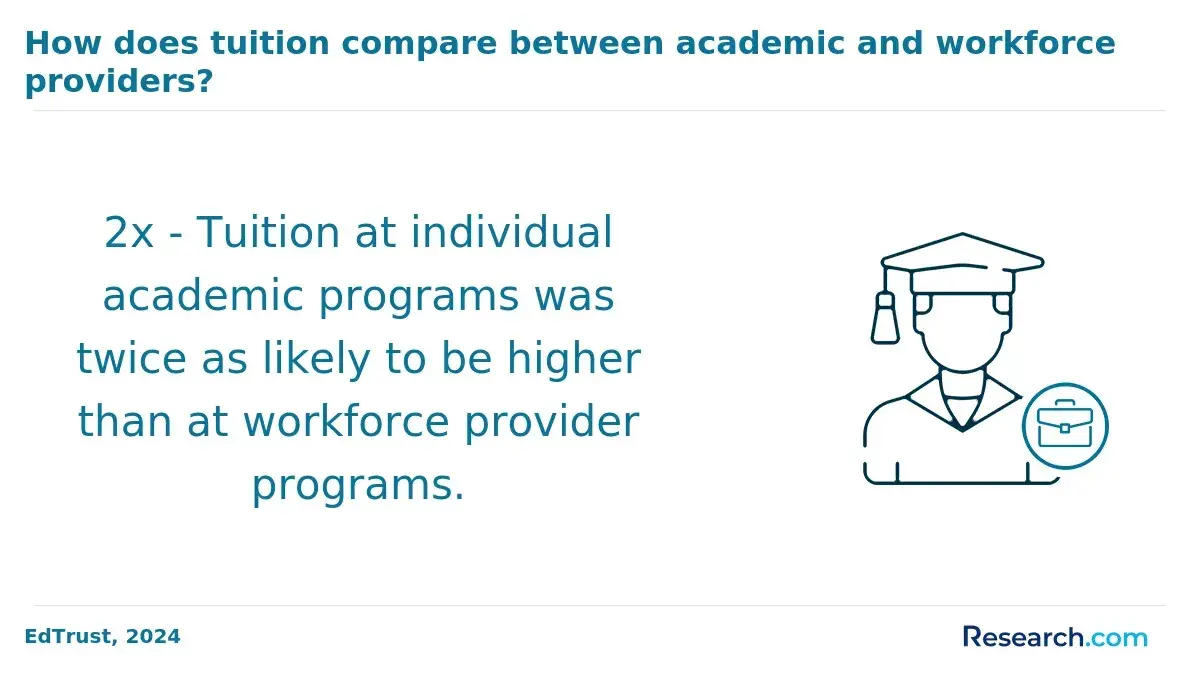
The estimated cost of an online doctorate in public policy depends less on the word "online" and more on credit requirements, tuition category, dissertation fees, and whether the program charges one flat online rate or separates in-state and out-of-state tuition. For most students, the lowest realistic tuition-only range is about $16,000 to $40,000 at public universities or lower-cost nonprofit institutions, while private programs can exceed $60,000 before books, travel, and dissertation continuation charges.
NCES data available in 2024 show that average graduate tuition and required fees are much lower at public institutions than at private nonprofit institutions. For a doctoral applicant, that means school type can influence affordability, but it should not be the only filter; accreditation, faculty fit, dissertation support, and employer reputation also matter.
The table below summarizes practical cost ranges you may see when comparing online public policy, public administration, or policy-focused doctoral programs. Use it to estimate whether a program is genuinely low-cost or simply spreading charges across more terms.
| Cost factor | Lower-cost range | Higher-cost range | Why it matters |
| Per-credit tuition | About $300 to $650 | About $800 to $1,200+ | A small difference per credit becomes large across 45 to 60 doctoral credits. |
| Total tuition before fees | About $16,000 to $40,000 | About $50,000 to $80,000+ | This is the baseline number to compare before aid, employer support, or loans. |
| Program length | 43 to 54 credits after a master's | 60+ credits or additional research courses | More credits often mean more tuition, more fees, and more time away from advancement opportunities. |
| Residency or intensive costs | Fully online or virtual residencies | Required campus visits | Travel, lodging, and missed work can make a cheaper tuition rate less affordable. |
| Dissertation continuation | Included or limited | Charged every term after coursework | Slow dissertation progress can add thousands in extra institutional charges. |
A good cost comparison should include the whole degree, not only the advertised per-credit rate. Ask each university for a written cost sheet showing tuition, mandatory fees, expected credits, dissertation charges, residency requirements, and whether tuition is locked after enrollment.
An online public policy doctorate is usually most cost-effective for professionals who already work in policy analysis, public administration, government relations, nonprofit leadership, research, or consulting and can use the degree to move into higher-impact leadership. It may not be the best financial choice for applicants who need an entry-level policy job, are unsure about their research interest, or can reach their target role with a lower-cost master's degree plus experience.
How long does it take to complete the cheapest online Public Policy doctorate program?
The cheapest online public policy doctorate programs typically take 3 to 5 years after a relevant master's degree. Coursework may finish in 2 to 3 years, but the dissertation, doctoral project, comprehensive exam, or capstone often determines the final graduation date.
Program format matters because a "cheap" doctorate can become expensive if slow pacing forces you to pay extra terms. The table below compares common completion paths and when each one makes sense.
| Completion path | Typical timeline | Best fit | Budget consideration |
| Full-time accelerated doctorate | About 3 years | Students with flexible jobs, strong research preparation, and a clear dissertation topic | Can reduce total term fees but may limit work hours. |
| Part-time online doctorate | About 4 to 5 years | Working professionals in government, nonprofit, military, or consulting roles | Protects income but may increase semester-based fees. |
| Transfer-credit pathway | Potentially under 4 years | Applicants with post-master's doctoral credits or closely aligned graduate work | Can lower tuition if credits are accepted before enrollment. |
| Research-intensive Ph.D. | About 4 to 6 years | Students targeting faculty roles, think tanks, or advanced policy research | May be worth the time if research prestige is central to career goals. |
| Applied doctorate or DPA-style path | About 3 to 4 years | Professionals seeking executive, administrative, or practitioner leadership roles | Often more practical for ROI if the goal is advancement outside academia. |
To shorten the timeline without weakening the degree, ask admissions staff whether the school accepts transfer credits, whether dissertation work begins during coursework, how often doctoral seminars are offered, and whether students can maintain enrollment during summer terms. The fastest path is usually not the one with the shortest catalog description; it is the program with predictable course rotation, responsive dissertation supervision, and clear milestone deadlines.
Which accredited universities offer the lowest tuition for an online Public Policy doctorate?
Several accredited U.S. universities offer online doctorates in public policy, public administration, or closely related governance fields at comparatively low tuition. Because tuition changes frequently, applicants should verify current rates directly with the university, but the schools below are useful starting points for finding lower-cost options.
The table focuses on institutional affordability signals: degree type, delivery format, credit expectations, and approximate tuition position. It is not a ranking, and the best program depends on your career goal, research fit, residency needs, and total cost after aid.
| University | Relevant online doctorate | Approximate affordability profile | Good fit for |
| Valdosta State University | Doctor of Public Administration | Often among the lowest-cost online public administration doctorates because of competitive public-university tuition | Public and nonprofit administrators seeking an applied doctoral credential |
| West Chester University | Doctor of Public Administration | Moderate public-university pricing with a practitioner-oriented structure | Working professionals focused on public management, governance, and administrative leadership |
| Old Dominion University | Ph.D. in Public Administration and Policy | Public-university tuition with online delivery options and a research-oriented policy focus | Students who want stronger research preparation for policy analysis or academic-adjacent roles |
| Liberty University | Ph.D. in Public Policy | Private nonprofit pricing, often with discounts for military or eligible groups | Students seeking a clearly labeled public policy doctorate with online flexibility |
| National University | Public administration or policy-related doctoral pathways | Private nonprofit pricing that may be higher but flexible for working adults | Professionals who need continuous online enrollment and applied research support |
Accreditation should be nonnegotiable. At minimum, confirm that the institution is accredited by a recognized institutional accreditor and that the program's public administration or policy curriculum is respected by employers in your intended sector. Specialized public affairs accreditation can be valuable, but doctoral programs vary in whether it applies, so verify the exact program rather than assuming accreditation from a related master's program carries over.
When comparing universities, ask for the total number of credits required after your master's degree, not the generic catalog minimum. A program that accepts fewer transfer credits or requires extra research prerequisites may cost more than its advertised tuition suggests.
What hidden fees should you expect in an online Public Policy doctorate program?
Hidden fees can change the affordability of an online public policy doctorate more than applicants expect. The biggest risk is not one large fee; it is a series of recurring charges that continue every term while you complete dissertation work.
Before applying, request a complete fee schedule and look specifically for the charges below. These are the costs most likely to surprise online doctoral students because they are not always included in the headline tuition rate.
- Technology or online learning fees charged every semester or credit hour.
- Dissertation continuation, doctoral project, or research supervision fees after coursework ends.
- Residency, colloquium, or intensive-session costs, including travel, lodging, meals, and time away from work.
- Graduation, comprehensive exam, library, proctoring, transcript, and portfolio assessment fees.
- Books, statistical software, qualitative analysis tools, data access, and citation-management subscriptions.
- Course retake costs if doctoral seminars are failed, delayed, or not offered frequently enough.
The most common budgeting mistake is comparing only per-credit tuition. A better approach is to build a full "degree completion budget" that includes tuition, fees, travel, software, loan interest, and a contingency amount for an extra dissertation term.
You should also ask whether the program has any on-campus requirements. A university may advertise an online doctorate but still require residencies or dissertation defenses that create travel costs. If you live far from campus, even one required visit can erase the savings of a lower tuition rate.
What financial aid options and federal grants are available for online Public Policy doctoral candidates?
Online public policy doctoral candidates can use several forms of financial aid, but graduate aid is different from undergraduate aid. Federal Pell Grants generally do not apply to graduate study, so students usually rely on FAFSA-based loans, institutional scholarships, employer tuition assistance, military benefits, and targeted fellowships.
Federal Student Aid rules allow eligible graduate students to borrow up to $20,500 per academic year in Direct Unsubsidized Loans, with Grad PLUS Loans potentially covering remaining approved cost of attendance after other aid. This can improve access, but loans still require repayment with interest, so the goal should be to borrow only after exhausting lower-cost options.
The list below gives a practical order for reducing out-of-pocket costs before turning to higher-interest borrowing.
- Submit the FAFSA early so the university can determine federal loan eligibility and any need-based institutional aid.
- Ask the graduate school about doctoral scholarships, public service awards, alumni grants, and diversity or leadership funding.
- Request a transfer-credit review before enrollment so accepted credits reduce tuition rather than simply shorten your schedule later.
- Ask your employer about tuition reimbursement, professional development budgets, paid study leave, and whether the degree must relate directly to your current job.
- If you are military-connected, verify eligibility for GI Bill, Yellow Ribbon, military tuition discounts, or spouse benefits before selecting a school.
- Compare loan repayment options, including Public Service Loan Forgiveness eligibility if you work for a qualifying government or nonprofit employer.
If your main career goal is senior public administration rather than doctoral research, a shorter master's pathway may offer stronger near-term ROI. For example, a 1 year MPA online can be a faster and less expensive option for professionals who need a recognized public service credential but do not need a terminal degree.
Before accepting aid, ask the financial aid office whether scholarships renew automatically, whether dropping below a credit threshold changes eligibility, and how dissertation-only enrollment affects aid. These details can determine whether your final year is affordable or unexpectedly expensive.
How can fellowships and research stipends offset the cost of an online Public Policy doctorate?
Fellowships and research stipends are less common for online doctoral students than for full-time campus Ph.D. students, but they are still worth pursuing. Public policy doctoral candidates with strong quantitative, evaluation, budgeting, health policy, education policy, or governance skills may find project-based funding through faculty research centers, government contracts, think tanks, and nonprofit policy institutes.
The financial value of a stipend is not limited to the payment itself. Research work can also produce publications, datasets, conference presentations, and professional references that support higher-paying policy roles after graduation.
Use the following approach when asking about funding because online students are often not automatically considered for assistantships.
- Contact the doctoral program director before applying and ask whether online students are eligible for research assistantships, teaching support roles, or grant-funded projects.
- Review faculty profiles and identify professors whose research overlaps with your policy area, such as housing, criminal justice, healthcare, fiscal policy, public management, or environmental governance.
- Prepare a short research statement explaining your methods skills, professional experience, and the policy questions you can help investigate.
- Ask whether assistantships provide tuition remission, a stipend, hourly pay, or only professional experience, because each model affects ROI differently.
- Look beyond the university by applying to policy fellowships, state agency research projects, local government innovation labs, and nonprofit evaluation contracts.
Students should be realistic: many online doctoral programs are designed for working adults and may not offer the same funding packages as residential Ph.D. programs. Still, even partial tuition remission or paid research work can reduce borrowing and strengthen the career case for the degree.
What is the average starting salary and long-term earnings potential for Public Policy doctorate graduates?
Public policy doctorate salaries vary widely because graduates work in government, higher education, consulting, philanthropy, health policy, defense, research, advocacy, and corporate government affairs. The degree itself does not create a uniform salary; ROI depends on whether the graduate moves into a role where advanced research, policy design, evaluation, and executive judgment are financially rewarded.
BLS May 2024 wage data place political scientists at a $139,380 median annual wage, making it one of the clearest high-paying labor-market benchmarks for doctoral-level policy expertise. However, many public policy doctorate holders work under different job titles, so this figure should be used as a reference point rather than a universal expected salary.
The table below gives a practical salary context for roles that may value doctoral-level public policy preparation. These are occupational benchmarks, not promises of individual outcomes.
| Career direction | Relevant benchmark | Typical doctorate value | Salary outlook interpretation |
| Political scientist or senior policy researcher | BLS May 2024 median wage: $139,380 | Strong fit for advanced research design, policy modeling, and publication-heavy roles | Often among the clearest high-paying paths for policy doctorates. |
| Medical and health services policy leadership | BLS May 2024 median wage for medical and health services managers: $117,960 | Useful for health policy, program evaluation, regulation, and public-sector healthcare strategy | Can offer strong ROI when paired with healthcare or agency experience. |
| Postsecondary teaching and research | BLS May 2024 median wage for postsecondary teachers: $83,980 | Often required or strongly preferred for tenure-track and research faculty roles | Prestige, publications, and institutional fit matter heavily. |
| Social and community service management | BLS May 2024 median wage: $78,240 | Helpful for senior nonprofit leadership, grant strategy, and evaluation | ROI is strongest in executive or foundation-funded roles, not entry-level management. |
| Top executive or public-sector administrator | BLS May 2024 median wage for chief executives: $206,680 | Valuable when combined with leadership record, budget authority, and political or agency experience | Potentially high-paying but not dependent on the doctorate alone. |
Long-term earnings potential is usually strongest when the doctorate adds something the candidate did not already have: advanced methods expertise, credibility for executive policy roles, eligibility for faculty positions, or authority in a specialized area such as health, defense, housing, climate, taxation, or education policy.
What high-paying career paths justify the cost of an online doctorate in Public Policy?
The best-paying career paths for an online doctorate in public policy are usually not entry-level policy analyst roles. They are senior positions where doctoral training supports complex decision-making, evidence-based leadership, and credibility with legislators, boards, agencies, funders, or clients.
A doctorate may be financially justified when it helps you compete for one of the following role categories. These paths generally require more than the degree alone; employers also look for leadership experience, writing ability, quantitative or qualitative methods skills, and a record of policy impact.
- Senior policy researcher or research director in a think tank, university center, polling organization, or policy institute.
- Government affairs director or public policy executive in regulated industries such as healthcare, energy, technology, transportation, or finance.
- Public-sector executive, agency administrator, city or county leader, or senior budget and performance official.
- Health policy strategist, Medicaid policy leader, population health executive, or regulatory policy director.
- Nonprofit executive, foundation program director, or advocacy organization leader managing large grants and policy campaigns.
- College faculty member, doctoral mentor, or academic program administrator in public policy, public administration, or public affairs.
Policy work also overlaps with social services, community development, and human services leadership. Students whose interests center on direct service systems, welfare policy, or community interventions may want to compare doctoral policy study with the best online MSW programs, especially if licensure or clinical leadership is part of the long-term plan.
The doctorate makes the most sense when your target job rewards terminal-degree credibility. It makes less sense if the role values operational experience, professional certification, or political networks more than doctoral research.
Which high-paying industries actively recruit professionals with an online doctorate in Public Policy?
High-paying employers recruit public policy doctorate holders when they need professionals who can interpret evidence, design policy, evaluate programs, and communicate findings to senior decision-makers. Hiring demand is strongest when doctoral training is paired with sector-specific experience.
The table below shows industries where public policy doctoral training can be marketable. Use it to match your dissertation topic and electives to the labor market you want after graduation.
| Industry | Common job titles | Why doctoral training is valued | ROI potential |
| Federal, state, and local government | Policy director, agency executive, program evaluation lead, budget analyst leader | Evidence-based decision-making, regulatory analysis, and public accountability | Strong when paired with promotion ladders or executive service roles. |
| Healthcare and health policy | Health policy director, regulatory affairs leader, Medicaid strategy executive | Complex reimbursement, compliance, population health, and public funding decisions | Often strong because healthcare leadership wages can be high. |
| Consulting and research firms | Principal consultant, evaluation director, senior policy scientist | Client-facing analysis, evaluation design, and technical credibility | Strong for candidates with methods skills and business development ability. |
| Technology, energy, transportation, and finance | Government affairs director, public policy lead, regulatory strategy manager | Policy risk, stakeholder engagement, compliance, and legislative strategy | High for professionals who combine policy expertise with industry knowledge. |
| Higher education and think tanks | Faculty member, research fellow, institute director | Publication, grant writing, teaching, and policy research credibility | Varies widely based on institution, funding, and research productivity. |
| Nonprofits and foundations | Executive director, program officer, advocacy director, evaluation chief | Grant strategy, impact measurement, coalition leadership, and policy advocacy | Moderate to strong in senior roles with large budgets. |
Some students enter public policy doctoral programs after undergraduate preparation in sociology, economics, political science, criminal justice, or public administration. If you are still early in the education pathway, the best online bachelors in sociology programs can provide a foundation for later graduate study in inequality, institutions, community policy, and social research.
The strongest industry match is usually the one you already know. A healthcare manager who earns a policy doctorate may see clearer ROI in health policy than in general public affairs, while a city administrator may gain more from a dissertation on budgeting, housing, or regional governance.
How quickly can you achieve a positive ROI on an online Public Policy doctorate?
A positive ROI on an online public policy doctorate can happen quickly, slowly, or not at all depending on tuition, borrowing, career timing, and whether the degree helps you move into a higher-paying role. The simplest payback calculation is total out-of-pocket cost divided by the annual compensation increase you reasonably expect after graduation.
Because salary changes are personal and cannot be guaranteed, the table below uses hypothetical payback scenarios. Replace the numbers with your own tuition, fees, loan interest, employer aid, and expected salary change before enrolling.
| Scenario | Net degree cost after aid | Hypothetical annual compensation increase | Approximate payback period |
| Low-cost public university with employer support | $15,000 | $10,000 | About 1.5 years |
| Affordable online doctorate with limited aid | $30,000 | $15,000 | About 2 years |
| Private program with moderate borrowing | $60,000 | $20,000 | About 3 years before considering interest and taxes |
| High-cost program with no salary change | $70,000+ | $0 | No financial payback from salary alone |
To improve ROI, focus on decisions you can control before enrollment. The biggest levers are tuition selection, transfer credits, employer funding, dissertation speed, and choosing a program aligned with a high-value career path.
- Set a maximum total cost before applying, including tuition, fees, travel, software, and a one-term dissertation buffer.
- Choose a dissertation topic connected to your target industry so the research doubles as career capital.
- Ask your employer for tuition reimbursement before admission, not after your first bill arrives.
- Compare the ROI of a Ph.D. against an applied doctorate; choose the Ph.D. for research and faculty goals, and the applied doctorate for executive practice goals.
- Avoid programs that cannot clearly explain completion rates, dissertation support, transfer policy, or total cost of attendance.
The safest financial choice is usually the accredited program that lets you keep working, borrow the least, finish without long dissertation delays, and build evidence of policy expertise that employers can immediately understand.
Other Things You Should Know About Public Policy
Yes, it can be respected if the university is properly accredited and the program has a credible curriculum, qualified faculty, and rigorous dissertation or applied research requirements. Employers usually care more about accreditation, reputation, relevant experience, and demonstrated policy impact than whether the coursework was online.
Most public policy and public administration doctoral programs expect applicants to hold a master's degree in a related field, such as public policy, public administration, political science, economics, sociology, nonprofit management, or social work. Some programs may admit applicants from other backgrounds if they have strong professional experience and can complete prerequisites.
A Ph.D. is usually better for research, faculty, and think tank roles. An applied doctorate, such as a DPA-style program, often fits working professionals who want executive leadership, public management, or agency-level advancement. The better choice depends on whether your career rewards publications and theory or applied leadership and implementation.
Many online programs are built for working adults, but the workload is still demanding. Full-time employees should be cautious with heavy course loads, plan weekly research time, and confirm whether the dissertation phase has flexible deadlines, virtual advising, and predictable milestone expectations.
References
- Average Cost of a Doctorate Degree [2026]: Ph.D., Psy.D. & More https://educationdata.org/average-cost-of-a-doctorate-degree
- PhD in Public Policy - Graduate School of Public Policy https://www.schoolofpublicpolicy.sk.ca/programs/doctoral-programs/phd-in-public-policy.php
- Best Online Ph.D. in Public Administration Programs (2026) – PublicAdministrationPolicy.org https://publicadministrationpolicy.org/degree/phd-in-public-administration/
- Doctor of Public Policy (DPP) https://www.cgu.edu/academics/program/doctor-public-policy/
- Funding your Degree https://gradsense.org/funding-your-degree/
- Can You Get Financial Aid for Doctoral Programs? - Graduate Programs for Educators https://www.graduateprogram.org/blog/can-you-get-financial-aid-for-doctoral-programs/
- Educational Funding https://phdproject.org/educational-funding/
- Financing Your Degree https://aspph.org/student-journey/financing-your-degree/
- How Long Does It Take to Get a PhD After a Master's Degree? https://streamlinedai.app/blog/how-long-phd-after-masters
- PhD advice for policy careers | Emerging Technology Policy Careers https://emergingtechpolicy.org/pathways/graduate-school/phds/