2027 Accelerated Online Public Policy Doctorate Programs: Faster Timelines, Credit Transfers, and Completion Paths

Co-Founder and Chief Data Scientist
Choosing an accelerated online public policy doctorate is really a timing decision: how quickly can you finish without weakening academic quality or career value? The stakes are high because graduate borrowing has become more expensive; federal Direct Unsubsidized Loans for graduate students carry an 8.08% interest rate for 2024-25.
This guide is for working professionals, policy analysts, administrators, and educators comparing faster doctoral paths. You will learn how timelines, transfer credits, dissertations, capstones, residency rules, and program design affect completion speed and total value.
Key Things You Should Know
- The fastest realistic online public policy doctorate pathways are usually professional doctorates with year-round courses, generous transfer policies, and applied capstone or dissertation models; many students should plan for about 3 to 4 years rather than relying only on advertised minimums.
- Transfer credits can shorten completion time, but only if they match doctoral-level requirements, fall within the school's time limits, and are approved before or early in enrollment.
- Speed should be weighed against cost and career fit: BLS data show the May 2024 median wage was $139,380 for political scientists and $78,240 for social and community service managers, but outcomes depend heavily on role, sector, experience, and location.
Which Online Public Policy Doctorate Programs Offer the Fastest Accelerated Pathways?
The fastest accelerated online public policy doctorate programs are usually designed for students who already hold a master's degree and have professional experience in government, nonprofit leadership, public administration, policy analysis, public affairs, or a related field. In practice, the quickest options are often Doctor of Public Administration, Doctor of Public Policy, or policy-focused Doctor of Philosophy programs with structured online coursework and a clearly staged dissertation or applied research project.
A "fast" doctorate does not mean academically easy. It usually means the program removes avoidable friction: courses start more frequently, students can study year-round, transfer credits are evaluated early, and the final research requirement is integrated into the curriculum instead of postponed until after coursework.
The table below compares common online doctorate formats by likely completion speed. Use it to distinguish programs that are structurally accelerated from programs that simply advertise a short best-case timeline.
| Program format | Typical student background | Why it may be faster | Common time risk | Best fit |
| Professional Doctor of Public Administration | Master's degree plus leadership or public-sector experience | Applied coursework, practitioner-focused research, and often a structured dissertation or capstone sequence | Research project delays if the topic is too broad | Agency, nonprofit, municipal, and administrative leaders |
| Doctor of Public Policy | Master's-trained policy professionals, analysts, consultants, or advocates | Policy analysis and implementation focus can align closely with workplace problems | Quantitative methods gaps can slow progress | Policy analysts, legislative staff, think tank professionals, and senior administrators |
| PhD in Public Policy or Public Affairs | Students seeking research, teaching, or advanced policy scholarship | Some online or hybrid programs offer structured cohorts and early dissertation planning | Original research expectations can extend the timeline | Future researchers, faculty, and high-level policy scholars |
| Interdisciplinary doctorate with policy concentration | Professionals from health, criminal justice, urban planning, social work, or education | Prior graduate work may map well to concentration electives | Policy fit may be weaker if the curriculum is too broad | Students applying policy to a specialized sector |
Students with a planning or community development background should also compare policy doctorates with an urban planning degree online, especially if their long-term goal is local government, transportation, housing, land use, or regional development leadership rather than broad policy research.
The fastest option is usually not the one with the lowest credit count alone. A 45-credit program with monthly start dates, dissertation milestones in every year, and transfer-friendly policies may be faster than a 36-credit program with limited course availability and an unstructured dissertation phase.
Which Completion Pathways Help Students Finish an Online Public Policy Doctorate Sooner?
Completion pathway matters because the final doctoral requirement often determines whether a student graduates on time. In public policy, the main options are a traditional dissertation, an applied dissertation, a doctoral capstone, or a portfolio-based project, depending on the institution and degree type.
The table below shows how completion models affect speed and academic fit. It is most useful for students deciding whether they want a research-heavy doctorate or a practice-focused credential.
| Completion pathway | Typical structure | Speed advantage | Possible drawback | Best for |
| Applied capstone | Solves a real policy, management, or implementation problem | Often easier to align with current professional work | May be less ideal for research-intensive academic careers | Working public administrators and nonprofit leaders |
| Applied dissertation | Doctoral research focused on a practical policy issue | Can be started early if the program embeds research courses | Still requires faculty approval, data access, and rigorous methodology | Professionals who want both scholarly depth and workplace relevance |
| Traditional dissertation | Original research contributing to the academic literature | Strong fit for faculty and research goals | Usually has the highest delay risk | Future scholars, researchers, and policy faculty |
| Portfolio or publication-style project | Series of connected policy papers, briefs, or research products | Can build on work completed throughout the program | Less widely available and school-specific | Experienced practitioners with a clear policy specialization |
If your goal is speed, look for programs where the research project begins before the final year. A common mistake is choosing a program with accelerated coursework but no structured dissertation support until after classes end. That design can erase the time saved in the first part of the program.
Students who are not ready for a doctorate may benefit from strengthening their public administration foundation first. For example, a 1-year MPA online can be a faster, lower-commitment step for applicants who need stronger graduate preparation before pursuing doctoral-level research.
To choose the right completion path, ask the program these questions before enrolling:
- When do students formally select a research topic, chair, or committee?
- Are dissertation or capstone courses built into the required sequence, or do they begin after coursework?
- Can professional workplace data be used if confidentiality requirements are met?
- What is the typical time from proposal approval to final defense or presentation?
- What happens if a student's topic, advisor, or data source changes?
How Do Transfer Credits Affect Completion Time for an Online Public Policy Doctorate?
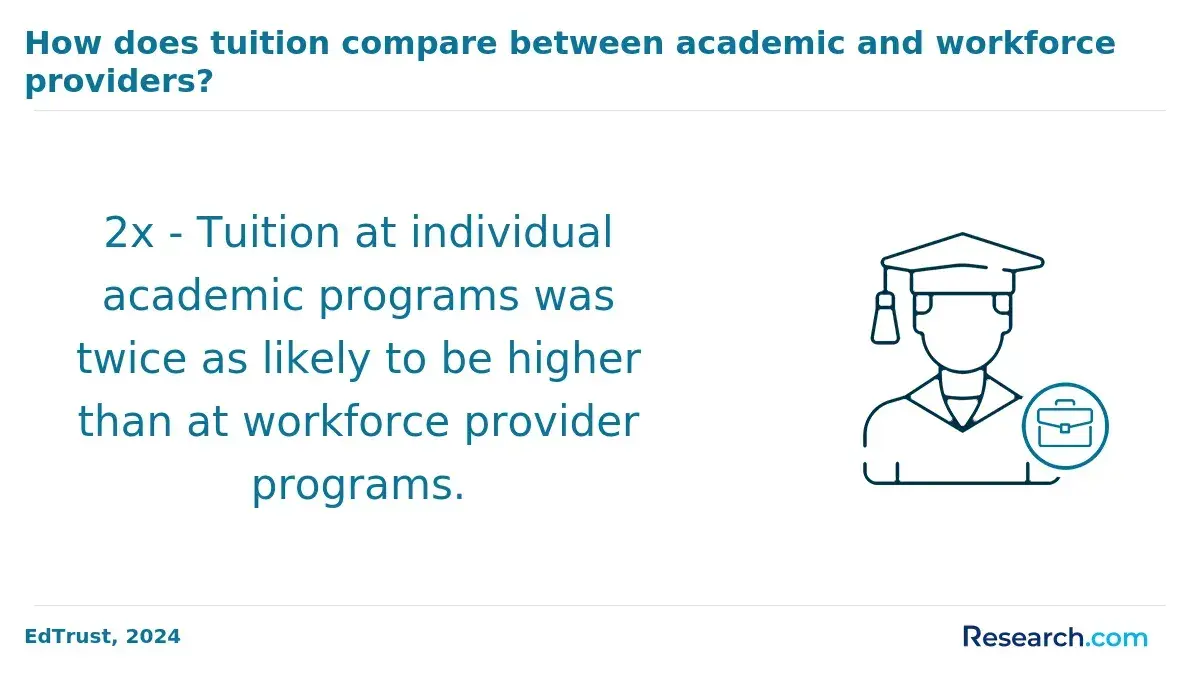
Transfer credits can be one of the biggest time-savers in an accelerated online public policy doctorate, but they are also one of the most misunderstood. Schools may cap the number of transferable credits, limit credits by age, require a minimum grade, or reject credits that overlap poorly with doctoral learning outcomes.
The table below summarizes common transfer scenarios. It can help you estimate whether your prior graduate work is likely to reduce your timeline or simply strengthen your application.
| Prior academic work | Transfer potential | Likely impact on timeline | What to verify |
| Recent MPA, MPP, public affairs, or public administration master's credits | Often strongest match | May reduce elective or foundation coursework | Maximum transfer cap and course equivalencies |
| Graduate statistics, research methods, economics, or evaluation courses | Potentially valuable | May prevent delays in advanced methods courses | Whether the course meets doctoral-level rigor expectations |
| Specialized graduate work in health policy, social policy, planning, or criminal justice | Useful if aligned with concentration | May shorten concentration requirements | Whether credits count as electives or core requirements |
| Old graduate credits | Variable | May have little effect if outside the school's time limit | Credit age policy and petition process |
| Professional certificates or noncredit training | Usually limited | May support admissions but not reduce credits | Whether the school awards credit for prior learning |
A transfer-friendly program is not automatically faster unless the accepted credits remove courses from the required sequence. For example, transferring elective credits may lower cost but may not accelerate graduation if required courses are offered only once per year.
Before you apply, take these steps to protect your timeline:
- Request an unofficial transfer review before paying an enrollment deposit.
- Send syllabi, catalog descriptions, transcripts, and major assignments when available.
- Ask whether transfer credits reduce total credits, replace specific required courses, or only satisfy electives.
- Confirm whether transferred credits affect financial aid eligibility or full-time status.
- Get the transfer decision in writing and save it with your degree plan.
The biggest red flag is vague language such as "up to" a certain number of transfer credits without a clear review process. That phrase describes a maximum, not a promise.
What Program Features Help Students Complete an Online Public Policy Doctorate Faster?
Accelerated completion depends less on the word "online" and more on program architecture. The best fast-track programs make it easy to move from admission to coursework to research without waiting through long administrative gaps.
The following features are especially important because they reduce downtime and prevent bottlenecks:
- Multiple start dates each year, so students do not lose a semester waiting to begin.
- Year-round enrollment options that allow motivated students to take summer or intensive terms.
- Shorter course sessions, such as 7- or 8-week terms, when paired with realistic workload expectations.
- A published course rotation showing when required courses are offered.
- Embedded research milestones, including topic development, proposal writing, data planning, and defense preparation.
- Dedicated doctoral advising rather than general graduate advising only.
- Clear residency rules, including whether any campus visits, synchronous weekends, or in-person defenses are required.
- Faculty with public policy, public administration, program evaluation, economics, governance, or sector-specific expertise that matches the student's topic.
Online education trends make these features more important. As more graduate programs use virtual advising, learning management systems, video defense platforms, and digital research tools, students can move faster only when the institution coordinates those tools well. Technology alone does not accelerate a doctorate; well-designed sequencing does.
Students should also compare synchronous and asynchronous formats. Asynchronous courses are more flexible for professionals across time zones, while synchronous sessions may create stronger accountability. The fastest format is the one you can sustain consistently, not the one that looks easiest on paper.
What Factors Most Commonly Delay Graduation From an Accelerated Online Public Policy Doctorate?
Most delays come from predictable issues rather than lack of ability. Students often lose time when the program's advertised timeline assumes perfect course availability, approved transfer credits, immediate research progress, and no work or family interruptions.
Watch for these common delay factors when comparing programs:
- Unclear dissertation or capstone expectations: Students may finish coursework quickly but spend extra terms defining a feasible project.
- Limited faculty availability: A program can slow down if too few faculty members can supervise a student's policy area or method.
- Residency surprises: Some online programs still require campus intensives, in-person presentations, or synchronous weekends.
- Course sequencing problems: Missing one required course can delay graduation if it is offered only annually.
- Transfer credit assumptions: Prior graduate credits may not apply to doctoral core requirements.
- Overloaded schedules: Accelerated terms can be difficult for students working full time, especially during methods, statistics, or proposal courses.
- Data access problems: Policy research often depends on agency records, survey approval, interviews, or organizational permission.
A practical way to avoid delays is to build a "realistic timeline," not a marketing timeline. Ask the school for the median or typical completion time for recent online doctoral students in the same program format. If the school only provides the fastest possible timeline, treat that as a best-case scenario rather than a planning number.
Another mistake is choosing a topic that is too broad, such as "poverty policy" or "education reform." Faster projects usually have a narrow population, clear data source, defined policy problem, and manageable method.
Which Accelerated Online Public Policy Doctorate Programs Are Best for Working Professionals?
The best accelerated online public policy doctorate for working professionals is usually a flexible, applied program that allows students to connect coursework and research to their current job. This is especially true for people in government agencies, nonprofit organizations, consulting firms, advocacy groups, higher education, healthcare administration, and public-sector management.
Working professionals should prioritize fit over the shortest advertised timeline. A program that requires heavy synchronous participation during business hours may be less realistic than a slightly longer program with evening sessions, asynchronous coursework, and predictable deadlines.
The table below compares common enrollment models for professionals. It shows why the fastest choice depends on workload, employer support, and personal capacity.
| Enrollment model | Typical pace | Strength | Risk | Best for |
| Full-time accelerated | Heavier course load with year-round study | Shortest academic timeline | High workload pressure | Students with flexible jobs, employer support, or reduced outside obligations |
| Part-time accelerated | Steady pace using shorter terms or continuous enrollment | Better balance for full-time workers | May extend total time | Professionals who need predictable weekly commitments |
| Cohort-based | Students progress together through a set sequence | Accountability and clearer planning | Less flexibility if a course is missed | Students who benefit from structure |
| Self-paced or competency-supported | Progress may vary by completed milestones | Can reward experienced learners | Requires strong self-management | Highly organized professionals with relevant prior knowledge |
Professionals should also evaluate employer tuition benefits. Even partial reimbursement can change the value calculation, but it may come with service commitments, grade requirements, or annual reimbursement caps. Those policies can affect whether a full-time accelerated load or a slower part-time pace makes more financial sense.
For many working adults, the best program is the one that lets them use their workplace as a learning laboratory. A policy analyst might evaluate implementation outcomes, a nonprofit director might study service access, and a city administrator might examine budgeting or community engagement processes.
Does Accelerating an Online Public Policy Doctorate Affect Cost or Academic Quality?
Acceleration can reduce total cost if it lowers the number of terms enrolled, reduces fees, or lets students graduate before additional tuition increases. However, faster is not always cheaper. Some programs charge by credit, some charge by term, and others add doctoral, technology, residency, or continuation fees.
According to the latest NCES graduate tuition data released in recent federal tables, average graduate tuition and required fees vary sharply between public and private institutions. That matters because a shorter program at a high per-credit cost may still be more expensive than a longer program with lower tuition and strong transfer credit acceptance.
The table below shows the main cost-quality trade-offs students should evaluate. It is not a ranking; it is a decision framework for comparing programs fairly.
| Factor | How acceleration can help | How it can hurt | What to check |
| Tuition structure | Fewer enrolled terms may reduce total fees | High per-credit tuition can offset time savings | Total program cost after transfer credits |
| Financial aid | Full-time status may preserve aid eligibility | Borrowing more per term can increase repayment pressure | Loan rates, aid limits, and employer reimbursement timing |
| Academic quality | Structured milestones can improve persistence | Compressed courses can reduce reflection time if overloaded | Regional accreditation, faculty credentials, and research support |
| Career value | Earlier completion may support promotion or leadership applications sooner | A weakly aligned program may not improve target opportunities | Curriculum match, alumni outcomes, and employer recognition |
Quality should be nonnegotiable. At minimum, confirm institutional accreditation from an agency recognized by the U.S. Department of Education or the Council for Higher Education Accreditation. Programmatic accreditation is less standardized in public policy than in fields such as nursing or counseling, so students should look closely at faculty expertise, doctoral research support, assessment standards, and employer relevance.
Acceleration is worth considering when it saves time without forcing you to skip essential preparation in research methods, policy analysis, ethics, budgeting, economics, governance, and program evaluation.
Which Careers Benefit Most From Completing an Accelerated Online Public Policy Doctorate?
An accelerated online public policy doctorate can be valuable for professionals who need advanced credibility in policy design, evaluation, leadership, teaching, or applied research. It is usually most relevant for people already working near policy decisions rather than career changers with no public-sector or analytical background.
BLS May 2024 data place the median annual wage for political scientists at $139,380, a useful benchmark for research-heavy policy roles. However, many public policy doctorate holders work in broader categories such as administration, social services, consulting, education, or nonprofit leadership, where compensation varies by sector and seniority.
The table below shows career areas where doctoral-level policy training may be especially useful. Use it to connect degree format with likely professional outcomes.
| Career area | How the doctorate may help | Best completion pathway | Important skills |
| Policy analysis and research | Supports advanced evaluation, evidence synthesis, and policy design roles | Dissertation or applied dissertation | Quantitative methods, writing, economics, research design |
| Government and public administration leadership | Builds credibility for executive, strategic planning, and governance roles | Applied dissertation or capstone | Budgeting, public management, ethics, stakeholder communication |
| Nonprofit and social impact leadership | Helps leaders evaluate programs, advocate for funding, and shape policy agendas | Applied capstone | Program evaluation, grant strategy, equity analysis, organizational leadership |
| Higher education and teaching | May support faculty, lecturer, or academic administration roles | Traditional dissertation or research-intensive applied dissertation | Research, publishing, curriculum design, mentoring |
| Consulting and public affairs | Strengthens expertise for advising agencies, foundations, and advocacy organizations | Applied dissertation or portfolio | Data storytelling, client communication, implementation analysis |
Students focused on human services or social policy may also compare doctorate options with the best online MSW programs, especially if their desired role requires social work licensure rather than policy research or administrative leadership.
The degree is less likely to pay off for students who only need entry-level policy knowledge. In that case, a master's degree, graduate certificate, or targeted technical training in data analysis, budgeting, or program evaluation may offer a better near-term return.
Which Students Are Most Likely to Succeed in an Accelerated Online Public Policy Doctorate?
Students most likely to succeed are those who enter with a clear policy interest, strong writing habits, realistic weekly study time, and prior exposure to graduate-level research or analysis. Accelerated doctoral work rewards consistency more than last-minute intensity.
Successful students often share these characteristics:
- They already know the policy area they want to study, such as housing, education, health, criminal justice, labor, environmental regulation, budgeting, or social welfare.
- They can reserve regular writing and reading time each week, even during busy work periods.
- They are comfortable asking faculty for feedback early instead of waiting until a project is nearly finished.
- They understand that online doctoral programs still require collaboration, deadlines, research ethics training, and formal review processes.
- They choose a research topic that fits available data, faculty expertise, and the program's required methodology.
Students who may struggle in an accelerated format include those entering mainly for the title, those unsure whether they want practice or research careers, and those without enough time for sustained independent work. A slower program can be the smarter choice if it improves retention, learning, and research quality.
Academic background also matters. Students coming from sociology, political science, economics, public administration, urban studies, or social work may adapt more quickly because they have already studied institutions, inequality, research methods, or public systems. Applicants building that foundation earlier in their education can explore pathways such as the best online bachelor's in sociology programs before moving into graduate public policy study.
A good self-test is simple: if you cannot explain your likely doctoral topic in two or three sentences, you may need more preparation before choosing the fastest pathway.
How Should Students Compare Accelerated Online Public Policy Doctorate Programs?
Students should compare accelerated online public policy doctorate programs by verified completion structure, not by marketing language. The best program is the one that shortens time to graduation while matching your career goal, research readiness, budget, and schedule.
Use this step-by-step process before applying or enrolling:
- Define your outcome first: Decide whether you need the doctorate for leadership, policy research, consulting, teaching, promotion, or personal scholarly development.
- Confirm the degree type: Compare DPA, DPP, PhD, and interdisciplinary doctorates based on whether they emphasize practice, scholarship, or both.
- Verify accreditation: Check institutional accreditation through recognized sources and review faculty qualifications.
- Request a written degree plan: Ask how courses, transfer credits, residencies, and the dissertation or capstone fit into each term.
- Ask for real completion data: Look for typical completion time, not only the shortest possible timeline.
- Model total cost: Include tuition, fees, books, residencies, continuation credits, technology costs, and loan interest.
- Evaluate research support: Confirm advisor availability, proposal support, data approval processes, and defense expectations.
- Test schedule feasibility: Compare weekly workload with your job, family responsibilities, and peak professional seasons.
When comparing offers, avoid assuming that fewer credits always mean faster completion. Course availability, research sequencing, transfer approval, and faculty support often matter more than the advertised credit total.
A strong accelerated program should be able to answer these questions clearly:
- How many credits can realistically transfer into this specific doctorate?
- Which required courses cannot be waived or transferred?
- How early do students begin the dissertation, capstone, or applied project?
- Are any campus visits, live sessions, internships, or defenses required?
- What happens if a student needs to slow down for one term?
- What support exists for students who struggle with statistics, research design, or academic writing?
The best decision balances speed, quality, cost, and career relevance. If two programs look similar, choose the one with clearer advising, stronger faculty alignment, and more transparent completion data.
Other Things You Should Know About Public Policy
Public policy focuses on designing, analyzing, and evaluating laws, programs, and public decisions. Public administration focuses more on managing agencies, budgets, personnel, and service delivery. Many doctorate programs overlap, but policy-heavy programs usually emphasize research and analysis, while administration-heavy programs emphasize leadership and implementation.
Public policy itself is not typically a licensed profession. However, related careers may have separate requirements. For example, social work, counseling, law, education administration, and some planning roles may involve state-specific credentials or employer requirements.
Yes, some programs accept applicants with related master's degrees in fields such as sociology, economics, political science, social work, urban planning, public health, criminal justice, or education. Applicants may need prerequisite coursework in research methods, statistics, economics, or public administration.
It can be, if the institution is properly accredited, the curriculum is rigorous, and the program aligns with the employer's expectations. Employers usually care more about accreditation, skills, research quality, professional experience, and reputation than whether coursework was completed online.
References
- Doctor of Public Policy (DPP) https://www.cgu.edu/academics/program/doctor-public-policy/
- Doctor of Public Administration (DPA) Online: Top Programs https://www.phds.me/online-programs/doctor-of-public-administration-dpa/
- How a PhD Accelerates Your Career in Any Industry https://realprofessors.org/how-a-phd-accelerates-your-career-in-any-industry/
- Understanding the Value in a Public Policy Degree https://www.callutheran.edu/programs/articles/understanding-value-public-policy-degree/
- The Importance of Understanding Transfer Credit Policies https://www.sophia.org/blog/higher-education/understanding-transfer-credit-policies/
- Best Online Ph.D. in Public Administration Programs (2026) – PublicAdministrationPolicy.org https://publicadministrationpolicy.org/degree/phd-in-public-administration/
- How Long Does It Take to Get a PhD After a Master's Degree? https://streamlinedai.app/blog/how-long-phd-after-masters
- PhD advice for policy careers | Emerging Technology Policy Careers https://emergingtechpolicy.org/pathways/graduate-school/phds/
- New Public Agenda Survey Finds Broad Support to Improve Credit Transfer for Colleges & Universities - Public Agenda https://publicagenda.org/news/bt-pr/
- How long should a PhD take today - Swiss School of Business Research https://ssbr-edu.ch/how-long-should-a-phd-take-today/