2027 Cheapest Accredited Online Elementary Education Master's Programs With No Out-of-State Tuition Surcharge

Co-Founder and Chief Data Scientist
An online elementary education master's can be affordable for out-of-state students, but a flat online tuition rate does not automatically mean the lowest total price. This guide is for current and prospective teachers comparing accredited programs without a nonresident surcharge. The U.S. Bureau of Labor Statistics projects elementary school teacher employment to decline 1% from 2023 to 2033, making cost control and career alignment especially important. Learn how to verify tuition, accreditation, licensing fit, fees, financial aid, and potential return on investment before applying.
Key Things You Should Know
- No out-of-state surcharge means eligible online students pay the same published tuition regardless of residence; it does not mean tuition is free, in-state, or automatically the lowest available.
- Compare required credits multiplied by the online rate, then add mandatory fees, books, licensure expenses, and any practicum travel before deciding which program is cheapest.
- Accreditation and state licensure fit matter as much as price: the BLS projects a 1% decline in elementary teacher employment from 2023 to 2033, so choose a degree that supports a specific advancement goal.
What Does No Out-Of-State Tuition Surcharge Mean for an Online Elementary Education Master's Program?
A no-out-of-state-tuition-surcharge program charges online students one tuition rate regardless of where they live. At a public university, this usually replaces the higher nonresident rate with an online, distance-learning, or universal tuition rate. At a private nonprofit university, there may already be one rate for all students, so there is no residency-based surcharge to waive.
This policy can be especially useful for licensed teachers who want to remain employed in another state. However, it is not necessarily equivalent to receiving the university's resident rate. A school may set one online rate that is lower than nonresident tuition but higher than campus-based in-state tuition. It also may exclude certain programs, cohorts, endorsements, or field-based courses.
Before treating a rate as residency-neutral, confirm these details in writing with enrollment services:
- The published tuition applies specifically to the online elementary education master's program.
- The rate applies to every required credit, including capstone, practicum, and internship courses.
- Your state of residence does not affect tuition, admission eligibility, field placement, or licensure support.
- Mandatory distance-learning, technology, student-service, and course fees are included or separately identified.
A common mistake is reading "online students pay the same rate" as "this is the cheapest program." A residency-neutral rate is a pricing structure, not a value judgment. The better comparison is total cost after aid, required credits, fees, travel, and the time needed to finish.
How Can Students Verify Accreditation for an Affordable Online Elementary Education Master's Program?
Start with institutional accreditation. A legitimate degree-granting university should be accredited by an institutional accreditor recognized by the U.S. Department of Education or the Council for Higher Education Accreditation. Verify the institution in the accreditor's directory rather than relying only on a logo or marketing statement on a program page.
Programmatic accreditation is different. Elementary education programs may hold specialized accreditation through an educator-preparation accreditor, but it is not universal and is not the only indicator of quality. More important for a teacher seeking a license, endorsement, or salary-lane advancement is whether the program meets the requirements of the relevant state education agency and district contract.
Use the following verification sequence before paying an application fee:
- Confirm the university's institutional accreditation and current accreditation status.
- Review whether the education school or educator-preparation program lists specialized accreditation, approval, or state authorization.
- Ask whether the online degree is designed for already licensed teachers, initial licensure candidates, or both.
- Contact your state licensing agency to confirm whether the curriculum, practicum, and testing pathway fit your intended credential.
- Request written confirmation of any state restrictions on online enrollment or student teaching placements.
Institutional accreditation generally affects credit transferability and federal financial-aid eligibility, while program approval can affect whether the degree helps meet teacher-licensure requirements. Do not confuse either with professional counseling accreditation; students exploring career changes should evaluate online mental health counseling programs (CACREP-accredited) under their separate professional standards.
How Much Does the Cheapest Online Elementary Education Master's Program Cost in Total?
The cheapest advertised tuition is not always the lowest total cost. Calculate total tuition by multiplying the program's required credits by the applicable online per-credit rate, then add required fees and expenses that cannot reasonably be avoided. A 30-credit program with a $400 per-credit rate, for example, has estimated tuition of $12,000 before fees; that calculation is useful only if all 30 credits are required at that rate.
This comparison framework separates the main cost categories that applicants should request from every school.
| Cost category | How to calculate it | Why it changes the comparison |
| Tuition | Required credits × online per-credit rate | Programs may require different credit totals. |
| Mandatory institutional fees | Per-term or per-credit fees × expected enrollment terms | Part-time students may pay more terms of fees. |
| Program-specific expenses | Course materials, testing, background checks, and licensure items | These costs can differ by state and program pathway. |
| Travel and placement costs | Required campus visit or field-placement travel estimate | A mostly online program may still require in-person work. |
| Net cost | Total direct costs − grants, scholarships, and employer support | This is the amount most relevant to borrowing decisions. |
Ask for a program-specific financial estimate rather than a university-wide graduate tuition page. Tuition may change annually, may differ by course level, and may exclude fees. Also ask whether the school locks your tuition rate at enrollment or can adjust it while you are completing the degree.
A lower per-credit price can lose its advantage when a program requires more credits, adds several fee-bearing terms, or includes travel-intensive requirements. Conversely, a slightly higher rate can be less expensive overall if it accepts applicable transfer credit or can be completed with fewer enrollment periods.
Do Online Elementary Education Master's Students Have to Establish Residency to Receive the Lowest Tuition Rate?
Usually, no. A true nationwide online tuition policy does not require students to establish residency because the school charges the same eligible online rate to residents and nonresidents. The admissions office should be able to state this plainly in the tuition schedule or enrollment agreement.
Some institutions use more limited language, such as "out-of-state tuition waiver," "select state eligibility," or "military rate." Those policies may require a particular residence, employment location, military affiliation, reciprocal agreement, or enrollment condition. They can be valuable, but they are not the same as an unconditional national online rate.
Residency can still matter outside tuition. It may affect state aid, teacher-certification reciprocity, field-placement approval, background-check rules, and whether the university is authorized to enroll students in your state. Teachers pursuing a license or additional endorsement should prioritize the rules of the state where they intend to work over a small tuition difference.
How Do Public and Private Universities Compare on the Cost of an Online Elementary Education Master's Degree?
Public universities often offer competitive online tuition, especially when they extend one rate to all distance learners. Private nonprofit universities commonly use one tuition schedule regardless of residency, which can simplify budgeting. Neither model is always less expensive: the decisive figures are required credits, institutional fees, aid, transfer policies, and completion time.
The table highlights the typical trade-offs rather than assuming one institutional category provides better value.
| Factor | Public university | Private nonprofit university | What to compare |
| Residency pricing | May have in-state, out-of-state, or universal online rates | Often one rate for all students | Whether the stated rate applies to your program and location |
| Tuition structure | May be lower before fees | May be higher per credit but more predictable | Total required tuition and fee estimate |
| Financial aid | May offer institutional and state-related opportunities | May offer institutional merit or mission-based aid | Grant and scholarship eligibility for online graduate students |
| Program scheduling | Can vary by department and term | May use structured cohorts and frequent starts | Whether pacing fits your work schedule |
| Licensure support | Often connected to its state system | May support multiple states but with restrictions | Written confirmation for your target state |
Private and nonprofit are not opposing labels: many private universities are nonprofit. A private nonprofit may be worth a higher sticker price when its schedule reduces missed work, its advising supports your state's requirements, or its aid makes the net cost competitive. For a useful contrast in another applied field, review how cost and outcomes are weighed in an online MSW search.
Can Financial Aid Reduce the Cost of a Cheap Online Elementary Education Master's Program?
Yes. Eligible graduate students may use federal Direct Unsubsidized Loans, and some may use Graduate PLUS Loans after other aid is considered. Graduate students generally are not eligible for Federal Pell Grants, so scholarships, employer assistance, state programs, district benefits, and tuition discounts can have an outsized effect on net price.
Complete the FAFSA early, even if you expect to use employer reimbursement. It can establish eligibility for federal loans and help a school assess certain institutional aid. Borrow only after comparing the amount you need with expected repayment obligations and your likely salary progression under your district's pay schedule.
These questions can uncover aid that is not obvious from the tuition page:
- Are online graduate students eligible for the same institutional scholarships as campus students?
- Does the school offer educator, alumni, military, district-partner, or cohort discounts?
- Does employer tuition assistance require preapproval, a minimum grade, or continued employment?
- Are books, licensure tests, and fees reimbursable under your employer's policy?
- Will the school bill your employer directly, or must you pay first and seek reimbursement later?
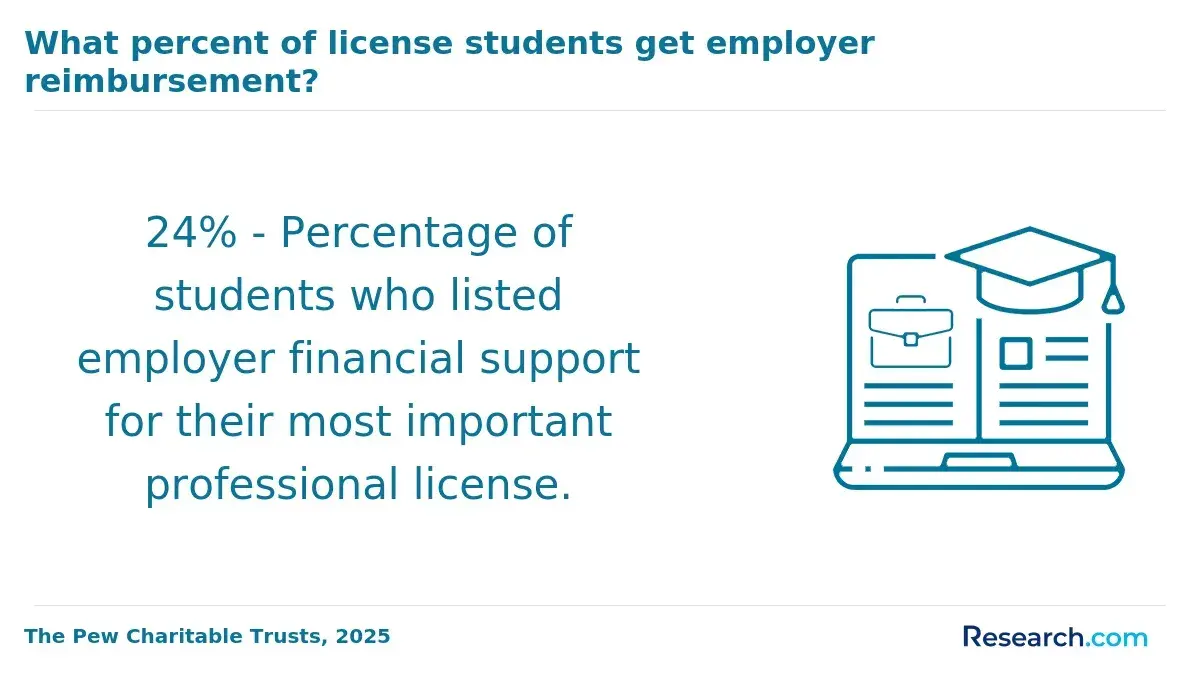
Do not assume employer support makes tuition irrelevant. Reimbursement may have annual caps or repayment conditions if you leave the employer. The same net-cost discipline applies across graduate fields, including when comparing a master's degree in marketing: evaluate aid terms, tuition, duration, and career purpose together.
How Do Program Format and Completion Time Affect the Cost of an Online Elementary Education Master's Degree?
Format changes both direct and indirect costs. Fully online asynchronous programs may allow working teachers to avoid relocation and attend around classroom schedules. Hybrid programs may provide face-to-face support but can add travel, lodging, and missed-work expenses. Synchronous classes can offer real-time interaction while limiting scheduling flexibility.
An accelerated program can reduce the number of terms in which you pay recurring fees and may help you qualify sooner for a salary-lane change. It can also create a heavier weekly workload, which may be difficult during the school year. A traditional or part-time format can be more manageable, but taking longer may expose you to future tuition increases and additional term fees.
Compare formats using the practical factors below, not completion time alone.
| Format | Potential cost advantage | Potential cost risk | Best fit |
| Fully online asynchronous | Minimal commuting and flexible pacing | May require strong self-management | Working teachers with variable schedules |
| Fully online synchronous | No campus commute for most courses | Required meeting times can conflict with school duties | Students who prefer live instruction |
| Hybrid | May offer local networking and hands-on support | Travel and campus-visit expenses | Students near campus or needing in-person services |
| Accelerated | Fewer terms and quicker completion | High course load may reduce work flexibility | Students with time and employer support |
| Part-time | Spreads payments over time | More terms of fees and potential tuition changes | Teachers balancing family and full-time work |
Confirm whether "online" includes orientation, capstone presentations, student teaching, practicum observations, or other in-person obligations. Students comparing fast programs in other disciplines can see how pace affects planning through an accelerated paralegal program online review.
How Much Can Transfer Credits Reduce the Cost of an Online Elementary Education Master's Degree?
Transfer credits can reduce tuition only when a program accepts them and applies them to degree requirements. Many master's programs limit the number of graduate credits that may transfer, require a minimum grade, impose an age limit on prior coursework, and review equivalency course by course. A school may accept a credit on the transcript without using it toward the degree.
For elementary education, transferability can be more limited in licensure-oriented programs because state-approved coursework, clinical experiences, and assessment requirements must align with the school's preparation pathway. Already licensed teachers in nonlicensure M. Ed., M.A., or MS programs may have more flexibility than initial-certification candidates.
Request a preliminary transfer evaluation before committing when possible. Send official transcripts, course descriptions, syllabi, and evidence of field experiences if requested. Then compare the school's written determination with its per-credit tuition and residency-neutral pricing. A low rate on 36 required credits may cost more than a higher rate on 27 credits after accepted transfer work.
Do not assume professional development, undergraduate education courses, or prior teaching experience will convert to graduate transfer credit. Ask separately about transfer credit, credit by examination, portfolio assessment, and advanced standing, because each policy can have different eligibility rules.
Is a Cheap Online Elementary Education Master's Degree Worth the Cost for Career Advancement?
A low-cost online master's can be worthwhile when it directly supports a documented career goal: moving into a district salary lane, adding an approved endorsement, qualifying for instructional leadership study later, strengthening elementary curriculum expertise, or meeting an employer's education requirement. It is less compelling when the degree does not match your state credential rules or when the likely pay increase does not justify the net cost and borrowing.
The U.S. Bureau of Labor Statistics projects a 1% decline in elementary teacher employment from 2023 to 2033. That national projection does not predict openings in every district; replacement needs, enrollment, location, and state funding vary. Use it as a reason to target a degree toward an identifiable advantage rather than assuming any master's degree will create a new teaching job.
Elementary education master's degrees are commonly offered as an M. Ed., MA, or MS. An M. Ed. is often practice-oriented and suited to working educators; MA and MS programs may emphasize curriculum, research, literacy, STEM, or educational theory. Programs may be generalist or specialized, thesis-based or capstone-based. A thesis may fit students considering doctoral study, while a capstone is often more practical for classroom professionals.
Before enrolling, compare your expected net cost with your district's written salary schedule and ask whether the degree must be regionally relevant, accredited, preapproved, or completed before a contract deadline. Career changers may also consider broad academic pathways and their online interdisciplinary studies degree career outcomes before selecting a credential with a narrower professional focus.
How Should Students Compare the Cheapest Accredited Online Elementary Education Master's Programs?
Build a short list using total cost and fit rather than an advertised tuition ranking. The best program for an out-of-state teacher is often the one with transparent nationwide tuition, recognized institutional accreditation, a curriculum that matches the intended role, and a realistic path to completion while working.
Use the same information for every finalist so that one program's marketing language does not distort the comparison.
| Comparison item | What to collect | Decision signal |
| Tuition policy | Written online rate and residency terms | Confirms whether a nonresident surcharge applies |
| Total direct cost | Required credits, tuition, and mandatory fees | Shows the meaningful price difference |
| Accreditation and approval | Institutional accreditor and state/program approval details | Protects licensure and transfer options |
| Program design | M. Ed., MA, or MS; concentration; thesis or capstone | Connects curriculum to career goals |
| Format and timing | Course schedule, completion range, and campus requirements | Tests whether the program is workable while employed |
| Transfer and aid | Written transfer evaluation and aid estimate | Identifies the likely net cost |
| Career and licensure fit | State eligibility and district salary-lane rules | Shows whether the investment serves its purpose |
After narrowing the list, contact admissions, financial aid, and the education department separately. Ask each office to confirm its part of the decision in writing, because tuition, aid, clinical placement, and licensure information may be managed by different teams.
Red flags include a tuition page that does not name the program, vague claims about nationwide eligibility, missing fee information, pressure to enroll before a transfer review, and promises that a degree automatically leads to licensure or a salary increase. A transparent school should provide its catalog requirements, online tuition schedule, state-authorization information, and a clear explanation of any field experience.
Other Things You Should Know About Elementary Education
It depends on the program. Many online M. Ed., MA, and MS programs are designed for licensed teachers seeking advancement. Initial-licensure programs may accept candidates without a license but typically require supervised field experiences, state testing, and placement eligibility.
Some programs are designed for initial licensure, but eligibility depends on the university's approval in your state and your state education agency's rules. Confirm this before enrollment, particularly if you live outside the university's home state.
Applicants commonly submit a bachelor's degree transcript, application, personal statement, résumé, and recommendation letters. Some programs also require a teaching license, minimum GPA, background check, interview, or documentation of classroom access for field-based assignments.
They are common in programs leading to initial licensure and may appear in specialized endorsement pathways. Programs for already licensed teachers may use classroom-based projects or observations instead. Ask whether the school arranges placements, whether you must find one, and whether travel is required.
References
- Online Master's in Education: Compare Top California Schools https://www.onlinemastersdegrees.org/best-programs/education/california-ca/
- Financial Aid For Online Colleges https://www.affordablecollegesonline.org/financial-aid/financial-aid-for-online-colleges/
- 2025 Most Affordable Online Secondary Education Master's Degrees https://www.onlineu.com/most-affordable-colleges/secondary-education-masters-degrees
- Online Master of Education in Learning and Instruction Degree Programs - USC Upstate https://online.uscupstate.edu/degrees/graduate/education/masters-learning-instruction/
- Guide to Online Education Degrees | OEDb.org https://www.oedb.org/rankings/online-education-programs/
- 11 tuition-free universities in the US for master's degrees https://studyinternational.com/news/tuition-free-universities-in-the-us/
- Master of Education (MEd) in Elementary Education - Online Program https://online.worcester.edu/programs/education/med-elementary-education/
- 18 Scholarships & Grants for Teachers & Education Majors https://www.salemu.edu/blog/how-can-teachers-pay-for-a-masters-degree/