2027 Can You Get Into an Online Public Health Doctorate Program with a Low GPA? Admission Chances and Alternatives

Co-Founder and Chief Data Scientist
A low GPA can make doctoral admissions feel out of reach, but it does not always end the conversation-especially in professional online public health doctorate programs. The U.S. Bureau of Labor Statistics reports that medical and health services managers had a median annual wage of $117,960 in May 2024, which helps explain why experienced health professionals are weighing doctoral credentials carefully. This guide is for applicants with uneven academic records who want realistic admission options, ways to strengthen an application, and alternatives if applying now is not the smartest move.
Key Things You Should Know
- A GPA below 3.0 is commonly considered low for doctoral admissions, but online DrPH and practice-focused public health doctorates may still review applicants holistically if they show strong graduate performance, leadership, quantitative readiness, and relevant public health experience.
- Career demand can justify careful planning: the BLS projects medical and health services manager employment to grow 29% from 2023 to 2033, so applicants should focus on programs that connect doctoral training to leadership, analytics, policy, or population health goals.
- Federal graduate Direct Unsubsidized Loans are capped at $20,500 per academic year, so applicants with low GPAs should compare admission flexibility, total cost, accreditation, and funding policies before choosing between applying now, taking extra coursework, or completing a related master's or certificate first.
Can You Get Into an Online Public Health Doctorate Program With a Low GPA?
Yes, you can sometimes get into an online public health doctorate program with a low GPA, but your chances depend on how low the GPA is, whether it is undergraduate or graduate GPA, and how the program evaluates academic readiness. In most cases, a GPA below 3.0 is a concern because doctoral study requires advanced writing, research interpretation, statistics, leadership analysis, and long-term independent work. However, a lower undergraduate GPA from years ago may matter less if you later earned strong graduate grades or built a substantial public health career.
The type of doctorate matters. A Doctor of Public Health, or DrPH, is usually a professional doctorate for experienced practitioners who want leadership roles in public health agencies, healthcare organizations, nonprofits, consulting, global health programs, or policy organizations. A PhD in public health is usually more research-intensive and may place heavier emphasis on prior research, faculty fit, methodological preparation, and academic performance. Online public health doctorates are more often DrPH or professional-practice programs, although some schools offer hybrid or limited-residency research pathways.
This table summarizes how GPA is commonly interpreted by program type. It is not a universal admissions rule, but it can help you estimate where your academic record may create barriers and where other strengths may matter more.
| Program type | Typical GPA expectation | How a low GPA is usually evaluated | Best fit for a low-GPA applicant |
| Online DrPH or practice-focused doctorate | Often around 3.0 minimum, especially for prior graduate work | May consider leadership, professional impact, recommendations, statement, and recent coursework | Applicants with public health experience, supervisory responsibilities, policy work, program evaluation, or community health leadership |
| Online or hybrid PhD in public health | Usually more academically selective | Research preparation, statistics, publications, faculty match, and graduate GPA may carry substantial weight | Applicants with strong recent academic evidence, research experience, and a clear dissertation direction |
| Executive or mid-career doctorate | May still require a minimum GPA but often emphasizes experience | Career progression and leadership portfolio can help offset older academic weakness | Applicants with several years of advanced public health, healthcare, nonprofit, government, or consulting experience |
| Doctorate with conditional admission | May admit below the standard threshold in limited cases | Admission may depend on earning specific grades in initial courses | Applicants whose GPA is slightly below the standard but whose file shows readiness |
The strongest low-GPA candidates usually do not ask schools to ignore their GPA. They show that the GPA is incomplete evidence. For example, a 2.8 undergraduate GPA followed by a 3.7 MPH GPA, strong biostatistics grades, five years of population health experience, and excellent recommendations is very different from a recent 2.8 graduate GPA with no explanation and little relevant experience.
The main mistake to avoid is applying as if GPA requirements are flexible everywhere. Some programs use firm minimums for accreditation, graduate school policy, or applicant screening. Before paying application fees, ask whether the stated GPA minimum is absolute, whether the school considers last 60 credits or graduate GPA separately, and whether conditional admission is available.
What Admissions Factors Matter Most Beyond GPA for Online Public Health Doctorate Programs?
Beyond GPA, online public health doctorate programs look for evidence that you can succeed in advanced, applied, and often self-directed study. For DrPH programs, admissions committees may care as much about professional maturity and leadership trajectory as about a single cumulative GPA. For PhD-oriented programs, research fit and methodological preparation may carry more weight.
Admissions readers typically evaluate whether your file answers one core question: can this applicant complete doctoral-level work and use it meaningfully in public health practice or research? The following factors often help answer that question.
- Graduate-level performance: Strong grades in an MPH, MS, MHA, MBA, or related graduate program can reduce concern about weak undergraduate performance, especially if the low GPA is old.
- Quantitative readiness: Good grades in biostatistics, epidemiology, research methods, economics, informatics, or data analysis courses can matter because public health doctorates require interpreting evidence and evaluating programs.
- Professional experience: Relevant work in health departments, hospitals, community organizations, policy offices, NGOs, consulting firms, or population health teams can strengthen a DrPH application.
- Leadership evidence: Supervising staff, managing grants, leading interventions, improving health equity initiatives, or influencing policy can show readiness for a practice-focused doctorate.
- Statement of purpose: A focused statement should connect your background, doctoral goals, public health problem of interest, and reasons for choosing that program.
- Recommendations: Letters from supervisors, faculty, or public health leaders should speak directly to your analytical ability, writing, judgment, ethics, and readiness for doctoral work.
- Research or evaluation products: Publications, reports, dashboards, program evaluations, conference presentations, policy briefs, or quality improvement projects can demonstrate applied scholarly capacity.
This table shows how common application strengths can compensate for different GPA concerns. Use it to identify the parts of your file that need the most improvement before you apply.
| GPA concern | Most persuasive compensating evidence | Less persuasive evidence | What the admissions committee may still worry about |
| Low undergraduate GPA but strong graduate GPA | Recent A or B+ grades in public health, statistics, epidemiology, or research courses | General claims that you are more mature now | Whether earlier academic issues are fully resolved |
| Low graduate GPA | Additional graduate coursework with strong grades and a clear explanation of circumstances | Work experience alone with no academic improvement | Whether you can handle doctoral-level writing and analysis |
| Weak quantitative grades | Recent statistics, biostatistics, data analytics, or epidemiology coursework | A high verbal or writing score without quantitative evidence | Whether you can evaluate research and population data |
| Long gap since school | Current professional projects, continuing education, and recent academic coursework | Old transcripts only | Whether you can return to structured academic work |
Optional standardized tests can help in limited cases, but they are not a universal fix. A strong GRE quantitative or analytical writing score may support your file if the program accepts it and your weakness is academic uncertainty rather than lack of fit. It is less useful if the program does not consider scores, if your score is average, or if the rest of the application does not show a doctoral-level purpose.
Which Online Public Health Doctorate Programs Offer Flexible Admission Pathways?
Flexible admission pathways are most common in programs that use holistic review, evaluate applicants with substantial professional experience, or offer provisional entry routes. They are less common in highly research-intensive programs where faculty mentorship capacity is limited and admissions decisions depend heavily on research match.
Applicants with low GPAs should look closely at public health programs that explain how they review experience, graduate coursework, and readiness beyond a cumulative GPA. If a doctorate is not yet realistic, some students first target the easiest MPH online programs to get into to build a stronger graduate record before reapplying at the doctoral level.
When comparing flexible pathways, focus on the actual policy language rather than marketing phrases. "Holistic admissions" is helpful only if the school clearly states how it handles applicants below the preferred GPA or allows exceptions through committee review.
| Pathway | How it may help a low-GPA applicant | Best candidate profile | Main caution |
| Holistic review | Allows the committee to weigh experience, statement, recommendations, and recent coursework | Experienced professionals with a clear public health leadership goal | Does not always override a firm minimum GPA |
| Conditional or provisional admission | May allow enrollment if the student earns required grades early in the program | Applicants slightly below the GPA threshold with strong other evidence | Failure to meet conditions can lead to dismissal or loss of full standing |
| Graduate certificate first | Creates recent evidence of academic readiness in public health or analytics | Applicants with old or uneven transcripts | Credits may not always transfer into a doctorate |
| Second master's or related master's pathway | Can rebuild GPA and clarify specialization before doctoral study | Applicants whose prior degree is not in public health or whose graduate GPA is weak | Adds time and cost before doctoral admission |
| Non-degree coursework | Shows readiness in targeted skill areas such as biostatistics or epidemiology | Applicants needing to repair one academic weakness | May not change the official cumulative GPA enough |
A flexible program is not automatically an easier or lower-quality program. The better question is whether the program is transparent, accredited, academically appropriate, and aligned with your career goal. For public health, accreditation by the Council on Education for Public Health is especially important because it signals that the program has been reviewed against field-specific standards.
A low-GPA application needs a strategy, not just hope. Your goal is to make the admissions committee comfortable that your transcript does not represent your current ability. That means every part of the application should point to readiness, focus, and fit.
Use the following steps to strengthen your file before submitting applications. These actions are most useful when they are completed intentionally rather than added at the last minute.
- Audit each program's GPA policy before applying: Confirm the minimum GPA, whether graduate GPA is weighted more heavily, whether exceptions are allowed, and whether conditional admission exists.
- Identify the real weakness in your transcript: Separate old undergraduate issues, weak quantitative grades, low graduate performance, withdrawals, repeated courses, and inconsistent semesters because each needs a different explanation.
- Take targeted coursework if needed: Prioritize biostatistics, epidemiology, research methods, health policy, program evaluation, or data analytics rather than random easy courses.
- Write a focused GPA addendum when appropriate: Briefly explain context, take responsibility, and emphasize specific evidence that your academic performance has improved.
- Choose recommenders who can address readiness: Ask them to discuss writing ability, analytical judgment, leadership, resilience, ethics, and capacity for doctoral work.
- Build a public health portfolio: Include major projects such as grant work, evaluation reports, dashboards, needs assessments, policy briefs, publications, presentations, or program outcomes when the application allows it.
- Tailor the statement of purpose to each program: Connect your experience to the curriculum, faculty expertise, concentration, dissertation or applied practice expectations, and career direction.
The GPA addendum is often misunderstood. It should not be an emotional autobiography or a long list of excuses. A strong addendum might explain a documented disruption, a major life responsibility, health issue, military deployment, caregiving burden, or first-generation adjustment, but it should quickly pivot to evidence: improved grades, successful graduate work, promotions, analytical projects, and readiness for doctoral expectations.
Common mistakes include applying only to prestigious programs with rigid GPA screens, submitting a generic statement, ignoring weak statistics grades, and assuming professional experience will automatically offset academic risk. Experience matters most when it is clearly connected to doctoral goals and supported by evidence of analytical work.
Additional coursework can be a smart move if your transcript does not show recent academic readiness. It is especially useful when your GPA is slightly below a program's threshold, when your low grades are old, or when your weakest grades are in areas central to public health doctoral study. It is less useful if you already have strong recent graduate grades and your application weakness is actually lack of experience, unclear goals, or poor program fit.
Students often choose between a few academic repair options. The right choice depends on how much evidence you need to create, how much time you can invest, and whether the credits may apply to a future degree.
| Option | When it makes sense | Academic value | Cost and time consideration |
| One or two non-degree graduate courses | You need to prove readiness in a targeted area | Strong if courses are rigorous and relevant | Usually faster than a certificate, but credits may not transfer |
| Graduate certificate in public health or analytics | You need a structured recent record | Strong if grades are high and courses match doctoral expectations | Costs more than single courses but may provide a clearer credential |
| MPH or related master's degree | Your prior degree is unrelated or your graduate GPA is weak | Very strong if completed with high grades and field experience | Largest time and cost commitment before a doctorate |
| Statistics or data analytics coursework | Your quantitative preparation is the main concern | High value for epidemiology, biostatistics, evaluation, and informatics tracks | Can be efficient if chosen carefully |
Applicants interested in population nutrition, community nutrition, food policy, or chronic disease prevention may consider a related master's before a doctorate. Comparing the cheapest online master's in nutrition can be useful if your long-term public health goals involve nutrition programs but your current academic record is not yet competitive for doctoral admission.
Before enrolling in extra coursework, ask doctoral programs whether they prefer graded graduate credits, certificate completion, prerequisite retakes, or a full master's degree. Also ask whether they will consider a last 60-credit GPA or recent graduate GPA. Paying for classes without confirming how admissions committees will interpret them is a common and expensive mistake.
Conditional admission and probationary admission are school-specific pathways that may allow an applicant to begin a graduate program without meeting every standard admission benchmark. In an online public health doctorate, these pathways are usually reserved for applicants who show promise but need to prove academic readiness early in the program.
Although policies vary, conditional admission often means the student must satisfy defined requirements before receiving full standing. These requirements may include earning a minimum grade in the first few courses, completing prerequisite coursework, submitting missing documents, or maintaining a specific GPA during the first term or year.
Here are the practical issues to clarify before accepting a conditional or probationary offer. These details matter because the offer may carry academic and financial risk.
- Exact grade requirement: Ask whether you need a B, B+, or higher in each course or only a minimum cumulative GPA after a set number of credits.
- Course restrictions: Confirm whether you must take specific foundational courses first, such as epidemiology, biostatistics, leadership, or research methods.
- Financial aid eligibility: Ask whether conditional status affects access to federal loans, institutional aid, assistantships, or employer tuition benefits.
- Timeline for full admission: Find out when your status will be reviewed and what documentation confirms the change.
- Consequences of not meeting conditions: Ask whether you can repeat a course, appeal, switch to a certificate, or must leave the program.
Conditional admission can be worthwhile when the conditions are clear, realistic, and tied to courses you are prepared to complete. It may be risky if you are already overextended, weak in the required subject area, or relying on financial aid that could be disrupted by probationary status.
The best approach is to treat conditional admission as a trial period with high stakes. Reduce outside commitments if possible, use tutoring or writing support early, meet faculty expectations immediately, and track every requirement in writing.
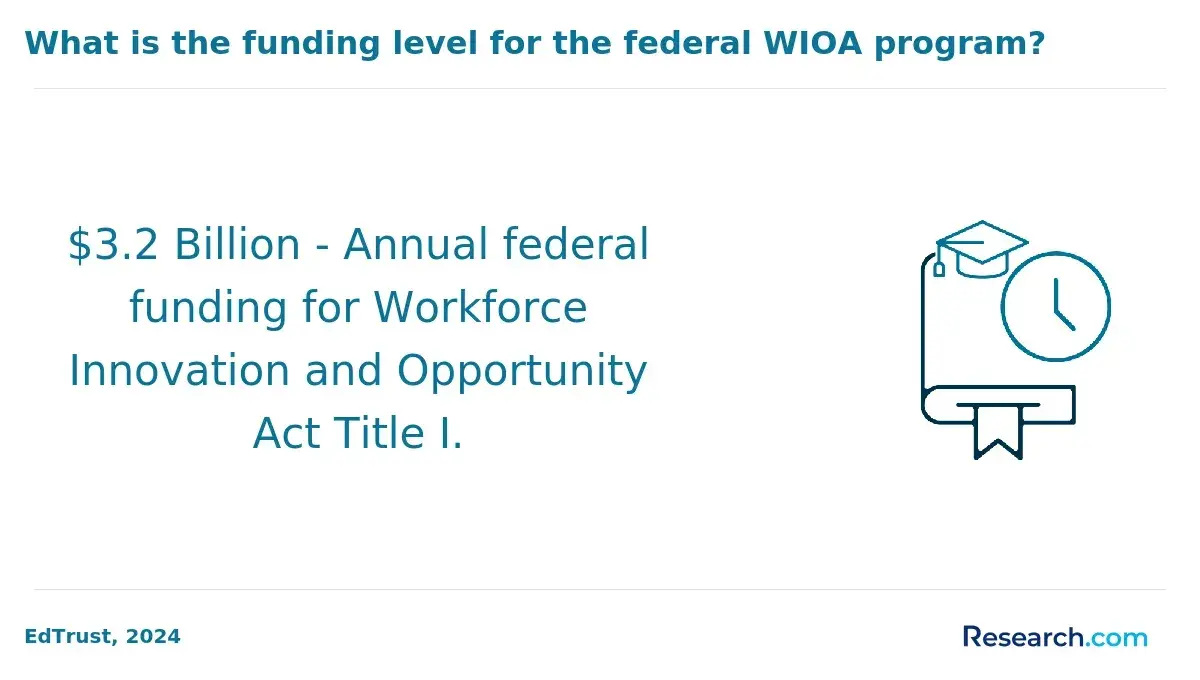
A low GPA can affect scholarships and institutional aid more than federal student loans. Federal graduate loan eligibility is generally based on enrollment, citizenship or eligible noncitizen status, satisfactory academic progress, and other federal rules-not on being a perfect applicant. However, merit scholarships, fellowships, assistantships, and tuition discounts may be more competitive and may consider GPA directly.
For federal borrowing, graduate students may borrow up to $20,500 per academic year through Direct Unsubsidized Loans, while Grad PLUS Loans may cover remaining eligible cost of attendance after other aid, subject to credit-related requirements. This matters because online doctoral students are often working adults, and a low-GPA applicant should not assume admission affordability just because loans are available.
Financial aid policies vary by school, so applicants should compare more than sticker tuition. The real cost of an online public health doctorate can include per-credit tuition, technology fees, dissertation or capstone continuation fees, residencies, travel, books, statistical software, and lost work time.
| Funding source | How GPA may matter | What to ask before enrolling | Risk for low-GPA applicants |
| Federal Direct Unsubsidized Loan | Usually not awarded based on admissions GPA | What is the annual borrowing limit and total program cost? | Borrowing may not cover all costs without Grad PLUS or other funding |
| Grad PLUS Loan | Not typically based on GPA, but credit rules apply | How much remains after unsubsidized loans and employer aid? | Can increase total debt substantially |
| Institutional merit scholarship | May require strong GPA or a competitive academic profile | Is there a minimum GPA for consideration or renewal? | Low GPA may reduce award competitiveness |
| Employer tuition assistance | Often based on employment policies rather than admissions GPA | Does the employer cover doctoral programs and online formats? | May require continued employment or repayment if you leave |
| Assistantship or fellowship | Often competitive and may consider academic record | Are online doctoral students eligible? | Many online professional programs offer limited assistantships |
The biggest financial mistake is choosing the first program that admits you. A low-GPA applicant may feel relieved to receive an offer, but admission alone does not make a doctorate a good investment. Compare total cost, completion support, transfer credit policy, dissertation structure, employer reimbursement, and likely career use before committing.
A low admissions GPA usually matters far less after you complete the doctorate, but it can still influence your path indirectly. Employers rarely ask for undergraduate GPA for senior public health leadership roles, but they do care about the credibility of the institution, the relevance of your doctoral work, your professional record, and whether you can lead complex health initiatives.
Career outcomes depend heavily on role, sector, location, and prior experience. The BLS reported a May 2024 median annual wage of $117,960 for medical and health services managers, a category that includes many leadership roles in healthcare organizations. That figure should not be read as a doctorate-specific salary, but it shows that advanced leadership roles in health systems can carry strong compensation potential when experience, responsibilities, and organizational fit align.
An online public health doctorate may support advancement into roles such as public health director, health policy leader, population health strategist, program evaluation director, healthcare quality executive, academic practitioner, nonprofit executive, global health program leader, or senior consultant. For research-heavy epidemiology or biostatistics positions, employers may place more weight on methods training, publications, grants, and dissertation quality.
Applicants drawn to public health data, compliance, privacy, and healthcare operations may also compare doctoral study with a health information management degree online, especially if their goal is applied healthcare data leadership rather than population-level public health research.
Once you are enrolled, the best way to reduce the long-term impact of a low prior GPA is to build visible evidence of competence. Complete a strong dissertation or applied practice project, publish or present when possible, master data tools relevant to your field, and connect your doctoral work to measurable public health problems.
Current employer expectations also favor applied skills. Public health organizations increasingly need leaders who can interpret data, communicate risk, manage cross-sector partnerships, evaluate interventions, and use digital tools responsibly. A doctorate can help, but only if the program builds skills that match the roles you want.
The students most likely to succeed despite a low GPA are not necessarily the ones with the most impressive job titles. They are the ones who understand why they struggled academically, have corrected the underlying issue, and can handle sustained doctoral work alongside professional and personal responsibilities.
Successful low-GPA doctoral students often share several traits. These indicators are useful because they predict readiness better than optimism alone.
- They have strong recent academic evidence: Recent graduate courses with high grades show current readiness better than promises about future effort.
- They know their doctoral purpose: They can explain the public health problem they want to address and why a doctorate is necessary for that goal.
- They can manage time realistically: Online doctoral programs are flexible, but they are not light; students need protected time for reading, writing, data analysis, and group work.
- They seek support early: They use faculty office hours, writing centers, statistics help, library support, and peer networks before falling behind.
- They have relevant professional experience: Their work gives them context for leadership, policy, evaluation, health equity, or systems-level problem solving.
- They are comfortable with feedback: Doctoral work involves revision, critique, and ambiguity, so resilience matters.
Students may struggle if they choose a doctorate mainly for prestige, have no clear career reason, underestimate writing demands, or enroll while already overwhelmed. Online learning also requires self-direction. Without regular campus routines, students must create their own structure for deadlines, reading, research, and faculty communication.
A useful self-test is whether you can complete a demanding graduate-level statistics, epidemiology, or research methods course while maintaining your current obligations. If that feels unrealistic now, it may be better to delay doctoral applications and build capacity first.
How Should Students Decide Whether to Apply to an Online Public Health Doctorate With a Low GPA?
The decision is not simply "apply" or "give up." A low-GPA applicant has several reasonable paths: apply now to carefully chosen programs, strengthen the academic record first, complete a related master's or certificate, or choose a different health-focused credential that better matches the career goal.
Use this decision framework to choose your next move. It is designed to help you avoid wasting application fees or enrolling in a program that does not fit your academic readiness, budget, or career plan.
- List your GPAs separately: Note undergraduate GPA, graduate GPA, last 60 credits, major GPA, and grades in statistics, epidemiology, research methods, and writing-heavy courses.
- Check minimums before applying: Eliminate programs with firm GPA cutoffs you do not meet unless an admissions counselor confirms that exceptions are possible.
- Match program type to your goal: Choose a DrPH for public health leadership and applied practice; choose a PhD-oriented route if your goal is research, faculty work, or advanced methods-heavy roles.
- Score your compensating strengths: Evaluate recent coursework, leadership, public health experience, recommendations, writing samples, and research or evaluation products.
- Estimate total cost and funding: Compare tuition, fees, residencies, loan needs, employer support, and opportunity cost before accepting an offer.
- Apply in tiers: Include a mix of realistic holistic-review programs, possible reach programs, and fallback pathways such as certificates or master's options.
- Set a trigger for delaying: If you lack recent graduate coursework, have weak quantitative preparation, or cannot explain your academic record clearly, strengthen the file before applying.
Some applicants should consider adjacent pathways instead of a public health doctorate. For example, a student interested in food systems, wellness programming, or community nutrition may find that an accelerated nutrition degree online is a faster bridge into a focused health field before deciding whether doctoral study is necessary.
Applying now makes sense if your GPA is only slightly below the preferred threshold, your graduate record is stronger than your undergraduate record, you have meaningful public health experience, and the programs on your list confirm holistic or conditional review. Waiting makes sense if your low GPA is recent, your quantitative grades are weak, your statement is unfocused, or the only programs you want have firm GPA screens.
The most practical next step is to contact admissions offices with specific questions. Ask whether your GPA is disqualifying, how the committee weighs graduate coursework, whether conditional admission is available, whether online students receive the same support as campus students, and what academic evidence would most improve a future application. A short, direct conversation can save months of guessing.
Other Things You Should Know About Public Health
Sometimes. Some programs accept applicants with related graduate degrees in healthcare, nursing, social work, public administration, data science, nutrition, or policy. Others specifically require an MPH or prerequisite public health coursework. Always verify prerequisites before applying.
Yes, it is often important. CEPH accreditation indicates that a public health school or program has met field-specific standards. It can matter for employer recognition, academic credibility, and some public health career pathways, although requirements vary by employer and role.
Many online public health doctorate programs take about three to five years, depending on transfer credits, enrollment pace, dissertation or applied practice requirements, and whether the student studies full time or part time.
Employers usually focus more on accreditation, institution reputation, curriculum quality, applied experience, and your professional record than on whether courses were online. However, some academic or research roles may scrutinize research training, dissertation quality, and faculty mentorship more closely.
- 25 Best Doctor of Public Health Programs - MPH Online https://www.mphonline.org/top-public-health-phd-programs/
- Admission Requirements https://www.ualberta.ca/en/public-health/programs/admissions/admission-requirements.html
- Doctorate of Public Health Program at MCW https://www.mcw.edu/education/graduate-school/graduate-school-programs/public-health/doctor-of-public-health
- Academic Requirements https://www.downstate.edu/education-training/school-of-public-health/programs/doctor-of-public-health/academic-requirements.html
- Online Doctor of Public Health (DrPH): Best Student Options https://www.phds.me/online-programs/public-health-doctorate-drph/