2027 Online Public Health Doctorate Program Costs: Tuition, Fees, Financial Aid, and Employer Reimbursement

Co-Founder and Chief Data Scientist
An online Public Health doctorate can advance leadership, research, policy, and population health careers, but the price can be hard to judge before enrollment. NCES data published in 2024 shows average graduate tuition and required fees reached $12,596 at public institutions and $29,931 at private nonprofit institutions, before living costs or debt interest.
This guide is for working professionals comparing DrPH, PhD, and related doctoral options. You'll learn how tuition, fees, aid, employer reimbursement, and career outcomes affect the real cost of the degree.
Key Things to Know About Online Public Health Doctorate Program Costs
- Most online Public Health doctorate students should plan for tuition in the mid-five figures, often around $50,000 to $90,000 before aid, because programs commonly require 45 to 60 post-master's credits plus dissertation or applied practice requirements.
- Hidden costs can materially change the bill: technology fees, distance learning fees, software, books, dissertation enrollment, and required campus residencies can add several thousand $ over the full program.
- Federal graduate Direct Unsubsidized Loans are capped at $20,500 per academic year, while employer education assistance may be tax-free up to $5,250 per year under current IRS rules.
What is the average tuition cost of an online Public Health doctorate program?
There is no single federal dataset that reports the average tuition of online Public Health doctorate programs only. The most useful way to estimate cost is to combine a program's per-credit tuition with its required credits, then add fees, dissertation enrollment, and any in-person requirements.
As a practical planning range, many online DrPH and PhD in Public Health programs fall into a tuition-only range of roughly $35,000 to more than $100,000. A common mid-range budget is about $50,000 to $90,000 before scholarships, employer support, or loans.
The table below shows how different pricing models can affect the tuition-only estimate. Use it to compare schools on the same basis instead of comparing only the advertised per-credit rate.
| Pricing model | Typical tuition structure | Common tuition-only planning range | Best fit |
| Public university, resident rate | Lower in-state or state-supported online tuition | $30,000 to $60,000 | Students who qualify for residency or a state-supported online rate |
| Public university, nonresident rate | Higher out-of-state graduate tuition or surcharge | $45,000 to $95,000 | Students choosing a specialized public program outside their state |
| Flat-rate online tuition | Same per-credit price regardless of residency | $45,000 to $90,000 | Working adults comparing programs across state lines |
| Private nonprofit university | Institution-wide graduate doctoral tuition | $60,000 to $110,000+ | Students prioritizing faculty fit, specialization, or cohort model |
The most important number is not the per-credit price alone. A $950-per-credit program requiring 48 credits can be less expensive than an $800-per-credit program requiring 72 credits, especially if dissertation continuation fees apply after coursework ends.
Are online Public Health doctorate programs subject to distance learning or technology fees?
Yes. Online Public Health doctorate programs often charge technology, online learning, student services, library, graduation, or distance education fees. These fees may be charged per credit, per course, per term, or as a flat program fee, so they can be easy to overlook when comparing tuition pages.
The table below summarizes fee categories that commonly affect online doctoral budgets. The exact amount varies by school, so the key is to ask whether each fee is already included in the posted online tuition rate.
| Fee type | How it is usually charged | Why it matters |
| Technology fee | Per credit, per term, or per course | Can add recurring costs every semester |
| Distance learning fee | Per online credit or online course | May apply even when tuition is advertised as online-friendly |
| Student services fee | Per term | May cover advising, library systems, career tools, or student platforms |
| Dissertation or doctoral continuation fee | Per term after coursework | Can increase costs if the dissertation or capstone takes longer than expected |
| Graduation or document fee | One-time fee | Small compared with tuition, but useful to include in the final budget |
A common mistake is assuming "online tuition" means "all-inclusive tuition." Before enrolling, request a full cost-of-attendance sheet from the bursar or financial aid office and ask whether doctoral research, practicum, dissertation, or residency terms are billed differently from regular coursework.
What out-of-pocket expenses should online Public Health doctorate students anticipate?
Out-of-pocket expenses are costs you may need to pay even if tuition is covered by loans, scholarships, or employer reimbursement. They matter because they affect monthly cash flow, not just the final degree price.
The table below highlights non-tuition expenses that online Public Health doctorate students should include in a realistic budget.
| Expense category | What to check before enrolling | Cost risk |
| Books and digital materials | Whether courses use open resources, required textbooks, or paid access codes | Moderate recurring cost |
| Statistical and research software | Whether the school provides licenses for tools used in biostatistics, epidemiology, or qualitative research | Moderate cost if licenses are not included |
| Campus residencies | Required visits, length of stay, location, and whether lodging is included | High cost if travel is required multiple times |
| Applied practice or fieldwork | Background checks, placement fees, immunization documentation, or local travel | Variable cost depending on site requirements |
| Professional development | Conference travel, association dues, poster printing, or publication fees | Optional but valuable for career mobility |
| Lost work time | Whether synchronous classes, residencies, or research meetings require time away from work | Potentially significant for working adults |
To avoid underbudgeting, build a semester-by-semester spreadsheet that separates tuition, mandatory fees, optional professional expenses, and travel. Then add a contingency line for delayed dissertation progress, because one extra enrollment term can change the total cost more than a small tuition difference.
Residency status can affect online Public Health doctorate tuition, but the impact depends on the university. Some public universities still use in-state and out-of-state graduate rates for online doctoral students, while others offer a flat online rate to all students regardless of location.
In-state tuition usually makes the most sense when you are eligible for a materially lower resident rate and the program fits your goals. A flat-rate online program can be better when the public out-of-state surcharge would erase the savings or when the curriculum, concentration, faculty, or practicum structure is a stronger fit.
Students who are still deciding whether they need a doctorate should also compare master's-level pathways, especially if they need lower upfront cost or faster admission. For example, applicants building public health credentials before a doctorate may want to review the easiest MPH online programs to get into as a lower-risk step before committing to doctoral tuition.
Ask admissions and the bursar these questions before assuming residency will lower your cost:
- Does the online doctorate use resident, nonresident, or flat-rate online tuition?
- Can online students qualify for in-state tuition after moving or working in the state?
- Are there separate nonresident, online, or professional program surcharges?
- Does tuition change during dissertation, capstone, practicum, or continuous enrollment terms?
- Is the advertised cost based on minimum credits, or does it include likely dissertation extension terms?
Online Public Health doctorates are often less expensive than on-campus programs in living and relocation costs, but they are not automatically cheaper in tuition. The best comparison is total cost of attendance, which includes tuition, fees, travel, housing, commuting, and income disruption.
The table below compares the major cost categories for online and campus-based doctoral study. It can help you decide whether the online format truly lowers your total cost or simply shifts expenses into different categories.
| Cost factor | Online doctorate | On-campus doctorate | Decision takeaway |
| Tuition | May be flat-rate, resident-based, or program-specific | Often resident or nonresident graduate tuition | Compare total required credits, not only per-credit tuition |
| Fees | May include online, technology, and platform fees | May include campus, activity, facility, and health fees | Fee differences can offset tuition savings |
| Housing and commuting | Usually no relocation and limited commuting | May require relocation, parking, transit, or higher local living costs | Online is often better for working adults with stable employment |
| Residencies | Short campus visits may still be required | Built into regular attendance | Online students should budget travel separately |
| Work flexibility | Often designed for part-time professional enrollment | May require daytime availability | Keeping income can be a major ROI advantage |
Online study is usually strongest financially for students who plan to keep working full time. However, if an on-campus program offers a funded assistantship, tuition waiver, or stipend, the campus option may cost less out of pocket than an online program with no institutional aid.
If your primary goal is a faster credential rather than a terminal public health leadership degree, compare the time-to-completion tradeoff across related health fields. Some students find that an accelerated nutrition degree online better matches their timeline and budget than a multi-year doctorate.
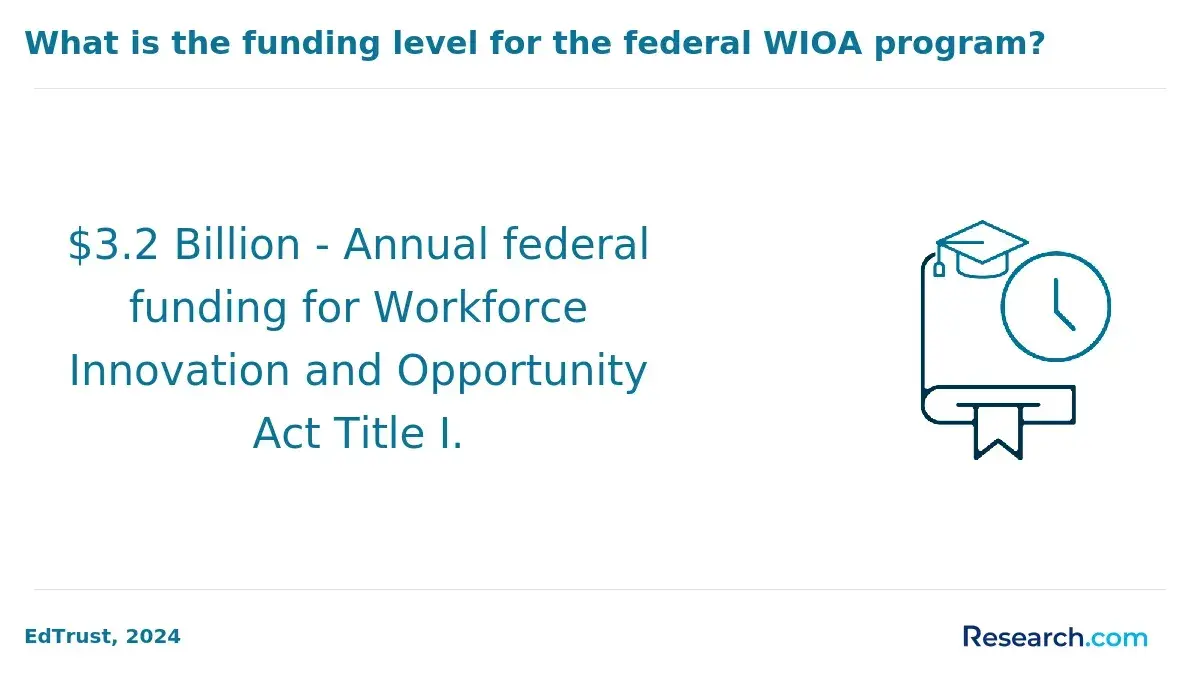
Graduate assistantships and fellowships can reduce doctoral costs, but online Public Health doctorate students should not assume they will have the same access as full-time campus PhD students. Many DrPH programs are designed for employed professionals, so institutional funding may be more limited or competitive.
Assistantships are most valuable when they include tuition remission, a stipend, or health insurance support. Fellowships may be school-funded, grant-funded, foundation-funded, or tied to public health research priorities such as health equity, epidemiology, maternal health, environmental health, or rural health.
Use the following steps to evaluate whether funding is realistic for an online program:
- Ask whether online doctoral students are eligible for teaching, research, or administrative assistantships.
- Confirm whether the funding covers tuition, fees, stipend support, or only a partial award.
- Ask whether part-time students qualify, since many working professionals cannot meet full-time assistantship requirements.
- Review faculty research areas and contact potential mentors before applying for research-based funding.
- Ask whether grant-funded positions require campus presence, daytime hours, or local fieldwork.
The main red flag is vague language such as "funding may be available" without award amounts, eligibility rules, or recent examples. If funding is central to your decision, get written clarification before accepting admission.
Online Public Health doctorate students may qualify for federal aid, institutional scholarships, external scholarships, employer support, payment plans, military or veterans benefits, and limited assistantship funding. Eligibility depends on accreditation, enrollment status, citizenship or eligible noncitizen status, satisfactory academic progress, and school participation in federal aid programs.
Federal Student Aid loan terms for 2025-26 list the graduate Direct Unsubsidized Loan interest rate at 7.94% and the Direct PLUS Loan rate at 8.94%. That matters because doctoral borrowers who rely heavily on loans should model interest costs, not just the tuition bill.
The table below summarizes major funding options and how they usually affect the amount you pay out of pocket.
| Funding option | Typical value | Important limitation |
| Direct Unsubsidized Loan | Up to $20,500 per academic year for eligible graduate students | Interest accrues while enrolled |
| Graduate PLUS Loan | Can cover remaining cost of attendance after other aid | Requires credit check and has a higher interest rate than unsubsidized loans |
| Institutional scholarship | Partial tuition discount or award | Often competitive and may not renew automatically |
| Assistantship or fellowship | May include tuition support, stipend, or both | May be limited for online or part-time students |
| Employer reimbursement | Often annual support tied to grades and continued employment | May require upfront payment and later reimbursement |
| Veterans or military benefits | Varies by benefit type and eligibility | School participation and program approval matter |
Students comparing doctoral study with more affordable health-related credentials should consider whether a lower-cost graduate degree could meet the same career need. For example, a health information management degree online may fit professionals targeting healthcare data, compliance, informatics, or operations roles without requiring doctoral-level borrowing.
Employer tuition reimbursement can cover part of an online Public Health doctorate, but policies vary widely. Large healthcare systems, public agencies, universities, insurers, consulting firms, and nonprofit health organizations may support doctoral study when the degree is clearly connected to leadership, analytics, population health, quality improvement, policy, or workforce development.
Under current IRS rules, up to $5,250 in employer-provided educational assistance can generally be excluded from taxable income each year. This can meaningfully reduce annual out-of-pocket cost, but it rarely covers an entire doctorate by itself unless the employer has a more generous sponsorship or fellowship program.
Before relying on reimbursement, review the policy for these details:
- Annual cap and lifetime cap for graduate education benefits
- Whether doctoral degrees are eligible or only job-required coursework is covered
- Minimum grade requirements for reimbursement
- Whether tuition only is covered or fees, books, and residencies are included
- Whether you must pay upfront and wait for reimbursement after grades post
- Required service commitment after reimbursement
- Repayment rules if you leave the employer before the commitment period ends
Employer reimbursement works best when you can cash-flow each term, accept a slower part-time pace, and keep your job long enough to satisfy repayment rules. It is less useful if the benefit is small, delayed, taxable above allowed limits, or tied to a restrictive employment contract.
Working professionals are often in the best position to negotiate sponsorship because they can connect the doctorate directly to organizational needs. The goal is to show that the degree is not only a personal credential but also a workforce investment that can improve programs, grants, analytics, community partnerships, compliance, or health outcomes.
Use a structured proposal instead of making a casual request. The steps below can help you make a stronger business case to your manager or HR team.
- Identify the employer's priorities, such as population health management, quality metrics, grant funding, program evaluation, health equity, epidemiologic surveillance, or leadership succession.
- Map specific courses, practicum projects, dissertation topics, or applied research plans to those priorities.
- Request a defined contribution, such as annual reimbursement, paid residency leave, conference support, data access, or a capstone partnership.
- Offer measurable deliverables, such as an internal evaluation report, dashboard, training module, policy brief, or publishable quality improvement project.
- Clarify the timeline, total expected cost, reimbursement schedule, and any service commitment you are willing to accept.
- Ask whether sponsorship can be combined with professional development funds, continuing education funds, or leadership development budgets.
A strong negotiation avoids overpromising. Do not claim the doctorate will guarantee promotion or salary growth. Instead, explain how the program will build competencies the organization already needs and how your work products can create near-term value while you are enrolled.
What ROI can graduates expect from an online Public Health doctorate?
ROI for an online Public Health doctorate depends on your starting salary, debt level, employer support, career goal, and whether the credential is necessary for the roles you want. The strongest ROI is usually for professionals who keep working while enrolled, receive employer or institutional support, and use the degree to move into leadership, research, academic, consulting, or senior population health roles.
BLS wage data from May 2024 shows a median annual wage of $117,960 for medical and health services managers and $83,980 for epidemiologists. These figures do not represent a guaranteed outcome for doctorate graduates, but they provide a useful benchmark for evaluating whether the cost of a doctoral program aligns with the roles you are targeting.
The table below connects common post-doctorate pathways with ROI considerations. Use it to judge whether the doctorate is essential, advantageous, or possibly more education than you need.
| Career direction | How a Public Health doctorate may help | ROI caution |
| Public health executive or director | Can strengthen leadership, policy, systems thinking, and applied practice credibility | Experience and organizational track record may matter as much as the credential |
| Epidemiology or analytics leadership | Can support advanced research design, surveillance, and population health strategy | Some roles may prefer specific quantitative experience over the doctorate alone |
| University teaching or research | May be necessary or strongly preferred for tenure-track or doctoral-level teaching roles | Academic hiring is competitive and may require publications or grants |
| Healthcare consulting or policy advising | Can increase credibility for complex population health, evaluation, or strategy projects | Client-facing experience and specialization still drive marketability |
| Nonprofit or government program leadership | Can support grant leadership, evaluation, and evidence-based program design | Salary growth may be limited by public or nonprofit pay structures |
A doctorate is more likely to be worth it if it helps you qualify for roles you cannot realistically reach with a master's degree and experience alone. It may not be the right investment if your goal is a modest salary increase, a quick career change, or a role where an MPH, certificate, or lower-cost master's would be sufficient.
If you are exploring adjacent public health and wellness fields, compare doctoral ROI against lower-cost alternatives such as the cheapest online master's in nutrition, especially if your target roles do not require a terminal doctorate.
Other Things You Should Know About Public Health
Yes, it is important to check accreditation. CEPH accreditation can signal that a public health program meets field-specific standards, but students should also confirm institutional accreditation, federal aid eligibility, and whether the program fits their licensure, employment, or academic goals.
Sometimes. Many doctoral programs limit transfer credits, especially for dissertation, research, practicum, or advanced doctoral seminars. Ask for a written transfer evaluation before assuming previous graduate coursework will lower your total cost.
They can. Part-time study may make tuition easier to manage each term, but it can increase total costs if the school charges recurring term fees or if a longer dissertation timeline creates extra continuation fees.
FAFSA applicants need their Social Security number, federal tax information, and the school’s Federal School Code. For 2027 aid, the FAFSA opens October 1, and students should complete it early because some grants and campus funds are first-come, first-served.
- Tuition Reimbursement for MHA Programs https://www.mhaonline.com/blog/mha-tuition-reimbursement
- Online Health Science Degrees with Financial Aid https://www.edumed.org/online-schools/health-science-degrees/financial-aid/
- Public Health Scholarship Program https://www.hrsa.gov/grants/find-funding/HRSA-22-122
- Financing Your Degree https://aspph.org/student-journey/financing-your-degree/
- Online Doctor of Public Health (DrPH): Best Student Options https://www.phds.me/online-programs/public-health-doctorate-drph/
- Tuition Reimbursement Programs [A Guide for HR and Employers] https://compt.io/blog/employee-tuition-reimbursement/
- Financial Aid Guide https://www.publichealth.org/resources/financial-aid/
- 2025 Most Affordable Online MPH Programs https://www.onlineu.com/most-affordable-colleges/public-health-masters-degrees
- DrPH vs. PhD — National Association for Doctors of Public Health https://nadrph.org/drphvsphd
- Online Doctorate in International Public Health https://www.euclid.int/online-doctorate-international-public-health/