2027 BS in Business Administration and Finance: Choosing Courses for Your First Related Job
Audited and Verified:
Our Editorial and Data Verification Process
Research.com uses government datasets, official education statistics and primary institutional information to support its career and degree guides. Our review process checks factual accuracy, occupational definitions, source dates and the requirements associated with the credentials discussed.
How This Article Was Fact-Checked
Our editorial team verifies salary estimates, employment projections, education requirements and program information against original data providers and official organizations. Salary figures are checked against the relevant occupational definitions and reporting periods. Information about licensure, accreditation and required in-person training is reviewed separately.
Fact-checked and verified on:

Co-Founder and Chief Data Scientist
A finance elective can strengthen your first job application - or use time you needed for accounting, spreadsheets, or an internship. If you are planning a BS in Business Administration with a finance focus, the best course choices depend on the work you want to do after graduation.
This guide connects entry-level finance tasks to courses and practical evidence, then explains how program structure, cost, credentials, and hiring expectations affect your plan. You will leave with a way to prioritize courses rather than choosing them by title alone.
Key Things You Should Know
- Start with financial accounting, spreadsheet-based analysis, and corporate finance; add specialized electives only after identifying the tasks in your target entry-level role.
- Pair coursework with an internship or a clearly labeled, reproducible project. A finance concentration alone does not establish job experience or authorize regulated financial work.
- The U.S. Bureau of Labor Statistics reports a May 2025 median of $102,740 for financial and investment analysts, but that occupation-wide figure is not a starting salary for new graduates.
What is a BS in Business Administration and Finance?
A BS in Business Administration typically combines a general business core with upper-level study. At one school, finance may be an official concentration within that degree; at another, it may be a separate major or simply a group of electives. Check the exact credential on the school's catalog and transcript before treating these options as interchangeable.
The business core provides context in accounting, economics, management, and operations. Finance courses build on that foundation to examine funding decisions, cash flows, valuation, and financial risk. A specialized finance bachelor's may offer more finance electives, while a broad business degree can leave room for another function. Compare required courses and remaining credits - not just degree names. For a broader program search, online business administration program cost-and-time comparisons can help frame questions about value, but the school's current degree audit determines your actual path.
What careers can you pursue with a BS in Business Administration and Finance?
For a first related job, focus on roles with supervised analysis and reporting rather than positions that own major budgets or advise clients independently. Titles vary by employer, so compare job descriptions by task.
The table distinguishes plausible starting responsibilities from qualifications you may still need to develop.
| Role to investigate | Typical early-career work | What to check in postings |
| Financial analyst or junior FP&A analyst | Update forecasts, explain budget variances, and prepare reports | Spreadsheet modeling, accounting knowledge, and whether prior experience is required |
| Credit analyst or credit assistant | Review borrower information and support risk assessments | Financial-statement analysis, documentation standards, and employer training |
| Treasury or finance operations assistant | Track cash activity, reconcile records, and support payment controls | Accounting, accuracy, systems familiarity, and internal-control duties |
| Investment operations or research assistant | Support data checks, reporting, or research under supervision | Market knowledge and whether the position involves licensed activity |
Finance is not the only route into analytical business work. If purchasing costs and inventory decisions interest you more than valuation, compare the relevant coursework and employer connections in shorter online supply chain bachelor's pathways. A shorter advertised timeline does not establish that your credits will apply or that the role fits your interests.
How do you choose courses for your first finance-related job?
Choose backward from job tasks. A budget analyst's reporting work calls for different electives than an investment research assistant's valuation work. Use several local entry-level postings to identify recurring tasks, then check which courses teach and assess those tasks.
This sequence helps you spend limited elective slots on skills you can demonstrate to an employer:
- Pick a target role. Write down its recurring tasks, required tools, and experience expectations; separate stated requirements from preferences.
- Secure the foundation. Prioritize financial and managerial accounting, statistics, spreadsheets, and introductory corporate finance before advanced electives that depend on them.
- Add role-specific depth. For FP&A, look for budgeting and financial modeling; for credit, financial-statement analysis and risk; for investments, valuation and investments coursework.
- Plan evidence. Seek an internship, supervised student assignment, or project that shows your assumptions, calculations, interpretation, and communication - not merely software use.
- Check the degree audit. Confirm prerequisites, elective availability, concentration rules, and whether your plan adds credits or delays graduation.
If the postings instead emphasize schedules, resource tracking, and project budgets, investigate whether finance electives or a project-focused degree better serve that goal. A project management bachelor's transfer planning guide can help you frame the credit-applicability question; only the receiving institution can approve specific substitutions.
Curricula differ, but a business administration degree commonly includes accounting, economics, statistics or quantitative reasoning, management, marketing, operations, and business communication. Finance-focused study may add corporate finance, investments, financial markets, risk management, or financial modeling. Some courses require accounting or statistics first, so the catalog's prerequisite chain matters as much as the elective list.
For entry-level finance work, distinguish exposure from usable practice. A course that asks you to build a cash-flow model, test assumptions, and explain a recommendation provides different evidence from one assessed only through exams. Ask instructors what tools, datasets, and deliverables students actually use. If your interest is employee compensation or workforce budgets rather than finance operations, compare the curriculum and costs of an HR degree before using finance electives to pursue a primarily HR goal.
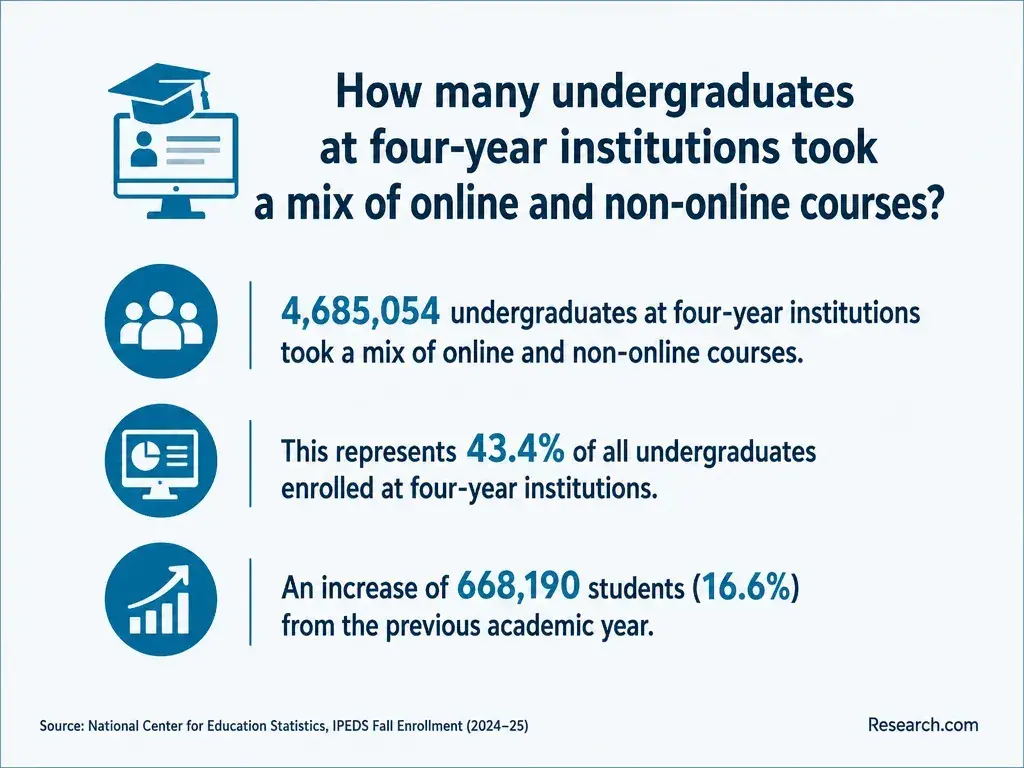
Either format can teach finance concepts. The consequential differences are access to instruction, recruiting, projects, and a schedule you can sustain. Online does not necessarily mean self-paced: courses may have fixed deadlines, live presentations, proctored exams, or group modeling assignments. Campus programs may provide more convenient in-person recruiting but require commuting and scheduled attendance.
Ask each program how students obtain internship support, finance software access, faculty feedback on models, and career services. Confirm whether remote students can attend employer events and whether any capstone or exam requires travel. When reviewing affordable online business program comparisons, calculate your own remaining tuition and fees after an official credit evaluation; a low advertised price does not settle the cost of finishing.
First, verify that the institution holds accreditation from an accreditor recognized by the U.S. Department of Education. Then check whether the business school or the specific program is covered by AACSB, ACBSP, or IACBE accreditation, if that distinction matters to you. These accreditations have different scopes; an institution's accredited status does not mean every business program holds separate business accreditation.
Use the school's and accreditor's current listings to confirm the exact degree, location, and delivery mode. Accreditation is a quality-screening factor, not proof that graduates receive internships or jobs. Apply the same check to alternatives, including value-focused project management degree choices, if your target work is project finance or cost coordination rather than a conventional finance role.
Requirements depend on whether you are applying as a first-year or transfer student and whether admission to the business major is separate from admission to the university. Schools commonly review prior education and transcripts; some require particular math, accounting, economics, or GPA preparation before upper-level finance courses. Check the program's published rules rather than assuming that business experience waives prerequisites.
Transfer students should request a degree audit showing which accepted credits satisfy general education, the business core, and finance requirements. A credit accepted as an elective may not replace financial accounting or another prerequisite. If your interests are shifting toward compensation, recruiting, or HR operations, compare admission and credit policies for HR bachelor's programs with flexible transfer pathways before committing to a finance concentration.
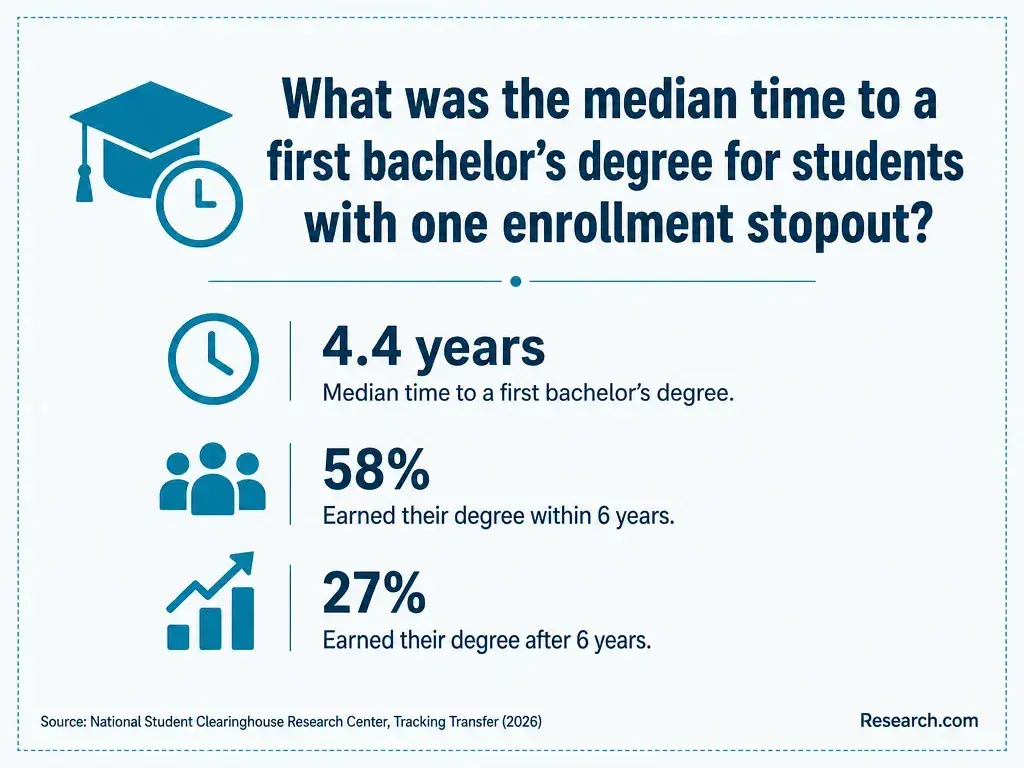
A full-time bachelor's path is commonly planned over four academic years, but your timeline depends on accepted credits, courses that satisfy degree requirements, prerequisites, and how often required finance classes run. Part-time enrollment or a missed prerequisite can extend the calendar even when the total credits do not change.
Ask an adviser for a term-by-term plan that includes the next offering of each upper-level finance course and a realistic internship window. US fast-track undergraduate business degree options are worth comparing if speed matters, but verify whether acceleration preserves access to the finance courses and applied experience your target job calls for.
A degree does not have a single salary. Pay depends on the occupation, experience, location, industry, and employer. The U.S. Bureau of Labor Statistics reports a May 2025 median annual wage of $102,740 for financial and investment analysts, with employment projected to grow 7% from 2025 to 2035. Those figures describe the occupation across experience levels - not what a new graduate should expect from a first offer.
For a useful comparison, collect salary ranges from postings that match your location, experience, and actual job title, then weigh them against remaining education costs. If your preferred tasks concern purchasing and supply networks, supply chain program length and value comparisons may be more relevant than analyst wage figures. Do not use one occupation's median to estimate another's starting pay.
Do finance careers require licenses or professional certifications?
Many internal finance and analysis jobs do not require an occupational license, although employers may prefer particular skills or credentials. Work involving securities transactions or investment advice can trigger registration and examination requirements tied to the role, firm, and regulator. A business degree or finance concentration does not itself authorize that work.
Similarly, CPA licensure and professional financial-planning credentials have separate education, examination, experience, and other rules. Before selecting electives for a credential, check the responsible board or credentialing organization and your state's rules where applicable. If your goal is general leadership rather than regulated financial practice, compare the required skills and remaining credits in faster bachelor's routes in organizational leadership; neither route substitutes for experience managing people or budgets.
Other Things You Should Know About Business Administration
Consider it if you want accounting-heavy roles and can complete both majors without disproportionate extra time or cost. For a narrower finance goal, selected accounting courses plus relevant experience may be more efficient. Ask for a degree audit before deciding.
Yes, if your instructor's rules permit it. Label it as academic work, identify hypothetical or public inputs, show your assumptions, and avoid implying that a company adopted your recommendation.
It can demonstrate research, teamwork, and communication, but it is not equivalent to supervised employment. Describe your actual responsibilities and outputs accurately rather than listing club membership as professional experience.
Only with appropriate employer and course approval. Check confidentiality, privacy, and intellectual-property rules first; a public-data or hypothetical case may be safer and sufficient for the learning objective.
- How to Become a Financial Analyst: Degree & Career Guide | Arkansas State University Online https://degree.astate.edu/online-programs/undergraduate/bsba/become-a-financial-analyst/
- Student internships and employment opportunities after graduation: A field experiment - ScienceDirect https://www.sciencedirect.com/science/article/pii/S0272775721000601
- Careers in Business Administration | CHASS Student Academic Affairs https://chassstudentaffairs.ucr.edu/pre-business-program/careers-in-business-administration
- Finance Curriculum vs. Accounting Curriculum: How Are They Different? | Freeman News https://freemannews.tulane.edu/2025/06/09/finance-curriculum-vs-accounting-curriculum-how-are-they-different
- 5 Tools Every Aspiring Data Analyst Should Learn | SCU https://www.scu.edu/business/blog/business-concepts/data-analyst-tools-to-learn/
- How to Become a Financial Analyst | Southeast Missouri State University https://semo.edu/blog/blog-posts/how-to-become-a-financial-analyst
- Business vs Finance Degree: What Are the Key Differences? | American Public University https://www.apu.apus.edu/area-of-study/business-and-management/resources/business-vs-finance-degree/
- How to Read a College Degree Plan Before You Enroll | Florida National University (FNU) https://www.fnu.edu/how-to-read-college-degree-plan/
- How to Become a Credit Analyst: Role, Skills & Strategies | Corporate Finance Institute https://corporatefinanceinstitute.com/resources/career/how-to-become-a-credit-analyst/
- What is a Financial Analyst? | CFA Institute https://www.cfainstitute.org/programs/cfa-program/careers/financial-analyst