2027 Is an Online BS in Business Administration the Right Next Step for Accounts Receivable Clerks?
Audited and Verified:
Our Editorial and Data Verification Process
Research.com uses government datasets, official education statistics and primary institutional information to support its career and degree guides. Our review process checks factual accuracy, occupational definitions, source dates and the requirements associated with the credentials discussed.
How This Article Was Fact-Checked
Our editorial team verifies salary estimates, employment projections, education requirements and program information against original data providers and official organizations. Salary figures are checked against the relevant occupational definitions and reporting periods. Information about licensure, accreditation and required in-person training is reviewed separately.
Fact-checked and verified on:

Co-Founder and Chief Data Scientist
Accounts receivable work builds useful experience in billing, collections, customer communication, and financial records. But moving beyond routine transactions may require broader business skills - or a different credential altogether.
This guide is for clerks considering an online BS in Business Administration while working. It explains which career moves the degree can support, where accounting-specific training may be stronger, and how to evaluate a program's schedule, remaining credits, cost, and likely career value before enrolling.
Key Things You Should Know
- An online BS in Business Administration is most useful when you want to move from receivables into broader operations, supervision, or another business function - not simply become faster at your current tasks.
- For accounting-focused advancement, compare the business degree with an accounting degree or targeted coursework; a general business degree does not establish CPA eligibility.
- Do not use occupation-wide wages as a promised return: the U.S. Bureau of Labor Statistics reports a May 2025 median of $75,940 for human resources specialists, a possible career transition that still requires role-specific preparation.
Is an Online Business Administration Bachelor's Degree Right for Accounts Receivable Clerks?
A BS in Business Administration combines accounting fundamentals with subjects such as operations, management, finance, and business analysis. That breadth can help a clerk who wants to coordinate a billing process, move into business operations, or qualify for roles that prefer a bachelor's degree.
Start with the job you want, not the degree title. If you want to remain in receivables but take on more complex reconciliations or collections work, employer training, advanced spreadsheet skills, or accounting courses may be a more direct investment. If you want to become an accountant, compare accounting-major requirements and applicable state CPA rules before choosing a general business program. If you want broader responsibility, explore flexible business administration programs for career progression - then verify that their actual schedules fit your job.
The degree is strongest when it closes a documented gap: a bachelor's requirement in target job postings, missing knowledge in another business function, or limited access to advancement without a degree. It is less compelling when the immediate obstacle is experience, a specialized accounting qualification, or a promotion process that values demonstrated results over additional education.
What Careers Can Accounts Receivable Clerks Pursue With a Business Administration Degree?
Receivables experience transfers most directly to roles involving payment processes, customer accounts, records, and coordination. The table distinguishes plausible next moves from transitions that require substantial new evidence; these are pathways to investigate, not jobs conferred by graduation.
| Potential direction | Relevant receivables experience | Additional preparation or experience often needed |
| Billing or receivables lead | Resolving exceptions, documenting procedures, and coordinating account follow-up | Evidence of training others, improving workflows, and handling escalations |
| Business operations or project coordinator | Tracking deadlines, working across teams, and reporting process issues | Scheduling, process mapping, reporting, and project documentation |
| Human resources specialist | Confidential record handling and stakeholder communication | HR coursework or experience with hiring, benefits, or employee records |
| Accountant or auditor | Transaction accuracy and account reconciliation | Accounting-specific coursework; employers and CPA boards set distinct requirements |
For a substantial move into HR, compare HR curricula and career directions against a general business degree. For an accounting role, examine actual job postings for required accounting credits. A degree can support a transition, but a work sample, relevant assignment, or supervised experience may be what persuades an employer you can perform the new function.
How Does an Online Business Administration Degree Advance Accounts Receivable Careers?
The most credible advancement story connects coursework to greater responsibility at work. A clerk might learn to interpret an aging report in finance coursework, evaluate handoffs in an operations course, and present a proposed process change in a capstone. None of those activities proves a business result on its own; the value comes from applying the learning, obtaining appropriate permission, and documenting what you personally did.
Ask your supervisor which responsibilities would demonstrate readiness for a lead or coordinator opening: training a new hire, investigating recurring payment disputes, or producing a clearer exception report may be more persuasive than a prospective management title. If your goal is specifically organizational leadership, compare the curriculum and pacing of accelerated online organizational leadership school choices with a business administration program. A shorter advertised timeline does not replace the experience an employer expects of a supervisor.
Programs typically combine general education with a business core, electives, and sometimes a formal concentration. For a receivables clerk, the most relevant courses are financial and managerial accounting, finance, statistics or business analytics, operations, business law, and management. They can add context to daily transactions: why payment delays affect cash flow, how a billing error arises upstream, and how to assess a proposed workflow change.
Depth varies by school. An accounting elective is not an accounting major, and a cluster of electives is not necessarily an officially awarded concentration. Check the catalog for course prerequisites, available online sections, and the skills assessed in upper-level work. If quantitative coursework is a concern, review academic preparation for business administration applicants and ask whether the specific program requires algebra, statistics, or introductory accounting before its advanced courses.
A useful applied assignment could involve a process map or an analysis using fictional or approved, de-identified data. Do not assume your employer permits customer balances or account records to be used in class; obtain permission and follow workplace privacy rules.
Online and campus programs can cover similar academic material, but their weekly demands may differ. This comparison highlights scheduling conditions that matter when receivables work has month-end deadlines.
| Feature | Online program | Campus program |
| Attendance | May use recorded lessons, live meetings, or both | Usually requires travel to scheduled classes |
| Group work | May require remote meetings outside normal work hours | May require meetings between or after classes |
| Assessments | May include timed exams or remote proctoring | May include scheduled in-person exams |
| Access to support | Depends on virtual advising, faculty availability, and career services | Depends on campus hours, location, and services |
Online does not mean self-paced. Request a sample course schedule and confirm live attendance, exam windows, group-project expectations, and any campus visits before committing. Business degree options with shorter sessions may help you focus on fewer courses at once, but compressed deadlines can be difficult during a busy collections cycle.
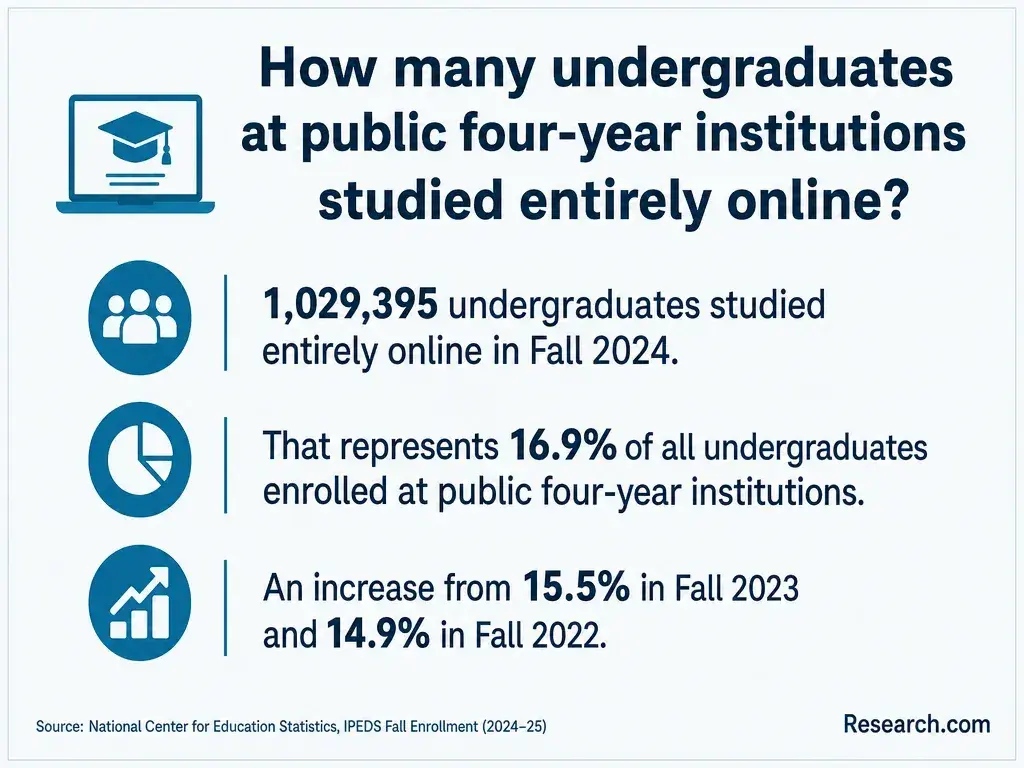
Requirements vary by institution and by whether you apply as a first-year or transfer student. Schools may request prior school transcripts and set GPA or prerequisite rules; admission to the university does not always mean immediate admission to its business major. Your AR work can strengthen an application where experience is considered, but it does not automatically award academic credit.
If you have previous college coursework, send official transcripts and request an evaluation showing where accepted credits apply: general education, business core, electives, or neither. That distinction matters especially if you previously studied a specialized subject. For example, online HR degrees for transfer students may apply business and elective credits differently from a BS in Business Administration. Rely on each school's written evaluation rather than assuming the same courses will fulfill the same requirements.
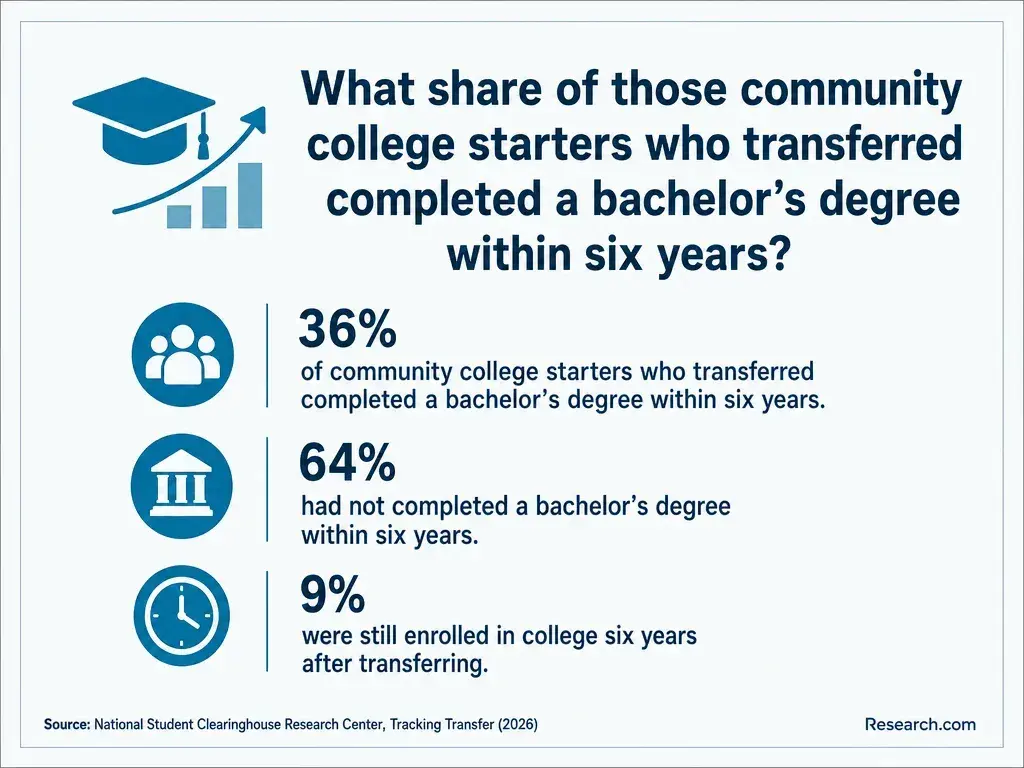
Your timeline depends on credits that satisfy the degree, required course sequencing, and how many classes you can complete while working. A school may accept prior credits as electives without reducing the number of required business courses. Part-time study can make the weekly load manageable while extending the calendar time; accelerated terms shorten the calendar only if required courses are offered when you need them.
Ask for a degree audit and a term-by-term plan that includes prerequisites, upper-level requirements, and any residency rule. If comparing another route, such as project coordination, compare project management bachelor's credit transfer rules separately. A faster-looking program is not faster for you until both schools show how your completed courses apply.
Without a specific school, credit evaluation, and aid offer, there is no responsible single price to quote. Calculate the cost of remaining required courses, not the advertised price of a full degree. Include tuition, mandatory and online fees, books or software, potential proctoring costs, and any travel. Also consider borrowing costs and whether coursework would require reduced work hours.
Employer tuition assistance can change the decision, but confirm eligibility, annual limits, grade rules, reimbursement timing, and any obligation to repay the employer after leaving. Compare grants, scholarships, loans, and your immediate cash-flow needs separately. If you are also considering a different major, such as project management, review financial aid packages for online project management bachelor's students as a separate comparison - not as evidence of the aid you will receive for business administration.
For a practical return-on-investment check, compare your estimated net cost with the specific opportunities you can realistically pursue. Do not build the calculation around an assumed promotion or salary increase.
There is no single salary or job-growth rate for business administration graduates: outcomes depend on the occupation, location, employer, and prior experience. For one possible transition, the U.S. Bureau of Labor Statistics reports a May 2025 median annual wage of $75,940 for human resources specialists and projects 6% employment growth from 2025 to 2035. Those figures describe everyone in that occupation, not a new graduate's starting pay or the likely earnings of an AR clerk moving into HR.
Likewise, wages for managers should not be treated as the immediate payoff from a bachelor's degree. Evaluate postings for the exact next role you want, including required experience and functional skills. When considering business administration degrees compared by cost duration and outlook, separate a program's price and completion timeline from occupation-wide wage data; one does not predict the other.
How Can You Choose an Accredited Online Business Administration Program?
Confirm that the institution holds recognized institutional accreditation, then check the exact degree name and whether the online program is covered by any business-school accreditation the school advertises. AACSB, ACBSP, and IACBE accredit within their stated scopes; none guarantees a promotion or substitutes for reviewing the curriculum.
For a working clerk, the best comparison is a written, school-specific completion plan. Request a transfer evaluation, remaining-course list, expected course rotation, sample weekly schedule, total-cost estimate, and details of career and academic support. Ask whether an approved workplace project is possible without disclosing customer information. Use lower-priced college options for business majors to identify schools to investigate, but compare your own remaining costs and requirements rather than selecting by advertised tuition alone.
Choose the program only after its requirements fit both your target role and the time you can reliably give it. If neither condition holds, targeted accounting coursework, workplace development, or a more specialized degree may be the better next step.
Other Things You Should Know About Business Administration
Possibly, if a school offers a prior-learning assessment and your experience meets its documentation and evaluation rules. Employment alone does not automatically earn credit.
Not by itself. CPA eligibility is set by state boards and may require specific accounting coursework, education, examinations, and experience.
Only if your employer and school permit the proposed use and you follow applicable privacy and confidentiality rules. A fictional or properly approved, de-identified example may be safer.
It can be useful if you want to discuss tuition assistance or future responsibilities. First decide which role you hope to reach, then ask what qualifications and performance evidence that role requires.
- Accreditation in the U.S. | ed.gov http://www.ed.gov/laws-and-policy/higher-education-laws-and-policy/college-accreditation/accreditation-in-the-us
- Accounts Receivable Clerks: How to Become One | Franklin University https://www.franklin.edu/career-guide/bookkeeping-accounting-and-auditing-clerks/how-to-become-accounts-receivable-clerks
- BA vs BS: Which is the Better Business Degree? - UC Online https://www.online.uc.edu/blog/ba-vs-bs-which-is-the-better-business-degree-uc-online.html
- What Can You Do With a Business Administration Degree? | snhu.edu https://www.snhu.edu/about-us/newsroom/business/what-can-you-do-with-a-business-administration-degree
- Business Administration vs Accounting: What Degree Should I Get? - BAU https://bau.edu/blog/business-administration-vs-accounting/
- How Long Does it Take to Get a Business Degree Online? | stevenson.edu https://www.stevenson.edu/online/about-us/news/how-long-does-it-take-to-get-a-business-degree-online/
- What Can You Do With a Business Administration Degree? | LSU Online https://online.lsu.edu/newsroom/articles/what-can-you-do-business-administration-degree/
- Bachelor's Degree in Business: Administration or Accounting? | Bay Path University https://www.baypath.edu/news/bay-path-university-blogs/post/bachelor-s-degree-in-business-administration-or-accounting/
- Online Bachelor's Degree in Business Administration | Purdue Global https://www.purdueglobal.edu/degree-programs/business/bachelor-business-administration/
- Online Business Administration Degrees: A Guide to Your Options and How to Choose | University of Arkansas Grantham https://www.uagrantham.edu/blog/business-admin-degree-online/