2027 Best Online Speech Pathology Master's Programs for Residents of Long Beach, CA

Co-Founder and Chief Data Scientist

Reviewed by Rhea Paul, PhD
SLP Education & Research Expert
Long Beach residents can pursue an online master's in speech-language pathology without limiting their search to local universities, but the degree must work for California licensure, supervised clinical training, and eventual ASHA certification.
This guide compares practical program-selection factors, not just school names, so prospective SLPs can identify California-eligible options, anticipate travel and placement needs, evaluate costs, and avoid enrolling in a program that cannot support their professional goal.
Key Things You Should Know
- A California SLP license requires more than an online master's degree: applicants generally need qualifying graduate education, supervised clinical experience, a required professional experience period, and California Board approval.
- CAA accreditation is the central quality check for students seeking ASHA CCC-SLP certification, verify the program's current status in ASHA's CAA directory before applying or paying a deposit.
- The national career outlook remains favorable, the U.S. Bureau of Labor Statistics projects 17% employment growth for speech-language pathologists from 2025 to 2035, with about 12,500 annual openings on average.
Which online speech pathology master's programs accept Long Beach residents and meet licensure requirements in California?
The strongest starting point is a CAA-accredited master's program that affirmatively allows California residents to enroll and provides a written California professional-licensure disclosure. Admission availability can change by cohort, so a school's general online format is not enough evidence that it currently accepts applicants from California.
Programs commonly considered by California residents include Emerson College's online MS in Communication Disorders, Baylor University's online MS in Speech-Language Pathology, New York University's online MS in Communicative Sciences and Disorders, and the University of Akron's online MS in Speech-Language Pathology. Each should be treated as a potential option rather than an automatic fit: applicants should obtain current confirmation of California eligibility, required campus attendance, clinical-placement expectations, and total charges in writing.
The comparison below focuses on decision factors that matter more than institutional location for a Long Beach applicant. Use it alongside a broader review of online speech and language pathology programs when building a realistic application list.
| Program | Online delivery consideration | California decision point | Best fit when |
| Emerson College | Online coursework with required experiential components. | Confirm current California enrollment eligibility, immersion requirements, and placement process. | You want a structured online cohort and can plan for required travel. |
| Baylor University | Distance-oriented graduate SLP format with clinical education requirements. | Request the current California licensure disclosure and placement expectations before applying. | You value a university-managed online program and can meet its clinical schedule. |
| New York University | Online graduate study designed around scheduled coursework and clinical training. | Confirm California authorization, live-session schedule in Pacific Time, and travel obligations. | You prefer a nationally recognized private-university option and have budget flexibility. |
| University of Akron | Online or distance components may be paired with supervised clinical requirements. | Verify that the specific pathway admits California residents and supports California placements. | You are comparing several public and private distance-delivery models. |
Do not rely on a school's marketing statement that a degree is "online." Ask whether its curriculum is designed to satisfy California educational requirements, whether it has placed recent students in Southern California, and whether a California placement is guaranteed, assisted, or primarily the student's responsibility.
How does California's speech-language pathology licensure process shape online program choices for Long Beach students?
California licensure should shape the program search from the beginning. The Speech-Language Pathology and Audiology and Hearing Aid Dispensers Board evaluates applicants for a California SLP license; a university cannot independently grant that license. A qualifying graduate degree is only one part of the process.
For a typical applicant, the path involves completing an appropriate master's program, documenting required supervised clinical practicum, passing the national Praxis examination when required by the Board, and completing a supervised Required Professional Experience (RPE) period before full licensure. California requirements can change, and individual circumstances - such as out-of-state coursework, international education, or a prior credential - can require additional review.
ASHA's Certificate of Clinical Competence in Speech-Language Pathology, commonly called the CCC-SLP, is separate from a California license. Many employers prefer or expect it, but applicants should not assume that ASHA certification and California licensure have identical documentation standards. ASHA's certification pathway includes graduate clinical hours and a clinical fellowship; California's licensing pathway includes its own application and RPE rules.
Before selecting a program, obtain clear answers to these licensure-sensitive questions:
- Does the program's current California disclosure state that its curriculum meets, is intended to meet, or has not been determined to meet California educational requirements?
- Will the program document practicum hours, supervision, and clinical competencies in a form useful for California Board review?
- Who secures external placements, and what happens if a Southern California site declines a student?
- Does the program advise graduates on the RPE, Praxis, and California application sequence?
A school that cannot answer these questions clearly may still offer sound coursework, but it is a higher-risk choice for a student whose immediate goal is California practice.
Which accredited online SLP master's programs most reliably support ASHA CCC-SLP certification for Californians?
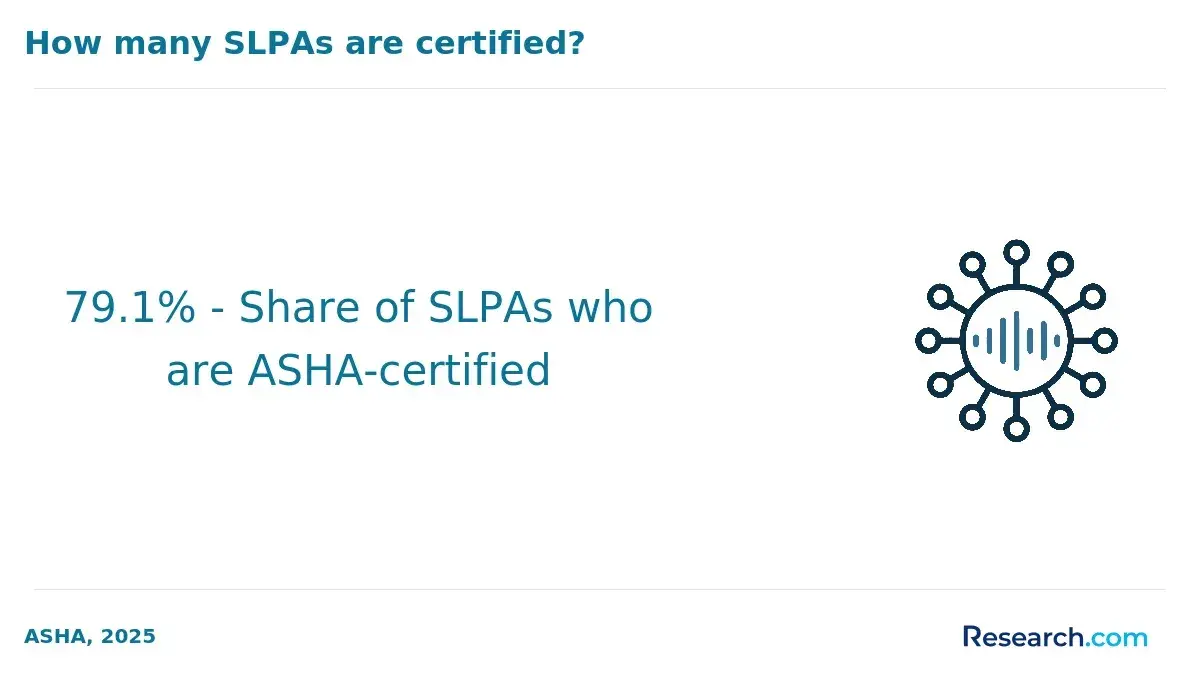
CAA accreditation is the most important baseline for students targeting the CCC-SLP. The Council on Academic Accreditation in Audiology and Speech-Language Pathology accredits graduate programs, not entire universities. Check the exact degree and campus or distance pathway, because an institution-wide accreditation statement does not establish CAA accreditation for an SLP program.
A CAA-accredited program generally provides the academic and clinical framework students need to pursue ASHA certification, but it does not remove every individual requirement. Students still need to satisfy ASHA's current standards, including graduate coursework, supervised clinical experiences, a passing Praxis score, and the post-graduate clinical fellowship.
For California residents, the most reliable programs tend to share several features: they publish a current CAA status, provide an explicit professional-licensure disclosure for California, explain how they arrange clinical education, and employ staff who can document clinical progress. Programs such as Emerson, Baylor, NYU, and the University of Akron can be reasonable schools to investigate, but "reliable" depends on the current cohort's state eligibility and whether the school can support the student's required clinical sequence.
CAA accreditation is necessary but not sufficient for a final enrollment decision. Compare the accreditation status with California authorization, placement logistics, cost, travel, and your ability to attend synchronous instruction or daytime clinical rotations.
What institutional and CAA accreditation checks should Long Beach applicants perform before choosing an online SLP program?
Accreditation checking should be a documented process, not a quick website scan. A polished program page may describe a university's regional or institutional accreditation without making clear whether the specific SLP master's program holds CAA accreditation.
Use the following review sequence before submitting an application or nonrefundable deposit:
- Search ASHA's CAA program directory for the exact master's program and read its current accreditation status, including any public notices.
- Confirm the university's institutional accreditation through the institution and the appropriate recognized accreditor.
- Read the program's California professional-licensure disclosure rather than relying on an admissions representative's verbal assurance.
- Ask whether the disclosure applies to fully online students, not only students attending a campus-based version of the degree.
- Request written confirmation that California residents are eligible for the intended start term.
- Save the school's tuition page, clinical-placement policy, and licensure disclosure with the date accessed.
Common red flags include vague statements such as "designed to prepare students for licensure," no distinction between institutional and programmatic accreditation, a requirement that students independently locate every clinical site, or refusal to state whether California residents may enroll. These signals do not automatically mean a school is unsuitable, but they warrant a detailed written response before committing.
How do in-state versus out-of-state online SLP programs compare for Long Beach residents on cost and authorization?
An in-state program is not automatically less expensive, and an out-of-state online program is not automatically available in California. Public institutions may offer lower resident tuition to eligible students, while private institutions often charge a single rate regardless of residence. However, total cost also includes university fees, clinical fees, travel, background checks, health requirements, technology, and possible housing during intensive experiences.
The practical comparison is not simply California versus non-California. It is a comparison of total educational cost, authorization certainty, required travel, and clinical-placement support. A list of online SLP programs can help expand the search, but admission accessibility should never outweigh accreditation and California licensure compatibility.
| Factor | In-state or California-based option | Out-of-state online option | What Long Beach applicants should verify |
| Tuition structure | May offer resident pricing at public institutions. | May use a flat private-university or distance-learning rate. | Total program tuition, required fees, and annual increases. |
| State authorization | Usually has clearer California operations, but still needs confirmation for the exact online pathway. | May be restricted by state authorization or professional-licensure policy. | Written confirmation that California residents can enroll. |
| Clinical access | May have more established California contacts. | May rely on national placement networks or student-supported outreach. | Who finds the site, expected commute, and contingency plans. |
| Travel burden | May reduce travel for campus requirements. | Could require flights, lodging, and time away from work. | All residencies, orientations, simulations, and exams that require attendance. |
| Schedule | May follow Pacific Time and local clinical calendars. | Live classes may follow another time zone. | Required meeting times and daytime clinical obligations. |
A lower published per-credit rate can be misleading if the program requires multiple out-of-state immersions or if students must delay graduation while waiting for placement approval. Request a written estimate of recurring fees and ask whether tuition is locked for the entering cohort.
Which online speech pathology programs offer California-compliant clinical placements reachable from Long Beach?
No online SLP program should be presumed to provide a placement in Long Beach simply because it admits California residents. Clinical sites are independent organizations with their own affiliation agreements, supervisor availability, onboarding rules, and patient populations. A program may support a placement search in Southern California without guaranteeing a site within a particular commute distance.
California-compliant clinical education should give students supervised experiences that align with both graduate-program competencies and the documentation needed for future credentialing. Long Beach students may need placements in schools, hospitals, rehabilitation settings, early-intervention programs, private practices, or skilled nursing facilities across Los Angeles and Orange counties. Clinical schedules are usually daytime and can make full-time employment difficult during placement-heavy terms.
Ask each program for precise, current details about its placement model:
- Whether the university's clinical team secures sites, shares responsibility with students, or expects students to locate sites independently.
- Whether the school has active affiliation agreements in Southern California and how often those agreements have supported recent cohorts.
- Whether students may be asked to travel outside Long Beach, outside the region, or outside California when local sites are unavailable.
- How long site approval typically takes and whether delayed placement can delay graduation.
- What support exists if a supervisor withdraws, a site closes, or a required population cannot be served at the original site.
The best clinical-placement model for a working adult is usually not the one that promises "100% online" coursework; it is the one that clearly assigns responsibility, plans early, and has a realistic response when local capacity is tight.
How do leading online SLP master's programs differ in curriculum focus for bilingual and multicultural practice in Long Beach?
Long Beach's multilingual and culturally diverse communities make bilingual and multicultural preparation a meaningful selection factor. Every CAA-accredited program addresses communication differences and disorders, but programs vary in how deeply they integrate bilingual assessment, multilingual language development, culturally responsive counseling, interpreter collaboration, and clinical experiences with diverse populations.
Review course descriptions rather than relying on broad diversity language. Strong evidence may include a dedicated bilingual or multicultural communication course, faculty expertise in bilingual practice, case-based learning involving linguistic diversity, and clinical opportunities serving varied communities. A program does not need to offer a formal bilingual specialization to be useful, but applicants who intend to work heavily with Spanish-speaking or multilingual families should look for sustained training rather than a single lecture.
Students seeking an accelerated route should be particularly careful that speed does not reduce fit. Some 5 year SLP programs combine undergraduate and graduate study, but they may be most practical for students who begin planning early and can meet the program's prescribed prerequisite sequence.
Ask prospective programs whether bilingual experience can be pursued during clinical placement, how dialect and language difference are distinguished from disorder in the curriculum, and whether electives are consistently available. Also recognize the boundary between cultural competence and bilingual clinical proficiency: completing multicultural coursework does not by itself establish professional fluency in another language.
What online SLP programs report the strongest Praxis pass rates and employment outcomes for California graduates?
Outcome data can help distinguish programs, but it must be compared carefully. A school may report Praxis results, employment rates, completion rates, or on-time completion figures using different graduating cohorts, time windows, and definitions. The most useful comparison is one based on the same measure, the same reporting period, and a clearly stated number of graduates.
Ask each program for its most recent CAA-required outcome data and read the reporting notes. A high Praxis pass rate is encouraging, but it does not prove that a program is best for every student or that it has strong California placement access. Small cohorts can also make year-to-year percentages volatile.
| Outcome measure | Why it matters | How to use it responsibly |
| Praxis examination pass rate | Shows how reported graduates performed on a common professional examination. | Compare the same reporting period and ask for the denominator, not just a percentage. |
| Program completion rate | Indicates whether students finish within the school's stated time frame. | Ask whether delayed clinical placement affected completion. |
| Employment rate | Provides a view of graduates obtaining relevant work after completion. | Confirm the definition of employment and the time after graduation used. |
| California-specific outcomes | Can indicate local readiness when available. | Do not assume national outcomes apply equally to California graduates. |
The broader labor market supports careful investment in the degree. The U.S. Bureau of Labor Statistics reports a May 2025 median annual wage of $97,870 for speech-language pathologists and projects 17% job growth from 2025 to 2035. Those national figures are not a salary promise for a new graduate in Long Beach, but they indicate sustained demand for the profession. For role and pay context, review this guide to speech and language therapist salary options.
How can Long Beach residents verify state authorization, complaint processes, and consumer protections for online SLP programs?
State authorization addresses whether an institution may provide distance education to a student in California. Professional licensure disclosure addresses whether the program's curriculum meets educational requirements for a California credential. These are related but different protections, and applicants should verify both.
Start with the program's official disclosures and admissions office, then contact the California Board directly when a licensure question affects your plan. Ask the university for its formal complaint process, refund policy, withdrawal policy, and the external agency responsible for complaints if the school cannot resolve an issue. California residents attending an out-of-state institution may have different complaint pathways from students at California institutions.
Keep a written record of material representations. Save emails confirming California eligibility, total charges, required travel, placement responsibility, and licensure disclosures. If an admissions representative makes a statement that is not reflected in the catalog or disclosure, ask for confirmation from the registrar, compliance office, or program director.
Consumer-protection review is especially important when a program uses phrases such as "licensure track" or "licensure-ready." Those phrases are not substitutes for a current disclosure applicable to California and to the specific degree format you plan to complete.
What application timelines, prerequisite coursework, and GPA expectations should Long Beach SLP applicants plan for online programs?
Online SLP programs typically use cohort admissions and may have only one start date each year. Begin planning well before the application deadline, especially if you need prerequisite coursework, observation hours, recommendation letters, transcript evaluations, or time to compare California clinical-placement policies.
Applicants from communication sciences and disorders backgrounds often have the most direct route. Career changers may need foundational coursework in areas such as phonetics, speech and hearing science, language development, anatomy and physiology of speech and hearing, audiology, and speech-language development. Many programs also expect science prerequisites that meet ASHA certification standards, although exact course requirements vary by school.
A practical application timeline can reduce preventable surprises:
- About 12 to 18 months before enrollment, identify CAA-accredited programs that confirm California eligibility and compare their prerequisite lists.
- About 9 to 12 months before enrollment, complete missing coursework, request unofficial transcript reviews where available, and budget for application-related costs.
- About 6 to 9 months before enrollment, prepare essays, secure recommendations, order official transcripts, and confirm whether the program uses CSDCAS or its own application system.
- Before accepting an offer, obtain written answers on tuition, travel, live-class attendance, clinical placement, and California licensure disclosure.
Minimum GPA requirements vary, and meeting a published minimum does not ensure admission. Evaluate your academic profile honestly: applicants with weaker grades may strengthen an application through recent prerequisite performance, relevant experience, thoughtful recommendations, and a clear explanation of readiness. Avoid assuming that an online program is less selective or less clinically demanding than a campus program.
Other Things You Should Know About Speech Language Pathology
Yes, potentially. The degree must be from an appropriate program, and you must meet California's separate education, clinical, examination, application, and supervised professional-experience requirements. Confirm the specific online program's California licensure disclosure before enrolling.
Often, yes. Some programs require immersions, orientations, simulations, examinations, or other in-person experiences. Clinical placements are also in person. Ask for every required visit, location, and estimated travel cost before applying.
It may be possible during some coursework terms, but clinical placements commonly require daytime availability and can be difficult to combine with full-time employment. Review the expected weekly schedule and placement calendar rather than relying on the word "online."
California licensure and ASHA CCC-SLP certification are separate credentials. State licensure is central to legal practice in California, while the CCC-SLP is a nationally recognized professional credential that many employers value or require. Check the expectations of your intended employer and setting.
References
- Best Online Master's in Speech-Language Pathology for 2026 https://healthscience.pepperdine.edu/online-masters-in-speech-language-pathology/article/best-online-masters-in-speech-language-pathology-programs-guide.htm
- Graduate Program | California State University Long Beach https://www.csulb.edu/college-of-health-human-services/speech-language-pathology/graduate-program
- Online Master's in Speech Pathology Programs: 2026 Guide https://speechpathologymastersprograms.com/
- Best Online Master's in Speech Pathology (SLP) Programs https://www.onlinemastersdegrees.org/best-programs/speech-language-pathology-slp/
- Best California Speech Pathology Programs, Online SLP for... https://www.speechpathologydegrees.com/st/california