2027 Best Online Nurse Education Degree Programs at Nonprofit Universities

Co-Founder and Chief Data Scientist
Choosing an online nurse education degree requires more than finding a nonprofit university or the lowest tuition rate. The U.S. Bureau of Labor Statistics projects registered nurse employment to grow 6% from 2023 to 2033, sustaining demand for faculty and clinical educators who can help prepare the workforce.
This guide helps RNs and aspiring nurse educators compare degree levels, accreditation, delivery formats, total costs, and career pathways so they can select a program that fits their schedule and long-term goals.
Key Things You Should Know
- For most practicing RNs seeking faculty, staff-development, or patient-education roles, an MSN with a nurse educator concentration is the most direct online path; a DNP or PhD is more appropriate for advanced leadership, research, or many tenure-track faculty roles.
- Verify both institutional accreditation and nursing accreditation before enrolling: nonprofit status alone does not establish credit transferability, employer recognition, or eligibility for future graduate study.
- Compare total cost, not tuition alone: include per-credit charges, technology fees, books, travel, required practicum hours, and whether the curriculum supports credentials such as the Certified Nurse Educator examination.
What Makes an Online Nurse Education Degree Program at a Nonprofit University Different?
An online nurse education degree prepares nurses to teach students, patients, families, or healthcare staff. Most programs are graduate-level MSN concentrations for licensed RNs; they typically combine advanced nursing courses with curriculum design, assessment, teaching strategies, learning technology, and a supervised teaching practicum.
Nonprofit universities include public institutions and private nonprofit institutions. Their tax status does not automatically make a program stronger, less expensive, or more flexible. The meaningful differences are whether the institution is accredited, how the nursing program is reviewed, who teaches courses, how practica are arranged, and whether the program fits the learner's intended setting.
Degree level should match the role a student wants rather than a school's marketing label. The comparison below distinguishes common paths.
| Path | Best fit | Typical outcome | Important limitation |
| RN-to-BSN | Diploma- or associate-prepared RNs building a bachelor's foundation | Broader nursing preparation and eligibility for many MSN programs | Usually does not qualify a nurse for faculty roles by itself |
| MSN, nurse educator concentration | BSN-prepared RNs pursuing teaching or professional-development roles | Academic clinical instruction, staff education, simulation, patient education, curriculum support | Faculty hiring requirements vary, especially for full-time university posts |
| DNP in nursing education or leadership | Master's-prepared nurses seeking advanced practice, leadership, or academic administration | Advanced educational leadership and practice-focused scholarship | May cost more and is not always required for educator positions |
| PhD in nursing | Nurses pursuing research-intensive academic careers | Research, scholarship, and many tenure-track pathways | Usually requires substantial research preparation and a dissertation |
Public nonprofits may offer lower in-state tuition, while private nonprofits may offer one online rate or more structured student support. Neither model is universally better. Nurses considering a practice doctorate can also compare best DNP programs when their goal extends beyond educator preparation into advanced leadership or doctoral study.
How Can Students Verify Accreditation for an Online Nurse Education Degree at a Nonprofit University?
Accreditation is a quality-review process, not a guarantee of admission, licensure, employment, or transfer credit. For an online nurse education degree, students should evaluate two distinct levels: institutional accreditation for the university and nursing accreditation for the nursing degree program.
Institutional accreditation matters for federal aid, graduate-school eligibility, and transfer review. Nursing program accreditation is commonly granted by the Commission on Collegiate Nursing Education (CCNE) or the Accreditation Commission for Education in Nursing (ACEN). A school's website is a starting point, but students should confirm the current status directly with the recognized accreditor and ask whether their specific online track is included.
Use the following verification process before submitting a deposit. It helps prevent a common mistake: confusing a school's general institutional approval with approval of the actual nursing program.
- Confirm the university's institutional accreditor through the U.S. Department of Education or CHEA database.
- Search CCNE or ACEN records for the exact nursing degree and campus or distance-learning option.
- Ask whether the accreditation covers the planned enrollment period and whether the program has any public conditions or reporting requirements.
- Request written confirmation that the curriculum meets prerequisites for the certification, state authorization, or future degree pathway you intend to pursue.
- Check with a target employer or graduate school if you have a specific role or doctoral program in mind.
Students should also distinguish accreditation from state authorization. State authorization affects whether a university can enroll distance learners in a given state, while nursing board rules affect RN licensure and clinical education. Because requirements can change, nurses relocating during enrollment should notify the program promptly.
How Rigorous Are Online Nurse Education Degree Programs at Nonprofit Universities?
Well-designed online nurse education programs are academically demanding because they require students to translate clinical expertise into safe, evidence-informed teaching. Online delivery changes where learning happens, not the expected graduate-level outcomes. Coursework commonly includes educational theory, curriculum development, evaluation, instructional design, simulation, informatics, and an educator practicum.
Most MSN nurse educator programs expect applicants to hold an active, unencumbered RN license, a BSN, official transcripts, and a minimum GPA set by the school. Some require professional experience, statistics coursework, recommendations, or a statement explaining the applicant's teaching goals. RN-to-MSN options may add undergraduate bridge coursework, while doctoral programs often require a master's degree.
Academic rigor is especially visible in experiential requirements. A practicum may require students to plan lessons, teach under faculty or preceptor supervision, assess learning, and reflect on feedback. Confirm whether the university finds the site, whether the student must secure a qualified preceptor, and whether virtual simulation can fulfill any portion of required hours.
Online study is not automatically self-paced. Asynchronous courses may let students choose when to complete weekly work, while still requiring fixed deadlines, group projects, live presentations, and practicum milestones. Students who specifically need minimal scheduling constraints should understand the difference between asynchronous coursework and truly flexible pacing; this overview of accredited self-paced online colleges can help frame that distinction.
A rigorous program should publish measurable learning outcomes, identify educator-prepared faculty, and use clear evaluation standards. Be cautious if a program cannot explain its practicum expectations, faculty oversight, course sequence, or academic-integrity procedures.
How Much Does an Online Nurse Education Degree Cost at a Nonprofit University?
Cost varies substantially by degree level, residency status, credit requirement, and institution type. Public nonprofit universities often differentiate in-state and out-of-state rates, whereas private nonprofit universities may charge a single rate. The advertised per-credit amount is useful, but it is not the total price of earning the degree.
For context, the College Board reported average published tuition and fees of $11,610 for in-state students at public four-year institutions in 2024-25. That undergraduate benchmark does not predict graduate nursing tuition, but it illustrates why students should request a program-specific estimate rather than relying on broad college averages.
The following cost categories are the ones that most often change the final budget for an online nurse education program.
| Cost category | What to confirm | Why it matters |
| Tuition | Per-credit rate, number of credits, residency rules, and annual increases | Determines the core instructional cost |
| Mandatory fees | Distance-learning, technology, graduation, clinical, and course fees | May not appear in a tuition-only quote |
| Practicum expenses | Background checks, immunizations, travel, attire, liability coverage, and site requirements | Can be significant when students arrange local placements |
| Learning materials | Books, testing platforms, simulation products, and software | Some programs bundle these costs; others bill separately |
| Lost work time | Schedule demands during practica or synchronous sessions | Affects affordability even when tuition is low |
To compare schools fairly, multiply the current per-credit tuition by required credits, then add each mandatory charge and a realistic practicum travel estimate. Ask whether transfer credits can reduce required coursework and whether a tuition lock applies after enrollment. A lower-cost program can be a weaker value if it delays graduation, lacks needed support, or does not align with the role a student ultimately wants.
What Financial Aid Is Available for an Online Nurse Education Degree at a Nonprofit University?
Online students at eligible nonprofit institutions may qualify for federal financial aid, but eligibility depends on the student, the program, enrollment intensity, and the school's participation in federal aid programs. Completing the Free Application for Federal Student Aid is the usual first step, even for working nurses who expect to use employer support.
Graduate nursing students most commonly use a combination of federal Direct Unsubsidized Loans, Graduate PLUS Loans when eligible, institutional scholarships, employer tuition assistance, professional association awards, and service-connected benefits. Federal loans can offer protections that private loans may not, but borrowing still requires a realistic repayment plan based on total debt rather than a projected salary.
Before accepting aid, ask the financial-aid office these targeted questions. The answers are more useful than a generic award estimate.
- Which awards are available specifically to online graduate nursing students, and are they renewable?
- Does the school package loans automatically, and can students reduce or decline part of the offer?
- Do practicum courses count toward the enrollment level required for aid?
- Can employer tuition reimbursement be coordinated with institutional scholarships without reducing eligibility?
- What happens to aid if a student drops below half-time enrollment or takes a leave during a clinical term?
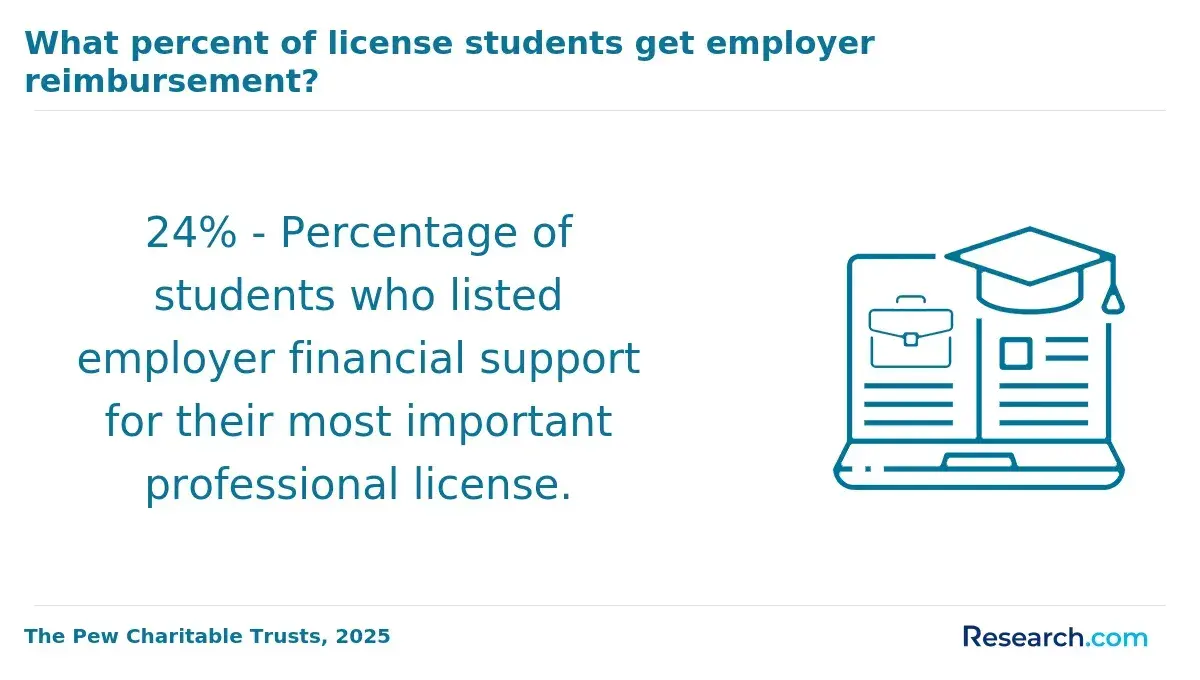
Many healthcare employers provide education benefits because nursing education and workforce development are operational needs. Students should read reimbursement policies closely: some require continued employment, manager approval before enrollment, grade minimums, or repayment if the employee leaves early. Scholarships and employer aid can reduce borrowing, but students should not assume either will cover practicum-related costs.
How Flexible Are Online Nurse Education Degree Programs at Nonprofit Universities?
Online nurse education programs can be flexible for working RNs, but flexibility has limits. Most operate in either asynchronous, synchronous, or hybrid formats. Asynchronous courses usually allow students to complete lectures and discussions around shift work before weekly deadlines. Synchronous courses require attendance at scheduled video sessions, often for seminars, presentations, or group activities. Hybrid programs may include campus intensives or orientation sessions.
The greatest scheduling constraint is often the practicum. Even a fully online curriculum may require supervised teaching in a school, healthcare organization, simulation center, or community setting. The student may need to attend during business hours or align with an academic term, which can be difficult for nurses working nights or rotating shifts.
This comparison can help applicants identify the format that best fits their work and family obligations.
| Format | Best for | Trade-off to evaluate |
| Mostly asynchronous | Shift-working nurses who need control over weekly study times | Deadlines, group work, and practicum hours still remain fixed |
| Scheduled synchronous online | Students who prefer real-time faculty interaction and predictable class meetings | Less compatible with rotating shifts and multiple time zones |
| Hybrid with campus sessions | Students who value in-person simulation or networking opportunities | Requires travel, time off, and advance planning |
| Part-time pathway | Working nurses prioritizing manageable course loads | Longer time to degree and potentially more exposure to tuition increases |
| Accelerated pathway | Students with strong time availability and organized support systems | Compressed deadlines can make practicum coordination harder |
Ask for a sample term calendar before enrolling. It should show live-session times, campus visits, practicum timing, course sequencing, and the maximum period allowed to complete the degree. Do not assume that "online" means no travel, no clinical engagement, or no daytime commitments.
What Student Support Services Do Nonprofit Universities Provide for Online Nurse Education Degree Students?
Strong student support can affect completion and learning quality, particularly for nurses balancing clinical work with graduate study. Nonprofit universities vary widely in the services they deliver to online learners, so applicants should look beyond general claims about a "supportive community."
Useful support commonly includes an assigned academic advisor, nursing-specific faculty mentorship, library access, writing assistance, tutoring, accessibility services, technical help, career coaching, and practicum coordination. For nurse education students, the most consequential service is often clear assistance with identifying an appropriate teaching site and documenting practicum requirements.
Students should evaluate whether services are actually accessible outside standard business hours. A 24/7 technology help desk may matter more to a night-shift nurse than a campus office that is only open during weekday hours. Similarly, ask whether virtual library consultations, online writing appointments, and career services are available to distance students without extra cost.
A potential red flag is a program that places all responsibility for finding a preceptor or practicum site on the student but cannot provide affiliation guidance, approval timelines, or contingency options. Local placement remains a shared responsibility in many programs, yet schools should clearly explain their process before admission.
Do Online Nurse Education Degree Programs at Nonprofit Universities Prepare Graduates for In-Demand Careers?
They can, when the curriculum, practicum, and the student's prior nursing experience align with a specific education role. Nurse educators work in colleges, hospitals, health systems, public health organizations, simulation centers, professional-development departments, and patient-education programs. Their responsibilities may include teaching, curriculum planning, clinical evaluation, staff onboarding, competency assessment, and quality-improvement education.
Workforce need is shaped by both nursing demand and faculty capacity. The American Association of Colleges of Nursing reported in its 2024 faculty vacancy survey that nursing schools continued to face faculty vacancies, which can limit student enrollment. This signals a real workforce pressure, but it does not mean every graduate will qualify for every faculty opening; employers set their own degree, specialty, clinical-experience, and scholarly-expectation requirements.
Career preparation is strongest when a program offers supervised teaching practice in the setting a student hopes to enter. For example, an RN aiming for hospital education may prioritize staff-development, quality, informatics, and adult-learning coursework, while someone pursuing a college faculty role may prioritize curriculum design, evaluation, simulation, and experience teaching prelicensure students.
Students weighing alternatives should consider the target role's educational threshold. A master's degree is often a practical starting point for clinical instruction and staff education, while research-intensive university faculty paths may favor doctoral preparation. Nurses interested in adjacent health-professions education can also explore career-aligned options such as PharmD programs if pharmacy practice and pharmacy education better match their background and goals.
The most transferable skills from a quality nurse education program are adult learning, communication, assessment, curriculum planning, data interpretation, educational technology, inclusive teaching, and evidence-based practice. Applicants should review course descriptions and practicum settings instead of assuming every program prepares graduates equally for academic and healthcare-system roles.
Can an Online Nurse Education Degree From a Nonprofit University Prepare Students for Graduate School?
Yes, an accredited online degree can prepare students for further study when it includes the prerequisite coursework, academic performance, and scholarly preparation required by the next program. Delivery format is usually less important than institutional recognition, program accreditation, transcript quality, faculty recommendations, and fit with the receiving school's admissions standards.
A BSN is the usual gateway to an MSN nurse educator program. An MSN may support applications to DNP, EdD, or PhD programs, but requirements differ. DNP programs generally emphasize advanced nursing practice and systems leadership, while PhD programs emphasize research methods, theory, statistics, and original scholarship. An EdD may suit nurses whose primary goal is educational leadership rather than nursing research.
Students who may pursue doctoral education should choose electives strategically and preserve academic records that demonstrate readiness. Research methods, statistics, evidence appraisal, scholarly writing, and a substantial capstone or thesis can be particularly useful, although no single course guarantees admission.
Before enrolling in a master's program, request the program of study and compare it with the admission requirements of two or three realistic doctoral options. Nurses exploring related wellness and population-health directions may also find an online masters degree in nutrition relevant, though it is a different professional pathway with its own credentialing and admissions considerations.
How Should Students Compare the Best Online Nurse Education Degree Programs at Nonprofit Universities?
The best program is the one that meets a student's intended career requirements at a manageable total cost and schedule. A comparison should begin with nonnegotiables: active RN eligibility, degree level, accreditation, state authorization, practical placement feasibility, and the role the student wants after graduation. Rankings and nonprofit status can be useful context, but they should not replace program-level due diligence.
Build a short list of three to five eligible programs, then compare the same information for every school. This scorecard focuses attention on decision factors that frequently matter more than a headline tuition rate.
| Comparison factor | What a strong answer looks like | Red flag |
| Accreditation | Current institutional and CCNE or ACEN status can be independently verified | Vague claims without naming the accreditor or covered program |
| Career alignment | Courses and practicum match academic faculty, clinical education, simulation, or staff-development goals | Generic curriculum with no explanation of educator competencies |
| Total price | Written estimate includes credits, fees, practicum costs, and transfer-credit review | Only a per-credit tuition figure is available |
| Flexibility | Published calendar identifies live sessions, campus requirements, and practicum timing | "Fully online" is used without scheduling details |
| Practicum support | Clear preceptor qualifications, approval process, and faculty oversight | Placement responsibility is unclear until after enrollment |
| Student outcomes | School can explain completion, retention, certification preparation, and career-support information | Broad employment promises without program-specific evidence |
After reviewing the scorecard, take these practical final steps to make a defensible choice.
- Request a written degree plan showing total required credits, expected completion timeline, and all known fees.
- Confirm that your state of residence is authorized for enrollment and that the practicum can be completed locally.
- Ask to speak with a program director or faculty member about typical teaching sites, faculty credentials, and educator certification preparation.
- Have each school complete an official transfer-credit evaluation before deciding based on time or cost.
- Calculate a personal budget that includes reduced work availability during practicum terms.
- Choose the program with the strongest documented fit for your target role, not simply the lowest advertised price or fastest timeline.
For nurses considering broader movement, rehabilitation, or exercise-science education roles rather than nursing education, a kinesiology degree online may be worth comparing as a separate academic route. It should be evaluated on its own prerequisites, professional scope, and career outcomes.
Other Things You Should Know About Nurse Education
Sometimes. Employers may hire nurses with relevant MSN preparation, clinical expertise, and teaching experience, especially for staff-development roles. A nurse educator concentration is often the clearer option because it documents coursework and practicum experience in teaching, curriculum, and evaluation.
The National League for Nursing's Certified Nurse Educator credential is voluntary, not a universal legal requirement. It can demonstrate educator competence, but individual employers determine whether they prefer or require it. Review eligibility requirements and ask target employers how they value the credential.
Yes. Many nurses begin as clinical instructors, preceptors, adjunct faculty, or staff educators while maintaining part-time clinical practice. Continuing clinical work can help educators keep specialty knowledge current, although balancing both roles requires careful scheduling.
Ask how manageable the workload was while working, how practicum sites were arranged, whether faculty feedback was timely, what technology was used, and whether the curriculum matched their eventual job. Their experiences are useful context, but confirm all policy, cost, and accreditation details directly with the university.
References
- Nonprofit vs. For-Profit Nursing Schools: Which to Choose? | NursingEducation https://nursingeducation.org/insights/non-profit-vs-profit/
- Guide to Online Nursing Programs | OEDb.org https://www.oedb.org/rankings/online-nursing-programs/
- Your Questions About Online Nursing School, Answered https://www.allnursingschools.com/how-to-get-into-nursing-school/online-programs/
- Industry Insights - Legacy Education https://legacyed.com/industry-insights/
- New Graduate Employment Data https://www.aacnnursing.org/news-data/research-data-center/new-graduate-employment-data
- 2025 Most Affordable Online Nursing Programs https://www.onlineu.com/most-affordable-colleges/nursing-degrees
- Top Institutes For Nursing Education https://hospitalcareers.com/blog/top-institutes-for-nursing-education/
- New Report Shows Graduates of NLN CNEA Accredited Programs Land Jobs at a Higher Rate than the National Average https://www.nln.org/detail-pages/news/2026/04/09/new-report-shows-graduates-of-nln-cnea-accredited-programs-land-jobs-at-a-higher-rate-than-the-national-average
- 30 Most Affordable Online Nurse Educator Programs https://www.bestmasterofscienceinnursing.com/best/affordable-online-nurse-educator-programs/