2027 Online Nurse Education Degree Programs With No Letters of Recommendation Required

Co-Founder and Chief Data Scientist
Applicants who have been out of school for years or cannot easily contact former instructors may prefer online Nurse Education programs with admissions processes that do not require recommendation letters. These programs can reduce an application barrier without reducing the need for a current RN license, qualifying GPA, transcripts, and professional experience.
The U.S. Bureau of Labor Statistics projects 17% employment growth for postsecondary nursing instructors and teachers through 2033, creating continued demand for qualified nurse educators. This guide helps working nurses identify legitimate options, verify requirements, compare costs, and choose a program that supports their teaching goals.
Key Things You Should Know
- "No letters of recommendation required" means recommendation letters are not part of the standard application for the specific program; it does not mean admission is automatic, and schools commonly still review RN licensure, transcripts, GPA, a resume, and prerequisite coursework.
- Online MSN Nurse Educator and MSN Education pathways are the most common no-recommendation options for licensed RNs; verify the current program-specific checklist because a university may waive letters for one degree while requiring them for another.
- Program quality matters more than a streamlined application: confirm institutional accreditation, nursing accreditation when available, clinical/practicum expectations, state authorization, total tuition, and faculty-preparation outcomes. BLS projects 17% growth for postsecondary nursing instructors and teachers through 2033.
Which Online Nurse Education Degree Programs Require No Letters of Recommendation?
Fully online nurse education degrees without recommendation letters are most often designed for licensed registered nurses completing an MSN with a nurse educator concentration. Requirements change by term, so treat every option below as a starting point and confirm the school's current application checklist before paying an application fee.
The following examples represent institutions whose published admissions materials have commonly used transcript-, license-, and resume-based review rather than a recommendation-letter requirement for relevant online nursing graduate pathways. A program's concentration page and graduate catalog are the final authority.
| Institution and pathway type | Typical applicant profile | Materials commonly used instead of letters | Important verification point |
| Western Governors University MSN Education | RN with a BSN or comparable nursing bachelor's preparation | Official transcripts, active RN license, resume, and enrollment documentation | Confirm clinical placement rules and any state restrictions before enrolling |
| Purdue Global MSN Nurse Educator | RN seeking graduate preparation for academic or staff education | Transcripts, RN license, application, and prior-degree review | Check current GPA, statistics, and writing-course prerequisites |
| University of Phoenix MSN with nurse education focus | Licensed nurse with qualifying undergraduate preparation | Transcripts, license verification, and admissions documentation | Verify whether a personal statement is required for the selected start date |
| Capella MSN with a nursing education-focused pathway | RN with prior nursing degree coursework | Transcripts, RN license, and program eligibility review | Confirm practicum requirements and state authorization for your location |
These examples should not be read as an endorsement or as a guarantee of availability. Schools can revise application rules, may request additional documentation for an individual applicant, and can apply different rules to RN-to-MSN, post-master's certificate, and doctoral pathways.
Nurses considering leadership or advanced-practice preparation rather than faculty preparation may also compare best DNP programs. A DNP is not the same as an MSN in Nurse Education: it generally emphasizes advanced clinical practice, systems leadership, or population outcomes rather than educator-focused curriculum design.
What Are the Admission Requirements for Online Nurse Education Degree Programs With No Recommendation Letters?
A no-recommendation policy removes one document from the application; it does not remove academic or professional screening. Most MSN Nurse Educator programs are intended for practicing RNs and expect applicants to demonstrate that they can succeed in graduate-level nursing coursework.
Applicants should expect some combination of the following requirements. Reviewing these items early helps prevent an application delay after transcripts arrive.
- An active, unencumbered RN license in the state where the student lives or completes practicum experiences.
- A BSN or another qualifying nursing bachelor's degree from an institution recognized by the university.
- Official transcripts demonstrating the program's minimum cumulative GPA, commonly around 2.5 to 3.0, although standards vary.
- Completed prerequisite coursework, which may include undergraduate statistics, health assessment, research, or community health.
- A professional resume or employment history showing nursing experience and, in some cases, a minimum amount of clinical practice.
- A statement of purpose, goal statement, short writing sample, or admissions interview when required by the individual program.
- Background checks, immunization records, drug screening, or health compliance documents before practicum placement.
GRE requirements are uncommon in many online MSN admissions processes, but "GRE not required" and "no letters required" are separate policies. Ask admissions staff for a written list of required documents for your exact degree, concentration, location, and start term.
Applicants pursuing health-professions education outside nursing can use different admissions and professional standards. For example, PharmD programs are professional doctoral pathways with their own prerequisite and experiential requirements.
Are Online Nurse Education Programs With No Letters of Recommendation Easier to Get Into?
Not necessarily. A program that does not require recommendation letters has a more streamlined application process, but it may still enforce GPA thresholds, verify RN licensure, review nursing experience, and limit enrollment based on faculty capacity or practicum resources. "No letters required" describes an application component, not the program's academic rigor or selectivity.
This route can be especially useful for experienced nurses who have strong clinical records but lack recent academic contacts, work nontraditional schedules, or prefer an application process based on records they can directly control. It may be less suitable for applicants whose transcripts do not meet the minimum GPA and who need an admissions process that allows contextual references to explain academic history.
Use the program's published minimum requirements as eligibility standards, not as an estimate of admission odds. Some schools admit qualified students on a rolling basis, while others use cohort deadlines and may evaluate applicants competitively even when recommendation letters are absent.
A common mistake is selecting a school solely because its application appears easy. Instead, compare the curriculum, practicum design, accreditation, faculty qualifications, schedule, withdrawal policies, and total cost before applying.
What Do Online Nurse Education Programs Evaluate Instead of Letters of Recommendation?
Without recommendation letters, admissions teams generally rely more heavily on evidence that is standardized, verifiable, and directly related to graduate readiness. Your transcript and professional record become especially important because they show both prior academic performance and eligibility to participate in nursing practica.
This comparison shows how common substitute materials are typically used in an admissions review.
| Application material | What it can demonstrate | How to strengthen it |
| Official transcripts | Academic preparation, GPA, prerequisite completion, and course rigor | Review transcripts for missing prerequisites and submit all institutions attended |
| RN license verification | Eligibility to enter a nursing graduate pathway and professional standing | Ensure the license is current and disclose any required information accurately |
| Resume or curriculum vitae | Clinical experience, specialty expertise, leadership, precepting, and staff development work | Quantify teaching-related responsibilities and include certifications where relevant |
| Personal statement | Career direction, writing ability, understanding of the educator role, and program fit | Connect your nursing experience to a realistic educator goal and address the prompt directly |
| Interview or writing sample | Communication skills, professionalism, and readiness for graduate work | Prepare concrete examples of teaching, mentoring, or quality-improvement experience |
A strong statement should explain whether you want to teach prelicensure nursing students, support clinical education, lead professional development, or educate patients and communities. Those roles overlap, but employers may value different experiences and credentials for each one.
Nurse educators need communication, curriculum planning, assessment, coaching, clinical judgment, learning-technology, and data-literacy skills. Artificial intelligence tools are increasingly used in education for simulation, feedback, and content development, but programs should still teach ethical use, privacy protections, academic integrity, and human oversight.
How Can You Tell if an Online Nurse Education Degree With No Recommendation Requirement Is Accredited and Legitimate?
A streamlined application does not make a program questionable, but accreditation and authorization must be checked separately from admissions. Institutional accreditation indicates that the college or university meets recognized quality standards. Nursing accreditation, when applicable, evaluates the nursing program itself through an approved accreditor such as the Commission on Collegiate Nursing Education or the Accreditation Commission for Education in Nursing.
Before enrolling, complete these checks using the school's current disclosures and the relevant accreditor's directory.
- Confirm that the institution holds recognized institutional accreditation and that the status is current rather than expired, withdrawn, or merely pending.
- Confirm whether the MSN nursing program has specialized nursing accreditation and identify the accreditor and accreditation period.
- Ask whether the program is authorized to enroll students in your state and whether it can arrange or approve practicum experiences there.
- Review the curriculum for graduate nursing education courses, supervised practicum hours, qualified faculty, and transparent progression requirements.
- Request the complete tuition schedule, technology and clinical fees, refund policy, and a written description of services for online students.
- Check that marketing claims match the catalog, including the exact recommendation-letter policy and the credential awarded.
Be cautious if a school cannot clearly identify accreditation, pressures you to enroll before sharing total costs, promises licensure or employment outcomes, or avoids questions about clinical placements. Accreditation does not guarantee a particular job, but it is a central quality signal for employers, graduate schools, and financial-aid eligibility.
Students who value maximum scheduling freedom can also review accredited self-paced online colleges. For nurse education, however, self-paced coursework does not eliminate fixed practicum, assessment, or compliance deadlines.
How Much Do Online Nurse Education Degree Programs With No Letters of Recommendation Cost?
The absence of recommendation letters has little direct effect on tuition. Cost depends primarily on the school, public or private status, number of required credits, residency policy, transfer credit acceptance, fees, and whether practicum costs are included. For context, College Board reported that average published tuition and fees at public four-year graduate institutions were $12,596 for the 2024-25 academic year; specialized online nursing programs may fall above or below that broad benchmark.
Compare the total program price rather than the per-credit figure alone. The cost categories below can materially change the amount you pay.
| Cost factor | Why it matters | What to request |
| Tuition per credit and required credits | Determines the core instructional cost | A written estimate for the full MSN or certificate sequence |
| Mandatory university fees | May include technology, graduation, course, or online-learning charges | An itemized fee schedule by term |
| Practicum expenses | Can include background checks, travel, site-related costs, and compliance items | A description of required placement and travel responsibilities |
| Books and course materials | Digital resources and simulation platforms may carry separate charges | Estimated materials costs for all courses |
| Transfer credits | Accepted graduate credits can reduce remaining coursework and tuition | A pre-enrollment transfer evaluation in writing |
Compare net cost after grants, employer assistance, and scholarships, not just sticker price. A lower-cost program that cannot support practicum placement in your area or lacks the curriculum needed for your target role may be a poor value.
If your career interests include nutrition education or wellness programming, an online master's degree in nutrition may be a complementary but distinct path. It does not replace graduate nursing education for roles that require nursing credentials.
Can You Get Financial Aid for an Online Nurse Education Degree With Streamlined Admissions?
Yes. Admissions requirements and financial-aid eligibility are separate issues. Students in an eligible online program at an institution participating in federal student aid can generally submit the Free Application for Federal Student Aid and may qualify for federal Direct Unsubsidized Loans or Graduate PLUS Loans, subject to federal rules, annual limits, cost-of-attendance limits, and credit requirements for PLUS borrowing.
Start with the FAFSA and then compare funding sources that do not have to be repaid before borrowing. The most useful options to investigate are below.
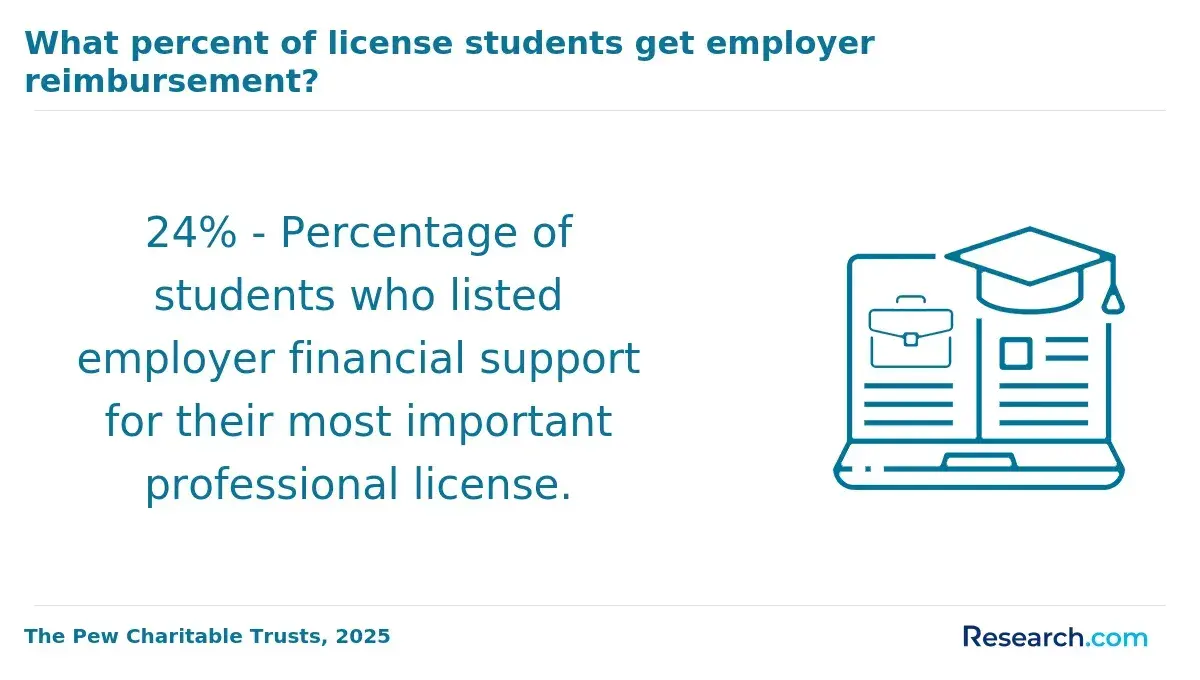
- Employer tuition assistance, especially from hospitals, health systems, academic medical centers, and public agencies that need clinical educators or staff-development specialists.
- Institutional scholarships and nursing-school awards, which may have separate application deadlines even when admission is rolling.
- Professional nursing association, specialty organization, and community foundation scholarships for graduate nursing students.
- Federal or state workforce programs when available, particularly for nurses serving shortage areas or teaching priorities identified by public agencies.
- Payment plans that spread tuition across a term, while recognizing that they reduce timing pressure rather than total cost.
Read award letters carefully. Loans must be repaid with interest, and aid can be adjusted if enrollment changes, transfer credits reduce your course load, or you do not meet satisfactory academic progress standards. Ask the financial-aid office whether online enrollment, summer terms, and practicum courses count as expected for your funding package.
How Long Does an Online Nurse Education Degree With No Letters of Recommendation Take to Complete?
Most online MSN Nurse Educator programs take about 18 months to 3 years, depending on the credit requirement, transfer credits, course load, sequencing, and practicum availability. Accelerated formats can reduce calendar time, but they require sustained weekly study and should not be assumed to be less demanding.
The timeline below illustrates why two students in the same program may finish at different times.
| Enrollment pattern | Typical fit | Timeline considerations |
| Full-time | Nurses with substantial schedule flexibility or employer support | May finish sooner if all courses and practica are available as planned |
| Part-time | Working nurses balancing shifts, family, or caregiving | Usually extends completion time but can make workload more manageable |
| Accelerated term structure | Students comfortable with concentrated coursework | Shorter terms can increase weekly reading, writing, and project demands |
| Transfer-credit pathway | Students with eligible prior graduate coursework | Requires formal evaluation; acceptance is not automatic |
Practicum planning is often the largest timeline variable. Ask whether you must locate a preceptor or site, whether the school approves sites in your state, how long approval takes, and whether courses must be completed in a fixed order. Avoid relying on a marketing estimate if it does not account for your work schedule and clinical-placement responsibilities.
Can You Transfer Credits Into an Online Nurse Education Degree Program With No Recommendation Letters?
Many online Nurse Education programs consider transfer credits, particularly graduate nursing courses completed at an accredited institution. Acceptance depends on course equivalency, grade earned, recency, credit limits, and alignment with the receiving school's curriculum. A no-recommendation admissions policy does not guarantee a favorable transfer decision.
Request an official transfer review before committing to enroll. Give the admissions or registrar office official transcripts, course descriptions, syllabi when requested, and documentation showing graduate-level credit. Ask whether accepted credits will reduce required tuition, change your graduation timeline, or affect financial-aid enrollment status.
Some schools accept only a limited number of credits and may not transfer practicum or capstone courses because those experiences must meet their own outcomes and assessment standards. If you hold a non-nursing graduate degree, it may satisfy selected electives but usually does not replace core advanced nursing education coursework.
Students exploring movement science, rehabilitation, or wellness education should note that a kinesiology degree online can support related interests, but it does not substitute for an MSN when the intended position requires graduate nursing preparation.
How Should You Compare Online Nurse Education Degree Programs That Do Not Require Letters of Recommendation?
Compare programs using career fit and educational quality first, then admissions convenience. An MSN in Nurse Education can support roles such as clinical educator, staff-development specialist, simulation educator, patient educator, professional-development coordinator, and, depending on employer requirements, nursing faculty. Postsecondary nursing instructors and teachers had a median annual wage of $86,530 in May 2024, according to the U.S. Bureau of Labor Statistics; actual pay varies by region, employer, experience, academic rank, and whether the role includes clinical duties.
Use this side-by-side framework to identify a program that is both accessible and aligned with your goals.
| Comparison area | What to look for | Why it affects your decision |
| Exact admissions policy | Written confirmation that recommendations are not required for your specific pathway and term | Prevents confusion between university-wide and program-specific rules |
| Accreditation and authorization | Current institutional accreditation, nursing accreditation where applicable, and authorization in your state | Supports quality, aid eligibility, and practicum feasibility |
| Educator curriculum | Courses in curriculum design, teaching strategies, assessment, simulation, educational technology, and evaluation | Determines whether preparation matches educator responsibilities |
| Practicum structure | Required hours, placement support, preceptor qualifications, and local-site approval process | Can affect completion time, cost, and hands-on learning |
| Total net cost | Full tuition, fees, books, travel, aid, and employer support | Provides a realistic affordability comparison |
| Schedule and student support | Course format, live-session expectations, faculty access, tutoring, library services, and technical support | Helps working nurses judge whether the format is sustainable |
| Career alignment | Preparation for academic faculty, clinical education, professional development, or patient education | Helps avoid paying for a credential that does not fit the intended role |
Before applying, ask each school to confirm its recommendation-letter policy, GPA calculation method, RN license requirements, practicum placement process, state authorization, total estimated cost, transfer-credit limit, and expected completion sequence. Keep answers in writing, because catalogs and application portals can change between terms.
A no-recommendation program is a good fit when you already meet its academic and licensure requirements, can demonstrate relevant experience through transcripts and a resume, and have verified that its curriculum supports your intended educator role. Consider programs with a more holistic review process if you need context for a low GPA, an academic gap, or a career transition that your records alone do not fully explain.
Other Things You Should Know About Nurse Education
Usually, only submit optional letters if the school explicitly accepts them. Unrequested materials may not be reviewed and can slow processing. Ask admissions whether optional references can strengthen an application or whether the program uses a fixed document checklist.
Include RN licensure, clinical specialties, years of experience, certifications, leadership responsibilities, precepting, orientation, staff education, quality-improvement work, committee service, and teaching or presentation experience. Tailor the resume to the educator role you want after graduation.
Check the current program admissions page, graduate catalog, and application portal for your specific concentration. Then ask an admissions representative for written confirmation that no letters are required for your start term and applicant type.
The program should hold institutional accreditation, and the nursing degree should come from a school approved by a recognized nursing accreditor such as the CCNE or ACEN. For licensure or faculty use, states and employers often require graduation from an accredited MSN or doctorate, not a nonaccredited certificate.
References
- Tips for Nursing School Applicant | San Mateo College of Allied Health https://smcah.edu/8-most-important-need-to-know-letter-of-recommendation-tips-for-nursing-school-applicants/
- How to Write a Nursing School Recommendation Letter: Tips & Templates https://www.nurseeducator.com/articles/nursing-school-recommendation-letter/
- NLN CNEA https://cnea.nln.org/
- Ed.S. in Nursing Education | ACE https://ace.edu/degree-programs/education-specialist-degrees/education-specialist-nursing/education-specialist-in-nursing-education/
- Supporting Nontraditional Students in Nursing Programs https://www.allnursingschools.com/articles/how-to-support-nontraditional-students-in-nursing-programs/