
2027 Best Online Colleges With Evening Classes

Co-Founder and Chief Data Scientist
If work or caregiving fills your daytime hours, an online degree is useful only if its schedule actually fits your evenings. Some colleges let you complete coursework after work; others require live meetings or daytime fieldwork. The distinction matters when weighing the cost of a degree against the time needed to finish it.
The U.S. Bureau of Labor Statistics reports median weekly earnings of $1,543 for full-time workers age 25 and older with a bachelor's degree in 2024, though education alone does not cause that earnings difference. This guide helps you compare colleges, programs, schedules, and costs before applying.
Key Things You Should Know
- "Evening online" has two meanings. Live classes meet at scheduled evening times, while asynchronous classes let you study in the evening but still impose deadlines.
- Confirm which your program offers. Start with the whole degree, not the course catalog. Ask whether required labs, clinicals, student teaching, or residencies can fit your daytime obligations.
- Compare total cost and likely completion time. Transfer credit and part-time enrollment can change both; a short course or low per-credit price does not establish either one.
Top 10 Best Online Colleges With Evening Classes
Business Programs
Online MBA and specialized master's programs in accounting, finance, or management often accommodate evening coursework, but a program may replace lectures with team meetings at fixed times. Compare whether required group projects and presentations can happen after work.
An MBA generally serves experienced professionals seeking broader management skills; a specialized master's may better suit a defined career goal. Check prerequisites, employer tuition assistance, and whether the program offers live evening sections or merely permits evening independent study.
Healthcare Programs
Master's programs in healthcare administration or public health can suit adults who need to complete readings and assignments at night. An MHA emphasizes organizational operations; an MPH emphasizes population health. Either may require a practicum or project with daytime partners.
Neither degree by itself grants a clinical license. Before enrolling, ask when required meetings occur, who arranges experiential placements, and whether your experience meets any program-specific admission requirements.
Information Technology Programs
Master's programs in information technology, cybersecurity, and information systems may let students complete technical work during evening hours. Labs can be virtual, but group projects, exams, or instructor meetings may have fixed windows.
Compare curricula against the roles you want: infrastructure, security, and IT management require different strengths. Ask whether applicants need prior computing coursework and whether the program includes practical projects rather than relying on the degree name alone.
Computer Science Programs
An online master's in computer science can deepen software, algorithms, or computing knowledge, but it is not necessarily a beginner's conversion program. Some admit applicants from other fields only after prerequisite coursework. Evening-friendly lectures do not remove scheduled exams, collaborative projects, or demanding weekly workloads. Compare foundation requirements and course sequencing before assuming part-time enrollment will fit both your schedule and your intended graduation date.
Nursing Programs
Online MSN programs commonly require an active RN license and previous nursing education; requirements vary by track. Coursework may fit evenings, while clinical hours and preceptor availability may not. Nurse practitioner and other advanced-practice tracks have additional certification and state licensure requirements. Compare clinical-placement support, state authorization, programmatic accreditation, and whether required hours can realistically fit around your shifts before treating an online listing as an evening-only pathway.
Psychology Programs
Online master's programs in psychology may focus on research, applied psychology, or preparation for further study. Do not assume a general psychology master's qualifies you to practice as a psychologist or counselor; licensing pathways have distinct degree, supervised-experience, and examination rules. Evening coursework can be convenient, but a thesis or research project may require meetings with faculty or participants. Match the curriculum to the occupation and state requirements you intend to pursue.
Education Programs
Online master's programs in education can support teachers seeking subject expertise, curriculum roles, or leadership preparation. Some are designed for already licensed educators; others offer a route toward initial licensure. That distinction matters more than whether lectures are available at night: initial-licensure programs may require daytime student teaching and state-specific coursework. Verify eligibility in the state where you plan to work and ask whether your chosen track requires school-based hours.
Criminal Justice Programs
A master's in criminal justice can be relevant to policy, administration, research, or advancement within an existing public-safety career. It does not replace agency hiring standards, academy training, or required experience. Online coursework may be manageable on evenings or rotating shifts, although live seminars can be harder to attend. Compare research and management courses with your goal, and confirm whether internships or agency-based projects are required.
Engineering Programs
Online engineering master's programs often serve graduates who already have substantial technical preparation. Recorded lectures may accommodate evening study, while specialized software, team design, labs, or exams can create scheduled commitments.
Check prerequisites and whether the curriculum supports your engineering discipline. A master's does not automatically confer a Professional Engineer license; state requirements can include an approved educational background, examinations, and experience.
Social Work Programs
An online MSW may offer evening classes, but required field placements can take place during agency business hours. Traditional and advanced-standing pathways have different eligibility and remaining requirements; advanced standing generally requires a qualifying social work bachelor's degree.
Confirm Council on Social Work Education accreditation, state authorization, placement arrangements, and the schedule of field hours. Graduation alone does not necessarily authorize independent clinical practice, which typically requires further supervised experience and licensure.
What are the best online colleges with evening classes for working adults?
The best college depends first on what you mean by evening classes. If you need to study after work, asynchronous coursework may be the strongest fit. If you learn best in a live class at night, ask for the actual meeting times of required courses before choosing a college. An institution's online offerings do not establish that every program - or every course in a program - has evening sections.
These accredited U.S. universities are useful starting points for comparing online study that can accommodate evening hours. They are not ranked as providers of guaranteed live evening classes; schedules and in-person requirements must be checked for the specific degree.
| College | Why an evening student might consider it | What to confirm for your program |
| Western Governors University | Its competency-based online model offers considerable control over when to study. | Required assessments, program pace, and any clinical or student-teaching schedule. |
| Southern New Hampshire University | Online coursework generally does not require logging in for class at a set time. | Weekly deadlines, group-work expectations, and any program-specific exceptions. |
| University of Maryland Global Campus | Online courses can accommodate students who complete much of their work after hours. | Course-specific meeting or assessment times and availability of required courses. |
| Oregon State University Ecampus | Many online courses use asynchronous delivery, which can support evening study. | Whether every required course in your chosen degree fits that format. |
For scheduled live evening instruction, request a current course schedule showing the meeting time and time zone for required classes, not just electives. For independent evening study, prioritize predictable deadlines, part-time options, and access to advising outside your working hours. Neither format is universally best.
Are online colleges with evening classes accredited and legitimate?
Online evening programs can be legitimate, but accreditation belongs to an institution or a specific program - not to the word "online." Check the college and its accreditor in the U.S. Department of Education's accreditation database. Then check any programmatic accreditation needed for your intended profession, particularly in nursing, social work, and some education or clinical fields.
Accreditation also matters when assessing federal aid eligibility, but it does not mean every student or program qualifies for every aid type. If financing is central to your decision, compare accredited online colleges that accept FAFSA and verify the specific school's federal-aid participation. A red flag is a school that cannot clearly identify its accreditor, required in-person work, or the licensing jurisdictions its program addresses.
How do online evening classes compare with campus-based programs?
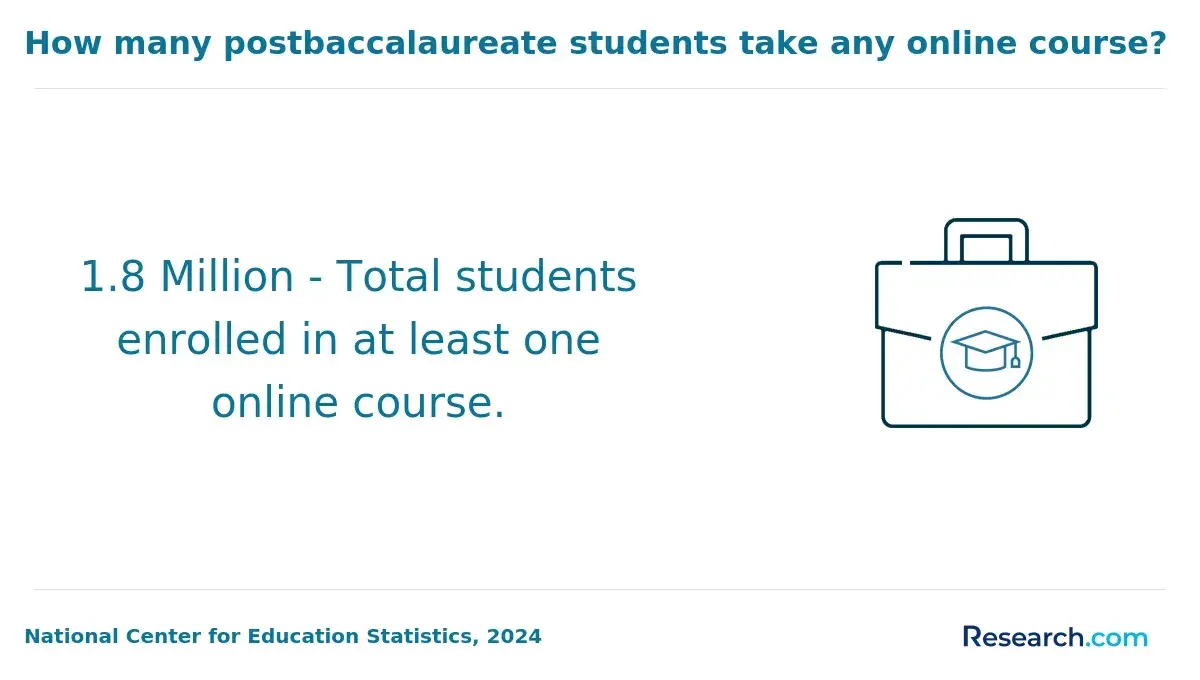
Online study removes the routine campus commute, but it does not necessarily remove scheduled attendance. Campus programs may offer easier access to physical labs and in-person interaction; online programs can be more practical for adults whose jobs or homes are far from campus. Hybrid programs occupy the middle ground but require travel that should be included in your budget and calendar.
The meaningful comparison is between the required activities of two specific programs. An online nursing program with daytime clinical placements might be less workable for your schedule than a nearby campus program with evening lectures. Conversely, an asynchronous business program may be easier to manage than a campus program whose evening classes meet on multiple nights.
Which degrees and certificates can you earn through evening online programs?
Depending on the college, evening-compatible online options can include undergraduate certificates, associate degrees, bachelor's degrees, graduate certificates, and master's degrees. Availability varies by field. A certificate may target a narrower skill, while a degree generally includes broader requirements; neither is interchangeable with a professional license.
At the graduate level, check whether admission requires a related bachelor's degree, prerequisites, professional experience, or an active license. Be especially careful with unusually short completion claims: a 6-month master's degree may assume particular prior preparation or an intensive course load. Ask how many credits remain for you and whether required courses are offered in the evenings or asynchronously each term.
What admission requirements do online colleges with evening classes have?
Undergraduate applicants generally need a high school diploma or equivalent; transfer applicants also submit college transcripts. Graduate programs generally require a bachelor's degree, and some require prerequisites, a minimum GPA, experience, a portfolio, or professional licensure. Testing policies vary by college and program. Admission to a university does not automatically mean admission to a selective nursing, education, or graduate track.
Before applying, ask for an evaluation of previous coursework and how accepted credits satisfy your intended degree - not merely how many credits the college accepts. Also ask whether your program has separate deadlines or eligibility rules. This is particularly important if you need part-time enrollment or a specific evening section to be available when you start.
How long do online evening programs take and how much do they cost?
Completion time depends on remaining credits, course sequencing, enrollment intensity, and experiential requirements. Part-time study can preserve your work schedule but extend the time to graduation. Shorter course terms do not by themselves shorten a degree, and transfer credits help only when they apply to its requirements. Students comparing accelerated programs should examine the starting credits and weekly workload assumed in any advertised timeline.
Published tuition is not the full price. The comparison below identifies expenses that can change what two apparently similar online programs cost; request a personalized estimate for your remaining courses.
| Cost factor | Why it matters for evening students |
| Tuition and mandatory fees | Rates may differ by program, credit load, or residency status. |
| Books, software, and equipment | Technical courses may require materials beyond tuition. |
| In-person requirements | Travel, time away from work, and placement expenses can add to the total. |
| Accepted credit and aid | Credits that fulfill requirements may reduce remaining coursework; grants and employer assistance can reduce out-of-pocket cost. |
Compare the cost to finish, not just the per-credit rate. Ask each financial aid office for an estimate based on your planned part-time or full-time enrollment, and check the conditions of employer tuition benefits before counting on them.
What coursework and class formats do online evening programs use?
Online evening programs may use live video meetings, recorded lectures, discussion boards, readings, virtual labs, and projects. Asynchronous means you can usually choose when to access course materials; it does not mean assignments have no deadlines. Synchronous classes require attendance at scheduled times. Neither term tells you whether an internship or clinical placement can happen after work.
If control over your study hours matters more than a live evening classroom, compare best online self-paced colleges with conventional asynchronous programs. Self-paced coursework still has academic requirements, assessment rules, and an enrollment calendar. Request a sample syllabus and the next term's schedule to see the real workload and meeting times.
What careers and salaries can online evening college graduates expect?
Career outcomes depend on the field, prior experience, location, and any license or additional training - not on whether classes happened at night. As one labor-market reference point, the Bureau of Labor Statistics reports a 2024 median annual wage of $93,600 for registered nurses. That is an occupational median, not an expected salary for online graduates, and becoming an RN requires an approved education pathway and licensure rather than an evening schedule alone.
For any career you are considering, compare the occupation's entry requirements with the exact credential offered. An MBA does not ensure a management position, a psychology master's may not qualify someone for clinical practice, and a certificate may be sufficient for some skills-focused goals. Ask colleges for program-specific career information, but do not mistake access to career services for a job-placement guarantee.
How do you choose a reputable online college with evening classes?
Choose a college by testing whether its required program fits your evenings, budget, and career goal. A ranking or a promise of "flexible online learning" cannot answer that question for you. These checks make comparisons more concrete before you commit.
- Identify your required credential and check institutional accreditation, plus programmatic accreditation and state eligibility where relevant.
- Get a degree plan showing required courses, accepted transfer credit, prerequisites, and any capstone or fieldwork.
- Request current schedules or sample syllabi; ask which required activities have live meetings, fixed exam windows, or daytime placements.
- Compare personalized completion estimates and total remaining tuition, fees, materials, and travel after applicable aid.
- Ask how often required courses run and what happens if work forces you to skip a term.
The most common mistake is treating "online" as proof of evening availability. The best choice is the college that can document a workable route through every required course, not just an appealing first term.
Other Things You Should Know About
Some do. Others are asynchronous courses that you can work on at night. Check the required courses' meeting times, deadlines, and time zone before enrolling.
Sometimes, particularly in programs without required fieldwork. Clinicals, internships, labs, and student teaching may require daytime hours even when academic courses are online.
Many programs allow it, but course sequencing, aid eligibility, and the time to finish can change. Ask the college for a part-time degree plan based on your starting credits.
The delivery schedule does not by itself determine a degree's value. Focus on an accredited institution, relevant coursework, any required professional approval, and the skills or experience employers seek.
References
- Accreditation in the U.S. | ed.gov http://www.ed.gov/laws-and-policy/higher-education-laws-and-policy/college-accreditation/accreditation-in-the-us
- Transfer | fit.edu https://www.fit.edu/admissions/applying/transfer/
- Class Scheduling Guidelines - Registrar | Illinois State https://registrar.illinoisstate.edu/resources/academic-scheduling/guidelines/
- Transfer Students | State University System of Florida https://www.flbog.edu/universities/admissions-transfers/transfer-students/
- Instruction Modes | brooklyn.edu https://employees.brooklyn.edu/base/instruction-modes/
- College of General Studies - University of Pittsburgh https://catalog.upp.pitt.edu/content.php
- Distance Education & Instructional Technology | Black River Technical College https://www.blackrivertech.edu/college-classes/academic-support/online-distance-education
- Online Learning | ccp.edu https://www.ccp.edu/degrees-programs/all-academic-offerings/online-learning
- Course Delivery Methods - Ways to Learn | Riverland https://www.riverland.edu/academics/course-delivery-methods-ways-to-learn/
- Evening Study in Information Technology | psu.edu https://berks.psu.edu/academics/baccalaureate-degrees/information-technology/evening-study-IT


