
2027 Best Online College Majors for Work-Life Balance

Co-Founder and Chief Data Scientist
Choosing an online major is only half the work-life-balance decision: the career it leads to may demand fixed shifts, travel, or on-site work. That distinction matters if you are studying around a job or family responsibilities. The U.S. Bureau of Labor Statistics (BLS) reports a 2024 median annual wage of $81,680 for accountants and auditors, but pay alone says little about their busy seasons or schedules.
This guide compares online fields, with particular attention to master's options, so you can weigh study demands against realistic career paths before enrolling.
Key Things You Should Know
- Business, IT, and computer science can lead to office-based roles with scheduling options, but remote work and predictable hours depend on the employer and job.
- Healthcare, nursing, education, and social work may offer meaningful career paths, yet clinical placements, school calendars, or client-facing duties can limit flexibility.
- BLS projects 29% employment growth for information security analysts from 2024 to 2034; strong demand does not eliminate incident-response or on-call work.
Top 10 Best Online College Majors for Work-Life Balance
Business Programs
An online MBA or specialized master's in accounting, finance, or human resources may suit experienced professionals seeking advancement without leaving work. Many office-based roles offer more location flexibility than clinical or classroom jobs, although accounting deadlines and management responsibilities can extend the workday.
Compare part-time course sequences, group-project meeting times, and whether an internship is required. An MBA is not necessary for every business role; if you want an entry-level career change, an undergraduate major or targeted coursework may be a better starting point.
Healthcare Programs
Online master's programs in healthcare administration or public health can prepare students for organizational, policy, or population-health work rather than direct patient care. They may appeal to healthcare workers seeking less shift-based work, but leadership jobs can still involve urgent decisions and on-site responsibilities.
Check whether a program requires a practicum and whether your experience meets admission requirements. A healthcare administration degree does not confer a clinical license; choose a clinical program if your goal is to diagnose or treat patients.
Information Technology Programs
An online master's in information technology may emphasize networks, cloud systems, cybersecurity, or IT management. Coursework can often fit around employment, while graduates may pursue roles with hybrid or remote options.
The trade-off is that infrastructure outages and security incidents may require evening, weekend, or on-call work. Ask whether labs use remote environments and whether classes have live sessions. Students without a technical background should check prerequisites; an IT master's alone does not replace hands-on experience for senior roles.
Computer Science Programs
Online computer science master's programs commonly cover algorithms, software systems, data, or artificial intelligence. Project-based work may allow substantial scheduling control, but release deadlines and team collaboration can create intense periods.
Verify required math and programming preparation, especially if your bachelor's degree is in another field. A research-heavy program may suit someone considering a doctorate; an applied software track may better serve a working developer. Neither the degree nor remote coursework guarantees a remote job.
Nursing Programs
Online Master of Science in Nursing programs serve licensed nurses pursuing advanced practice, education, or leadership. Online classes do not remove required clinical hours or make placements easy to schedule; advanced-practice roles also have state-specific licensing and certification rules.
Nurse education or administrative work may offer more predictable hours than bedside shifts, depending on the employer. Confirm the program accepts students in your state, supports local placements, and meets requirements for your intended role before treating an MSN as a flexible option.
Psychology Programs
An online psychology master's may focus on research, applied psychology, or a distinct counseling pathway. Its work-life-balance value depends heavily on the career goal: research and organizational roles differ from client-facing practice.
A general psychology master's does not automatically qualify graduates to practice independently as psychologists or counselors. If licensure is your goal, verify the exact degree, supervised training, and state requirements first. Also check whether the program includes a thesis, scheduled research meetings, or in-person fieldwork.
Education Programs
Online Master of Education programs may serve licensed teachers seeking curriculum, instructional design, or leadership skills. Some non-classroom roles offer different schedules, but school-based jobs usually follow fixed calendars and may include work outside class hours.
Determine whether the degree is for professional development or initial teacher licensure; those pathways have different placement and state-approval requirements. Working teachers should ask how courses and any student-teaching or practicum obligations fit the school year.
Criminal Justice Programs
An online criminal justice master's can support study in policy, administration, or research while students remain employed. Some analytical or administrative roles may have more predictable hours than patrol or corrections work, but experience and agency rules often matter more than the degree alone.
Public-safety jobs can still require shifts, emergencies, or travel. Compare courses and internships against a specific target occupation rather than assuming the credential leads directly to management or a remote position.
Engineering Programs
An online engineering master's may help practicing engineers deepen expertise in systems, electrical, mechanical, or related specialties. Design and analysis work can offer some scheduling flexibility, while testing, manufacturing, and field projects may require on-site attendance.
Check for laboratory, team-project, and live-class requirements. Applicants often need substantial mathematics and discipline-specific preparation. If professional engineer licensure is your goal, investigate your state board's education and experience rules rather than assuming any engineering master's satisfies them.
Social Work Programs
Online Master of Social Work programs can prepare students for social-service practice and, with additional requirements, clinical licensure. Their field placements are substantial in-person commitments, even when classes are online.
Client needs, documentation, and crisis work can also affect hours after graduation. An MSW may be a strong fit if the work matters to you and you can arrange placement time; it is less suitable if you need an entirely self-scheduled degree. Verify accreditation, placement support, and your state's licensing pathway.
What Are the Best Online College Majors for Work-Life Balance?
The best online major for work-life balance is the one whose study requirements and likely jobs fit your available time.
Business, IT, and computer science are worth considering if you want potential office-based or remote work. Healthcare administration and instructional design can be alternatives for people who want to build on experience in healthcare or education. None is universally flexible.
This comparison separates flexibility during school from flexibility at work. The career column describes possibilities, not guaranteed conditions.
| Field | What may help during online study | Career scheduling trade-off |
| Business | Part-time study may fit continued employment | Client, reporting, and management deadlines |
| IT and computer science | Remote-access coursework and projects | On-call support, incidents, or release deadlines |
| Healthcare administration | Nonclinical academic focus | Operations may require on-site or urgent work |
| Nursing and social work | Online academic courses | Required placements and client-facing schedules |
| Education | Study may fit an existing teaching career | School calendars or required fieldwork |
If your schedule cannot accommodate placements, start by comparing nonlicensure pathways. If you want clinical practice or teaching, plan around in-person requirements rather than choosing a major solely because its courses are online.
Which Online Degrees Lead to Flexible, In-Demand Careers?
Business, software, data, and some IT roles can offer flexible scheduling, but job design matters more than a degree title. Compare the occupations you actually want: a software developer building products may have a different week from an IT specialist responsible for around-the-clock systems. Likewise, an accountant's schedule can change during reporting or tax periods.
For a closer look at career-oriented options, compare online degrees that pay well against job postings in your area. Note whether employers require scheduled coverage, travel, prior experience, or on-site days. If remote work is essential, check those conditions before committing to a major.
How Much Do Graduates of Work-Life-Balance Majors Earn?
Occupational wages are a comparison tool, not a prediction of what a graduate will earn. BLS median annual wages include workers across experience levels, locations, and educational backgrounds. The figures below provide pay context for occupations that may relate to these fields; a master's degree is not necessarily required for entry.
| Occupation | BLS 2024 median annual wage | Important qualification |
| Accountants and auditors | $81,680 | Entry typically requires a bachelor's degree; some positions or credentials have additional requirements. |
| Registered nurses | $93,600 | RN licensure is required; an MSN is not required for every RN role. |
| Information security analysts | $124,910 | Employers commonly value relevant technical experience; a master's alone may not qualify an applicant. |
To judge financial fit, compare the full cost of the credential with the jobs you can realistically pursue now and after gaining experience. Give schedule and placement demands weight alongside potential pay.
Which Online Majors Offer the Best Job Outlook?
Information security is a notable growth area: BLS projects employment of information security analysts to grow 29% from 2024 to 2034. That suggests opportunity, but the occupation can involve incident response outside regular hours, and openings may call for substantial experience. Demand is not the same as an easy-to-enter or predictable-hours career.
Use outlook as one filter. For any major, examine the specific occupation's entry requirements and typical working conditions, then review local openings. A slower-growing occupation with a schedule you can sustain may be a better work-life-balance choice than a faster-growing one that requires frequent on-call coverage.
What Coursework Do Online Majors for Work-Life Balance Include?
Coursework varies by degree level and concentration. Business students may take finance, operations, and strategy; IT and computer science students may study systems, programming, security, or data. Healthcare administration focuses more on organizations and policy, while education and social work can add practice-based assignments tied to schools or community agencies.
Look beyond course titles to the weekly workload. Group projects may require evening meetings, technical courses may need extended lab access, and a thesis or capstone can make the final term less predictable. Request a sample course schedule and ask how often required classes run; a part-time option is less useful if a needed course is offered infrequently.
Do These Careers Require Licenses or Professional Certifications?
Some paths require credentials beyond the degree. Registered nurses need state licensure; advanced-practice nursing has additional requirements.
Clinical social work, counseling, and teaching also involve state-specific education, examination, or supervised-practice rules. Business and technology roles generally do not have one universal occupational license, though particular jobs may value certifications.
Before applying, identify the exact job and state where you intend to work, then compare its requirements with the program's published outcomes. If your goal is narrower than a degree, easy licenses and certifications to get online may be worth exploring, but a short credential does not substitute for a regulated profession's required training or license.
How Long and How Much Do Online Degree Programs Take?
A bachelor's degree generally takes longer than a master's because it includes broader general education and major requirements. Actual time in an online program depends on your course load, accepted transfer credits, prerequisite courses, course availability, and any thesis or field placement. Part-time study can make each week more manageable while extending the time to completion.
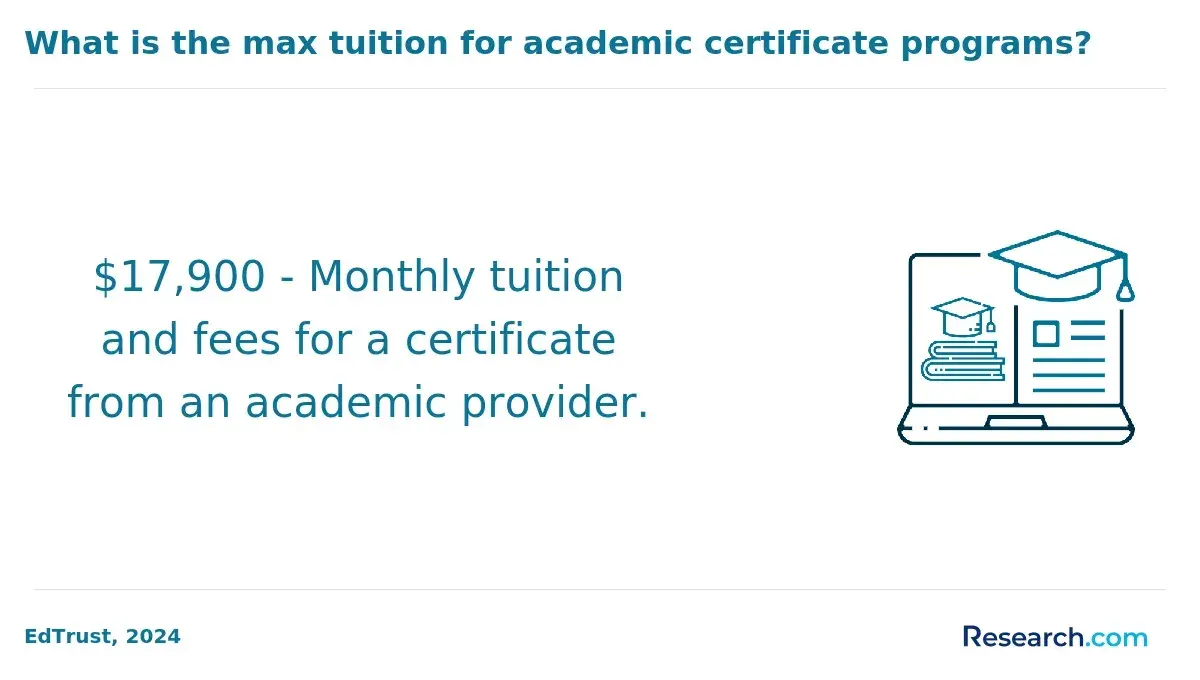
Published tuition is not the whole price. Compare required fees, books and software, travel, clinical or practicum expenses, and the cost of reducing paid work for placements. Ask for an individualized review of transfer credit: accepted courses may fill electives without reducing requirements in your major. Check financial-aid eligibility and employer tuition assistance before borrowing.
Accelerated programs online may shorten the calendar for eligible students, but faster terms can mean heavier weekly workloads. Confirm the remaining credits and any transfer-credit assumptions behind an advertised timeline.
What Are the Admission Requirements for Online College Majors?
Undergraduate applicants generally need a high school diploma or equivalent, while master's applicants generally need a bachelor's degree
Individual graduate fields may also require prerequisite courses, professional experience, a license, recommendations, or a statement of purpose. An MSN, for example, serves a different applicant than a master's program designed for career changers.
Check the specific program's admissions page rather than assuming a university-wide policy applies. Ask whether prerequisites can be completed before enrollment and whether the program admits part-time students.
If you need to test an interest before applying for a degree, 6 month certificate programs may provide a shorter alternative; verify whether any coursework would later count toward your intended degree.
How Can You Choose an Accredited Online Program?
Start with institutional accreditation recognized by the U.S. Department of Education or the Council for Higher Education Accreditation. Then check programmatic accreditation or state approval where it affects your goal. Institutional accreditation alone does not establish that a program meets your state's licensing rules.
Before enrolling, confirm the degree's delivery details in writing: live-class times, in-person components, placement arrangements, part-time course availability, and eligibility for students in your state. Ask for a full cost estimate and a degree audit showing how previous credits apply. A red flag is any claim that "online" means fully self-paced, license-qualifying, or free of campus and field obligations without program-specific documentation.
Other Things You Should Know About the Best Online College Majors
Business, software-related, and some administrative fields are reasonable places to start. Compare specific jobs, though: deadlines, on-call duties, and employer policies determine whether hours are predictable.
Online classes may be available, but programs preparing students for practice typically include in-person clinical or field placements. Check the requirements for the exact program and state.
Often not. Many business and technology occupations have bachelor's-level entry paths. A master's makes more sense when it supports a defined specialization, advancement goal, or required professional pathway.
Ask about live attendance, weekly deadlines, required in-person work, part-time course sequencing, total cost, transfer-credit evaluation, and whether the program meets requirements for your intended occupation and state.
References
- General Schedule Qualification Policies | U.S. Office of Personnel Management https://www.opm.gov/policy-data-oversight/classification-qualifications/general-schedule-qualification-policies/
- United States Bureau of Labor Statistics Education and Training Classification System | ca.gov https://labormarketinfo.edd.ca.gov/LMID/BLS_Training_Levels.html
- Requirements Related to the Practice of Counseling - NCBI https://www.ncbi.nlm.nih.gov/books/NBK259170/
- Healthcare jobs you can get without a bachelor's degree | bls.gov https://www.bls.gov/opub/btn/volume-5/healthcare-jobs-you-can-get-no-bachelors-degree.htm
- Semester Course Load and Student Performance - PMC - NIH https://pmc.ncbi.nlm.nih.gov/articles/PMC7568764/
- Putting your major to work: Career paths after college | Brookings https://www.brookings.edu/articles/putting-your-major-to-work-career-paths-after-college/
- What Early-Career Earnings and Unemployment Rates Tell Us About the Returns on Bachelor's Degree Majors - CEW Georgetown https://cew.georgetown.edu/resource/cew-blog-major-payoff/
- Credit Hour, Transfer Credit and Course Load Policy | California Health Sciences University https://catalog.chsu.edu/credit-hour-transfer-credit-and-course-load-policy
- What adult learners should consider about online degrees | wisc.edu https://dcs.wisc.edu/blog/what-adult-learners-should-consider-about-online-degrees-2/
- Developing and Supporting Virtual Social Work Practicum Placements: Applied Learning in Social Work Education https://alswe.simmons.edu/article/developing-and-supporting-virtual-social-work-practicum-placements/


